


At Imigrar, we understand that securing the right to work in the U.S. is not just about a document; it's about stability, dignity, and keeping families together. The Employment Authorization Document (EAD), often called a work permit, is a crucial step for many immigrants on their journey to building a new life in America, especially here in the thriving communities of Orlando and across Florida.
The reporting that sparked this guide:
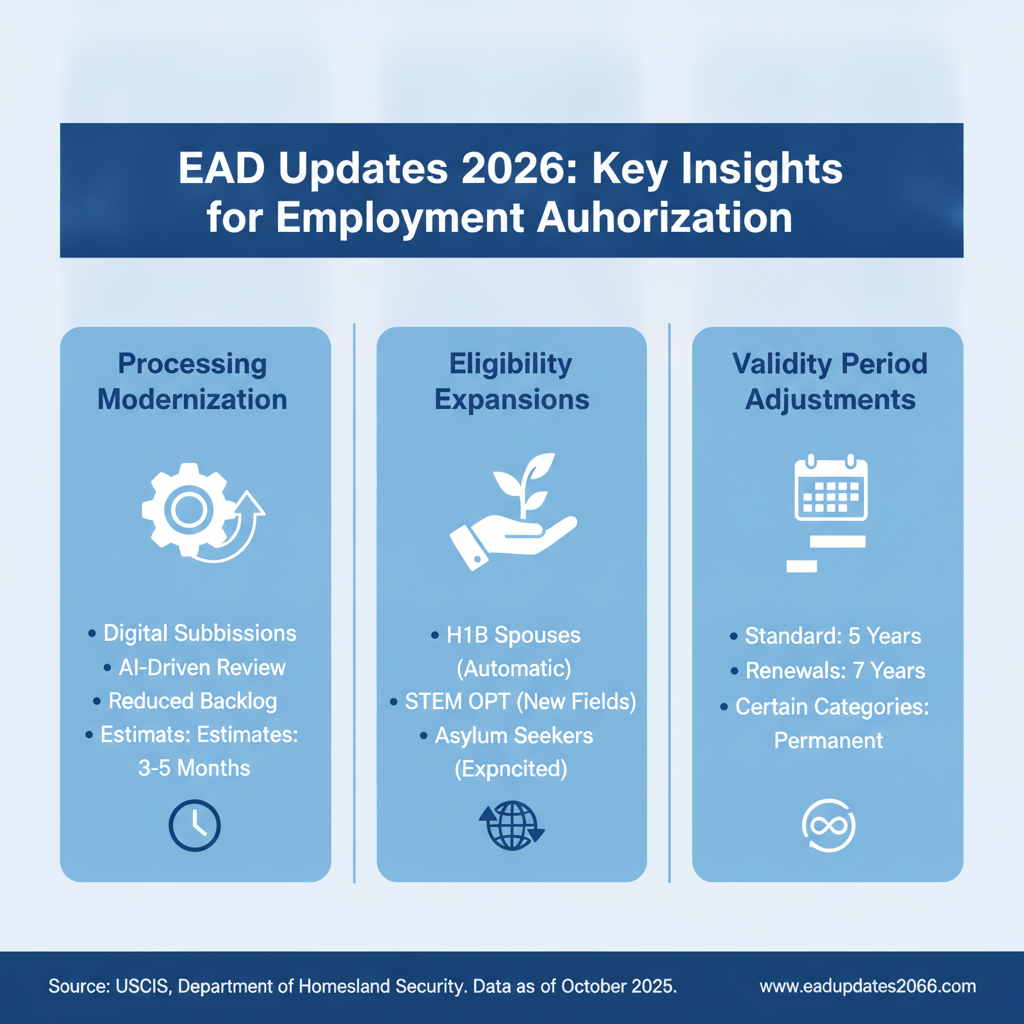
Recent discussions and policy adjustments from USCIS regarding the processing of Employment Authorization Documents have generated significant interest within the immigrant community and among legal practitioners. The ongoing efforts by the agency to address backlogs and streamline procedures directly impact the lives of countless individuals and families. This comprehensive guide has been developed in response to the latest developments and continuing trends in Employment Authorization Document Processing (USCIS), aiming to provide clarity and actionable advice for our clients.
What This News Means for Immigrants in Orlando and Across Florida
The landscape of immigration law is constantly evolving, and updates from U.S. Citizenship and Immigration Services (USCIS) regarding Employment Authorization Document (EAD) processing can have profound effects. For immigrants residing in Orlando, Central Florida, and throughout the Sunshine State, these changes are more than just bureaucratic adjustments; they directly impact their ability to work, support their families, and contribute to our vibrant economy.
Why this news is showing up now
In the lead-up to and during 2026, USCIS has been under continuous pressure to improve efficiency and reduce processing backlogs that accumulated in previous years. This has led to a series of policy reviews, procedural adjustments, and technological implementations aimed at streamlining the adjudication of various immigration benefits, including EAD applications. The "news" we're seeing now reflects USCIS's ongoing commitment and specific actions to address these challenges. This includes initiatives to expand premium processing options, extend the validity periods for certain EAD categories, and refine internal processes to speed up decision-making. The goal is to provide greater predictability and faster access to employment for eligible non-citizens, which is critical for economic integration and humanitarian relief. These efforts are a direct response to public demand, congressional oversight, and the agency's internal drive to fulfill its mission more effectively.
How it can affect Florida residents
For individuals and families across Florida, particularly those in bustling metropolitan areas like Orlando, Tampa, and Miami, these EAD processing updates carry significant weight. Florida's economy relies heavily on a diverse workforce, and any acceleration in EAD processing means eligible immigrants can enter or re-enter the workforce more quickly, reducing periods of financial hardship and uncertainty. Shorter processing times can translate into immediate job opportunities, allowing individuals to secure employment faster, obtain necessary professional licenses, and contribute to their communities. Conversely, delays or procedural changes can cause immense stress, leading to job loss, difficulty paying bills, and potential instability for families.
Specifically, for those whose cases are processed through the Orlando USCIS Field Office or the various service centers that handle EAD applications, understanding these updates is paramount. Faster processing could mean less time waiting in limbo, allowing individuals to plan their careers and lives with greater certainty. It can also impact local businesses that depend on a steady supply of labor. For Central Florida residents, navigating the I-4 corridor for appointments or seeking legal advice, timely EAD processing is a cornerstone of their ability to thrive. Imigrar, located in Orlando, is uniquely positioned to help clients in Orange County and surrounding areas understand these nuances and prepare robust applications that align with USCIS's current operational directives, ensuring they benefit from any positive changes and mitigate risks from potential hurdles.
Need Help? Our Orlando immigration team is ready to assist. Call +1 786-791-3106 for a free consultation, or message us online. Se Habla Español.
What Employment Authorization Document (EAD) Processing Is (and Why It Matters)
The ability to work legally in the United States is a fundamental aspect of life for many immigrants. This is where the Employment Authorization Document (EAD), commonly known as a work permit, plays a critical role. Understanding what an EAD is and why its processing is so important is the first step toward securing your future in the U.S.
A plain-English definition
An Employment Authorization Document (EAD) is a card issued by USCIS that provides temporary permission to work legally in the United States to non-citizens who are not U.S. citizens or lawful permanent residents (Green Card holders). It serves as proof that you are authorized to accept employment in the U.S. for a specific period. The EAD card contains your photo, name, category of eligibility, and expiration date. It is distinct from a Green Card, which grants permanent residency and inherent work authorization. An EAD is typically granted to individuals who are in the process of adjusting their immigration status, have applied for asylum, are beneficiaries of certain temporary programs, or are in specific nonimmigrant categories that allow work.
Key terms you need to know
Navigating the EAD process involves understanding several key terms:
- EAD (Employment Authorization Document): The official name for the work permit card.
- Work Permit: The common, everyday term for an EAD.
- Form I-765, Application for Employment Authorization: The specific USCIS form you must file to apply for an EAD.
- Eligibility Category: The specific legal basis under which you are allowed to apply for an EAD. This is represented by a code on your EAD card (e.g., C09 for those with a pending Form I-485, C08 for asylum applicants).
- Adjustment of Status (AOS): The process of applying for a Green Card while physically present in the U.S. Individuals with a pending Form I-485 (Application to Register Permanent Residence or Adjust Status) are often eligible for an EAD.
- Asylum Seeker: An individual seeking protection in the U.S. due to fear of persecution. Asylum applicants can apply for an EAD after their asylum application has been pending for 150 days.
- DACA (Deferred Action for Childhood Arrivals): A program that provides certain unauthorized immigrants who entered the U.S. as children with deferred action from deportation and eligibility for an EAD.
- F-1 OPT (Optional Practical Training): A period during which F-1 nonimmigrant students can work in their field of study in the U.S., requiring an EAD.
- Renewal: The process of reapplying for an EAD before your current one expires to maintain continuous work authorization.
- Initial Application: Your first application for an EAD.
- Premium Processing: An expedited service offered by USCIS for certain forms, allowing for faster adjudication for an additional fee. While not always available for Form I-765, its availability is expanding for some categories.
- Receipt Notice: A document sent by USCIS acknowledging receipt of your application, usually 2-3 weeks after filing. It contains your receipt number, which you can use to track your case online.
The EAD is more than just a piece of plastic; it's a gateway to self-sufficiency, financial independence, and a stable life for immigrants and their families in Orlando and across the country. Without it, legal employment is generally impossible, making its timely processing a critical concern for thousands.
Current Immigration Law: The Foundation of Your EAD Application
Understanding the legal framework behind Employment Authorization Documents is essential for anyone seeking to work in the U.S. The authority to grant work permits stems from federal immigration law, primarily the Immigration and Nationality Act (INA) and its implementing regulations.
Federal requirements
The ability to work in the United States without being a U.S. citizen or lawful permanent resident is granted by the federal government under specific provisions of the INA. Section 274A of the INA, codified at 8 U.S.C. § 1324a, broadly prohibits employers from knowingly hiring or continuing to employ unauthorized aliens. This is why having an EAD is critical for many non-citizens to demonstrate their eligibility to work.
The regulations governing EADs are found in 8 CFR Part 274a.12, which lists the various categories of non-citizens eligible to apply for employment authorization. These categories are diverse and depend heavily on an individual's current immigration status or pending application. Common eligibility categories include:
- Asylum applicants (C08): Individuals with a pending asylum application that has been filed for at least 150 days.
- Refugees and Asylees (A03, A05): Individuals granted asylum or refugee status.
- Applicants for Adjustment of Status (C09): Individuals with a pending Form I-485, Application to Register Permanent Residence or Adjust Status. This is a very common category for family-based or employment-based Green Card applicants.
- Spouses of E, L, and H-1B visa holders (A17, A18, C27): Certain spouses of nonimmigrant visa holders may be eligible. For example, H-4 spouses of H-1B workers may be eligible if the H-1B worker has an approved Form I-140 or has extended their H-1B status beyond six years.
- F-1 students seeking Optional Practical Training (OPT) (C03): Students authorized for post-completion practical training related to their field of study.
- DACA recipients (C33): Individuals granted deferred action under DACA.
- Battered spouses of U.S. citizens or lawful permanent residents (C20): Under the Violence Against Women Act (VAWA), certain abused spouses, children, and parents may self-petition for immigration benefits and receive an EAD.
- Temporary Protected Status (TPS) registrants (A12, C19): Nationals of designated countries who cannot safely return home.
Each category has specific requirements and documentation. The application is made using Form I-765, Application for Employment Authorization. It is crucial to correctly identify your eligibility category on this form, as errors can lead to delays or denial. You can find detailed instructions and all necessary forms on the USCIS Forms page.
Florida-specific considerations
While EAD eligibility and processing are entirely governed by federal law and USCIS regulations, there are practical considerations for Florida residents. The state of Florida does not have its own EAD laws or state-level work permits. All work authorization for non-citizens flows from federal authority. However, the impact of federal processing times and policies is deeply felt at the local level.
For individuals working or seeking employment in Orlando, Tampa, Miami, or any part of Florida, an EAD is the universal key to legal employment. Employers throughout the state must comply with federal I-9 verification requirements, which mandate that all employees, regardless of citizenship, complete Form I-9, Employment Eligibility Verification, and present acceptable documentation proving identity and employment authorization. An EAD card is one of the primary "List A" documents that satisfies both requirements.
The Orlando metropolitan area, with its diverse industries ranging from tourism and hospitality to technology and healthcare, offers numerous employment opportunities. Having a valid EAD is a prerequisite for accessing these jobs. Furthermore, state agencies for professional licensing (e.g., healthcare, real estate, teaching) often require proof of work authorization. Therefore, timely EAD processing is not just about getting a job, but about being able to practice a profession and contribute fully to Florida's economy and society. Imigrar helps clients in Orange County and beyond ensure their EAD applications meet all federal requirements, keeping them compliant and ready for the Florida job market.
How to Apply for or Renew Your EAD: A Complete Step-by-Step Guide
Applying for or renewing an Employment Authorization Document (EAD) can seem daunting, but breaking it down into manageable steps can make the process clearer. This guide provides a comprehensive overview to help you navigate the process effectively. Reminder: While this guide offers detailed information, individual cases can vary significantly. Consulting with an experienced immigration attorney, like those at Imigrar, is always recommended.
1) Determine Your Eligibility and EAD Category
Before you even touch a form, you must confirm you are eligible for an EAD and identify the correct eligibility category. This is the most crucial first step. USCIS provides a comprehensive list of categories in the instructions for Form I-765.
- Review Your Immigration Status: Are you an asylum applicant, an adjustment of status applicant, a DACA recipient, an F-1 student on OPT, or in another specific nonimmigrant status?
- Identify Your Category Code: Each eligibility group has a specific code (e.g., (c)(9) for pending Form I-485, (c)(8) for asylum applicants). Selecting the wrong category can lead to denial.
- Check Specific Requirements: Some categories have additional criteria. For example, asylum applicants must wait 150 days after filing their asylum application before they can apply for an EAD. Spouses of certain visa holders (like H-4) may need their principal spouse's approved Form I-140 or a specific extension.
Required Documents for Eligibility Determination (Internal Review):
- Current immigration documents (I-94, visa stamps, previous EADs, Green Card applications, asylum applications).
- Notices from USCIS (receipt notices, approval notices for underlying petitions).
- Marriage certificates (if applying as a spouse).
- Birth certificates (if applying as a child).
2) Gather Required Documents
Once your eligibility and category are confirmed, the next step is to meticulously gather all necessary supporting documents. This often includes both primary evidence and, in some cases, secondary evidence.
- Proof of Identity and Nationality:
- Copy of your passport (biographic page).
- Copy of your birth certificate with photo ID.
- Copy of your national identity document with photo and/or fingerprint.
- Proof of Immigration Status:
- Copy of your Form I-94, Arrival/Departure Record (front and back, if applicable).
- Copy of your visa (if applicable).
- Copy of any previous EAD card (front and back) – crucial for renewals.
- Copy of any other USCIS-issued identity document (e.g., Green Card, if applying for an EAD based on TPS).
- Evidence of Eligibility for Specific Category:
- For C09 (pending I-485): Copy of your Form I-485 receipt notice.
- For C08 (asylum applicant): Copy of your Form I-589, Application for Asylum and for Withholding of Removal, receipt notice or filing confirmation.
- For H-4 spouses (C26): Copy of your spouse's Form I-797 approval notice for Form I-140 or proof of H-1B extension beyond six years, and your marriage certificate.
- For F-1 OPT (C03): Copy of your Form I-20 with the OPT recommendation.
- Photographs: Two identical, color passport-style photographs taken within 30 days of filing.
- Previous EAD (for renewals): A copy of the front and back of your most recent EAD card. If it was lost or stolen, provide a police report or explanation.
Important: Provide copies of documents, not originals, unless specifically requested by USCIS. Ensure all foreign language documents are accompanied by a complete English translation certified by a translator.
3) Complete Form I-765, Application for Employment Authorization
The accuracy and completeness of Form I-765 are paramount. Any errors can lead to delays or a Request for Evidence (RFE).
- Download the Latest Form: Always download the most current version of Form I-765 from the USCIS Forms page.
- Read Instructions Carefully: Review the instructions thoroughly before filling out the form.
- Fill Out Completely and Accurately:
- Provide all requested personal information.
- Clearly state your eligibility category (Part 2, Item 27).
- Answer all questions truthfully. If a question doesn't apply, write "N/A" (Not Applicable).
- Sign the form in blue ink. An unsigned form will be rejected.
- Specifics for Renewals: If renewing, ensure you indicate "Renewal" in Part 1, Item 1.d.
4) Prepare Your Application Packet and Pay Fees
Proper assembly of your application packet and correct fee payment are vital.
- Filing Fee: Check the current fee for Form I-765 on the USCIS website (USCIS official website). The fee can change, so verify it right before filing.
- Payment Method: You can pay by money order, personal check, cashier's check, or credit card using Form G-1450, Authorization for Credit Card Transactions. Make checks payable to "U.S. Department of Homeland Security." Do not send cash.
- Fee Waiver: In some limited circumstances, you may be eligible for a fee waiver using Form I-912, Request for Fee Waiver. This is typically based on low income or receipt of public benefits.
- Assemble Your Packet:
- Form I-765 (signed).
- Filing fee (check, money order, or Form G-1450).
- Two passport-style photos.
- Copies of all supporting documents (as listed in Step 2).
- A cover letter listing all contents is highly recommended.
5) File Your Application with USCIS
The filing location depends on your eligibility category and sometimes on other forms you might be filing concurrently.
- Check Filing Addresses: Refer to the "Where to File" section in the Form I-765 instructions or the USCIS Direct Filing Addresses for Form I-765 page.
- Concurrent Filing: If you are filing Form I-765 concurrently with an underlying application (e.g., Form I-485, Form I-589), send both applications to the address specified for the primary application.
- Mailing Tips:
- Use a reputable mail service (USPS, FedEx, UPS) that provides tracking.
- Keep a copy of the entire application packet for your records.
- Consider certified mail with a return receipt for proof of delivery.
6) Attend Biometrics Appointment (If Required)
After filing, many applicants will receive an appointment notice for biometrics (fingerprints, photograph, and signature).
- Receive Appointment Notice: USCIS will mail Form I-797C, Notice of Action, indicating your biometrics appointment date, time, and location (usually an Application Support Center - ASC).
- Attend Appointment: Bring the appointment notice, a valid photo ID (e.g., passport, driver's license), and any other requested documents.
- Purpose: Biometrics are used for background checks and to verify your identity. Failure to attend can lead to delays or denial.
7) Monitor Your Case Status and Respond to RFEs
The waiting period can be lengthy, but you can actively monitor your case.
- Receipt Notice: Within 2-3 weeks of filing, you should receive a Form I-797C receipt notice with your 13-character receipt number.
- Online Case Status: Use your receipt number to track your case status on the USCIS Case Status Online tool.
- Processing Times: Check current processing times for your specific EAD category and service center on the USCIS Processing Times page. This gives you an estimate of how long to expect.
- Request for Evidence (RFE): If USCIS needs more information, they will send an RFE. Respond promptly and thoroughly by the deadline provided. Failure to respond can result in denial.
- Change of Address: If you move during the processing period, you must notify USCIS using Form AR-11, Alien's Change of Address Card, within 10 days of moving.
Following these steps carefully can significantly improve your chances of a smooth and successful EAD application or renewal process. For those in Orlando and across Florida, Imigrar is here to guide you through each stage, ensuring accuracy and compliance.

Practical Steps You Can Take Today for a Smoother EAD Process
The EAD application process demands attention to detail and proactive planning. By taking certain practical steps today, you can significantly reduce stress, minimize delays, and increase the likelihood of a successful outcome for your work permit application in Orlando or anywhere in Florida.
Actionable Checklist (5+ items):
- Start Early, Especially for Renewals: Don't wait until your current EAD is about to expire. USCIS recommends filing EAD renewal applications up to 180 days before your current EAD expires. This allows for potential processing delays and helps prevent gaps in employment authorization. For some categories, USCIS has even allowed automatic extensions for up to 540 days, but relying on this without filing early is risky.
- Organize Your Documents Digitally and Physically: Create a dedicated folder for your immigration documents. Scan all important papers (passports, visas, previous EADs, birth certificates, marriage certificates, receipt notices) and save them securely. Keep physical copies in an organized binder. This makes retrieval easy for applications, RFEs, or consultations.
- Review and Update Personal Information: Ensure your name, date of birth, and other personal details are consistent across all immigration documents. If you've had a legal name change, gather supporting documentation. Verify your mailing address with USCIS via your online account or by filing Form AR-11 if you've moved.
- Understand Your Eligibility Category Deeply: Revisit the instructions for Form I-765 and confirm your exact eligibility category. Misidentifying your category is a common reason for RFEs or denials. If you are unsure, seek legal advice immediately.
- Consult with an Immigration Attorney: Even if you feel confident, a quick consultation can identify potential issues or missing documents you might overlook. An attorney can help you understand the nuances of your specific case, particularly with the latest USCIS updates.
- Set Up Online Case Tracking: Once you receive your receipt number (Form I-797C), immediately set up an account on the USCIS Case Status Online tool. This allows you to receive email updates and check your status regularly.
- Budget for Fees and Potential Legal Costs: The EAD filing fee is significant. Plan for this expense and, if applicable, for legal fees. Explore fee waiver eligibility if you meet the criteria, but remember it's not guaranteed.
Document preparation guidance
- Photocopy Everything: Make a complete photocopy of your entire application packet before mailing it to USCIS. This copy is your safety net.
- Translations: Any document not in English must be accompanied by a full English translation, certified by the translator. The certification must state that the translator is competent to translate from the foreign


