


Overview — what changed
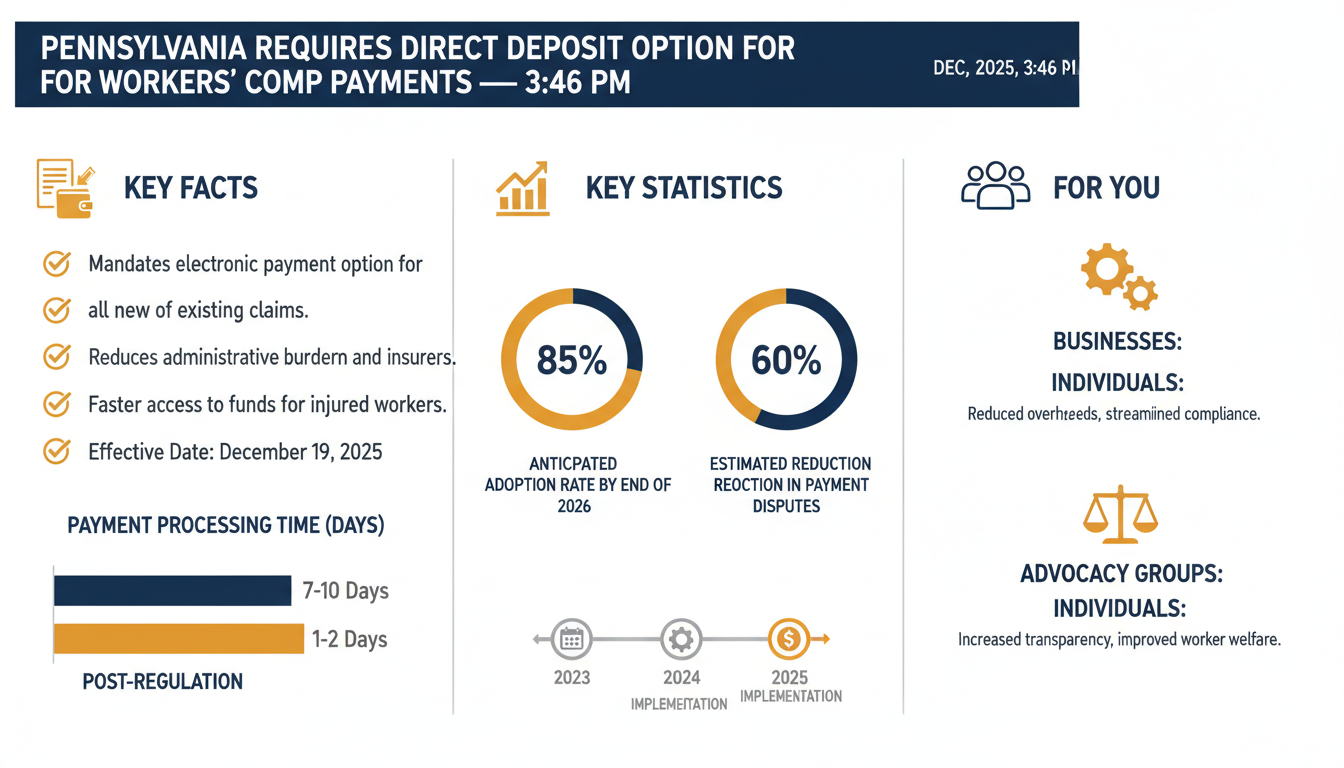
Pennsylvania enacted a law requiring employers and workers’ compensation insurers to offer injured workers the option to receive workers’ compensation benefit payments by direct deposit, and to notify claimants of that option when payments become available or when a Notice of Compensation Payable is issued[2].
Source and verification
The change stems from Senate Bill 1232 (2024 Act 126), signed by Governor Josh Shapiro and reported in legal and practitioner summaries explaining that the Act amends the Pennsylvania Workers’ Compensation Act to require offering direct deposit and related claimant notice and authorization procedures[2][9].
Key provisions explained
- Offer requirement: Employers and insurers must offer claimants the option of receiving compensation payments by direct deposit rather than only by check[2].
- Timing of notice: The law requires notice of the direct-deposit option as soon as the option becomes available or concurrently with issuance of a Notice of Compensation Payable[2].
- Claimant authorization: Claimants who opt in must complete an authorization form (a Commonwealth-issued form is expected) and return it by mail or electronically per the options provided by the payer[2].
- Implementation timeline: Practitioner summaries indicate employers/insurers must offer the option by December 28, 2025, and related administrative steps are being implemented in phases[2][9].
Why this matters — legal and practical implications
The requirement has multiple implications for injured workers, employers, insurers, payroll administrators, and healthcare providers:
- Faster, more secure payments for claimants: Direct deposit reduces mail delay and lost/stolen checks, improving injured workers’ access to timely benefits and reducing interruptions in income and medical-care access[2].
- Administrative compliance burden for employers/insurers: Employers and carriers must update notice procedures, provide an approved authorization form, and implement or expand electronic payment capabilities[2][9].
- Recordkeeping and audit risk: Offering and documenting the offer and the claimant’s authorization will create new recordkeeping obligations and potential audit or regulatory exposure if payers fail to comply[2].
- Potential disputes about consent and timing: Disagreements may arise over whether notice was given “as soon as available” or with the Notice of Compensation Payable; such disputes could lead to administrative claims or petitions in the state workers’ compensation system[2].
Who is affected
- All Pennsylvania employers and workers’ compensation insurers who pay statutory benefits to injured workers[2][9].
- Current and future claimants in Pennsylvania’s workers’ compensation system who receive indemnity or wage-loss payments[2].
- Payroll processors, third-party administrators, and HR departments responsible for benefit distribution and regulatory notices[9].
Actionable guidance for injured workers
- Watch for the offer: Expect a written notice about the direct-deposit option when your claim is accepted or when payments begin; keep that notice with your claim file[2].
- Consider enrollment: If you want quicker access to funds and fewer lost-check issues, complete and return the Commonwealth authorization form when offered[2].
- Verify authorization choices: Confirm whether the employer/insurer allows electronic return of the form and retain proof of submission (email receipt, screenshot, tracked mail). This will be evidence if a payment dispute arises later[2].
- Protect banking information: Provide only the necessary routing/account numbers on the official form; ask about safeguards the payer uses to protect your financial data[2].
- If you don’t receive the offer: File a written request with the employer/insurer asking for the direct-deposit option and keep a copy; if ignored, consider filing a Petition for Penalties or contacting an attorney to enforce the new statutory right[2].
Actionable guidance for employers, insurers, and payroll administrators
- Update policies and notices now: Revise workers’ compensation intake packets and Notice of Compensation Payable templates to include the direct-deposit offer and instructions for returning the Commonwealth authorization form[2][9].
- Implement or test electronic payment rails: Ensure payroll/claims systems can execute ACH payments securely and reconcile returns, stop payments, or account-closure issues. Train staff on how to process authorizations and maintain consent records[9].
- Adopt secure recordkeeping: Maintain copies of the offer and the claimant’s signed/emailed authorization in the claims file to document compliance if challenged[2].
- Plan for exceptions and transitions: Establish clear procedures for implementing direct deposit for foreign bank accounts, joint accounts, or claimants who decline direct deposit[2].
- Coordinate with vendors: If using third-party administrators or payment vendors, confirm contracts and SLAs cover the new statutory timing, notice, and data-security requirements[9].
Enforcement and dispute risk
While the statute creates a claimant right to be offered direct deposit and to complete an authorization, enforcement will likely occur through the Pennsylvania workers’ compensation adjudicatory system if employers/insurers fail to comply; claimants or their representatives can raise noncompliance in petitions before a Workers’ Compensation Judge or seek penalties where the Act provides them[2].
Relevant authorities and sources
- Senate Bill 1232 / 2024 Act 126 amending the Pennsylvania Workers’ Compensation Act (as reported in practitioner summaries and state law updates)[2][9].
- Practice and news summaries from Pennsylvania workers’ compensation attorneys and specialty sites explaining the compliance timeline and operational details[2][9].
- Pennsylvania Department of Labor & Industry publications and FAQs (employers and claimants should consult the department’s official guidance for the final Commonwealth authorization form and procedural instructions)[1].
Sample checklist — what to do next
- For claimants: keep the offer, complete the authorization promptly if you want direct deposit, and save proof of submission.
- For employers/insurers: update notices, implement ACH capabilities, train staff, and document offers and consents in each claim file.
- For attorneys and advocates: include the direct-deposit offer and receipt in claim audits and raise noncompliance in petitions to the WCJ if necessary.
Frequently asked questions
Does this force a claimant to accept direct deposit?
No. The law requires offering the option; claimants retain the right to decline and receive paper checks if they prefer, but the payer must document the offer and the claimant’s election or declination[2].
What if my employer or insurer says direct deposit is not available yet?
Payers should provide notice “as soon as” the option is available or with the Notice of Compensation Payable; if a payer delays without explanation, claimants can preserve evidence of the lack of notice and seek enforcement through the workers’ compensation system[2].
Will direct deposit affect subrogation, liens, or offset processes?
Direct deposit is a payment method and does not change legal entitlements, offsets, or lien procedures; payers must still handle statutory offsets, repayments, or third-party recovery rights consistent with the Act and any administrative regulations[2].
Practical pitfalls to avoid
- Failing to retain the claimant’s signed authorization or proof of offering the option.
- Mixing up timing obligations — notice must be concurrent with the Notice of Compensation Payable or when the option becomes available, not weeks later.[2]
- Inadequate data-security practices when handling bank account information, increasing liability risk.[9]
Next steps and where to get help
Claimants with questions or disputes should contact their employer’s HR or claims representative and, if unresolved, consult a Pennsylvania workers’ compensation attorney or file an administrative petition with the Workers’ Compensation Office in their county[2][1]. Employers and insurers should consult counsel or their compliance teams to implement forms, processes, and vendor arrangements that meet the December 28, 2025 implementation deadline[2][9].
Sources: practitioner summaries and statute updates reporting on Pennsylvania’s Senate Bill 1232 / 2024 Act 126 and implementation guidance from workers’ compensation authorities and legal commentators on the direct-deposit requirement for workers’ compensation payments[2][9][1].


