

The reporting that sparked this guide
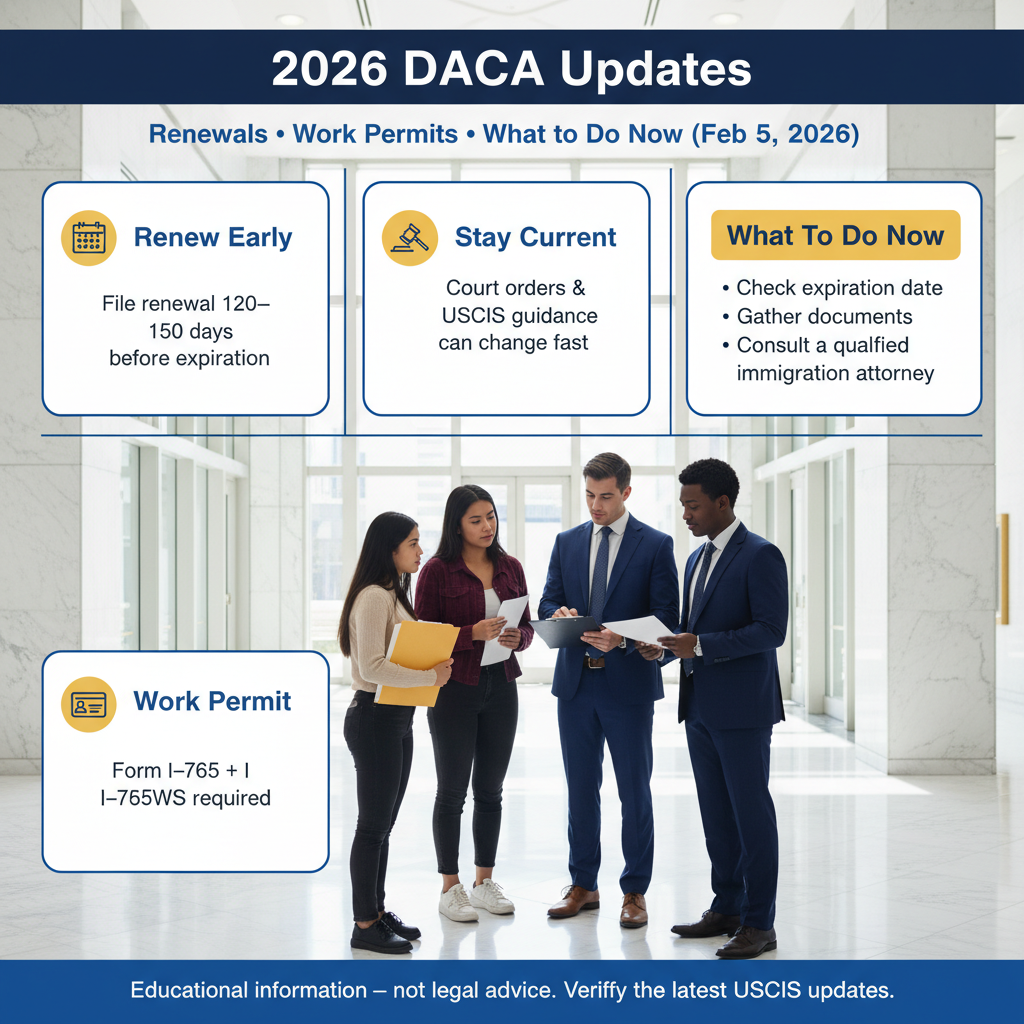
The reporting that sparked this guide is here: DACA Program Updates and Renewal Information (USCIS).
Important: This article is educational and not legal advice for your specific case. DACA policy and court orders can change quickly. For individualized guidance, speak with a qualified immigration attorney.
Need Help? Our Orlando immigration team is ready to assist. Call +1 786-791-3106 for a free consultation, or message us online. Se Habla Español.
What This News Means for Immigrants in Orlando and Across Florida
Why this news is showing up now
DACA (Deferred Action for Childhood Arrivals) continues to be one of the most closely watched immigration programs in the United States because it affects hundreds of thousands of people who grew up here, went to school here, and work in essential industries. DACA has also been at the center of ongoing federal litigation for years—meaning the “rules of the road” can shift based on court decisions, DHS/USCIS policy updates, and operational changes at USCIS.
As of today (2026-02-05), the most consistent takeaway from USCIS updates remains: renewals have continued for people who previously received DACA, while first-time DACA requests have not been broadly available due to court orders and related agency guidance. This is why you may be seeing renewed attention to “DACA updates” and “renewal information” in the news cycle—people are trying to protect their ability to work and remain in the U.S. while the legal landscape evolves.
Reminder: Many DACA recipients rely on DACA-based employment authorization (EAD) to work lawfully, renew driver’s licenses, and maintain stability for their families. Even small processing delays can create real-world consequences—especially if a work permit expires before a renewal is approved.
How it can affect Florida residents
For Florida residents—especially in Central Florida along the I-4 corridor (Orlando, Kissimmee, Sanford, and nearby Orange County communities)—DACA renewals often intersect with:
- Employer I-9 re-verification deadlines and payroll interruptions
- Driver’s license renewal timing and state ID validity periods
- Travel planning and the risks of leaving the U.S. without proper authorization
- Family-based immigration goals (marriage, children turning 21, or paths to Adjustment of Status when eligible)
If your case is in Orlando or you work for a large employer in Orange County, a DACA expiration can become urgent quickly. A proactive renewal strategy—and careful document preparation—can reduce the chance of gaps.
What DACA Program Updates and Renewal Information Is (and Why It Matters)
A plain-English definition
DACA is a DHS policy that can grant certain people who came to the U.S. as children:
- Deferred action (a decision to temporarily not pursue removal), and
- Employment authorization (an EAD/work permit), typically issued in two-year increments.
“DACA program updates and renewal information” generally refers to USCIS guidance about who may renew, how to file, what forms and fees apply, how long processing takes, and what to do if you receive a request for evidence (RFE) or a denial.
Warning: DACA is not permanent legal status, not a visa, and not a green card. It does not automatically lead to lawful permanent residence or citizenship. However, DACA can be a critical “bridge” that allows recipients to work lawfully and remain in the U.S. while exploring other immigration options.
Key terms you need to know
- DACA: Deferred Action for Childhood Arrivals.
- Deferred action: A discretionary decision not to remove someone for a period of time.
- EAD: Employment Authorization Document (work permit), often issued under category (c)(33) for DACA.
- USCIS: U.S. Citizenship and Immigration Services, the agency that processes DACA renewals.
- RFE: Request for Evidence—USCIS asks for additional documents before deciding.
- Notice of Action: USCIS receipt and decision notices (commonly I-797 notices).
- 90-day window: A common planning concept in DACA renewals—many applicants aim to file about 120–150 days before expiration, but “90 days” is often discussed as a minimum buffer. Timing should be individualized.
- 180 days: Another critical planning benchmark used in many immigration contexts; for DACA, many attorneys recommend filing well before expiration to avoid gaps. (USCIS guidance often emphasizes filing early enough to account for processing times.)
- Adjustment of Status: A process to apply for a green card from inside the U.S. (not automatically available to DACA recipients, but sometimes possible through family or employment pathways).
- Priority Date: A date that controls your place in line for certain green card categories (more common in family/employment preference cases than DACA itself, but relevant when DACA recipients explore long-term options).
We also include references to common family-based forms like Form I-130 and Form I-485 because many DACA recipients ask how DACA interacts with longer-term strategies.
Current Immigration Law: The Foundation
DACA exists as an exercise of executive branch discretion rather than a statute passed by Congress. That said, DACA processing and employment authorization tie into broader immigration laws and regulations that govern DHS authority, employment authorization, and removal proceedings.
Federal requirements
Key legal and regulatory foundations include:
- Immigration and Nationality Act (INA): The primary federal immigration statute (Title 8 of the U.S. Code). While DACA itself is not an INA “status,” DACA-related decisions occur within the INA enforcement framework.
- Employment authorization regulations: USCIS issues EADs under DHS regulatory authority (commonly under 8 C.F.R. provisions governing employment authorization categories, including deferred action-based categories).
- USCIS forms and instructions: DACA renewals typically involve Form I-821D (Consideration of Deferred Action for Childhood Arrivals), Form I-765 (Application for Employment Authorization), and Form I-765WS (Worksheet).
- Biometrics: USCIS may require biometrics (fingerprints/photo) depending on current policy and case specifics.
For the most current official guidance, always cross-check directly with the USCIS official website and the DACA page(s), plus form instructions at USCIS Forms.
Florida-specific considerations
Florida does not “run” DACA, but Florida residents experience DACA renewals through state and local systems—especially employment, licensing, and ID/driver’s license timing. Practical Florida considerations include:
- Driver’s license/state ID timing: Florida DMV/FLHSMV processes can be sensitive to the expiration date on your EAD. Plan renewals early so your EAD approval arrives before you need to renew your license.
- Employment verification: Employers along the I-4 corridor (hospitality, healthcare, construction, logistics) often run strict compliance timelines. If your EAD expires, your employer may be required to pause work until you present valid authorization.
- Local case support: For Central Florida residents, it helps to have a legal team familiar with the Orlando area’s USCIS workflow and typical mail/processing patterns.
If your case is in Orlando, it may also intersect with the Orlando USCIS Field Office for other immigration matters (like family-based green cards), even though DACA filings are typically handled through USCIS lockbox/intake and service center processing rather than field office interviews.
Need Help? Our Orlando immigration team is ready to assist. Call +1 786-791-3106 for a free consultation, or message us online. Se Habla Español.
How to Renew DACA: A Complete Step-by-Step Guide
Below is a practical renewal roadmap designed for people who have had DACA before and want to renew. Because court orders and USCIS procedures can change, confirm the latest eligibility and filing instructions on the USCIS official website.
Important: If you have any arrests, charges, or convictions since your last approval—or if you traveled outside the U.S. without authorization—talk to an immigration attorney before filing. A renewal can trigger review of your entire record.
1) Confirm you are eligible to renew (and spot red flags early)
Most renewal applicants are people who previously received DACA and are seeking another period of deferred action and a new EAD. Eligibility can be affected by criminal history, national security concerns, fraud/misrepresentation, and other discretionary factors.
Warning: Even if you were approved before, USCIS can deny a renewal if new issues appear or if prior information was incorrect.
Documents to gather for this step:
- Copy of your current/most recent EAD (front and back)
- Copy of your most recent DACA approval notice(s) (I-797)
- Any court dispositions for arrests/charges (certified copies if possible)
- Any new identity documents since last filing (passport, state ID)
- Proof of any name change (marriage certificate, court order) if applicable
2) Plan your filing timing to avoid an EAD gap
The goal is to file early enough so USCIS can process your renewal before your current DACA/EAD expires. Because processing times fluctuate, many applicants aim to file several months ahead. Two planning benchmarks people commonly discuss are 180 days before expiration and the 90-day window as a “bare minimum” buffer—though your best timing depends on real-time USCIS workload.
Check current estimates at USCIS Processing Times, and consider filing earlier if you have:
- Prior RFEs
- Any criminal history review needs
- Mailing/address changes
- Upcoming driver’s license renewal deadlines
Documents to gather for this step:
- Calendar screenshot or written timeline showing your EAD/DACA expiration date
- Employer notice about re-verification deadlines (if you have one)
- Florida driver’s license expiration date (photo or scan)
3) Prepare the correct USCIS forms (and match your prior filings)
DACA renewals generally require:
- Form I-821D (DACA request)
- Form I-765 (work permit application)
- Form I-765WS (worksheet explaining economic need)
Consistency matters. USCIS will compare your renewal to prior filings. If something changed (address history, schooling, employment history), explain it clearly and truthfully.
Documents to gather for this step:
- Copies of your last DACA renewal packet (if available)
- Updated address history and dates (write it out first)
- Updated employment/school history (names, addresses, dates)
- Two passport-style photos if required by current filing method/instructions
4) Pay the correct fees (or request a fee exemption only if allowed)
DACA-related filings typically include a combined fee covering the work permit and biometrics/services, but the exact amount and payment methods can change. Always verify the current fee on the USCIS Forms page for the relevant form(s).
Reminder: Submitting the wrong fee or incorrect payment method is a common reason for rejection at intake.
Documents to gather for this step:
- Proof of payment method (money order, check, or online payment confirmation, depending on how you file)
- Copy of the USCIS fee page printout for your records
- If exploring fee exemption/waiver options, documentation supporting eligibility (only if USCIS permits it for that filing)
5) File the renewal correctly (online or by mail) and track delivery
USCIS has expanded online filing options for certain forms over time. Whether you file online or by mail, follow the form-specific USCIS instructions precisely (correct edition date, signature requirements, and correct filing address).
If filing by mail, use a trackable service and keep a complete copy of everything you send.
Documents to gather for this step:
- Complete copy (PDF) of your full packet before submission
- Mailing receipt and tracking number (if filing by mail)
- USCIS online account screenshots/receipts (if filing online)
- Updated proof of address (lease, utility bill) if you recently moved
6) Respond quickly to biometrics notices, RFEs, or other USCIS requests
USCIS may issue:
- A biometrics appointment notice (if required)
- An RFE asking for clarification or additional documents
- A notice of intent to deny (NOID) in more serious situations
Warning: Missing a deadline or sending an incomplete RFE response can lead to denial. If you receive an RFE, consider getting legal help before responding—especially if it involves criminal history, identity issues, or prior entries.
Documents to gather for this step:
- Original USCIS notice (scan it and save it)
- All documents requested (organized and labeled)
- Cover letter explaining what you are submitting
- Proof of timely mailing/upload (delivery confirmation)
7) After approval: protect your status, job, and long-term options
When approved, you will receive an updated DACA approval notice and a new EAD card. Review the card for errors (name, dates, category). If something is wrong, address it immediately.
Also use this moment to plan ahead. DACA is temporary. Depending on your family situation, you may want to explore longer-term strategies such as family petitions (Form I-130) and, if eligible, Adjustment of Status using Form I-485. For some, a Priority Date may become relevant when a petition is filed in a preference category.
Documents to gather for this step:
- New EAD (front and back copy)
- Approval notice (I-797)
- Employer HR contact info for I-9 updates
- Florida driver’s license renewal checklist
- Family documents if exploring other options (birth certificates, marriage certificate)
Need Help? Our Orlando immigration team is ready to assist. Call +1 786-791-3106 for a free consultation, or message us online. Se Habla Español.
Practical Steps You Can Take Today
If your DACA expiration date is approaching, the most helpful thing you can do is treat your renewal like a project with a timeline, documents, and checkpoints.
Actionable checklist (do these now)
- 1) Find your expiration dates (both DACA approval period and EAD card) and put them on two calendars.
- 2) Create a “renewal folder” (digital + paper): last approval notices, last EAD, prior applications, and identity documents.
- 3) Pull certified court dispositions immediately if you had any interaction with law enforcement—don’t rely on memory.
- 4) Verify your mailing address and update USCIS where appropriate so you don’t miss notices.
- 5) Check real-time processing estimates at USCIS Processing Times and adjust your filing plan.
- 6) Talk to HR early if your EAD expiration could affect your work schedule (avoid last-minute surprises).
- 7) Schedule a legal review if anything changed since your last filing (arrest, travel, prior misstatements, or new immigration filings).
Document preparation guidance
Organize documents in the same order as your forms and label them clearly. If you’ve moved within Orange County or elsewhere along the I-4 corridor, ensure your address history is accurate down to the month and year.
Important: Keep a complete copy of what you submit. If you later pursue a family-based case (for example, a spouse files Form I-130 and you file Form I-485 for Adjustment of Status when eligible), prior filings matter and inconsistencies can create delays.
Timeline expectations (realistic planning)
USCIS timelines can vary widely. A practical approach is to plan for:
- Intake/receipt notice: often within weeks (varies by filing method and USCIS workload)
- Processing: can range from a few weeks to several months depending on service center capacity and case complexity
- RFE delays: can add weeks or months
For Central Florida residents, mail delays and address changes are frequent “hidden” problems. If you move, ensure your mail is reliably forwarded and consider using a stable mailing address.
How Imigrar Helps Immigrants in Orlando
At Imigrar, we focus on practical, family-centered immigration solutions—our tagline is “Keep Families Together”. We serve clients in Orlando, throughout Central Florida, and nationwide.
DACA renewals can look “simple” until they’re not. Our team helps by:
- Reviewing your eligibility and identifying red flags before you file
- Preparing and filing renewal packets with organized supporting evidence
- Helping you respond to RFEs and avoid preventable denials
- Exploring longer-term options beyond DACA (family petitions like Form I-130, green card strategies, and when Adjustment of Status via Form I-485 may be possible)
- Coordinating with related systems when needed (for example, if you are in removal proceedings, we consider how USCIS filings may intersect with EOIR)
If your case is in Orlando, we can also guide you on what to expect locally and how to keep your documentation consistent for any future applications that might involve the Orlando USCIS Field Office.
We offer a free consultation. Se Habla Español.
Frequently Asked Questions
Q: Am I eligible to renew DACA if my DACA already expired?
A: It depends on how long ago it expired and current USCIS guidance in effect at the time you file. Some late renewals may be treated differently than timely renewals, and delays can increase the risk of an EAD gap. Important: If your DACA has been expired for a long time, speak with an attorney before filing so you understand whether USCIS will accept it as a renewal or treat it as an initial request under current court restrictions.
Q: Does renewing DACA give me lawful status or a green card?
A: No. DACA is not lawful permanent resident status and does not directly lead to a green card. It is a form of deferred action plus work authorization. However, some DACA recipients may have separate pathways through family or employment. For example, a U.S. citizen spouse might file Form I-130, and if you qualify to apply from inside the U.S., you may later file Form I-485 for Adjustment of Status. Whether you can do that depends on your immigration history (including entries and any unlawful presence issues).
Q: How long does a DACA renewal take right now?
A: Processing times fluctuate. The most reliable public tool is USCIS Processing Times. Your timeline can be longer if USCIS issues an RFE, if biometrics are required, or if there are background check delays. For planning, many people try to file well before expiration—often using benchmarks like 180 days ahead, rather than waiting for a 90-day window.
Q: What documents do I need for a DACA renewal?
A: Most renewals include copies of your current/most recent EAD, prior approval notice(s), identity documents, and any documents relating to changes since your last filing (name change, new arrests/charges with certified dispositions, updated address/employment/school history). Reminder: If you had any arrest—even if the case was dropped—get the final court disposition and consult counsel before filing.
Q: How much does it cost to renew DACA?
A: USCIS fees can change, and the correct amount depends on the forms and current fee rule. Always confirm the current filing fee directly through USCIS Forms and the specific form pages for Form I-821D and Form I-765. Warning: Incorrect fees or payment methods can cause rejection and delay.
Q: What happens if my DACA renewal is denied?
A: A denial can mean you lose deferred action and your ability to renew your EAD, and it can increase exposure to enforcement risk depending on your circumstances. Next steps depend on why it was denied (criminal issues, alleged misrepresentation, missing evidence, or discretionary concerns). In some situations you may be able to re-file with corrected information; in others you may need to explore alternative relief. If you are in immigration court or may be placed in proceedings, EOIR resources may become relevant: Executive Office for Immigration Review. Speak with an attorney immediately after a denial.
Q: Will renewing DACA affect a future family-based case?
A: It can. USCIS reviews your history across filings, and inconsistencies can create credibility problems later. If you later pursue a family-based petition (Form I-130) and a green card application (Form I-485) through Adjustment of Status, details like entry history, addresses, and prior statements matter. Also, if a Priority Date becomes relevant (for preference categories), timing and strategy matter. A legal review can help ensure your DACA renewal aligns with long-term goals.
Common Mistakes (and How to Avoid Them)
Mistake #1: Filing too late and creating a work authorization gap
Waiting until the last minute is one of the most common problems we see. Even if you file within what people call a 90-day window, USCIS processing can exceed that. How to avoid it: Build a plan around earlier benchmarks like 180 days before expiration and monitor USCIS Processing Times.
Mistake #2: Ignoring arrests, citations, or sealed/expunged records
USCIS may still see records even if a case was sealed or expunged under state law. How to avoid it: Obtain certified dispositions and get legal advice before filing if anything appears on your record—even minor charges.
Mistake #3: Inconsistencies across forms and prior filings
Differences in address history, entry dates, or names can trigger RFEs or credibility concerns. How to avoid it: Compare your renewal to prior submissions, keep a copy of everything, and explain legitimate changes clearly. This becomes even more important if you later file Form I-130 or Form I-485 for Adjustment of Status or track a Priority Date.
Official Resources and Where to Verify Updates
Because DACA is impacted by litigation and policy changes, verify information with official sources:
- USCIS official website
- USCIS Forms
- USCIS Processing Times
- U.S. Department of State (useful for broader immigration and travel-related context)
- Executive Office for Immigration Review (if removal proceedings are involved)
Reminder: Be cautious about social media “shortcuts” or rumors. Use official sources and legal counsel for decisions that affect your ability to work and remain in the U.S.
Need Help? Our Orlando immigration team is ready to assist. Call +1 786-791-3106 for a free consultation, or message us online. Se Habla Español.

Closing: Protect Your DACA and Plan Your Next Step
DACA renewals are more than paperwork—they protect your job, your ability to support your family, and your stability in the U.S. If you live in Orlando, Orange County, or anywhere along the I-4 corridor, planning early can help you avoid gaps and unnecessary stress.
Important: If anything in your life changed since your last approval—arrests, travel, prior immigration filings, or family changes—get legal advice before submitting. A renewal is an opportunity to stay protected, but it can also trigger closer review.
Call Imigrar today at +1 786-791-3106 for a free consultation or message us online. Se Habla Español.


