


The reporting that sparked this guide
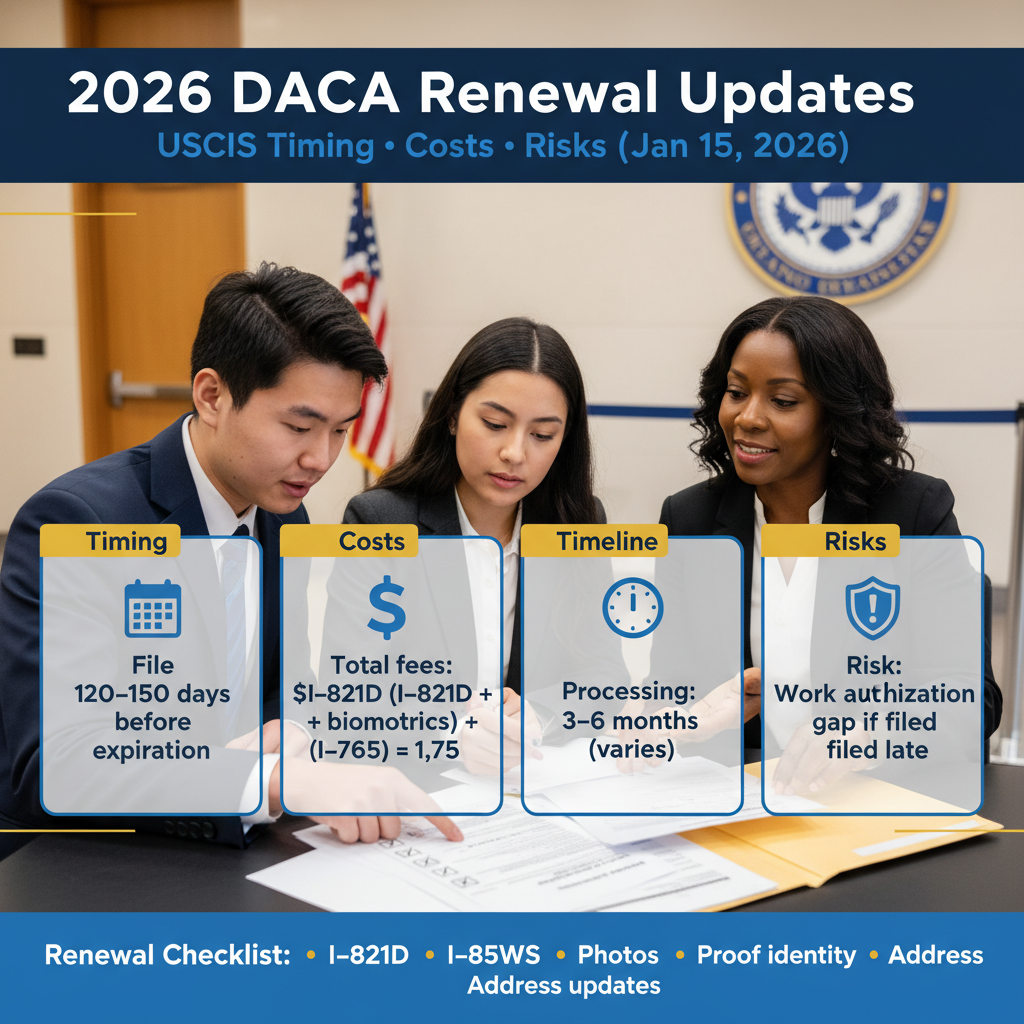
This article is based on the latest public-facing updates and common questions tied to USCIS information and DACA-related headlines. For the news feed that prompted this guide, see: DACA Program Updates and Renewal Information (USCIS).
Need Help? Our Orlando immigration team is ready to assist. Call +1 786-791-3106 for a free consultation, or message us online. Se Habla Español.
Important: DACA is a policy that has been heavily litigated. The rules can change quickly due to court orders and federal agency action. This guide is educational and not legal advice for your specific case.
What This News Means for Immigrants in Orlando and Across Florida
Why this news is showing up now
DACA continues to trend because it sits at the intersection of three things that change frequently:
- Federal litigation that can affect whether USCIS accepts new applications or only renewals.
- USCIS operational updates such as filing addresses, online filing tools, fee changes, and processing time fluctuations.
- Real-life urgency for recipients whose work permits (EADs) are expiring and who must renew on time to keep jobs, driver’s licenses, and stability.
USCIS has consistently emphasized that DACA recipients should plan ahead and file renewals early. That’s especially true when processing times increase or when requests for evidence (RFEs) delay adjudication.
How it can affect Florida residents
For Floridians—especially those living in Orlando, Orange County, and along the I-4 corridor (Kissimmee, Davenport, Lakeland, Tampa)—DACA renewals often affect day-to-day life in immediate ways:
- Employment: Your EAD (work permit) is what many employers use to verify continued work authorization on Form I-9.
- Driver’s license and ID: Florida DHSMV typically ties license validity to lawful presence/work authorization documents. An expired EAD can create renewal issues.
- Education and professional licensing: Some programs and licenses may require current work authorization or valid ID documents.
- Risk management: Criminal arrests, immigration encounters, or travel missteps can create denial risk and broader immigration consequences.
Reminder: If your case is in Orlando and you’re planning a renewal, timing matters. A late filing can lead to a lapse in work authorization—even if you ultimately get approved.
What DACA Program Updates and Renewal Information Is (and Why It Matters)
A plain-English definition
DACA stands for Deferred Action for Childhood Arrivals. It is a discretionary policy that can:
- Delay (defer) removal action for a period of time, and
- Allow eligible individuals to apply for employment authorization (a work permit/EAD).
DACA is not permanent legal status. It is not a green card. It is not citizenship. But it can provide critical stability and work authorization for eligible recipients.
Key terms you need to know
- Deferred action: A decision by DHS to not pursue removal for a set period. It does not “legalize” status.
- EAD (Employment Authorization Document): The work permit card issued by USCIS.
- Renewal: A request to extend DACA and work authorization, typically in two-year increments when available.
- Advance Parole: Permission to travel and return to the U.S. for certain purposes. DACA-related Advance Parole has been subject to shifting rules and is highly case-specific.
- Removal proceedings: Immigration court cases handled by the Executive Office for Immigration Review (EOIR).
- Adjustment of Status and Priority Date:
- Adjustment of Status is the process of applying for a green card from inside the U.S. (often using Form I-485).
- Priority Date is your place in line for certain family- or employment-based immigrant visas.
Warning: Because DACA is discretionary, USCIS can deny an application even if you were approved before—especially if new facts arise (arrests, misrepresentation, departures, or other eligibility issues).
Need Help? Our Orlando immigration team is ready to assist. Call +1 786-791-3106 for a free consultation, or message us online. Se Habla Español.
Current Immigration Law: The Foundation
DACA exists through executive branch policy and DHS/USCIS guidance rather than a standalone statute passed by Congress. However, DACA adjudications and work authorization touch several legal authorities and regulatory frameworks.
Federal requirements
Key legal foundations include:
- Immigration and Nationality Act (INA) (8 U.S.C. § 1101 et seq.), which provides broad DHS authority over immigration enforcement and benefits.
- Employment authorization regulations under 8 C.F.R. § 274a, which govern EAD categories and USCIS issuance of work permits.
- DHS/USCIS policy guidance implementing DACA eligibility screening, background checks, and discretionary review.
- Ongoing federal litigation that has affected whether USCIS can accept initial DACA requests versus renewals.
In practice, most DACA renewals involve these core USCIS forms:
- Form I-821D (Consideration of Deferred Action for Childhood Arrivals)
- Form I-765 (Application for Employment Authorization)
- Form I-765WS (Worksheet explaining economic need for employment)
Always confirm the latest instructions and filing locations directly on the USCIS official website and the USCIS Forms page, because USCIS can update editions, addresses, and filing rules.
Reminder: Many DACA recipients also explore longer-term options (family petitions, employer sponsorship, humanitarian relief). Some of those paths involve Form I-130 (family petition) and Form I-485 (green card application via Adjustment of Status)—but those are separate from DACA and require careful eligibility analysis.
Florida-specific considerations
Florida does not control DACA eligibility (it’s federal), but Florida realities can affect your planning:
- Driver’s license timing: Many clients in Orange County report difficulty renewing a license if their EAD is close to expiring. Plan renewals early to avoid a gap.
- Employment verification: Large employers along the I-4 corridor may run automated reverification reminders when an EAD is within 90–120 days of expiration.
- Local enforcement encounters: Any arrest—especially for DUI, domestic violence allegations, drugs, or firearms—can trigger DACA denial risk. Consult counsel before filing if you have any criminal history.
Important: If you are in removal proceedings, your strategy should be coordinated with immigration court practice through EOIR: Executive Office for Immigration Review.
How to Renew DACA: A Complete Step-by-Step Guide
This section focuses on renewals (not first-time DACA). Because court rulings have limited initial DACA in recent years, many people currently eligible to file are renewals only. Always verify the latest USCIS posture before filing.
1) Confirm you are filing a renewal (and check your expiration date)
Start by locating:
- Your DACA approval notice (I-797) and DACA validity dates
- Your EAD card expiration date
Reminder: USCIS commonly recommends filing DACA renewals well before expiration. Many attorneys plan around 180 days (about 6 months) before the EAD expires to reduce lapse risk.
Documents to gather for Step 1:
- Copy (front/back) of your current EAD
- Copies of prior DACA approval notices (if available)
- Government-issued photo ID (passport, consular ID, state ID/driver’s license)
- Any documents showing name changes (marriage certificate, court order), if applicable
2) Screen for red flags before you file (criminal, travel, fraud issues)
Before submitting anything, do a careful self-audit. USCIS will run biometrics/background checks and can deny if you are no longer eligible or if discretion weighs against approval.
Common red flags include:
- Any arrest, charge, or conviction (even if “dropped” or “sealed”)
- Any departure from the U.S. after receiving DACA without proper authorization
- Prior immigration fraud or misrepresentation concerns
- Gang allegations or certain police contacts
Warning: If you have been arrested in Florida (Orange, Osceola, Seminole, Lake, Polk), do not assume it “doesn’t count.” Get certified dispositions and speak with an immigration attorney before filing.
Documents to gather for Step 2:
- Certified court dispositions for every charge/case number
- Arrest report (if available) and final outcome documentation
- Proof of compliance with probation or court requirements
- Immigration records if you’ve ever been in proceedings (NTA, hearing notices)
3) Prepare the correct USCIS forms and supporting evidence
A standard DACA renewal package typically includes:
- Form I-821D
- Form I-765
- Form I-765WS
- Filing fee(s) as required by USCIS (confirm current fees before filing)
- Supporting documents (identity, prior approvals, and any updates)
Reminder: Use the newest form editions and instructions from: USCIS Forms.
Documents to gather for Step 3:
- Two passport-style photos (only if required for your filing method)
- Updated address history and travel history (if any)
- Any new legal name documentation (if changed since last filing)
- Explanation of economic need on Form I-765WS (budget, expenses, income)
4) File with USCIS correctly (online vs. mail, fees, and proof of delivery)
USCIS has expanded online tools for many benefit types. Whether DACA renewal can be filed online depends on USCIS’s current system availability and your eligibility profile. Always follow the official USCIS instructions for DACA filing.
- Confirm the correct filing method and address on USCIS official website.
- Pay the correct fee using the allowed payment types.
- Keep a complete copy (PDF or paper) of everything you submit.
- Use tracked delivery if filing by mail.
Important: Filing in the wrong place or with an outdated fee can cause rejection, which can be devastating if you are close to expiration.
Documents to gather for Step 4:
- Payment confirmation (money order/cashier’s check/credit card form if permitted)
- Delivery tracking and receipt proof
- Complete copy of the final signed forms
5) Track your case, attend biometrics if scheduled, and respond fast to any RFE
After filing, USCIS will issue receipt notices and may schedule biometrics. Some applicants may receive reuse of biometrics notices instead of an appointment.
Track your case and processing trends here:
- USCIS Processing Times
- Your USCIS online account (if you have one)
Warning: If USCIS issues an RFE and you miss the deadline, your case can be denied. Treat every USCIS letter as urgent.
Documents to gather for Step 5:
- USCIS receipt notices (I-797C)
- Biometrics appointment notice (if scheduled)
- Government-issued photo ID for biometrics
- RFE response packet (if requested), with organized exhibits
6) Plan for work authorization continuity and employer re-verification
Even if you file early, you should plan for a potential gap if processing is delayed. Unlike some other EAD categories, DACA-based EADs generally do not receive automatic extensions the way certain renewal categories do.
Consider:
- Talking to HR early (without oversharing) about your renewal timeline
- Saving money for a short gap if needed
- Renewing your driver’s license as soon as you have updated proof
Documents to gather for Step 6:
- Employment records (offer letter, pay stubs) if you need to show economic need or stability
- Driver’s license/ID renewal requirements list from FLHSMV (varies by office)
- Copies of your pending receipts and approvals to show institutions if needed
7) Re-check longer-term options (family, employment, humanitarian) to reduce reliance on DACA
DACA can be life-changing, but it is not permanent. Many recipients should explore whether they qualify for a more durable status strategy—especially through family-based processes.
Examples of immigration tools that may apply (case-specific):
- Family sponsorship via Form I-130
- Green card application via Form I-485 through Adjustment of Status (if eligible)
- Consular processing through the U.S. Department of State
- Defense strategies if you are in court with EOIR
Important: Whether you can do Adjustment of Status depends on how you entered the U.S., your family relationship, and whether any bars apply. Your Priority Date matters in preference categories.
Need Help? Our Orlando immigration team is ready to assist. Call +1 786-791-3106 for a free consultation, or message us online. Se Habla Español.
Practical Steps You Can Take Today
If your DACA and EAD are expiring soon, the best time to prepare is now. Here is an actionable checklist that helps prevent last-minute filing problems.
- 1) Calculate your ideal filing date: Aim around 180 days before your EAD expires, unless legal issues require attorney review first.
- 2) Order certified dispositions: If you have any criminal history, request certified records from the clerk of court immediately (Orange County and neighboring counties can take time).
- 3) Update your address with USCIS: Use your USCIS account or official change-of-address process so you don’t miss notices.
- 4) Build a “USCIS folder”: Keep copies of every filing, receipt, approval, and EAD front/back in one place (paper + cloud backup).
- 5) Budget for fees and photos: Confirm the current USCIS fee and plan for passport photos if needed.
- 6) Check processing times weekly: Use USCIS Processing Times to set expectations.
- 7) Avoid travel assumptions: Do not depart the U.S. without speaking to counsel. DACA travel is legally sensitive.
Timeline expectations: DACA renewal timelines vary widely. Some cases move quickly; others slow down due to biometrics scheduling, background checks, or RFEs. Plan for months, not weeks, and file early to reduce the chance of a lapse.
Reminder: For Central Florida residents, the Orlando metro area is busy year-round. If you need help gathering documents (court records, identity documents, prior approvals), start early so you’re not racing the clock.
How Imigrar Helps Immigrants in Orlando
At Imigrar, we help DACA recipients and their families protect work authorization, reduce renewal risks, and explore longer-term strategies beyond DACA—always with our mission to Keep Families Together.
How we support you:
- Renewal readiness review: We screen for travel, criminal, and discretion issues before you file.
- Document strategy: We help you assemble organized evidence and certified dispositions when needed.
- Filing accuracy: We reduce rejection risk by confirming form editions, signatures, and submission method.
- Case monitoring: We help you track notices, biometrics, and respond to RFEs on time.
- Long-term planning: If you may qualify for a family-based case (e.g., Form I-130 and Form I-485 through Adjustment of Status), we map the safest path and explain how your Priority Date could affect timing.
Se Habla Español. We serve clients in Orlando and nationwide.
Need Help? Our Orlando immigration team is ready to assist. Call +1 786-791-3106 for a free consultation, or message us online. Se Habla Español.
Location note: If your case is in Orlando, we can help you prepare in a way that anticipates practical issues clients commonly face with the Orlando-area ecosystem (employers, schools, and time-sensitive ID renewals). While DACA filings are generally handled through USCIS service centers, local planning still matters—especially when deadlines are tight.
The Orlando USCIS Field Office typically handles many in-person interviews for other benefit types; DACA renewals are usually adjudicated without interviews, but any USCIS request must be taken seriously and answered promptly.
Frequently Asked Questions
Q: Am I still eligible to renew DACA if I had a recent arrest in Florida?
A: It depends on the charge, the outcome, and your full record. Even an arrest that did not lead to a conviction can raise concerns and may require certified court dispositions and a legal analysis. Warning: Do not file “hoping it works out.” If you have any arrest in Orange County or along the I-4 corridor, speak with an immigration attorney first so you don’t trigger a denial or referral risk.
Q: Does a DACA renewal give me lawful status or a path to citizenship?
A: No. DACA is deferred action and work authorization, not lawful permanent status. It does not directly create a path to citizenship. However, some DACA recipients may qualify for other options (for example, family sponsorship through Form I-130 and potentially Form I-485 via Adjustment of Status, depending on entry and other factors). A consultation can identify whether you have a realistic long-term plan.
Q: When should I file my DACA renewal?
A: Many practitioners recommend filing around 180 days before your current DACA/EAD expires. Filing too late increases the chance of a work authorization gap. Filing too early can also create timing issues in some situations, so follow USCIS guidance and talk to counsel if your case has complications. If your employer uses a 90-day window for reverification reminders, start preparing before that window begins.
Q: What documents do I need for a DACA renewal?
A: Most renewals include copies of your current EAD (front/back), prior approval notices if available, a photo ID, and the completed USCIS forms (Form I-821D, Form I-765, and Form I-765WS) with the correct fee. If anything changed since your last filing (name, address, criminal history, immigration court involvement), you may need additional evidence like certified court dispositions or updated identity documents.
Q: How much does it cost to renew DACA?
A: USCIS fees can change. The DACA renewal cost typically includes the employment authorization application fee and may include biometrics depending on USCIS policy at the time. Always confirm the current fee directly on the USCIS official website before filing. Important: Paying the wrong amount or using an improper payment method can cause a rejection and lost time.
Q: How long does a DACA renewal take in 2026?
A: Processing times vary by workload and individual background checks. Use USCIS Processing Times as a general guide, but treat it as an estimate. If your EAD expires soon, file early and monitor your mail and USCIS account carefully for biometrics notices or RFEs.
Q: What happens if USCIS denies my DACA renewal?
A: A denial can lead to loss of deferred action and work authorization, and it may increase enforcement risk depending on your circumstances. Next steps depend on why USCIS denied the case (missing evidence, criminal issues, discretionary findings, or eligibility concerns). If you are denied, speak with an attorney immediately to review the denial notice, assess whether a motion or new filing is possible, and evaluate any other relief options—especially if you are in or at risk of removal proceedings with EOIR.
Q: Can I travel outside the U.S. with DACA?
A: Travel is highly sensitive. Historically, some DACA recipients could apply for Advance Parole in limited circumstances, but policies and litigation have changed over time. Do not travel without written authorization and legal guidance. For travel-related immigration information generally, consult the U.S. Department of State and your attorney.
Common Mistakes (and How to Avoid Them)
Mistake #1: Filing too late and assuming USCIS will “process it fast”
USCIS timelines can change with little warning. If you wait until the last minute, you may lose work authorization. Avoid this by building a renewal calendar and aiming near 180 days before expiration.
Mistake #2: Hiding or minimizing arrests, tickets, or court cases
USCIS will see many law enforcement records through background checks. If you omit or misstate information, you can face denial for credibility and discretionary reasons. Avoid this by requesting certified dispositions and disclosing accurately.
Mistake #3: Using outdated forms, wrong fees, or incorrect filing method
Rejections happen when applicants use old editions, forget signatures, or pay incorrectly. Avoid this by downloading forms directly from USCIS Forms and confirming instructions on the USCIS official website right before submission.
Reminder: DACA renewals are not the same as family-based filings like Form I-130 or green card filings like Form I-485. Mixing instructions between case types is a common and costly error.
Additional Official Resources (Recommended)
Use official government sources to verify current rules and avoid scams:
- USCIS official website
- USCIS Forms
- USCIS Processing Times
- U.S. Department of State
- Executive Office for Immigration Review
Warning: Be cautious with social media “notarios” and unlicensed preparers. If you have questions, consult a qualified immigration attorney.
Final Thoughts and Next Steps
DACA renewals remain one of the most time-sensitive filings in immigration law because a delay can directly affect your ability to work, drive, and support your family. The best protection is a proactive plan: file early, disclose accurately, and get legal help if anything in your history has changed.
Important: If your case is in Orlando or you live in Central Florida, don’t wait until your employer’s 90-day window notice arrives. Start preparing now so you can respond calmly to any USCIS request and reduce the risk of a gap.
Need Help? Our Orlando immigration team is ready to assist. Call +1 786-791-3106 for a free consultation, or message us online. Se Habla Español.

Call Imigrar Today (Keep Families Together)
If you need help with a DACA renewal, a potential RFE, or a longer-term plan beyond DACA, contact Imigrar. We serve Orlando, Orange County, and clients nationwide.
Call: +1 786-791-3106 | Se Habla Español | Message us online


