


The journey to U.S. citizenship is a profound commitment, representing the culmination of years of hard work, dedication, and a desire to fully integrate into American society. For many, the final hurdle is the Naturalization Test, designed to assess an applicant's knowledge of U.S. history and government, as well as their English language proficiency. As we stand in early 2026, significant changes are on the horizon for this crucial test, with new requirements expected to take effect later this year. Understanding these changes is paramount for anyone considering applying for naturalization, especially for our vibrant immigrant communities here in Orlando and throughout Florida.
Navigating the Path to Citizenship? The rules are changing, and expert guidance is more critical than ever. Our Orlando immigration team at Imigrar is ready to assist you. Call +1 786-791-3106 for a free consultation, or message us online to discuss your specific situation. Se Habla Español.
The Reporting That Sparked This Guide
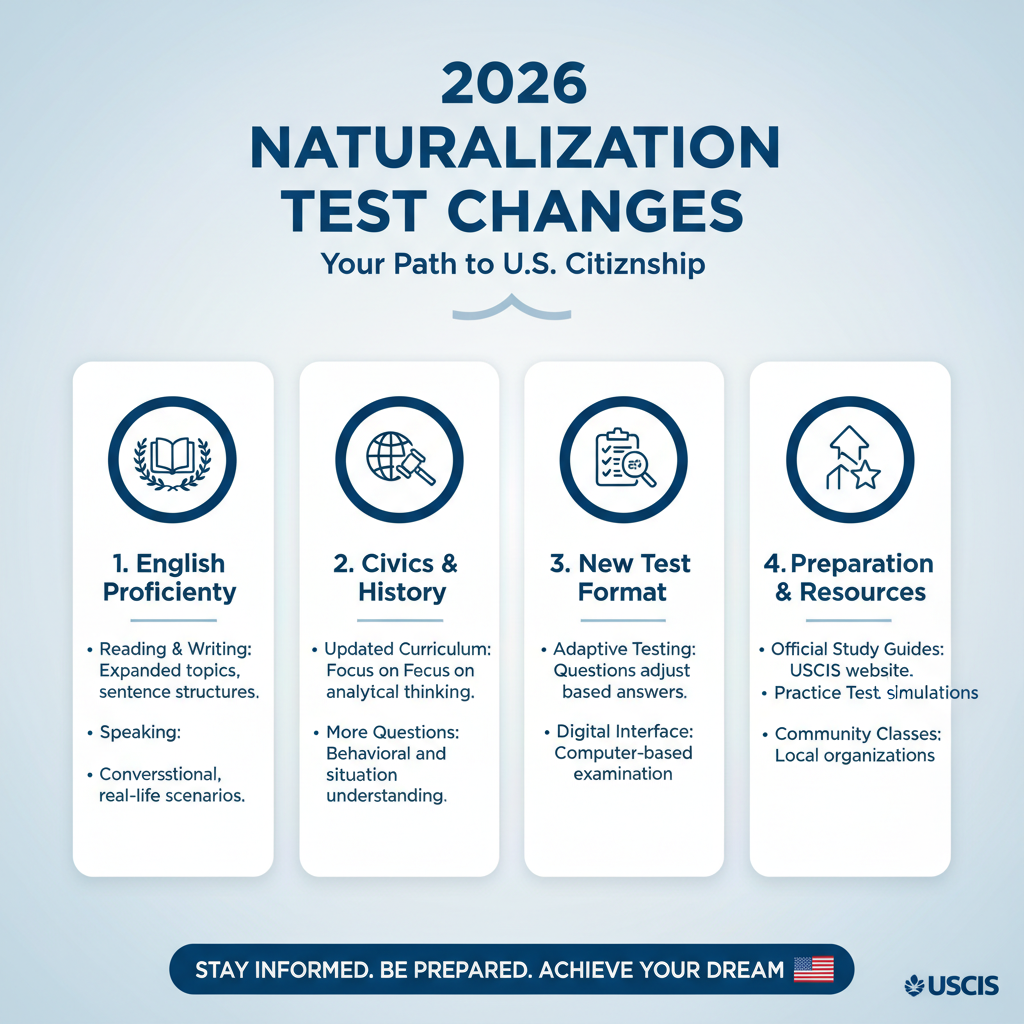
The anticipation surrounding the Naturalization Test Changes Coming in 2026 (Citizenship) has been building for some time. News outlets and immigration advocacy groups have been closely monitoring developments from U.S. Citizenship and Immigration Services (USCIS) regarding potential updates to the civics and English components of the test. These discussions began years ago with pilot programs and public feedback periods, culminating in the current expectation that a revised test format will be implemented this year. For anyone planning to become a U.S. citizen, staying informed about these evolving requirements is not just advisable, it's essential.
What This News Means for Immigrants in Orlando and Across Florida
The news of impending changes to the Naturalization Test carries significant weight for hundreds of thousands of immigrants across the United States, including the diverse populations of Orlando and the wider Florida community. As a hub for international residents and a state with a large immigrant population, Florida is particularly sensitive to modifications in federal immigration policies and procedures.
Why this news is showing up now
The discussion around Naturalization Test changes isn't new; it's the culmination of a process initiated by USCIS several years ago. The agency conducted a pilot program for a revised civics test in 2022, involving approximately 1,500 volunteer naturalization applicants and USCIS officers. The goal was to evaluate potential changes to the English and civics components, particularly focusing on making the civics test more conversational and demonstrating a deeper understanding of U.S. history and government, rather than simply memorizing facts. The feedback from this pilot program, combined with a desire to modernize the naturalization process and ensure it effectively assesses civic knowledge and English proficiency, has led to the current expectation of a new test format being rolled out in 2026. This timing allows USCIS to finalize the new test content, develop updated study materials, and train officers before implementation.
How it can affect Florida residents
For immigrants residing in Florida, particularly those in the Orlando metropolitan area and surrounding counties like Orange, Seminole, Osceola, and Volusia, these changes will directly impact their path to citizenship. Florida has one of the largest immigrant populations in the nation, and the **Orlando USCIS Field Office** processes a significant volume of naturalization applications. Here’s how these changes could affect you:
- Increased Preparation Time: The new test format, especially if it emphasizes conversational skills and conceptual understanding over rote memorization, may require a different approach to studying. Applicants might need to dedicate more time to practice explaining civic concepts in English.
- New Study Materials: USCIS will undoubtedly release new official study guides and resources. Florida residents will need to ensure they are using the most current materials to prepare effectively.
- Potential for Delay or Accelerated Applications: Some applicants might choose to accelerate their naturalization application to file and be interviewed under the current test format, if eligible. Others might delay their application to thoroughly prepare for the new test, potentially impacting overall processing times for the **Form N-400**.
- Impact on English Proficiency: If the English portion becomes more integrated and conversational, individuals who struggle with spontaneous English conversation might find the new test more challenging, even if their reading and writing skills are strong.
- Local Resources: Organizations and community centers along the I-4 corridor that offer naturalization preparation classes will need to update their curricula, and applicants should verify that their chosen program is aligned with the new test format.
Important: Staying informed and adapting your preparation strategy is crucial. Imigrar is committed to keeping our Orlando clients updated on these developments and providing tailored guidance.
What the 2026 Naturalization Test Changes Are (and Why They Matter)
The Naturalization Test is a fundamental requirement for most individuals seeking to become U.S. citizens. It consists of two main components: an English test and a civics test. The upcoming changes are expected to modify both these elements, aiming for a more comprehensive assessment of an applicant's integration into American civic life.
A plain-English definition
In simple terms, the "Naturalization Test Changes Coming in 2026" means that the way USCIS tests your knowledge of U.S. history and government, and your ability to speak, read, and write English, is going to be updated. Historically, the civics test involved answering 6 out of 10 questions correctly from a list of 100 predetermined questions. The English test involved reading a sentence, writing a sentence, and answering personal questions about your **Form N-400** application. The proposed changes suggest a shift towards a more interactive and conversational format, particularly for the civics portion. Instead of simply reciting answers, applicants might be asked to describe, explain, or interpret historical events or governmental functions, potentially using visual aids like photographs. This aims to gauge a deeper understanding and practical application of civic knowledge, rather than just memorization.
Key terms you need to know
To fully understand the naturalization process and these upcoming changes, it's important to be familiar with several key terms:
- Naturalization: The process by which a foreign citizen or national becomes a citizen of the United States.
- U.S. Citizenship: The legal status of being a citizen of the United States, granting rights such as the right to vote, hold federal office, and obtain a U.S. passport.
- Civics Test: A component of the Naturalization Test that assesses an applicant's knowledge of U.S. history, government, and civics.
- English Test: A component of the Naturalization Test that assesses an applicant's ability to read, write, and speak basic English.
- Form N-400: The official **Application for Naturalization** form filed with USCIS. This form initiates the naturalization process.
- USCIS: U.S. Citizenship and Immigration Services, the federal agency that oversees lawful immigration to the United States.
- Permanent Resident (Green Card Holder): An individual who has been granted authorization to live permanently in the United States. Naturalization is generally the next step after obtaining permanent residency for a certain period.
These changes matter because they require applicants to adapt their study methods and potentially their English language practice. For instance, if the test moves towards a conversational format, applicants will need to practice expressing themselves clearly and coherently in English, beyond just answering direct questions. This represents a more holistic assessment of an applicant's readiness for citizenship.
Current Immigration Law: The Foundation of U.S. Citizenship
The process of naturalization is governed by federal law, primarily the **Immigration and Nationality Act (INA)**. While the Naturalization Test itself is undergoing modifications, the core legal eligibility requirements for becoming a U.S. citizen remain steadfast. Understanding these foundational laws is crucial, regardless of the test format.
Federal requirements
The primary legal framework for naturalization is found in the **Immigration and Nationality Act (INA)**, specifically **INA § 312** concerning English language and civics knowledge, and **INA § 316** outlining general eligibility requirements. To be eligible for naturalization, an applicant must generally meet the following criteria:
- Age: Be at least 18 years old at the time of filing **Form N-400**.
- Continuous Residence and Physical Presence:
- Have been a **Permanent Resident** (Green Card holder) for at least 5 years (or 3 years if married to a U.S. citizen and certain other conditions are met).
- Have resided continuously in the U.S. for at least 5 years (or 3 years) immediately preceding the filing of **Form N-400**.
- Have been physically present in the U.S. for at least half of that period (30 months or 18 months, respectively).
- Have resided for at least 3 months in the state or USCIS district where the application is filed. For residents of Central Florida, this means residing in the jurisdiction of the **Orlando USCIS Field Office**.
- Good Moral Character: Demonstrate **good moral character** for the statutory period (typically 5 or 3 years). This involves a review of your criminal record, tax compliance, and other aspects of your conduct.
- Attachment to the Principles of the U.S. Constitution: Show a commitment to the U.S. Constitution and the well-being of the United States.
- English Language Proficiency: Be able to read, write, and speak basic English. This is assessed during the interview.
- Knowledge of U.S. History and Government (Civics): Demonstrate an understanding of U.S. history and government. This is assessed during the civics test.
- Oath of Allegiance: Be willing to take an **Oath of Allegiance** to the United States.
Certain exemptions exist for the English and civics requirements based on age and length of permanent residency (e.g., the "50/20" and "55/15" rules) or for medical disabilities (**Form N-648, Medical Certification for Disability Exceptions**). These exemptions are not expected to change with the new test format.
All naturalization applications are submitted to USCIS using **Form N-400, Application for Naturalization**. You can find this form and detailed instructions on the USCIS Forms page on the USCIS official website.
Florida-specific considerations
While naturalization is a federal process, local factors can influence your experience. For Florida residents, particularly those in the Orlando area, applications are typically processed through the **Orlando USCIS Field Office**. This office is responsible for interviews and oath ceremonies for applicants residing in its jurisdiction. While Florida does not have its own specific naturalization laws, the sheer volume of applicants in the state can sometimes influence processing times. The **I-4 corridor** is a densely populated region, meaning the Orlando office serves a large number of immigrants. Ensuring your application is meticulously prepared and filed correctly is especially important to avoid delays in a high-volume office.
Reminder: Local non-profit organizations and legal aid services in Central Florida often provide assistance with naturalization applications and test preparation. Imigrar works closely with individuals throughout the region to ensure their applications are complete and they are fully prepared for every step of the process.
Worried About the New Naturalization Test? Don't face it alone. Imigrar's experienced immigration attorneys in Orlando can help you understand the changes and prepare effectively. Call us for a free consultation at +1 786-791-3106 or reach out online. Se Habla Español.
How to Prepare for the Evolving Naturalization Test: A Complete Step-by-Step Guide
Preparing for the Naturalization Test requires diligence and a clear strategy. With the upcoming changes, your preparation should be even more comprehensive. This guide focuses on how to ready yourself for the test itself, complementing the overall **Form N-400** application process.
1) Understand the Current Test and Anticipate Changes
Start by thoroughly understanding the test as it exists today. The current civics test asks up to 10 questions from a predefined list of 100, and you must answer 6 correctly. The English test involves reading one sentence aloud and writing one sentence dictated by the officer. While the new test format is not fully finalized, the pilot program indicated a shift towards a more conversational civics section, possibly integrating English and civics, and potentially using visual aids. The English test might also evolve to assess more nuanced conversational abilities.
- Required Documents/Materials:
- USCIS official study materials for the 100 civics questions
- USCIS "Learn About Citizenship" resources
- Sample English reading and writing tests from USCIS
2) Master English Proficiency Beyond Basic Conversation
The current test requires basic English proficiency in reading, writing, and speaking. The anticipated changes suggest a need for more robust conversational skills. This means not just understanding questions but being able to articulate answers, explain concepts, and engage in a dialogue with the interviewing officer. For residents in Orlando, enrolling in local ESL (English as a Second Language) classes or joining conversation groups can be incredibly beneficial. Focus on vocabulary related to government and history.
- Required Documents/Materials:
- English dictionaries and grammar guides
- English language learning apps and websites
- Practice reading and writing simple sentences
- Engage in daily English conversation practice
3) Dive Deep into U.S. Civics and History
Do not just memorize the 100 civics questions. Understand the *concepts* behind them. For example, instead of just knowing "Who is the current Speaker of the House?", understand the role of the Speaker, how they are chosen, and their importance in the legislative process. The new test is expected to gauge this deeper understanding. Read U.S. history books, watch documentaries, and discuss current events. Focus on the principles of American democracy, the Constitution, and key historical periods.
- Required Documents/Materials:
- USCIS official civics study guide
- Flashcards (physical or digital)
- U.S. history textbooks or reputable online resources
- News articles and reputable current events coverage
4) Practice the New Interview Style
Based on pilot programs, the new civics test might involve scenario-based questions or asking you to describe a picture related to U.S. history or government. This requires you to articulate your knowledge rather than just recall facts. Practice mock interviews with a friend, family member, or an immigration attorney. Have them ask you open-ended questions about U.S. civics and history, and prompt you to explain your answers. This is especially important for those applying from cities like Orlando, where the interview will take place at the local USCIS Field Office.
- Required Documents/Materials:
- Sample interview questions (available from USCIS or immigration resources)
- Practice explaining civics concepts in your own words
- Consider mock interviews with an attorney or experienced tutor
5) Gather and Organize All Documents for Form N-400
While preparing for the test, simultaneously work on your **Form N-400** application. The interview for naturalization covers not only the test but also your entire application. Ensure all supporting documents are collected, organized, and accurate. Inaccuracies or omissions can lead to delays or even denial, regardless of how well you perform on the test.
- Required Documents:
- Copy of your **Permanent Resident Card (Green Card)** (front and back)
- Your **Social Security Card**
- Copies of your marriage certificate, divorce decrees, or death certificates (if applicable)
- Birth certificates for your children (if applicable)
- Certified court dispositions for any arrests or detentions (even if charges were dismissed)
- Proof of Selective Service Registration (for males aged 18-26)
- Tax returns for the past 5 (or 3) years
- Travel history outside the U.S. for the past 5 (or 3) years (dates of departure and return)
- Two recent passport-style photos (if required by instructions)
- A completed **Form N-400** with all required sections filled out accurately.
6) Seek Professional Legal Guidance Early
Given the complexity of immigration law and the impending changes to the Naturalization Test, consulting with an experienced immigration attorney is invaluable. An attorney can review your eligibility, help you prepare **Form N-400**, identify potential issues (like **good moral character** concerns), and provide tailored advice for the test, especially for the new format. They can also represent you during the naturalization process, offering peace of mind.
- Required Documents:
- All documents related to your immigration history and personal background
- Any questions or concerns you have about your eligibility or the process
7) Stay Informed and Adapt
The exact details of the 2026 Naturalization Test changes are still being finalized and will be officially announced by USCIS. Regularly check the USCIS official website for updates, new study materials, and the official implementation date. Flexibility in your study approach will be key to adapting to the new requirements as they are unveiled. For Central Florida residents, local news outlets and community organizations that focus on immigrant services will also be good sources of information.

Practical Steps You Can Take Today to Prepare for Naturalization
Even with changes on the horizon, there are many proactive steps you can take right now to strengthen your naturalization application and prepare for the test, regardless of its final format.
Actionable Checklist:
- Review Current Civics Questions: Start studying the current 100 civics questions and answers available on the USCIS website. Understanding these will provide a strong foundation for any new test.
- Improve English Skills Continuously: Practice speaking, reading, and writing English daily. Read English newspapers, books, or online articles. Watch English-language news or shows. Engage in conversations with native English speakers.
- Understand the "Why": For each civics question, try to understand the underlying historical event or governmental principle. This will help with a more conceptual, conversational test.
- Gather All Necessary Documents: Start compiling all the required documents for your **Form N-400** application, including your **Green Card**, travel records, tax returns, and any court documents. Create a master checklist.
- Check Your Eligibility: Confirm you meet all continuous residence, physical presence, and **good moral character** requirements. If you have any concerns, consult an attorney immediately.
- Stay Updated: Regularly check the USCIS official website for announcements regarding the 2026 Naturalization Test changes. Sign up for USCIS email alerts.
- Consider Applying Sooner Rather Than Later: If you are eligible now or will be eligible soon, consider filing your **Form N-400** before the new test officially takes effect. This could allow you to be interviewed under the current test format. Consult with Imigrar to determine if this is the best strategy for your individual circumstances.
- Seek Professional Advice: Schedule a free consultation with Imigrar to discuss your specific situation and get personalized guidance on preparing for naturalization.
Document Preparation Guidance
Organizing your documents is critical. Do not wait until the last minute. Here’s how to approach it:
- Create a Dedicated Folder: Keep all your original documents in a safe, secure place.
- Make Copies: For every original document, make several photocopies. You will generally submit copies with your **Form N-400** application and bring originals to your interview.
- Chronological Order: Organize documents like tax returns, travel records, and employment history in chronological order for


