


The landscape of U.S. immigration law is constantly evolving, with policy changes and judicial decisions regularly impacting the lives of millions. Staying informed is not just beneficial; it's essential for protecting your status and planning your future.
At Imigrar, an immigration law firm based in Orlando, Florida, we understand the profound importance of these updates. Our mission, "Keep Families Together," drives us to provide timely, accurate, and actionable information to our community, whether you're in Central Florida, across the state, or anywhere in the nation.
The reporting that sparked this guide:
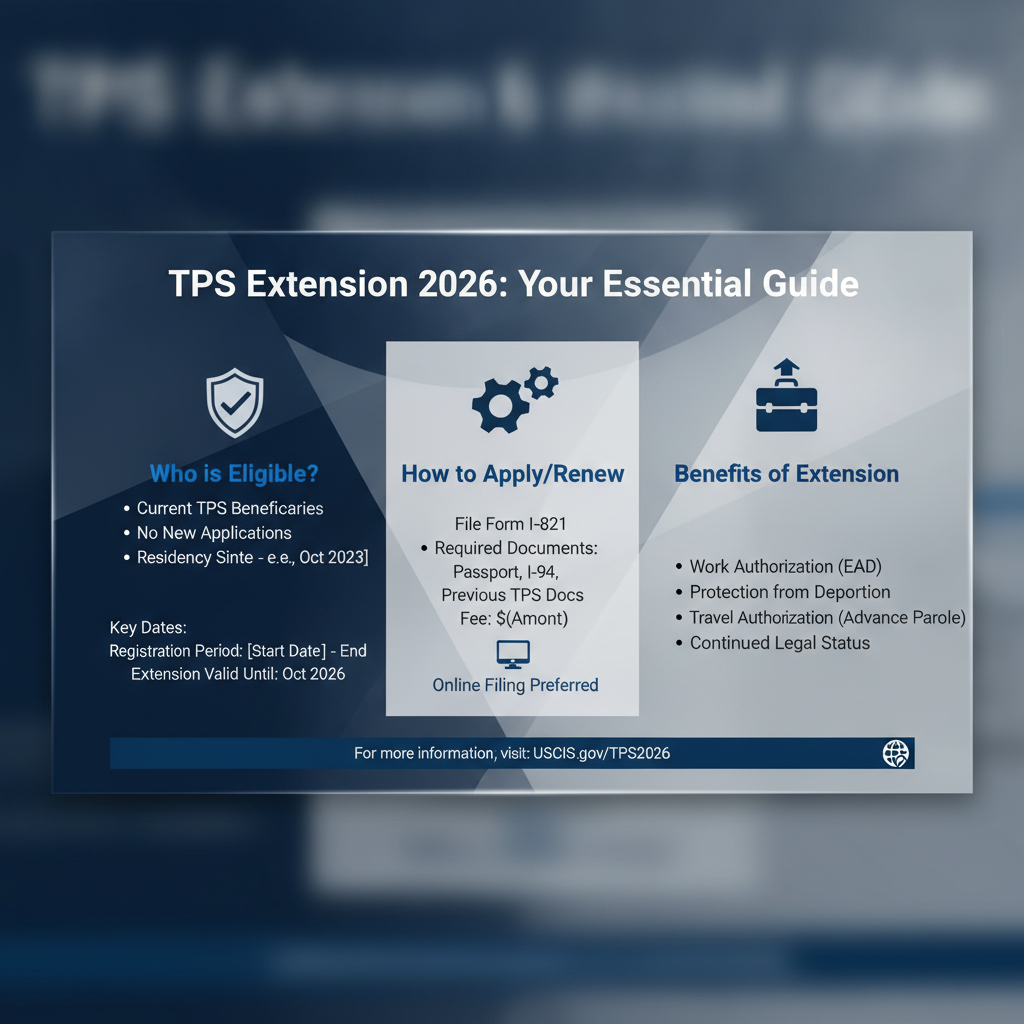
Recent reports from various legal news outlets indicate significant developments regarding Temporary Protected Status (TPS) extensions for several designated countries. This news brings both relief and renewed urgency for thousands of individuals and families. While specific country designations and extension dates are announced by the Department of Homeland Security (DHS) via the Federal Register and USCIS website, the general trend of extensions underscores the ongoing need for beneficiaries to understand their rights and responsibilities.
You can track general immigration law news and updates here: TPS (Temporary Protected Status) Extension News (Legal News)
What This News Means for Immigrants in Orlando and Across Florida
The news of TPS extensions is a lifeline for many, offering continued protection from removal and the ability to work legally in the United States. For beneficiaries residing in Orlando, across Florida, and nationwide, this means a renewed opportunity to maintain stability while navigating their immigration journey.
Why this news is showing up now
Temporary Protected Status is, by its very nature, temporary. It's granted to nationals of certain countries experiencing conditions that prevent their safe return, such as armed conflict, environmental disaster, or other extraordinary and temporary conditions. However, these conditions often persist beyond the initial designation period.
The Secretary of Homeland Security (DHS) is mandated to review conditions in designated countries at least 60 days before the expiration of the current TPS designation. If the Secretary determines that the conditions supporting the original designation (or a re-designation) continue to be met, they can decide to extend TPS for periods ranging from 6 to 18 months. These extensions are typically announced well in advance of the current expiration date, often triggering a new re-registration period.
Given that today is 2026-09-15, any recent announcements regarding TPS extensions likely pertain to countries whose current designations are set to expire in late 2026 or early 2027. These announcements provide a crucial window for current beneficiaries to re-register and maintain their protected status.
How it can affect Florida residents
Florida is home to a vibrant and diverse immigrant community, with a significant number of individuals from countries that have previously received or currently hold TPS designations. For residents in Orlando and throughout the Sunshine State, TPS extensions have several profound impacts:
- Continued Protection: The most immediate effect is the continuation of protection from deportation or removal from the U.S. This allows individuals and families to remain together without the constant fear of being forced to return to unsafe conditions.
- Work Authorization: TPS beneficiaries are eligible for Employment Authorization Documents (EADs), commonly known as work permits. An extension means the opportunity to apply for a new EAD, ensuring continued legal employment and the ability to support families, contribute to the local economy, and maintain financial stability. For many in Central Florida, this means uninterrupted work in sectors vital to the region.
- Travel Authorization: While not automatic, TPS beneficiaries may apply for Advance Parole, allowing them to travel outside the U.S. and lawfully return. Extensions allow this crucial option to continue.
- Stability and Planning: For families, an extension provides a period of stability, enabling them to plan for their children's education, manage housing, and pursue opportunities without the looming threat of status expiration. This stability is particularly important for those who have built lives and established roots in communities like Orlando, Kissimmee, and other areas along the I-4 corridor.
- Driver's Licenses and State Benefits: With a valid EAD and TPS status, many Florida residents can continue to renew their driver's licenses and access certain state-level services, further integrating them into the fabric of the community.
The implications of these extensions are far-reaching, providing a critical safety net for thousands of individuals who call Florida home. However, it is paramount for eligible individuals to act promptly and correctly to ensure their status is maintained.
Need Help Navigating TPS Extensions? Our Orlando immigration team at Imigrar is ready to assist you in understanding the latest TPS news and how it applies to your specific situation. Call +1 786-791-3106 for a free consultation, or message us online. Se Habla Español.
What Temporary Protected Status (TPS) Is (and Why It Matters)
Understanding TPS is crucial for anyone whose country has been designated. It's a humanitarian form of relief that has provided safety and stability to hundreds of thousands of individuals in the United States.
A plain-English definition
Temporary Protected Status (TPS) is a temporary immigration benefit granted by the U.S. government to eligible nationals of certain countries. These countries are designated by the Secretary of Homeland Security when conditions in those countries prevent their nationals from returning safely, or when the country is unable to handle the return of its nationals adequately. These conditions can include ongoing armed conflict, environmental disasters (like earthquakes or hurricanes), or other extraordinary and temporary circumstances.
Essentially, TPS allows individuals from designated countries who are already in the U.S. to live and work here legally for a specific period without fear of deportation. It is not a path to a Green Card or permanent residency on its own, but it offers crucial temporary relief and stability.
Key terms you need to know
To fully grasp TPS, it's helpful to understand the specific terminology used by immigration authorities:
- Designated Country: A country officially identified by the Secretary of Homeland Security as meeting the criteria for TPS. Only nationals of these specific countries are eligible to apply.
- Initial Registration Period: The first window of time during which eligible individuals from a newly designated country can apply for TPS. Missing this period can make it difficult, if not impossible, to apply later, unless there are very specific exceptions.
- Re-registration Period: When TPS for a country is extended, USCIS announces a specific window (usually 60 days) during which current TPS beneficiaries must re-register to maintain their status and obtain a new Employment Authorization Document (EAD). Missing this deadline can lead to loss of TPS.
- Employment Authorization Document (EAD): Also known as a work permit, this card allows TPS beneficiaries to work legally in the U.S. It must be renewed periodically by re-registering for TPS.
- Advance Parole: A travel document issued by USCIS that allows certain non-citizens, including TPS beneficiaries, to travel outside the U.S. and return lawfully without abandoning their immigration application or status. Traveling without Advance Parole can lead to serious immigration consequences.
- Continuously Physically Present (CPP): A requirement that an applicant has been physically present in the U.S. since a specific date set by the TPS designation for their country. Brief, casual, and innocent absences typically do not break CPP.
- Continuously Resided (CR): A requirement that an applicant has maintained residence in the U.S. since a specific date set by the TPS designation for their country. This implies having a dwelling place and maintaining ties to the U.S. over time.
- Date of Designation: The official date on which a country's TPS status becomes effective. This date is critical for determining eligibility for initial registration and subsequent re-registrations.
- Statutory Basis: The specific section of U.S. law that authorizes TPS. For TPS, this is primarily Section 244 of the Immigration and Nationality Act (INA).
Understanding these terms is the first step towards successfully navigating the TPS process, especially when a country's designation is extended.
Current Immigration Law: The Foundation of TPS
Temporary Protected Status is rooted in federal immigration law, specifically the Immigration and Nationality Act (INA). Grasping the legal framework provides clarity on why and how TPS designations and extensions are made.
Federal requirements
The authority to designate and extend TPS for foreign countries stems from Section 244 of the Immigration and Nationality Act (INA), codified at 8 U.S.C. § 1254a. This section grants the Secretary of Homeland Security (DHS) the discretion to designate a country for TPS if it meets specific statutory criteria. These criteria include:
- Ongoing Armed Conflict: There is an ongoing armed conflict within the state, and requiring the return of nationals to that state would pose a serious threat to their personal safety.
- Environmental Disaster: There has been an earthquake, flood, drought, epidemic, or other environmental disaster in the state resulting in a substantial, but temporary, disruption of living conditions, and the state is unable to handle adequately the return of its nationals.
- Extraordinary and Temporary Conditions: There exist extraordinary and temporary conditions in the foreign state that prevent nationals from returning safely.
Once a country is designated, individuals seeking TPS must meet their own set of federal eligibility requirements:
- Be a national of a country designated for TPS (or a person without nationality who last habitually resided in that designated country).
- Have been continuously physically present (CPP) in the United States since the effective date of the most recent designation for their country.
- Have been continuously resided (CR) in the United States since a specific date established by the TPS designation for their country.
- Timely file the required application forms: Primarily Form I-821, Application for Temporary Protected Status, and often concurrently, Form I-765, Application for Employment Authorization.
- Meet all other eligibility requirements, which include not being inadmissible on certain criminal or security grounds, not having been convicted of any felony or two or more misdemeanors committed in the U.S., and not being subject to certain mandatory bars to asylum.
It's vital to remember that TPS is a discretionary benefit. Even if an applicant meets all requirements, USCIS has the final say. All application materials, including supporting documents and fees, must be submitted correctly and within the specified deadlines.
For official information and forms, always refer to the USCIS official website.
Florida-specific considerations
While TPS is a federal program, its impact is felt deeply at the state and local levels. For Florida residents, especially those in Orlando and the wider Central Florida region, there are practical considerations:
- Local USCIS Field Office: The Orlando USCIS Field Office (located at 5449 Forbes Pl, Orlando, FL 32812) serves many applicants in Central Florida. While most TPS applications are processed at service centers, this office handles interviews for some other immigration benefits and provides information. Biometrics appointments for TPS applicants are typically scheduled at Application Support Centers (ASCs), and Orlando has one.
- Driver's Licenses: A valid EAD, obtained through TPS, is often a key document for applying for or renewing a Florida driver's license or state identification card. This is essential for daily life, employment, and mobility across Orange County and beyond.
- Community Resources: Florida has numerous community organizations that provide support services to immigrants, including those with TPS. These resources can be invaluable for understanding local services, language support, and navigating daily life.
- Legal Representation: Given the complexities of immigration law, having an experienced Orlando immigration lawyer who understands both federal regulations and local nuances can make a significant difference in the success of your TPS application or re-registration. Imigrar serves clients from all over Florida, including Miami, Tampa, and Jacksonville, ensuring comprehensive support.
These local considerations highlight why understanding federal law in the context of your specific location is so important.

How to Re-Register for TPS: A Complete Step-by-Step Guide
If your country's TPS designation has been extended, re-registration is the critical next step to maintain your status. This guide focuses on the re-registration process, which is similar to initial registration but for existing beneficiaries.
1) Determine Your Eligibility and Re-registration Window
The first and most crucial step is to confirm that your country's TPS status has indeed been extended and to identify the specific re-registration period. USCIS will publish a Federal Register notice detailing the extension, including the new expiration date and the deadline for re-registration (typically a 60-day window).
- Check Official Sources: Regularly monitor the USCIS TPS webpage and the Federal Register for announcements related to your country.
- Review Your Own Status: Ensure you previously held TPS for the designated country. If you are an initial registrant, confirm you meet the continuous physical presence (CPP) and continuous residence (CR) requirements from the original designation date.
- Criminal Record Check: Be aware that certain criminal convictions (any felony or two or more misdemeanors) can disqualify you from TPS. If you have any criminal history, consult with an attorney immediately.
Required Documents for this step (for self-verification):
- Your current TPS approval notice (Form I-797)
- Your current Employment Authorization Document (EAD)
- Passport or national identity document from your designated country
Important: Missing the re-registration deadline can lead to the loss of your TPS status. Mark your calendar!
2) Gather All Required Documents
A successful re-registration hinges on providing comprehensive and accurate supporting documentation. Start gathering these well in advance of the deadline.
-
Proof of Identity and Nationality:
- Passport from your designated country (current or expired, with explanation)
- Birth certificate from your designated country (with photo identification)
- National identity document from your designated country bearing your photograph and/or fingerprint
-
Proof of Continuous Residence (CR) and Continuous Physical Presence (CPP) in the U.S. since the designated date: (Provide documents covering the entire period, especially around the designation dates)
- Rental agreements, leases, or deeds for property in the U.S.
- Utility bills (electricity, water, gas, internet) in your name
- Employment records (pay stubs, W-2 forms, employment verification letters)
- School records (transcripts, enrollment letters) for yourself or your children
- Medical records (hospital bills, vaccination records, doctor's notes)
- Bank statements or other financial records
- Affidavits from credible individuals who can attest to your residence and presence
- Receipts for money transfers or purchases
- Any previous USCIS correspondence or approval notices
- Two Passport-Style Photos: Taken within 30 days of filing, meeting USCIS specifications.
- Previous TPS Approval Notice: A copy of your most recent Form I-797, Notice of Action, approving your TPS.
- Previous Employment Authorization Document (EAD): A copy of your most recent EAD card (Form I-766).
- Criminal History Records (If Applicable): If you have any arrests or convictions, you MUST provide certified court dispositions and police reports. Failure to disclose can lead to severe penalties.
- Marriage Certificates/Birth Certificates: If you are also applying for family members (though each must meet independent eligibility for TPS).
Reminder: All foreign language documents must be accompanied by a certified English translation.
3) Complete and File Form I-821, Application for Temporary Protected Status
This is the primary form for TPS re-registration. It is crucial to complete it accurately and thoroughly.
- Download the Latest Form: Always use the most current version of Form I-821 from the USCIS website.
- Read Instructions Carefully: The instructions provide detailed guidance on each question. Pay close attention to sections regarding criminal history, prior immigration applications, and travel.
- Provide Complete Information: Answer every question truthfully. If a question doesn't apply, mark "N/A" (not applicable).
- Sign and Date: Ensure you sign and date the form in all required places. An unsigned form will be rejected.
- Filing Fee: Check the current filing fee for Form I-821. For re-registration, often there is no fee for the I-821 itself, but a biometrics fee is usually required. If you cannot afford the fees, you may be eligible to apply for a fee waiver using Form I-912, Request for Fee


