


Understanding Consular Processing in 2026
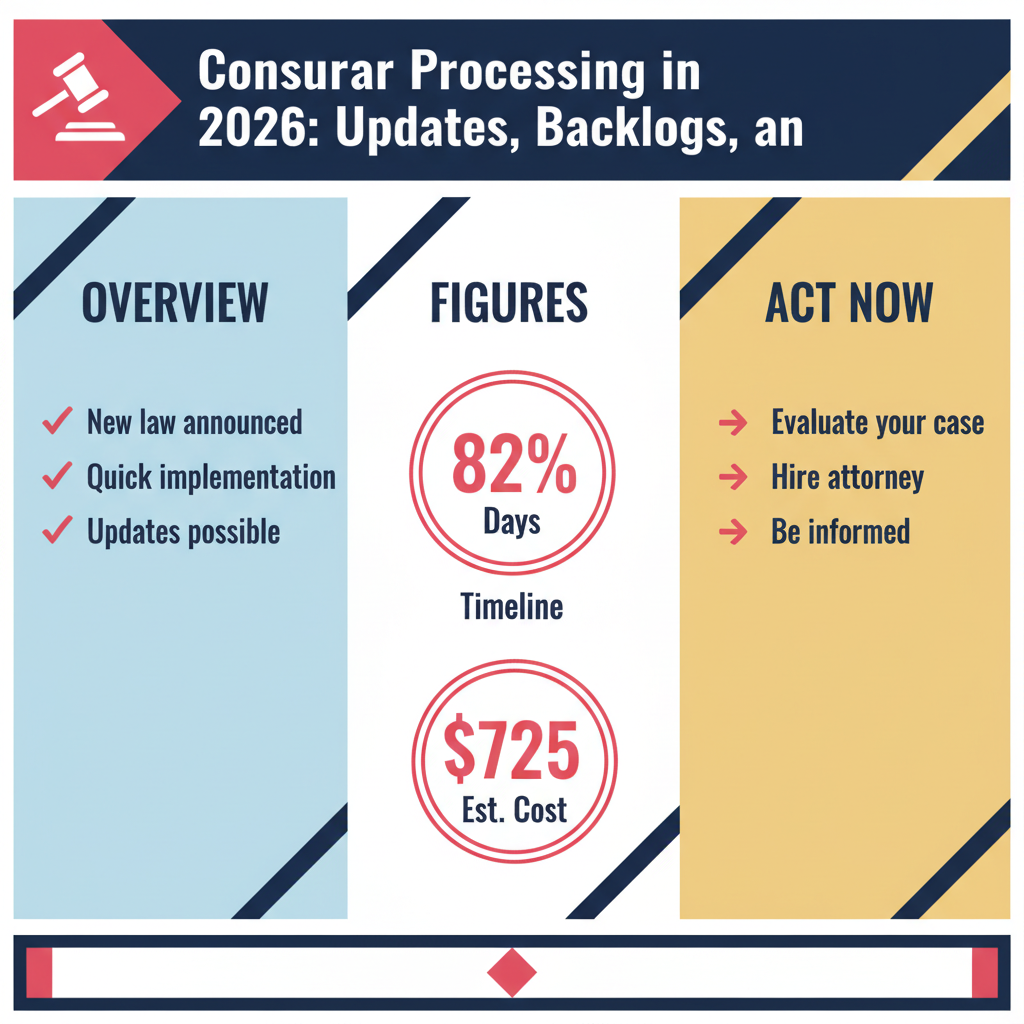
Consular processing is the path for people outside the United States to apply for a U.S. immigrant visa at a U.S. embassy or consulate abroad, then enter the country as lawful permanent residents. It is the alternative to adjustment of status, which is done inside the U.S.
In 2026, consular processing remains affected by backlogs, staffing limits, and security screening changes, but there are also new tools and strategies you can use to better predict and reduce your wait time.[4][2]
This article focuses on immigrant visas (green cards) processed through the National Visa Center (NVC), with key notes for nonimmigrant (temporary) visas where consular wait times are especially long.
Key 2026 Updates Affecting Consular Processing
1. Updated tools for tracking interview scheduling
The U.S. Department of State now maintains an Immigrant Visa (IV) Scheduling Status Tool that shows, for each consulate, the month and year of “documentarily complete” cases currently being scheduled for interviews.[4]
What it shows: The month/year of cases NVC is sending to that post for immigrant visa interviews.
What it does not show: Your personal interview date or your place in line; it is a trend indicator, not a guarantee.[4]
How often it updates: Monthly.[4]
Use this tool together with your NVC “documentarily qualified” date to estimate when an interview might be scheduled.
2. Ongoing visa backlogs and uneven progress by consulate
Backlogs remain high at many posts, with some locations processing documentarily complete cases more quickly and others moving slowly or even pausing certain categories.[4][2]
Some embassies show relatively short waits for immigrant visas, while others still face significant delays due to staffing and local conditions.[4][2]
Appointment movement is not always forward; a post can temporarily slow or pause interviews because of local security, staffing, or policy changes.[4]
3. Long waits for many nonimmigrant visa appointments
The Department of State’s Global Visa Wait Times page shows current estimates for nonimmigrant visa interviews (tourist, student, work visas) at each consulate.[2][3]
Wait times are listed by visa type and consular post and are updated monthly.[2][3]
These numbers are estimates; the actual interview can be sooner or later depending on appointment availability and cancellations.[2]
In some high‑demand posts, interviews for H‑1B and L‑1 visas have been pushed out into 2026–2027, driven in part by enhanced security screening in certain cases.[7]
4. Visa Bulletin movement in early 2026
The January 2026 Visa Bulletin brings some positive movement for several family‑based and employment‑based categories, creating fresh opportunities for consular processing cases to move forward.[5][6]
However, the Visa Bulletin still does not give an exact timeline; it only shows when a green card number is available or approaching availability.[6]
Step‑by‑Step: How Consular Processing Works Today
Step 1: Underlying petition approval (family or employment)
The process begins with an approved immigrant petition (for example, Form I‑130 for family or Form I‑140 for employment). Processing times for these petitions can range from several months to multiple years, depending on the category and USCIS workload.[1]
Once USCIS approves the petition and a visa number is (or will soon be) available, the case is sent to the National Visa Center.
Step 2: NVC case creation and fee payment
The NVC assigns a case number and issues instructions, usually by email. In 2026, NVC communications come through the Consular Electronic Application Center (CEAC) system, where you will:
Designate an agent and update contact information.
Pay the required visa and affidavit of support fees online.
Complete the immigrant visa application form (DS‑260).
If your priority date becomes current, NVC should contact you within about 30–60 days, but you should actively monitor your CEAC account rather than waiting passively.[5]
Step 3: Submitting civil and financial documents
To become “documentarily complete,” you must submit all required civil and financial documents to NVC for review.[4][5]
Civil documents typically include birth certificates, marriage certificates, police certificates (where required), divorce or death certificates, and passports.
Financial documents usually include Form I‑864 (Affidavit of Support) from the sponsor, tax transcripts or returns, W‑2s, and proof of current income.
NVC will review these documents and either accept them or issue a checklist asking for corrections or missing items. Only once all issues are resolved will your case be classified as documentarily complete (also called “documentarily qualified”).[4]
Step 4: Waiting for interview scheduling
After your case is documentarily complete, NVC will hold it until the consulate has both:
Visa number availability (based on the Visa Bulletin for your category and country), and
Interview capacity at the local post.[4]
At that point, NVC will schedule an interview at the designated embassy or consulate and send you an appointment notice with the date, time, and location.[4]
Step 5: Medical exam and interview preparation
Before the interview, you must schedule a medical examination with a panel physician approved by the U.S. embassy or consulate. You will also prepare your original documents and evidence to bring to the interview.
At the interview, a consular officer will review your application, check your documents, and ask questions about your relationship or job offer, your background, and admissibility issues (such as prior immigration or criminal history).
Step 6: Visa issuance and travel to the United States
If the consular officer approves the visa, your passport will typically be returned with an immigrant visa stamp within days to weeks, depending on local processing times and passport return methods.[3]
You must enter the United States before the visa expires (often within six months of the medical exam). Your green card is produced after you enter the U.S.
How Long Does Consular Processing Take in 2026?
1. From petition approval to NVC “documentarily complete”
This segment often takes several months and depends on how quickly you respond and how accurate your documents are.
Typical range: about 3–6 months for many family cases if you respond promptly and avoid checklist delays.[5]
Common delays: missing civil documents, incorrect translations, unsigned I‑864, outdated financial evidence.[5]
2. From “documentarily complete” to interview
Here, timing depends on both visa availability (from the Visa Bulletin) and your consulate’s capacity.[4][6]
Where a visa number is available and the post is functioning normally, interviews may be scheduled within a few months of being documentarily complete.[4]
At high‑demand posts or in oversubscribed family/employment categories, the wait can be significantly longer.
The IV Scheduling Status Tool helps you see which month of documentarily complete cases is currently being scheduled at your consulate.[4]
3. Nonimmigrant visa interview wait times
The Global Visa Wait Times page shows separate estimates for different visa types (such as B1/B2 visitor, F student, H work categories) at each post.[2][3]
Some posts show visitor visa interview waits of several months; others can be shorter than 30 days.[2]
For certain work visa categories like H‑1B and L‑1 at specific consulates, appointments are being scheduled well into 2026–2027.[7]
These estimates do not include the time it takes for administrative processing or mailing your passport back.[3]
Administrative Processing and Security Checks
What is administrative processing?
After the interview, some cases go into “administrative processing,” which means additional security or eligibility checks are required before a final decision.[3]
The Department of State explains that the length of administrative processing varies according to circumstances, and applicants are advised to wait at least 180 days from the interview or submission of supplemental documents before making status inquiries in non‑emergency cases.[3]
How to handle administrative processing
Keep your contact information current with the consulate and NVC.
Respond immediately to any requests for additional documents or information.
Avoid repeated, non‑urgent inquiries during the first 180 days, unless there is a genuine emergency or substantial change in your case.[3]
Expedited and Emergency Appointments: What Really Qualifies
Nonimmigrant visas
For nonimmigrant visas, you must first submit the DS‑160, pay the fee, and schedule the first available interview before a consular section will consider an expedited appointment request.[3]
According to the Department of State, travel for weddings, graduations, assisting pregnant relatives, recurring conferences, or last‑minute tourism does not qualify for expedited appointments.[3]
Emergency travel usually must involve serious illness, injury, or death in your immediate family, or similar urgent circumstances.[3]
Immigrant visas
For immigrant visas, NVC and consular posts can sometimes expedite cases with urgent humanitarian or medical needs, or where there is a clear, documented hardship if the case remains on the regular timeline.[4]
Expedites are discretionary and granted sparingly. They require specific evidence and detailed explanations of the hardship.
Practical Strategies to Reduce Delays
1. Monitor your Visa Bulletin category
Before your case even reaches NVC, track your priority date and category using the monthly Visa Bulletin.[6]
Compare your priority date to the “Final Action Dates” and “Dates for Filing” charts.[6]
When your priority date approaches the listed date, gather civil and financial documents so you can respond quickly when NVC contacts you.[5]
2. Stay proactive with NVC and CEAC
Log into your CEAC account regularly to check for messages and status updates.[5]
Ensure NVC has your correct email, mailing address, and phone number.[5]
If your priority date is current and you have not heard from NVC within 30–60 days, consider contacting NVC with your case number to confirm your status.[5]
3. Avoid common document mistakes
Many consular cases stall because of preventable document issues. To avoid this:
Use the exact civil document types required by the State Department for your country (check the embassy’s reciprocity and document guide).
Provide certified translations for all non‑English documents.
Double‑check that your I‑864 is signed, includes the correct household size, and is supported by current income evidence.
Upload clear, readable scans that show full documents, not cropped screenshots.
4. Respond quickly—but carefully—to NVC checklists
If NVC issues a checklist, your case will not move forward until you resolve every item. An accurate, complete response the first time can save months.[5]
5. Prepare thoroughly for the consular interview
A strong interview preparation can prevent unnecessary delays or refusals:
Bring all original civil documents plus copies, even if they were previously uploaded.
Carry updated financial evidence if the sponsor’s circumstances changed.
For marriage‑based cases, bring relationship evidence: photos, communication records, joint financial documents, and proof of living arrangements.
Answer questions honestly and clearly; do not guess or hide important facts.
6. Plan realistically around long wait times
Given continued backlogs, it is important to plan your life around realistic timelines:
Avoid making non‑refundable travel or relocation plans before your visa is issued.
Consider school calendars, employment contracts, and lease dates when estimating your move.
If you have urgent timing needs (for example, a job start date), explore whether an expedite request is appropriate and well‑supported.
Special Considerations for Families
Keeping family members together through the process
Many family‑based petitions allow spouses and unmarried minor children to immigrate as “derivative beneficiaries.” Coordinating everyone’s documents and interviews is essential to avoid separation.
Ensure each derivative has their own passport, civil documents, and DS‑260.
Confirm all derivatives are correctly listed on the main petition and NVC records.
If a child is close to turning 21, discuss Child Status Protection Act (CSPA) timing with an attorney, as delays can affect eligibility.
Maintaining communication when family is split between countries
Many families have one spouse or parent in the U.S. and others abroad during consular processing. You can reduce stress by:
Creating a shared folder (digital or physical) for all immigration documents.
Agreeing on who is responsible for checking CEAC and email updates.
Scheduling regular check‑ins to review case progress and any new requests.
What to Do if Your Case Seems “Stuck”
1. Confirm your current status
First, determine where your case is:
At USCIS (petition still pending)?
At NVC (awaiting documents or documentarily complete)?
At the consulate (interview scheduled, administrative processing, or post‑interview review)?


