

As of March 15, 2026, the Deferred Action for Childhood Arrivals (DACA) program continues to be a critical lifeline for hundreds of thousands of young immigrants across the United States, including many in our vibrant Orlando community and throughout Florida. Navigating the complexities of DACA, especially with its ongoing legal challenges and administrative updates, requires vigilance and expert guidance. At Imigrar, we understand the profound impact DACA has on families and individuals, and we are committed to providing the most accurate, up-to-date information and support to help you keep your deferred action status and work authorization.
This comprehensive guide is designed to clarify the latest DACA program updates, provide a detailed step-by-step renewal process, and offer practical advice for Dreamers. Our goal is to empower you with the knowledge needed to protect your future.
Need Help? Our Orlando immigration team is ready to assist. Call +1 786-791-3106 for a free consultation, or message us online. Se Habla Español.
The reporting that sparked this guide
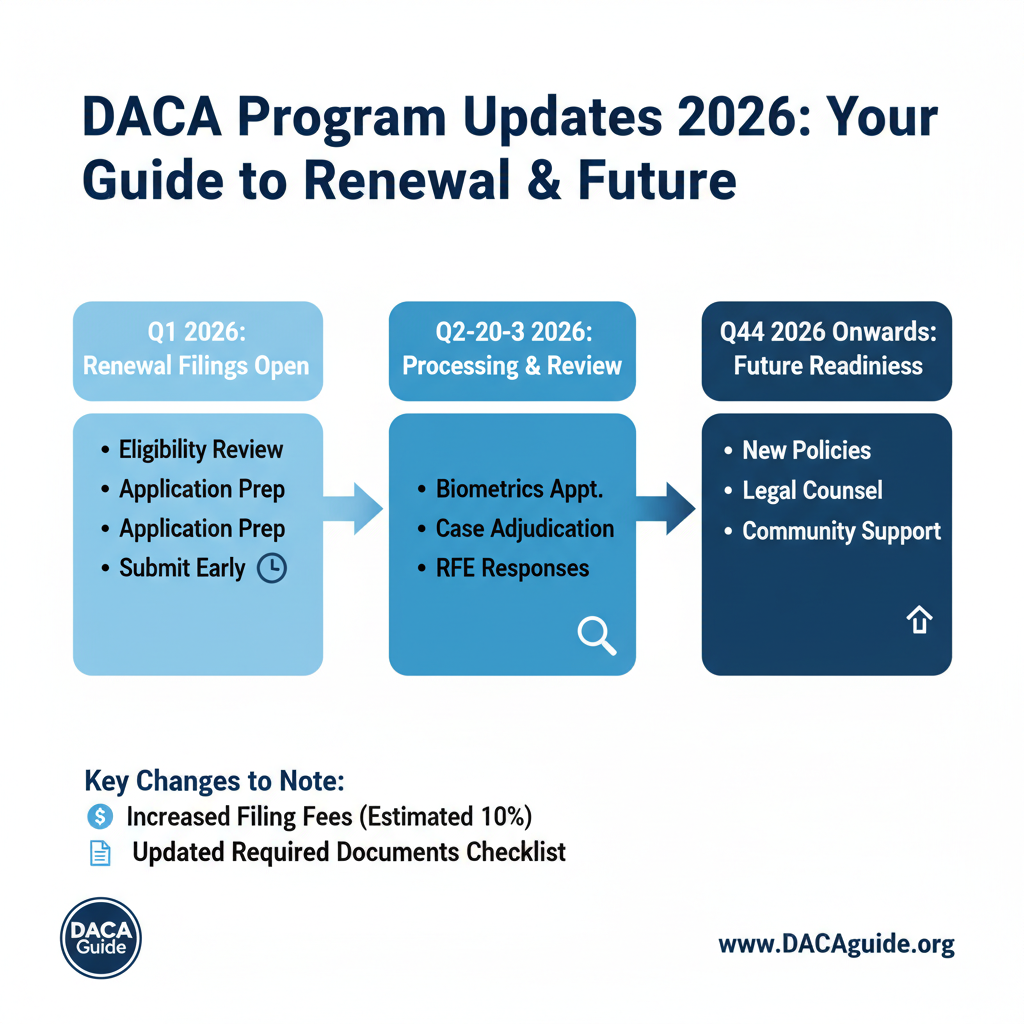
The information and guidance in this article are informed by continuous monitoring of official government sources and legal developments. For the latest official updates directly from USCIS, please refer to: DACA Program Updates and Renewal Information (USCIS).
What This News Means for Immigrants in Orlando and Across Florida
For DACA recipients, their families, and aspiring Dreamers in Orlando and across Florida, the news surrounding the DACA program is always of paramount importance. The program, while currently maintained, remains under judicial review, leading to a state of cautious optimism and the imperative for continuous awareness.
Why this news is showing up now
The DACA program has been a subject of intense legal and political debate since its inception in 2012. As of March 15, 2026, the program’s future continues to be shaped by ongoing litigation, particularly the case of Texas v. United States. While federal courts have allowed DACA to continue for existing recipients, new applications generally remain paused. The U.S. Department of Homeland Security (DHS) codified DACA into federal regulation in August 2022, intending to solidify its legal standing. However, subsequent court decisions have largely maintained the status quo: current DACA recipients can continue to renew, but new applications are not being processed.
The news you’re seeing now likely reflects the ongoing administrative efforts by USCIS to manage renewals under existing court orders, coupled with discussions and potential legislative efforts in Congress. Each update, whether administrative or judicial, can bring small but significant changes to processing times, eligibility interpretations, or required documentation, making it crucial for recipients to stay informed.
How it can affect Florida residents
Florida is home to a significant population of DACA recipients, many of whom reside in the Orlando metropolitan area and along the I-4 corridor. The stability of the DACA program directly impacts their ability to work legally, pursue higher education, and contribute to the state's economy. For Florida residents, particularly those in Orange County and surrounding areas, the implications include:
- Employment Security: DACA recipients depend on their Employment Authorization Documents (EADs) to work legally. Any delays in renewal processing or changes to the program could jeopardize their employment, affecting families and local businesses.
- Educational Opportunities: While Florida has made strides in offering in-state tuition to DACA recipients, the underlying stability of DACA ensures continued access to higher education and professional development.
- Driving Privileges: DACA recipients in Florida can obtain driver's licenses, which are vital for daily life, commuting to work, and accessing essential services. Renewing DACA ensures the continued validity of these licenses.
- Community Impact: DACA recipients are integral members of Florida communities, contributing to the economy, culture, and social fabric. Uncertainty in the program creates stress and instability for thousands of families.
At Imigrar, we closely monitor these developments to provide timely and relevant advice to our clients in Orlando and across Florida, helping them navigate these uncertain waters with confidence.
What DACA Is (and Why It Matters)
The Deferred Action for Childhood Arrivals (DACA) program is not an immigration status or a pathway to U.S. citizenship. Instead, it is an exercise of prosecutorial discretion by the Department of Homeland Security (DHS) that allows certain eligible undocumented individuals who came to the United States as children to receive a renewable two-year period of deferred action from deportation and to be eligible for a work permit.
A plain-English definition
Imagine DACA as a temporary shield. If you meet certain criteria, the government agrees not to deport you for two years. During this time, you also get permission to work legally in the U.S. This "shield" and work permit can be renewed every two years, as long as the program is active and you continue to meet the eligibility requirements. It does not give you a green card or citizenship, but it provides a crucial period of stability and opportunity.
Key terms you need to know
- Deferred Action: This is the core of DACA. It means that the government has decided to "defer" or postpone any action to remove (deport) an individual from the United States for a specified period.
- DACA Recipient (or Dreamer): An individual who has been granted deferred action under the DACA program. The term "Dreamer" often refers to young undocumented immigrants who were brought to the U.S. as children.
- Employment Authorization Document (EAD): Also known as a work permit, this card (Form I-766) is issued to DACA recipients, allowing them to legally work in the U.S. for the duration of their deferred action period.
- Prosecutorial Discretion: The authority of government officials (in this case, immigration authorities) to decide whether to enforce the law in a particular case. DACA is based on this principle.
- Advance Parole: A travel document (Form I-131) that allows certain individuals who do not have a green card to travel abroad and return to the U.S. without jeopardizing their immigration status. For DACA recipients, advance parole is generally only granted for humanitarian, educational, or employment purposes, and its availability is subject to change based on court orders and USCIS policy.
- USCIS: U.S. Citizenship and Immigration Services, the federal agency responsible for administering immigration and naturalization benefits.
DACA matters because it provides vital protections and opportunities for individuals who grew up in the U.S., often knowing no other home. It allows them to pursue education, build careers, contribute to their communities, and live without the constant fear of deportation. For families, DACA keeps loved ones together and supports their economic well-being. Without DACA, many would face significant barriers to education and employment, and be at risk of removal to countries they barely remember.
Need Help? Our Orlando immigration team is ready to assist. Call +1 786-791-3106 for a free consultation, or message us online. Se Habla Español.
Current Immigration Law: The Foundation for DACA
It's important to understand that DACA itself is not a federal law enacted by Congress. It was established through an executive memorandum by the Secretary of Homeland Security in 2012, based on the broad statutory authority granted to the DHS to manage immigration enforcement. Specifically, the Secretary's authority stems from laws such as the Homeland Security Act of 2002 and the Immigration and Nationality Act (INA), particularly 8 U.S.C. § 1103, which outlines the general powers and duties of the Secretary of Homeland Security.
The Biden administration, through DHS, codified DACA into federal regulation (8 CFR Part 236) in August 2022, intending to make the program more durable. However, this regulation has been challenged in court, and as of March 15, 2026, the federal courts have affirmed an injunction that prevents DHS from approving initial DACA requests, though it allows for the processing of renewal requests.
Federal requirements for DACA renewal
To be eligible to renew your DACA, you must have previously been granted DACA and continue to meet the initial guidelines. The core federal requirements, as outlined by USCIS, include:
- You must have previously received deferred action under the DACA program.
- You must not have departed the United States on or after August 15, 2012, without first obtaining advance parole.
- You must have continuously resided in the United States since the date you submitted your most recent DACA request that was approved.
- You must not have been convicted of a felony, a significant misdemeanor, or three or more other misdemeanors, and not otherwise pose a threat to national security or public safety.
Important: USCIS will send you a reminder notice approximately 150 days before your DACA and EAD expire. However, it is your responsibility to track your expiration date and apply for renewal in a timely manner. We generally recommend applying between 150 and 120 days before your current DACA/EAD expires.
For official forms and the most up-to-date information, always refer to the USCIS official website.
USCIS forms for DACA renewal
The primary forms required for DACA renewal are:
- Form I-821D, Consideration of Deferred Action for Childhood Arrivals
- Form I-765, Application for Employment Authorization
- Form I-765WS, Worksheet (used to demonstrate economic necessity for employment)
These forms, along with supporting documentation and the required fees, constitute your renewal application package.
Florida-specific considerations for DACA recipients
While DACA is a federal program, its impact is felt locally. For DACA recipients in Florida, there are specific state-level considerations:
- In-State Tuition: Florida Statute 1009.26 allows DACA recipients who meet certain criteria (e.g., attended a Florida high school for three years and graduated, applied for higher education within 24 months of graduation) to be eligible for in-state tuition rates at public colleges and universities. This is a significant benefit for Dreamers pursuing education in Orlando and beyond.
- Driver's Licenses: DACA recipients in Florida are eligible to apply for a Florida driver's license or ID card. Your valid EAD (Form I-766) is a key document needed for this. Ensure your DACA and EAD are renewed promptly to maintain your driving privileges.
- Professional Licenses: Eligibility for certain state professional licenses can vary. While DACA grants work authorization, specific state boards may have additional requirements or restrictions based on immigration status. It's advisable to check with the relevant licensing board if you are pursuing a licensed profession in Florida.
The Orlando USCIS Field Office primarily handles interviews for certain applications, but DACA renewals are typically processed through USCIS service centers. However, local resources, community organizations, and legal aid in Central Florida play a crucial role in supporting DACA recipients.
How to Renew Your DACA: A Complete Step-by-Step Guide
Renewing your DACA is a critical process that requires attention to detail and timely submission. Here’s a step-by-step guide to help you through it:
1) Understand Your Timeline and Gather Basic Information
When to apply: USCIS recommends filing your renewal application between 150 and 120 days before your current DACA and EAD expire. Filing too early (more than 150 days) may result in your application being rejected. Filing too late (less than 120 days) risks your DACA expiring before your renewal is approved, which could lead to a lapse in work authorization and potential loss of employment.
Required documents for this step:
- Your current EAD (Form I-766)
- Your current DACA approval notice (Form I-797C)
- Any previous DACA application documents you have
Reminder: Mark your calendar! Set multiple reminders for your renewal deadline. This is the most crucial step in avoiding a lapse in your DACA.
2) Complete the Required Forms Accurately
You will need to complete three forms for your DACA renewal:
- Form I-821D, Consideration of Deferred Action for Childhood Arrivals
- Form I-765, Application for Employment Authorization
- Form I-765WS, Worksheet (used to demonstrate economic necessity for employment)
Key details for form completion:
- Read Instructions Carefully: Download the latest versions of the forms and their instructions from the USCIS Forms page. Instructions change frequently.
- Type or Print Legibly: Use black ink. If completing by hand, print clearly. Typing is highly recommended.
- Answer All Questions: If a question does not apply to you, write "N/A" (not applicable). Do not leave blanks.
- Sign and Date: Ensure you sign and date each form in the appropriate places. An unsigned form will be rejected.
- Address: Use your current mailing address. If your address changes during processing, update it with USCIS immediately using Form AR-11, Alien's Change of Address Card.
Important: If you have any new criminal history since your last DACA approval, or if you had any issues previously that you did not fully disclose, it is imperative to consult with an immigration attorney *before* submitting your renewal. Even minor infractions can impact eligibility.
3) Gather All Supporting Documentation
While DACA renewals typically require less documentation than initial applications, you must still provide evidence to support your continued eligibility. If you have maintained your eligibility and had no changes since your last DACA approval, you generally do not need to resubmit all the initial supporting documents (e.g., proof of entry, continuous residence). However, it's wise to include updated copies of certain items and be prepared to submit more if requested.
Required documents for renewal:
- Copies of your previous DACA approval notice (Form I-797C).
- Copy of your previous Employment Authorization Document (EAD, Form I-766) (front and back).
- Two passport-style photos taken within 30 days of filing. Write your name and A-Number lightly in pencil on the back of each photo.
- Any documentation related to new criminal offenses or arrests, even if charges were dropped or expunged. Consult an attorney for guidance on these.
- Proof of continuous residence since your last DACA approval (e.g., utility bills, bank statements, school records, employment records). While not always required for *renewal*, having these ready is good practice, especially if there were gaps in your previous documentation.
- For Form I-765WS, provide a summary of your current financial situation, including income, expenses, and any dependents, to demonstrate economic necessity.
Warning: Never send original documents unless specifically requested by USCIS. Always send copies.
4) Calculate and Prepare Your Fees
As of March 15, 2026, the DACA renewal fee includes the filing fee for Form I-765 and the biometrics services fee. There is no separate fee for Form I-821D.
- Filing Fee: Check the USCIS Filing Fees page for the most current amount. Fees can change.
- Biometrics Services Fee: This fee covers the cost of fingerprinting and background checks. This is usually combined with the I-765 fee.
Payment methods:
- Personal check, cashier's check, or money order payable to "U.S. Department of Homeland Security." Do not use abbreviations.
- Credit card using Form G-1450, Authorization for Credit Card Transactions.
Important: Ensure the check or money order is correctly filled out and for the exact amount. Incorrect fees or payment methods will lead to rejection of your application.
5) Assemble and Mail Your Application Package
Once all forms are completed, signed, and all supporting documents and fees are prepared, assemble your package in a logical order.
Recommended assembly order:
- Check or Form G-1450 on top.
- Form I-821D
- Form I-765
- Form I-765WS
- Supporting documents (copies of EAD, approval notices, photos, etc.)
Mailing instructions:
- Send your application to the correct USCIS lockbox facility. The address depends on where you live. Check the "Where to File" section on the USCIS I-821D page. For Florida residents, this is usually a lockbox in Chicago.
- Use a mailing service that provides tracking (e.g., USPS Certified Mail, FedEx, UPS). This provides proof of mailing and delivery, which is crucial.
- Keep a complete copy of your entire application package for your records.
6) Attend Your Biometrics Appointment (If Required)
After USCIS receives your application, you will receive a receipt notice (Form I-797C). Within a few weeks, you should receive an appointment notice for biometrics (fingerprinting and photos) at a local Application Support Center (ASC). This is typically the Orlando ASC for those in Central Florida.
- Attend on time: Do not miss your appointment.
- Bring required documents: Your appointment notice, a valid photo ID (e.g., driver's license, passport, or current EAD).
- Follow instructions: Cooperate with the ASC staff.
Note: Sometimes, USCIS may reuse previously collected biometrics, and you might not receive a new appointment notice. If you don't receive one after a reasonable time (e.g., 6-8 weeks after filing), you can check your case status online or contact USCIS.
7) Monitor Your Case Status and Respond to RFEs
You can monitor the status of your DACA renewal application online using the receipt number provided on your Form I-797C notice. Visit the USCIS Case Status Online tool.
- Request for Evidence (RFE): USCIS may send an RFE if they need additional information or clarification. Respond to RFEs promptly and completely by the deadline provided. Failure to do so can lead to denial.
- Interview: While rare for DACA renewals, USCIS may request an interview. If this happens, it's highly advisable to consult with an immigration attorney from Imigrar to prepare thoroughly.
Once your application is approved, you will receive an approval notice (Form I-797C) and your new EAD (Form I-766) by mail. Ensure your address is always current with USCIS!
Practical Steps You Can Take Today for DACA Renewal
Proactive preparation is key to a smooth DACA renewal process. Don't wait until the last minute!
Actionable Checklist:
- Mark Your Calendar: Note your DACA and EAD expiration dates. Set reminders for 150 days, 120 days, and 90 days before expiration.
- Start Saving for Fees: The filing fees can be substantial. Begin setting aside funds well in advance to avoid financial stress during renewal.
- Review Your Previous Application: Go through your last DACA application. Note any changes in address, employment, or personal information.
- Check for Criminal History: Ensure you have no new arrests or convictions since your last DACA approval. If you do, consult an attorney immediately.
- Gather Personal Records: Keep updated copies of your birth certificate, passport (if applicable), previous EADs, and DACA approval notices in a safe, accessible place.
- Consult with an Attorney (Optional but Recommended): Especially if you have any doubts, new legal issues, or significant changes in your life, schedule a consultation with an immigration lawyer at Imigrar.
Document Preparation Guidance:
- Organize Digitally: Scan all important immigration documents and save them in a secure cloud storage or external drive.
- Physical Folder: Maintain a dedicated physical folder for all DACA-related documents, including copies of submitted applications and notices from USCIS.
- Proof of Residence: Keep copies of utility bills, bank statements, school transcripts, or employer letters to demonstrate continuous residence in case USCIS requests it.
- Passport Photos: Get new passport-style photos taken within 30 days of filing. Do not reuse old photos.
Timeline Expectations:
USCIS processing times for DACA renewals can vary significantly. You can check current estimates on the USCIS Processing Times website. While the goal is generally to process renewals within 120 days, delays can occur. Plan for the possibility of a lapse in employment authorization if your application is not submitted within the recommended window.
Reminder: If your EAD expires while your renewal is pending, you cannot legally work until the new EAD is approved and received. Communicate with your employer about this possibility well in advance.
How Imigrar Helps DACA Recipients in Orlando
At Imigrar, our mission is to "Keep Families Together." We understand the unique challenges and anxieties faced by DACA recipients and their families in Orlando, Central Florida, and across the nation. Our dedicated team of immigration attorneys is here to provide compassionate, expert, and up-to-date legal assistance for your DACA renewal and other immigration needs.
Our experience and expertise
Our firm specializes in immigration law, with extensive experience in DACA applications and renewals. We stay current with all judicial rulings, legislative developments, and USCIS policy changes that impact the DACA program. We know the intricacies of the application process, from correctly filling out forms like Form I-821D and Form I-765 to compiling robust supporting documentation and responding effectively to RFEs.
Whether you're in Orlando, Kissimmee, Sanford, or anywhere else in Florida, our team understands the local context and the specific needs of our community. We provide personalized attention, ensuring that your application is meticulously prepared and submitted accurately, maximizing your chances of a successful renewal.
Free consultation offer
Navigating DACA renewals can be complex, especially if you've had any changes in your life, such as arrests, travel outside the U.S., or significant personal events. We offer a free consultation to DACA recipients. During this consultation, we can:
- Review your specific situation and eligibility.
- Address any concerns you have about your criminal history or previous immigration issues.
- Explain the renewal process in detail.
- Outline the legal services Imigrar can provide to assist you.
Don't face the DACA renewal process alone. Let our expertise provide you with peace of mind and professional guidance.
Se Habla Español. Our team is fluent in both English and Spanish, ensuring clear and effective communication for all our clients. We believe that language should never be a barrier to accessing critical legal assistance.
Ready to Renew Your DACA? Contact Imigrar today for expert legal support. Call +1 786-791-3106 for your free consultation. We serve clients nationwide from our Orlando office. Se Habla Español.

Frequently Asked Questions About DACA Renewal
Q: Am I still eligible for DACA renewal if I have a minor criminal offense?
A: It depends on the nature and severity of the offense. USCIS distinguishes between felonies, significant misdemeanors, and other misdemeanors. A single significant misdemeanor or three or more other misdemeanors (not arising from the same act, omission, or scheme of misconduct) can disqualify you. Even minor offenses, arrests without conviction, or expunged records should be disclosed and reviewed by an immigration attorney. It is crucial to consult with an expert at Imigrar before filing if you have any criminal history since your last DACA approval.
Q: How does DACA renewal affect my immigration status or eligibility for a green card?
A: DACA itself does not confer a legal immigration status, nor does it provide a direct pathway to a green card or U.S. citizenship. It grants temporary protection from deportation and work authorization. However, some DACA recipients may become eligible for other immigration benefits through different avenues, such as marriage to a U.S. citizen or a family-based petition, especially if they entered the U.S. with inspection or obtained advance parole. Each case is unique, and consulting with an immigration attorney is essential to explore potential pathways.
Q: What is the typical timeline for DACA renewal processing?
A: USCIS processing times vary, but typically DACA renewals can take anywhere from 2 to 6 months. It's highly recommended to apply between 150 and 120 days before your current DACA and EAD expire. You can check the average processing times for Form I-821D and Form I-765 at your specific service center on the USCIS Processing Times website. Timely submission is key to minimizing the risk of a lapse


