


The landscape of U.S. immigration policy is constantly evolving, and for recipients of the Deferred Action for Childhood Arrivals (DACA) program, staying abreast of the latest developments is not just important—it's essential for maintaining their status and continuing to live and work in the United States. As an immigration law firm based in Orlando, Florida, Imigrar is dedicated to providing clear, accurate, and actionable information to help DACA recipients and their families navigate these complexities. Today, May 4, 2026, we’re addressing critical updates and renewal information to empower our community.
The reporting that sparked this guide
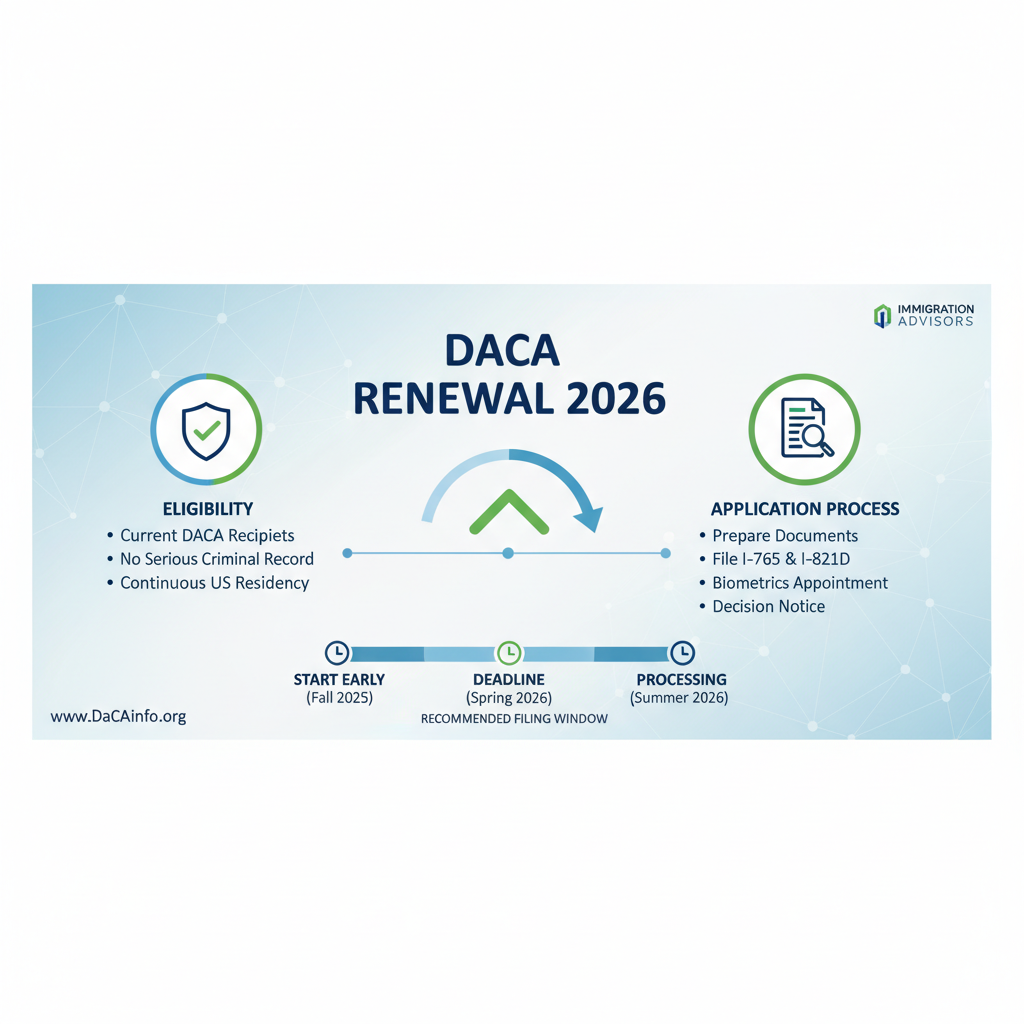
Recent discussions and reports from government sources like USCIS, highlighted in broader immigration news, underscore the ongoing legal and administrative status of the DACA program. These updates primarily focus on the continued ability for current DACA recipients to renew their status, while initial applications remain paused due to court orders. For a deeper dive into the official announcements, you can refer to the latest information directly from USCIS and other federal agencies.
DACA Program Updates and Renewal Information (USCIS)
What This News Means for Immigrants in Orlando and Across Florida
For hundreds of thousands of individuals nationwide, and tens of thousands right here in Florida, the DACA program represents a pathway to stability, education, and employment. Understanding the nuances of its current status and renewal process is paramount.
Why this news is showing up now
The DACA program has been a subject of intense legal and political debate since its inception in 2012. Over the past few years, its future has been shaped by various court rulings and administrative actions. Most notably, federal court injunctions have largely maintained the program in a state where only renewals are permitted, while new, initial applications for DACA are not being processed. These legal battles are ongoing, with courts continuing to review challenges to the program's legality. Periodically, USCIS releases guidance or updates on processing, eligibility, and procedural changes, which then ripple through immigration news channels. These updates often serve as reminders of the program's precarious but persistent existence, urging current recipients to remain vigilant about their renewal deadlines and requirements.
The current news cycle reflects the continuous monitoring by USCIS and other government bodies of these court orders and their impact on DACA administration. It's a testament to the program's enduring importance and the government's obligation to inform the public about its operational status, even as its long-term future remains uncertain. This ongoing dialogue ensures that DACA recipients are aware of their responsibilities and the resources available to them.
How it can affect Florida residents
Florida is home to a significant population of DACA recipients, often referred to as Dreamers. According to various estimates, thousands of DACA recipients reside in the state, contributing to its economy, culture, and communities. For these individuals, DACA provides protection from deportation and eligibility for an Employment Authorization Document (EAD), which allows them to legally work in the U.S. and obtain a driver's license.
For residents in Orlando and throughout Central Florida, the implications of DACA updates are tangible:
- Economic Stability: The ability to work legally through an EAD is crucial for financial independence and contributing to the local economy, from the tourism sector along the I-4 corridor to small businesses in Orange County.
- Educational Opportunities: DACA recipients often pursue higher education. While in-state tuition policies for DACA recipients vary by state and institution, maintaining DACA status is generally a prerequisite for any such considerations.
- Community Integration: DACA allows recipients to live with less fear of deportation, fostering deeper integration into their communities, pursuing careers, and building families without constant apprehension.
- Driver's Licenses: With an EAD, DACA recipients in Florida can apply for a state driver's license, which is essential for commuting, accessing services, and daily life in a sprawling state like Florida.
Any changes to DACA, especially concerning renewals, directly impact the lives of these individuals and their families. It underscores the critical need for accurate information and expert legal guidance to ensure their status is maintained and protected.
Need Help? Our Orlando immigration team is ready to assist. Call +1 786-791-3106 for a free consultation, or message us online. Se Habla Español.
What DACA Is (and Why It Matters)
To fully grasp the importance of these updates, it's crucial to understand what DACA is and the significant role it plays in the lives of hundreds of thousands across the nation.
A plain-English definition
DACA, or Deferred Action for Childhood Arrivals, is an immigration policy established in 2012 by the Obama administration. It provides temporary relief from deportation for certain undocumented immigrants who came to the United States as children. In essence, it grants them a temporary, renewable period of deferred action, meaning the U.S. government agrees to "defer" (postpone) any deportation action against them. Along with this deferred action, DACA recipients are eligible to apply for an Employment Authorization Document (EAD), which allows them to legally work in the U.S. for the duration of their deferred action period.
Important: DACA is not a path to U.S. citizenship or a green card. It is a temporary, discretionary program that offers protection from deportation and work authorization, renewable typically every two years. Due to ongoing legal challenges, as of May 2026, USCIS is only accepting and processing DACA renewal requests; initial applications for DACA are not being accepted.
Key terms you need to know
Navigating DACA and immigration law requires familiarity with specific terminology:
- Deferred Action: A discretionary determination to defer removal action against an individual. Deferred action does not confer lawful status upon an individual, nor does it excuse any previous or subsequent periods of unlawful presence. It is a temporary measure.
- Employment Authorization Document (EAD): Also known as a "work permit," this is a card issued by USCIS that proves an individual is authorized to work in the United States. DACA recipients receive an EAD that is valid for two years, corresponding to their DACA period.
- Dreamers: A term often used to refer to young undocumented immigrants who were brought to the U.S. as children, many of whom are eligible for or have received DACA. The term comes from the proposed "DREAM Act" legislation that would offer a path to citizenship.
- USCIS (U.S. Citizenship and Immigration Services): The federal agency that oversees lawful immigration to the United States. USCIS processes DACA applications and renewals.
- Initial Application: The first-time request for DACA. As of current legal mandates, USCIS is NOT accepting or processing new initial DACA applications.
- Renewal Application: A request to extend a previously granted period of deferred action and employment authorization. This is the only type of DACA application currently being processed.
- Advance Parole: A document issued by USCIS that allows certain non-citizens to travel abroad and return to the United States without jeopardizing their immigration status. DACA recipients can apply for advance parole for humanitarian, educational, or employment purposes, though approval is discretionary and not guaranteed.
- Biometrics Appointment: An appointment at an Application Support Center (ASC) where applicants provide fingerprints, photographs, and a signature for background checks. This is typically required for DACA renewals.
- Request for Evidence (RFE): A letter from USCIS asking for additional information or documentation to support an application. Responding promptly and thoroughly to an RFE is critical.
Current Immigration Law: The Foundation for DACA
While DACA itself is an administrative policy rather than a statutory law passed by Congress, its existence and current operational parameters are deeply rooted in immigration law and subsequent legal challenges. Understanding this foundation is key to comprehending its precarious yet persistent status.
The authority for DACA stems from the executive branch's inherent discretion in enforcing immigration laws, specifically the concept of "deferred action." This discretion allows the Department of Homeland Security (DHS) to prioritize enforcement efforts. The initial DACA memo issued by then-Secretary of Homeland Security Janet Napolitano in 2012 outlined the criteria for deferred action, essentially creating the program.
However, DACA has faced significant legal scrutiny. In 2017, the program was rescinded by the Trump administration, leading to numerous lawsuits. Federal courts intervened, blocking the rescission and ordering USCIS to continue accepting renewal applications. The most significant recent development comes from a July 2021 ruling by a federal judge in Texas, which declared DACA unlawful. This ruling prohibited USCIS from approving any new DACA applications. While the ruling allowed existing DACA recipients to continue renewing their status, it further solidified the "renewals only" policy. The case is currently undergoing appeals, adding to the program's long-term uncertainty.
Therefore, while DACA is not codified in federal statute, its operation is governed by the principles of administrative law, executive discretion, and a series of federal court orders that dictate what USCIS can and cannot do regarding the program. The legal landscape is fluid, making consistent monitoring of official USCIS announcements and expert legal advice indispensable.
Federal requirements for DACA Renewal
To be eligible for DACA renewal, applicants must continue to meet the original DACA requirements, along with additional criteria for renewals. These requirements are outlined on the USCIS official website. Generally, to renew DACA, you must:
- Have previously been granted DACA.
- Not have departed the United States on or after August 15, 2012, without first obtaining advance parole.
- Have continuously resided in the United States since you submitted your most recent DACA request that was approved.
- Not have been convicted of a felony, a significant misdemeanor, or three or more other misdemeanors, and not otherwise pose a threat to national security or public safety.
Reminder: It is crucial to meet all these criteria. Any changes in your criminal record or residency since your last DACA approval could impact your eligibility for renewal. Always consult an immigration attorney if you have any concerns about your eligibility.
Florida-specific considerations for DACA recipients
While DACA is a federal program, its impact on recipients varies slightly by state due to state-level laws and policies. For DACA recipients in Florida, here are some key considerations:
- Driver's Licenses: DACA recipients in Florida are generally eligible to apply for a Florida driver's license once they receive their Employment Authorization Document (EAD). The EAD serves as proof of legal presence and work authorization.
- In-State Tuition: Eligibility for in-state tuition for DACA recipients can be complex and depends on specific state laws and university policies. In Florida, DACA recipients are not typically eligible for in-state tuition rates unless they meet specific criteria related to Florida residency and certain academic achievements. It's advisable to check with individual institutions and seek legal advice regarding tuition eligibility.
- Professional Licenses: The ability for DACA recipients to obtain professional licenses (e.g., for nursing, teaching, law) varies by profession and state. Florida has specific requirements for each licensed profession. DACA recipients should research the licensing board requirements for their desired profession.
- Local Support Networks: Florida, particularly major metropolitan areas like Orlando, Miami, and Tampa, has numerous non-profit organizations and community groups dedicated to supporting immigrants, including DACA recipients. These organizations can provide resources, legal aid referrals, and advocacy.
The Orlando USCIS Field Office, located on Colonial Drive, serves many Central Florida residents. While DACA renewals are generally processed at national service centers, local field offices may handle specific requests or interviews if required. Our firm, Imigrar, is intimately familiar with the local context and resources available to DACA recipients in the Orlando area.
How to Renew Your DACA: A Complete Step-by-Step Guide
Renewing your DACA status is a critical process that requires meticulous attention to detail and adherence to USCIS guidelines. Failing to renew on time or submitting an incomplete application can lead to a lapse in your work authorization and protection from deportation. Here’s a comprehensive guide to help you through the process.
1) Understand Eligibility & Gather Documents
Before anything else, confirm your continued eligibility. You must meet all original DACA requirements and the renewal criteria mentioned above. Once confirmed, begin gathering your necessary documents. This step is foundational for a smooth application process.
Required Documents Checklist:
- Your most recent DACA approval notice (Form I-797).
- Your current or most recently expired Employment Authorization Document (EAD), Form I-766.
- Copies of any previous DACA approval notices and EADs.
- Copies of identification documents (e.g., passport, birth certificate with translation, school IDs).
- Two passport-style photos (taken within 30 days of filing).
- Proof of continuous residence since your last DACA approval (e.g., utility bills, bank statements, school records, employment records, medical records).
- Any documents related to criminal history (even minor infractions or arrests, regardless of conviction). Consult an attorney if you have any criminal history.
- If you have traveled outside the U.S. since your last DACA approval, copies of your Advance Parole document and travel stamps.
Warning: Always keep original documents and submit only copies unless USCIS specifically requests originals.
2) Complete Required Forms
You will need to complete three specific forms for your DACA renewal. Accuracy is paramount. Ensure all information is consistent with your previous applications and current details.
- Form I-821D, Consideration of Deferred Action for Childhood Arrivals: This is the primary form for DACA. Fill it out completely and accurately. Pay close attention to sections asking about your travel history and criminal record, even if you believe records have been expunged or dismissed.
- Form I-765, Application for Employment Authorization: This form requests your work permit. For DACA renewals, you will typically use eligibility category (c)(33).
- Form I-765WS, Worksheet: This worksheet explains your economic need for employment authorization. Be honest and provide clear explanations of your financial situation.
Reminder: Download the latest versions of these forms from the USCIS Forms page. Form editions change, and using an outdated form can lead to rejection.
3) Prepare Supporting Evidence
Organize your gathered documents as supporting evidence for your application. This includes copies of your previous DACA approvals, EADs, identification, and proof of continuous residence.
- Clearly label each document.
- Present documents in a logical order, often corresponding to the sections of the forms.
- If any document is not in English, it must be accompanied by a complete and accurate English translation, certified by the translator.
Important: If there have been any changes to your personal information (e.g., name change, new address), ensure you provide documentation to reflect this.
4) Calculate and Prepare Fees
DACA renewal requires a filing fee. As of early 2026, the fee for DACA renewal is typically $495. This includes the Form I-765 filing fee ($410) and the biometrics services fee ($85). However, fees can change, so always verify the current amounts on the USCIS Fee Schedule page before sending your application.
- Payment must be made by money order, personal check, cashier’s check, or by credit card using Form G-1450, Authorization for Credit Card Transactions.
- Make checks payable to "U.S. Department of Homeland Security."
- Do NOT send cash.
- Fee waivers are rarely granted for DACA renewals, and the criteria are very strict. Consult an attorney if you believe you qualify for a fee waiver.
5) Assemble and Mail Your Application Package
Once all forms are completed, documents gathered, and fees prepared, assemble your application package. A well-organized package can help prevent delays.
- Place the payment on top of the package.
- Place Form I-821D, then Form I-765, then Form I-765WS, followed by your supporting documents.
- Make a complete copy of the entire application package for your records before mailing. This is crucial for future reference and in case of any issues.
- Mail your application to the correct USCIS lockbox facility. The mailing address depends on your state of residence. For Florida residents, check the "Direct Filing Addresses for Form I-821D" section on the USCIS website.
- Use a mailing service that provides tracking and delivery confirmation, such as USPS Certified Mail with Return Receipt.
Important: USCIS recommends filing your DACA renewal application 120 to 150 days before your current DACA and EAD expire. Filing too early (more than 150 days) can lead to rejection, and filing too late risks a lapse in status.
6) Attend Biometrics Appointment (If Required)
After USCIS receives your application, they will send you a receipt notice. Subsequently, you may receive an appointment notice for biometrics at an Application Support Center (ASC). Not all DACA renewals require a new biometrics appointment, but if you receive a notice, it is mandatory to attend.
- Bring the appointment notice, a valid photo ID (e.g., EAD, passport), and any other requested documents.
- The biometrics appointment involves taking fingerprints, photographs, and a signature for background checks.
- Failure to attend without rescheduling can lead to denial of your application.
7) Monitor Your Case Status & Respond to RFEs
After your biometrics appointment (if applicable), you will wait for USCIS to process your application. You can track your case status online using the receipt number provided by USCIS on your receipt notice.
- Visit USCIS Case Status Online and enter your receipt number.
- If USCIS sends a Request for Evidence (RFE), respond promptly and thoroughly with all requested information. An RFE means your application is incomplete or lacks sufficient evidence. Failure to respond by the deadline will likely lead to a denial.
- If you change your address during the processing period, you must update it with USCIS within 10 days using Form AR-11, Alien's Change of Address Card, and update any pending cases online.
Confused by the DACA renewal process? Don't risk your status. Imigrar offers expert legal guidance for DACA recipients in Orlando and across Florida. Call +1 786-791-3106 for a free, confidential consultation. Se Habla Español.
Practical Steps You Can Take Today for DACA Renewal
Proactive planning is your best defense against processing delays and potential lapses in your DACA status. Here are actionable steps you can take starting today.
- Mark Your Calendar: Note your DACA and EAD expiration dates. Set reminders for the 150-day and 120-day marks before expiration. This is your optimal window for filing.
- Organize Your Documents: Create a dedicated folder (physical or digital) for all immigration-related documents. Ensure you have copies of all previous DACA approvals, EADs, and identification.
- Verify Your Address: Ensure your mailing address with USCIS is current. If you've moved, file Form AR-11, Alien's Change of Address Card, immediately.
- Review Your Criminal History: Honestly assess any arrests, charges, or convictions, even if they seem minor or were dismissed. These must be disclosed. If you have any concerns, consult an attorney.
- Check USCIS for Updates: Regularly visit the USCIS DACA page for the latest policy changes, form editions, and fee updates.
- Save for Fees: The current filing fee is $495. Start saving now to ensure you have the funds ready when it's time to renew.
- Consult an Attorney: Even if your case seems straightforward, a consultation with an experienced immigration attorney can help identify potential issues, ensure accuracy, and provide peace of mind.
Document preparation guidance
- Keep it Clean and Organized: Submit clear, legible copies. Do not submit original documents unless specifically requested by USCIS.
- Label Everything: If you have many supporting documents, use cover sheets or sticky notes to clearly indicate what each document is (e.g., "Copy of Previous EAD," "Proof of Continuous Residence – Bank Statement").
- Translations: For any document not in English, provide a certified English translation. The translator must attest that they are competent to translate and that the translation is accurate.
- Photographs: Ensure your passport-style photos meet USCIS specifications (2x2 inches, white background, taken within 30 days).
- Personal Records: Maintain your own complete set of copies of everything you submit to USCIS, along with mailing receipts.
Timeline expectations
The DACA renewal process involves several stages, each with its own timeline:
- Filing Window: USCIS strongly recommends filing your DACA renewal 120 to 150 days before your current DACA and EAD expire.
- Receipt Notice: You should receive a receipt notice from USCIS within 2-4 weeks after they receive your application.
- Biometrics Appointment: If required, an appointment notice typically arrives 3-8 weeks after filing. The appointment itself will be scheduled a few weeks after the notice.
- Processing Times: DACA renewal processing times can vary significantly. While USCIS aims to process applications within a few months, it can take anywhere from 2 to 6 months, or sometimes longer. You can check current USCIS Processing Times online.
- Decision: You will receive a written decision by mail. If approved, your new DACA approval notice and EAD card will be mailed to you.
Warning: Do not let your DACA and EAD expire! A lapse in status can lead to loss of employment authorization and protection from deportation, creating significant challenges to regain status.

How Imigrar Helps Immigrants in Orlando and Beyond
At Imigrar, we understand the profound impact that DACA has on individuals and families. Our mission, "Keep Families Together," drives our commitment to providing expert legal support to the immigrant community in Orlando, Central Florida, and nationwide.
Our experience and expertise
Our team of dedicated immigration attorneys possesses extensive experience in DACA renewals and the broader spectrum of immigration law. We stay meticulously updated on all USCIS policy changes, federal court rulings, and administrative guidance concerning DACA. We have successfully assisted countless DACA recipients in navigating complex renewal processes, ensuring their applications are complete, accurate, and submitted on time. Our expertise extends to addressing challenging situations, such as criminal history disclosures, travel history issues, and responding to RFEs.
We provide personalized legal strategies tailored to each client's unique circumstances, offering clarity and peace of mind in an often-uncertain legal environment. From the initial document gathering to the final submission and follow-up, Imigrar is your trusted partner.
Free consultation offer
We believe that access to legal information and advice should be available to everyone. That's why Imigrar offers a free, no-obligation consultation for DACA recipients. During this consultation, you can discuss your specific situation, ask questions about the renewal process, and understand how our services can benefit you. We will assess your eligibility, identify potential challenges, and outline a clear path forward.
Don't navigate the complexities of DACA renewal alone


