

As an immigration law firm dedicated to "Keep Families Together," Imigrar understands the critical importance of staying informed about programs like Deferred Action for Childhood Arrivals (DACA). The landscape of immigration policy is constantly shifting, and for DACA recipients, these changes directly impact their ability to live, work, and contribute to their communities without fear.
Need Help with Your DACA Renewal? Don't navigate the complexities alone. Our experienced Orlando immigration team at Imigrar is ready to assist you. Call +1 786-791-3106 for a free consultation, or message us online. Se Habla Español.
The reporting that sparked this guide
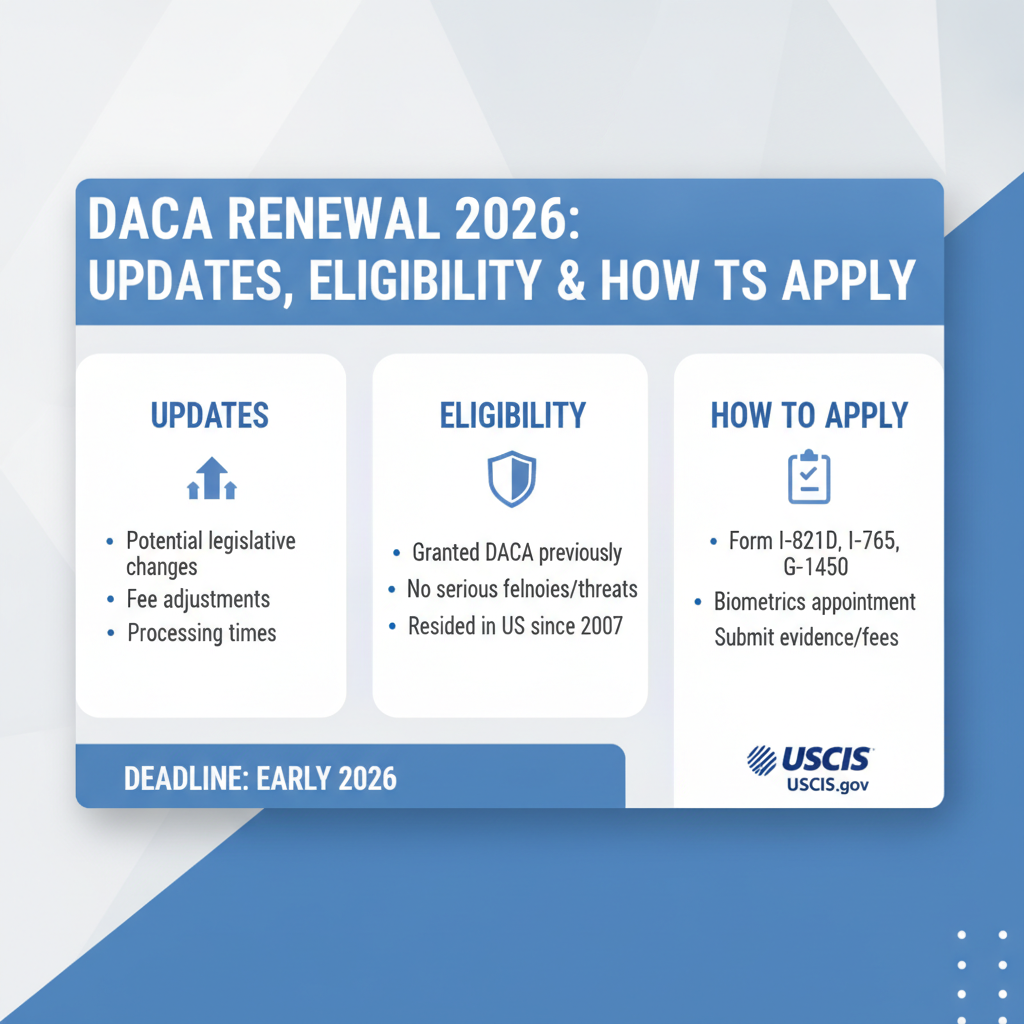
Recent discussions and updates regarding immigration law, particularly those from official government channels like USCIS, continuously highlight the evolving nature of programs like DACA. For the latest insights and official guidance, we monitor sources such as: DACA Program Updates and Renewal Information (USCIS)
What This News Means for Immigrants in Orlando and Across Florida
For hundreds of thousands of DACA recipients, often referred to as "Dreamers," every announcement from USCIS or development in the courts carries significant weight. As of August 30, 2026, the DACA program continues to operate under specific parameters, primarily focusing on renewals rather than new initial applications due to ongoing legal challenges. Understanding these nuances is crucial for maintaining your deferred action and work authorization.
Why this news is showing up now
The DACA program, originally established in 2012, has been a focal point of legal and political debate for over a decade. Its existence has been challenged, defended, and modified through various court rulings and administrative actions. The U.S. Department of Homeland Security (DHS) published a final rule on August 31, 2022, codifying DACA into federal regulation. However, this rule's implementation has been subject to ongoing litigation. A federal court in Texas has held that the DACA program is unlawful and has vacated the 2022 DACA final rule. This ruling has been stayed, allowing current DACA recipients to continue renewing their deferred action and employment authorization. This means that while DACA is currently not accepting new initial applications, renewals remain a lifeline for existing recipients. Therefore, any communication from USCIS about the renewal process, eligibility requirements, or processing times is vital news, as it directly impacts the stability and future of DACA recipients nationwide, including those living in Orlando and throughout Florida.
How it can affect Florida residents
Florida is home to a significant population of DACA recipients, many of whom reside in Central Florida, including Orlando and surrounding counties like Orange and Osceola. These individuals contribute to our economy, serve in various professions, and are integral members of our communities. For Florida residents with DACA, updates on the program directly affect several key aspects of their lives:
- Work Authorization: A timely DACA renewal ensures continued eligibility for an Employment Authorization Document (EAD), allowing them to legally work and support themselves and their families. A lapse in DACA can lead to job loss and financial instability.
- Protection from Deportation: DACA provides temporary protection from removal from the U.S. Without a valid DACA status, individuals become vulnerable to deportation proceedings.
- Driver's Licenses: In Florida, DACA recipients are eligible to obtain a driver's license, which is essential for commuting to work, school, and fulfilling daily responsibilities. Renewal ensures this privilege continues.
- Access to Education: While DACA does not directly grant federal financial aid, it can influence eligibility for in-state tuition at Florida public colleges and universities, offering more affordable educational opportunities for Dreamers.
- Family Stability: Many DACA recipients are parents, spouses, or children of U.S. citizens or lawful permanent residents. Maintaining DACA status helps keep these families intact and prevents separation.
The uncertainty surrounding DACA requires constant vigilance. For Central Florida residents, understanding these updates is not just about legal compliance; it's about securing their future and maintaining their contributions to the vibrant fabric of our state.
Concerned about Your DACA Status? Imigrar provides expert legal guidance for DACA renewals and other immigration matters. Call +1 786-791-3106 for a free consultation. Se Habla Español.
What DACA Is (and Why It Matters)
The Deferred Action for Childhood Arrivals (DACA) program stands as a critical lifeline for hundreds of thousands of young people across the United States. Its existence, while often precarious due to legal and political challenges, provides a measure of stability that profoundly impacts individuals, families, and communities.
A plain-English definition
DACA, or Deferred Action for Childhood Arrivals, is an administrative program that provides temporary protection from deportation and work authorization to eligible young undocumented immigrants who were brought to the U.S. as children. It is not a path to U.S. citizenship or lawful permanent residency, but rather a temporary grant of discretion by the Department of Homeland Security (DHS) to defer removal proceedings against an individual. This deferral is granted for a period of two years and is renewable.
Essentially, DACA means that for a temporary period, the U.S. government agrees not to pursue deportation against you, and it grants you permission to work legally in the country. This allows individuals to pursue education, employment, and contribute more fully to society without the constant fear of being removed from the only country many have ever known.
Key terms you need to know
To fully understand DACA and its implications, it's important to be familiar with several key terms:
- Deferred Action: This is a discretionary determination by USCIS to defer removal action against an individual. It does not grant lawful status but provides temporary relief from deportation.
- Work Authorization: Along with deferred action, DACA recipients are eligible to apply for an Employment Authorization Document (EAD), which allows them to legally work in the United States.
- Dreamers: This is a widely used term referring to young undocumented immigrants who came to the U.S. as children, many of whom are DACA recipients. The term originates from the proposed "DREAM Act" legislation.
- USCIS (U.S. Citizenship and Immigration Services): This is the government agency responsible for processing DACA applications and renewals, as well as managing other immigration benefits. You can find official information and forms on the USCIS official website.
- EAD (Employment Authorization Document): This is the physical card issued by USCIS that serves as proof of your authorization to work in the U.S. It is often referred to as a "work permit."
- Advance Parole: This is a travel document issued by USCIS that allows certain non-citizens to travel outside the U.S. and return without jeopardizing their immigration status. For DACA recipients, Advance Parole is granted only under very limited circumstances (humanitarian, educational, or employment purposes) and is subject to strict eligibility criteria and judicial review. It is crucial to consult an attorney before considering travel with Advance Parole.
- Final Rule: In the context of DACA, the DHS published a final rule in August 2022 to codify the DACA policy into federal regulations. While this aims to provide a more stable legal framework, it remains subject to ongoing court challenges.
DACA matters because it offers a pathway to stability and opportunity for individuals who grew up in the U.S. It allows them to pursue higher education, secure better jobs, purchase homes, and contribute to the economy as taxpayers and consumers. More importantly, it provides a sense of belonging and alleviates the pervasive fear of separation from their families and communities. For families striving to "Keep Families Together," DACA provides essential, albeit temporary, relief.
Current Immigration Law: The Foundation
Understanding DACA requires a grasp of its legal foundation, which is distinct from traditional immigration laws. DACA is not a statute passed by Congress; instead, it is an exercise of prosecutorial discretion by the executive branch. This discretionary nature is why it has been subject to numerous legal challenges and administrative changes over the years.
The program was established through a memorandum issued by then-Secretary of Homeland Security Janet Napolitano on June 15, 2012. This memo outlined the criteria under which certain individuals could request deferred action from removal. While the program has faced legal hurdles, including court orders that have largely halted the processing of new initial DACA applications, renewals for existing recipients continue under the authority of the DHS Final Rule on DACA, published in August 2022, though this rule itself is under judicial review.
Federal requirements
To be eligible for DACA renewal, applicants must meet specific federal criteria established by USCIS. It is critical to note that as of August 30, 2026, USCIS continues to accept and process DACA renewal requests, but generally cannot approve new initial DACA requests due to court injunctions. The eligibility requirements for renewal include:
- Previous DACA Grant: You must have previously been granted DACA.
- Continuous Residence: You must have continuously resided in the United States since you submitted your most recent DACA request that was approved.
- No Disqualifying Travel: You must not have departed the United States without Advance Parole since August 15, 2012.
- No Disqualifying Criminal History or Public Safety Threat: You must not have been convicted of a felony, a significant misdemeanor, or three or more other misdemeanors, and not otherwise pose a threat to national security or public safety.
For DACA renewals, applicants must primarily use two official USCIS forms:
- Form I-821D, Consideration of Deferred Action for Childhood Arrivals: This form is where you formally request deferred action.
- Form I-765, Application for Employment Authorization: This form is used to apply for your EAD, allowing you to legally work in the U.S.
- Form I-765WS, Worksheet: This worksheet must be submitted with Form I-765 to justify your economic need for employment.
All forms and instructions are available on the USCIS official website. Always use the most current versions of the forms.
Florida-specific considerations
While DACA is a federal program, its impact and certain ancillary benefits can vary by state. For Florida residents, particularly those in Orlando and the Central Florida region, there are specific considerations:
- Driver's Licenses: DACA recipients in Florida are eligible to obtain a driver's license from the Florida Department of Highway Safety and Motor Vehicles (FLHSMV). A valid EAD and DACA approval notice are typically required. Ensuring your DACA renewal is processed without a lapse is crucial to maintaining your driving privileges.
- In-State Tuition: Florida residents who are DACA recipients may qualify for in-state tuition at public colleges and universities under specific state policies. This can significantly reduce the cost of higher education, making timely DACA renewal vital for educational pursuits.
- Local Community Engagement: DACA recipients are integral members of Orlando's diverse community. Continued DACA status allows individuals to fully participate in local civic life, volunteer, and contribute to the local economy without fear.
- Orlando USCIS Field Office: While DACA applications are typically mailed to specific USCIS lockbox facilities, residents of Orlando and surrounding areas like Orange County will likely attend their biometrics appointments at the Orlando USCIS Field Office. This office handles interviews and other in-person services for Central Florida residents, emphasizing the importance of local legal support.
The intricate relationship between federal immigration policy and state-level benefits highlights why DACA recipients in Florida must stay informed and seek professional legal assistance for their renewals. Imigrar is deeply familiar with both federal requirements and Florida-specific considerations, ensuring comprehensive support for our clients.
Don't risk your DACA status. Let Imigrar guide you through the renewal process. Schedule your free consultation today: +1 786-791-3106. Se Habla Español.

How to Renew Your DACA: A Complete Step-by-Step Guide
Renewing your DACA is a critical process that requires careful attention to detail and adherence to deadlines. A successful renewal ensures your continued protection from deportation and your eligibility for work authorization. Here is a comprehensive, step-by-step guide for DACA recipients:
1) Determine Your Eligibility for Renewal
Before you begin, confirm that you meet the criteria for DACA renewal. You must have previously been granted DACA. USCIS generally recommends applying for renewal within the 120- to 150-day window before your current DACA and EAD expire. Applying too early (more than 150 days) can lead to rejection, and applying too late (less than 120 days) significantly increases the risk of a lapse in your work authorization.
- Check Your Expiration Date: Locate your current EAD card and DACA approval notice to identify the exact expiration date.
- Review Eligibility: Ensure you have continuously resided in the U.S. since your last DACA approval, have not traveled outside the U.S. without Advance Parole since August 15, 2012, and have no new disqualifying criminal convictions.
Important: If you have any new arrests, charges, or convictions, even if dismissed or expunged, it is absolutely crucial to consult with an immigration attorney immediately before filing your renewal. These could affect your eligibility.
2) Gather Required Documents
Thorough document collection is key to a smooth renewal process. Organize your documents well in advance.
- Previous DACA Approval Notice: A copy of your most recent Form I-797, Approval Notice for DACA.
- Current EAD Card: A clear copy of the front and back of your valid Employment Authorization Document.
- Proof of Continuous Residence: Provide evidence that you have continuously resided in the U.S. since your last DACA approval. This can include:
- School records (transcripts, report cards)
- Employment records (pay stubs, W-2 forms, employment letters)
- Utility bills (electricity, water, gas, internet)
- Bank statements
- Medical records
- Rental agreements or mortgage statements
- Tax returns
- Identity Documents: Copies of your passport, birth certificate with translation (if not in English), or other government-issued identification.
- Passport-Style Photos: Two identical, color, passport-style photographs taken within 30 days of filing your application. Write your name and A-number lightly on the back of each photo.
- Criminal History Records (if applicable): If you have any arrests, charges, or convictions since your last DACA approval, you must include certified copies of court dispositions and police reports. Even minor incidents must be disclosed.
Reminder: For any documents not in English, you must provide a complete and accurate English translation certified by the translator.
3) Complete the Forms
Accuracy and completeness are paramount when filling out your DACA renewal forms.
- Form I-821D, Consideration of Deferred Action for Childhood Arrivals: Fill out every section completely. If a question does not apply to you, write "N/A" (not applicable) or "None" as appropriate. Do not leave blank spaces.
- Form I-765, Application for Employment Authorization: Complete this form carefully, ensuring all information matches your previous applications and current documents. For question 27, your eligibility category will be (c)(33).
- Form I-765WS, Worksheet: This worksheet must be submitted with Form I-765 to explain your economic need for employment. Provide a clear and concise explanation of your financial situation.
- Signature: Crucially, sign and date both Form I-821D and Form I-765 in blue ink. An unsigned form will be rejected.
Warning: Always download the latest versions of these forms from the USCIS Forms page. Outdated forms will be rejected.
4) Prepare Your Application Packet
Organize your documents in a clear and logical order to facilitate USCIS review.
- Cover Letter (Optional but Recommended): A cover letter can list all the forms and supporting documents included in your packet.
- Payment: Include the total filing fee of $495 (as of August 2026, subject to change) consisting of the Form I-765 fee and the biometrics services fee. Payment must be made by money order, personal check, cashier's check, or by credit card using Form G-1450, Authorization for Credit Card Transactions. Make checks payable to "U.S. Department of Homeland Security." Important: USCIS generally does not grant fee waivers for DACA applications.
- Order of Documents: While USCIS doesn't mandate a specific order, a common and helpful arrangement is:
- Check or Money Order (on top of the packet)
- Form G-1450 (if paying by credit card)
- Cover Letter
- Two passport-style photos (placed in a small clear bag and stapled to the upper left corner of Form I-765)
- Form I-821D
- Form I-765
- Form I-765WS
- Copies of your previous DACA approval notice and EAD
- Proof of continuous residence (organized chronologically)
- Identity documents
- Criminal history records (if applicable)
- Make Copies: Make a complete copy of your entire application packet for your records before mailing. This is essential for your personal files and if USCIS requests duplicates or if the original is lost.
5) Mail Your Application
Send your completed application to the correct USCIS lockbox facility. The address depends on your mailing address. Check the USCIS website for direct filing addresses for Form I-821D.
- Use Certified Mail: Always use certified mail with a return receipt requested. This provides proof that you sent the application and that USCIS received it, which can be crucial if there are any disputes or delays.
- Track Your Package: Keep your tracking number and confirmation of delivery.


