


For hundreds of thousands of young immigrants across the United States, including countless individuals and families right here in Orlando and throughout Florida, the Deferred Action for Childhood Arrivals (DACA) program remains a critical lifeline. As of August 20, 2026, DACA continues to be a topic of ongoing discussion, legal challenges, and administrative updates. Navigating these changes can be complex and intimidating, but staying informed and acting proactively is paramount to maintaining your status and protecting your future.
At Imigrar, an immigration law firm based in Orlando, Florida, we understand the profound importance of DACA to our clients and the communities we serve. Our mission, "Keep Families Together," drives our commitment to providing clear, accurate, and actionable legal guidance. This comprehensive guide is designed to cut through the noise, offering you the latest information on DACA updates and a detailed roadmap for successful renewal.
The reporting that sparked this guide
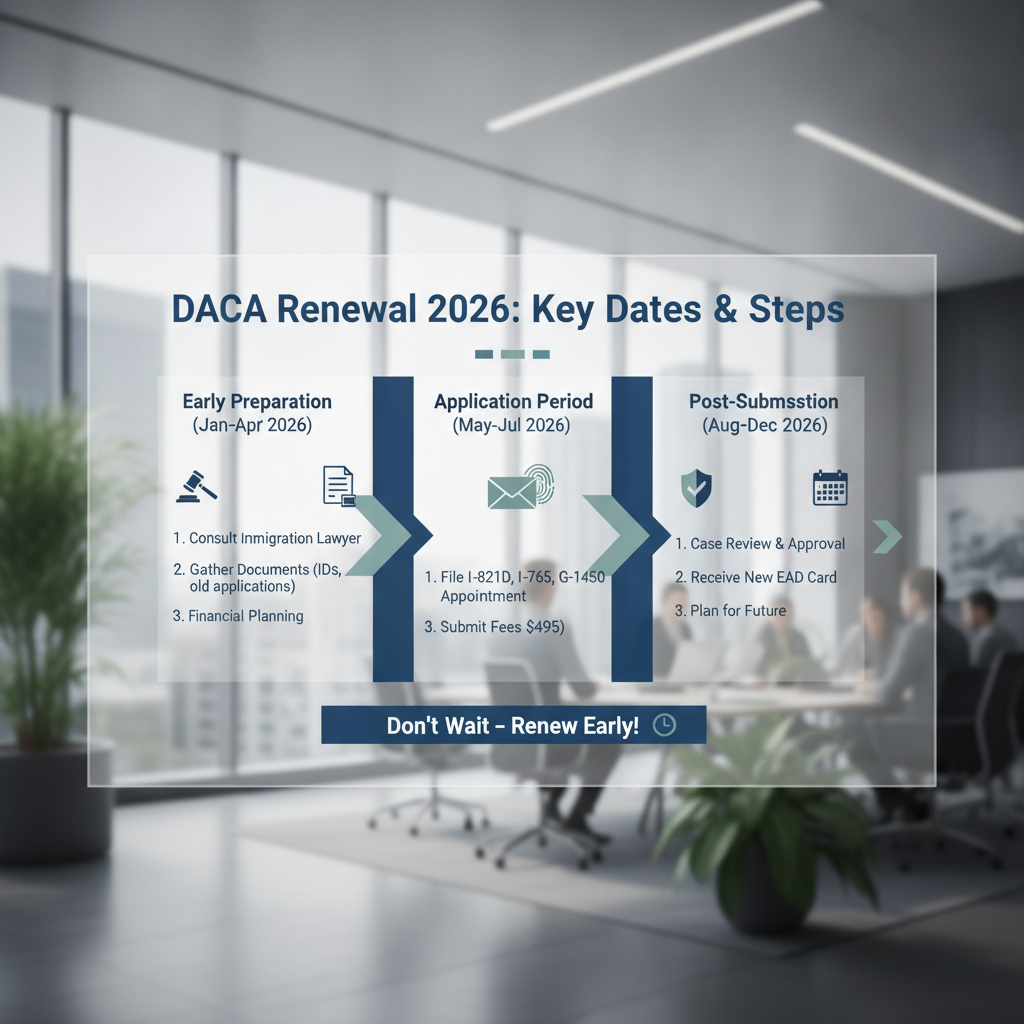
The continuous legal and administrative developments surrounding DACA are regularly featured in national news. The reporting that sparked this guide includes ongoing discussions and updates from USCIS regarding the program's status and renewal processes, as found through general searches for DACA Program Updates and Renewal Information (USCIS). These reports consistently highlight the program's critical role and the need for beneficiaries to remain vigilant about their renewal obligations.
What This News Means for Immigrants in Orlando and Across Florida
The dynamic nature of DACA means that news and updates are a constant part of the immigration landscape. For DACA recipients in Orlando, Tampa, Miami, and every corner of Florida, these updates directly impact your ability to live, work, and contribute to your community without fear.
Why this news is showing up now
DACA, established in 2012, has faced numerous legal and political challenges since its inception. While the program has survived multiple attempts to terminate it, its future remains subject to court decisions and administrative policy shifts. As of August 2026, the program is operating under specific court orders that generally permit renewals but continue to restrict the processing of initial DACA applications for those who have never before received deferred action under the program. This ongoing legal back-and-forth means that any new court ruling, government policy pronouncement, or even a change in the political climate can trigger a fresh wave of news and uncertainty.
The current news cycle often focuses on the stability of the renewal process, the implications of various court injunctions (such as those from the Fifth Circuit Court of Appeals and subsequent lower court rulings), and the administrative efficiency of USCIS in processing applications. For DACA recipients, this means a continuous need to monitor official sources like the USCIS official website and trusted legal counsel to ensure compliance with the latest requirements.
How it can affect Florida residents
Florida is home to a significant population of DACA recipients, often referred to as "Dreamers." According to various reports, thousands of DACA beneficiaries reside in the state, contributing to its economy and cultural fabric. For these individuals and their families, the implications of DACA news are profound:
- Employment Stability: DACA provides essential work authorization (via Form I-765, Employment Authorization Document), allowing recipients to secure jobs, support their families, and pay taxes. Any disruption to the DACA program or delays in renewals can jeopardize employment, leading to financial hardship and uncertainty for families in Orlando, Central Florida, and beyond.
- Educational Opportunities: Many DACA recipients are pursuing higher education in Florida. The ability to maintain DACA status often impacts eligibility for in-state tuition at public universities and colleges, as well as access to certain scholarships and financial aid opportunities.
- Driving Privileges: In Florida, DACA recipients are generally eligible to obtain a driver's license, which is crucial for daily life, commuting to work, and accessing essential services, especially in areas like Orange County where public transportation can be limited. Maintaining DACA is essential for renewing these licenses.
- Sense of Security: Perhaps most importantly, DACA provides a temporary sense of security from deportation. News about the program directly affects the mental well-being and long-term planning of recipients and their families, who often live with the constant fear of separation.
- Local Community Impact: DACA recipients are integral members of Orlando's diverse community, contributing to local businesses, schools, and cultural institutions. The stability of the DACA program directly influences the vibrancy and strength of these communities.
Given the ongoing legal debates, it's more important than ever for DACA recipients in Florida to understand their current status, know their rights, and act decisively when it comes to renewing their deferred action and employment authorization.
Need Help? The DACA landscape can be confusing, but you don't have to navigate it alone. Our Orlando immigration team is ready to assist. Call +1 786-791-3106 for a free consultation, or message us online. Se Habla Español.
What DACA Is (and Why It Matters)
Understanding DACA is the first step toward effectively managing your immigration journey. It’s more than just a piece of paper; it’s a program that offers vital protections and opportunities.
A plain-English definition
DACA stands for Deferred Action for Childhood Arrivals. It is a U.S. immigration policy that allows certain undocumented immigrants who entered the country as minors to receive a renewable two-year period of deferred action from deportation and eligibility for a work permit. "Deferred action" means that the government agrees not to pursue your deportation for a specific period. It is not a path to U.S. citizenship or a green card, but it provides temporary legal presence and the ability to work lawfully in the United States.
The program was established by the Department of Homeland Security (DHS) in June 2012 under the Obama administration, recognizing the unique circumstances of young people who grew up in the U.S. and consider it their home. The core idea is to allow these individuals, often referred to as "Dreamers," to continue living and contributing to the country without the constant fear of removal.
Key terms you need to know
Navigating DACA involves specific terminology. Here are some key terms explained simply:
- Deferred Action: This is the core benefit of DACA. It means the government has chosen to "defer" (postpone) any action to remove you from the country for a specific period, typically two years. It does not grant you legal status or a visa, but it provides temporary protection.
- Dreamers: A widely used term for young undocumented immigrants who were brought to the U.S. as children. The name comes from the proposed "DREAM Act" (Development, Relief, and Education for Alien Minors Act), which sought to provide a pathway to legal status for these individuals. While DACA is not the DREAM Act, the term "Dreamers" is often used interchangeably with DACA recipients.
- Employment Authorization Document (EAD): Also known as a work permit, this is the card issued by USCIS (Form I-765) that proves you are authorized to work legally in the U.S. DACA recipients are eligible for an EAD, which is valid for the duration of their deferred action period.
- Initial Application: This refers to the very first time someone applies for DACA. As of August 2026, due to ongoing court orders, USCIS is generally *not* processing initial DACA applications. This guide primarily focuses on renewals.
- Renewal Application: This is the process DACA recipients undertake every two years to extend their deferred action and employment authorization. This is the critical process for current DACA beneficiaries.
- USCIS: The United States Citizenship and Immigration Services. This is the government agency responsible for administering DACA and processing all related forms and applications. You can find official information and forms on the USCIS official website.
- Biometrics Appointment: A scheduled appointment at an Application Support Center (ASC) where USCIS collects your fingerprints, photograph, and signature for background checks. This is a standard part of the DACA renewal process.
Understanding these terms is crucial as you prepare your DACA renewal application. It empowers you to comprehend official communications and make informed decisions about your immigration future.
Current Immigration Law: The Foundation for DACA
While DACA is a discretionary program, its operation is deeply intertwined with established immigration law and administrative procedures. It's important to recognize that DACA is not a statute passed by Congress, but rather an exercise of prosecutorial discretion by the executive branch through the Department of Homeland Security.
Federal requirements
The DACA program was created through a memo from then-Secretary of Homeland Security Janet Napolitano. Its legal challenges have often revolved around whether the executive branch exceeded its authority under the Administrative Procedure Act (APA) in creating the program without formal rulemaking procedures. Despite these challenges, the core eligibility criteria for DACA, as initially established and largely maintained for renewals, are federal in nature. To be considered for DACA, an individual must demonstrate they meet several requirements:
- Entered the U.S. Before Age 16: You must have been under the age of 16 when you entered the United States.
- Continuous Residence: You must have continuously resided in the U.S. since June 15, 2007, up to the present time. Brief, casual, and innocent departures do not break continuous residence.
- Physical Presence: You must have been physically present in the U.S. on June 15, 2012, and at the time of filing your DACA request.
- Age Requirement: You must have been under the age of 31 on June 15, 2012. You must also be at least 15 years old at the time of filing, unless you are in removal proceedings or have a final removal order or voluntary departure order.
- Education or Military Service: You must currently be in school, have graduated or obtained a certificate of completion from high school, have obtained a general education development (GED) certificate, or be an honorably discharged veteran of the Coast Guard or Armed Forces of the United States.
- No Disqualifying Criminal History: You must not have been convicted of a felony, a significant misdemeanor, or three or more other misdemeanors, and not otherwise pose a threat to national security or public safety.
Important: As of August 20, 2026, USCIS is generally only accepting DACA renewal requests. Initial DACA applications are not being processed due to ongoing court orders, meaning individuals who have never received DACA before cannot currently apply. This situation is subject to change based on future court decisions or administrative actions, so it's vital to check the USCIS official website for the absolute latest policy.
The primary forms used for DACA renewals are: Form I-821D (Consideration of Deferred Action for Childhood Arrivals), Form I-765 (Application for Employment Authorization), and Form I-765WS (Worksheet for Form I-765). These forms, along with detailed instructions, can be found directly on the USCIS Forms page.
Florida-specific considerations
While DACA is a federal program, its impact and certain state-level considerations can affect recipients in Florida:
- Driver's Licenses: DACA recipients in Florida are generally eligible to obtain a Florida driver's license upon presentation of their EAD and other required identity documents. Ensuring your DACA and EAD are renewed on time is crucial to maintaining this privilege. The Florida Department of Highway Safety and Motor Vehicles (FLHSMV) requires valid immigration documents.
- In-State Tuition: Florida law has provisions that allow certain DACA recipients, under specific circumstances, to qualify for in-state tuition rates at public colleges and universities. This can significantly reduce the cost of higher education. Eligibility typically depends on meeting residency requirements and other state-specific criteria, often tied to continuous enrollment and graduation from a Florida high school.
- Local Resources: Communities in Florida, including Orlando and Orange County, often have non-profit organizations and legal aid groups that provide assistance and resources to immigrant communities, including DACA recipients. These organizations can offer valuable support, though they do not replace the need for qualified legal counsel for complex cases.
- "Sanctuary" Policies: Florida does not have "sanctuary city" policies; in fact, state law generally prohibits them. This means local law enforcement agencies are often required to cooperate with federal immigration authorities. For DACA recipients, this reinforces the importance of maintaining valid DACA status and avoiding any interactions with the criminal justice system that could jeopardize their deferred action.
Given the specific nuances of Florida law and policy, consulting with an immigration attorney familiar with both federal DACA requirements and state-level impacts is always advisable for residents of Central Florida.
Don't Risk Your DACA Status! Filing your renewal correctly is essential. Let Imigrar's experienced Orlando immigration attorneys guide you through every step. Call +1 786-791-3106 today for your free consultation. Se Habla Español.

How to Renew Your DACA: A Complete Step-by-Step Guide
Renewing your DACA is a critical process that requires meticulous attention to detail and timely action. This guide focuses on the renewal process, as initial applications are currently not being accepted by USCIS (as of August 2026). Follow these steps carefully to maximize your chances of a successful renewal.
1) Determine Your Eligibility for Renewal
Before you begin gathering documents, confirm that you still meet the DACA renewal criteria. The eligibility requirements for renewal are largely the same as the initial criteria, with an emphasis on maintaining continuous residence and a clean record since your last DACA approval.
- Continuous Residence: You must have continuously resided in the United States since you submitted your most recent DACA request that was approved. Brief, casual, and innocent travel outside the U.S. that was authorized by USCIS (through advance parole) does not break continuous residence. However, unauthorized travel or extended absences can disqualify you.
- No Disqualifying Criminal History: Since your last DACA approval, you must not have been convicted of a felony, a significant misdemeanor, or three or more other misdemeanors. Any new arrests or convictions, even for minor offenses, can jeopardize your renewal. It is crucial to disclose all interactions with law enforcement, even if charges were dropped or expunged.
- Physical Presence: You must be physically present in the U.S. at the time of filing your renewal application.
- Timely Filing: It is highly recommended to file your renewal application within the 120- to 150-day window before your current DACA and EAD expire. Filing too early (more than 150 days) may result in rejection, and filing too late (less than 120 days) significantly increases the risk of a lapse in your work authorization and deferred action. USCIS processing times can vary significantly; check USCIS Processing Times for current estimates.
Action: Review your personal history since your last DACA approval. If you have any concerns about criminal history or travel, consult an immigration attorney immediately.
2) Gather All Required Documents
A complete application packet is crucial. Missing documents or insufficient evidence can lead to delays or even denial. Here's a list of essential documents for your DACA renewal:
- Previous DACA Approval Notices: Include copies of your most recent Form I-797 Approval Notice for Form I-821D and Form I-765.
- Current Employment Authorization Document (EAD): Provide a copy of the front and back of your most recent EAD card.
- Identification: A copy of your birth certificate (with certified translation if not in English), passport, or other government-issued identification.
- Proof of Continuous Residence (since your last DACA approval): While USCIS may not always request new evidence for renewals if your prior record was sufficient, it's wise to be prepared. Examples include:
- School records (transcripts, report cards)
- Employment records (pay stubs, W-2 forms, employment letters)
- Medical records (doctor's visits, hospital records)
- Rental agreements, utility bills
- Bank statements
- Dated photographs, affidavits from friends/family
- Passport-Style Photographs: Two identical, color passport-style photos taken within 30 days of filing. Write your name and A-number lightly on the back of each photo.
- Criminal History Documentation (if applicable): If you've had any arrests, citations, or convictions since your last DACA approval, you must include certified court dispositions, police reports, and any other relevant documentation, even if charges were dismissed or expunged. Failure to disclose this information is a serious mistake.
Reminder: Always submit copies of your documents, not originals, unless USCIS specifically requests an original. Organize your documents neatly.
3) Complete Forms I-821D, I-765, and I-765WS
These are the primary forms for your DACA renewal. Accuracy and completeness are paramount.
- Form I-821D, Consideration of Deferred Action for Childhood Arrivals:
- Fill out every field. If a question does not apply, write "N/A" (not applicable) or "None."
- Ensure your name, address (especially if you've moved within Orlando or Florida), date of birth, and A-number are consistent with previous applications and identification documents.
- Carefully answer all questions related to continuous residence, education, and criminal history.
- Sign and date the form. An unsigned form will be rejected.
- Form I-765, Application for Employment Authorization:
- This form requests your work permit.
- For Question 27, your eligibility category will almost certainly be (c)(33).
- Ensure all personal information matches Form I-821D.
- Sign and date the form.
- Form I-765WS, Worksheet for Form I-765:
- This form is required to demonstrate your economic need for employment authorization.
- Provide details about your income, expenses, and assets. Even if you are unemployed, explain your financial need.
- Sign and date the form.
Warning: Use black ink only. Avoid white-out or excessive corrections. If you make a significant error, it's better to start with a fresh form. Do not leave any required fields blank. If you need assistance with Spanish translation or understanding any part of the forms, Imigrar offers support in both English and Spanish.
4) Pay the Filing Fees
The filing fees for DACA renewal are substantial and must be paid correctly. As of August 2026, the combined fee is $495, which includes:
- Form I-821D: No fee.
- Form I-765: $410 (Application for Employment Authorization).
- Biometrics Services Fee: $85.
- Payment Method: You can pay by money order, personal check, cashier's check, or by credit card using Form G-1450, Authorization for Credit Card Transactions.
- Checks/Money Orders: Make payable to "U.S. Department of Homeland Security." Do not abbreviate. Ensure the amount is exact. Write your A-number on the memo line.
- Fee Waivers: Fee waivers for DACA renewals are very rarely granted and are typically only considered in extreme circumstances. USCIS generally expects DACA recipients to pay the full fee. If you believe you qualify for a fee waiver, consult an attorney as the criteria are very strict and denial of the waiver will delay your application.
Important: Include your payment with your application packet. Incorrect payment or missing payment will lead to rejection of your application.
5) Assemble Your Application Packet
Organizing your application packet correctly helps USCIS process your request efficiently. While there's no single "official" order, this is a widely accepted and recommended method:
- Cover Letter (Optional but Recommended): A brief letter listing the contents of your packet and your A-number.
- Payment: Check, money order, or Form G-1450 on top.
- Passport-Style Photographs: Place in a small envelope securely attached to the top of the packet, or paper-clipped to the forms.
- Form I-821D (signed and dated).
- Form I-765 (signed and dated).
- Form I-765WS (signed and dated).
- Supporting Documents (in order):
- Copy of current EAD (front and back).
- Copy of most recent Form I-797C Approval Notice for DACA.
- Proof of continuous residence since last approval (if providing new evidence).
- Criminal history documentation (if applicable).
- Other identification documents.
Recommendation: Use a binder clip to secure the entire packet. Do not staple forms together unless specifically instructed, as this can interfere with scanning. Make a complete copy of your entire assembled packet for your records before mailing.
6) Mail Your Application to the Correct USCIS Lockbox Facility
The correct mailing address depends on your state of residence. For Florida residents, you will mail your DACA renewal application to the USCIS Chicago Lockbox facility. It's crucial to use the correct address for the U.S. Postal Service (USPS) or courier service (FedEx, UPS).
- For USPS (U.S. Postal Service) deliveries:
USCIS
Related Articles
You may also be interested in:
-
TPS Extension News 2026: Your Guide to Re-registration in Florida
Stay informed about the latest TPS extension news impacting immigrants in Florida and nationwide. Our comprehensive guide covers eligibility, re-regis...
-
Orlando Guide to Family-Based Immigration Petitions 2026
Navigating family-based immigration can be complex. Our 2026 guide provides Orlando and Florida families with step-by-step instructions, current laws,...
-
Navigating USCIS Processing Times 2026: Your Orlando Immigrant's
Understand the latest USCIS processing time updates for 2026 and what they mean for your immigration journey in Florida. Get practical advice, timelin...
-
H-1B Lottery Shake-Up for FY2027: New Rules & Your Path Forward
Major H-1B visa lottery changes for FY2027 are here, impacting hopeful immigrants nationwide. Learn what's new, how it affects you, and how Imigrar ca...
-
TPS Extension News 2026: Your Guide to Re-registration in Florida


