


Navigating the ever-evolving landscape of U.S. immigration policy can be daunting, especially for those whose lives are directly impacted by programs like Deferred Action for Childhood Arrivals (DACA). At Imigrar, we understand the uncertainty and stress that DACA recipients and their families face. Our mission, "Keep Families Together," drives us to provide clear, actionable information and expert legal support.
Today, 2026-07-06, we’re addressing the latest updates concerning the DACA program, focusing on renewal information to help you maintain your deferred action status and employment authorization.
The reporting that sparked this guide
DACA Program Updates and Renewal Information (USCIS)
What This News Means for Immigrants in Orlando and Across Florida
The DACA program, while a lifeline for hundreds of thousands of young people, has been subject to continuous legal and administrative challenges since its inception in 2012. For beneficiaries, this means a constant need to stay informed about policy changes, court rulings, and renewal requirements.
Why this news is showing up now
The DACA program remains in a precarious legal state. Following various court decisions, including the ongoing litigation in the Fifth Circuit Court of Appeals and subsequent injunctions, U.S. Citizenship and Immigration Services (USCIS) is generally prohibited from approving new, initial DACA requests. However, USCIS continues to accept and process DACA renewal requests from individuals who previously held DACA status. The news and updates around DACA are continuous because the program's legal future is still undecided, leading to a dynamic environment where administrative guidance and court orders can change how renewals are processed or what requirements might apply. As of July 6, 2026, the focus remains squarely on ensuring current DACA recipients can renew their status without interruption, while the broader legal battle over the program's existence plays out.
How it can affect Florida residents
For the tens of thousands of DACA recipients living in Florida, including a significant population in Orlando and throughout Central Florida, these updates are not abstract legal concepts; they are about livelihoods, educational opportunities, and the ability to live without constant fear of deportation. Florida's DACA recipients rely on their deferred action status to work legally, pursue higher education, and obtain driver's licenses, allowing them to contribute to the state's economy and culture. Any delay in renewal processing or changes in policy can have immediate and severe consequences, impacting families and communities. The ability to travel for work or family, access professional licenses, or even maintain banking relationships can hinge on a timely DACA renewal. Therefore, understanding the current rules and adhering strictly to the renewal process is paramount for Florida residents. Imigrar is strategically located in Orlando to serve these critical needs, offering localized expertise for those in Orange County and along the I-4 corridor.
Need Help? Our Orlando immigration team is ready to assist. Call +1 786-791-3106 for a free consultation, or message us online. Se Habla Español.
What DACA Is (and Why It Matters)
Deferred Action for Childhood Arrivals (DACA) is an immigration policy established by the Obama administration in June 2012. It offers certain undocumented young people who came to the U.S. as children a temporary reprieve from deportation and the opportunity to obtain a renewable two-year work permit. While DACA does not provide a path to lawful permanent residency or U.S. citizenship, it offers significant protections and opportunities.
A plain-English definition
Imagine DACA as a temporary shield. It doesn't give you a green card or make you a citizen, but it tells the government, "For now, we won't try to deport you." It also allows you to legally work in the U.S. for a two-year period, which can be renewed. To qualify, you generally had to have come to the U.S. before your 16th birthday, been under 31 on June 15, 2012, continuously resided in the U.S. since June 15, 2007, and have no serious criminal record. Crucially, as of 2026-07-06, USCIS is only accepting DACA renewal applications; new, initial applications are not being processed due to court injunctions.
Key terms you need to know
- Deferred Action: This is the core of DACA. It means the government has decided to postpone or defer taking action against you (i.e., deportation). It's a temporary exercise of prosecutorial discretion and can be revoked.
- Employment Authorization Document (EAD): Often referred to as a "work permit," this card (Form I-766) allows DACA recipients to legally work in the United States. It is typically valid for two years and is tied to your DACA status.
- USCIS (U.S. Citizenship and Immigration Services): This is the federal agency responsible for administering immigration and naturalization benefits, including processing DACA applications and renewals. You will interact with USCIS for all your DACA-related filings.
- Dreamers: This is a widely used term to describe young undocumented immigrants who were brought to the U.S. as children. While DACA specifically refers to those who meet its criteria, "Dreamer" is a broader term often used in advocacy for legislative solutions for these individuals.
- Continuous Presence: A requirement for DACA eligibility, meaning you have remained physically present in the United States for a specified period without significant breaks.
- Biometrics Appointment: A mandatory appointment at a USCIS Application Support Center (ASC) where your fingerprints, photograph, and signature are collected for background checks.
DACA matters because it has allowed hundreds of thousands of young people to pursue higher education, build careers, buy homes, and contribute openly to their communities. It has provided stability and a sense of belonging to individuals who consider the U.S. their only home.
Current Immigration Law: The Foundation for DACA
It's important to clarify that DACA itself is not a federal statute or "law" passed by Congress. Instead, it is an exercise of "prosecutorial discretion" by the executive branch, allowing the Department of Homeland Security (DHS) to defer deportation for certain individuals. This distinction is crucial because it means DACA's existence and scope are vulnerable to changes in administration policy and court rulings, rather than requiring an act of Congress to repeal or amend. However, the program operates within the broader framework of existing immigration laws and regulations.
The legal basis for DACA stems from the inherent authority of the executive branch to set enforcement priorities and exercise discretion in immigration matters. This authority is derived from various statutes, including the Immigration and Nationality Act (INA), which grants the Attorney General and, by delegation, the Secretary of Homeland Security, broad powers over immigration enforcement.
Currently, the DACA program is subject to a 2021 order from the U.S. District Court for the Southern District of Texas, which found the DACA memorandum unlawful. This decision was largely affirmed by the U.S. Court of Appeals for the Fifth Circuit in 2022. The injunction prohibits USCIS from granting initial DACA requests and related employment authorization documents. However, the court's order allowed USCIS to continue processing DACA renewal applications and associated employment authorization documents for current DACA recipients. This legal landscape means the priority for all eligible DACA recipients must be timely renewal.
Federal requirements for DACA Renewal
To be eligible to renew your DACA, you must meet several key federal requirements, as outlined by USCIS. These include:
- You must have previously received DACA.
- You must not have departed the United States without advance parole on or after August 15, 2012.
- You must have continuously resided in the United States since you submitted your most recent DACA request that was approved.
- You must not have been convicted of a felony, a significant misdemeanor, or three or more other misdemeanors, and not pose a threat to national security or public safety.
Important: Even minor infractions can potentially impact your eligibility, so it is critical to consult with an immigration attorney if you have any arrests or convictions, regardless of how minor they may seem.
To renew, you will need to submit specific forms to USCIS:
- Form I-821D, Consideration of Deferred Action for Childhood Arrivals
- Form I-765, Application for Employment Authorization
- Form I-765WS, Worksheet (This form helps you determine if you need to submit additional information or documentation, particularly concerning financial need for fee waivers, though fee waivers are rarely granted for DACA renewals).
You can find the most up-to-date versions of these forms and detailed instructions on the USCIS Forms page. Always download forms directly from the USCIS website to ensure you are using the correct version.
Florida-specific considerations
While DACA is a federal program, its impact is felt at the state level. In Florida, DACA recipients, once they receive their Employment Authorization Document (EAD), can apply for a Florida driver's license or state identification card. This is a critical benefit for daily life, employment, and personal mobility, especially in a state like Florida where public transportation outside major city centers can be limited. The Florida Department of Highway Safety and Motor Vehicles (FLHSMV) accepts the EAD (Form I-766) as proof of legal presence. However, state policies regarding benefits for DACA recipients can fluctuate. While some states offer in-state tuition for DACA students, Florida's policies have been more restrictive, though advocacy efforts continue. It's always wise for Florida DACA recipients to stay informed about any state-level legislative changes that could impact their lives.
The Orlando USCIS Field Office primarily handles interviews and certain in-person services, but DACA renewal applications are mailed to specific USCIS Lockbox facilities. However, if you are called for a biometrics appointment, it will likely be at an Application Support Center (ASC) in Central Florida, with the Orlando ASC being a common location. Imigrar assists clients throughout Orlando, Orange County, and the broader Central Florida region in understanding these local nuances and ensuring a smooth process.
For more official information, always refer to the USCIS official website.
How to Renew Your DACA: A Complete Step-by-Step Guide
Renewing your DACA is a critical process that requires precision and attention to detail. Missing a deadline or submitting an incomplete application can lead to a lapse in your work authorization and deferred action status, which can have severe consequences. Follow this comprehensive guide to ensure a successful renewal.
1) Determine Your Eligibility for Renewal
Before you begin assembling documents, confirm you meet the core requirements for DACA renewal. Remember, initial DACA applications are currently not being accepted. You must:
- Have previously been granted DACA status.
- Not have departed the U.S. without advance parole on or after August 15, 2012.
- Have continuously resided in the U.S. since your last DACA approval.
- Not have been convicted of a felony, a significant misdemeanor, or three or more other misdemeanors.
- Not pose a threat to national security or public safety.
Important: If you have had any encounters with law enforcement, even minor ones, or if you are unsure about your continuous presence, it is absolutely essential to consult an immigration attorney before filing. Do not assume a minor traffic ticket or an old misdemeanor won't affect your case. It is better to address potential issues proactively.
2) Gather Required Documents
Thorough documentation is key. Make sure you have all necessary paperwork ready. You should make copies of everything you send to USCIS and keep them for your records.
- Copy of your most recent DACA approval notice (Form I-797).
- Copy of your most recent Employment Authorization Document (EAD) (Form I-766).
- Two passport-style photos. These must be taken within 30 days of filing your application. Write your name and A-number (Alien Registration Number) lightly on the back of each photo.
- Proof of continuous residence since your last DACA approval. While USCIS typically does not require extensive evidence for renewals if your previous DACA was approved, it is wise to have some recent documents on hand in case they issue a Request for Evidence (RFE). Examples include:
- School transcripts or diplomas
- Employment records (pay stubs, W-2s)
- Bank statements
- Rental agreements, utility bills
- Medical records
- Tax returns
- Proof of identity: Copy of your birth certificate, passport, or other government-issued ID.
- Any new criminal history documentation. If you have been arrested or convicted of any crime since your last DACA approval, you must include certified court dispositions and police reports. Warning: Failure to disclose criminal history can lead to denial and severe immigration consequences.
Reminder: Do not send original documents unless specifically requested by USCIS. Send clear photocopies.
Need Help? Our Orlando immigration team is ready to assist. Call +1 786-791-3106 for a free consultation, or message us online. Se Habla Español.
3) Complete the Necessary Forms
You will need to complete and sign three forms:
- Form I-821D, Consideration of Deferred Action for Childhood Arrivals: Fill out every section accurately and completely. If a section does not apply to you, write "N/A" (not applicable) or "None."
- Form I-765, Application for Employment Authorization: Ensure you select the correct eligibility category, which is (c)(33) for DACA recipients.
- Form I-765WS, Worksheet: This form helps determine if you need to submit additional information or documentation.
Important:
- Use black ink only.
- Do not leave any questions blank. If a question doesn't apply, write "N/A." If the answer is zero or none, write "None."
- Sign each form in the appropriate signature fields. An unsigned form will be rejected.
- Always use the latest version of the forms available on the USCIS Forms page.
4) Calculate and Pay Fees
The total filing fee for DACA renewal is currently $495. This includes:
- $410 for Form I-765 (Application for Employment Authorization).
- $85 for biometrics services.
You must pay the fee with a money order, personal check, cashier's check, or by credit card using Form G-1450, Authorization for Credit Card Transactions. Make checks payable to "U.S. Department of Homeland Security." Do not send cash. Ensure the check is correctly written and signed, as errors can cause delays or rejections.
Fee Waivers: USCIS rarely grants fee waivers for DACA renewal requests. Only in very limited circumstances, such as for individuals who are homeless, in foster care, or have debilitating medical conditions that prevent them from working, might a fee waiver be considered. If you believe you qualify, you must submit Form I-912, Request for Fee Waiver, with substantial evidence. Consulting an attorney is highly recommended if you intend to request a fee waiver.
5) Assemble Your Application Packet
Organizing your application packet correctly can help ensure smooth processing. While USCIS doesn't mandate a specific order, this is a generally accepted best practice:
- Cover Letter: (Optional, but recommended) A brief letter outlining the contents of your application, your name, A-number, and the forms included.
- Payment: Check or money order clipped to the top of Form I-765, or Form G-1450 if paying by credit card.
- Form I-821D
- Form I-765
- Form I-765WS
- Supporting Documents:
- Two passport-style photos (placed in a small envelope and stapled to Form I-765).
- Copy of your most recent DACA approval notice (Form I-797).
- Copy of your most recent EAD (Form I-766).
- Copies of any new criminal history records (if applicable).
- Copies of continuous residence proof (if significant changes or requested).
- Any other requested documentation.
Reminder: Do not staple the entire package together. Use a single paper clip for each set of forms and their immediate supporting documents. Do not use binders or dividers unless specifically instructed.
6) Mail Your Application
Mail your complete application packet to the correct USCIS Lockbox facility. The mailing address depends on the state you reside in. For Florida residents, you will typically mail your DACA renewal application to the USCIS Chicago Lockbox. Always double-check the "Where to File" instructions on the USCIS website for Forms I-821D and I-765, as addresses can change.
- Regular Mail: Use U.S. Postal Service (USPS) for most submissions.
- Courier Service: If using FedEx, UPS, or DHL, there is a separate street address.
- Certified Mail with Return Receipt: It is highly recommended to send your application via Certified Mail with Return Receipt requested. This provides proof that you sent the application and that USCIS received it, which is invaluable if there are any questions about your filing date.
Warning: Ensure your envelope is correctly addressed and has sufficient postage. An incorrectly addressed or underpaid envelope can lead to delays or rejection.
7) Attend Biometrics Appointment (If Required)
After USCIS receives your application, they will send you a receipt notice (Form I-797C). Within a few weeks to a few months, you will likely receive a separate appointment notice (Form I-797C) for a biometrics appointment at an Application Support Center (ASC). For Orlando residents, this will typically be at the Orlando ASC.
- Attend on time: It is crucial to attend your biometrics appointment as scheduled.
- Bring required documents: Take your appointment notice, a valid photo ID (e.g., driver's license, passport, EAD), and a copy of your DACA application.
- No interview: This is generally not an interview; it's just for fingerprinting, photos, and signature collection.
If you cannot attend your scheduled appointment, immediately contact USCIS to request a reschedule, providing a valid reason. Failure to attend without rescheduling can lead to your application being considered abandoned.
After your biometrics, your application will be reviewed by a USCIS officer. You may receive a Request for Evidence (RFE) if they need more information, or a Notice of Intent to Deny (NOID) if they are considering denying your case. Responding promptly and thoroughly to RFEs and NOIDs is critical, and legal assistance is highly recommended in such situations.
Practical Steps You Can Take Today for DACA Renewal
Proactive preparation is your best defense against processing delays and potential lapses in DACA status. Here's what you can do now:
Actionable Checklist:
- Check Your Expiration Date: Locate your current EAD (Form I-766) and DACA approval notice (Form I-797). Note the expiration date.
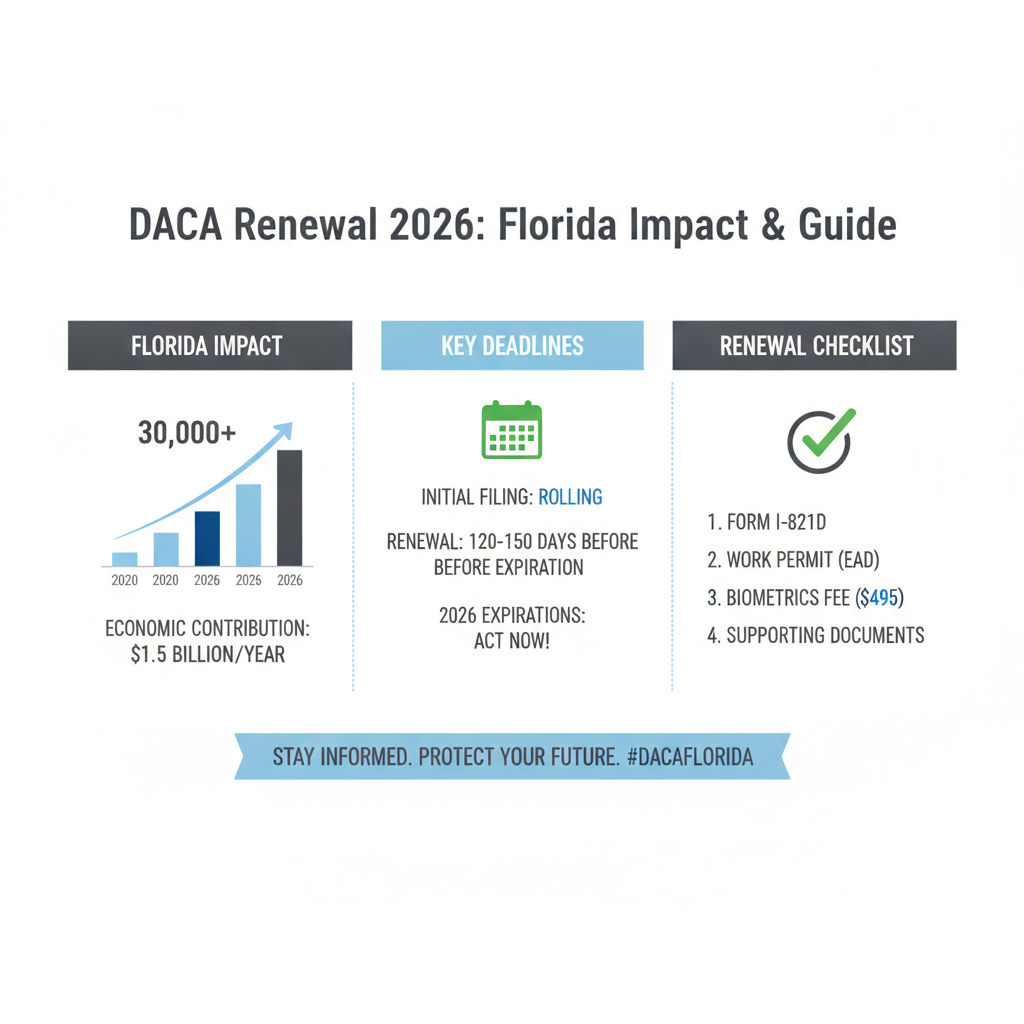
- Mark Your Calendar: Set a reminder to start preparing your renewal application 120 to 150 days before your DACA and EAD expire. Filing too early (more than 150 days) can lead to rejection, and filing too late risks a gap in your work authorization.
- Review Your Criminal History: Objectively assess if you have had any arrests, charges, or convictions since your last DACA approval. Gather all certified court dispositions and police reports. Even if charges were dropped or expunged, you must disclose them.
- Update Your Address with USCIS: If you have moved, file Form AR-11, Alien's Change of Address Card, online or by mail within 10 days of moving. This ensures you receive all USCIS notices.
- Start Saving for Fees: The $495 filing fee is a significant expense. Begin setting aside funds well in advance.
- Organize Existing Documents: Create a dedicated folder for all your DACA-related documents, including previous applications, approval notices, and EADs.
- Consult an Attorney: If you have any doubts about your eligibility, criminal history, continuous residence, or the application process itself, schedule a consultation with an experienced immigration attorney at Imigrar.
Document Preparation Guidance:
- Make Copies: Always make at least two copies of every document you send to USCIS and keep them in a safe place.
- Chronological Order: If submitting multiple documents for continuous residence (e.g., bank statements, pay stubs), arrange them in chronological order.
- Clarity: Ensure all photocopies are clear and legible. If a document is in a foreign language, it must be accompanied by a full English translation certified by the translator.
- No Staples (Generally): Avoid stapling entire packets. Use paper clips to secure individual form sets and their immediate supporting documents.
Timeline Expectations:
- Filing Window: File your DACA renewal application between 120 and 150 days before your current DACA and EAD expire.
- Receipt Notice: You should receive a receipt notice (Form I-797C) from USCIS within 2-4 weeks of filing.
- Biometrics Appointment Notice: The notice for your biometrics appointment typically arrives 4-8 weeks after filing. The appointment itself is usually scheduled 2-4 weeks after the notice.
- Processing Times: USCIS processing times for DACA renewals can vary significantly. You can check current estimates for the service center handling your application on the USCIS Processing Times page. Be prepared for processing to take anywhere from 3 to 6 months, sometimes longer.
- Approval and EAD: If approved, you will receive a new DACA approval notice (Form I-797) and your new EAD (Form I-766) in the mail.
Important: If your EAD expires while your renewal application is pending, you will lose your work authorization temporarily until your new EAD arrives. This gap can impact employment, so filing within the recommended 120-150 day window is crucial to minimize this risk.

How Imigrar Helps DACA Recipients in Orlando
At Imigrar, we understand the unique challenges and uncertainties faced by DACA recipients and their families in Orlando and across Florida. Our firm is dedicated to providing compassionate, knowledgeable, and effective legal representation to "Keep Families Together."
Our experienced immigration attorneys have a deep understanding of DACA policy, the evolving legal landscape, and USCIS procedures. We regularly assist clients with:
- Eligibility Assessment: Thoroughly reviewing your history to confirm you meet all DACA renewal requirements and identify any potential issues that need to be addressed.
- Application Preparation: Guiding you through the completion of all necessary forms (Form I-821D, Form I-765, Form I-765WS), ensuring accuracy and completeness to minimize the risk of delays or rejections.
- Document Collection: Advising on the precise documents needed for your renewal, especially if you have had any


