


What This News Means for Immigrants in Orlando and Across Florida
Why this news is showing up now
The DACA program, established in 2012, has faced persistent legal and political challenges. Its existence has been debated in courts across the nation, leading to periods of uncertainty, policy changes, and injunctions. The news surrounding DACA is cyclical, driven by court rulings, administrative policy adjustments by the Department of Homeland Security (DHS) and USCIS, and legislative efforts (or lack thereof) in Congress. In recent years, federal courts have played a significant role in shaping the program's current status. While initial DACA applications have largely remained blocked for new applicants due to court orders, **USCIS** has consistently been permitted to process DACA renewal requests. This ongoing legal battle means that every few months, there are developments, statements, or procedural updates from **USCIS** or the courts that warrant attention. For DACA recipients, staying informed is not just advisable; it's essential to maintaining their status. The current environment (mid-2026) reflects continued administrative processing of renewals, alongside the persistent legal challenges that could impact the program's future.How it can affect Florida residents
Florida is home to a significant population of DACA recipients, many of whom reside in major metropolitan areas like Orlando, Miami, and Tampa. For these individuals and their families, any news regarding DACA has direct and profound implications. * **Work Authorization:** A primary benefit of DACA is the **Employment Authorization Document (EAD)**, which allows recipients to legally work in the U.S. Any disruption to DACA or its renewal process directly threatens their ability to maintain employment, support their families, and contribute to Florida's economy. Many Dreamers in Orlando and across Central Florida are vital contributors to various industries, from hospitality to healthcare. * **Education:** DACA recipients in Florida have pursued higher education, often qualifying for in-state tuition at public colleges and universities, provided they meet specific residency requirements. Renewing DACA ensures they can continue their studies without interruption, pursuing degrees that benefit themselves and the state. * **Driver's Licenses:** With a valid **EAD** and DACA status, recipients in Florida can obtain driver's licenses, crucial for daily life, commuting to work, and accessing essential services, particularly in a state with limited public transportation outside major urban centers. * **Family Stability:** DACA helps **Keep Families Together**, allowing young people to live with their loved ones without the constant fear of deportation. Changes to DACA can create immense stress and instability for these families, many of whom have deep roots in communities like Orlando, Orange County, and along the I-4 corridor. * **Community Impact:** The DACA program has allowed thousands of young people to integrate more fully into Florida communities, starting businesses, buying homes, and raising families. The stability offered by DACA renewals directly impacts the social and economic fabric of these communities. For Central Florida residents, understanding the nuances of DACA updates is crucial. The Orlando **USCIS** Field Office handles certain immigration matters, but DACA renewals are typically processed by Lockbox facilities. Navigating these processes accurately is paramount, and local expertise can make a significant difference.Need Help? Our Orlando immigration team is ready to assist. Call +1 786-791-3106 for a free consultation, or message us online. Se Habla Español.
What DACA Is (and Why It Matters)
The Deferred Action for Childhood Arrivals (DACA) program is a U.S. immigration policy that allows certain undocumented immigrants who entered the country as minors to receive a renewable two-year period of deferred action from deportation and eligibility for a work permit. It was established by the Obama administration in June 2012.A plain-English definition
In simple terms, DACA is a temporary protection program. It does not provide a path to U.S. citizenship or lawful permanent resident (green card) status. Instead, it offers two key benefits: 1. **Deferred Action:** This means the government agrees to "defer" or postpone any action to remove (deport) an individual from the United States for a period of two years. This deferral is renewable. 2. **Work Authorization:** DACA recipients are eligible to apply for an **Employment Authorization Document (EAD)**, which is a work permit. This allows them to legally work in the U.S. during their period of deferred action. DACA was created in response to the stalled DREAM Act legislation in Congress and aimed to provide a measure of relief to young people who grew up in the U.S., attended American schools, and often knew no other home.Key terms you need to know
To understand DACA and its implications, it’s helpful to be familiar with specific terminology: * **Deferred Action:** A discretionary determination by **USCIS** or another immigration agency to defer removal action against an individual. It does not confer lawful status but rather a period of authorized stay. * **DACA Recipient:** An individual who has been granted deferred action under the DACA program. They are protected from deportation and possess an **EAD**. * **Employment Authorization Document (EAD):** Also known as a work permit, this card proves an individual is authorized to work in the United States. It is typically valid for two years for DACA recipients. * **Advance Parole:** A travel document issued by **USCIS** that allows certain non-citizens to travel abroad and return to the U.S. without impacting their immigration status. For DACA recipients, **Advance Parole** has had a complex history, with its availability varying based on court rulings and policy. Currently, it is generally available for DACA recipients for humanitarian, educational, or employment purposes, but restrictions can change. * **USCIS (U.S. Citizenship and Immigration Services):** The federal agency responsible for administering the country's lawful immigration system, including processing DACA applications and renewals. * **DHS (Department of Homeland Security):** The federal department that oversees **USCIS**, Customs and Border Protection (CBP), and Immigration and Customs Enforcement (ICE). * **Dreamer:** A term often used to describe young undocumented immigrants brought to the U.S. as children. While DACA specifically addresses a subset of these individuals, the term broadly encompasses those who would have benefited from the proposed DREAM Act. * **Continuous Residence:** A requirement for DACA eligibility, meaning the applicant has resided in the U.S. for a specific period of time without significant breaks. * **Significant Misdemeanor:** A term used in DACA eligibility criteria to define certain types of criminal offenses that can disqualify an applicant. This includes offenses like domestic violence, sexual abuse, burglary, DUI, and drug distribution, among others. Understanding these terms is crucial for anyone navigating the DACA program, especially during the renewal process. The discretion involved in DACA means that precise adherence to guidelines and accurate representation of facts are paramount.Current Immigration Law: The Foundation
The DACA program, unlike many other immigration benefits, is not established by statute (a law passed by Congress) but by executive action and policy memoranda. This means its legal foundation is less stable and more susceptible to challenges and changes. The current legal framework for DACA renewals is largely governed by a series of court injunctions that have allowed **USCIS** to continue processing renewals for existing recipients, even as new initial applications remain largely blocked. As of June 15, 2026, the key legal takeaway is that individuals who have previously been granted DACA are generally eligible to apply for renewal, provided they continue to meet the program’s criteria. The primary legal challenge continues to stem from the Fifth Circuit Court of Appeals’ ruling in *Texas v. United States*, which found the 2012 DACA memorandum unlawful. While this ruling has prevented **USCIS** from approving new initial DACA applications, it has allowed renewals to continue for existing recipients while the case proceeds through further litigation. This legal limbo underscores the temporary and precarious nature of DACA.Federal requirements for DACA renewal
To be eligible for DACA renewal, applicants must demonstrate they meet the following federal requirements, which mirror the original DACA criteria: * **Previously Granted DACA:** You must have previously received DACA. * **Continuous Residence:** You must have continuously resided in the United States since you submitted your most recent DACA request that was approved. Brief, casual, and innocent departures from the United States will not break continuous residence. * **No Disqualifying Criminal Record:** You must not have been convicted of a felony, a **significant misdemeanor**, or three or more other misdemeanors. Additionally, you must not pose a threat to national security or public safety. * **Age at Entry:** You must have been under the age of 16 when you entered the United States. * **Age at Application:** You must have been under the age of 31 as of June 15, 2012. * **Physical Presence:** You must have been physically present in the United States on June 15, 2012, and at the time of making your DACA request. * **Education:** You must currently be in school, have graduated or obtained a certificate of completion from high school, have obtained a general education development (GED) certificate, or be an honorably discharged veteran of the Coast Guard or Armed Forces of the United States. **Important:** Any changes to your criminal history since your last DACA approval, even minor ones, must be fully disclosed. It is crucial to consult with an immigration attorney if you have any arrests or convictions, no matter how minor you perceive them to be. The forms required for renewal are standard: * Form I-821D, Consideration of Deferred Action for Childhood Arrivals * Form I-765, Application for Employment Authorization * Form I-765WS, Worksheet for Form I-765 You can find these forms and detailed instructions on the USCIS Forms page. For general information, always refer to the USCIS official website.Florida-specific considerations
While DACA is a federal program, its impact and certain benefits can have state-level variations. For DACA recipients in Florida, here are some key considerations: * **In-State Tuition:** Florida law (specifically F.S. 1009.26(12)(a)) allows DACA recipients to be eligible for in-state tuition at public colleges and universities if they meet specific residency requirements. This is a significant benefit, reducing the financial burden of higher education. Dreamers in Orlando and across Florida should verify current institutional policies and state laws. * **Driver's Licenses:** DACA recipients with a valid **EAD** are eligible to apply for a Florida driver's license or identification card through the Florida Department of Highway Safety and Motor Vehicles (FLHSMV). This is vital for mobility in Florida, where public transportation options are often limited outside of downtown areas. * **Professional Licenses:** Depending on the profession, DACA recipients with **EADs** may be eligible for certain professional licenses in Florida. This allows them to pursue careers in fields like nursing, teaching, and other licensed professions, contributing their skills to the state's workforce. * **Local Support Networks:** Florida, and particularly Central Florida, has numerous community organizations and advocacy groups that provide support, resources, and legal aid to DACA recipients. Connecting with these networks can be invaluable. **Reminder:** State laws and policies can change, so it's always advisable to verify current regulations with official state agencies or an immigration attorney.
How to Renew Your DACA: A Complete Step-by-Step Guide
Renewing your DACA status is a critical process that requires attention to detail, accuracy, and timely submission. Missing a deadline or making an error can lead to a lapse in your work authorization and protection from deportation. Follow this guide carefully.1) Prepare Early & Understand Eligibility
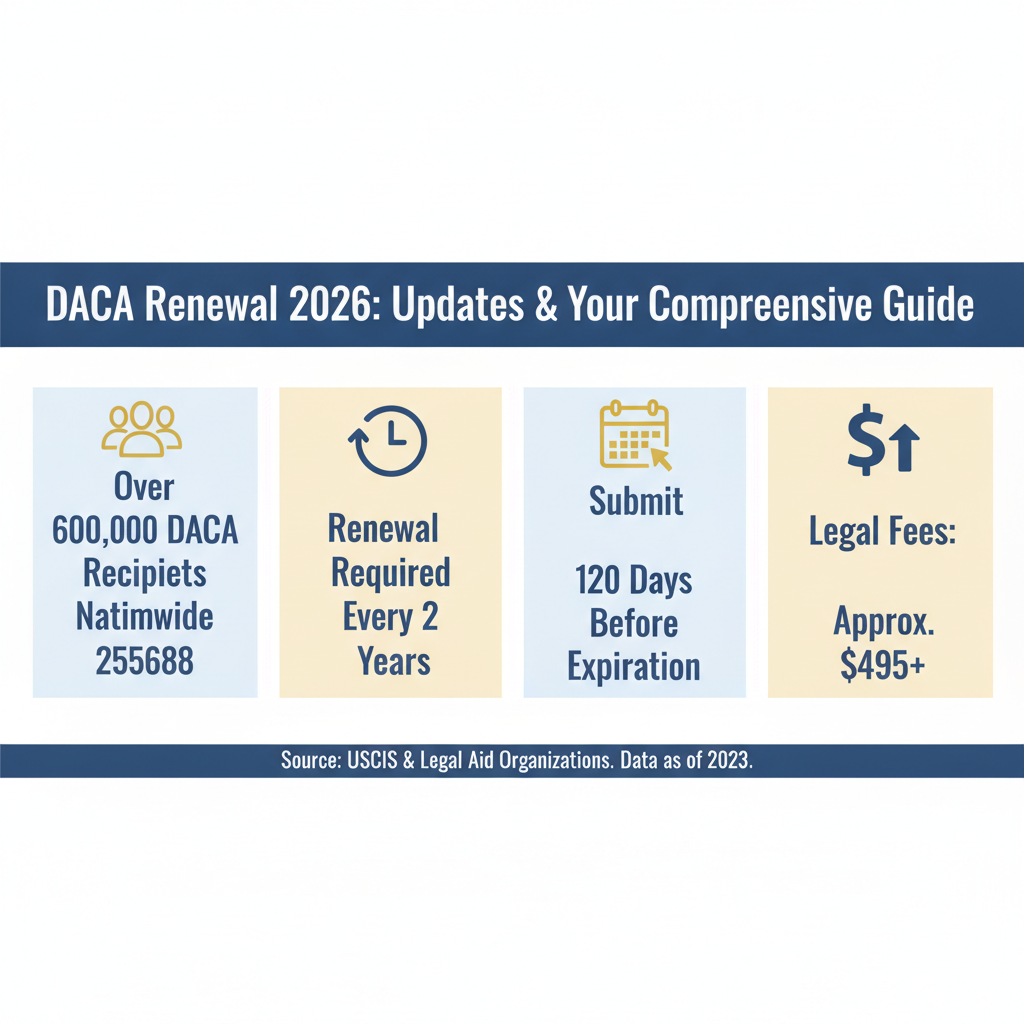
The most crucial step is to start preparing well in advance. **USCIS** recommends filing your renewal request **120 to 150 days** before your current DACA and **EAD** expire. Filing too early (more than 150 days) can lead to rejection, and filing too late risks a gap in your status. * **Check Your Expiration Dates:** Locate your **Form I-797** (Approval Notice) and your **EAD** card to confirm the exact expiration dates. * **Review Continued Eligibility:** Ensure you still meet all DACA eligibility criteria. Have you maintained continuous residence? Have you had any new arrests or convictions, no matter how minor? If your answers raise any doubts, consult with an immigration attorney immediately. * **Gather Previous DACA Records:** Have copies of your previous DACA approval notices, your past **EAD** cards, and any prior DACA application submissions. These documents will help you verify information for your new application. **Required Documents for this step (for review/reference):** * Your current **Employment Authorization Document (EAD)** * Your most recent **Form I-797** DACA approval notice * Any past DACA application records you have2) Gather Required Forms
You will need to complete three specific forms for your DACA renewal: * Form I-821D, Consideration of Deferred Action for Childhood Arrivals * Form I-765, Application for Employment Authorization * Form I-765WS, Worksheet for Form I-765 Download the latest versions of these forms directly from the USCIS Forms page. Do not use outdated forms, as this will lead to rejection. * **Fill Out Forms Accurately:** Read all instructions carefully. Type your answers or write legibly in black ink. Ensure all questions are answered truthfully and completely. If a question doesn't apply, write "N/A" (not applicable). Sign and date forms in the required places. * **Consistency is Key:** Use the same name, date of birth, and other identifying information as on your previous DACA application and official documents. **Required Documents for this step:** * Completed and signed Form I-821D * Completed and signed Form I-765 * Completed and signed Form I-765WS3) Collect Supporting Documentation
While renewals generally require less supporting documentation than initial applications, you must still provide certain items. * **Two Passport-Style Photos:** These must be recent (taken within 30 days of filing), unmounted, full-face, two-inch by two-inch color photographs. Write your name and Alien Registration Number (A-Number) lightly on the back of each photo. * **Copy of Your Current EAD Card:** Provide a copy of the front and back of your most recent **EAD**. * **Copy of Your Most Recent DACA Approval Notice (Form I-797):** This proves your prior DACA grant. * **Proof of Identity:** A copy of your birth certificate with a translation, passport identity page, or other national identity document. * **Proof of Continuous Residence (if applicable):** If you have traveled outside the U.S. with **Advance Parole** since your last DACA approval, or if there have been any changes that might affect your continuous residence, you may need to provide updated evidence. Examples include school transcripts, employment records, bank statements, utility bills, or lease agreements for the period since your last DACA approval. * **Proof of Education (if applicable):** If your educational status has changed (e.g., you graduated high school or obtained a GED since your last application), include proof. * **Criminal History Records (if applicable):** If you have been arrested, charged, or convicted of any crime since your last DACA approval, you **MUST** include certified copies of all court dispositions, police reports, and arrest records. Even if charges were dropped or expunged, you must disclose them. This is a critical area where legal counsel is highly recommended. **Required Documents for this step:** * Two identical, color passport-style photographs * Copy of the front and back of your most recent **EAD** * Copy of your most recent **Form I-797** DACA approval notice * Copy of your birth certificate (with certified translation if not in English) or passport * Any updated proof of continuous residence (if necessary) * Any updated proof of educational attainment (if necessary) * Certified court dispositions and police reports for any new arrests or convictions4) Calculate and Prepare Fees
There is a combined filing fee for DACA renewal, which typically includes the **Form I-765** fee and the biometrics services fee. As of June 15, 2026, the fee structure is subject to change, so always check the USCIS Filing Fees page for the most current amount. * **Current Fees:** Verify the exact amount. The fee for **Form I-821D** is currently $0, but the fee for **Form I-765** and the biometrics services fee are required. * **Payment Method:** You can pay by money order, personal check, cashier's check, or by credit card using **Form G-1450**, Authorization for Credit Card Transactions. * If paying by check or money order, make it payable to "U.S. Department of Homeland Security." Do not use abbreviations. * Write your name and Alien Registration Number (A-Number) on the check or money order. * **Fee Waivers:** Fee waivers (Form I-912) are generally not available for DACA renewal requests. In very limited circumstances, an individual may qualify for an exemption from the **Form I-765** fee, but this is rare and requires specific evidence of extreme hardship. **Required Documents for this step:** * Check or money order for the exact filing fee, payable to "U.S. Department of Homeland Security," OR * Completed **Form G-1450** for credit card payment5) Assemble and Mail Your Application
Proper assembly and mailing are crucial to ensure your application is processed efficiently. * **Order of Documents:** While **USCIS** doesn't mandate a strict order, a common and recommended practice is: 1. Check or **Form G-1450** on top. 2. Cover letter (optional, but recommended if you have complex issues or a list of contents). 3. Form I-821D 4. Form I-765 5. Form I-765WS 6. Supporting documents (photos, EAD copy, approval notices, criminal records, etc.). * **Make Copies:** **Warning:** Before mailing, make a complete copy of your entire application packet for your personal records. This includes all forms, supporting documents, and the payment method. * **Mailing Address:** Send your application to the correct **USCIS** Lockbox facility. The address depends on your state of residence. For Florida residents, you will typically mail to the **USCIS** Chicago Lockbox. Always double-check the "Where to File" section on the **USCIS** website for **Form I-821D** instructions, as addresses can change. * **Certified Mail:** Use a mail service that provides tracking and delivery confirmation (e.g., USPS Certified Mail with Return Receipt, FedEx, UPS). This provides proof of mailing and delivery, which can be invaluable if your application is delayed or lost. **Required Documents for this step:** * Complete, assembled application packet * Proof of mailing (tracking number, return receipt)Need Help? Our Orlando immigration team is ready to assist. Call +1 786-791-3106 for a free consultation, or message us online. Se Habla Español.


