

The landscape of immigration law is constantly evolving, and for those relying on programs like Deferred Action for Childhood Arrivals (DACA), staying informed is not just helpful—it’s absolutely critical. As an immigration law firm dedicated to helping families in Orlando, Florida, and nationwide, Imigrar understands the anxieties and uncertainties that DACA recipients face. Our mission, "Keep Families Together," drives us to provide the most accurate, up-to-date, and actionable information possible.
Today, we delve into the latest DACA program updates and provide a comprehensive guide to the renewal process. This article is designed to empower you with the knowledge needed to protect your deferred action status and continue building your life in the United States.
The reporting that sparked this guide:
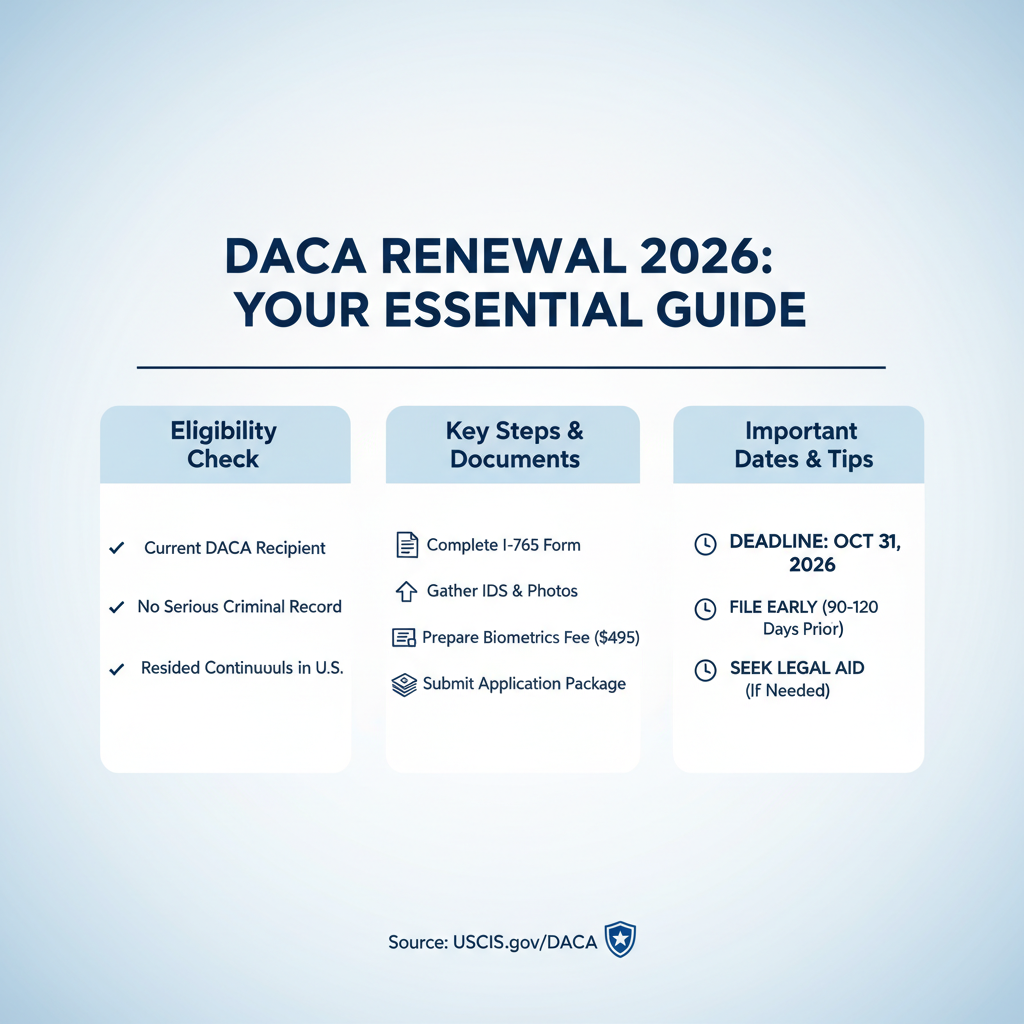
Recent news and ongoing discussions from government sources and legal analyses continue to highlight the dynamic nature of the DACA program. The need for clear, current information is paramount for the hundreds of thousands of individuals who rely on DACA to live and work in the U.S. Our insights here are informed by the latest guidance available from official channels, ensuring you receive the most relevant advice for your situation.
DACA Program Updates and Renewal Information (USCIS)
What This News Means for Immigrants in Orlando and Across Florida
For DACA recipients and their families in Orlando, Central Florida, and across the Sunshine State, understanding the nuances of current DACA policies is paramount. The program's status remains a topic of considerable legal and political debate, making timely and accurate information indispensable.
Why this news is showing up now
As of February 2026, the DACA program continues to operate under a cloud of legal uncertainty. Federal courts have largely maintained the injunction that prevents U.S. Citizenship and Immigration Services (USCIS) from approving new, initial DACA applications. This means that individuals who have never before received DACA are still unable to apply. However, and this is a crucial distinction, USCIS is still accepting and processing DACA renewal applications. This ongoing legal battle, particularly the case of Texas v. United States, means that every few months, there are updates, rulings, or court-mandated reviews that keep DACA in the news cycle. The program's future is subject to judicial decisions, legislative efforts, and administrative actions, making it a constant point of discussion and concern for the immigrant community and their advocates. The consistent need for renewals for existing DACA recipients also ensures that updates regarding processing times, requirements, and potential changes remain highly relevant.
How it can affect Florida residents
Florida is home to a significant population of DACA recipients, often referred to as Dreamers, who contribute immensely to our state's economy and cultural fabric. For these individuals, the ability to renew their DACA status directly impacts their lives in profound ways:
- Employment Stability: DACA provides recipients with an Employment Authorization Document (EAD), allowing them to legally work. A timely renewal ensures continuous employment, protecting their ability to provide for themselves and their families. Many DACA recipients work in essential sectors, from healthcare to hospitality, which are vital to Florida’s economy.
- Educational Opportunities: With DACA, many young Floridians can access in-state tuition at public colleges and universities, pursue higher education, and build brighter futures. A lapse in DACA status can jeopardize these opportunities.
- Driver's Licenses: DACA recipients in Florida are eligible to obtain driver's licenses, which are essential for daily life, commuting to work, and accessing services, especially in a state where public transportation can be limited outside major urban centers like Orlando.
- Community Integration: DACA allows recipients to live with less fear of deportation, fostering greater integration into their communities. Renewals help maintain this stability, allowing individuals to continue contributing to their neighborhoods, schools, and local economies in cities like Orlando, Tampa, Miami, and throughout the I-4 corridor.
- Legal Planning: The ongoing legal challenges mean that Florida residents must be more vigilant than ever about their immigration status. Consulting with an immigration attorney in Orlando, like those at Imigrar, becomes critical to navigate these complexities and prepare for any potential shifts in policy. We serve clients not only in Orange County but nationwide, offering expert guidance tailored to their specific circumstances.
Reminder: While renewals are currently permitted, the legal challenges continue. This underscores the importance of prompt action and expert legal advice to protect your status.
Need Help? Our Orlando immigration team is ready to assist. Call +1 786-791-3106 for a free consultation, or message us online. Se Habla Español.
What DACA Is (and Why It Matters)
Deferred Action for Childhood Arrivals, universally known as DACA, is a critical immigration policy that has profoundly impacted the lives of hundreds of thousands of young people across the United States since its inception in 2012. Understanding what DACA is, its purpose, and its limitations is the first step toward navigating the renewal process effectively.
A plain-English definition
At its core, DACA is a U.S. immigration policy that grants certain undocumented immigrants who entered the country as children a temporary reprieve from deportation, known as deferred action. This means the U.S. government agrees to "defer" (postpone) any action to remove them from the country. In addition to this protection, DACA recipients are eligible to apply for an Employment Authorization Document (EAD), which allows them to legally work in the United States. This deferred action and work authorization are granted for a two-year period and are subject to renewal.
It is crucial to understand that DACA is not a pathway to U.S. citizenship or lawful permanent residency (a green card). It does not provide a permanent legal status but rather a temporary, renewable protection from deportation and the ability to work lawfully.
Key terms you need to know
Navigating immigration processes often involves specific terminology. Here are some key terms related to DACA that you should be familiar with:
- Deferred Action: This is the core benefit of DACA. It's a discretionary decision by the Department of Homeland Security (DHS) to postpone removal proceedings against an individual. It does not confer lawful status but rather a temporary period of authorized presence.
- Employment Authorization Document (EAD): Also known as a work permit, this document (Form I-766) is issued to DACA recipients, allowing them to legally work in the U.S. for the duration of their deferred action.
- USCIS: Stands for U.S. Citizenship and Immigration Services. This is the federal agency responsible for administering the DACA program, processing applications, and issuing approvals.
- DHS: Stands for the Department of Homeland Security, the parent agency of USCIS.
- Dreamers: A term commonly used to refer to young undocumented immigrants who were brought to the U.S. as children. While DACA specifically addresses a subset of these individuals, the term often encompasses a broader group advocating for permanent legislative solutions.
- DACA Recipient: An individual whose application for Deferred Action for Childhood Arrivals has been approved by USCIS.
- Advance Parole (Form I-131): A travel document that allows certain non-citizens, including DACA recipients, to travel outside the U.S. and lawfully return. Traveling without Advance Parole can lead to denial of re-entry and loss of DACA status. This is a separate application and not part of the standard DACA renewal.
For non-lawyers, it’s important to remember that DACA is a temporary administrative relief, not a permanent immigration solution. Its continued existence relies on ongoing legal decisions and potential legislative action in Congress. This makes regular renewal and staying informed about updates vital for those who benefit from it.
Current Immigration Law: The Foundation
The DACA program, while impactful, is not a statutory law passed by Congress. Instead, it was established through executive action by the Department of Homeland Security (DHS) in 2012, exercising its authority of prosecutorial discretion. This foundation is why DACA has faced, and continues to face, significant legal challenges that determine its operational scope.
As of February 2026, the DACA program is operating under a complex legal framework resulting from the Texas v. United States lawsuit. On September 13, 2023, U.S. District Judge Andrew Hanen issued a ruling that largely maintained his previous injunction. This ruling states that:
- USCIS cannot approve new, initial DACA applications. If you have never had DACA before, USCIS will not process your application.
- USCIS can continue to accept and process DACA renewal applications. This is critical for current DACA recipients to maintain their status.
- The current DACA policy remains under a standing injunction, with the case likely to continue through the appeals process.
This means that while the program is not entirely ended, its future for new applicants is frozen, and its long-term existence for all recipients is subject to ongoing legal review and potential future court decisions.
Federal requirements
To be eligible for DACA renewal, you must meet the following federal requirements, which are largely consistent with the initial DACA criteria (with the exception of the entry date for initial applications, which is not applicable for renewals):
- You must have received DACA previously.
- You must have been under the age of 31 as of June 15, 2012.
- You must have come to the United States before reaching your 16th birthday.
- You must have continuously resided in the United States since June 15, 2007, up to the present time. Brief, casual, and innocent departures are generally permissible, but prolonged or unauthorized travel outside the U.S. can disqualify you.
- You must have been physically present in the United States on June 15, 2012, and at the time of making your request for deferred action.
- You must have had no lawful status on June 15, 2012.
- You must currently be in school, have graduated or obtained a certificate of completion from high school, have obtained a General Education Development (GED) certificate, or be an honorably discharged veteran of the Coast Guard or Armed Forces of the United States.
- You must not have been convicted of a felony, a significant misdemeanor, or three or more other misdemeanors, and not otherwise pose a threat to national security or public safety.
USCIS generally uses Form I-821D, Consideration for Deferred Action for Childhood Arrivals, and Form I-765, Application for Employment Authorization, along with its associated Form I-765WS, Worksheet for Form I-765, for both initial and renewal applications. However, as noted, only renewals are currently being processed.
For the most current official guidance, always refer to the USCIS official website.
Florida-specific considerations
While DACA is a federal program, its impact and certain benefits can vary at the state level. For DACA recipients in Florida:
- Driver's Licenses: Florida law permits DACA recipients to obtain a Florida driver's license upon presentation of their valid EAD and other required identification documents. This is a critical benefit for mobility and employment in a state like Florida, where public transportation options can be limited outside of major cities.
- In-State Tuition: Under Florida Statute 1009.26, certain undocumented students, including DACA recipients, may qualify for in-state tuition rates at Florida's public colleges and universities if they meet specific residency requirements and attended a Florida high school for at least three years, among other criteria. This significantly reduces the cost of higher education.
- State-Level Support and Challenges: Florida has a complex relationship with immigration. While some policies provide benefits, there can also be state-level legislative efforts that create challenges or uncertainty for immigrant communities. Staying informed about local and state laws is as important as understanding federal policy.
- Local USCIS Offices: For Central Florida residents, the Orlando USCIS Field Office may handle certain in-person services, though DACA applications are typically mailed to specific USCIS Lockbox facilities. Understanding which office handles what, and when an in-person appointment might be necessary, is crucial.
Given the constantly shifting legal landscape, especially concerning immigration, it is highly advisable for Florida residents to consult with an experienced immigration attorney. Imigrar is deeply familiar with both federal DACA guidelines and their implications for individuals living in Orlando and across the state, ensuring you receive tailored and accurate advice.

How to Renew Your DACA: A Complete Step-by-Step Guide
Renewing your DACA status is a critical process that requires meticulous attention to detail and timely action. A lapse in your DACA can lead to loss of work authorization and deferred action, potentially placing you at risk of removal. Follow this step-by-step guide carefully to ensure a smooth renewal process.
1) Determine Your Eligibility and Gather Essential Documents
Before you begin filling out forms, confirm your continued eligibility for DACA renewal. The basic criteria outlined in the "Current Law Section" still apply. You must not have committed any disqualifying felonies or significant misdemeanors since your last DACA approval. Begin compiling all necessary documents well in advance.
Required Documents for Step 1:
- Your most recent DACA approval notice (Form I-797 for Form I-821D).
- Your current Employment Authorization Document (EAD) (front and back).
- Any prior EADs issued under DACA.
- Proof of your identity (e.g., copy of your birth certificate with translation, passport, or national identity card from your country of origin).
- Proof of continuous residence in the U.S. since June 15, 2007 (and since your last DACA approval). This can include:
- School records (transcripts, diplomas, enrollment letters).
- Medical records (vaccination records, hospital bills).
- Employment records (pay stubs, W-2s, employment verification letters).
- Utility bills (electricity, water, gas, internet).
- Bank statements.
- Rental agreements or mortgage statements.
- Tax returns.
- Letters from churches, community organizations, or employers.
- Records of any criminal history (even minor offenses like traffic citations, unless parking tickets) since your last DACA approval. It’s crucial to disclose everything and provide certified court dispositions.
- If you have traveled outside the U.S. with Advance Parole, provide copies of your Form I-131 approval and any travel stamps.
Important: Start gathering these documents at least 4-5 months before your DACA and EAD expire. This gives you ample time to request transcripts, court records, or other documents that may take weeks to obtain.
2) Complete and Prepare Required USCIS Forms
The DACA renewal application typically consists of three primary forms. Ensure you are using the most current versions, which can be downloaded from the USCIS Forms page.
- Form I-821D, Consideration for Deferred Action for Childhood Arrivals:
- Fill out every section completely and accurately. If a question doesn't apply, write "N/A" (not applicable). Do not leave blank spaces.
- Pay close attention to Part 1, Question 1.b., where you indicate you are filing for a renewal.
- Review your answers carefully, ensuring consistency with previous applications and current information.
- Form I-765, Application for Employment Authorization:
- This form requests your work permit. For DACA renewals, your eligibility category will be (c)(33).
- Ensure your name, date of birth, and address match your other documents.
- If you have previously applied for an EAD, provide the A-Number and previous EAD card number.
- Form I-765WS, Worksheet for Form I-765:
- This worksheet helps USCIS determine if your economic need justifies the EAD. Provide truthful and comprehensive information about your financial situation.
Warning: Any inaccuracies or omissions on these forms can lead to delays, Requests for Evidence (RFEs), or even denial. If you are unsure about any question, consult with an immigration attorney.
3) Prepare Supporting Evidence and Photos
Beyond the forms, you need to submit additional evidence to support your application.
- Two identical, passport-style photographs:
- Must be taken within 30 days of filing your application.
- Full frontal view, white background, no glasses, no hats (unless for religious purposes and facial features are not obscured).
- Lightly print your name and A-Number on the back of each photo with a pencil.
- Copies of previous DACA approval notice (Form I-797) for Form I-821D.
- Copy of your current EAD (front and back).
- Copy of your valid government-issued photo identification (e.g., driver's license from Florida, state ID).
- Copies of all documents proving continuous presence as gathered in Step 1. Organize these chronologically.
- Copies of all certified court dispositions for any arrests or citations since your last DACA approval (if applicable). Do NOT send original documents unless specifically requested by USCIS.
Reminder: Organize your documents neatly. Use tabs or dividers to separate different types of evidence. Make sure all copies are legible.
4) Calculate and Pay the Filing Fees
As of February 2026, the total filing fee for a DACA renewal application is $495. This fee covers:
- $410 for Form I-765, Application for Employment Authorization.
- $85 for the biometrics services fee


