


The reporting that sparked this guide
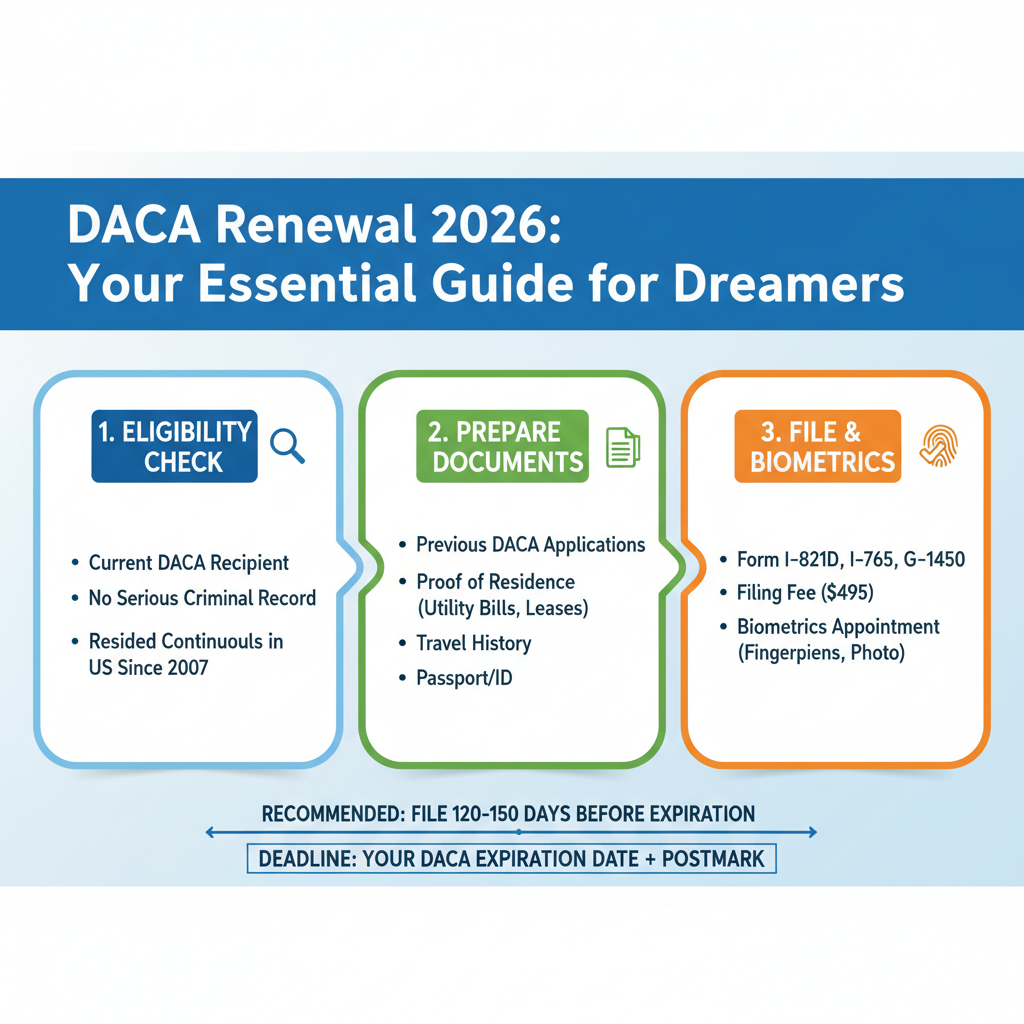
The information and guidance in this article are inspired by ongoing national discussions and official updates regarding the Deferred Action for Childhood Arrivals (DACA) program. For the latest official news from government sources, please refer to:
What This News Means for Immigrants in Orlando and Across Florida
As of February 14, 2026, the Deferred Action for Childhood Arrivals (DACA) program remains a critical lifeline for hundreds of thousands of young people across the United States. For Dreamers and their families in Orlando, Central Florida, and throughout the nation, staying informed about DACA updates and understanding the renewal process is not just important—it’s essential for maintaining stability and securing their future.
Why this news is showing up now
DACA has been a subject of continuous legal and political debate since its inception in 2012. The program’s future has been challenged repeatedly in federal courts, leading to periods of uncertainty, halted new applications, and administrative adjustments. Most recently, court decisions have largely maintained the status quo: USCIS continues to accept and process DACA renewal requests but is generally prohibited from approving new, initial DACA applications. This ongoing legal back-and-forth means that news and updates regarding DACA are a constant feature in immigration discussions, reflecting the program's precarious yet vital role in the lives of many. Each court ruling, policy memorandum, or change in processing guidelines by USCIS can have significant implications, making it crucial for DACA recipients to remain vigilant and proactive. The current landscape, driven by judicial review and administrative efforts, necessitates regular clarification and guidance on how to navigate the program effectively, especially concerning renewals.
How it can affect Florida residents
Florida is home to a significant population of DACA recipients, many of whom reside in major metropolitan areas like Orlando, Miami, and Tampa. For these individuals, DACA provides crucial protections against deportation and the ability to work legally in the U.S. through an Employment Authorization Document (EAD). The ongoing legal challenges and administrative changes directly impact their ability to plan for their education, careers, and family life. Without the stability DACA offers, many would face immense uncertainty, potential job loss, and fear of removal. For Central Florida residents, especially those attending colleges or working in critical industries, a lapse in DACA status can disrupt their lives profoundly. Additionally, Florida has specific state-level policies, such as those related to in-state tuition eligibility for DACA recipients, which can fluctuate based on the program's federal status. The Orlando USCIS Field Office and associated service centers handle numerous DACA applications, making local processing times and requirements particularly relevant for our community. The ripple effect of DACA news extends to families, employers, and educational institutions across the I-4 corridor and beyond, underscoring the deep impact on Florida's social and economic fabric. Staying on top of renewal deadlines is paramount for maintaining these vital protections.
Need Help? Our Orlando immigration team is ready to assist. Navigating DACA renewals can be complex, and we are here to provide clarity and support. Call +1 786-791-3106 for a free consultation, or message us online. Se Habla Español.
What DACA Is (and Why It Matters)
The Deferred Action for Childhood Arrivals (DACA) program is a U.S. immigration policy that allows certain undocumented immigrants who entered the country as minors to receive a renewable two-year period of deferred action from deportation and eligibility for a work permit. Established in June 2012 by the Obama administration, DACA was designed to offer temporary relief to young people often referred to as "Dreamers," who grew up in the United States, often considering it their only home.
A plain-English definition
Think of DACA as a temporary shield. It doesn't grant you legal status or a path to a green card, but it does two very important things: First, it tells the government that for a period of two years, they won't try to deport you. This is called deferred action. Second, it allows you to apply for an Employment Authorization Document (EAD), which is a work permit. This EAD lets you legally work in the U.S. and, in many states including Florida, obtain a driver's license. Essentially, DACA provides a measure of stability and allows individuals who were brought to the U.S. as children to pursue education, careers, and contribute more fully to their communities without the constant fear of deportation. It's a temporary solution that has had a profound impact on the lives of hundreds of thousands, enabling them to pursue their dreams and build futures in the country they know as home.
Key terms you need to know
- Deferred Action: This is the core benefit of DACA. It means that the Department of Homeland Security (DHS) has decided, for a specific period, not to pursue removal (deportation) actions against an individual. It does not grant lawful status or citizenship, but it provides temporary protection.
- Employment Authorization Document (EAD): Often referred to as a "work permit," this card allows DACA recipients to legally work in the United States. It is typically valid for two years, coinciding with the DACA deferral period.
- Dreamer: A term commonly used to describe young undocumented immigrants who were brought to the United States as children. The term originated from the "DREAM Act" (Development, Relief, and Education for Alien Minors Act), proposed legislation that would have provided a pathway to legal status for these individuals.
- USCIS: Stands for U.S. Citizenship and Immigration Services. This is the government agency responsible for administering DACA, processing applications, and issuing approvals. USCIS official website
- Biometrics Appointment: A mandatory appointment for most immigration applicants, including DACA renewals, where USCIS collects fingerprints, photographs, and a signature. This data is used for background checks and identity verification.
- Continuous Residence: A key eligibility requirement for DACA, meaning the applicant has resided in the U.S. continuously for a specified period, typically from June 15, 2007, to the present.
- Lawful Status: A broad term referring to an individual's legal standing in the United States, such as a green card holder (lawful permanent resident) or a visa holder. DACA does not confer lawful status.
Current Immigration Law: The Foundation for DACA
It's important to understand that DACA itself is not a law passed by Congress, but rather an executive action. However, it operates within the framework of existing U.S. immigration law, primarily the Immigration and Nationality Act (INA). The legal basis for deferred action comes from the inherent authority of the executive branch to exercise prosecutorial discretion in immigration enforcement. This discretion allows the government to decide whom to prioritize for removal and whom to grant temporary relief. The ongoing legal challenges to DACA often center on whether the executive branch overstepped its authority in creating the program, rather than on the merits of the program itself. While DACA has been challenged under various administrative law doctrines, federal courts have allowed renewals to continue. As of early 2026, the program is still under a federal court order that prohibits USCIS from approving new initial DACA requests but allows for the processing of renewal requests.
Federal requirements
To be eligible for DACA renewal, individuals must meet several strict federal criteria. These requirements are established by USCIS and are critical for maintaining your deferred action status and work authorization. It is essential to ensure you meet all criteria before applying. USCIS strictly adheres to these guidelines, and any deviation can lead to denial.
Important: As of the current date, USCIS is only accepting DACA renewal applications. New, initial DACA applications are generally not being processed due to federal court orders. If you have previously been granted DACA, you may be eligible to renew.
The core federal requirements for DACA renewal include:
- You must have previously received DACA.
- You must not have departed the United States on or after August 15, 2012, without advance parole.
- You must have continuously resided in the United States since you submitted your most recent DACA request that was approved.
- You must not have been convicted of a felony, a significant misdemeanor, or three or more other misdemeanors, and not otherwise pose a threat to national security or public safety.
When applying for renewal, you will need to file Form I-821D (Consideration of Deferred Action for Childhood Arrivals), Form I-765 (Application for Employment Authorization), and Form I-765WS (Worksheet). These forms are essential for USCIS to evaluate your continued eligibility. You can find these forms and detailed instructions on the USCIS Forms page.
Florida-specific considerations
For DACA recipients in Florida, there are additional considerations that can impact daily life and opportunities. While DACA is a federal program, its benefits can interact with state laws and policies. For example, DACA recipients in Florida are generally eligible to obtain a driver's license, which is tied to their valid Employment Authorization Document (EAD). This is a critical benefit for navigating Central Florida, especially given the expansive nature of cities like Orlando and the reliance on personal transportation along the I-4 corridor.
Regarding education, Florida law allows eligible DACA recipients to qualify for in-state tuition at public universities and colleges, provided they meet specific residency requirements. This can significantly reduce the cost of higher education, making it more accessible for Dreamers in Orlando and Orange County to pursue their academic and career goals. However, these state-level benefits are directly dependent on maintaining valid DACA status. A lapse in your DACA renewal can jeopardize your ability to keep your driver's license, maintain employment, or continue your education at in-state tuition rates. This makes timely and accurate renewal even more critical for Florida residents.
Reminder: Always verify state-specific policies with the relevant Florida government agencies (e.g., Department of Highway Safety and Motor Vehicles, State University System of Florida) as they can be subject to change.
Confused about the requirements? Don't risk a denial. Imigrar's experienced immigration attorneys specialize in DACA renewals and understand the nuances of federal and Florida-specific regulations. Call us for a free consultation at +1 786-791-3106. Se Habla Español.
How to Renew Your DACA Status: A Complete Step-by-Step Guide
Renewing your DACA status is a critical process that requires attention to detail and timely action. A lapse in your DACA can lead to loss of work authorization, potential employment issues, and even place you at risk of deportation. This guide outlines the essential steps for a successful DACA renewal.
1) Determine Your Eligibility for Renewal
Before you begin gathering documents and filling out forms, confirm your eligibility for DACA renewal. This is the foundational step. USCIS only permits renewals for individuals who have previously been granted DACA. You must continue to meet the initial DACA criteria, with the exception of the age requirement (you do not need to be under 31 to renew). The most crucial aspects to confirm are your continuous residence and lack of disqualifying criminal offenses.
- Previous DACA Approval: You must have been previously granted DACA. USCIS will verify this through your records.
- Continuous Residence: You must have continuously resided in the United States since you submitted your most recent DACA request that was approved. Brief, authorized travel with advance parole does not break continuous residence, but unauthorized travel outside the U.S. on or after August 15, 2012, will make you ineligible.
- Criminal Record Check: You must not have been convicted of a felony, a significant misdemeanor, or three or more other misdemeanors. Additionally, you must not otherwise pose a threat to national security or public safety. Be honest about any encounters with law enforcement, even minor ones, and consult an attorney.
Important: Start this process early! USCIS recommends filing your DACA renewal application between 120 to 150 days before your current DACA and EAD expire. Filing too late could result in a lapse in your work authorization.
2) Gather Required Documentation
Thorough and accurate documentation is key to a successful DACA renewal. Organize your documents carefully, ensuring you have copies of everything. Do not send original documents unless specifically requested by USCIS.
- Proof of Identity:
- Copy of your current EAD card.
- Copy of your previous DACA approval notices (Form I-797).
- Copy of your passport, birth certificate with photo ID, or school ID with photo.
- Two identical passport-style photos taken within 30 days of filing. Write your name and A-Number lightly on the back of each photo.
- Proof of Continuous Residence (since your last DACA approval):
- School records (transcripts, diplomas, attendance records).
- Employment records (pay stubs, W-2s, employment verification letters).
- Medical records (vaccination records, hospital bills).
- Financial records (bank statements, utility bills, tax returns).
- Rental agreements or mortgage statements.
- Military records (if applicable).
- Dated church records, receipts, or letters.
- Any other dated documents that show you were present in the U.S.
- Proof of Prior DACA Approval:
- Copy of your previous Form I-821D and Form I-765 applications.
- Copy of your previous EAD cards.
- Criminal History Records (if applicable):
- Certified court dispositions for any arrests or convictions, even if expunged or dismissed.
- Police reports.
- Warning: Never conceal criminal history. It will likely be discovered during background checks and could lead to denial and even more severe immigration consequences.
- Proof of Travel (if applicable):
- Copies of any Form I-131 (Application for Travel Document) and subsequent advance parole documents.
Reminder: For any documents not in English, you must include a complete English translation along with a certification by the translator. The certification must state that the translator is competent to translate from the foreign language into English and that the translation is complete and accurate.
3) Complete USCIS Forms I-821D, I-765, and I-765WS
Accuracy is paramount when filling out these forms. Any inconsistencies or errors could lead to Requests for Evidence (RFEs) or even denial. Use black ink and write clearly, or type your responses. You can download the latest versions of these forms from the USCIS Forms page.
- Form I-821D, Consideration of Deferred Action for Childhood Arrivals: This is the main form for your DACA request. Pay close attention to all sections, especially those asking about your entry into the U.S., continuous residence, education, employment, and any criminal history. Ensure all information is consistent with your previous DACA application unless there's a legitimate reason for a change (e.g., new address).
- Form I-765, Application for Employment Authorization: This form requests your work permit. Be sure to select the correct eligibility category (c)(33) for DACA recipients. Fill out all sections completely.
- Form I-765WS, Worksheet: This worksheet helps USCIS determine if you have an economic need to work. Provide a clear explanation of your current financial situation, including your income, expenses, and any dependents.
Tip: Review your previous DACA application carefully. Consistency in information is important. If anything has changed (address, employer), update it accurately and be prepared to provide supporting documentation.
4) Prepare Your Filing Packet and Pay Fees
Once your forms are complete and documents gathered, assemble your application packet in the correct order and prepare for payment.
- Assemble Your Packet:
- Place your payment on top.
- Then, Form I-821D.
- Next, Form I-765.
- Followed by Form I-765WS.
- Then, your supporting documentation in a logical order (e.g., identity documents, continuous residence proof, criminal history records, travel documents).
- Create a cover letter listing all the documents included in your packet.
- Fees: The total fee for DACA renewal is currently $495. This includes the Form I-765 fee ($410) and the biometrics services fee ($85).
- Payment Method: You can pay by money order, personal check, cashier’s check, or by credit card using Form G-1450, Authorization for Credit Card Transactions. Make checks payable to "U.S. Department of Homeland Security." Do not send cash.
- Fee Waivers/Reductions: Fee waivers are generally not available for DACA applications, but check the USCIS website for any updates.
- Mailing Address: Mail your application to the correct USCIS Lockbox Facility. The address depends on the state you reside in. For Florida residents, check the "Direct Filing Addresses for Form I-821D" page on USCIS official website. Use a mailing service that provides tracking, such as USPS Certified Mail, FedEx, or UPS.
Warning: Double-check the total fee and mailing address on the USCIS website right before you send your application, as they can change.
5) Attend Your Biometrics Appointment (If Required)
After USCIS accepts your application, you will typically receive a notice for a biometrics appointment at an Application Support Center (ASC). Not every DACA renewal requires new biometrics if USCIS has recent biometrics on file, but be prepared to attend if scheduled.
- What to Bring: Your appointment notice (Form I-797C), a valid photo ID (e.g., passport, state driver's license, EAD).
- What Happens: At the appointment, your fingerprints, photograph, and signature will be collected. This data is used for background checks. The appointment is usually quick.
- Failure to Appear: Missing your biometrics appointment without rescheduling can lead to a denial of your application. If you cannot attend, follow the instructions on your notice to reschedule immediately.
6) Monitor Your Case Status
Once your application is filed and you've attended biometrics, the waiting period begins. It's crucial to actively monitor your case status for updates and be prepared to respond to any further requests from USCIS.
- USCIS Online Tools: Use the receipt number provided on your Form I-797C (Notice of Action) to check your case status online at USCIS Case Status Online. You can also sign up for email and text message updates.
- Processing Times: Check the USCIS Processing Times page for an estimate of how long your application might take. Remember these are estimates and can vary based on the service center and current workload.
- Request for Evidence (RFE): USCIS might send an RFE if they need more information or clarification. Respond promptly and thoroughly to any RFE. If you receive an RFE, it's highly advisable to consult with an immigration attorney to ensure your response is complete and addresses USCIS's concerns.
- Interview: While rare for DACA renewals, USCIS reserves the right to request an interview. If this happens, seek legal counsel immediately.
7) Receive Your Decision and New EAD
The final step is receiving USCIS's decision on your DACA renewal application.
- Approval: If approved, you will receive a new DACA approval notice (Form I-797) and your new EAD card in the mail. Keep these documents safe! Your new EAD will allow you to continue working and, if applicable, renew your driver's license in Florida.
- Denial: If your DACA renewal is denied, USCIS will send a denial letter explaining the reasons. A denial can have serious consequences. If denied, it is imperative to consult with an immigration attorney immediately to understand your options, which may include filing a motion to reopen or reconsider, or addressing the underlying issues that led to the denial. Do not delay in seeking legal advice.
Reminder: Keep copies of *everything* you send to USCIS and every document you receive from them. This includes the entire application packet, mailing receipts, and all notices.

Practical Steps You Can Take Today for DACA Renewal
Proactive planning is the best strategy for a smooth DACA renewal process. Don't wait until the last minute!
Actionable Checklist:
- Mark Your Calendar: Note your current DACA and EAD expiration dates. Set reminders for 150 days, 120 days, and 90 days before expiration.
- Start Document Gathering Early: Begin collecting all necessary documents now, especially those proving continuous residence. The sooner you start, the less stressful the process will be.
- Review Previous Application: Locate and review your last DACA application. This will ensure consistency and help you identify any changes you need to report.
- Check USCIS Website for Updates: Regularly visit USCIS official website for the latest forms, fees, and policy updates related to DACA renewal.
- Save for Fees: The $495 filing fee is a significant expense. Start saving now so you're not caught off guard.
- Consult an Immigration Attorney: Even for renewals, an attorney can review your application, identify potential issues, and ensure


