


The landscape of U.S. immigration policy is constantly shifting, and for hundreds of thousands of individuals, few programs are as central to their lives as Deferred Action for Childhood Arrivals (DACA). As of August 2026, DACA continues to face complex legal and administrative challenges, making accurate, up-to-date information more crucial than ever, especially concerning renewals.
At Imigrar, an immigration law firm based in Orlando, Florida, our mission is to "Keep Families Together." We understand the profound impact DACA has on our clients and their loved ones, providing a temporary shield against deportation and the opportunity to work legally. This comprehensive guide is designed to cut through the noise, offering clear, actionable advice on DACA updates and the renewal process, leveraging the latest information from official sources like USCIS.
Need Help? Our Orlando immigration team is ready to assist. Call +1 786-791-3106 for a free consultation, or message us online. Se Habla Español.
Whether you're preparing for your first renewal or navigating the complexities of ongoing litigation, this guide provides the clarity you need to protect your status and plan for the future.
The reporting that sparked this guide:
DACA Program Updates and Renewal Information (USCIS)
What This News Means for Immigrants in Orlando and Across Florida
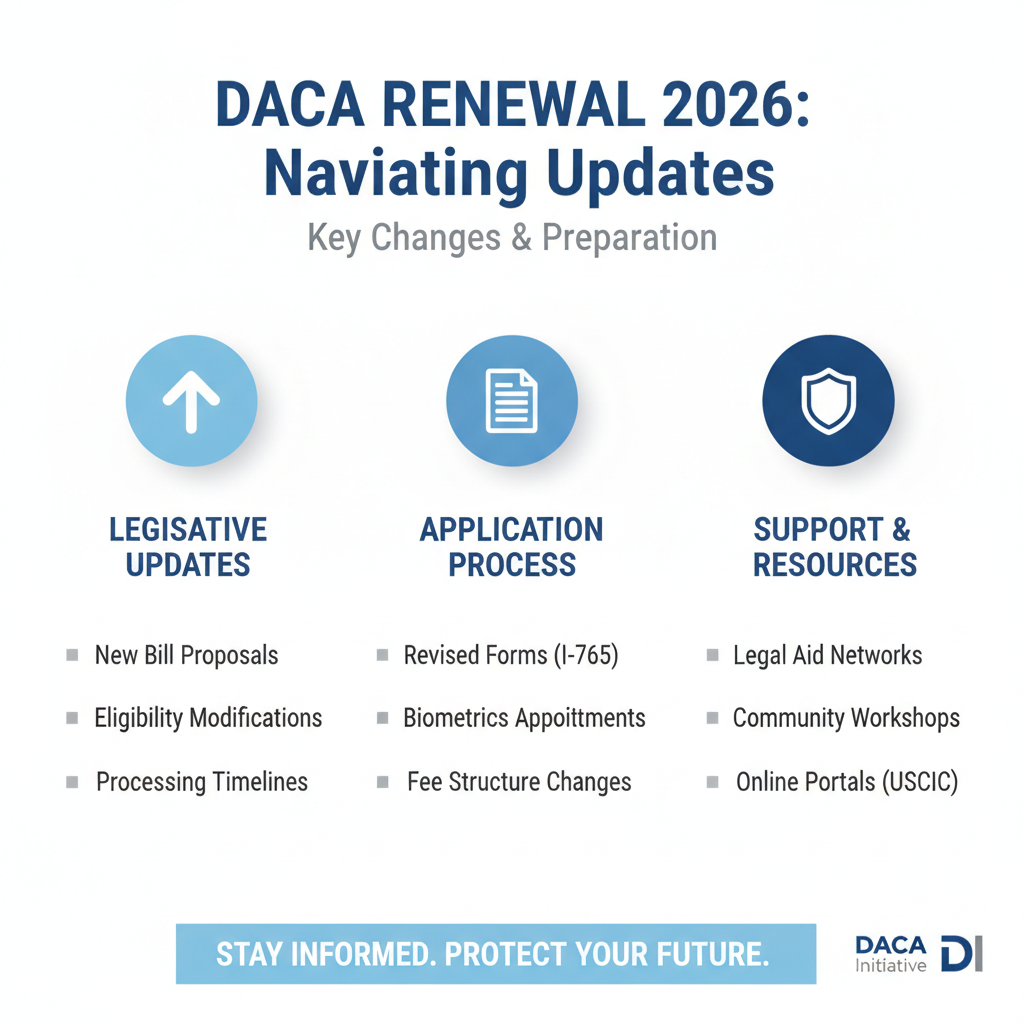
The ongoing legal and administrative discussions surrounding DACA are not abstract policy debates; they have tangible, immediate consequences for individuals and families. For DACA recipients in Orlando, across Central Florida, and throughout the Sunshine State, staying informed isn't just a recommendation—it's a necessity.
Why this news is showing up now
DACA, established in 2012, has been a subject of intense legal and political contention for years. While USCIS continues to accept and process DACA renewal requests, the program’s future remains uncertain due to court challenges. Most recently, federal court rulings have limited USCIS to only processing DACA renewal requests, while new initial applications for DACA remain on hold. This means that while existing DACA recipients can continue to apply for renewal, individuals who have never held DACA are generally unable to apply for the first time.
The "news" often refers to the latest court decisions, administrative guidance from the Department of Homeland Security (DHS), or legislative efforts in Congress that seek to either codify DACA into law or challenge its legality further. Each update, no matter how small, can influence processing times, eligibility interpretations, or the overall long-term viability of the program. For example, recent reports often highlight:
- Judicial Rulings: Ongoing litigation, particularly from states challenging DACA's legality, continues to shape the program's scope. Decisions from federal appellate courts or even the Supreme Court can dramatically alter who is eligible and what benefits are available.
- Administrative Changes: USCIS, under DHS, periodically issues guidance or updates to forms and procedures, often in response to court orders or new policy directives. These changes, though sometimes technical, can impact how renewals are processed.
- Legislative Efforts: There are continuous attempts in Congress to pass a permanent legislative solution for Dreamers. While these efforts have not yet succeeded, news regarding their progress (or lack thereof) keeps DACA in the spotlight.
This constant stream of information can be overwhelming, but it underscores the volatile environment in which DACA operates.
How it can affect Florida residents
For the estimated 27,000 DACA recipients residing in Florida, and many more family members, these updates have direct implications. Florida is home to a significant DACA population, with many living and working in major metropolitan areas like Orlando, Miami, and Tampa. Here’s how the news can affect them:
- Uncertainty and Stress: The continuous legal challenges create immense stress and uncertainty for DACA recipients and their families. The fear of potential program termination impacts life planning, education, career choices, and family stability.
- Employment Authorization: DACA provides Employment Authorization Documents (EADs), allowing recipients to work legally. Any disruption to DACA could jeopardize their ability to maintain employment, impacting their financial stability and contributing to the state’s economy. Many DACA recipients are essential workers in Florida's hospitality, agriculture, and healthcare sectors.
- Driver’s Licenses: In Florida, DACA recipients are generally eligible to apply for a driver's license, which is crucial for daily life, commuting to work, and accessing services, especially given Florida's car-dependent infrastructure. Loss of DACA status could mean losing this privilege.
- Educational Opportunities: While Florida does not currently offer in-state tuition for DACA recipients at public universities (unlike some other states), many DACA recipients pursue higher education. The stability offered by DACA allows them to plan for and invest in their educational futures.
- Community Impact: DACA recipients are integral members of their communities, contributing culturally, economically, and socially. Any adverse changes to DACA affect not just individuals but entire communities in Orange County and beyond.
Important: Given the dynamic nature of DACA, it is paramount for Florida residents to seek accurate, professional legal advice. Relying on rumors or outdated information can lead to severe consequences. The Orlando USCIS Field Office primarily handles interviews for certain applications, but DACA renewals are typically processed centrally. However, understanding local resources and legal support is key.
What DACA Is (and Why It Matters)
Deferred Action for Childhood Arrivals, or DACA, is an immigration policy established by the Obama administration in June 2012. It provides certain eligible undocumented immigrants who came to the United States as children with temporary relief from deportation and a renewable two-year work permit.
A plain-English definition
Think of DACA as a temporary legal shield. It doesn't grant permanent legal status or a pathway to citizenship. Instead, it offers two crucial benefits:
- Deferred Action: This means the U.S. government agrees to "defer" or postpone any deportation action against you for a period of two years. It's not amnesty, but a promise not to pursue removal proceedings.
- Employment Authorization: Along with deferred action, DACA recipients are eligible to apply for an Employment Authorization Document (EAD), also known as a work permit. This document allows them to legally work in the U.S. for the two-year period, renewable upon DACA renewal.
DACA was created to address the plight of "Dreamers"—young people brought to the U.S. as children, often having no memory of their country of birth, who have grown up and become integrated into American society. Without DACA, many of these individuals face the constant threat of deportation to a country they barely know, and are unable to work legally to support themselves and their families.
Key terms you need to know
- Deferred Action: As mentioned, this is a discretionary decision by the Department of Homeland Security (DHS) to postpone removal proceedings against an individual. It does not confer lawful status.
- Employment Authorization Document (EAD): Often referred to as a "work permit," this card (Form I-766) allows non-citizens to legally work in the U.S. for a specified period.
- Dreamers: A term often used to describe young undocumented immigrants who were brought to the U.S. as children. The term originated from the "DREAM Act" (Development, Relief, and Education for Alien Minors Act), a bipartisan legislative proposal that would provide a pathway to permanent residency for these individuals.
- USCIS: U.S. Citizenship and Immigration Services. This agency is responsible for administering the country's lawful immigration system, including processing DACA applications and renewals. Visit the USCIS official website for more information.
- DHS: Department of Homeland Security. USCIS is part of DHS.
- Continuous Residence: A key DACA eligibility requirement, meaning you have continually lived in the U.S. for a specified period without significant breaks.
- Physical Presence: Another eligibility requirement, meaning you were physically present in the U.S. on a specific date and when you apply.
Understanding these terms is fundamental to navigating the DACA program and its renewal process. DACA matters because it allows hundreds of thousands of individuals to live without immediate fear of deportation, pursue education, contribute to the economy, and build stable lives in the only country many of them have ever known.
Need Help? Our Orlando immigration team is ready to assist. Call +1 786-791-3106 for a free consultation, or message us online. Se Habla Español.
Current Immigration Law: The Foundation for DACA
While DACA itself is not a "law" passed by Congress, it operates within the framework of existing immigration statutes and regulations, drawing its authority from the executive branch's prosecutorial discretion. The legal challenges to DACA often hinge on interpretations of the Administrative Procedure Act (APA) and the scope of executive authority. USCIS, as part of the Department of Homeland Security (DHS), implements DACA under its discretionary power to grant deferred action.
Federal requirements for DACA Renewal
To be eligible for DACA renewal, you must meet the following criteria, which are largely consistent with the initial DACA requirements, but with an emphasis on continuous eligibility:
- You must have received DACA previously. (As of current court orders, USCIS is generally not processing initial DACA requests.)
- You must not have departed the United States on or after August 15, 2012, without advance parole.
- You must have continuously resided in the United States since the date you submitted your most recent DACA request that was approved.
- You must not have been convicted of a felony, a significant misdemeanor, or three or more other misdemeanors, and not otherwise pose a threat to national security or public safety.
The forms required for DACA renewal are:
- Form I-821D, Consideration of Deferred Action for Childhood Arrivals: This is the primary form for requesting DACA.
- Form I-765, Application for Employment Authorization: This form is used to request your work permit.
- Form I-765WS, Worksheet: This worksheet helps justify your need for an EAD.
These forms, along with detailed instructions, can be found on the USCIS Forms page. It is crucial to use the latest version of each form.
Florida-specific considerations
While DACA is a federal program, its impact can vary at the state level. For Florida residents, here are some key considerations:
- Driver’s Licenses: DACA recipients in Florida are generally eligible to apply for a Florida driver's license or state identification card. Your EAD (Form I-766) and DACA approval notice are critical documents for this process. Keep these documents safe and current.
- Employment Opportunities: Florida's diverse economy offers various employment opportunities. Your EAD is your ticket to legally access these jobs. Employers in Orlando and across Florida are accustomed to verifying employment authorization through E-Verify, using the information from your EAD.
- Educational Access: While Florida does not offer in-state tuition benefits for DACA recipients at public universities, DACA status allows individuals to pursue higher education without fear of deportation, opening doors to scholarships from private organizations and the ability to work to pay for tuition.
- Local Resources: Many non-profit organizations and legal aid groups in Central Florida (including Orlando, Kissimmee, and Sanford) offer support and resources for DACA recipients. Imigrar collaborates with and refers clients to such organizations where appropriate, ensuring comprehensive support.
- State Legislation: Be aware that state laws can change. Florida, like other states, occasionally considers legislation that could impact immigrants. Staying informed through reliable legal sources is vital.
Reminder: DACA does not provide a path to permanent residency or U.S. citizenship. It is a temporary form of relief. For those seeking long-term solutions, consulting with an experienced immigration attorney is essential to explore other potential avenues, such as family-based petitions or employment-based visas, if applicable.
For more detailed information on federal immigration policies and services, always refer to the USCIS official website.
How to Renew Your DACA: A Complete Step-by-Step Guide
Renewing your DACA is a critical process that requires precision and attention to detail. Missing deadlines or submitting incomplete information can lead to significant delays or even denial. Follow this step-by-step guide carefully.
1) Determine Your Eligibility and When to Apply
Before you begin, reconfirm your eligibility for renewal. You must meet all the federal requirements mentioned in the previous section (no significant criminal record, continuous residence, etc.).
- When to Apply: USCIS recommends filing your DACA renewal application 150 days to 120 days before your current DACA and EAD expire. Filing within this 90-day window helps ensure that you receive your new EAD before your current one expires, preventing a lapse in employment authorization.
- Why the Window Matters: Filing too early (more than 150 days) might result in USCIS rejecting your application. Filing too late (less than 120 days, especially if close to expiration) significantly increases the risk of your DACA and EAD expiring before your renewal is processed, leading to a period of unauthorized presence and work.
- Check Expiration Dates: Look at your current DACA approval notice (Form I-797C) and your EAD card (Form I-766) for the exact expiration dates.
2) Gather Required Documents
Thorough documentation is key. While USCIS may already have many of your initial DACA documents, it’s best to be prepared to resubmit certain items, especially if there have been changes since your last application.
- Previous DACA Approval Notices: Copies of your previous Form I-797C for DACA approval.
- Current EAD: A copy of your existing Employment Authorization Document (Form I-766).
- Proof of Continuous Residence: Documents showing you have continuously resided in the U.S. since your last DACA approval. Examples include:
- School records (transcripts, diplomas)
- Employment records (pay stubs, W-2 forms, employment letters)
- Rental agreements, utility bills
- Bank statements
- Medical records
- Receipts, money order receipts for money sent in or out of the country
- Any other dated documents proving physical presence in the U.S.
- Identity Documents: A copy of your birth certificate with a certified translation (if not in English), passport, or other national identity document from your country of origin.
- Photographs: Two identical, passport-style color photographs taken within 30 days of filing. Write your name and A-number lightly on the back of each photo.
- Proof of Educational Attainment or Military Service (if applicable): If you obtained a GED, high school diploma, or joined the military since your last application, include updated documentation.
- Criminal History Records (if applicable): If you have had any arrests, citations, or convictions since your last DACA approval, you must include certified court dispositions and police records. Even minor incidents must be disclosed.
- Previous Advance Parole Documents (if applicable): If you traveled outside the U.S. with Advance Parole, include copies of your Form I-512L approval.
Warning: Never send original documents unless specifically requested by USCIS. Always send high-quality copies.
3) Complete the Forms (I-821D, I-765, I-765WS)
Download the latest versions of Form I-821D, Form I-765, and Form I-765WS from the USCIS Forms page. Read the instructions for each form carefully before you start filling them out.
- Form I-821D: Fill out all sections completely and accurately. Pay close attention to questions about your continuous residence and any criminal history. If a question does not apply to you, write "N/A" (not applicable) or "None."
- Form I-765: This form is for your Employment Authorization Document. Ensure your name and address match exactly what is on your Form I-821D.
- Form I-765WS: This worksheet requires you to explain why you need an EAD. A simple statement about needing to work to support yourself and/or your family is usually sufficient.
- Signatures: Crucially, remember to sign and date all forms in blue or black ink. An unsigned form will be rejected.
- Translations: Any document not in English must be accompanied by a complete English translation and a certification by the translator that the translation is accurate and that they are competent to translate.
4) Prepare Your Application Packet
Organize your documents in a clear and logical manner. This helps USCIS officers process your application more efficiently.
- Cover Letter (Optional but Recommended): A simple cover letter listing the contents of your packet can be helpful.
- Payment: Place your check or money order on top.
- Forms:
- Form I-821D (signed)
- Form I-765 (signed)
- Form I-765WS (signed)
- Supporting Documents (in order):
- Two passport-style photos in an envelope.
- Copy of current EAD.
- Copy of previous DACA approval notice(s).
- Copies of identity documents.
- Evidence of continuous residence since last DACA approval.
- Any criminal history dispositions (if applicable).
- Other relevant supporting documents.
Use paper clips or binder clips to hold sections together; avoid staples that might damage documents. Make a complete copy of your entire application packet for your records before mailing it.
5) Pay the Fees
There are two fees associated with DACA renewal:
- Form I-821D Fee: There is no fee for Form I-821D itself.
- Form I-765 Fee: As of the date of this article, the fee for Form I-765 (Application for Employment Authorization) is $410. This fee covers the cost of processing your EAD and biometric services.
- Biometrics Fee: Included in the Form I-765 fee.
- Total Fee: $410 (subject to change by USCIS, always verify current fees on the USCIS Fee Schedule).
- Payment Method: You can pay by money order, personal check, cashier's check, or by credit card using Form G-1450, Authorization for Credit Card Transactions. Make checks payable to "U.S. Department of Homeland Security." Do not abbreviate.
Important: Fee waivers are generally not available for DACA renewal applications. Ensure your payment is correct and valid to avoid rejection of your application.
6) Submit Your Application
Mail your complete application packet to the correct USCIS lockbox facility. The address depends on your state of residence.
- For Florida Residents: Generally, DACA renewal applications from Florida residents are sent to the USCIS Chicago Lockbox. However, these addresses can change. Always verify the correct mailing address on the USCIS Direct Filing Addresses for Form I-821D page.
- Shipping Method: Use a reputable mail service (USPS, FedEx, UPS) that provides tracking and delivery confirmation. This creates a record that you submitted your application and when it was received.
7) What Happens After Submission
Once USCIS receives your application, the process typically unfolds as follows:
- Receipt Notice: Within a few weeks, you should receive a Form I-797C, Notice of Action, confirming that USCIS has received your application. This notice will include a receipt number that you can use to track your case status online at USCIS Case Status Online.
- Biometrics Appointment: USCIS will send you an appointment notice (Form I-797C) for a biometrics (fingerprinting and photo) appointment at an Application Support Center (ASC). For Orlando residents, this might be the Orlando ASC. Attend this appointment promptly.
- Decision: USCIS will review your application and make a decision. If approved, you will receive an approval notice for Form I-821D and your new EAD card (Form I-766) in the mail. If there are issues, USCIS may send a Request for Evidence (RFE) or a Notice of Intent to Deny (NOID).
- Processing Times: Check current DACA processing times on the USCIS Processing Times page. These times can fluctuate significantly.
Important: Do not travel outside the U.S. without an approved Advance Parole document (Form I-131). Leaving the country without it could terminate your deferred action and deem you ineligible for DACA renewal.
Need Help? Our Orlando immigration team is ready to assist. Call +1 786-791-3106 for a free consultation, or message us online. Se Habla Español.
Practical Steps You Can Take Today for DACA Renewal
Proactive preparation is your best defense against potential delays or issues with your DACA renewal. Don't wait until the last minute!
Actionable Checklist (5+ items):
- Check Your Expiration Dates: Immediately identify the expiration date on your current DACA approval notice and EAD card. Set reminders for the 150-day and 120-day renewal windows.
- Start Document Gathering Early: Begin collecting all necessary documents now, especially those proving continuous residence. If you need new copies of records (e.g., school transcripts, court dispositions), request them well in advance.
- Review Your Criminal History: If you've had any encounters with law enforcement, no matter how minor, since your last DACA approval, obtain certified court dispositions and police reports. Even dismissed charges or traffic infractions can be relevant.
- Update Your Address with USCIS: If you've moved since your last application, file Form AR-11, Alien's Change of Address Card, online or by mail within 10 days of moving. This ensures you receive all USCIS correspondence.
- Consult with an Immigration Attorney: Even if you've renewed DACA before, consulting an attorney is highly recommended, especially if you have any changes in your life circumstances (e.g., arrests, travel, new dependents) or if you're unsure about any part of the application.
- Save for Fees: Ensure you have the $410 filing fee readily available.
- Make Copies of Everything: Before mailing your application, make a complete, organized copy of the entire packet for your personal records.
Document preparation guidance
- Organize Chronologically: Arrange documents proving continuous residence in chronological order, from oldest to newest.
- Highlight Key Information: For documents like bank statements or utility bills, you might gently highlight your name, address, and the date to make it easier for USCIS to review.
- Translations: For any document not in English, ensure you have a certified translation. The translator must provide a statement certifying their competence and the accuracy of the translation.
- Clarity: Ensure all copies are clear and legible. If an original document is difficult to read, try to obtain a better copy.
- Digital Backup: Scan and save digital copies of all your documents. This can be invaluable if originals are lost or if you need to quickly access information.
Timeline expectations
- Filing Window: Apply between 150 and 120 days before your DACA and EAD expire.
- Receipt Notice: Expect a receipt notice (Form I-797C) within 2-4 weeks after USCIS receives your application.
- Biometrics Appointment: A biometrics appointment notice typically arrives within 3-8 weeks after filing. The actual appointment is usually scheduled 2-4 weeks after the notice.
- Processing Time: DACA renewal processing times vary but can range from 3-10 months. Always check the USCIS Processing Times page for the most current estimates.
- Decision and Card Delivery: Once approved, you'll receive your approval notice and new EAD card within 1-2 weeks.
Reminder: While you wait, avoid any actions that could jeopardize your DACA status, such as committing crimes or leaving the U.S. without Advance Parole. If your EAD expires during the processing period, you will temporarily lose your work authorization.

How Imigrar Helps Immigrants in Orlando with DACA
Navigating the DACA renewal process, especially with its ongoing legal uncertainties, can be daunting. At Imigrar, we understand the stress and complexity involved. Our Orlando-based immigration law firm is dedicated to providing compassionate, expert legal guidance to DACA recipients and their families, ensuring they have the support needed to "Keep Families Together."
Our experience and expertise
Our team of experienced immigration attorneys at Imigrar has a deep understanding of DACA policy, its history, and its current legal challenges. We stay constantly updated on the latest court rulings, USCIS


