

The reporting that sparked this guide: DACA Program Updates and Renewal Information (USCIS)
What This News Means for Immigrants in Orlando and Across Florida
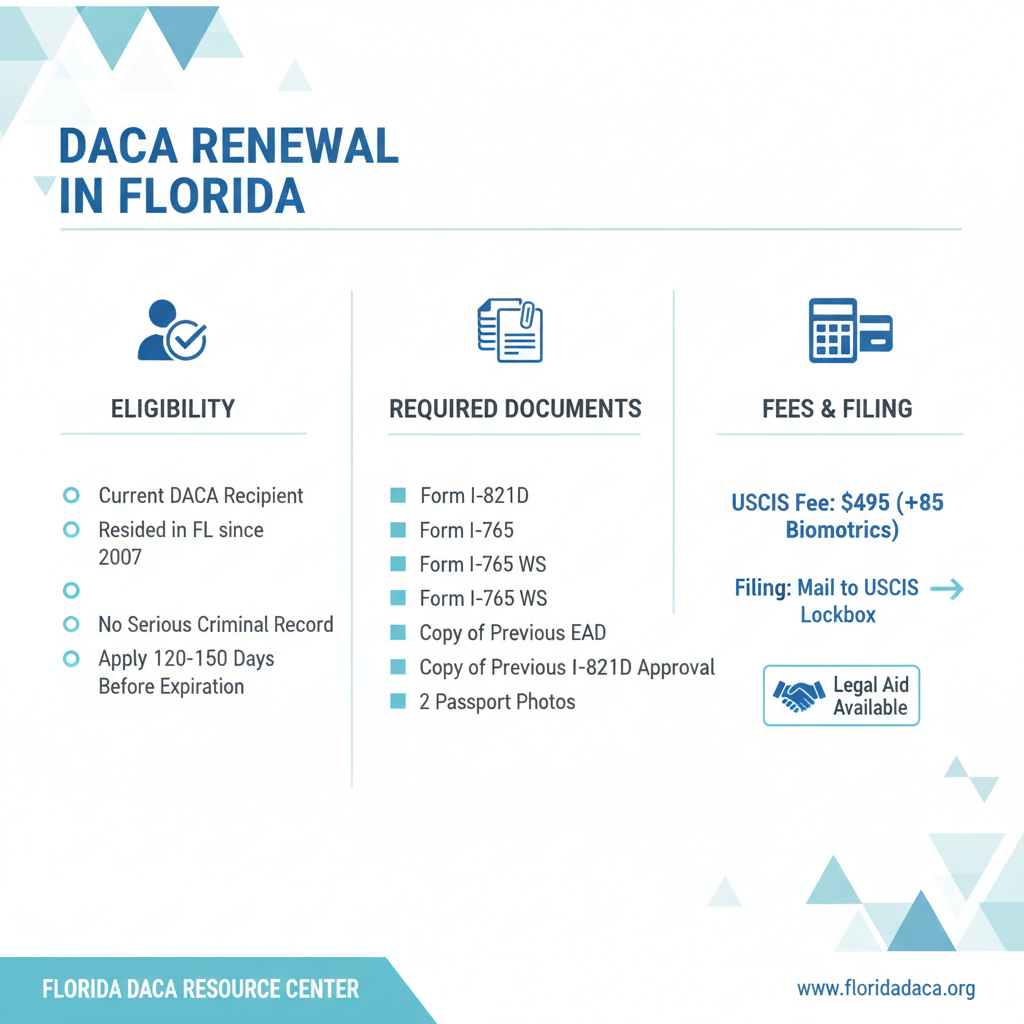
Why this news is showing up now
The DACA program, first established in 2012, has been subject to continuous legal and political challenges since its inception. While the program has survived numerous attempts to terminate it, its future remains uncertain, primarily due to ongoing litigation. As of our current date, August 26, 2026, the DACA program continues to operate under injunctions from federal courts. Specifically, the order from the Southern District of Texas, affirmed by the Fifth Circuit Court of Appeals, has prohibited USCIS from granting initial DACA requests. However, it explicitly allows USCIS to continue processing DACA renewal requests. This legal ping-pong means that every court filing, every judicial decision, and every statement from USCIS becomes significant news for the DACA community, sparking renewed discussions and a critical need for accurate, up-to-date information. These legal battles are a constant reminder of the program's fragility and the urgency for eligible individuals to understand their rights and responsibilities, especially concerning renewals.How it can affect Florida residents
Florida is home to one of the largest populations of DACA recipients in the United States, with tens of thousands of individuals benefiting from deferred action and work authorization. For these "Dreamers" in Orlando, Tampa, Miami, and across the state, the news surrounding DACA is not abstract; it directly impacts their lives, their families, their jobs, and their educational pursuits.**Impacts on Florida DACA Recipients:**
- Employment: DACA provides crucial work authorization, allowing recipients to legally work and contribute to Florida’s economy. A lapse in DACA status can mean immediate job loss.
- Education: Many DACA recipients are pursuing higher education in Florida. Maintaining DACA status can influence eligibility for in-state tuition and access to certain scholarships, although state-specific policies vary and are subject to change.
- Driving Privileges: In Florida, a valid DACA-based Employment Authorization Document (EAD) is often required to obtain or renew a driver’s license.
- Family Stability: DACA status provides a degree of stability and protection from deportation, allowing families to plan for the future without constant fear. Any uncertainty directly impacts family well-being.
- Community Contribution: DACA recipients are integral members of their communities, owning businesses, serving in essential roles, and contributing to the vibrant culture of cities like Orlando. Their continued status allows them to thrive.
What DACA Is (and Why It Matters)
The Deferred Action for Childhood Arrivals (DACA) program is a critical, though temporary, immigration policy that has provided a lifeline to hundreds of thousands of young undocumented immigrants who were brought to the United States as children. Understanding what DACA is, and what it is not, is the first step toward navigating its complexities.A plain-English definition
At its core, DACA is an exercise of "prosecutorial discretion" by the U.S. government. This means that instead of prioritizing certain individuals for deportation, the government defers, or postpones, any removal action against them for a specific period, typically two years. This deferred action can be renewed. While DACA does not grant lawful immigration status or a pathway to U.S. citizenship, it provides two primary benefits:- Protection from Deportation: DACA recipients are granted a temporary reprieve from removal proceedings.
- Work Authorization: Along with deferred action, recipients are eligible to apply for an Employment Authorization Document (EAD), which allows them to legally work in the United States.
Key terms you need to know
Navigating DACA requires familiarity with specific terminology. Here are some essential terms:- Deferred Action: This is a decision by the Department of Homeland Security (DHS) to postpone any immigration enforcement action against an individual. It is temporary and can be revoked. It is *not* an immigration status.
- DACA Recipient (or Dreamer): An individual who has been granted deferred action under the DACA program. The term "Dreamer" refers to individuals who would benefit from the DREAM Act (Development, Relief, and Education for Alien Minors Act), proposed legislation that DACA was intended to partially address.
- Employment Authorization Document (EAD): Also known as a "work permit," this card proves that an individual is authorized to work in the United States. DACA recipients receive an EAD, typically valid for two years, concurrently with their deferred action approval.
- USCIS: The U.S. Citizenship and Immigration Services, the federal agency within the Department of Homeland Security (DHS) responsible for administering immigration and naturalization benefits, including DACA.
- Form I-821D: This is the official USCIS form, "Consideration of Deferred Action for Childhood Arrivals," which individuals must file to request DACA.
- Form I-765: This is the official USCIS form, "Application for Employment Authorization," filed concurrently with Form I-821D to request a work permit.
- Form I-765 Worksheet (Form I-765WS): Used to calculate and document income and expenses when requesting an EAD.
- Advance Parole: A travel document (Form I-131, Application for Travel Document) that allows certain non-citizens to travel outside the U.S. and return legally without jeopardizing their immigration status. DACA recipients can apply for advance parole under specific, limited circumstances.
- Continuous Residence: A requirement for DACA eligibility, meaning the applicant has resided continuously in the U.S. for a specified period.
Current Immigration Law: The Foundation
The legal foundation of DACA is rooted in executive action rather than statutory law passed by Congress. This distinction is crucial because it explains why the program has faced such persistent legal challenges and why its future remains precarious. DACA was established by the Secretary of Homeland Security in June 2012. It was based on the authority of DHS to exercise prosecutorial discretion in immigration enforcement. This means that immigration officials have the discretion to decide which cases to pursue and which to defer.**Key Legal Status as of August 26, 2026:** The DACA program's operational status is currently governed by a July 2021 order from the U.S. District Court for the Southern District of Texas, which found the 2012 DACA memorandum unlawful. This decision was largely affirmed by the U.S. Court of Appeals for the Fifth Circuit in October 2022. While the Supreme Court has previously heard cases related to DACA, the current legal landscape dictates:
- No New DACA Applications: USCIS is prohibited from granting initial DACA requests. This means individuals who have never before received DACA cannot apply at this time.
- DACA Renewals Continue: Crucially, the court order explicitly stated that USCIS *can* continue to accept and process DACA renewal requests from individuals who have previously been granted DACA.
Federal requirements for DACA Renewal
For those eligible for renewal, the federal requirements remain largely consistent with the initial DACA criteria, with an emphasis on continuous eligibility. To renew DACA, you must meet the following criteria:- You must have received DACA previously.
- You must not have departed the United States on or after August 15, 2012, without first obtaining advance parole.
- You must have continuously resided in the United States since you submitted your most recent DACA request that was approved. This means you must not have traveled outside the U.S. without proper authorization (advance parole) since your last DACA approval.
- You must not have been convicted of a felony, a significant misdemeanor, or three or more other misdemeanors, and not otherwise pose a threat to national security or public safety.
**Required USCIS Forms for Renewal:** When renewing your DACA, you will typically file three forms with USCIS:
- Form I-821D, Consideration of Deferred Action for Childhood Arrivals: This is the primary form requesting renewal of your deferred action.
- Form I-765, Application for Employment Authorization: This form is for renewing your work permit, which is granted alongside deferred action.
- Form I-765 Worksheet (Form I-765WS): Used to calculate and document your income and expenses, helping USCIS determine your economic need for the EAD.
Florida-specific considerations
While DACA is a federal program, its effects ripple down to state and local policies. For Florida residents, specific considerations include:- Driver's Licenses: DACA recipients in Florida can obtain a driver's license upon presenting a valid EAD and other required identification documents. Timely renewal of DACA and the EAD is critical to maintaining driving privileges.
- In-State Tuition: DACA recipients in Florida may be eligible for in-state tuition at public colleges and universities under certain circumstances, primarily through Section 1009.26, F.S. This eligibility is often tied to meeting specific residency requirements and maintaining DACA status. It's crucial to check with individual institutions for their specific policies.
- Professional Licenses: The ability to obtain certain professional licenses (e.g., nursing, teaching) can vary by state and profession. DACA status generally enables recipients to apply for licenses, but specific requirements should be verified with the relevant state licensing board.
- Local Resources: Communities in Central Florida, including Orlando and Orange County, often have non-profit organizations and legal aid groups that provide support and resources for DACA recipients. Imigrar works alongside these resources to ensure comprehensive support for our clients.
Need Help with Your DACA Renewal? Don't navigate the complexities alone. Our Orlando immigration team at Imigrar is ready to assist. Call +1 786-791-3106 for a free consultation, or message us online. Se Habla Español.
How to Renew Your DACA: A Complete Step-by-Step Guide
Renewing your DACA is a critical process that requires attention to detail and timely action. Missing deadlines or making errors can lead to a lapse in your work authorization and protection from deportation. Follow this comprehensive guide to ensure a smooth renewal.1) Determine Your Eligibility for Renewal
Before you begin gathering documents, confirm that you still meet the DACA renewal criteria. This primarily means:- You were previously granted DACA.
- You have not left the U.S. without advance parole since August 15, 2012.
- You have maintained continuous residence in the U.S. since your last DACA approval.
- You have not been convicted of a felony, a significant misdemeanor, or three or more other misdemeanors, and do not pose a threat to national security or public safety.
2) Gather Required Documents and Information
Thorough document preparation is key. Collect all necessary evidence before filling out any forms.**Required Documents Checklist:**
- Previous DACA Approval Notices: Copies of your most recent Form I-797C, Notice of Action, approving your DACA and EAD.
- Previous EAD: A copy of your current or most recently expired Employment Authorization Document.
- Proof of Continuous Residence: Documents showing you have lived in the U.S. since your last DACA approval. Examples include:
- Bank statements
- Utility bills (electricity, water, gas, internet)
- Rental agreements or mortgage statements
- School transcripts or diplomas
- Employment records (pay stubs, W-2 forms)
- Medical records
- Car registration or insurance documents
- Affidavits from friends, family, or employers
- Identity Documents: Copies of your birth certificate, passport (if you have one), and any other government-issued ID.
- Two Passport-Style Photos: Taken within 30 days of filing, meeting USCIS specifications (2x2 inches, white background, full-face view). Write your name and A-Number lightly on the back.
- Criminal History Records (if applicable): Certified court dispositions for *any* arrest or conviction, even if charges were dismissed or expunged. This is critically important.
- Proof of Previous Departure/Advance Parole (if applicable): If you traveled outside the U.S. with advance parole, include copies of your approved Form I-131 and entry/exit stamps.
3) Complete USCIS Forms Accurately
You will need to complete Form I-821D, Form I-765, and Form I-765 Worksheet.- Form I-821D: Fill out every section completely. If a question does not apply, write "N/A" (Not Applicable). Ensure consistency with your previous DACA application. Double-check your address, contact information, and any criminal history disclosures.
- Form I-765: Again, complete all sections. Ensure the category for DACA is correctly marked (c)(33). Verify your name, address, and A-Number are identical to your other forms.
- Form I-765 Worksheet: This form helps USCIS determine if you meet the economic need requirement for the fee exemption or waiver. While DACA renewals typically pay the full fee, completing this worksheet is still required. Be honest and accurate about your income and expenses.
4) Prepare Supporting Evidence
Organize your supporting documents logically.- Place copies of your previous DACA approval notice (Form I-797C) and your current/expired EAD at the top.
- Organize proof of continuous residence chronologically.
- Include copies of your identity documents and passport photos.
- If you have any criminal history, include the certified court dispositions immediately after the forms.
5) Calculate and Submit Fees
As of current USCIS fee schedules, there is no fee for Form I-821D. However, there is a fee for Form I-765 and a biometrics service fee.- I-765 Fee: Check the USCIS Filing Fees page for the most current amount.
- Biometrics Fee: This fee is also required for DACA renewals.
- Total Fee: The total fee for DACA renewal is the sum of the I-765 fee and the biometrics fee.
6) Mail Your Application Package
Mail your completed application package to the correct USCIS Lockbox facility. The correct address depends on your state of residence.- For Florida residents, you will typically mail your DACA renewal package to the USCIS Chicago Lockbox. However, always verify the most current mailing address on the USCIS DACA page or the instructions for Form I-821D.
- Recommendation: Use a shipping service that provides tracking and delivery confirmation (e.g., USPS Certified Mail with Return Receipt, FedEx, UPS). This provides proof of mailing and delivery.
7) Attend Biometrics Appointment and Track Your Case
After USCIS receives your application, they will send you a receipt notice (Form I-797C). Subsequently, you will receive an appointment notice for biometrics (fingerprints, photos, signature).- Biometrics Appointment: Attend this appointment at the designated Application Support Center (ASC). For Central Florida residents, this might be the Orlando ASC. Bring the appointment notice and a valid photo ID. This appointment is mandatory.
- Case Tracking: Use the receipt number from your Form I-797C to track your case status online at USCIS Case Status Online. You can also check average processing times for Form I-821D and Form I-765 at USCIS Processing Times.

Practical Steps You Can Take Today for DACA Renewal
Proactive planning is the best strategy for a stress-free DACA renewal. Here are practical steps you can take starting today.Actionable Checklist:
- Start Early: Mark your calendar! Begin preparing your renewal application 120 to 150 days before your current DACA and EAD expire. This gives you ample time to gather documents, complete forms, and account for USCIS processing times. Filing too late risks a lapse in employment authorization.
- Organize Existing Documents: Create a dedicated folder for all DACA-related documents. Include copies of previous applications, approval notices, EADs, and any correspondence from USCIS.
- Review Your History: Reflect on any changes since your last DACA approval, especially regarding travel, education, employment, and any encounters with law enforcement. Be prepared to provide documentation for these changes.
- Consult with an Immigration Attorney: Even if you've renewed DACA before, legal counsel can provide peace of mind and catch potential issues. This is especially true if you have any criminal history, even minor infractions, or if you have traveled outside the U.S.
- Gather Proof of Continuous Residence: Start collecting documents that show you have continuously resided in the U.S. since your last DACA approval. Aim for at least one document per year, if possible.
- Save for Fees: Set aside the required USCIS filing fees well in advance. Check the USCIS website for the most current fee schedule.
- Stay Informed: Regularly check the USCIS official website and reputable immigration news sources for any updates on DACA policy or court rulings.
Document preparation guidance
The meticulous organization of your documents can significantly streamline the renewal process and reduce the likelihood of Requests for Evidence (RFEs) from USCIS.- Make Copies, Not Originals: Always send copies of supporting documents, unless USCIS specifically requests an original. Keep your originals safe.
- Label Everything: Clearly label each document (e.g., "Copy of Current EAD," "Bank Statement - [Month/Year]").
- Organize Chronologically: For documents like bank statements or utility bills proving continuous residence, arrange them in chronological order.
- Use Cover Letters and Dividers: For


