


The landscape of U.S. immigration law is constantly shifting, and few programs embody this more than the Deferred Action for Childhood Arrivals (DACA). For hundreds of thousands of young people across the nation, including many in Florida, DACA has been a lifeline, offering protection from deportation and the ability to work legally. As of April 17, 2026, DACA continues to face legal challenges, yet renewals remain a critical process for eligible individuals. Staying informed and acting proactively is not just recommended, it’s essential.
Need Help? Our Orlando immigration team is ready to assist. Call +1 786-791-3106 for a free consultation, or message us online. Se Habla Español.
The reporting that sparked this guide
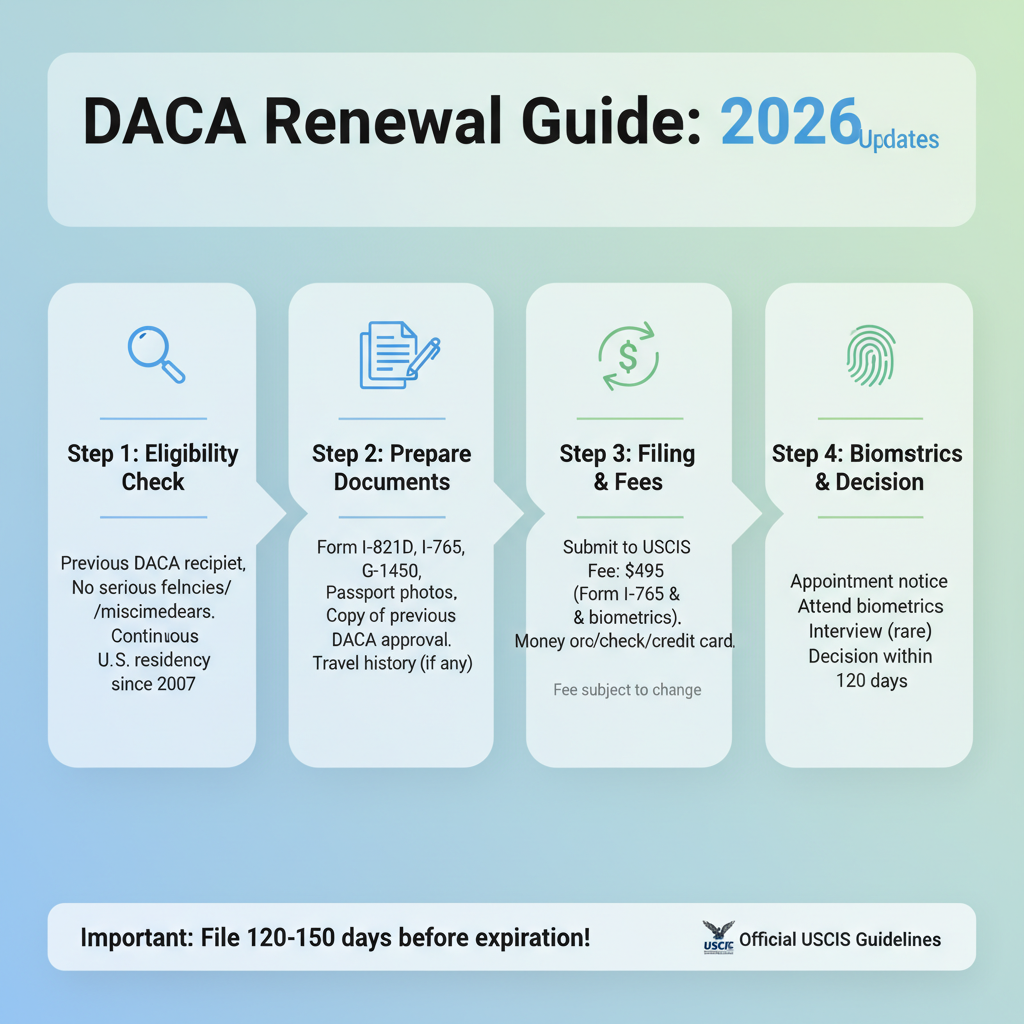
The ongoing discussions and legal battles surrounding DACA frequently generate news and updates from various sources, including official government channels. The need for clear, actionable information for DACA recipients is constant. This guide is inspired by the latest information on the DACA program and its renewal process, as highlighted by continuous reporting from sources like USCIS news releases and general DACA Program Updates and Renewal Information (USCIS).
What This News Means for Immigrants in Orlando and Across Florida
For thousands of DACA recipients living in Central Florida and throughout the Sunshine State, every piece of news regarding the program carries significant weight. The legal and political uncertainty surrounding DACA can create immense stress and confusion. Understanding the current status and implications is paramount to maintaining your deferred action and work authorization.
Why this news is showing up now
As of 2026, DACA remains a program born of executive action, not federal law, making it susceptible to ongoing legal challenges and administrative changes. The program has been the subject of numerous court cases, with various rulings impacting its scope. While court orders have largely prohibited USCIS from approving new DACA applications, renewals for existing recipients have generally been allowed to continue. This creates a perpetual state of vigilance for DACA holders and their families, as updates can emerge at any time regarding court decisions, policy changes, or even potential legislative efforts that could either solidify or dismantle the program. The news cycle around DACA is constant because its future is not yet secured by comprehensive immigration reform, leaving its fate to judicial rulings and executive discretion.
How it can affect Florida residents
Florida is home to a significant population of DACA recipients, often referred to as Dreamers. According to estimates, Florida ranks among the top states for DACA beneficiaries. For these individuals and their families in Orlando, Miami, Tampa, and across the state, DACA provides crucial benefits: protection from deportation, the ability to work legally, and in some cases, access to in-state tuition at public universities. Any update, positive or negative, directly impacts their ability to plan for their future, pursue education, build careers, and contribute to their communities. For those in Orlando and surrounding counties like Orange, Osceola, and Seminole, staying informed means safeguarding their present and future. Changes to DACA processing times, eligibility requirements for renewal, or even the fee structure can have immediate, tangible effects on their lives and financial stability. It's not just about legal status; it's about stability, opportunity, and the ability to "Keep Families Together" – a core value for Imigrar.
What DACA Is (and Why It Matters)
The Deferred Action for Childhood Arrivals (DACA) program was established in 2012 by the Obama administration. It provides a temporary reprieve from deportation and work authorization to certain undocumented immigrants who were brought to the United States as children. While DACA does not grant permanent legal status or a pathway to citizenship, it offers significant protections and opportunities.
A plain-English definition
Imagine you arrived in the U.S. as a child, through no fault of your own, and grew up here, attending schools, making friends, and embracing American culture. DACA is a policy that allows these young people – often called Dreamers – to apply for a temporary status that prevents them from being deported. If approved, they receive "deferred action," meaning the government agrees not to pursue their deportation for a specific period, typically two years. Crucially, they also receive an Employment Authorization Document (EAD), which allows them to legally work in the U.S. This means they can pursue careers, pay taxes, and contribute more fully to the economy. DACA recipients must renew their status every two years to maintain these protections.
Key terms you need to know
- Deferred Action: This is a discretionary decision by the U.S. government to postpone removal (deportation) proceedings against an individual. It does not grant lawful status or a pathway to citizenship, but it does provide temporary protection from deportation.
- Employment Authorization Document (EAD): Often referred to as a "work permit," this card allows DACA recipients to legally work in the United States. It is typically valid for two years, coinciding with the deferred action period.
- Advance Parole: This is a travel document that allows certain non-citizens, including DACA recipients, to travel outside the U.S. and lawfully return without jeopardizing their immigration status. It must be applied for and approved *before* travel.
- Dreamers: A term commonly used to refer to young undocumented immigrants who were brought to the United States as children, often associated with the proposed "DREAM Act" legislation.
- USCIS: U.S. Citizenship and Immigration Services, the agency responsible for processing DACA applications and renewals.
- DHS: Department of Homeland Security, the parent agency of USCIS and other immigration enforcement bodies.
- Attorney General: The head of the U.S. Department of Justice, often involved in legal challenges and decisions related to immigration policies.
- Continuous Residence: A key DACA eligibility requirement meaning the applicant has continuously resided in the U.S. for a specified period (e.g., from June 15, 2007, to the present for initial DACA, and continuously since their last DACA approval for renewals).
- Significant Misdemeanor/Felony: Specific criminal offenses that can disqualify an individual from DACA eligibility.
Need Help? Our Orlando immigration team is ready to assist. Call +1 786-791-3106 for a free consultation, or message us online. Se Habla Español.
Current Immigration Law: The Foundation for DACA
It's crucial to understand that DACA is not a federal law enacted by Congress but rather a policy implemented through executive action by the Secretary of Homeland Security. This distinction is vital because it means DACA's existence and parameters can be, and have been, challenged in court and altered by subsequent administrations. Its foundation rests on the concept of "prosecutorial discretion" – the government's authority to decide whom to prioritize for immigration enforcement.
While DACA itself isn't codified in the Immigration and Nationality Act (INA), its administration relies on existing immigration statutes. For instance, the authority for USCIS to grant employment authorization stems from 8 CFR 274a.12(c)(14), which allows for employment authorization for individuals granted deferred action. However, the specific criteria for deferred action under DACA are defined by the policy memorandum that created it and subsequent guidance from DHS.
As of April 17, 2026, due to various court rulings, USCIS is generally prohibited from accepting initial DACA requests. This means that individuals who have never been granted DACA before cannot apply. However, USCIS continues to accept and process DACA renewal requests from individuals who previously held DACA and meet the renewal criteria. This distinction is paramount for anyone considering applying for or renewing DACA.
Federal requirements for DACA Renewal
To be eligible for DACA renewal, you must meet the following federal requirements:
- You must have previously received deferred action under DACA.
- You must not have departed the United States on or after August 15, 2012, without first obtaining Advance Parole.
- You must have continuously resided in the United States since you submitted your most recent DACA request that was approved.
- You must not have been convicted of a felony, a significant misdemeanor, or three or more other misdemeanors, and must not pose a threat to national security or public safety.
Important: A significant misdemeanor is defined as an offense for which the maximum term of imprisonment is one year or less but greater than five days, and for which the individual was sentenced to time in custody of 90 days or more. It also includes certain offenses like domestic violence, sexual abuse or exploitation, burglary, illegal possession or use of a firearm, drug distribution or trafficking, or driving under the influence (DUI) if the conviction resulted in a sentence of 90 days or more in custody. Always consult with an experienced attorney if you have any criminal history.
Florida-specific considerations
For DACA recipients in Florida, there are specific state-level considerations that make maintaining DACA status particularly valuable:
- Driver's Licenses: With a valid DACA approval and EAD, DACA recipients in Florida are generally eligible to obtain a Florida driver's license. This is critical for daily life, employment, and navigating Central Florida's extensive road network, including the I-4 corridor.
- In-State Tuition: While not universal, some public colleges and universities in Florida may offer in-state tuition to DACA recipients who meet certain residency requirements. This can significantly reduce the cost of higher education, opening doors for many young Dreamers.
- Professional Licenses: DACA recipients with EADs may be eligible to apply for certain professional licenses in Florida, allowing them to pursue careers in fields like healthcare, education, and various trades.
The Orlando USCIS Field Office, located in Orange County, serves many DACA recipients in the area. While renewal applications are generally mailed to specific USCIS service centers, the local office may be involved in biometrics appointments or interviews if required. Staying connected with local resources and understanding state-level policies is key.
For all official forms and up-to-date information, always refer to the USCIS official website.
How to Renew Your DACA: A Complete Step-by-Step Guide
Renewing your DACA is a critical process to maintain your protection from deportation and your work authorization. It requires meticulous attention to detail and timely submission. Here’s a comprehensive guide to help you through each step.
1) Determine Your Eligibility for Renewal
Before you begin gathering documents or filling out forms, confirm that you still meet all the DACA renewal criteria. The eligibility requirements for renewal are generally the same as the initial DACA grant, with the added condition of continuous residence since your last approval. This means you must:
- Have previously received DACA.
- Not have departed the U.S. without Advance Parole since August 15, 2012.
- Have continuously resided in the U.S. since your last DACA approval.
- Not have been convicted of a felony, a significant misdemeanor, or three or more other misdemeanors, and not pose a threat to national security or public safety.
Warning: If you have any new arrests, charges, or convictions, even minor ones, since your last DACA approval, it is absolutely essential to consult with an immigration attorney before filing your renewal. These could jeopardize your eligibility.
2) Gather Required Documents and Information
Thorough documentation is key to a successful renewal. Start gathering these items well in advance:
- Proof of Previous DACA Approval: Your most recent Form I-797C, Notice of Action, for your DACA approval.
- Current Employment Authorization Document (EAD): A copy of both sides of your expiring EAD card.
- Proof of Continuous Residence: Documents that show you have continuously resided in the U.S. since your last DACA approval. Examples include:
- School transcripts or report cards
- Employment records, pay stubs, W-2 forms
- Bank statements
- Rental agreements or utility bills
- Medical records
- Dated photographs with location information
- Any other dated official documents showing your presence in the U.S.
- Travel History: A record of any trips outside the U.S., including dates, destinations, and whether you had Advance Parole.
- Criminal History: If you have any arrests, charges, or convictions since your last DACA approval, gather certified court dispositions and police reports. Even if charges were dropped or you were found not guilty, you must disclose them.
- Biographic Information: Your current address, phone number, email, and any changes to your name.
- Passport-Style Photos: Two identical, unmounted, color passport-style photos taken within 30 days of filing. Write your name and A-Number lightly on the back of each photo.
Reminder: It is crucial to submit copies of documents, not originals, unless specifically requested by USCIS.
3) Complete Forms I-821D, I-765, and I-765WS
You will need to complete three forms for your DACA renewal. Ensure you are using the most current versions of these forms, available on the USCIS Forms page:
- Form I-821D, Consideration of Deferred Action for Childhood Arrivals: This is the main form for DACA renewal. Fill out every section accurately and completely. If a section does not apply to you, write "N/A" (not applicable) or "None."
- Form I-765, Application for Employment Authorization: This form requests your work permit. For DACA renewals, you will typically check box 1.a. "Renewal of my permission to work" and use eligibility category (c)(33).
- Form I-765WS, Worksheet: This worksheet helps you demonstrate your economic need for employment authorization. Provide detailed and honest information about your income, expenses, and assets.
Important: Double-check all dates, names, and addresses for consistency across all forms and with your supporting documents. Any discrepancies can lead to delays or a Request for Evidence (RFE).
4) Pay the Filing Fees
As of April 17, 2026, the filing fee for DACA renewal includes:
- Form I-765 fee: $410
- Biometrics services fee: $85 (This fee is for fingerprints and a photograph, even if you previously provided them).
- Total: $495
These fees are subject to change, so always verify the current amounts on the USCIS website before submitting. You can pay by money order, personal check, cashier's check, or by credit card using Form G-1450, Authorization for Credit Card Transactions. Make checks payable to "U.S. Department of Homeland Security." Fee waivers for DACA renewals are extremely rare and generally only granted in very specific circumstances, usually for individuals who are indigent and unable to pay the fees.
5) Submit Your Application Package
Once all forms are completed, signed, dated, and all supporting documents are compiled, assemble your application package in the correct order. USCIS provides specific filing instructions for DACA, including the correct mailing address based on your state of residence. For Florida residents, applications are typically sent to the USCIS Chicago Lockbox. Check the USCIS direct filing addresses for Form I-821D for the most current information.
- Make a complete copy of your entire application package for your records before mailing.
- Send your package via certified mail with a return receipt requested. This provides proof of mailing and delivery, which is invaluable if there are any questions about your submission.
6) Attend Biometrics Appointment (If Required)
After USCIS accepts your application, you will typically receive a Form I-797C, Notice of Action, confirming receipt. Within a few weeks, you may receive a separate appointment notice for biometrics (fingerprints, photograph, and signature) at an Application Support Center (ASC). Even if you have provided biometrics before, you may be required to do so again.
- Bring your appointment notice, a valid photo ID (such as your current EAD or driver's license), and any other requested documents.
- The Orlando USCIS Application Support Center serves many Central Florida residents. Be sure to attend your appointment on time.
7) Monitor Your Case Status and Respond to RFEs
You can monitor the status of your application online using the receipt number provided on your Form I-797C via the USCIS Case Status Online tool. It's important to check this regularly.
- Request for Evidence (RFE): If USCIS needs additional information or clarification, they will send you an RFE. It is critical to respond to an RFE fully and within the specified deadline. Failure to do so will likely result in a denial.
- Approval: If your renewal is approved, you will receive a new Form I-797, Approval Notice, followed by your new EAD card in the mail.
- Denial: If your application is denied, USCIS will send a denial notice explaining the reasons. If this happens, it is crucial to seek legal advice immediately to understand your options.
Practical Steps You Can Take Today for DACA Renewal
Preparing for your DACA renewal should start long before your current status expires. Proactive steps can save you stress, time, and potential complications.
Actionable Checklist:
- Start Early: Mark your calendar! Aim to file your renewal application between 120 and 150 days before your current DACA and EAD expire. This window allows ample time for processing and helps avoid a lapse in your work authorization.
- Consult an Attorney: If you have any doubts about your eligibility, any criminal history, or unusual travel, consult with an experienced immigration attorney. An initial consultation can clarify complex issues and prevent costly mistakes.
- Organize Your Documents: Create a dedicated folder (physical and/or digital) for all DACA-related documents. Keep copies of everything you submit to USCIS.
- Update Your Contact Information: Ensure USCIS has your most current mailing address. If you move, file Form AR-11, Alien's Change of Address Card, online or by mail, and also update your address on any pending applications.
- Save for Fees: The current filing fees are $495. Set aside funds in advance to avoid last-minute financial stress.
- Review Your Criminal Record: Obtain a copy of your criminal record from local law enforcement agencies if you have any arrests or citations, even if they seemed minor or were dismissed. This allows you and your attorney to assess potential impacts on your DACA eligibility.
- Consider Advance Parole: If you have a legitimate humanitarian, educational, or employment reason to travel outside the U.S., consider applying for Advance Parole (Form I-131). This is a separate application and must be approved before you travel. Travel without it could result in being barred from re-entry.
Document Preparation Guidance:
The key to a smooth process is organized and complete documentation:
- Digital Copies: Scan all your supporting documents and save them in an organized digital format. This serves as a backup and makes it easier to share with your attorney.
- Chronological Order: Arrange documents such as proof of continuous residence in chronological order. This makes it easier for USCIS officers to review your case.
- Clear Labeling: Label each document with a brief description (e.g., "School Transcripts - 2020-2022," "Utility Bill - March 2024").
- Avoid Staples/Paperclips: Unless specifically instructed, avoid stapling or using paperclips on your application. Use binder clips if you need to group documents within sections.
Timeline Expectations:
While USCIS processing times can vary, here's a general expectation:
- Application Submission: File between 120 and 150 days before your DACA and EAD expire.
- Receipt Notice (I-797C): Typically received within 2-4 weeks after filing.
- Biometrics Appointment Notice: May arrive 3-8 weeks after filing, with the appointment usually scheduled a few weeks later.
- Decision/EAD Card: Processing can take anywhere from 3 to 6 months, sometimes longer. You can check current USCIS Processing Times online.
Important: Do not let your DACA expire. If your DACA expires before you receive your renewal, you will lose your work authorization and may lose your protection from deportation. While you can still file a late renewal, it's a riskier position to be in.
Need Help? Our Orlando immigration team is ready to assist. Call +1 786-791-3106 for a free consultation, or message us online. Se Habla Español.
How Imigrar Helps DACA Recipients in Orlando and Beyond
At Imigrar, we understand the immense significance of DACA for individuals and families in Orlando, Central Florida, and across the nation. Our firm is dedicated to the mission of "Keep Families Together," and for DACA recipients, maintaining their status is often the cornerstone of family unity and stability. The ongoing legal uncertainty surrounding DACA adds layers of complexity, making expert legal guidance more crucial than ever.
Our experienced immigration attorneys provide comprehensive support for DACA recipients, ensuring that their renewal applications are prepared accurately and submitted on time. We guide our clients through every step of the process, from assessing eligibility and gathering necessary documents to completing complex forms and responding to any USCIS inquiries.
Our experience and expertise:
- Navigating Complex Renewals: We have extensive experience with DACA renewals, including cases involving minor criminal history, travel issues, or periods of non-continuous residence that require careful explanation and documentation.
- Addressing Legal Challenges: We stay abreast of all legal developments and court rulings affecting DACA, providing our clients with the most current and accurate advice. We can help you understand how changes to the program may impact your situation.
- Advance Parole Assistance: If you have a compelling reason to travel outside the U.S., we can assist you with applying for Advance Parole (Form I-131), explaining the risks and requirements to ensure a safe return.
- Holistic Immigration Planning: While DACA does not provide a direct path to a green card, we can evaluate your unique circumstances for other potential avenues for permanent residency, such as through family petitions (e.g., Form I-130) or other immigration pathways, if they become available or applicable.
- Local Knowledge: For clients in Orlando and surrounding areas, our familiarity with local resources, the Orlando USCIS Field Office, and Florida-specific considerations adds an invaluable layer of support.
We know that the DACA process can be daunting, especially with the weight of your future resting on its outcome. Our team is here to alleviate that burden, providing clear, compassionate, and


