


DACA Renewal Now Open: Your Step-by-Step Guide for 2026
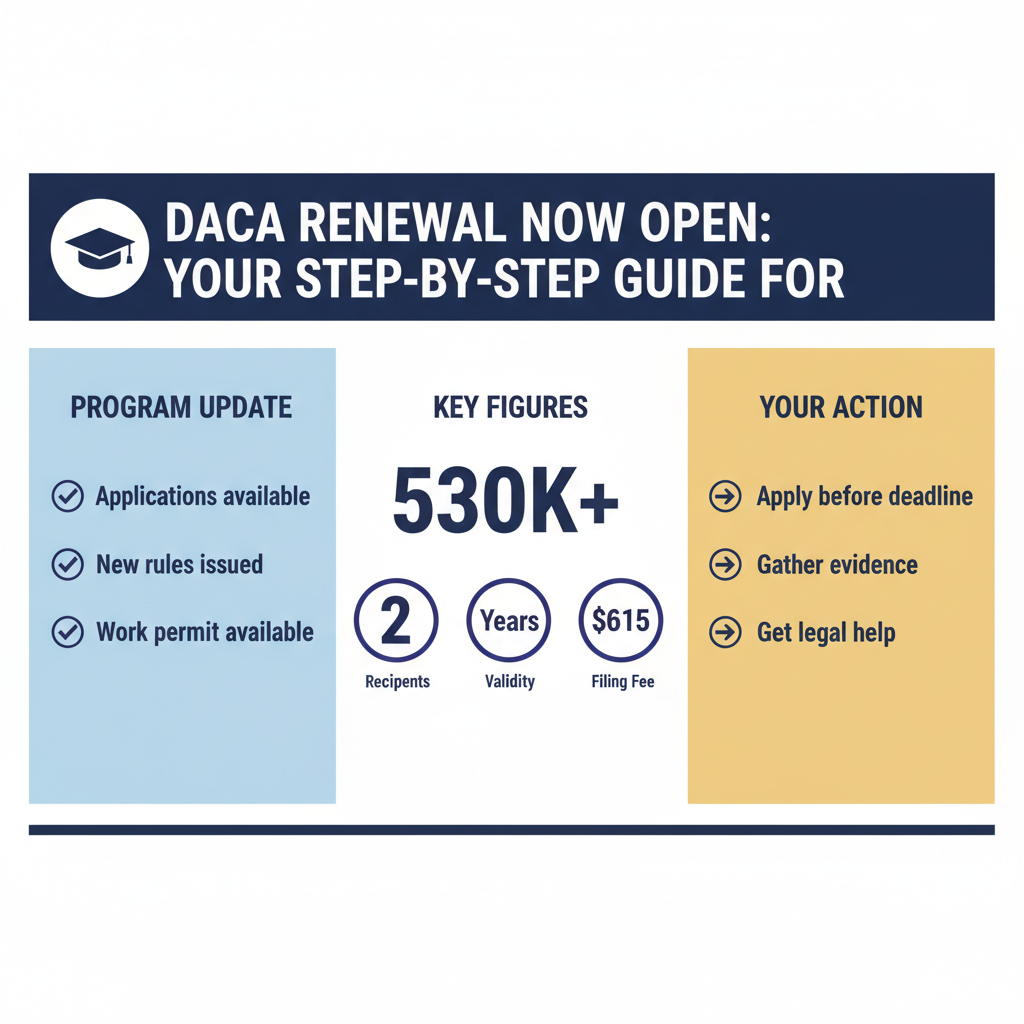
If you have Deferred Action for Childhood Arrivals (DACA) status, now is the time to act. The U.S. government is currently processing DACA renewals, and while the legal landscape remains complex, current beneficiaries can continue protecting their status and work authorization. This guide provides everything you need to know about renewing your DACA in 2026.
Current Status of DACA: What You Need to Know
The DACA program continues to evolve through the courts. On January 17, 2025, the Fifth Circuit Court of Appeals issued a significant decision finding major parts of the Biden Administration's DACA rule to be unlawful. However, the court kept the stay pending appeal in place, meaning current DACA recipients across the United States can still renew their DACA while the case continues through the courts.[4]
Here's what this means for you: If you already have DACA, you can renew your status and work permits. The government continues to accept and process all properly filed DACA renewal requests as long as the judicial stay remains in effect.[2]
For those who have never applied for DACA, the situation is more limited. U.S. Citizenship and Immigration Services (USCIS) is currently not processing new, initial DACA applications in most states, though the federal government has indicated plans to resume processing initial applications in the coming months.[3][5]
Who Can Renew DACA Right Now?
You are eligible to renew your DACA if:
- You currently have DACA status, OR
- Your DACA has been expired for less than one year
- You are in the same legal position as when you filed your original DACA application
- You have not been arrested, charged with a crime, convicted of a crime, or accused of violating immigration laws
If you have any criminal history or immigration-related concerns, consult with an immigration attorney before filing your renewal. An attorney can review your specific situation and advise whether it's safe to proceed.[1]
Critical Timelines: Don't Miss Your Window
Timing is essential for DACA renewals. USCIS has provided clear guidance on when to file:
- Optimal filing window: 150 to 120 days before your current DACA grant expires
- Acceptable filing window: Up to 6 months (180 days) before expiration
- Processing time: If your renewal has been pending for more than 105 days, you can submit a status inquiry by calling 1-800-375-5283
USCIS strongly recommends filing within the 150-120 day window to ensure your renewal is processed before your current status expires.[1] Given the ongoing legal uncertainty surrounding DACA, filing as soon as possible within this window is advisable.
Step-by-Step: How to Renew Your DACA
Step 1: Gather Required Documentation
Before starting your application, collect the following documents:
- Your current DACA approval notice
- Valid government-issued photo ID
- Proof of continuous residence in the United States
- Evidence of employment or school enrollment (if applicable)
- Any updated biographical information
- Results of your medical examination (Form I-693)
Step 2: Complete Form I-821D
This is the Application for Consideration of Deferred Action for Childhood Arrivals. Ensure all information is accurate and matches your original application, unless circumstances have changed.
Step 3: Submit Your Application
File your renewal application online through the USCIS website or by mail to the appropriate USCIS office. Keep copies of everything you submit.
Step 4: Pay the Filing Fee
DACA renewal requires a filing fee. Check the current amount on the USCIS website, as fees may change.
Step 5: Attend Your Biometric Appointment
USCIS will schedule you for fingerprinting and photos. Attend this appointment on time with all required documents.
Step 6: Wait for a Decision
Processing times vary. You can check your application status online or call 1-800-375-5283 if your case has been pending longer than 105 days.
Protecting Your Information: Important Safeguards
The current DACA regulation includes important protections for applicants and beneficiaries. The government has restrictions on using information you provide in your DACA application for initiating removal proceedings against you or your family members and guardians.[2]
Additionally, if your DACA renewal is denied, the government faces restrictions on issuing a Notice to Appear—the charging document that would start removal proceedings against you.[2] These protections are built into the regulation and apply to all DACA applicants and beneficiaries.
Employment Authorization Documents (EADs): What's Included
When you renew your DACA, you're also renewing your work permit—your Employment Authorization Document (EAD). This document allows you to work legally in the United States and is valid for two years.[1]
With your renewed EAD, you can:
- Work for any employer in the United States
- Change jobs freely
- Apply for professional licenses in many states
- Obtain a Social Security number (if you don't already have one)
Important note for Texas residents: Due to ongoing litigation, the situation in Texas is unique. Current DACA recipients in Texas can continue to renew their status and work permits every two years.[3] However, the federal government has indicated that applicants who reside in Texas may be granted deferred action but would not be eligible for employment authorization or lawful presence classification under a potential future ruling.[5] If you live in Texas or are considering moving there, consult with an immigration attorney about how this may affect you.
Advance Parole: Travel Permission for DACA Holders
In addition to renewal, DACA holders can apply for Advance Parole, which allows you to travel outside the United States and return without abandoning your DACA status. This is particularly valuable if you have family emergencies or need to travel for work or education.[4]
Advance Parole is filed with your DACA renewal and requires an additional fee, but it provides crucial flexibility for DACA beneficiaries.
What If You've Had Legal Issues?
If you have been arrested, charged with a crime, convicted of a crime, or accused of violating immigration laws, do not file your renewal without speaking to an immigration attorney first. Certain convictions can make you ineligible for DACA, and filing without legal guidance could have serious consequences.[1]
However, the DACA Rule does provide some relief: expunged convictions, juvenile delinquency adjudications, and convictions under state laws for immigration-related offenses are not considered disqualifying convictions when applying for DACA.[4]
An experienced immigration attorney can review your record and advise whether renewal is safe for you.
Looking Ahead: What's Uncertain?
The future of DACA remains in litigation. While the Fifth Circuit's January 2025 decision narrowed the scope of injunctions on new applications, the district court judge still needs to issue a final order implementing the Fifth Circuit's decision.[3] The federal government submitted its implementation proposal on September 29, 2025, but a final decision from the district court is still pending.
What this means for you: Renew your DACA as soon as possible. Don't wait. The judicial stay that currently allows renewals could change, and you want your renewal processed and approved before any potential changes occur.
Free Legal Help and Resources
If you need assistance with your DACA renewal, several organizations offer free or low-cost help:
- Contact your local immigration legal services organization
- Attend free DACA renewal clinics in your area (many organizations offer these regularly)
- Call USCIS at 1-800-375-5283 with questions about your specific case
- Visit the USCIS website for detailed renewal instructions and forms
Action Items: Your DACA Renewal Checklist
- Check your DACA expiration date on your approval notice
- Calculate your filing window: File between 150-120 days before expiration
- Gather all required documents now, while you have time
- Schedule a consultation with an immigration attorney if you have any legal concerns or questions
- Complete your application carefully, ensuring all information is accurate
- Submit your renewal within the recommended timeframe
- Keep copies of everything you file
- Track your application status online or by phone
Final Thoughts
DACA renewal is available now, and thousands of current beneficiaries are successfully renewing their status and work authorization each month. While the legal landscape remains complex, the immediate path forward is clear: if you have DACA, renew it soon.
Your work permit, protection from deportation, and ability to plan for your future depend on staying current with your DACA status. Don't delay. File your renewal today within the recommended 150-120 day window before your current grant expires.
For personalized guidance specific to your situation, contact an immigration attorney or local legal services organization. You don't have to navigate this process alone.


