


The landscape of immigration law is ever-evolving, and for beneficiaries of the Deferred Action for Childhood Arrivals (DACA) program, staying informed is not just important – it's crucial for maintaining their status and continuing to build their lives in the United States. As your dedicated immigration law firm in Orlando, Imigrar is committed to providing clarity and comprehensive guidance on the latest DACA updates and the essential renewal process.
The reporting that sparked this guide
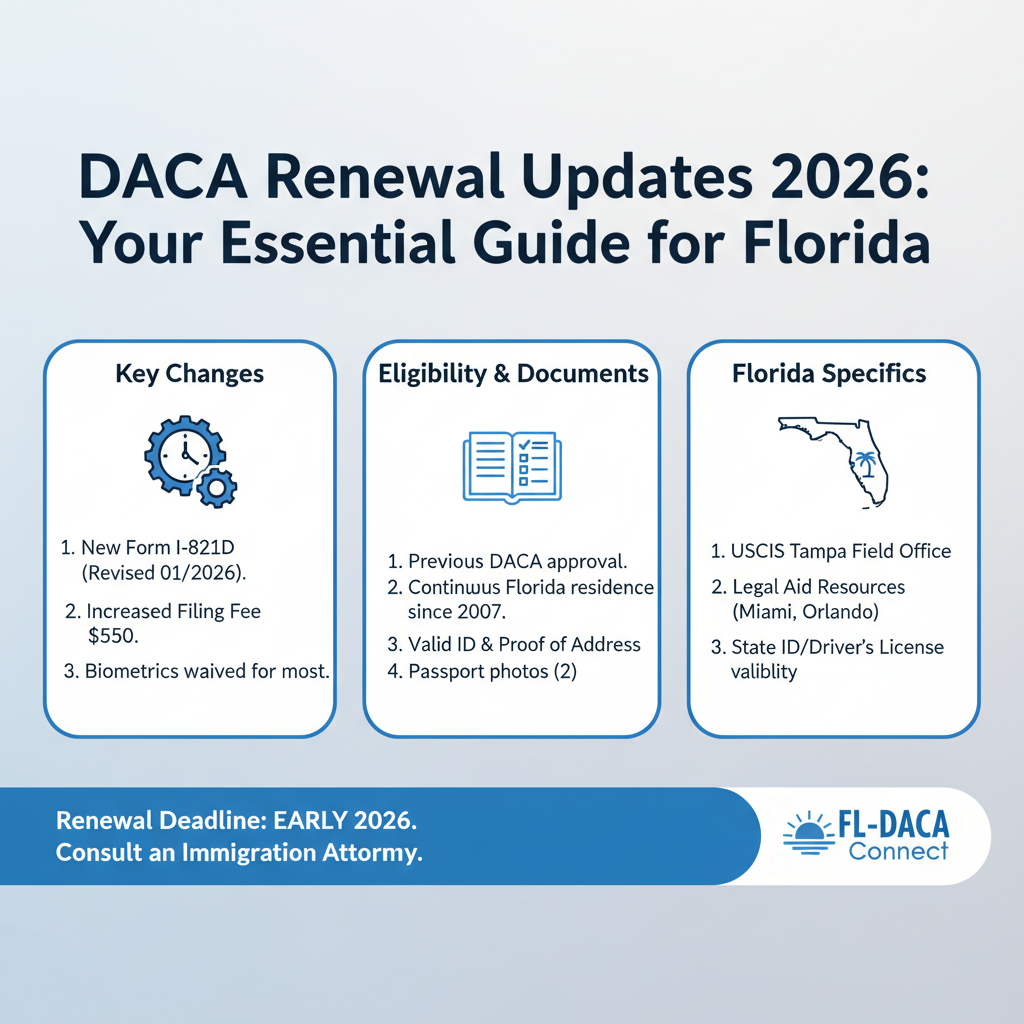
Our commitment to keeping our community informed is driven by the latest developments from official sources. This detailed guide is prompted by ongoing reporting and updates regarding the DACA program, particularly from the U.S. Citizenship and Immigration Services (USCIS).
DACA Program Updates and Renewal Information (USCIS)
What This News Means for Immigrants in Orlando and Across Florida
For hundreds of thousands of DACA recipients, often referred to as "Dreamers," every news cycle brings a mix of hope and anxiety. The latest information from USCIS and the broader legal context surrounding DACA directly impacts their ability to live, work, and contribute to communities like Orlando and beyond.
Why this news is showing up now
The Deferred Action for Childhood Arrivals (DACA) program has been a subject of intense legal and political debate since its inception in 2012. The recent news and updates regarding DACA are not a singular event but rather a continuation of this complex legal saga. The program currently operates under an injunction issued by a federal court in Texas, which was affirmed by the Fifth Circuit Court of Appeals. This injunction, stemming from the case of *Texas v. United States*, prevents USCIS from approving any new initial DACA requests.
However, and this is a critical distinction, the injunction *does not* affect the ability of current DACA recipients to file for renewal. USCIS continues to accept and process DACA renewal requests and associated applications for employment authorization documents (EADs). The ongoing legal challenges mean that the program's future remains uncertain, but for now, renewals are proceeding. The administrative updates and reminders from USCIS are therefore vital, ensuring that eligible individuals understand the current rules and procedures for maintaining their deferred action status and work authorization.
This ongoing legal battle, with its twists and turns, necessitates constant vigilance. Immigrants, their families, and legal professionals must stay abreast of every court decision and every USCIS directive to ensure compliance and protect the status of DACA recipients. The updates serve as a reminder that while new applications are halted, existing beneficiaries must continue to renew their status meticulously.
How it can affect Florida residents
Florida is home to a significant population of DACA recipients, with estimates placing tens of thousands of Dreamers living and working across the state. For these individuals, the ongoing ability to renew their DACA status is paramount. It means the difference between continuing their education, maintaining stable employment, and contributing to the state's economy, or facing the terrifying prospect of losing their livelihoods and potentially deportation.
- Employment Stability: DACA provides work authorization, allowing recipients to secure jobs, pay taxes, and support their families. For many in Orlando and Central Florida, this means working in essential sectors, from hospitality and tourism to healthcare and education. The ability to renew their Employment Authorization Document (EAD) is directly tied to their economic stability.
- Educational Opportunities: DACA recipients often pursue higher education. In Florida, DACA recipients are generally eligible for in-state tuition at public universities and colleges, provided they meet residency requirements. The continuation of DACA allows them to finish their degrees and utilize their skills within the state.
- Community Integration: DACA recipients are deeply integrated into Florida communities. They are neighbors, friends, and family members. The program allows them to obtain driver's licenses, register their vehicles, and participate fully in daily life, reducing fear and uncertainty.
- Family Unity: Many DACA recipients are part of mixed-status families, with U.S. citizen children, spouses, or parents. The renewal process is essential for these families to remain together, preventing the separation that would inevitably occur if DACA status were lost.
For Central Florida residents, particularly those along the I-4 corridor in cities like Orlando, Kissimmee, and Tampa, the impact of DACA updates resonates profoundly. These communities have large immigrant populations, and the stability offered by DACA allows individuals to contribute to local businesses, schools, and civic life. The Orlando USCIS Field Office processes various immigration matters, and while DACA applications are primarily handled by Lockbox facilities, the local community feels the direct effects of any changes or renewals.
At Imigrar, we understand these local impacts deeply. We are here to serve our community in Orlando, Orange County, and throughout Florida, ensuring that DACA recipients have the accurate information and legal support they need to navigate this complex terrain and keep their families together.
Need Help? Our Orlando immigration team is ready to assist. Navigating DACA renewals can be complex, especially with ongoing legal changes. Call +1 786-791-3106 for a free consultation, or message us online. Se Habla Español.
What DACA Is (and Why It Matters)
The Deferred Action for Childhood Arrivals (DACA) program has offered a lifeline to hundreds of thousands of young people across the United States. Understanding its origins, purpose, and current status is essential for anyone impacted by it.
A plain-English definition
DACA, or Deferred Action for Childhood Arrivals, is an immigration policy established in June 2012 by the Obama administration. It provides certain eligible undocumented immigrants who came to the United States as children with two main benefits:
- Protection from Deportation: It grants a temporary reprieve from deportation, known as "deferred action." This means that for a specified period (typically two years), U.S. immigration authorities agree not to initiate deportation proceedings against the individual.
- Work Authorization: It allows recipients to apply for an Employment Authorization Document (EAD), commonly known as a work permit. This permit enables them to legally work in the U.S. and obtain a Social Security number, which is crucial for employment, paying taxes, and obtaining a driver's license.
It is important to understand what DACA is NOT: DACA is not a path to U.S. citizenship or lawful permanent residency (a Green Card). It provides temporary relief and work authorization, but it does not change an individual's underlying immigration status. It must be renewed periodically to maintain its benefits.
The program was created to address the situation of young people who were brought to the U.S. as children, often having little to no memory of their country of birth, and who have grown up considering the U.S. their home. These individuals, often referred to as "Dreamers," have largely integrated into American society, pursuing education, building careers, and contributing to their communities. DACA acknowledges their unique circumstances and allows them to continue their lives without immediate fear of removal.
Key terms you need to know
Navigating immigration law requires familiarity with specific terminology. Here are some key terms related to DACA:
- Deferred Action: This is a discretionary determination by USCIS to defer removal (deportation) action against an individual. It does not confer lawful status but rather a temporary period during which an individual is not prioritized for removal.
- Dreamer: A term commonly used to describe young undocumented immigrants who were brought to the U.S. as children. The term originated from the "DREAM Act" (Development, Relief, and Education for Alien Minors Act), proposed legislation that would have provided a pathway to lawful status for these individuals.
- Employment Authorization Document (EAD): Also known as a work permit, this is a card issued by USCIS that proves an individual is authorized to work in the United States. For DACA recipients, the EAD is typically valid for two years and must be renewed along with their deferred action.
- Biometrics Appointment: A mandatory appointment at an Application Support Center (ASC) where USCIS collects fingerprints, photographs, and a signature. This information is used for background checks and identity verification. Most DACA renewal applicants will need to attend a biometrics appointment, though some may have their biometrics reused.
- Advance Parole: A document issued by USCIS that allows certain non-citizens to travel abroad and return to the U.S. without abandoning their application for adjustment of status or other benefits. For DACA recipients, Advance Parole has historically been available only under very limited humanitarian, educational, or employment-related circumstances. Important: Due to ongoing legal challenges, Advance Parole for DACA recipients has become extremely difficult to obtain and is generally not available. Consult an attorney before considering any international travel.
- Form I-821D: The official USCIS form, "Consideration of Deferred Action for Childhood Arrivals." This is the primary form used to request DACA.
- Form I-765: The official USCIS form, "Application for Employment Authorization." This form is filed concurrently with Form I-821D to request a work permit.
- Form I-765WS: The official USCIS form, "Worksheet for Form I-765, Application for Employment Authorization." This form is used to establish economic necessity when applying for an EAD based on DACA.
- Notice of Action (Form I-797): A receipt or approval notice sent by USCIS confirming an action taken on your case, such as receiving your application or approving your deferred action.
Understanding these terms will help you navigate the DACA renewal process more effectively and communicate clearly with legal professionals like those at Imigrar.
Current Immigration Law: The Foundation for DACA Renewals
The DACA program, while not a statute passed by Congress, operates under existing immigration laws and regulations, particularly the discretionary authority of the Department of Homeland Security (DHS) to grant deferred action. However, its current status is heavily influenced by ongoing litigation.
Federal requirements
As of April 29, 2026, the DACA program continues to exist, but its scope is limited due to a federal court order. The key takeaway is: USCIS is currently accepting and processing DACA renewal requests only. New initial DACA applications are not being accepted.
For those seeking to renew their DACA and EAD, the eligibility criteria remain largely the same as the original requirements, with the added condition of having previously been granted DACA. To be eligible for DACA renewal, you must meet the following federal requirements:
- You must have previously received deferred action under DACA.
- You must not have departed the United States on or after August 15, 2012, without first obtaining Advance Parole.
- You must have continuously resided in the United States since you submitted your most recent DACA request that was approved.
- You must not have been convicted of a felony, a significant misdemeanor, or three or more other misdemeanors, and not otherwise pose a threat to national security or public safety.
When you file for renewal, USCIS will re-evaluate your eligibility based on these criteria and your continued satisfaction of the original DACA guidelines:
- Were under the age of 31 as of June 15, 2012;
- Came to the United States before reaching your 16th birthday;
- Have continuously resided in the United States since June 15, 2007, up to the present time;
- Were physically present in the United States on June 15, 2012, and at the time of making your DACA request;
- Had no lawful status on June 15, 2012;
- Are currently in school, have graduated or obtained a certificate of completion from high school, have obtained a general education development (GED) certificate, or are an honorably discharged veteran of the Coast Guard or Armed Forces of the United States.
The primary forms you will need for renewal are: Form I-821D (Consideration of Deferred Action for Childhood Arrivals), Form I-765 (Application for Employment Authorization), and Form I-765WS (Worksheet for Form I-765). These forms are available on the USCIS Forms page.
For the most up-to-date information on DACA policy and renewal procedures, always refer to the USCIS official website.
Florida-specific considerations
While DACA is a federal program, its impact and certain benefits are felt at the state level. For DACA recipients in Florida, there are specific considerations:
- Driver's Licenses: In Florida, DACA recipients with an approved Employment Authorization Document (EAD) are eligible to apply for a Florida driver's license or identification card. This is a crucial benefit for mobility, employment, and daily life in a state like Florida, where public transportation can be limited outside major urban centers like Orlando.
- In-State Tuition: Under Florida law, DACA recipients who meet certain residency requirements (e.g., attending high school in Florida for at least three years, graduating from a Florida high school, and applying for enrollment within 24 months of graduation) may be eligible for in-state tuition at Florida's public colleges and universities. This significantly reduces the financial burden of higher education, fostering educational attainment for Dreamers.
- Professional Licenses: The ability to obtain professional licenses (e.g., for healthcare, teaching, or other skilled trades) can vary by profession and state. Generally, DACA recipients with valid work authorization can pursue these licenses, but it's essential to check specific board requirements in Florida.
The economic contributions of DACA recipients to Florida are substantial. They contribute to the state's tax base, fill labor shortages, and stimulate local economies, particularly in bustling areas like Orlando and the surrounding Orange County. Maintaining DACA status is not just an individual benefit but a benefit to the entire Florida community.
Reminder: While DACA provides certain state-level benefits, it does not change your status as an undocumented immigrant under federal law. It is temporary relief from deportation.
Confused about DACA eligibility or the renewal process? Imigrar is here to help. Our experienced Orlando immigration attorneys can provide personalized guidance. Call us today at +1 786-791-3106 for a free consultation. Se Habla Español.
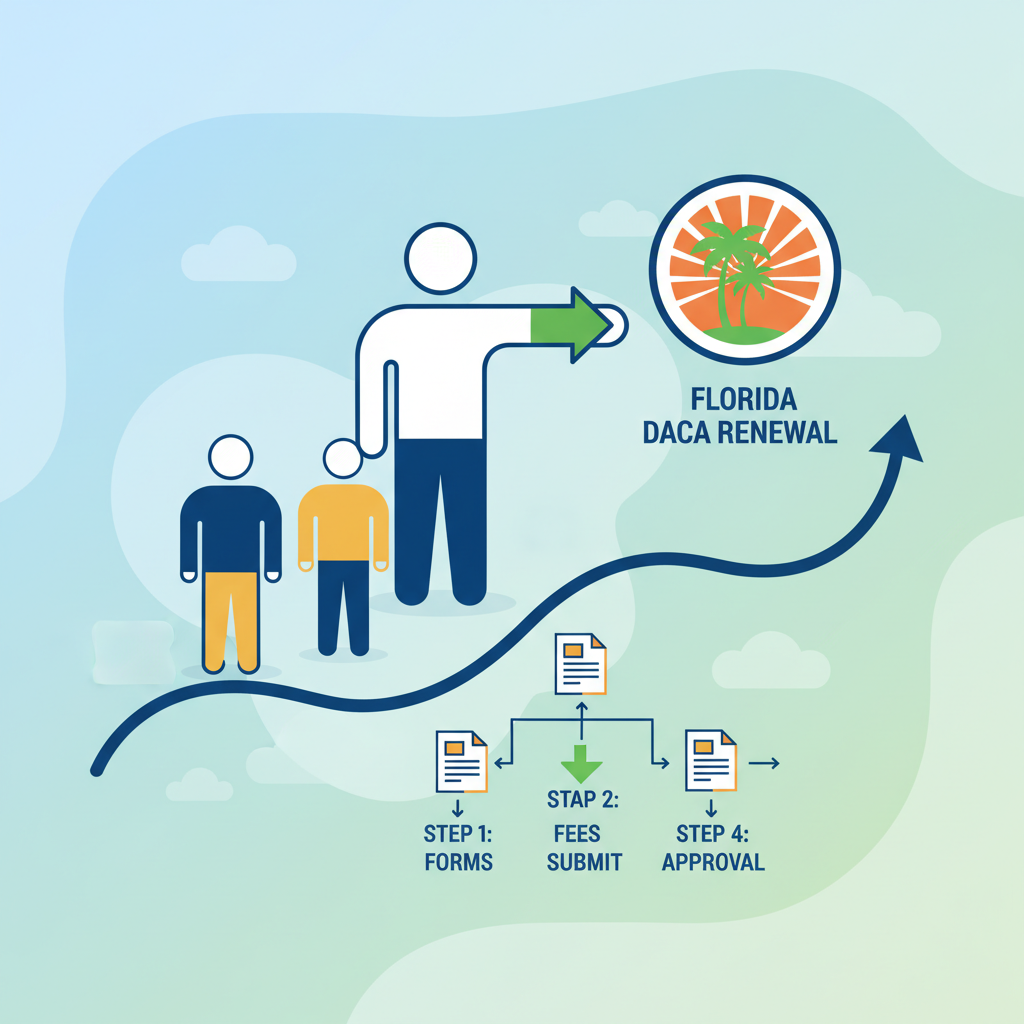
How to Renew Your DACA: A Complete Step-by-Step Guide
Renewing your DACA status and Employment Authorization Document (EAD) is a critical process that requires careful attention to detail and adherence to specific timelines. Missing deadlines or making errors can lead to lapses in work authorization and protection from deportation. Follow this comprehensive guide to ensure a smooth renewal process.
1) Determine Your Eligibility and When to Apply
Before you begin, ensure you meet the renewal eligibility criteria mentioned in the "Current Law" section. Most importantly, you must have previously been granted DACA. The optimal window for filing your DACA renewal application is 120 to 150 days before your current DACA and EAD expire. Filing too early (more than 150 days out) can lead to USCIS rejecting your application, while filing too late (less than 120 days) risks a lapse in your work authorization and deferred action.
- Action: Check the expiration date on your current EAD card immediately. Mark your calendar for the start of your 150-day renewal window.
- Warning: Do not let your DACA and EAD expire before filing your renewal. A lapse can lead to job loss and potential enforcement action.
2) Gather Required Documents
Thorough documentation is key to a successful DACA renewal. While USCIS may reuse biometrics and often relies on information from your previous applications, it's essential to provide all necessary supporting evidence. Prepare the following:
- Copies of Previous DACA Approval Notices: Include your most recent Form I-797, Notice of Action, approving your DACA and EAD.
- Copy of Your Current EAD Card: Front and back.
- Two Passport-Style Photos: Taken within 30 days of filing, with a white background. Write your name and A-number (Alien Registration Number) lightly on the back of each photo.
- Proof of Identity: Copy of your birth certificate with translation (if not in English), passport, or national identity document.
- Proof of Continuous Residence: While not always required for renewals if there have been no changes, it's wise to have evidence demonstrating your continuous physical presence in the U.S. since your last DACA approval. This could include:
- School records (transcripts, diplomas)
- Employment records (pay stubs, W-2s)
- Utility bills, bank statements, rental agreements
- Medical records
- Tax returns
- Records of Any Criminal History (if applicable): If you have been arrested or charged with *any* crime since your last DACA approval, you must include certified court dispositions and police reports, even if charges were dropped or expunged. Failure to disclose can lead to denial.
Important: Organize all documents neatly. Make sure you keep original documents and submit only copies to USCIS unless specifically requested otherwise.
3) Complete USCIS Forms I-821D, I-765, and I-765WS
These are the core forms for your DACA renewal. Accuracy and consistency with previous applications are paramount.
- Form I-821D, Consideration of Deferred Action for Childhood Arrivals:
- Fill out every section completely and accurately. If a question does not apply, write "N/A" (not applicable).
- Pay close attention to Part 1, Question 3 ("Have you previously been granted DACA?"). Mark "Yes."
- Ensure your name, address, and A-number match your previous applications and current EAD.
- Carefully review the eligibility questions in Part 2.
- Form I-765, Application for Employment Authorization:
- Again, ensure consistency with your personal information.
- For Question 27, "Eligibility Category," enter (c)(33) for DACA recipients.
- Form I-765WS, Worksheet for Form I-765, Application for Employment Authorization:
- This form is used to establish your economic necessity for needing employment authorization. Provide a detailed explanation of your income, expenses, and assets.
Recommendation: Use the latest versions of these forms, which can be downloaded directly from the USCIS Forms page. Do not use outdated forms.
4) Prepare Your Filing Fees
As of April 29, 2026, the combined fee for DACA renewal (Form I-821D and Form I-765) is $495. This includes the $410 for the I-765 and the $85 biometrics services fee. Note that there is no fee for Form I-821D itself, but it must be filed with Form I-765 and its associated fee.
- Payment Method: You can pay by money order, personal check, cashier's check, or by credit card using Form G-1450, Authorization for Credit Card Transactions.
- Important: Make checks or money orders payable to "U.S. Department of Homeland Security." Do not use abbreviations.
- Fee Waivers: Fee waivers for DACA renewals are extremely rare and generally not granted. It is almost always necessary to submit the full fee.
5) Assemble and Mail Your Application Package
Once all forms are completed, signed, and all supporting documents are gathered, it's time to assemble your package. The order of documents can vary, but a common approach is:
- Check or Form G-1450 on top.
- Form I-765 with Form I-765WS attached.
- Form I-821D.
- Two passport-style photos in a small envelope labeled with your name and A-number, stapled to the upper left corner of Form I-765.
- Copies of your previous DACA approval notices.
- Copy of your current EAD card (front and back).
- Copies of any additional supporting documents (proof of residence, criminal dispositions, etc.).
Mail your complete package to the correct USCIS Lockbox facility. The address depends on your state of residence and whether you're using the U.S. Postal Service (USPS) or a courier service (FedEx, UPS, DHL). You can find the specific mailing address on the USCIS website for DACA filing addresses. For Florida residents, it typically goes to a Chicago Lockbox.
- Recommendation: Use a mailing service that provides tracking and delivery confirmation, such as USPS Certified Mail with Return Receipt. This provides proof that you sent your application and that USCIS received it.
6) Attend Your Biometrics Appointment (If Required)
After USCIS receives your application, they will send you a Form I-797C, Notice of Action, confirming receipt and, usually, scheduling a biometrics appointment at an Application Support Center (ASC). This appointment is typically held at your nearest ASC; for many in Central Florida, this might be the Orlando USCIS Field Office's ASC or another location within a reasonable driving distance.
- What to bring: Your appointment notice, a valid photo ID (e.g., driver's license, passport), and any previous EAD cards.
- Important: It is crucial to attend your biometrics appointment. Failure to do so can lead to delays or denial of your application. If you absolutely cannot make it, follow the instructions on your notice to reschedule, but be aware this may cause significant delays.
- Note: USCIS sometimes reuses previously collected biometrics, especially for renewals. If this happens, you


