


The landscape of immigration law is constantly evolving, and for hundreds of thousands of individuals across the United States, few programs carry as much significance as the Deferred Action for Childhood Arrivals (DACA). As an immigration law firm based in Orlando, Florida, Imigrar is dedicated to keeping you informed about the latest developments and ensuring you have the most accurate, actionable information to protect your future and keep your family together.
Today, May 20, 2026, we're addressing the ongoing updates and critical renewal information surrounding the DACA program. Despite continuous legal challenges, the ability to renew DACA remains a lifeline for many, and understanding the process is paramount.
Need Help with Your DACA Renewal? Don't navigate the complexities alone. Our Orlando immigration team is ready to assist. Call +1 786-791-3106 for a free consultation, or message us online. Se Habla Español.
NEWS SOURCE REFERENCE SECTION
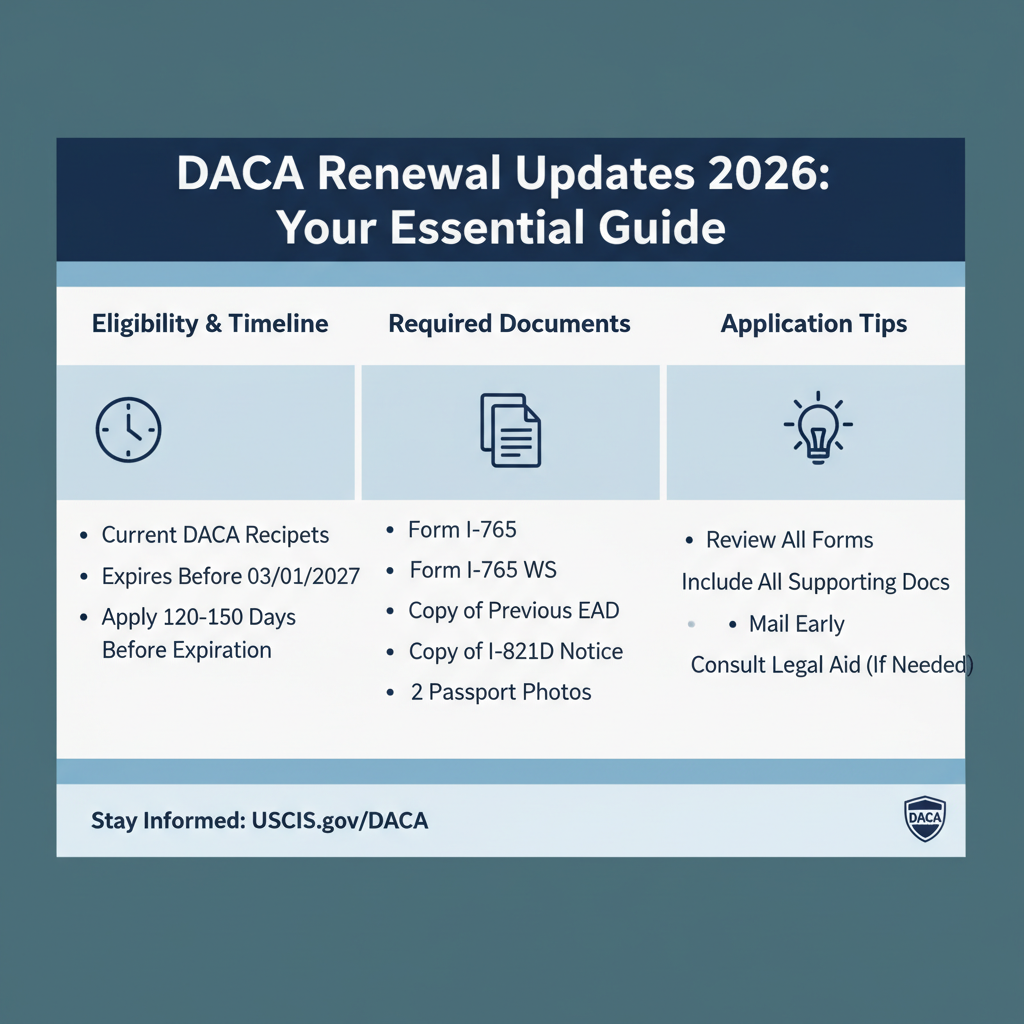
The reporting that sparked this guide: DACA Program Updates and Renewal Information (USCIS)
What This News Means for Immigrants in Orlando and Across Florida
For DACA recipients and their families, news regarding the program is always met with a mix of hope and apprehension. The Deferred Action for Childhood Arrivals program, while not a pathway to citizenship, has provided crucial protection from deportation and work authorization for eligible undocumented young people for over a decade. As we stand in May 2026, the program continues to operate under unique circumstances, primarily allowing for renewals but facing persistent legal scrutiny.
Why this news is showing up now
The DACA program has been a subject of intense legal and political debate since its inception in 2012. It has survived attempts at rescission, multiple court challenges, and continues to be a focal point in the broader immigration reform discussion. The news surrounding DACA is cyclical, driven by court decisions, administrative updates from USCIS, and the regular need for recipients to renew their deferred action. As of 2026, the program is still operating under injunctions following a ruling by the Fifth Circuit Court of Appeals that found DACA unlawful. This ruling, however, allowed for continued processing of renewal applications for current recipients, while new applications remain on hold. This ongoing legal battle means that every administrative update, every court filing, and every policy clarification from USCIS becomes significant news for the DACA community, necessitating continuous vigilance and informed action.
How it can affect Florida residents
Florida is home to a significant population of DACA recipients, often referred to as "Dreamers." For these individuals and their families in Orlando, Tampa, Miami, and across the I-4 corridor, the ongoing status of DACA directly impacts their ability to work legally, pursue higher education, and live without immediate fear of deportation. A stable DACA status means they can contribute to Florida's economy, drive legally, and plan for their futures. Instability, on the other hand, can create immense stress, disrupt careers, and separate families. Updates from USCIS, whether minor procedural tweaks or significant policy shifts, directly influence the renewal process, potentially affecting processing times, required documentation, or even the future availability of the program. Staying informed is not just about compliance; it's about protecting one's livelihood and family stability within the Sunshine State.
At Imigrar, we understand these concerns deeply. Our Orlando-based team is committed to providing clarity and support to DACA recipients throughout Florida, helping them navigate these complex updates and secure their renewals.
What Deferred Action for Childhood Arrivals (DACA) Is (and Why It Matters)
The Deferred Action for Childhood Arrivals (DACA) program is an administrative policy established in 2012 that provides certain eligible undocumented young people who came to the United States as children with a temporary reprieve from deportation and the ability to obtain a work permit. While it has been a transformative program for hundreds of thousands, it's crucial to understand its nature and limitations.
A plain-English definition
In simple terms, DACA allows individuals who meet specific criteria to request that the U.S. government defer any deportation action against them for a period of two years, which is renewable. During this time, they are also eligible to apply for an Employment Authorization Document (EAD), which is a work permit. This means DACA recipients can legally work in the U.S., obtain a driver's license in many states (including Florida), and pursue educational opportunities without the constant fear of being removed from the country they consider home. Important: DACA is not a path to a green card or U.S. citizenship. It is a temporary form of protection and work authorization.
Key terms you need to know
- Deferred Action: This is the core of DACA. It means the government is choosing to delay or "defer" deportation proceedings against an individual for a specific period. It does not grant a legal status or forgive past immigration violations, but rather puts enforcement action on hold.
- Employment Authorization Document (EAD): Often referred to as a "work permit," this document allows DACA recipients to legally work in the United States. It is typically valid for two years, coinciding with the period of deferred action.
- Dreamers: This term is commonly used to describe young undocumented immigrants who were brought to the U.S. as children, many of whom are DACA recipients. The term comes from the "DREAM Act," proposed legislation that aimed to provide a pathway to citizenship for this group.
- Renewal: As DACA is a temporary program, recipients must periodically apply to renew their deferred action and EAD. As of May 2026, USCIS is currently only accepting and processing DACA renewal applications, not initial applications.
- Continuous Residence: One of the key eligibility criteria for DACA, requiring applicants to have continuously resided in the U.S. since a specific date (June 15, 2007, for initial DACA, and since their last DACA approval for renewals).
Understanding these terms is vital for anyone navigating the DACA program, especially during renewal. The program matters because it allows individuals who grew up in the U.S. to live, work, and contribute to their communities with a sense of stability, even if temporary. It helps keep families together and fosters economic growth by integrating these individuals into the workforce.
Confused by DACA Terminology? Our legal experts can clarify any questions you have. Contact Imigrar in Orlando for a free, confidential consultation. Call +1 786-791-3106 today. Se Habla Español.
Current Immigration Law: The Foundation of DACA Renewals
The Deferred Action for Childhood Arrivals (DACA) program was established through an executive memorandum issued by the Secretary of Homeland Security on June 15, 2012. It is not codified into federal statute by Congress, which is why it has been subject to such intense legal and political scrutiny. The authority for DACA stems from the inherent prosecutorial discretion of the Department of Homeland Security (DHS) under 8 U.S.C. § 1103, which grants the Secretary the power to administer and enforce immigration laws. However, this administrative foundation has made it vulnerable to legal challenges and changes in presidential administrations.
As of May 2026, DACA continues to exist in a precarious state due to ongoing litigation. A ruling by the Fifth Circuit Court of Appeals in October 2022 affirmed a lower court's decision that the DACA policy is unlawful. However, the court's order allowed for individuals who were already DACA recipients to continue renewing their deferred action and employment authorization. This means that while no new DACA applications are being accepted, current DACA recipients are still able to apply for renewal, typically for a two-year period.
Federal requirements for DACA renewal
To be eligible for DACA renewal, applicants must meet the following federal requirements, as established by USCIS:
- You must have previously received DACA.
- You must not have departed the United States on or after August 15, 2012, without advance parole.
- You must have continuously resided in the United States since the date you submitted your most recent DACA request that was approved.
- You must not have been convicted of a felony, a significant misdemeanor, or three or more other misdemeanors, and not otherwise pose a threat to national security or public safety.
Reminder: USCIS is currently only processing DACA renewal requests. They are not accepting initial DACA requests from individuals who have never before received DACA.
Florida-specific considerations for DACA recipients
While DACA is a federal program, its impact on recipients can vary slightly by state. For DACA recipients in Florida, there are several important considerations:
- Driver's Licenses: DACA recipients in Florida are generally eligible to obtain a Florida driver's license or state identification card, provided they present their valid Employment Authorization Document (EAD) and other required identification. This is a crucial benefit for daily life, employment, and navigating Central Florida's expansive roadways, including the I-4 corridor.
- In-State Tuition: Florida has specific policies regarding in-state tuition for certain non-citizens. While DACA recipients generally do not qualify for federal financial aid, some state institutions may offer in-state tuition rates under certain conditions. It's essential to check with individual colleges and universities in Orlando and across Florida for their specific policies.
- Orlando USCIS Field Office: While DACA renewal applications are typically mailed to a USCIS Lockbox facility, DACA recipients in the Orlando area may interact with the Orlando USCIS Field Office for biometrics appointments or other related immigration matters.
The primary forms required for DACA renewal are:
- Form I-821D, Consideration of Deferred Action for Childhood Arrivals
- Form I-765, Application for Employment Authorization
- Form I-765 Worksheet, Instructions for Form I-765
Always ensure you are using the most current versions of these forms, which can be found on the USCIS Forms page. For the most up-to-date information on DACA policy and forms, always refer to the USCIS official website.
How to Renew Your DACA: A Complete Step-by-Step Guide
Renewing your DACA is a critical process that requires attention to detail and timely action. Missing deadlines or submitting an incomplete application can lead to a lapse in your work authorization and protection from deportation. Here is a comprehensive, step-by-step guide to help DACA recipients in Orlando and across the country successfully renew their deferred action.
1) Determine Your Eligibility and When to Apply
Before anything else, confirm you meet the federal eligibility criteria for renewal (as outlined in the "Current Law" section). The timing of your application is crucial. USCIS recommends filing your DACA renewal application between 120 and 150 days before your current DACA and Employment Authorization Document (EAD) expire. Filing too early can lead to rejection, while filing too late risks a lapse in your work authorization and protection. Warning: If your DACA expires before you reapply, you will lose your deferred action and work authorization, potentially impacting your employment and ability to legally drive.
- Check Your Expiration Date: Locate your most recent DACA approval notice (Form I-797) and your EAD card. Note the expiration date.
- Calculate Your Filing Window: Count back 120-150 days from your expiration date. This is your target window for mailing your application.
- Review Eligibility: Ensure you still meet all previous DACA eligibility criteria, especially regarding continuous residence and criminal history.
2) Gather Required Documents
Thorough document gathering is essential for a complete and strong renewal application. Missing documents can cause significant delays or even a denial. Organize these documents systematically.
- Previous DACA Approval Notices: Copies of your most recent Form I-797, Approval Notice, for Form I-821D and Form I-765.
- Current Employment Authorization Document (EAD): A clear copy of the front and back of your current EAD card.
- Identification Documents: A copy of your birth certificate with a certified translation if not in English, passport identity page, or other government-issued photo identification.
- Proof of Continuous Residence: Documentation proving you have continuously resided in the U.S. since your last DACA approval. Examples include:
- School records (transcripts, report cards)
- Employment records (pay stubs, W-2s, employment verification letters)
- Utility bills (electricity, water, gas, internet)
- Bank statements
- Medical records
- Rental agreements or mortgage statements
- Tax returns
- Criminal History Documents (if applicable): If you have any new arrests, charges, or convictions since your last DACA approval, you must obtain certified court dispositions for each case, even if charges were dismissed or expunged. Consult an attorney if you have any criminal history.
- Passport-Style Photos: Two identical, unmounted, color passport-style photos taken within 30 days of filing. Write your name and A-Number lightly on the back of each photo.
3) Complete Required Forms
Accuracy and completeness are paramount when filling out USCIS forms. Use black ink, write legibly, and answer all questions honestly. If a question does not apply, write "N/A" (not applicable) or "None" as appropriate.
- Form I-821D, Consideration of Deferred Action for Childhood Arrivals: This is the primary form for requesting DACA. Fill it out completely, ensuring all personal information is up-to-date.
- Form I-765, Application for Employment Authorization: This form requests your work permit. For DACA renewals, under "Reason for Applying," check box 1.c. "Renewal of my permission to accept employment." For Eligibility Category, enter (c)(33).
- Form I-765 Worksheet: This worksheet helps you determine if you need to submit additional evidence for your Form I-765. Most DACA renewal applicants will not need to fill out the entire worksheet if they have continuously resided in the U.S. and meet the criteria.
- Double-Check Everything: Review all forms multiple times for errors, omissions, or inconsistencies. Ensure your name, date of birth, and A-Number are identical across all forms and match your previous DACA documents.
4) Pay the Filing Fees
There are fees associated with DACA renewal, which are subject to change by USCIS. As of the date of this article (May 2026), the total fee for DACA renewal is typically $495, which includes the Form I-765 fee ($410) and the biometrics services fee ($85). This fee must be paid by money order, personal check, cashier's check, or credit card using Form G-1450, Authorization for Credit Card Transactions.
- Payment Method: If paying by check or money order, make it payable to "U.S. Department of Homeland Security." Do not abbreviate.
- Fee Waivers/Exemptions: Important: Fee waivers (Form I-912) are generally not available for DACA renewals. However, under very limited circumstances, you may be eligible for a fee exemption directly from USCIS if you can demonstrate extreme financial hardship. This is rare and requires strong evidence. Consult with an attorney if you believe you might qualify.
5) Assemble and Mail Your Application Package
Proper assembly and mailing are crucial to ensure your application reaches USCIS correctly and is processed without delay. Make sure to send your application to the correct USCIS Lockbox Facility based on your mailing address. For Florida residents, this is typically the USCIS Dallas Lockbox.
- Order of Documents: USCIS often provides recommended stacking orders for applications. Generally, place your check/money order or Form G-1450 on top, followed by Form I-821D, Form I-765, Form I-765 Worksheet, and then all supporting documentation (copies, not originals, unless specifically requested).
- Make Copies: Before mailing, make a complete copy of your entire application package for your records. This is invaluable if your application gets lost or if USCIS requests additional information.
- Mailing Address: Check the USCIS website for the most current Lockbox filing address for Form I-821D. For most DACA renewals, it's a specific P.O. Box or street address in Dallas, TX.
- Shipping Method: Use a shipping method that provides tracking and delivery confirmation, such as USPS Certified Mail with Return Receipt, FedEx, or UPS. This provides proof that you sent your application and when it was received.
6) Attend Biometrics Appointment (if requested)
After USCIS receives your application, they will send you a receipt notice (Form I-797C) and, typically, a separate notice scheduling a biometrics appointment at an Application Support Center (ASC). This appointment is usually mandatory.
- What to Expect: At the appointment, your fingerprints, photograph, and signature will be collected. This is for background checks and identity verification.
- Bring Required Documents: Bring your appointment notice, a valid photo ID, and your receipt notice to the ASC.
- Do Not Miss It: Failure to attend your biometrics appointment without rescheduling can lead to your application being denied.
7) Monitor Your Case Status
Once you've submitted your application, it's important to keep track of its progress.
- USCIS Case Status Online: Use the receipt number from your Form I-797C to check your case status online at the USCIS official website.
- Processing Times: You can also check estimated processing times for Form I-821D and Form I-765 on the USCIS Processing Times page. Be aware that these are estimates and actual times can vary.
- Responding to RFEs: USCIS may send a Request for Evidence (RFE) if they need more information. Respond to RFEs promptly and completely by the deadline provided.
- Approval/Denial: If approved, you will receive a new DACA approval notice and your new EAD card in the mail. If denied, seek legal counsel immediately to understand your options.
Overwhelmed by the DACA Renewal Process? Let Imigrar guide you. Our experienced Orlando immigration attorneys can ensure your application is complete and accurate. Call +1 786-791-3106 for a free consultation. Se Habla Español.
Practical Steps You Can Take Today for DACA Renewal
Proactive planning is your best defense against delays and complications in the DACA renewal process. Even if your DACA isn't expiring for several months, there are steps you can take today to prepare.
Actionable Checklist for DACA Renewal:
- Mark Your Calendar: Note your DACA and EAD expiration dates prominently. Set reminders for 150 days, 120 days, and 90 days before expiration.
- Locate All Previous DACA Documents: Gather your previous Form I-797 approval notices and your current EAD card. Ensure you have copies.
- Start Organizing Proof of Continuous Residence: Begin collecting documents that show you've lived in the U.S. since your last DACA approval. This includes utility bills, pay stubs, bank statements, school records, and other mail addressed to you. Keep them organized chronologically.
- Review Your Criminal History: If you have had any encounters with law enforcement, no matter how minor, since your last DACA approval, obtain certified court dispositions immediately. Even traffic tickets can sometimes cause issues.
- Check USCIS for Updates: Regularly visit the USCIS official website for any new DACA policy updates, form changes, or filing


