


The landscape of immigration policy is constantly evolving, and for Deferred Action for Childhood Arrivals (DACA) recipients, staying updated is not just important—it's essential for maintaining their status and future in the United States. Today, on September 9, 2026, we at Imigrar are dedicated to providing the most current and comprehensive information to help our community navigate these critical updates.
Facing DACA Renewal? Don't navigate the complexities alone. Imigrar offers expert legal guidance for DACA recipients in Orlando and across the nation. Call +1 786-791-3106 for a free, confidential consultation. Se Habla Español.
The reporting that sparked this guide
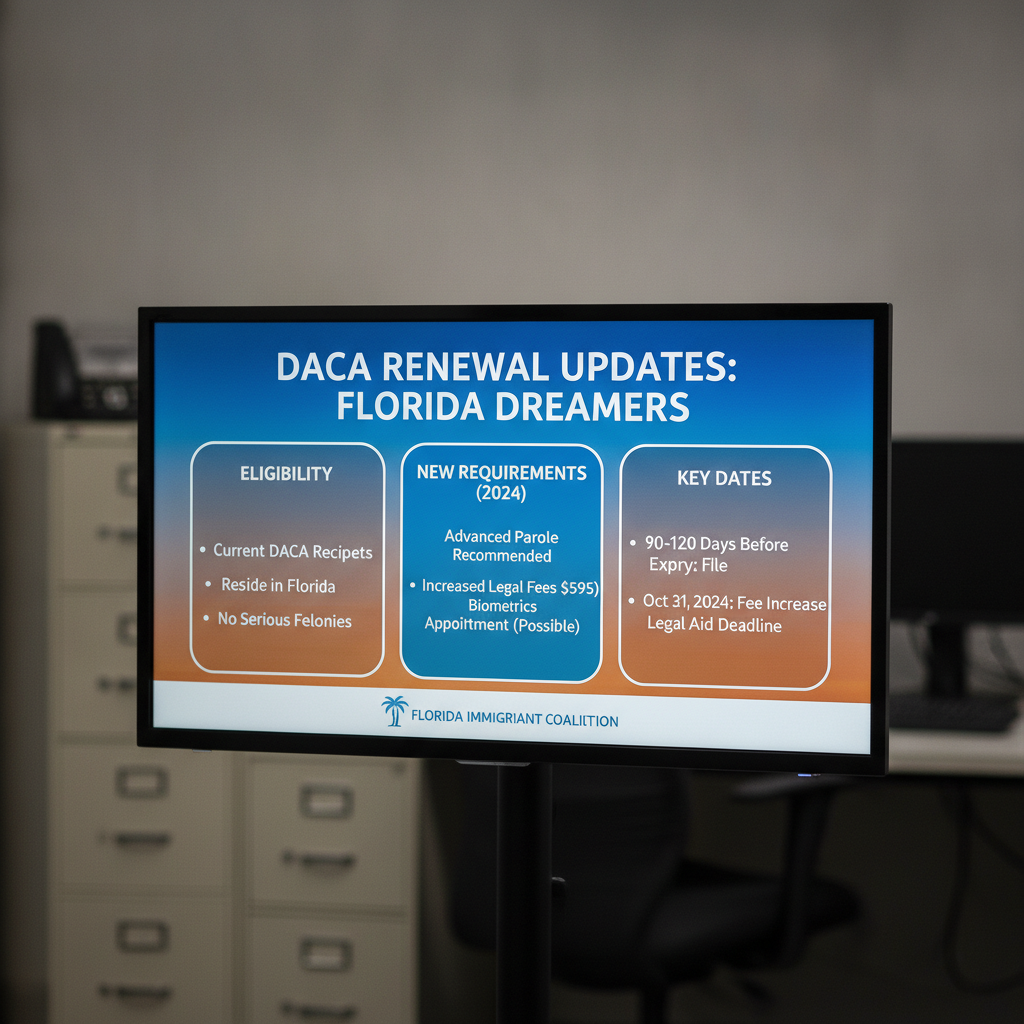
Recent discussions and guidance from USCIS regarding the DACA program have again brought this vital policy to the forefront. While the program's long-term future remains subject to legal challenges, the immediate focus is on ensuring current recipients can maintain their protections. The information presented here synthesizes the latest official guidance, including updates on renewal processes and the implications of ongoing litigation.
DACA Program Updates and Renewal Information (USCIS)
What This News Means for Immigrants in Orlando and Across Florida
For hundreds of thousands of individuals nationwide, DACA represents a chance to live, work, and contribute to their communities without the constant fear of deportation. In Florida, a state with a significant and vibrant immigrant population, these updates carry particular weight.
Why this news is showing up now
The DACA program has been a subject of intense legal and political debate since its inception in 2012. While the Biden administration has sought to preserve and fortify DACA, court challenges have created an unstable environment. Specifically, the July 2021 ruling by a federal judge in Texas, which declared DACA unlawful, has significantly impacted the program. This ruling, currently under appeal, prohibits USCIS from approving new DACA applications. However, it allows USCIS to continue accepting and processing DACA renewal requests and associated applications for employment authorization documents (EADs). The "news" today, on September 9, 2026, likely refers to ongoing efforts to solidify the DACA program through regulatory means, continued legal battles, or perhaps new USCIS guidance aimed at clarifying the renewal process under the existing injunctions. These ongoing developments mean that DACA recipients must remain vigilant and proactive about their renewals.
How it can affect Florida residents
Florida is home to one of the largest populations of DACA recipients in the United States. For DACAmented individuals in Orlando, throughout Central Florida, and across the state, the ability to renew their deferred action and work authorization is critical. Without renewal, individuals risk losing their employment, their driver's licenses (which are often tied to the validity of their Employment Authorization Document), and their protection from deportation. The uncertainty surrounding DACA's future can cause immense stress, impacting families, careers, and educational pursuits along the I-4 corridor and beyond. Staying informed and acting promptly on renewals is paramount for maintaining stability for thousands of Florida families. Our Orlando USCIS Field Office and local community organizations are often at the forefront of assisting with these critical processes, highlighting the local impact of federal policy.
What DACA Is (and Why It Matters)
The Deferred Action for Childhood Arrivals (DACA) program has been a lifeline for nearly a decade, offering a measure of security to young immigrants who were brought to the U.S. as children. Understanding its core components is the first step toward navigating its complexities.
A plain-English definition
DACA is an immigration policy that allows certain undocumented immigrants who entered the United States as minors to receive a renewable two-year period of deferred action from deportation and eligibility for a work permit (Employment Authorization Document or EAD). It is not a pathway to lawful permanent residency (a green card) or U.S. citizenship. Instead, it provides temporary protection from deportation and allows recipients to legally work and, in many states, obtain a driver's license. The program was established by the Obama administration in June 2012 through an executive memorandum.
Key terms you need to know
- Deferred Action: This is an exercise of prosecutorial discretion to defer removal action against an individual. It does not confer lawful status but rather a temporary pause on deportation proceedings.
- DACA Recipient / Dreamer: Terms used to describe individuals who meet DACA eligibility criteria and have been granted deferred action. The term "Dreamer" originates from the proposed "DREAM Act" legislation, which aimed to provide a path to citizenship for these individuals.
- Employment Authorization Document (EAD): Often referred to as a "work permit," this card (Form I-766) allows DACA recipients to legally work in the United States for the duration of their deferred action period.
- USCIS: The U.S. Citizenship and Immigration Services, the federal agency responsible for administering DACA and other immigration benefits.
- Unlawful Presence: Being in the U.S. without authorization. DACA grants protection from deportation but does not erase prior periods of unlawful presence.
- Significant Misdemeanor / Felony: Criminal offenses that can disqualify an individual from DACA eligibility or renewal. This category is broadly defined by USCIS and requires careful legal analysis.
Confused by DACA terminology? Imigrar's expert attorneys can clarify your situation. Reach out for a free consultation at +1 786-791-3106 or contact us online. Se Habla Español.
Current Immigration Law: The Foundation for DACA
While DACA itself is not a law passed by Congress, it operates within the existing framework of U.S. immigration statutes and regulations, drawing its authority from the executive branch's prosecutorial discretion. Understanding this foundation is crucial for DACA recipients.
Federal requirements
DACA was established under the Department of Homeland Security (DHS) memorandum issued on June 15, 2012, by then-Secretary Janet Napolitano. This memorandum outlined the specific criteria for deferred action. While the program's legal standing has been challenged, the core eligibility requirements for renewals remain as follows:
- You must have been under the age of 31 as of June 15, 2012.
- You must have come to the United States before reaching your 16th birthday.
- You must have continuously resided in the United States since June 15, 2007, up to the present time. Brief, casual, and innocent departures do not break continuous residence.
- You must have been physically present in the United States on June 15, 2012, and at the time of making your request for deferred action.
- You must have had no lawful status on June 15, 2012.
- You must currently be in school, have graduated or obtained a certificate of completion from high school, have obtained a general education development (GED) certificate, or be an honorably discharged veteran of the Coast Guard or Armed Forces of the United States.
- You must not have been convicted of a felony, a significant misdemeanor, or three or more other misdemeanors, and not otherwise pose a threat to national security or public safety.
Important: As of the current legal landscape (September 2026), USCIS is generally prohibited from approving *initial* DACA requests. However, it continues to accept and process *renewal* requests from individuals who previously received DACA. This distinction is critical.
Applicants for DACA renewal typically file Form I-821D, Consideration of Deferred Action for Childhood Arrivals, and Form I-765, Application for Employment Authorization, along with Form I-765WS, Worksheet for Form I-765. These forms are the cornerstone of the renewal process.
For the most up-to-date forms and instructions, always refer to the USCIS official website.
Florida-specific considerations
While DACA is a federal program, its impact and certain ancillary benefits can vary by state. For DACA recipients in Florida, the ability to obtain a driver's license is directly tied to their valid Employment Authorization Document (EAD). With a valid EAD, DACA recipients are generally eligible to apply for a Florida driver's license, allowing for greater mobility and independence across Orange County and the wider state.
Additionally, DACA recipients in Florida may be eligible for in-state tuition at some public colleges and universities if they meet specific residency requirements, though this can be a complex area of state policy. It's crucial for students to check with their specific educational institution for the latest guidelines.
The large number of DACAmented individuals in Florida means that local community organizations and legal aid groups, in collaboration with firms like Imigrar, play a vital role in providing support and resources. Navigating employment opportunities, understanding state-specific identification requirements, and accessing educational benefits are all areas where Florida residents may have unique considerations.
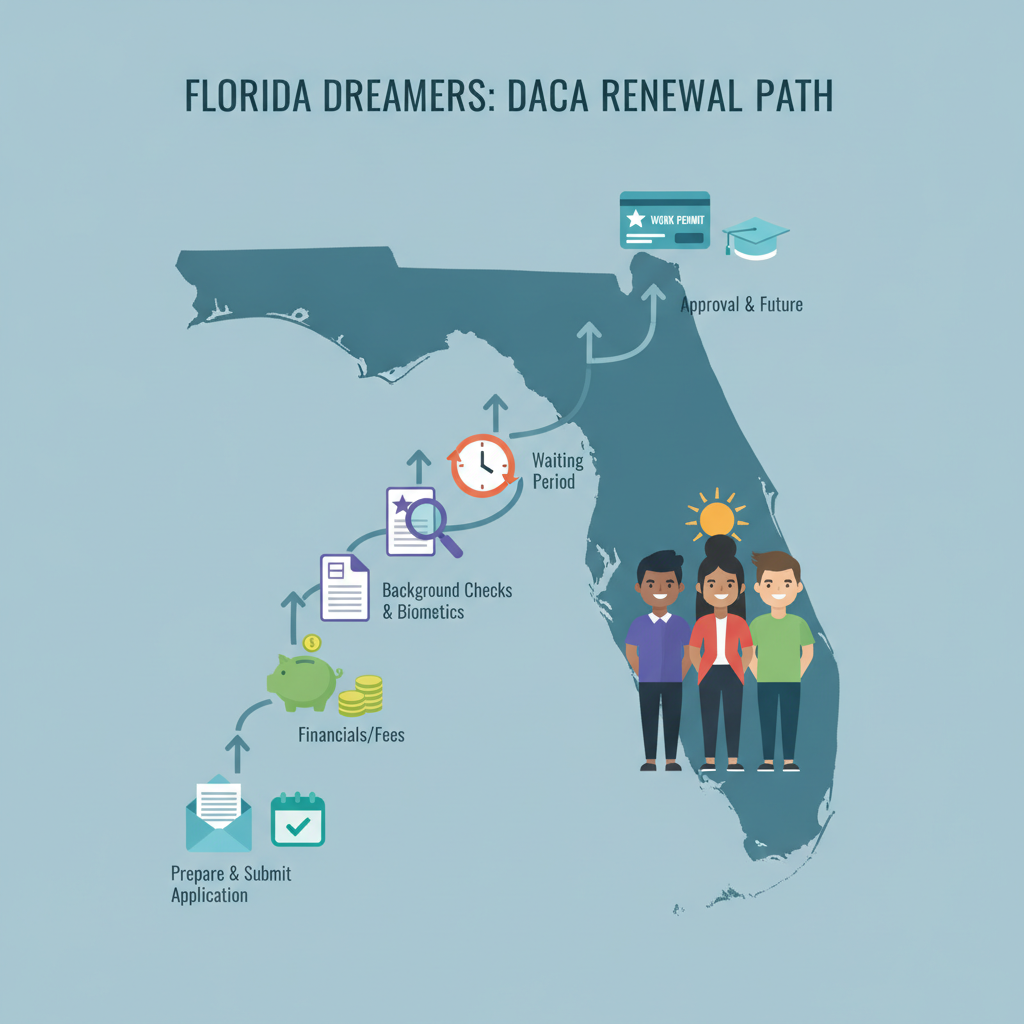
How to Renew Your DACA: A Complete Step-by-Step Guide
Renewing your DACA is a critical process that requires meticulous attention to detail and timely action. Missing deadlines or submitting an incomplete application can lead to a lapse in your protection and work authorization. Here’s a comprehensive guide to help you through it.
1) Determine Your Eligibility and Timing
First, ensure you still meet the DACA renewal criteria. The core requirements (continuous residence, no disqualifying criminal history) apply. The most crucial aspect of renewal is timing. USCIS recommends filing your DACA renewal request approximately 120 to 150 days before your current DACA and EAD expire. Filing too early (more than 150 days) might result in your application being rejected. Filing too late could mean a gap in your work authorization and protection from deportation.
Reminder: USCIS processing times can vary significantly. Check the USCIS Processing Times page regularly for updates relevant to Form I-821D and Form I-765.
Actionable Tip: Set multiple reminders on your calendar for the 150-day and 120-day marks before your expiration date.
2) Gather Required Documents
Even for renewals, it's essential to have your supporting documents in order. While you typically don't need to resubmit all the initial evidence, you must provide documents that confirm your continued eligibility, especially regarding continuous residence and any new criminal history information. Keep organized copies of everything you submit.
Required Documents (General):
- A copy of your previous Form I-797 Approval Notice for DACA.
- A copy of your most recent Employment Authorization Document (EAD) (front and back).
- Proof of continuous residence since your last DACA approval (e.g., utility bills, bank statements, school transcripts, employment records, medical records). While not always required for renewals unless there's a gap or change, having recent documents ready is prudent.
- Any documents related to new criminal history (if applicable), including certified court dispositions for any arrests or convictions since your last DACA approval.
- Your current passport or other government-issued identification.
- Two passport-style photos taken within 30 days of filing.
Warning: Be absolutely honest and transparent about any arrests or convictions, no matter how minor. Failure to disclose can lead to denial and severe immigration consequences.
3) Complete the Necessary Forms
You will need to complete three forms for your DACA renewal:
- Form I-821D, Consideration of Deferred Action for Childhood Arrivals: Fill out every section accurately. If a section does not apply, write "N/A."
- Form I-765, Application for Employment Authorization: This form requests your work permit. Ensure you select the correct eligibility category, typically (c)(33) for DACA recipients.
- Form I-765WS, Worksheet for Form I-765: This worksheet requires you to demonstrate an economic need for employment. Provide clear and concise reasons.
Important: Always use the latest version of these forms, available on the USCIS Forms page. Read the instructions for each form carefully, as they contain vital information and updates.
4) Prepare Supporting Evidence
For renewals, USCIS mainly focuses on whether you still meet the "continuous residence" and "no disqualifying criminal history" criteria. If you have traveled outside the U.S. without advance parole, or if you have had any encounters with law enforcement (even if charges were dropped), you must provide detailed explanations and supporting documents.
Key Evidence for Renewals:
- Copies of all previously submitted DACA applications (Form I-821D, Form I-765, Form I-765WS).
- Evidence of continuous residence since your last DACA approval (e.g., dated bank statements, pay stubs, lease agreements, school records, medical bills).
- Certified court dispositions for *any* arrests or convictions, no matter how minor, since your last DACA approval. This is critical.
- A personal statement explaining any significant changes in your life since your last approval, especially if it relates to your eligibility criteria (e.g., travel, criminal history, education).
Tip: Organize your documents clearly with cover sheets and tabs. Make sure all copies are legible.
5) Calculate and Pay Fees
As of September 2026, the DACA renewal filing fees typically include:
- Form I-765 Application Fee: $410
- Biometrics Services Fee: $85
- Total: $495
These fees must be paid to the U.S. Department of Homeland Security. You can pay by money order, personal check, cashier's check, or by credit card using Form G-1450, Authorization for Credit Card Transactions. Do NOT send cash.
Note: Fee amounts are subject to change. Always verify the current fees on the USCIS Fee Schedule before mailing your application. Fee waivers for DACA renewals are rarely granted and only in extreme circumstances.
6) Mail Your Application
Once your application packet is complete and meticulously reviewed, mail it to the correct USCIS lockbox facility. The mailing address depends on where you live. Check the "Where to File" section on the USCIS website for Form I-821D instructions.
Recommendation:
- Send your application via certified mail with return receipt requested. This provides proof that USCIS received your application and on what date.
- Keep a complete copy of your entire application packet, including all forms, evidence, and the check/money order for your records.
If your case is in Orlando or Central Florida, your mailing address will typically be one of the USCIS lockbox facilities, not the local Orlando Field Office, as initial filings are processed centrally.
7) Attend Biometrics Appointment (If Required) and Monitor Your Case
After USCIS receives your application, they will send you a receipt notice (Form I-797C). You may then receive an appointment notice (Form I-797C) for a biometrics appointment at an Application Support Center (ASC). During this appointment, your fingerprints, photograph, and signature will be collected. It's crucial to attend this appointment.
You can monitor the status of your case online using the receipt number provided on your Form I-797C. Visit the USCIS Case Status Online tool.
What to Expect After Biometrics:
- USCIS will review your application.
- You may receive a Request for Evidence (RFE) if they need more information. Respond promptly and thoroughly.
- Eventually, you will receive an approval notice (Form I-797) and your new EAD card (Form I-766) in the mail.
Practical Steps You Can Take Today
Being proactive is the best strategy for DACA recipients. Here’s an actionable checklist to help you prepare for your renewal or simply maintain your status.
- Start Early: If your DACA is expiring in the next 6 months, begin gathering documents now. Aim to submit your renewal 120-150 days before expiration.
- Review Your Documents: Go through your previous DACA application. What evidence did you submit? What has changed since then?
- Check for Criminal History: Obtain certified court dispositions for any arrests or citations you may have had, even if they were minor or dismissed. This includes traffic violations that are considered misdemeanors.
- Maintain Continuous Residence Records: Keep records that prove you have continuously resided in the U.S. since your last DACA approval. Examples include bank statements, utility bills, pay stubs, and leases.
- Budget for Fees: The current filing fee is $495. Ensure you have these funds available. Fee waivers are extremely rare for DACA renewals.
- Consult an Attorney: Even if you've renewed DACA before, consulting an experienced immigration lawyer can prevent costly mistakes, especially if you have any changes in your record (travel, criminal history).
- Make Copies of Everything: Before mailing your application, make a complete, organized copy of your entire packet for your records.
- Update Contact Information: Ensure USCIS has your current mailing address. If you move, file Form AR-11, Alien's Change of Address, promptly.
Document preparation guidance
Organizing your documents efficiently will streamline the process. Create a checklist and file system. Label folders clearly (e.g., "DACA Renewal - Forms," "DACA Renewal - Evidence of Residence," "DACA Renewal - Criminal History"). Scan important documents to create digital backups in addition to physical copies. For documents not in English, ensure you have certified translations.
Timeline expectations
While USCIS aims to process DACA renewals efficiently, current processing times can range from a few weeks to several months. As of September 2026, it's not uncommon for renewals to take 3-5 months, and sometimes longer. This is why the 120-150 day filing window is so critical. A lapse in your DACA and EAD can lead to loss of employment, inability to drive, and potentially even deportation proceedings if you come into contact with immigration enforcement.
How Imigrar Helps DACA Recipients in Orlando
At Imigrar, our mission is to "Keep Families Together." For DACA recipients and their families in Orlando, Central Florida, and across the nation, this means providing steadfast legal support to protect their futures.
Our experience and expertise
Our team of dedicated immigration attorneys possesses extensive experience in DACA renewals and navigating the complex, ever-changing landscape of immigration law. We understand the nuances of USCIS policies, the impact of ongoing litigation, and how to prepare a robust application that minimizes the risk of delays or denials. We have successfully assisted countless DACA recipients, helping them maintain their status and continue contributing to their communities.
We stay abreast of the latest legal developments, court rulings, and USCIS guidance to provide the most accurate and up-to-date advice. Whether you're in Orange County, along the I-4 corridor, or anywhere in Florida, our firm offers personalized, compassionate, and effective legal representation.
Free consultation offer
We know that navigating immigration processes can be daunting and costly. That’s why Imigrar offers a free initial consultation to DACA recipients. During this consultation, you can discuss your specific situation, ask questions, and understand your options without any financial obligation. We'll assess your eligibility, review your documents, and outline the steps required for a successful renewal.
Our goal is to empower you with knowledge and provide peace of mind. Don't risk your DACA status due to an oversight or misunderstanding of the process. Let our experienced Orlando immigration team guide you.
Se Habla Español. Our bilingual team ensures that language is never a barrier to accessing critical legal assistance. We are here to serve our Spanish-speaking community with clarity and understanding.
Ready to Renew Your DACA? Secure your future with Imigrar. Schedule your free consultation today by calling +1 786-791-3106 or visiting our contact page. Se Habla Español.
Frequently Asked Questions About DACA Renewals
Q: Am I still eligible for DACA renewal if I traveled outside the U.S. without Advance Parole?
A: Generally, if you traveled outside the U.S. without obtaining Advance Parole (Form I-131) after your initial DACA approval, you may have broken your continuous residence and could be deemed ineligible for DACA renewal. Unauthorized departure from the U.S. can have severe consequences for your immigration status. It is crucial to consult with an immigration attorney immediately if you have traveled internationally without proper authorization to assess your specific situation and potential risks before filing for renewal.
Q: Does DACA provide a pathway to a Green Card or U.S. Citizenship?
A: No, DACA itself does not provide a direct pathway to lawful permanent residency (a Green Card) or U.S. citizenship. It grants temporary deferred action from deportation and work authorization. While DACA recipients may be able to adjust their status to a Green Card through other means (e.g., marriage to a U.S. citizen, employment-based petitions), their DACA status alone does not confer this benefit. The process for obtaining a Green Card is separate and dependent on meeting the requirements of other immigration categories. An attorney can help you explore these potential pathways.
Q: How long does the DACA renewal process typically take, and what if my EAD expires while I'm waiting?
A: USCIS processing times for DACA renewals can vary, but generally range from 3 to 5 months, sometimes longer. It is strongly recommended to file your renewal request 120 to 150 days before your current DACA and EAD expire to minimize the risk of a lapse. If your EAD expires while your renewal is pending, you will temporarily lose your authorization to work and may not be able to renew your driver's license. There is no automatic extension of work authorization for DACA renewals. This highlights the importance of timely filing.
Q: What documents are absolutely essential for a DACA renewal application?
A: The most essential documents for a DACA renewal include the completed and signed Form I-821D, Form I-765, and Form I-765WS. You will also need two passport-style photos, a copy of your most recent DACA approval notice (Form I-797), a copy of your most recent EAD (front and back), and the correct filing fees. Additionally, any new criminal history records (certified court dispositions) are absolutely crucial to include. While not always required, having documents proving continuous residence since your last approval is prudent, especially if there have been any gaps or changes.
Q: What are the costs associated with DACA renewal, beyond the USCIS filing fees?
A: Beyond the current USCIS filing fee of $495 (for Form I-765 and biometrics), other potential costs include fees for obtaining certified copies of documents (e.g., birth certificates, court records), translation services for documents not in English, and legal fees if


