


At Imigrar, we understand the profound impact that evolving immigration policies have on families across the nation, especially for our clients in Orlando and throughout Florida. The Deferred Action for Childhood Arrivals (DACA) program remains a lifeline for hundreds of thousands, offering temporary protection from deportation and the ability to work legally in the U.S. However, DACA’s future is often uncertain, marked by legal challenges and administrative updates that require constant vigilance.
This comprehensive guide is designed to provide clarity on the latest DACA program updates and offer a detailed roadmap for DACA renewal. Our goal is to empower you with accurate, actionable information, ensuring you and your family can navigate these complex processes with confidence. Keep Families Together – it’s not just our tagline, it’s our mission.
Navigating DACA renewal can be overwhelming, but you don't have to do it alone. Our experienced immigration attorneys in Orlando are here to guide you through every step. Call +1 786-791-3106 for a free consultation today, or message us online. Se Habla Español.
The reporting that sparked this guide:
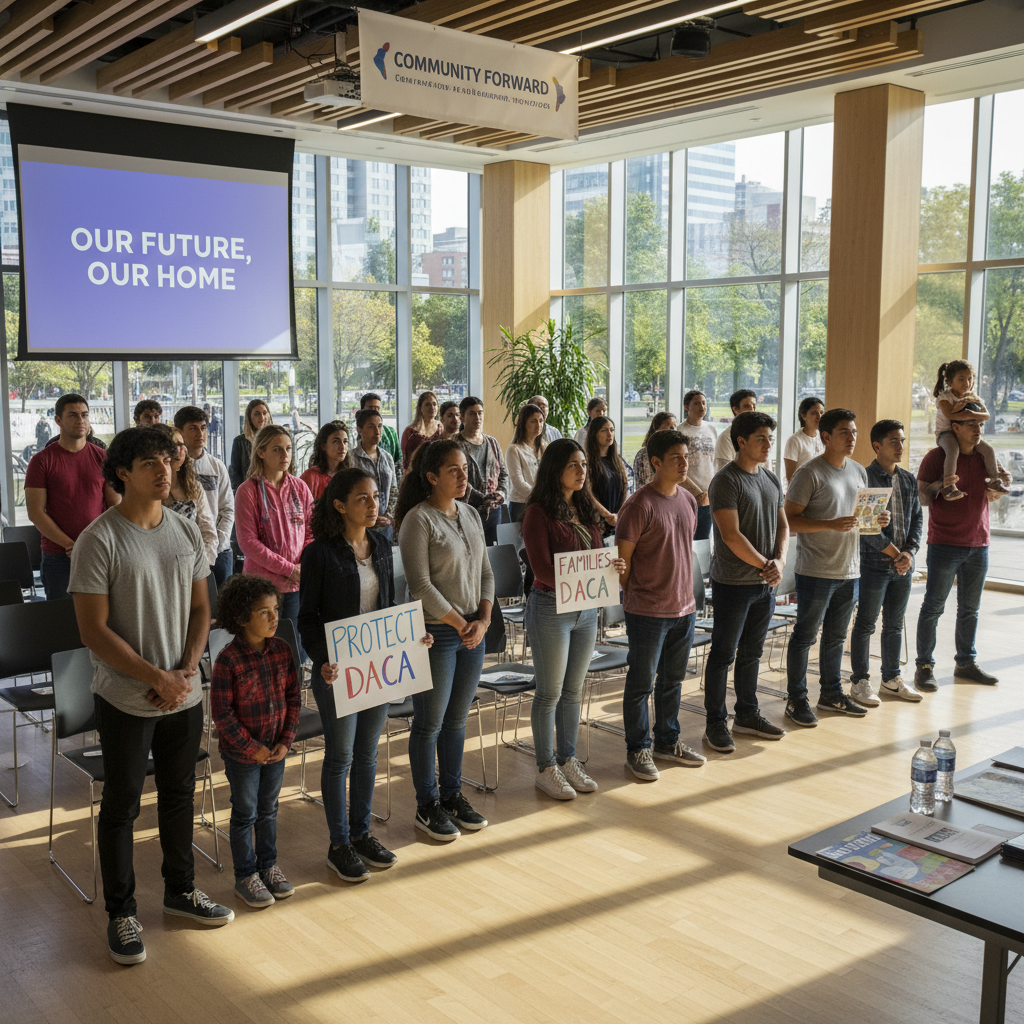
The information and guidance in this article are informed by ongoing developments and official communications from USCIS regarding the Deferred Action for Childhood Arrivals (DACA) program. For the most up-to-date announcements and official resources, please refer to the DACA Program Updates and Renewal Information (USCIS).
What This News Means for Immigrants in Orlando and Across Florida
As of March 2026, the DACA program continues to operate under the shadow of legal challenges, yet renewals remain critically important for current recipients. The latest news from USCIS and ongoing court proceedings emphasize that while initial DACA applications are still not being accepted, eligible individuals *must* continue to renew their deferred action and employment authorization to maintain their protections.
Why this news is showing up now
The DACA program, introduced in 2012, has faced persistent legal battles. A federal court ruling in Texas in 2021 declared the program unlawful, leading to a halt in the processing of initial DACA applications. This ruling was affirmed in 2022 by the Fifth Circuit Court of Appeals, which also returned the case to the district court for further review of the DACA rule issued by the Biden administration in 2022. As of early 2026, the legal injunction against initial DACA applications remains in effect. USCIS is permitted to continue accepting and processing DACA renewal requests and accompanying applications for employment authorization documents (EADs).
This ongoing legal uncertainty means that every update, every court filing, and every USCIS announcement is significant. The news is showing up now because the DACA program exists in a state of administrative limbo, requiring constant attention to its operational status. It’s a dynamic situation where the legal landscape can shift, impacting the lives of hundreds of thousands of individuals. For DACA recipients, staying informed about these developments is not just advisable, it’s essential for maintaining their status.
How it can affect Florida residents
Florida is home to one of the largest populations of DACA recipients in the United States, with tens of thousands of individuals relying on the program for stability and the ability to contribute to our state’s economy and communities. For these individuals, particularly those living in and around Orlando, the constant flux of DACA policy has direct and profound implications:
- Maintaining Employment: DACA provides an Employment Authorization Document (EAD), allowing recipients to work legally. Without renewal, this authorization expires, leading to job loss and economic hardship for individuals and their families. This directly impacts local economies, from tourism to agriculture, sectors where many DACA recipients contribute significantly.
- Educational Opportunities: While Florida’s policies on in-state tuition for DACA recipients can vary by institution, maintaining DACA status often facilitates access to higher education and professional licenses. Losing DACA can jeopardize academic pursuits and career advancement.
- Driver’s Licenses: DACA recipients in Florida are eligible for driver’s licenses, which are crucial for daily life, commuting to work, and accessing essential services in a state heavily reliant on personal transportation, especially in sprawling areas like Central Florida.
- Family Stability: The possibility of losing deferred action brings immense stress and fear of deportation, threatening the stability of mixed-status families. Imigrar's mission to "Keep Families Together" resonates deeply with the anxieties faced by DACA families in Orlando and beyond.
- Community Impact: DACA recipients are integral members of Florida communities, owning businesses, paying taxes, and contributing to the social fabric. Any adverse changes to DACA directly impact the vibrancy and resilience of these communities.
The Orlando USCIS Field Office and immigration courts in Florida regularly handle cases involving DACA recipients, underscoring the local relevance of these national updates. Understanding the renewal process and staying compliant is paramount for Florida’s DACAmented population.
What DACA Is (and Why It Matters)
The Deferred Action for Childhood Arrivals (DACA) program is a U.S. immigration policy that allows certain undocumented immigrants who entered the country as minors to receive a renewable two-year period of deferred action from deportation and eligibility for a work permit. It was established by the Obama administration on June 15, 2012, through executive action.
A plain-English definition
Imagine you came to the U.S. as a child, perhaps not even remembering your home country. You grew up here, went to school here, and this is the only home you’ve ever known. However, you don't have legal immigration status. DACA is a temporary program that offers you a chance to live and work in the U.S. without fear of immediate deportation. It doesn’t give you a green card or a path to citizenship, but it provides a measure of stability and allows you to contribute more fully to society by working legally and pursuing education. Think of it as a temporary pause button on deportation, allowing you to build a life here for a renewable two-year period.
Key terms you need to know
To navigate DACA, it’s important to understand specific terminology:
- Deferred Action: This is the core of DACA. It means the government has chosen to "defer" or postpone taking action to remove (deport) an individual from the U.S. It is a discretionary grant and does not confer lawful status.
- Employment Authorization Document (EAD): Often referred to as a "work permit," this document (Form I-766) allows DACA recipients to legally work in the United States. It is granted for the same two-year period as deferred action.
- Dreamers: This term broadly refers to young undocumented immigrants who were brought to the U.S. as children. While DACA specifically addresses a subset of these individuals, the term "Dreamers" often encompasses all those who would benefit from the DREAM Act (Development, Relief, and Education for Alien Minors Act), a legislative proposal that would provide a pathway to citizenship.
- Unlawful Presence: This refers to the period of time an individual is in the U.S. without being admitted or paroled, or after the expiration of a period of authorized stay. DACA protects individuals from accruing further unlawful presence during the deferred action period.
- Significant Misdemeanor/Felony: DACA eligibility requires individuals not to have been convicted of a felony, a significant misdemeanor, or three or more other misdemeanors. A "significant misdemeanor" is defined by USCIS and generally includes offenses such as domestic violence, sexual abuse, burglary, DUI, drug distribution, or any misdemeanor for which the sentence was 90 days or more in jail.
- Form I-821D: This is the official "Consideration of Deferred Action for Childhood Arrivals" form, used for both initial and renewal requests.
- Form I-765: This is the "Application for Employment Authorization," which DACA recipients file concurrently with Form I-821D to obtain their work permit.
- Form I-765WS: This is the "Worksheet for Form I-765," used to calculate and justify the economic need for employment authorization.
DACA matters because it has allowed hundreds of thousands of young people to pursue higher education, build careers, open businesses, and contribute taxes, all while living without the constant fear of deportation. It has had a transformative impact on individuals, families, and communities across the U.S., including right here in Florida. Without DACA, many would be forced back into the shadows, unable to legally work or study, and at constant risk of removal from the only country they’ve ever truly called home.
Current Immigration Law: The Foundation for DACA
It's crucial to understand that DACA itself is not a federal law passed by Congress, but rather an exercise of prosecutorial discretion by the executive branch. This means it's an administrative program, not a statutory one, which contributes to its vulnerability to legal challenges and changes in administration. The legal framework surrounding DACA draws upon the broad authority of the Secretary of Homeland Security to establish enforcement priorities and grant deferred action on a case-by-case basis, as outlined in the Immigration and Nationality Act (INA).
Specifically, the INA grants the Executive Branch certain powers regarding immigration enforcement. DACA operates under the discretion afforded to immigration authorities to prioritize who is apprehended, detained, and removed. Deferred action is a long-standing practice in immigration law, but DACA applied it on a programmatic scale to a specific group of individuals. The legal challenges to DACA often center on whether the executive branch exceeded its authority in creating such a broad program without congressional approval. As of March 2026, the current legal status, as affirmed by the Fifth Circuit Court of Appeals and pending further review by the district court, is that the program is unlawful, but USCIS is permitted to continue processing DACA *renewal* requests under the 2012 policy and the 2022 DACA final rule, while initial applications remain halted.
For official information and forms, always refer to the USCIS official website.
Federal requirements for DACA renewal
To be eligible for DACA renewal, you must meet the following criteria, which largely mirror the original DACA requirements, with continuous residence being the key factor for renewal:
- You must have received DACA previously and your deferred action has not been terminated or expired before November 1, 2022.
- You must have continuously resided in the United States since you submitted your most recent DACA request that was approved. Brief, casual, and innocent departures from the U.S. do not break continuous residence.
- You must not have been convicted of a felony, a significant misdemeanor, or three or more other misdemeanors.
- You must not pose a threat to national security or public safety.
Important: If you have traveled outside the U.S. without advance parole since your last DACA approval, or if you have had any arrests or convictions, it is absolutely critical to consult with an immigration attorney *before* filing your renewal. These issues can complicate your eligibility.
Florida-specific considerations for DACA recipients
While DACA is a federal program, its impact and certain benefits can vary at the state level. For DACA recipients in Florida, here are some key considerations:
- Driver’s Licenses: DACA recipients in Florida are eligible to obtain a driver’s license. You will typically need your EAD (Form I-766) and other identification documents to apply at the Florida Department of Highway Safety and Motor Vehicles (DHSMV). Maintaining an unexpired EAD through timely DACA renewal is essential for keeping your driver’s license valid.
- In-State Tuition: Access to in-state tuition for DACA recipients in Florida has been a complex issue, often varying by institution and specific circumstances. Florida Statute 1009.26(12)(a) allows certain undocumented students, including some DACA recipients, to pay in-state tuition rates if they meet specific criteria, such as attending a Florida high school for three years and graduating from a Florida high school. However, policies can be nuanced, and it’s advisable to check with individual colleges or universities in the Central Florida area (e.g., UCF, Valencia College, Rollins College) for their specific policies.
- Professional Licenses: Eligibility for professional licenses (e.g., nursing, teaching, cosmetology) can also vary. While DACA provides work authorization, state licensing boards may have additional requirements regarding immigration status. It's important to research the specific board for your desired profession in Florida.
- Local Resources: Communities in Orlando and surrounding Orange County have various non-profit organizations and legal aid groups that may offer additional support or information tailored to DACA recipients in Central Florida.
Reminder: Staying informed about both federal DACA updates and state-specific policies is crucial for DACA recipients in Florida. Imigrar is dedicated to providing guidance on both fronts.
Worried about your DACA renewal in light of recent news? Imigrar is here to help keep your family together. Contact our Orlando immigration law firm at +1 786-791-3106 for a free, confidential consultation. Se Habla Español.
How to Renew Your DACA: A Complete Step-by-Step Guide
Renewing your DACA is a critical process that requires attention to detail and timely submission. USCIS recommends filing your renewal request 120 to 150 days before your current DACA and EAD expire. Filing too early can lead to rejection, and filing too late can result in a lapse in your work authorization and deferred action.
1) Determine Your Eligibility for Renewal
Before you begin, reconfirm that you meet the renewal criteria. As mentioned, USCIS is currently *only* accepting renewal applications for individuals who have previously been granted DACA. You must still meet the original DACA criteria, including:
- You have not departed the United States since August 15, 2012, without advance parole;
- You have continuously resided in the United States since you submitted your most recent DACA request that was approved; and
- You have not been convicted of a felony, a significant misdemeanor, or three or more other misdemeanors, and do not otherwise pose a threat to national security or public safety.
Important: If any of your circumstances have changed since your last DACA approval (e.g., new arrests, convictions, or unauthorized travel), consult an attorney immediately. These changes could impact your eligibility and require careful handling.
2) Gather Required Documents
Even for renewals, thorough documentation is key. While less extensive than an initial application, you still need to prove your continued eligibility and identity. Here’s a checklist:
- Previous DACA Approval Notices: Copies of your most recent Form I-797 Approval Notice for Form I-821D and Form I-765.
- Previous EAD: A copy of your most recent Employment Authorization Document (EAD, Form I-766).
- Identity Documents: Copies of government-issued identification (e.g., passport, birth certificate with photo ID, state ID/driver’s license).
- Proof of Continuous Residence (since last DACA approval): While USCIS generally relies on your previous submission for continuous residence up to that point, you should be prepared to provide evidence that you have continuously resided in the U.S. since your last DACA approval. This can include:
- School records (transcripts, diplomas)
- Employment records (pay stubs, W-2s, employment verification letters)
- Financial records (bank statements, tax returns - Form 1040)
- Medical records
- Utility bills (electricity, water, gas, internet)
- Rental agreements or mortgage statements
- Dated church records, photos, or letters
- Criminal History Records (if applicable): If you have any new arrests or convictions since your last DACA approval, you *must* include certified court dispositions for all charges, regardless of outcome. Failure to disclose can lead to denial and serious immigration consequences.
- Two Passport-Style Photos: Taken within 30 days of filing. Write your name and A-Number (Alien Registration Number) lightly on the back of each photo.
Reminder: Always keep original documents and submit only copies unless USCIS specifically requests originals. Make a complete copy of your entire application packet for your records.
3) Complete the Forms Accurately
You will need to complete three forms for your DACA renewal:
- Form I-821D, Consideration of Deferred Action for Childhood Arrivals:
- Fill out all sections completely and accurately.
- For renewal, check the box indicating you are filing a renewal request.
- Pay close attention to the questions about criminal history and continuous residence.
- Form I-765, Application for Employment Authorization:
- This form is for your work permit.
- For renewal, check the box indicating "Renewal of my permission to accept employment."
- Under "Eligibility Category," enter (c)(33) for DACA.
- Form I-765WS, Worksheet for Form I-765:
- This worksheet is where you explain your economic need for employment.
- Detail your current income, expenses, and how an EAD helps you support yourself and your family. Be honest and thorough.
Warning: Any blank spaces that are applicable to you should be filled in. If a question does not apply, write "N/A" (Not Applicable). For numerical answers, if the answer is zero, write "0." Do not leave blank fields. Use black ink only.
4) Prepare Your Application Packet
Organize your forms and supporting documents clearly. USCIS appreciates well-organized submissions. A common order is:
- Payment (check or money order)
- Form I-821D
- Form I-765
- Form I-765WS
- Two passport-style photos (placed in a small plastic bag and stapled to the upper left corner of Form I-821D)
- Copies of supporting documents (approval notices, EAD, identity documents, continuous residence evidence, criminal dispositions if applicable).
Tip: Use cover sheets to label sections (e.g., "Exhibit A: Proof of Identity," "Exhibit B: Continuous Residence Evidence"). This helps the USCIS officer quickly find information.
5) Pay the Fees
The current filing fee for DACA renewal is $495, which includes the $410 fee for Form I-765 and the $85 biometrics services fee. There is no separate fee for Form I-821D.
- Payment must be made by money order, personal check, cashier’s check, or by credit card using Form G-1450, Authorization for Credit Card Transactions.
- Make checks or money orders payable to "U.S. Department of Homeland Security." Do not abbreviate.
- Important: Fee waivers for DACA are extremely rare and generally not granted. Ensure you can pay the full fee. If your check bounces or payment is incorrect, your application will be rejected.
6) Submit Your Application
Mail your complete application packet to the correct USCIS lockbox facility. The mailing address depends on your state of residence. For Florida residents, you will typically send your application to the USCIS Chicago Lockbox. Always double-check the USCIS website for direct filing addresses, as these can change.
- Use a mailing service that provides tracking, such as USPS Certified Mail with a return receipt, FedEx, or UPS. This provides proof of delivery.
- Do not send your application to the Orlando USCIS Field Office; they do not process initial filings.
7) What Happens After Submission
Once USCIS receives your application:
- Receipt Notice: You will receive a Form I-797C, Notice of Action, confirming receipt of your application. This usually arrives within 2-3 weeks. Keep this notice safe.
- Biometrics Appointment: You will receive a notice for a biometrics appointment (fingerprints, photograph, signature) at an Application Support Center (ASC). For those in Central Florida, this will likely be at the Orlando ASC. Attend this appointment as scheduled.
- Processing: USCIS will process your application. You can check processing times on the USCIS Processing Times page using Form I-821D and Form I-765.
- Decision: If approved, you will receive an approval notice for Form I-821D and a new EAD (Form I-766). If denied, you will receive a denial letter explaining the reasons.
Warning: If your DACA expires while your renewal is pending, you will lose your work authorization and deferred action status until the renewal is approved. Plan accordingly and file within the recommended window.
Practical Steps You Can Take Today for DACA Renewal
Proactive preparation is your best defense against processing delays and potential issues. Here’s an actionable checklist:
- Mark Your Calendar: Note your DACA and EAD expiration dates. Set a reminder to start preparing your renewal application 150-180 days before expiration.
- Organize Your Documents: Create a dedicated folder (physical or digital) for all DACA-related documents. Keep copies of everything you’ve ever submitted to USCIS.
- Review Your Criminal Record: If you have any arrests or citations since your last DACA approval, obtain certified court dispositions immediately. Even minor incidents can impact eligibility.
- Gather Continuous Residence Evidence: Start collecting recent utility bills, pay stubs, bank statements, or school records that prove you’ve lived in the U.S. continuously since your last DACA approval.
- Save for Fees: The $495 filing fee is mandatory. Start setting aside funds well in advance.
- Consult an Immigration Attorney: Especially if your situation has changed (travel, arrests, new addresses, gaps in residence), or if you simply want peace of mind, schedule a consultation with an experienced immigration lawyer. This is the most crucial step for many.
- Stay Informed: Regularly check the USCIS official website for any policy updates or changes to filing procedures.
Document preparation guidance
When preparing your documents:
- Clarity and Legibility: Ensure all copies are clear and easy to read.
- Chronological Order: If submitting multiple documents for continuous residence, arrange them chronologically.
- Translate Foreign Documents: Any document not in English must be accompanied by a certified English translation.
- No Staples on Photos: Place photos in a small plastic bag and staple the bag to the form, not the photos themselves.
Timeline expectations
While USCIS strives to process DACA renewals efficiently, processing times can vary. As of March 2026, typical processing times for Form I-821D and Form I-765 can range from 3 to 8 months, sometimes longer. You can check the current USCIS Processing Times for an estimate. Filing within the 120-150 day window is crucial to minimize the risk of a lapse in your work authorization.
Important: If your EAD is about to expire and your renewal is still pending, you may need to speak with your employer about your situation. While there are some automatic EAD extensions for certain categories, DACA is generally not one of them.

How Imigrar Helps DACA Recipients in Orlando and Beyond
At Imigrar, we understand the unique challenges and anxieties faced by DACA recipients and their families. With the constant shifts in policy and ongoing legal battles, navigating the DACA renewal process can be daunting. Our firm is dedicated to providing compassionate, expert legal guidance to help you maintain your deferred action and work authorization.
Our experience and expertise extend to all facets of DACA. We regularly assist clients in Orlando, across the I-4 corridor, and throughout Florida with:
- Eligibility Assessment: Thoroughly reviewing your case to ensure you meet all current DACA renewal requirements, especially if you have new criminal history or travel.
- Comprehensive Application Preparation: Guiding you through the meticulous completion of Form I-821D, Form I-765, and Form I-765WS, ensuring all questions are answered accurately and completely.
- Document Compilation: Helping you gather and organize all necessary supporting evidence, from proof of continuous residence to criminal dispositions.
- Addressing Complex Issues


