


At Imigrar, we understand that news about the Deferred Action for Childhood Arrivals (DACA) program can bring a mix of hope and anxiety for thousands of individuals and families across the United States, including our vibrant community in Orlando, Florida. Today, March 22, 2026, we're providing a comprehensive guide to the latest updates and crucial information for DACA recipients and their loved ones.
Need Help? Our Orlando immigration team is ready to assist. Call +1 786-791-3106 for a free consultation, or message us online. Se Habla Español.
The reporting that sparked this guide
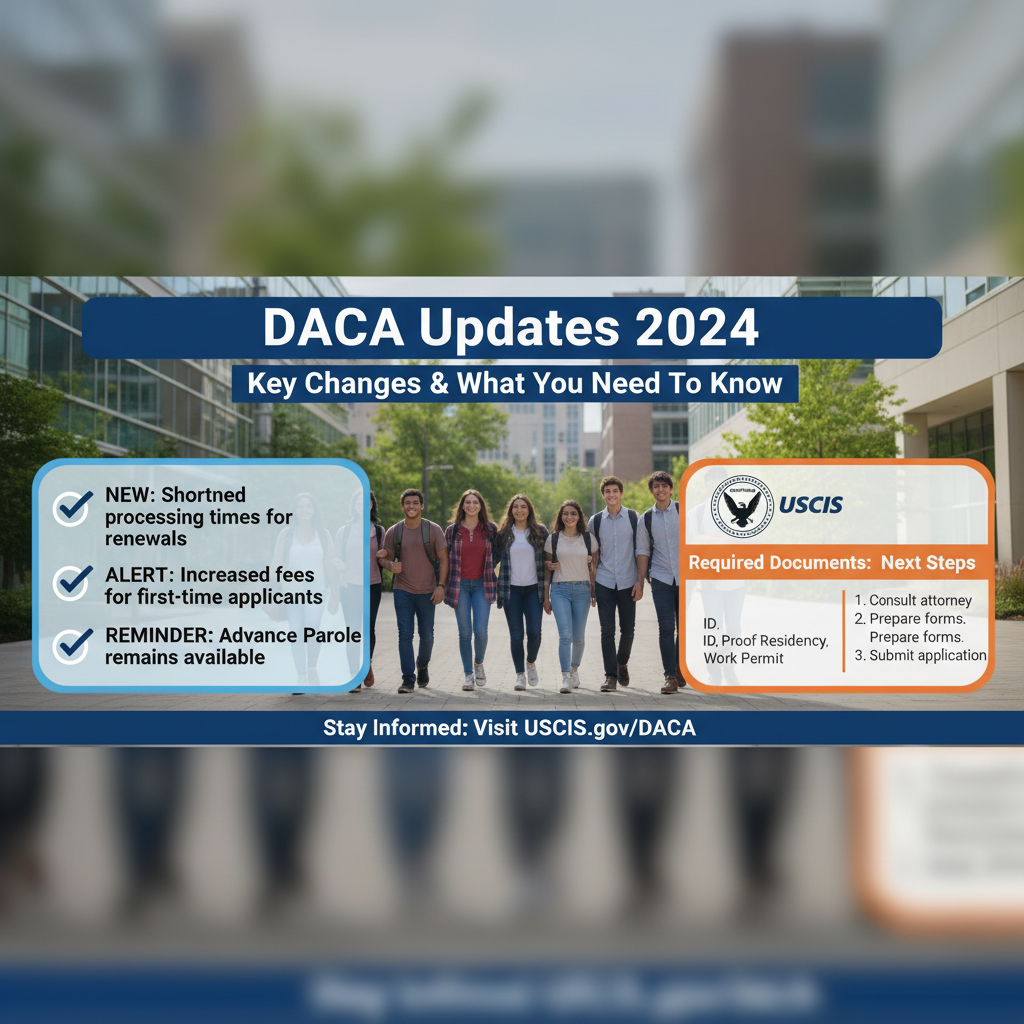
Ongoing discussions and legal challenges surrounding DACA continue to be a significant topic in immigration news. While the program itself remains under a federal court injunction that prevents U.S. Citizenship and Immigration Services (USCIS) from approving new DACA applications, renewals are still being processed. This continuous legal and administrative activity, frequently reported by outlets monitoring immigration law, underscores the critical need for current, accurate information for those whose lives are directly impacted.
DACA Program Updates and Renewal Information (USCIS)
What This News Means for Immigrants in Orlando and Across Florida
For the hundreds of thousands of DACA recipients nationwide, and the significant population here in Florida, understanding the nuances of the program's current status is paramount. The legal landscape surrounding DACA is dynamic, often shifting, and requires constant vigilance.
Why this news is showing up now
The DACA program, originally established in 2012, has faced numerous legal battles since its inception. As of March 22, 2026, the program continues to operate under an injunction issued by a federal court in the Southern District of Texas in July 2021, which was largely affirmed by the Fifth Circuit Court of Appeals. This ruling declared DACA unlawful but allowed for a partial stay, permitting USCIS to continue processing DACA renewal requests and associated applications for employment authorization. However, it prohibits USCIS from approving new initial DACA requests.
This ongoing legal saga means that DACA's future remains uncertain. Appeals, potential legislative action, and further court decisions are always on the horizon. Therefore, any development, even if it's a reaffirmation of the status quo, is significant news for DACA recipients, emphasizing the need to comply with current rules and prepare for potential changes. For many, this news serves as a critical reminder to prioritize timely renewals and seek legal counsel to navigate the complexities.
How it can affect Florida residents
Florida is home to a substantial DACA population. These individuals contribute significantly to our economy, culture, and communities, from Orange County to the furthest corners of the state. The current legal status of DACA directly impacts their ability to work, pursue education, and plan for their futures. Specifically:
- Employment: DACA recipients in Florida rely on their Employment Authorization Documents (EADs) to legally work. Timely renewal is essential to avoid gaps in employment and potential job loss.
- Education: Many DACA recipients in Florida are pursuing higher education. While some state institutions offer in-state tuition for DACA holders, the ability to maintain DACA status is crucial for accessing these opportunities and planning for post-graduation careers.
- Driver's Licenses: In Florida, DACA recipients are generally eligible for driver's licenses upon presentation of their valid EAD. An expired DACA status can lead to the inability to renew or obtain a driver's license, impacting daily life, commuting, and independence.
- Community Stability: The "Keep Families Together" tagline of Imigrar resonates deeply with the DACA community. Any threat to DACA status creates immense stress and instability for families, many of whom have lived in Florida for decades. The Orlando USCIS Field Office processes many of these critical applications, making local expertise invaluable.
Understanding these impacts underscores why staying informed and acting decisively on DACA renewals is not just a legal necessity but a matter of family and community well-being in Central Florida and beyond.
What Deferred Action for Childhood Arrivals (DACA) Is (and Why It Matters)
The Deferred Action for Childhood Arrivals (DACA) program is a critical lifeline for hundreds of thousands of young people across the United States. It's essential to understand exactly what DACA is, and just as importantly, what it is not.
A plain-English definition
DACA is an immigration policy that allows certain undocumented immigrants who entered the United States as minors to receive a renewable two-year period of deferred action from deportation and eligibility for a work permit. Essentially, "deferred action" means that the government agrees to postpone any deportation action against an individual for a set period. It does not grant lawful immigration status, but rather provides a temporary shield against removal and the ability to legally work in the U.S. This program was established on June 15, 2012, by the Secretary of Homeland Security under the Obama administration.
For those eligible, DACA offers stability, allowing them to pursue higher education, build careers, and contribute more fully to their communities without the constant fear of deportation. It provides a pathway to obtain a driver's license in states like Florida and generally improves quality of life.
Key terms you need to know
- Deferred Action: This is the core of DACA. It means the government is choosing to exercise its discretion not to pursue removal (deportation) proceedings against an individual for a specific period. It is not an immigration status, nor does it provide a path to citizenship or a green card.
- Employment Authorization Document (EAD): Often referred to as a "work permit," this document allows DACA recipients to legally work in the United States. It is typically valid for two years and must be renewed along with DACA status.
- USCIS: U.S. Citizenship and Immigration Services is the federal agency responsible for administering immigration and naturalization adjudication functions, including processing DACA applications and renewals. You can find more information on the USCIS official website.
- Injunction: In the context of DACA, an injunction is a legal order issued by a court that prohibits USCIS from taking certain actions, specifically approving new initial DACA requests. This is why only DACA renewals are currently being processed.
- Dreamers: This term is often used to refer to young undocumented immigrants who were brought to the U.S. as children. While DACA specifically addresses a subset of this population, the term "Dreamers" is broadly associated with the movement to provide a permanent legislative solution for these individuals.
- Advance Parole: This is a document that allows certain non-citizens to travel outside the U.S. and return legally without jeopardizing their immigration process. DACA recipients can apply for advance parole under specific circumstances (humanitarian, educational, employment reasons), but it is a separate application and not guaranteed.
Understanding these terms is crucial for anyone navigating the DACA program, especially given its complex and often uncertain legal standing.
Don't risk your DACA status. Get expert legal advice on your renewal. Call Imigrar at +1 786-791-3106 for a free consultation. Se Habla Español.
Current Immigration Law Governing DACA: The Foundation
Unlike many other immigration benefits, DACA is not a statutory program created by an act of Congress. Instead, it was established through executive action, specifically a memorandum issued by the Secretary of Homeland Security on June 15, 2012. This distinction is critical because it means DACA's existence and parameters are more vulnerable to legal challenges and changes in presidential administrations.
Federal requirements
While new DACA applications are not being approved, the original eligibility criteria form the basis for who can renew their DACA status. To be considered for DACA, individuals must meet the following federal requirements:
- Were under the age of 31 as of June 15, 2012.
- Came to the United States before reaching their 16th birthday.
- Have continuously resided in the United States since June 15, 2007, up to the present time.
- Were physically present in the United States on June 15, 2012, and at the time of making their request for deferred action.
- Had no lawful status on June 15, 2012.
- Are currently in school, have graduated or obtained a certificate of completion from high school, have obtained a general education development (GED) certificate, or are an honorably discharged veteran of the Coast Guard or Armed Forces of the United States.
- Have not been convicted of a felony, a significant misdemeanor, or three or more other misdemeanors, and do not pose a threat to national security or public safety.
For renewal applications, the primary requirements are that you have previously been granted DACA and continue to meet the original criteria, particularly regarding continuous residence and criminal history. Any departure from the U.S. without a valid advance parole document after August 15, 2012, can jeopardize your renewal.
Florida-specific considerations
While DACA is a federal program, its impact and specific considerations vary by state. In Florida, DACA recipients face unique opportunities and challenges:
- Driver's Licenses: The Florida Department of Highway Safety and Motor Vehicles generally issues driver's licenses to DACA recipients who present a valid Employment Authorization Document (EAD) and other required identification. This is a crucial benefit for mobility and economic participation in a state known for its reliance on personal transportation, especially along the I-4 corridor.
- In-State Tuition: Some public colleges and universities in Florida offer in-state tuition rates for DACA recipients who meet certain residency requirements. This can significantly reduce the cost of higher education, making it more accessible for Dreamers in Central Florida and beyond. It is vital for students to confirm specific institutional policies.
- State Legislative Landscape: Florida's immigration policies can be influenced by state legislative action, which may create additional considerations or challenges for DACA recipients. Staying informed about state-level discussions is always advisable.
Navigating these federal and state-specific layers requires careful attention to detail and up-to-date knowledge of the law. Imigrar is deeply familiar with both federal immigration law and its practical implications for Florida residents.
The primary forms used for DACA renewal are Form I-821D (Consideration of Deferred Action for Childhood Arrivals), Form I-765 (Application for Employment Authorization), and Form I-765WS (Worksheet for Form I-765). You can access these forms and their instructions directly on the USCIS Forms page.

How to Renew Your DACA: A Complete Step-by-Step Guide
Renewing your DACA status is a critical process that requires precision and timeliness. As of March 22, 2026, USCIS continues to accept and process DACA renewal requests. Here's a detailed guide to help you through each step.
1) Determine Your Eligibility for Renewal
Before you begin assembling your application, ensure you are eligible for renewal. You must have previously received DACA, and you must continue to meet the original DACA criteria. Key checks include:
- You have not departed the U.S. without advance parole since August 15, 2012.
- You have not been convicted of a felony, a significant misdemeanor, or three or more other misdemeanors.
- You have not otherwise posed a threat to national security or public safety.
Important: If you have any new criminal history, even minor incidents, or if you traveled outside the U.S. without advance parole, it is imperative to consult an immigration attorney before proceeding with your renewal. These issues can lead to denial and potentially place you in removal proceedings.
Required documents for this step (for your review):
- Your most recent DACA approval notice (Form I-797).
- Your current or most recently expired Employment Authorization Document (EAD).
2) Gather Necessary Documents and Information
Organization is key. Start collecting these documents well in advance of your filing window:
- Copies of Previous Applications: Keep copies of your previous Form I-821D and Form I-765, along with their approval notices.
- Proof of Continuous Residence: While not always explicitly requested for renewals, it's wise to have evidence of continuous residence readily available, especially if there have been significant gaps in employment or schooling, or if your last application was a long time ago. Examples include school transcripts, employment records, utility bills, bank statements, medical records, and tax returns for the period since your last DACA approval.
- Travel History: If you traveled outside the U.S. with advance parole since your last DACA approval, include copies of your advance parole document and stamps in your passport.
- Criminal Records: If you have any new arrests, charges, or convictions (even if dismissed or expunged) since your last DACA grant, you must obtain certified court dispositions for each case.
- Passport-Style Photos: Two identical, unmounted, passport-style color photographs taken within 30 days of filing. Write your name and Alien Registration Number (A-Number) lightly in pencil on the back of each photo.
3) Complete Required USCIS Forms
You will need to complete the following forms:
- Form I-821D, Consideration of Deferred Action for Childhood Arrivals: Fill out every section completely and accurately. If a question does not apply, write "N/A." Do not leave blanks.
- Form I-765, Application for Employment Authorization: This form requests your work permit. Be sure to select the correct eligibility category (c)(33) for DACA.
- Form I-765WS, Worksheet for Form I-765: This worksheet requires you to demonstrate an economic need for employment authorization.
Warning: Incomplete forms or forms with errors are the most common reasons for delays, Requests for Evidence (RFEs), or outright denials. Review all instructions carefully. Consider using the most recent version of the forms available on the USCIS Forms page.
4) Calculate and Pay the Filing Fees
As of March 22, 2026, the DACA renewal application requires a total fee of $495. This consists of:
- Form I-821D: No filing fee.
- Form I-765: $410.
- Biometrics Services Fee: $85.
You must submit one combined payment of $495. Payments can be made via money order, personal check, cashier's check, or by credit card using Form G-1450, Authorization for Credit Card Transactions. Make checks payable to "U.S. Department of Homeland Security." Do not send cash. USCIS offers very limited fee waivers for DACA, and eligibility is extremely strict.
Reminder: USCIS fees can change. Always verify the current fees on the USCIS official website before mailing your application.
5) Assemble Your Application Packet
Organize your documents clearly to assist the USCIS officer reviewing your application:
- Cover Letter: (Optional, but recommended) A cover letter listing the contents of your application.
- Payment: Place your check/money order or Form G-1450 on top of your packet.
- Forms: Form I-821D, Form I-765, and Form I-765WS.
- Supporting Documents: Arrange supporting evidence logically (e.g., previous approval notices, EAD copy, photos, evidence of continuous residence, criminal dispositions).
Important: Make a complete copy of your entire application packet for your personal records before mailing. Do not send original documents unless specifically requested by USCIS, as they may not be returned.
6) Mail Your Application to the Correct USCIS Lockbox
The correct mailing address depends on your state of residence. For Florida residents, you typically mail your DACA renewal application to the USCIS Chicago Lockbox. However, always verify the most current mailing address on the USCIS Form I-821D page under "Where to File."
Recommendation: Use a shipping method that provides tracking and delivery confirmation, such as USPS Certified Mail with Return Receipt, FedEx, or UPS. This provides proof of mailing and delivery.
Timeline: USCIS recommends filing your DACA renewal request approximately 120 to 150 days before your current Employment Authorization Document (EAD) expires. Filing too early (more than 150 days) may result in your application being rejected, while filing too late risks a gap in your work authorization and deferred action.
7) Attend Biometrics Appointment (If Required)
After USCIS accepts your application, you will typically receive a receipt notice (Form I-797C). Within a few weeks, you may receive an appointment notice (Form I-797C) for a biometrics services appointment at an Application Support Center (ASC).
- What to Bring: Bring your appointment notice, a valid photo identification (e.g., driver's license, state ID), and any other documents specified in the notice.
- Purpose: At this appointment, USCIS will collect your fingerprints, photograph, and signature. This data is used for background checks.
Reminder: It is crucial to attend this appointment. Failure to do so


