


As of February 24, 2026, the Deferred Action for Childhood Arrivals (**DACA**) program remains a critical lifeline for hundreds of thousands of individuals across the United States, including many here in Orlando and throughout Florida. Navigating the ever-evolving landscape of immigration law, especially concerning **DACA**, can be daunting. At Imigrar, we understand the anxieties and uncertainties you face. Our mission is to provide clear, actionable information and expert legal guidance to help you keep your family together.
The reporting that sparked this guide
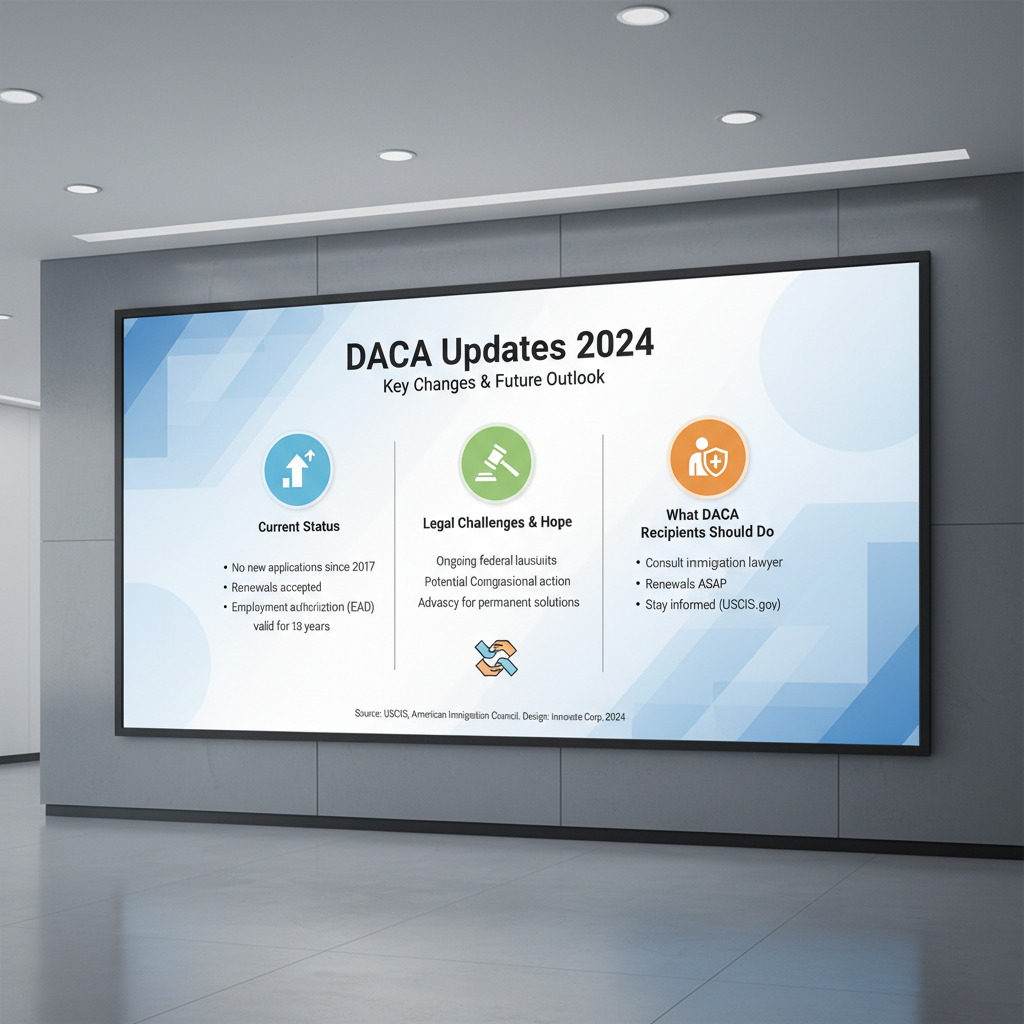
Recent discussions and news related to immigration law, particularly regarding **DACA**, have once again brought the program to the forefront. The ongoing legal challenges and administrative updates from USCIS continue to shape the program's future and impact its beneficiaries. For the most current official information, always refer to the DACA Program Updates and Renewal Information (USCIS).
What This News Means for Immigrants in Orlando and Across Florida
The **DACA** program, born out of a 2012 executive action, has been a beacon of hope for eligible young undocumented immigrants who arrived in the U.S. as children. However, its existence has been fraught with legal battles, leading to periods of uncertainty, especially regarding new applications. Understanding the latest developments is crucial for those who rely on **DACA** for their ability to work and live without immediate fear of deportation.
Why this news is showing up now
The **DACA** program has been the subject of intense legal scrutiny and political debate for years. The current legal status of **DACA** stems largely from a July 2021 ruling by a federal judge in Texas, which found the program unlawful. This ruling, upheld by the U.S. Court of Appeals for the Fifth Circuit in October 2022, effectively halted the acceptance of new **DACA** applications. While the Department of Homeland Security (DHS) subsequently issued a final rule in August 2022 aiming to codify **DACA** into federal regulation, the legal challenges persist, and the Texas court has since issued another order blocking the new rule. This means that as of early 2026, USCIS is currently prohibited from granting initial **DACA** requests or related employment authorization documents. However, a critical distinction remains: USCIS continues to accept and process **DACA** renewal requests and associated **Form I-765** applications for employment authorization from individuals who were previously granted **DACA** status.
These ongoing court battles and administrative responses mean that **DACA** is frequently in the news, with each development potentially impacting the lives of hundreds of thousands of individuals. It underscores the precarious nature of the program and the constant need for beneficiaries to stay informed and prepared.
How it can affect Florida residents
For the estimated tens of thousands of **DACA** recipients living in Florida, including a significant population in Orlando and the surrounding Central Florida region, these updates are not abstract legal concepts; they are real-world concerns. The ability to renew **DACA** means maintaining work authorization, which translates to stable employment along the I-4 corridor, contributing to the local economy, and providing for families. It means continued access to driver's licenses and the opportunity to pursue higher education without fear of immediate deportation.
Conversely, any disruption to the renewal process or a permanent termination of the program would have devastating effects. Losing **DACA** status would mean losing the ability to legally work, potentially impacting employment in industries vital to Florida, such as tourism, hospitality, and agriculture. It would also plunge many back into the shadows, increasing the risk of deportation and tearing families apart. For Central Florida residents, staying vigilant about renewal deadlines and understanding the current legal landscape is paramount. The Orlando USCIS Field Office processes many of these cases, and local access to legal counsel is essential for navigating the complexities.
Need Help? The legal landscape for **DACA** can change rapidly. Our Orlando immigration team is ready to assist you in understanding the latest updates and preparing your renewal application. Call +1 786-791-3106 for a free consultation, or message us online. Se Habla Español.
What **DACA** Is (and Why It Matters)
**DACA**, or Deferred Action for Childhood Arrivals, is a United States immigration policy that allows certain undocumented immigrants who entered the country as minors to receive a renewable two-year period of deferred action from deportation and eligibility for a work permit. Since its implementation in 2012, it has provided a measure of stability and opportunity for hundreds of thousands of young people, often referred to as "Dreamers."
A plain-English definition
Imagine you're a young person who came to the U.S. as a child, grew up here, went to school here, and considers this country your home, but you don't have legal immigration status. **DACA** is a program that offers you temporary protection from being deported (sent out of the country). It doesn't give you a green card or a path to citizenship, but it does allow you to legally work in the U.S. and often obtain a driver's license for a two-year period, which can be renewed. It's like a temporary pause button on the threat of deportation, giving you a chance to build a life here without constant fear.
Key terms you need to know
- Deferred Action: This is the core of **DACA**. It's a discretionary decision by the government to postpone or delay removing an individual from the U.S. It does not grant legal status but provides temporary protection from deportation.
- Employment Authorization Document (EAD): Also known as a work permit, this card proves your authorization to work legally in the U.S. **DACA** recipients receive an **EAD** for two years, renewable with their **DACA** status.
- USCIS: Stands for U.S. Citizenship and Immigration Services. This is the federal agency responsible for administering immigration and naturalization benefits, including processing **DACA** applications. You'll interact with USCIS for your **DACA** renewals. Check their USCIS official website regularly for updates.
- Dreamers: A term often used to refer to young undocumented immigrants who came to the U.S. as children. While the term originated with the proposed "DREAM Act" legislation, it is now widely associated with **DACA** recipients.
- Advance Parole: This is a travel document that allows certain non-citizens to travel abroad and return to the U.S. without abandoning their immigration application or status. For **DACA** recipients, obtaining **Advance Parole** is exceptionally difficult and generally limited to humanitarian, educational, or employment purposes, and its availability is subject to change due to legal challenges. Traveling without it can lead to termination of **DACA** status.
- Continuous Residence: A key eligibility requirement for **DACA**, meaning you have resided in the U.S. from a specific date (June 15, 2007, for initial **DACA** applicants) up to the present.
Current Immigration Law: The Foundation for **DACA**
It's crucial to understand that **DACA** is not a law passed by Congress, but rather an executive action. This distinction is at the heart of the ongoing legal challenges. While it's not codified law like the Immigration and Nationality Act (INA), it operates under the existing statutory framework and administrative authority of the Department of Homeland Security.
Federal requirements for **DACA** Renewal
As of February 24, 2026, USCIS continues to accept and process **DACA** renewal requests. To be eligible for renewal, you must meet the following federal requirements:
- You must have previously been granted **DACA**. (New initial applications are not being accepted.)
- You must have continuously resided in the United States since June 15, 2007, up to the present time.
- You must not have departed the United States on or after August 15, 2012, without obtaining **Advance Parole**.
- You must not have been convicted of a felony, a significant misdemeanor, or three or more other misdemeanors.
- You must not otherwise pose a threat to national security or public safety.
It's important to note that even if you meet these criteria, **DACA** is a discretionary benefit, meaning USCIS has the final say. Maintaining a clean record and demonstrating good moral character are always paramount.
Florida-specific considerations
While **DACA** is a federal program, its impact is felt at the state level. In Florida, **DACA** recipients benefit from the ability to obtain driver's licenses, which is essential for commuting to work, school, and navigating daily life in a state heavily reliant on personal transportation, especially in sprawling areas like Orlando and Orange County. Some **DACA** recipients in Florida may also be eligible for in-state tuition at public universities and colleges, though policies can vary and are subject to state legislative changes. However, it's important to remember that state laws cannot override federal immigration policy. The core of **DACA** eligibility and renewal remains dictated by USCIS. For residents of Central Florida, understanding how **DACA** status interacts with state benefits and local community resources is key.
When applying for renewal, you will primarily interact with USCIS by submitting specific forms:
- Form I-821D, Consideration of Deferred Action for Childhood Arrivals
- Form I-765, Application for Employment Authorization
- Form I-765WS, Worksheet for Form I-765
Always refer to the USCIS official website for the latest versions of forms and instructions.
How to Renew Your **DACA**: A Complete Step-by-Step Guide
Renewing your **DACA** is a critical process that requires careful attention to detail and timely submission. Missing a deadline or submitting an incomplete application can have severe consequences, including loss of work authorization and protection from deportation. Follow this comprehensive guide to ensure a smooth renewal process.
1) Determine Your Eligibility and Timing
The first step is to confirm you are eligible for **DACA** renewal based on the criteria outlined above. More importantly, you must file your renewal application within the recommended timeframe. USCIS advises filing your renewal request between 120 days and 150 days before your current **Form I-765** (Employment Authorization Document) expires. Filing too early may result in a rejection, while filing too late could lead to a gap in your work authorization and **DACA** protection.
- Action: Check the expiration date on your current **EAD**. Mark your calendar for the 150-day and 120-day windows prior to expiration.
- Example: If your **EAD** expires on July 1, 2026, you should aim to file your renewal between March 3, 2026 (120 days prior) and February 1, 2026 (150 days prior).
2) Gather Required Documents
Having all your documents ready before you start filling out forms will streamline the process and reduce errors. Here's a list of essential documents for **DACA** renewal:
- Copy of your most recent **DACA** approval notice (Form I-797C, Notice of Action).
- Copy of your current **Employment Authorization Document (EAD)**.
- Copy of your previous **EADs** (if available).
- Two identical, unmounted, passport-style photographs taken within the last 30 days. Write your name and A-Number lightly on the back of each photo.
- Copy of your birth certificate with a certified English translation (if original is not in English).
- Copy of your passport or national identity document from your country of origin.
- Copies of any previous **Advance Parole** documents (if applicable).
- Proof of continuous residence since your last **DACA** approval (e.g., utility bills, school transcripts, employment records, bank statements, medical records). While not always required for renewals unless there are significant changes, having these ready is a good practice.
- Any documents related to arrests, citations, or criminal history, even if charges were dismissed or expunged. Consult with an attorney if you have any criminal history.
Important: Always make copies of ALL documents you send to USCIS for your records.
3) Complete and File Forms I-821D, I-765, and I-765WS
These three forms are the core of your **DACA** renewal application. Accuracy and consistency are paramount.
- Form I-821D, Consideration of Deferred Action for Childhood Arrivals: This form requests a renewal of your deferred action. Fill it out completely and truthfully. Pay close attention to questions about your travel history, criminal record, and current address.
- Form I-765, Application for Employment Authorization: This form requests your work permit. Ensure you select the correct eligibility category, which for **DACA** renewals is (c)(33).
- Form I-765WS, Worksheet for Form I-765: This worksheet requires you to detail your current annual income, assets, and expenses. It helps USCIS determine if you meet the economic need requirement for the fee exemption (though fee exemptions are very rarely granted for **DACA** renewals).
Key Considerations:
- Use black ink only.
- Type or print clearly.
- Answer all questions. If a question doesn't apply, write "N/A" (not applicable) or "None." Do not leave blank spaces.
- Ensure all information (name, date of birth, address, A-Number) is consistent across all forms and matches your previous **DACA** applications.
- Sign and date all forms in the appropriate places. An unsigned form will be rejected.
Feeling Overwhelmed? The sheer volume of paperwork and the precision required for **DACA** renewal can be daunting. Let Imigrar's experienced Orlando immigration lawyers guide you through every step. Call +1 786-791-3106 today for your free consultation. Se Habla Español.
4) Prepare Your Application Packet and Pay Fees
Once your forms are complete and documents gathered, it's time to assemble your packet and prepare for payment.
- Fees: The total fee for **DACA** renewal is currently $495. This includes a $410 fee for **Form I-765** and an $85 biometrics services fee. Fees are subject to change, so always check the USCIS Forms page for the latest amounts.
- Payment Method: You can pay by money order, personal check, cashier's check, or credit card using **Form G-1450, Authorization for Credit Card Transactions**. Make checks or money orders payable to "U.S. Department of Homeland Security." Do not send cash.
- Fee Waivers: Fee waivers for **DACA** renewals are extremely rare and granted only in very limited circumstances. Do not assume you qualify without consulting an attorney.
- Assembly:
- Place your check or money order on top.
- Then, **Form I-821D**.
- Followed by **Form I-765** and **Form I-765WS**.
- Include your two passport-style photos in a small plastic bag or envelope stapled to the upper left corner of **Form I-765**.
- Finally, attach all supporting documents (copies, not originals, unless specifically requested).
- Mailing: Send your complete application packet to the correct USCIS Lockbox facility based on your state of residence. For Florida residents, you will typically mail to the USCIS Chicago Lockbox. Always double-check the USCIS website for the correct mailing address for **DACA** applications. Use a reliable mailing service that provides tracking (e.g., Certified Mail with Return Receipt from USPS, FedEx, UPS).
5) Attend Biometrics Appointment (If Required)
After USCIS accepts your application, you will typically receive a receipt notice (Form I-797C) and then a separate appointment notice (Form I-797C, Notice of Action) for a biometrics (fingerprinting) appointment at an Application Support Center (ASC). This appointment is mandatory.
- What to Bring: Your appointment notice, a valid photo identification (e.g., driver's license, passport, **EAD**), and any other documents requested in the notice.
- Location: For Orlando and Central Florida residents, your appointment will likely be at the Orlando ASC.
- Action: Attend your appointment on time. If you cannot attend, you must request to reschedule, but this can delay your application.
6) Monitor Your Case Status
You can track the progress of your **DACA** renewal application online using the receipt number provided on your **Form I-797C**. Visit the USCIS Case Status Online tool.
- Action: Check your status regularly. If you receive a Request for Evidence (RFE) or a Notice of Intent to Deny (NOID), respond promptly and consider seeking legal counsel immediately.
- Processing Times: USCIS processing times for **DACA** renewals can vary. You can check estimated processing times at USCIS Processing Times. These times can fluctuate based on caseload and current legal injunctions.
7) Receive Your Decision and New EAD
Once USCIS processes your application, you will receive a decision notice. If approved, you will receive a new **DACA** approval notice and your new **Employment Authorization Document (EAD)**, typically valid for two years.
- Action: Review your new **EAD** for accuracy. If there are any errors, contact USCIS immediately to request a correction.
- Reminder: Keep all approval notices and **EADs** in a safe place. They are vital records.
Practical Steps You Can Take Today for Your **DACA** Renewal
Even if your **DACA** is not expiring soon, there are proactive steps you can take to ensure you are prepared for your next renewal.
Actionable Checklist:
- Know Your Expiration Date: Check your **EAD** card today and note the expiration date. Set a reminder 180 days before it expires.
- Start Gathering Documents Early: Begin collecting copies of your previous **DACA** approval, **EADs**, and any evidence of continuous residence. Organize them in a dedicated folder.
- Update Your Address with USCIS: If you've moved, file **Form AR-11, Alien's Change of Address Card**, online or by mail within 10 days of moving. This is crucial to receive all notices.
- Maintain a Clean Record: Avoid any encounters with law enforcement. Even minor infractions can jeopardize your **DACA** renewal. Consult an attorney if you have any legal issues.
- Save Money for Fees: The current renewal fee is $495. Start saving now to ensure you have the funds when it's time to apply.
- Consult an Immigration Attorney: Especially if you have any concerns about your eligibility, travel history, or criminal record, seeking legal advice from an expert is invaluable.
Document Preparation Guidance
- Create a Master Folder: Keep all immigration-related documents, including previous applications, receipts, and approval notices, in one secure location.
- Make Copies: Before sending anything to USCIS, make a complete copy of the entire application packet for your records.
- Organize Supporting Evidence: If you need to submit additional evidence, such as proof of continuous residence, organize it chronologically and label clearly.
- Use a Checklist: Create your own checklist based on the USCIS instructions for **Forms I-821D** and **I-765** to ensure you don't miss anything.
Timeline Expectations
While USCIS aims to process **DACA** renewals efficiently, processing times can vary significantly. As of early 2026, the ongoing legal challenges might introduce additional delays or uncertainties. Typically, you can expect:
- Filing Window: 120-150 days before **EAD** expiration.
- Receipt Notice: Within 1-3 weeks of filing.
- Biometrics Appointment Notice: Within 3-5 weeks of filing.
- Biometrics Appointment: 4-8 weeks after filing.
- Decision/New EAD: Typically within 3-6 months from filing, but can be longer.
Warning: Do not rely on these estimates as guarantees. Always check the USCIS Processing Times tool for the most up-to-date information. If your **EAD** is expiring soon and you haven't received a decision, contact USCIS or your attorney.

How Imigrar Helps **DACA** Recipients in Orlando and Beyond
At Imigrar, we understand the immense significance of **DACA** for individuals and families. The program's complex legal status, coupled with the detailed requirements for renewal, can be a source of significant stress. Our firm is dedicated to providing compassionate, knowledgeable, and effective legal representation to **DACA** recipients in Orlando, across Florida, and nationwide.
Our experience and expertise
Our team of experienced immigration attorneys at Imigrar has a proven track record of assisting clients with their **DACA** renewals. We stay abreast of every legal development, court ruling, and USCIS policy change affecting the program. We pride ourselves on:
- In-depth Knowledge: We


