

The reporting that sparked this guide
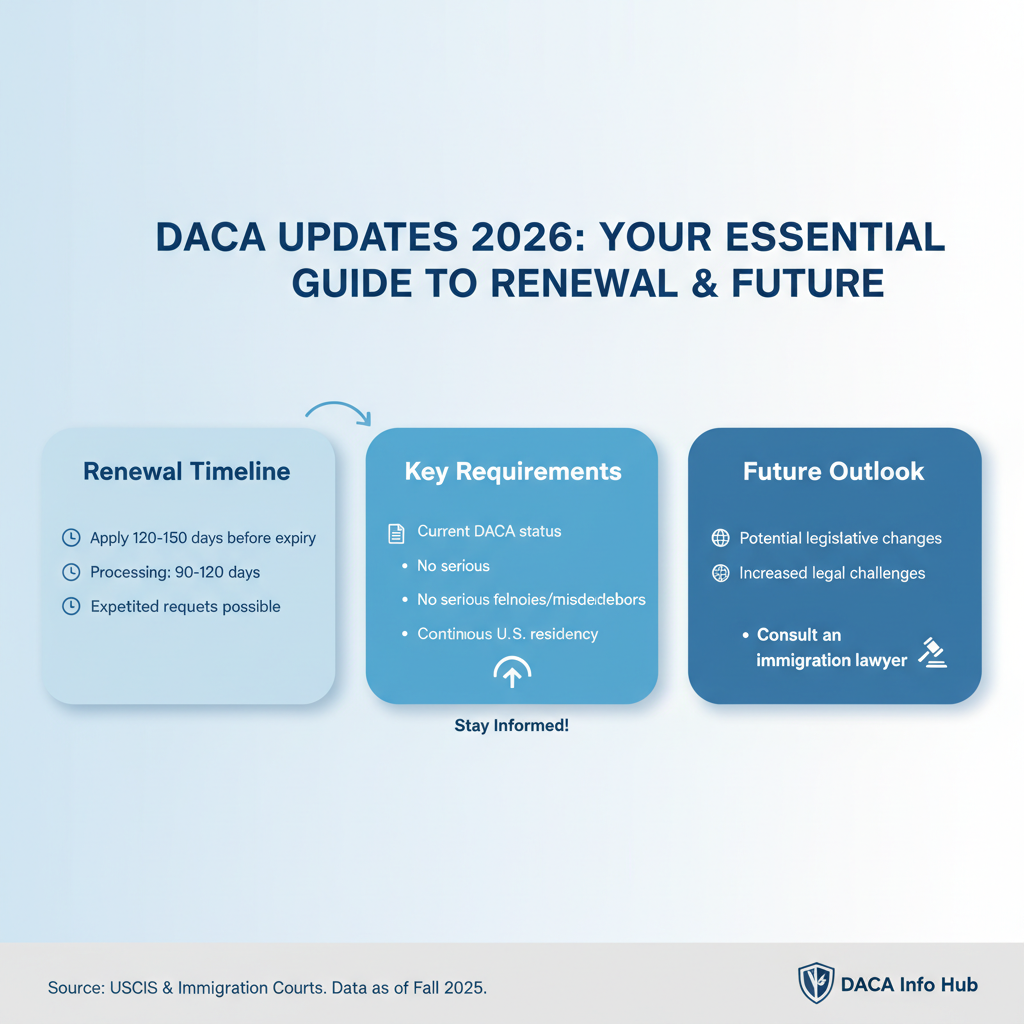
We closely monitor developments from official government sources and reputable news outlets to bring you the most current and accurate information. The insights for this comprehensive guide were sparked by recent reports and official announcements concerning the DACA program:
What This News Means for Immigrants in Orlando and Across Florida
As of April 5, 2026, the Deferred Action for Childhood Arrivals (DACA) program continues to be a lifeline for hundreds of thousands of young immigrants across the United States, including a significant population right here in Florida. The program, while facing ongoing legal challenges, remains active for renewals, making it critical for eligible individuals to stay informed and proactive.
Why this news is showing up now
The DACA program has been a subject of continuous legal and political debate since its inception in 2012. The "news" around DACA is rarely a single, definitive announcement, but rather an ongoing series of court rulings, administrative policy adjustments, and legislative efforts. Currently, the program operates under a complex framework shaped by federal court injunctions. While USCIS is prohibited from approving initial DACA requests, it continues to accept and process renewal requests for individuals who have previously been granted DACA.
Recent discussions often revolve around the latest court decisions from the Fifth Circuit Court of Appeals and the subsequent actions of federal district courts, which have maintained the block on new DACA applications. These legal battles mean the program's future remains uncertain, underscoring the urgency for current DACA recipients to understand their rights and responsibilities, especially regarding timely renewals. Every few months, new filings, hearings, or judicial reviews can bring DACA back into the spotlight, reminding us of its precarious yet vital status.
How it can affect Florida residents
Florida is home to a substantial number of DACA recipients, often referred to as "Dreamers," who contribute significantly to our communities and economy. For these individuals and their families in Orlando, Central Florida, and throughout the Sunshine State, the ongoing DACA updates have profound implications:
- Continued Protection: Successful DACA renewal means continued protection from deportation and eligibility for an Employment Authorization Document (EAD), allowing recipients to work legally in the U.S. This is vital for maintaining livelihoods and supporting families.
- Driving Privileges: In Florida, an EAD is often a key document required to obtain a driver's license, enabling DACA recipients to commute to work, school, and essential appointments, especially crucial in spread-out areas like the I-4 corridor.
- Educational Opportunities: While Florida's in-state tuition policies for DACA recipients have evolved and faced challenges, maintaining DACA status can still be a factor in accessing certain educational benefits or scholarships. For students attending institutions around Orlando, such as the University of Central Florida or Valencia College, DACA status can impact their academic path.
- Economic Stability: DACA recipients in Florida contribute millions in state and local taxes annually. Their ability to work legally under DACA directly impacts the state's economic vitality.
- Uncertainty and Stress: The constant legal flux surrounding DACA creates immense stress for individuals and families. This uncertainty highlights the importance of timely renewals and consulting with experienced immigration counsel.
For Central Florida residents, the Orlando USCIS Field Office is a critical touchpoint for various immigration matters, though DACA renewal applications are typically mailed to specific service centers. Understanding the federal process and how it intertwines with state-level considerations is paramount for DACA recipients in Orange County and surrounding areas.
Need Help Navigating DACA Renewal? Don't face the complexities alone. Our Orlando immigration team at Imigrar is ready to assist you with your DACA renewal application, ensuring accuracy and timeliness. Call +1 786-791-3106 for a free consultation today, or message us online. Se Habla Español.
What DACA Is (and Why It Matters)
The Deferred Action for Childhood Arrivals (DACA) program has been a cornerstone of U.S. immigration policy for over a decade, offering temporary relief to hundreds of thousands of young people who were brought to the country as children. Its significance cannot be overstated, providing a measure of stability and opportunity where previously there was none.
A plain-English definition
DACA, or Deferred Action for Childhood Arrivals, is a U.S. immigration policy that allows certain undocumented immigrants who entered the United States as minors to receive a renewable two-year period of deferred action from deportation and eligibility for a work permit. Essentially, "deferred action" means the government agrees to postpone any deportation proceedings against an individual for a specific period. It is important to understand that DACA is *not* a pathway to lawful permanent residency (a Green Card) or U.S. citizenship. It provides temporary relief and authorization to work, giving recipients a chance to pursue education, careers, and a more stable life without constant fear of removal.
Key terms you need to know
- Deferred Action: A discretionary determination by USCIS or an immigration judge to defer removal action against an individual. It does not confer lawful status but offers temporary protection from deportation.
- DACA Recipient / Dreamer: An individual who has been granted deferred action under the DACA program. The term "Dreamer" refers to individuals who would benefit from the DREAM Act (Development, Relief, and Education for Alien Minors Act), a legislative proposal that has never passed Congress but inspired the DACA policy.
- Employment Authorization Document (EAD): Often referred to as a "work permit," this document (Form I-766) is issued to DACA recipients, allowing them to legally work in the United States for the duration of their deferred action period.
- Form I-821D: The official application form, "Consideration of Deferred Action for Childhood Arrivals," used by individuals seeking DACA.
- Form I-765: The "Application for Employment Authorization," filed concurrently with Form I-821D to request a work permit.
- Form I-765WS: The "Worksheet for Form I-765, Application for Employment Authorization," which helps applicants determine if they meet the economic need requirement for a fee exemption or waiver (though fee waivers are rarely granted for DACA).
- Advance Parole: A document (Form I-512L) that allows certain non-citizens, including DACA recipients, to travel outside the United States and return legally. It must be approved before travel. While DACA does not automatically grant advance parole, recipients can apply for it under specific circumstances (humanitarian, educational, employment purposes).
- Court Injunction: A judicial order that restricts or prohibits a party from doing a particular act. In the context of DACA, federal court injunctions have prevented USCIS from approving initial DACA applications since July 2021.
Understanding these terms is crucial for anyone involved with DACA, especially given the program's evolving legal landscape. For DACA recipients in Orlando, staying informed about these definitions can help in navigating their immigration journey.
Current Immigration Law: The Foundation for DACA
DACA itself is not a law passed by Congress but rather an administrative policy implemented by the Department of Homeland Security (DHS) in 2012. Its legal basis has been consistently challenged in courts, primarily under the Administrative Procedure Act (APA), which governs how federal agencies develop and issue regulations. The current legal status of DACA is defined by specific court orders, most notably from the U.S. District Court for the Southern District of Texas and the Fifth Circuit Court of Appeals, which have found the original DACA memorandum to be unlawful.
As of April 5, 2026, these court orders mean that USCIS is:
- Prohibited from granting initial DACA requests. If you have never had DACA before, you cannot apply for it at this time.
- Permitted to accept and process DACA renewal requests from individuals who previously received DACA.
- Permitted to accept and process accompanying applications for Employment Authorization Documents (EADs).
- Permitted to accept and process applications for advance parole from DACA recipients.
This "renewals only" status is critical. DACA does not provide a path to citizenship or a Green Card; it is a temporary, discretionary benefit.
Federal requirements for DACA Renewal
To be eligible for DACA renewal, you must meet the following federal criteria:
- You must have previously received DACA.
- You must not have departed the United States on or after August 15, 2012, without first obtaining advance parole.
- You must have continuously resided in the United States since you submitted your most recent DACA request that was approved.
- You must not have been convicted of a felony, a significant misdemeanor, or three or more other misdemeanors, and not otherwise pose a threat to national security or public safety.
Important: USCIS reviews each renewal request on a case-by-case basis. Even if you met the criteria before, any changes in your criminal record, travel history, or continuous residence could impact your renewal eligibility. Maintaining meticulous records is essential.
You will need to file Form I-821D, Consideration of Deferred Action for Childhood Arrivals, and Form I-765, Application for Employment Authorization, along with Form I-765WS, Worksheet for Form I-765. These forms are available on the USCIS Forms page.
Florida-specific considerations
While DACA is a federal program, its impact is felt at the state level. For DACA recipients in Florida, there are several key considerations:
- Driving Privileges: With a valid EAD and DACA approval notice, DACA recipients in Florida can apply for a Florida driver's license or identification card through the Florida Department of Highway Safety and Motor Vehicles (FLHSMV). This is a critical benefit for navigating Florida's extensive road networks, especially for those commuting along the I-4 corridor in Central Florida.
- Professional Licenses: DACA recipients with an EAD may be eligible to apply for certain professional licenses in Florida, opening doors to various careers. However, eligibility varies by profession and specific state regulations.
- In-State Tuition: Florida law has provisions that allow certain non-U.S. citizens, including some DACA recipients, to qualify for in-state tuition at public colleges and universities if they meet specific residency requirements and attended a Florida high school for at least three years. This can significantly reduce the cost of higher education for students in Orlando and across the state.
- State-Level Advocacy: Florida's DACA population is active in advocating for more comprehensive immigration reform and state-level protections. Staying connected with local advocacy groups can provide additional support and information.
For more detailed information on federal immigration processes, always refer to the USCIS official website.
Worried About Your DACA Renewal? Let Imigrar guide you through the process with confidence. Our firm in Orlando specializes in DACA and is here to keep your family together. Contact us at +1 786-791-3106 for a free, confidential consultation. Se Habla Español.

How to Renew Your DACA: A Complete Step-by-Step Guide
Renewing your DACA is a critical process to maintain your protection from deportation and your ability to work legally. Missing deadlines or making errors can lead to serious consequences. This guide provides a detailed, step-by-step approach for DACA recipients in Orlando and nationwide.
1) Determine Eligibility and Optimal Filing Window
Before you begin, confirm you meet the federal DACA renewal eligibility criteria mentioned above. The most crucial aspect of renewal is timing. USCIS recommends filing your renewal application within 120 to 150 days before your current DACA and EAD expire. Filing too early can lead to your application being rejected, while filing too late risks a lapse in your work authorization and deferred action.
- Check Expiration Dates: Locate your current DACA approval notice (Form I-797) and your EAD (Form I-766) to find the exact expiration dates.
- Calculate Your Window: Count back 150 days from your expiration date to determine the earliest you should file, and 120 days to identify the start of the ideal window.
- Early Filing Warning: If you file more than 150 days before expiration, USCIS may reject your application and return the fees.
- Late Filing Consequences: If you file after your DACA expires, you risk a period without work authorization and without deferred action protection. If your DACA expired more than a year ago, or if your DACA was terminated, you may need to file as an initial DACA request, which is currently blocked by court orders. In such cases, immediate legal consultation is essential.
2) Gather Required Documents
Organization is key. Collect all necessary documents before you start filling out forms. This step helps ensure your application is complete and accurate.
Required Documents Checklist:
- Previous DACA Approval Notices: All Form I-797 notices for your past DACA approvals.
- Current EAD Card: A copy of the front and back of your valid Employment Authorization Document.
- Proof of Identity: A copy of your birth certificate, passport, or other government-issued ID.
- Proof of Continuous Residence: Documents demonstrating you have resided in the U.S. since your last DACA approval. This can include:
- School records (transcripts, report cards)
- Employment records (pay stubs, W-2 forms)
- Medical records
- Rental agreements or utility bills
- Bank statements
- Dated photographs
- Any other dated official documents.
- Travel Records (if applicable): If you traveled outside the U.S. with advance parole since your last DACA approval, provide copies of your advance parole document and passport stamps.
- Criminal History Records (if applicable): If you have any arrests, citations, or convictions (even if dismissed or expunged) since your last DACA approval, you MUST provide certified court dispositions and police reports. Failure to disclose can lead to denial and serious immigration consequences.
- Two Passport-Style Photos: Taken within 30 days of filing, with a white background. Write your name and A-number lightly on the back.
- Proof of Prior DACA: Your previous Form I-821D and Form I-765 applications, if you have copies.
3) Complete Forms I-821D, I-765, and I-765WS
These forms must be filled out accurately and completely. Read all instructions carefully.
- Form I-821D, Consideration of Deferred Action for Childhood Arrivals:
- Fill out every section. If a question doesn't apply, write "N/A" (not applicable) or "None."
- For renewal, ensure you indicate you are filing a "renewal" request.
- Provide current and accurate information for your address, employment, and education.
- Be truthful about any interactions with law enforcement, even minor ones.
- Form I-765, Application for Employment Authorization:
- Complete all sections. For DACA renewal, your eligibility category is (c)(33).
- Ensure your name and address match Form I-821D exactly.
- Form I-765WS, Worksheet for Form I-765:
- This form is required for all DACA filers, even if not seeking a fee waiver.
- It helps USCIS determine if you meet the economic need criteria for a fee exemption, though fee exemptions for DACA are rarely granted and only in exceptional circumstances (e.g., severe disability, extreme poverty).
Reminder: Do not leave any blank spaces. If a question asks for a number and you have none, write "0". If it asks for dates and you don't recall exact dates, provide the best estimate and indicate it's an estimate.
4) Prepare Your Application Packet
Once forms are complete and documents gathered, assemble your packet in the correct order.
- Cover Letter: (Optional, but recommended) A brief letter listing the contents of your application, your A-number, and a statement that it's a DACA renewal.
- Payment: Place your check or money order on top (see Step 5).
- Forms:
- Form I-821D
- Form I-765
- Form I-765WS
- Supporting Documents: Organize your supporting documents behind the forms, typically in the order they are referenced on the forms or in a logical sequence (e.g., identity, EAD, continuous residence, criminal history).
- Photos: Place the two passport-style photos in a small envelope and staple it to the top left corner of Form I-821D.
- Copies: Make a complete copy of your entire application packet for your records before mailing. This is a critical step.
5) Pay the Filing Fees
The filing fees for DACA renewal are substantial and must be paid correctly.
- Total Fee: As of April 5, 2026, the combined fee for Form I-821D (no fee) and Form I-765 (Application for Employment Authorization) is $410, plus an $85 biometrics fee, totaling $495. Always check the USCIS Filing Fees page for the most current amounts.
- Payment Method: You must pay by money order, personal check, cashier's check, or by credit card using Form G-1450, Authorization for Credit Card Transactions.
- Make Payable To: "U.S. Department of Homeland Security." Do not abbreviate.
- Fee Waivers/Exemptions: Fee waivers for DACA renewal are extremely rare and only granted in very limited circumstances, generally only if you meet the economic need criteria and are experiencing severe hardship. Do not count on a fee waiver. If you request one and are denied, it will delay your application.
6) Mail Your Application
The mailing address depends on your state of residence. For Florida residents, your application will typically go to a USCIS Lockbox facility.
- Check USCIS Website: Always verify the correct filing address on the USCIS Filing Addresses page for Form I-821D. The address can change.
- Use Certified Mail: Send your application via Certified Mail with a Return Receipt Requested. This provides proof of mailing and delivery, which is invaluable if there are any issues.
- Do Not Go to a Field Office: DACA renewal applications are processed at service centers, not local field offices like the Orlando USCIS Field Office. Do not hand-deliver your application.
7) Attend Biometrics Appointment (If Required) & Monitor Status
After mailing your application, you will receive several notices from USCIS.
- Receipt Notice: Within a few weeks, you should receive Form I-797C, Notice of Action, confirming receipt of your application. This notice will include your receipt number, which you can use to track your case online.
- Biometrics Appointment: Most DACA renewal applicants will receive an appointment notice (Form I-797C) for a biometrics (fingerprints and photo) appointment at an Application Support Center (ASC). It is crucial to attend this appointment. If you miss it, reschedule immediately. The closest ASC for many Central Florida residents is in Orlando.
- Monitor Status: Use the receipt number on the USCIS Case Status Online tool to track the progress of your application.
- Decision: Eventually, you will receive a decision notice. If approved, you will receive a new DACA approval notice and your new EAD by mail.
Don't Risk a DACA Lapse! Imigrar's experienced immigration attorneys in Orlando are here to ensure


Have Questions About Your Case?
Schedule a free consultation with our attorney-reviewed team today