


The landscape of U.S. immigration law is constantly evolving, and for those relying on programs like Deferred Action for Childhood Arrivals (DACA), staying informed is not just helpful—it’s essential. At Imigrar, an immigration law firm based in Orlando, Florida, we understand the anxieties and uncertainties that come with these changes. Our mission, "Keep Families Together," drives us to provide clear, actionable guidance to immigrants and their families nationwide, including our vibrant community in Central Florida.
Today, as of March 16, 2026, we’re addressing critical updates regarding the DACA program, particularly focusing on the renewal process, which remains a lifeline for hundreds of thousands across the country. This comprehensive guide will break down the latest information, offer a step-by-step renewal process, and provide practical advice to help you navigate these complex waters.
Need Help? Our Orlando immigration team is ready to assist. Call +1 786-791-3106 for a free consultation, or message us online. Se Habla Español.
The reporting that sparked this guide:
DACA Program Updates and Renewal Information (USCIS)
What This News Means for Immigrants in Orlando and Across Florida
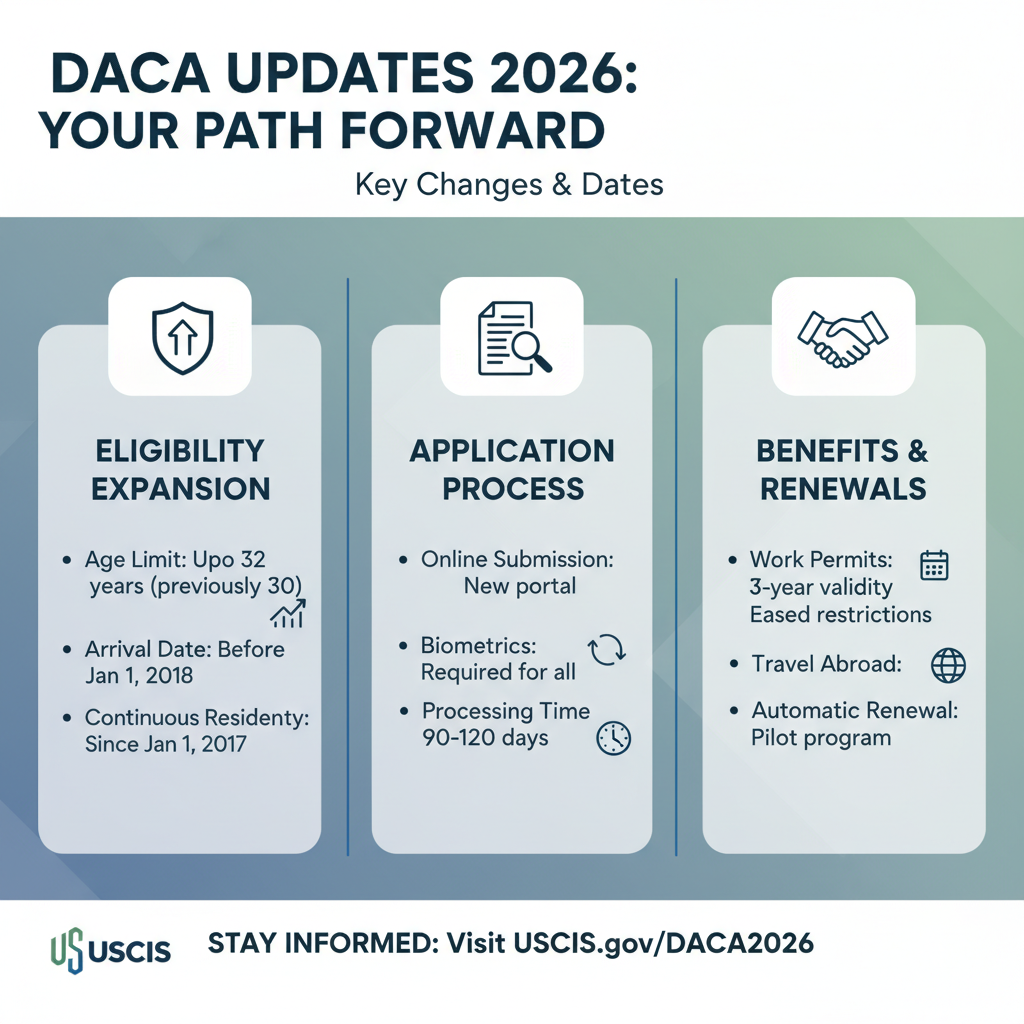
The recent news circulating about DACA, often sourced from official channels like USCIS, serves as a crucial reminder of the program's ongoing status and the importance of timely action for eligible recipients. For individuals and families in Orlando, Tampa, Miami, and throughout Florida, these updates are not abstract legal concepts; they directly impact lives, livelihoods, and futures.
Why this news is showing up now
The DACA program has been subject to continuous legal and political challenges since its inception in 2012. As of March 16, 2026, the program continues to operate under the shadow of ongoing litigation. Federal court orders have significantly impacted DACA, most notably by halting the acceptance of new, initial DACA applications. This means that, for the foreseeable future, only individuals who have previously been granted DACA are eligible to apply for renewal. The news often reflects:
- Ongoing Legal Battles: Courts, particularly in the Fifth Circuit, continue to hear arguments and issue rulings that challenge the legality of the DACA program itself. These legal proceedings create a constant state of flux, and any significant court decision generates widespread news.
- Administrative Actions: USCIS regularly issues guidance, policy updates, or reminders regarding DACA, especially concerning the renewal process. These updates are vital for ensuring current recipients understand their obligations and opportunities.
- Advocacy Efforts: Immigration advocates, non-profit organizations, and political leaders frequently highlight DACA's importance and push for legislative solutions, keeping the program in the public discourse.
- Renewal Deadlines: As DACA grants are for two years, there is a continuous cycle of renewals. USCIS often issues reminders about the importance of applying early to avoid a lapse in status.
Each of these factors contributes to the recurring nature of DACA-related news, underscoring its precarious yet persistent existence.
How it can affect Florida residents
For the approximately 27,000 DACA recipients residing in Florida, these updates carry significant weight. Central Florida, including Orlando and surrounding areas like Kissimmee and Sanford, is home to a substantial number of DACA beneficiaries. The implications include:
- Employment Stability: DACA provides an Employment Authorization Document (EAD), allowing recipients to work legally. A lapse in DACA status due to delayed renewal can lead to job loss, financial hardship, and instability for families. For businesses in Orlando and across the I-4 corridor, employing DACA recipients contributes significantly to the local economy.
- Driving Privileges: In Florida, DACA recipients are eligible for a driver's license, which is crucial for daily life, commuting to work, and accessing essential services. Maintaining DACA status is key to retaining this privilege.
- Educational Opportunities: While federal financial aid remains limited, DACA recipients in Florida may qualify for in-state tuition at public colleges and universities under certain circumstances, making higher education more accessible. Renewing DACA ensures continued eligibility for these state-level benefits.
- Uncertainty and Stress: The continuous legal challenges create immense stress and uncertainty for DACA recipients and their families. Knowing the latest updates and having a clear path for renewal helps alleviate some of this burden.
- Access to Legal Aid: Given the complexities, Florida residents, particularly those in Orange County and neighboring areas, need access to accurate legal advice. Firms like Imigrar serve as a vital resource to navigate these federal and state-level considerations.
Understanding the current state of DACA and the renewal process is paramount for maintaining the stability and future prospects of these individuals and their families in Florida.
What DACA Is (and Why It Matters)
Deferred Action for Childhood Arrivals (DACA) is an administrative program established in 2012 that provides certain eligible undocumented immigrants who came to the United States as children with protection from deportation and a renewable work permit. It is a discretionary program, meaning it is granted on a case-by-case basis by the Department of Homeland Security (DHS) and can be revoked. Crucially, DACA is not a pathway to U.S. citizenship or lawful permanent residency (a green card).
A plain-English definition
Imagine DACA as a temporary legal pause button for deportation. If you arrived in the U.S. as a child, meet specific educational and residency criteria, and have no serious criminal record, the government agrees not to pursue your deportation for a period of two years. During this time, you also get a work permit, allowing you to legally find a job and contribute to the economy. After two years, you must apply to renew this "deferred action" and work permit to continue receiving these protections.
The program was created to allow young people, often referred to as "Dreamers," who grew up in the U.S. and consider it their home, to live and work without constant fear of deportation, allowing them to pursue education and careers. It acknowledges that these individuals were brought to the U.S. through no fault of their own and have deep ties to American society.
Key terms you need to know
- Deferred Action: This is the core benefit of DACA. It means that USCIS agrees to defer, or postpone, any deportation action against you for a specific period (currently two years). It does not grant legal status but is a form of prosecutorial discretion.
- DACA Recipient: An individual who has been granted Deferred Action for Childhood Arrivals.
- Dreamers: A term often used to refer to young undocumented immigrants who were brought to the U.S. as children. While DACA specifically refers to the administrative program, "Dreamers" broadly encompasses those who would benefit from the DREAM Act (a proposed legislative solution).
- Employment Authorization Document (EAD): Also known as a work permit, this card (Form I-766) allows DACA recipients to legally work in the United States. It is granted for the same two-year period as the DACA deferral.
- Initial Application: The first time an individual applies for DACA. As of March 16, 2026, USCIS is generally not accepting or processing initial DACA applications due to federal court orders.
- Renewal Application: An application filed by an individual who has previously been granted DACA to extend their deferred action and work authorization for another two years. This is the primary focus for current DACA recipients.
- Advance Parole: A document (Form I-131) that allows certain non-citizens to travel outside the U.S. and return lawfully. DACA recipients can apply for advance parole under specific circumstances (humanitarian, educational, or employment purposes), though eligibility and approval are discretionary and subject to strict criteria.
- USCIS: U.S. Citizenship and Immigration Services, the agency responsible for processing DACA applications.
- DHS: Department of Homeland Security, the parent agency of USCIS.
Understanding these terms is crucial for navigating the DACA program and any related updates. For most DACA recipients today, the focus is entirely on understanding and completing the renewal process correctly and on time.
Concerned about your DACA status? Our Orlando immigration team is here to help. Call +1 786-791-3106 for a free consultation. We serve clients nationwide. Se Habla Español.
Current Immigration Law: The Foundation for DACA
As of March 16, 2026, DACA continues to exist as a discretionary program, but its legal footing remains contested. The primary legal framework for DACA stems from administrative policy, rather than an act of Congress. It relies on the concept of "prosecutorial discretion," allowing the executive branch to prioritize certain enforcement actions over others.
The current state of DACA is heavily influenced by a July 2021 ruling by a federal judge in the Southern District of Texas, which found the program unlawful. This ruling was affirmed by the Fifth Circuit Court of Appeals in October 2022, and subsequently sent back to the lower court for further review of the revised DACA rule implemented by the Biden administration in August 2022. While these legal challenges proceed, the court orders generally allow USCIS to continue accepting and processing DACA renewal applications and accompanying Form I-765 applications for employment authorization. However, USCIS is prohibited from granting initial DACA requests.
This means that for the vast majority of individuals, DACA is currently a program solely for those seeking to extend their existing deferred action and work authorization.
Federal requirements for DACA renewal
To be eligible for DACA renewal, you must meet the following criteria, based on the original 2012 DACA guidelines and subsequent administrative instructions:
- You must have previously been granted DACA.
- You must not have departed the United States on or after August 15, 2012, without first obtaining advance parole.
- You must have continuously resided in the United States since the date you submitted your most recent DACA request that was approved.
- You must not have been convicted of a felony, a significant misdemeanor, or three or more other misdemeanors, and not otherwise pose a threat to national security or public safety.
Important: USCIS reviews each renewal application on a case-by-case basis. Even if you met the criteria previously, a change in your criminal record or travel history could affect your renewal eligibility.
The core forms for DACA renewal are:
- Form I-821D, Consideration of Deferred Action for Childhood Arrivals
- Form I-765, Application for Employment Authorization
- Form I-765WS, Worksheet for Form I-765
You can find these forms and detailed instructions on the USCIS Forms page. Always download the latest versions directly from the official USCIS official website to ensure you are using the correct edition.
Florida-specific considerations
While DACA is a federal program, its impact and certain benefits are realized at the state level. For DACA recipients in Florida:
- Driver's Licenses: The Florida Department of Highway Safety and Motor Vehicles (FLHSMV) issues driver's licenses to DACA recipients whose Employment Authorization Documents (EADs) are valid for at least 30 days. Maintaining your DACA and EAD validity is critical for keeping your driving privileges in Florida.
- In-State Tuition: Under Florida Statute § 1009.26(12)(a), certain undocumented students, including DACA recipients, who attend a Florida high school for three consecutive years immediately before graduation, apply to a Florida college or university within 24 months of graduation, and provide an affidavit stating they will apply for permanent residency when eligible, may be eligible for in-state tuition. This is a significant benefit for Dreamers in Florida seeking higher education.
- Professional Licenses: Eligibility for professional licenses (e.g., nursing, teaching) varies by profession and state regulations. DACA status, along with other qualifications, can be a factor.
- Community Resources: Local organizations and legal aid groups in Orlando, Miami, and other major Florida cities often provide support and resources specifically for DACA recipients, including assistance with renewals and referrals for other services.
It's important to remember that state laws and policies can change, so always verify the most current information, especially regarding benefits tied to DACA status. The Orlando USCIS Field Office, located at 5449 Forbes Pl, Orlando, FL 32812, serves as a point of contact for some immigration matters, though DACA applications are primarily filed by mail to a designated USCIS Lockbox.
How to Renew Your DACA: A Complete Step-by-Step Guide
The DACA renewal process, while seemingly straightforward, requires meticulous attention to detail and strict adherence to deadlines. A single error or missed document can lead to delays or even denial. Here's a comprehensive guide to help you through it.
1) Determine Your Eligibility and When to Apply
Before anything else, confirm you meet all the federal eligibility criteria for renewal (as outlined above). The most crucial aspect of renewal is timing. USCIS recommends filing your DACA renewal application 120 to 150 days (approximately 4 to 5 months) before the expiration date on your current Form I-766 (EAD card). This window accounts for typical processing times and helps prevent a lapse in your work authorization.
- If you apply too early (more than 150 days out): USCIS may reject your application.
- If you apply too late (less than 120 days out): You risk having your DACA and EAD expire before your renewal is processed, potentially leading to job loss and a period without protection from deportation.
- If your DACA has already expired: You can still file for renewal, but you will have a gap in your deferred action and employment authorization. If your DACA expired more than a year ago, or if you had DACA terminated at any point, it's highly advisable to consult an attorney, as your case might be treated differently, possibly requiring additional explanation or documentation.
Reminder: Keep track of your expiration date diligently. Mark it on your calendar and set reminders!
2) Gather Required Documents
Even for renewals, it's critical to have all necessary supporting documents ready. While USCIS generally relies on your previous application information, they may request updated evidence. For most renewals, you will need:
- Copies of your previous DACA approval notices (Form I-797C).
- Copies of all previous Employment Authorization Documents (EAD cards, Form I-766).
- Copies of all passports and travel documents.
- Proof of continuous residence since your last DACA approval: This can include utility bills, pay stubs, bank statements, school records, medical records, or leases showing your address. While not always strictly required for renewals if there are no changes, it's good practice to have this ready, especially if you've moved.
- Proof of any new criminal history: If you've been arrested or convicted of any crime since your last DACA approval, you must include certified court dispositions and arrest records. Failure to disclose this information can lead to denial and severe immigration consequences.
- Two identical passport-style photos: These must be taken within 30 days of filing your application. Write your full name and Alien Registration Number (A-Number) lightly on the back of each photo with a pencil.
Warning: Never send original documents unless specifically requested by USCIS. Always send high-quality photocopies.
3) Complete the Forms Accurately
You will need to complete the following forms:
- Form I-821D, Consideration of Deferred Action for Childhood Arrivals: Fill out every section completely and accurately. Pay close attention to questions about your travel history and criminal record. If you need more space, attach a separate sheet, indicating the question number it refers to.
- Form I-765, Application for Employment Authorization: For DACA renewals, you will typically indicate eligibility category (c)(33). Ensure your name, address, and A-Number match your previous applications.
- Form I-765WS, Worksheet for Form I-765: This worksheet requires you to explain your financial need for an Employment Authorization Document. While DACA itself doesn't have a financial need requirement, the EAD does. Provide a brief explanation of why you need to work.
Important: Use black ink only. Type your answers or print clearly. If a question does not apply to you, write "N/A" (not applicable) or "None." Do not leave any blank spaces unless the instructions explicitly say to. Sign and date all forms in the correct places. An unsigned form will be rejected.
4) Prepare Your Application Packet
Organize your application packet in the following order (recommended by USCIS):
- Payment (check or money order)
- Form I-821D
- Form I-765
- Form I-765WS
- Passport-style photos (place in a small envelope securely stapled to Form I-765, do not directly staple photos)
- Copies of supporting documents (previous approval notices, EADs, proof of continuous residence, criminal records if applicable)
Recommendation: Create a cover letter listing all the contents of your application packet. Make a complete copy of the entire application packet for your records before mailing it. This is a critical step for your own peace of mind and in case USCIS requests additional information or you need to re-file.
5) Pay the Fees
As of March 16, 2026, the total filing fee for DACA renewal is $495. This includes:
- $85 for the biometrics services fee (for fingerprinting).
- $410 for the Form I-765 (Employment Authorization Document) application fee.
Note: There is no separate filing fee for Form I-821D. Fee waivers are extremely rare for DACA renewals and are generally not available. The fee must be paid by money order, personal check, cashier’s check, or credit card using Form G-1450, Authorization for Credit Card Transactions. Make checks payable to "U.S. Department of Homeland Security." Do not use abbreviations.
Warning: Ensure your payment is correct. Incorrect payments are a common reason for application rejection.
6) Submit Your Application
Mail your complete DACA renewal application packet to the USCIS Lockbox facility designated for DACA applications. The correct mailing address depends on the state you reside in and the delivery method (U.S. Postal Service or express mail/courier). You can find the most current mailing addresses on the USCIS Form I-821D page under "Where to File."
For Florida residents, as of this date, DACA renewals are typically sent to a specific Chicago Lockbox address. Always verify the address on the USCIS website just before mailing to ensure it hasn't changed. Use a mailing service that provides tracking, such as USPS Certified Mail with a return receipt, FedEx, or UPS, so you have proof of delivery.
7) What Happens After Submission
After USCIS receives your application:
- Receipt Notice: You will receive a Form I-797C, Notice of Action, confirming receipt of your application. This notice will include a receipt number, which you can use to track your case status online at USCIS Case Status Online.
- Biometrics Appointment: USCIS will send you an appointment notice (Form I-797C) to attend a biometrics (fingerprinting) appointment at an Application Support Center (ASC). For Central Florida residents, this might be at the Orlando ASC. It is mandatory to attend this appointment.
- Potential Request for Evidence (RFE): USCIS may send you an RFE if they need additional information or documents. Respond promptly and thoroughly to avoid delays or denial.
- Decision: If your renewal is approved, you will receive an approval notice for Form I-821D and your new Employment Authorization Document (EAD), Form I-766, in the mail.
You can check estimated processing times for DACA renewals on the USCIS Processing Times page. Select "Form I-821D" and your service center to get an idea of current wait times.
Navigating DACA renewal can be complex. Let Imigrar simplify it for you. Schedule your free consultation by calling +1 786-791-3106 or contact us online. We're here to help keep your family together. Se Habla Español.
Practical Steps You Can Take Today
Being proactive is the best strategy for DACA renewal. Here are immediate steps you can take:
Actionable Checklist
- Check Your EAD Expiration Date: Locate your Form I-766 (EAD card) and note the expiration date. Calculate your 120-150 day renewal window.
- Organize Your Documents: Start gathering copies of all past DACA approval notices, EAD cards, and any documents proving continuous residence since your last approval.
- Review Your Criminal History: Honestly assess if you have had any arrests or convictions since your last DACA application. If so, immediately obtain certified court dispositions and arrest records.
- Update Your Address with USCIS: If you have moved, file Form AR-11, Alien's Change of Address Card, online or by mail within 10 days of moving. This ensures you receive all USCIS correspondence.
- Save for Fees: Begin saving the $495 filing fee. This amount is non-negotiable and must be paid at the time of submission.
- Consult an Immigration Attorney: Especially if you have any changes in your life (e.g., arrests, extensive travel, marriage), or if your DACA expired more than a year ago, seek legal advice from a qualified immigration lawyer.
Document Preparation Guidance
- Keep Everything Organized: Use a folder or binder specifically for your DACA documents. Label sections clearly.
- Create a Master Checklist: Make your own checklist of all required forms and supporting documents to ensure nothing is missed.
- Photocopy All Originals: Before sending anything to USCIS, make a complete copy of your entire application packet for your personal records.
- Secure Passport Photos: Get new passport-style photos taken professionally. Write your A-Number and full name on the back in pencil.
- Proofread Meticulously: Have someone else review your forms for any errors, typos, or blank spaces.
Timeline Expectations
While USCIS processing times vary, here’s a general timeline to expect:
- Application Submission: Aim for 120-150 days before your EAD expires.
- Receipt Notice: Within 2-4 weeks after USCIS receives your application.
- Biometrics Appointment Notice: Within 3-8 weeks after filing. The appointment itself is usually 2-4 weeks after the notice.
- Decision/EAD Card: Typically within 3-7 months from the filing date. Some cases may be faster, others slower.
- Potential for Delay: Be prepared for potential delays, especially if USCIS issues a Request for Evidence (RFE). Responding promptly is key.
Important: You cannot work legally if your EAD expires, even if your renewal application is pending. Applying within the recommended window helps mitigate this risk. If you are in Orlando or Central Florida and your EAD is nearing expiration, speak to an attorney immediately.

How Imigrar Helps Immigrants in Orlando and Beyond
At Imigrar, we understand that the DACA program's uncertain future, coupled with the complexities of the renewal process, can be overwhelming. Our firm is dedicated to providing compassionate, expert legal guidance to DACA recipients in Orlando, throughout Florida, and nationwide.
Our experience and expertise
Our team of experienced immigration attorneys has a deep understanding of DACA policies, the ongoing legal challenges, and the meticulous requirements for successful renewals. We pride ourselves on:
- Up-to-Date Knowledge: We continuously monitor the evolving legal landscape surrounding DACA, including court decisions and USCIS policy changes, to ensure our advice is always current and accurate.
- Personalized Guidance: We treat each case with the individual attention it deserves. We review your specific circumstances, address any potential issues (like criminal history or travel), and help you prepare a strong, complete application.
- Meticulous Preparation: We assist with gathering all necessary documents, accurately completing Form I-821D, Form


