


As an immigrant or a family member of one, staying informed about the ever-evolving landscape of U.S. immigration law is crucial. At Imigrar, we understand the anxiety and uncertainty that changes to programs like Deferred Action for Childhood Arrivals (DACA) can bring. Our mission is to "Keep Families Together" by providing clear, accurate, and actionable legal guidance.
Today, we're addressing the latest DACA program updates and renewal information, a topic that continues to generate significant discussion and concern across the nation, including right here in Orlando and throughout Florida.
The reporting that sparked this guide
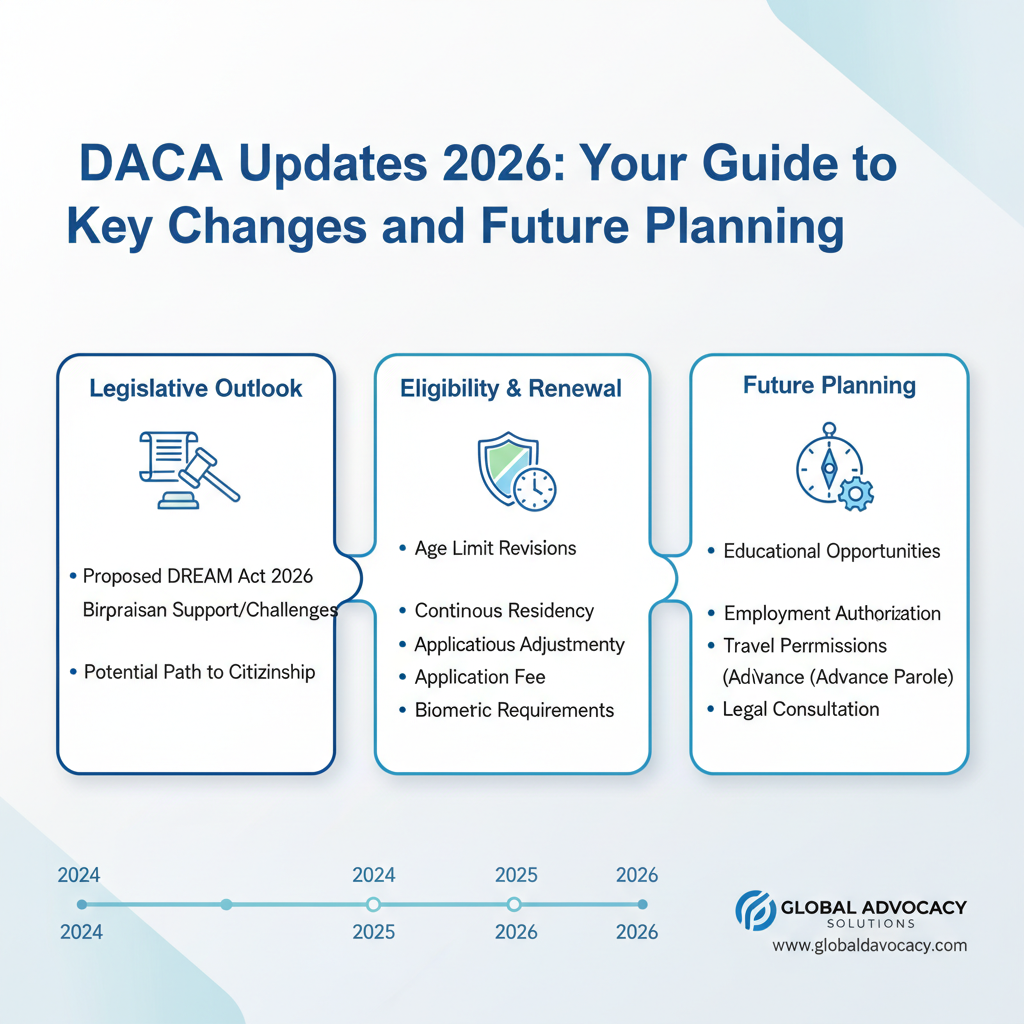
The ongoing legal challenges and administrative policy updates regarding DACA frequently appear in national news, impacting the lives of hundreds of thousands of individuals. Our comprehensive guide is informed by the latest information concerning the program's status and renewal process, drawing from official government sources and legal analyses.
DACA Program Updates and Renewal Information (USCIS)
What This News Means for Immigrants in Orlando and Across Florida
The DACA program, first established in 2012, has provided a lifeline for hundreds of thousands of young people who were brought to the U.S. as children. For these individuals, DACA offers temporary protection from deportation and the ability to work legally in the United States. However, its future has been fraught with legal battles and policy shifts, making every update critically important.
Why this news is showing up now
The DACA program has been under intense scrutiny and legal challenge for several years. As of May 2026, the program continues to operate under a federal court order that prohibits U.S. Citizenship and Immigration Services (USCIS) from approving new DACA applications. However, USCIS is still accepting and processing DACA renewal requests from individuals who previously held DACA status. This dichotomy creates a complex situation where existing DACA recipients must be vigilant about their renewal process, while those who were never granted DACA remain in limbo.
The "news" often revolves around court hearings, potential legislative actions (or lack thereof), and administrative guidance issued by USCIS. These developments fuel discussions about the program's long-term viability and the need for a more permanent legislative solution for Dreamers. The constant back-and-forth in the courts means that DACA's status is never truly settled, requiring ongoing attention from legal experts and affected individuals alike.
How it can affect Florida residents
Florida is home to a significant population of DACA recipients, often referred to as Dreamers, many of whom reside in Central Florida, including Orlando and the surrounding areas like Orange County, Kissimmee, and along the I-4 corridor. For these individuals, DACA is not just a policy; it's the foundation of their lives, allowing them to pursue education, build careers, and contribute to our communities.
For Florida residents, the ongoing DACA updates mean:
- Uncertainty and Stress: The precarious nature of DACA creates immense stress for recipients and their families, impacting their long-term planning for education, careers, and family life.
- Critical Importance of Timely Renewals: With new applications largely on hold, maintaining current DACA status through timely renewals is paramount to retaining work authorization and protection from deportation. Any lapse can have severe consequences.
- Local Economic Impact: DACA recipients contribute significantly to Florida's economy through their work, taxes, and entrepreneurship. Disruptions to their status can have ripple effects across various industries.
- Access to Services: While DACA provides work authorization and a driver's license in Florida, it does not provide a path to permanent residency or citizenship. Furthermore, DACA recipients in Florida generally do not qualify for in-state tuition at public universities, which is a key distinction compared to some other states.
Staying informed and proactive is the best defense against the program's volatility. Imigrar is dedicated to helping our Florida community navigate these challenges, ensuring that every DACA recipient understands their rights and responsibilities.
Need Help? Our Orlando immigration team is ready to assist. Call +1 786-791-3106 for a free consultation, or message us online. Se Habla Español.
What DACA Is (and Why It Matters)
Deferred Action for Childhood Arrivals (DACA) is an exercise of prosecutorial discretion that allows certain undocumented immigrants who were brought to the United States as children to receive a renewable two-year period of deferred action from deportation and eligibility for a work permit (Employment Authorization Document, or EAD).
A plain-English definition
Imagine DACA as a temporary protective shield. It doesn't grant you a green card or citizenship, but it tells the government, "For now, we won't try to deport you, and you can legally work here." This shield lasts for two years and can be renewed. It's specifically for young people who came to the U.S. as children, grew up here, and meet certain educational and conduct requirements. It allows them to come out of the shadows, pursue higher education, build careers, and contribute openly to the country they consider home.
Key terms you need to know
- Deferred Action: This is the core of DACA. It means the government agrees to postpone any deportation proceedings against you for a specific period. It is not a legal immigration status, but rather a temporary exercise of prosecutorial discretion.
- DACA Recipient / DACAmented: An individual who has been granted deferred action under the DACA program.
- Employment Authorization Document (EAD): Often referred to as a "work permit," this card (Form I-766) proves you are authorized to work legally in the U.S. It is typically valid for two years, matching your deferred action period.
- USCIS (U.S. Citizenship and Immigration Services): The government agency responsible for processing DACA applications and renewals, among other immigration benefits. You'll interact primarily with USCIS.
- ICE (U.S. Immigration and Customs Enforcement): The agency responsible for enforcing immigration laws, including deportations. DACA provides protection from enforcement actions by ICE.
- Advance Parole: A document (Form I-512L) that allows certain non-citizens, including DACA recipients, to travel outside the U.S. and lawfully return. Important: USCIS has generally stopped approving advance parole for DACA recipients, except in very limited, urgent humanitarian circumstances. Travel without advance parole can lead to DACA termination and inability to re-enter.
- Dreamer: A term often used to describe young undocumented immigrants who were brought to the U.S. as children, regardless of whether they have DACA.
Current Immigration Law: The Foundation
DACA itself is not a law passed by Congress, but rather an administrative policy implemented by the Department of Homeland Security (DHS) in 2012. It falls under the executive branch's authority to exercise prosecutorial discretion in immigration enforcement. This is why it has been so vulnerable to legal challenges and changes in presidential administrations.
The legal battles surrounding DACA primarily focus on whether DHS had the authority to implement the program without congressional approval and whether the process followed the Administrative Procedure Act (APA). While specific statutes like 8 U.S.C. § 1101 define immigration terms, DACA's existence relies on the interpretation of executive power and agency rulemaking, rather than a specific law establishing it.
As of May 15, 2026, the situation remains consistent with prior court rulings: USCIS is prohibited from granting initial DACA requests. However, individuals who were previously granted DACA are eligible to apply for renewal of their DACA and their employment authorization. This means the program is in a partial state of operation.
Federal requirements for DACA Renewal
To be eligible to renew your DACA, you must meet several federal requirements. These generally mirror the initial eligibility criteria, with an emphasis on continuous compliance:
- You must have received DACA previously.
- You must have not departed the United States without advance parole since August 15, 2012.
- You must have continuously resided in the United States since you submitted your most recent DACA request that was approved.
- You must not have been convicted of a felony, a significant misdemeanor, or three or more other misdemeanors, and not otherwise pose a threat to national security or public safety.
- You must currently be in the United States to apply for renewal.
Reminder: USCIS conducts a thorough background check for all DACA renewals. Any criminal history, no matter how minor it seems, should be discussed with an experienced immigration attorney before filing.
The primary USCIS forms for DACA renewal are: Form I-821D (Consideration of Deferred Action for Childhood Arrivals), Form I-765 (Application for Employment Authorization), and Form I-765WS (Worksheet for Form I-765). You can find these and other official forms on the USCIS Forms page.
Florida-specific considerations
While DACA is a federal program, its impact can vary at the state level. For Florida residents:
- Driver's Licenses: DACA recipients in Florida are eligible to obtain a Florida driver's license upon presenting their EAD and other required identification documents. This is a significant practical benefit for daily life, work, and transportation across Orlando and the wider state.
- In-State Tuition: Unfortunately, unlike some other states, Florida currently does not grant in-state tuition benefits to DACA recipients. This means DACAmented students attending Florida's public colleges and universities typically pay out-of-state tuition rates, which can be a substantial financial burden. This issue remains a major advocacy point for many immigrant rights organizations in the state.
- Access to Professional Licenses: Depending on the profession, DACA recipients may face limitations in obtaining certain professional licenses in Florida. It's crucial to research specific occupational licensing requirements.
- Local Community Support: Orlando and Central Florida have various non-profit organizations and community groups dedicated to supporting Dreamers, offering resources, and advocating for more inclusive policies at the state level.
Understanding these state-specific nuances is vital for DACA recipients living in Florida. For the most up-to-date information, always refer to the USCIS official website and consult with a qualified immigration attorney.
How to Renew Your DACA: A Complete Step-by-Step Guide
Renewing your DACA is a critical process that requires meticulous attention to detail and timely action. A lapse in your DACA status can lead to loss of employment authorization and potential exposure to deportation. Follow this step-by-step guide carefully.
1) Understand Your Renewal Timeline and Eligibility
When to Apply: USCIS recommends filing your DACA renewal application 120 to 150 days before your current DACA and EAD expire. Filing too early (more than 150 days) might result in rejection, and filing too late risks a gap in your work authorization and protection. Mark your calendar with your expiration date and count back!
Eligibility Check: Reconfirm you meet the renewal criteria:
- You were previously granted DACA.
- You have not left the U.S. without advance parole since August 15, 2012.
- You have continuously resided in the U.S. since your last DACA approval.
- You have not committed a felony, a significant misdemeanor, or three or more other misdemeanors, and do not pose a threat to national security or public safety.
2) Gather All Required Documents
Even for a renewal, it's essential to have your documentation in order. While you might not need to resubmit everything from your initial application, you should be prepared to provide updated information and proof of continuous residence and good moral character.
Required Documents (for renewal):
- Copies of your previous DACA approval notices (Form I-797).
- Copy of your current Employment Authorization Document (EAD) (front and back).
- Copies of any previous EADs issued under DACA.
- Copies of all passports, travel documents, and Form I-94 (Arrival/Departure Record) if you have them.
- Proof of continuous residence in the U.S. since your most recent DACA approval. This can include:
- School transcripts or diplomas
- Employment records (pay stubs, W-2s)
- Bank statements
- Medical records
- Lease agreements or utility bills
- Tax returns (Form 1040)
- Affidavits from individuals who can attest to your presence.
- Two passport-style photos (taken within 30 days of filing).
- Any documents related to criminal arrests or convictions, even if charges were dropped or expunged. (Important: Always disclose these and seek legal advice).
Tip: Keep a well-organized folder with all your immigration documents. This will save you time and stress during renewal.
3) Complete the Necessary USCIS Forms Accurately
You will need to submit three forms for a DACA renewal:
- Form I-821D, Consideration of Deferred Action for Childhood Arrivals: Fill this out completely and accurately. Pay close attention to questions asking about your criminal history and continuous residence.
- Form I-765, Application for Employment Authorization: For DACA renewals, under "Reason for Applying," you should select "Renewal of my permission to work." For question 27, enter (c)(33) as your eligibility category.
- Form I-765WS, Worksheet for Form I-765: This worksheet helps you calculate your total income and expenses, ensuring you meet the economic necessity requirement for the employment authorization.
Warning: Answer every question truthfully and completely. If a question does not apply, write "N/A" (Not Applicable). Do not leave blanks. Inconsistencies or omissions can lead to delays or denial. If you need more space, attach a separate sheet, clearly indicating the form and question number.
4) Prepare the Filing Fees
The current filing fee for a DACA renewal is $495. This fee covers the Form I-765 ($410) and the biometrics services fee ($85). There is no separate fee for Form I-821D.
Payment Options:
- Money Order or Cashier's Check: Made payable to "U.S. Department of Homeland Security." Do not abbreviate.
- Personal Check: Ensure funds are available.
- Credit Card: You can use Form G-1450, Authorization for Credit Card Transactions.
Important: Fees are subject to change, so always check the USCIS Filing Fees page for the most current information. Fee waivers for DACA renewals are rarely granted, but if you believe you qualify, consult with an attorney.
5) Assemble and Mail Your Application Package
Once all forms are completed, signed, and all supporting documents are gathered, assemble your package in the correct order. USCIS provides specific guidelines for assembly. Generally, the order is:
- Payment (check or Form G-1450 on top).
- Form I-821D
- Form I-765
- Form I-765WS
- Supporting documents (copies, not originals, unless specifically requested).
- Two passport-style photos in a small envelope, taped to the top left corner of Form I-821D or Form I-765.
Mailing Address: Send your application to the appropriate USCIS Lockbox Facility based on your state of residence. For Florida residents, you will typically mail to the USCIS Chicago Lockbox. Always double-check the "Where to File" section on the USCIS Form I-821D page, as addresses can change.
Recommendation: Send your application via certified mail with a return receipt requested. This provides proof of mailing and delivery.
6) Attend Your Biometrics Appointment
After USCIS receives your application, they will send you a receipt notice (Form I-797C) and, typically within a few weeks, a biometrics appointment notice (Form I-797C). This notice will specify the date, time, and location of your appointment at an Application Support Center (ASC).
- What to Bring: Your appointment notice, a valid photo ID (like your current EAD or driver's license).
- What Happens: At the ASC, your fingerprints, photograph, and signature will be collected. This data is used for background checks.
For Central Florida residents, your biometrics appointment will likely be at the Orlando USCIS Field Office or another nearby ASC. It is crucial to attend this appointment. Failure to do so without rescheduling can lead to your application being denied.
7) Monitor Your Case and Await a Decision
After your biometrics appointment, the waiting period begins. You can track the status of your case online using the receipt number provided on your Form I-797C at the USCIS Case Status Online tool. You can also check USCIS Processing Times for an estimate, though these are just estimates and can vary.
What to Expect:
- Request for Evidence (RFE): USCIS may send an RFE if they need additional information or documents. Respond promptly and thoroughly.
- Approval: If approved, you will receive an approval notice (Form I-797) and your new EAD card by mail.
- Denial: If denied, USCIS will send a denial notice explaining the reasons. It's crucial to consult an attorney immediately to understand your options, which may include filing a motion to reopen or reconsider.
Important: Do not travel outside the U.S. while your DACA renewal is pending unless you have an approved advance parole document (which is highly unlikely for DACA recipients given current policy). Traveling without it will likely result in your DACA being terminated and you being unable to return to the U.S.
Worried about your DACA renewal? Imigrar's experienced attorneys in Orlando can guide you through every step, ensuring accuracy and timeliness. Call +1 786-791-3106 for a free consultation. Se Habla Español.
Practical Steps You Can Take Today
Being proactive is the best way to manage your DACA status. Here’s a checklist of practical steps you can take starting today:
Actionable Checklist (5+ items)
- Check Your Expiration Date: Locate your current EAD and DACA approval notice. Note the expiration date and calculate your 120-150 day renewal window. Set multiple reminders.
- Organize Your Documents: Create a dedicated folder (physical and/or digital) for all your immigration documents. Ensure copies of previous DACA applications, EADs, approval notices, and proof of continuous residence are readily accessible.
- Review Your Personal History: Reflect on any changes in your life since your last DACA approval, especially any interactions with law enforcement, even minor ones. Gather all related documentation.
- Save for Fees: The $495 filing fee is a significant expense. Start saving well in advance to avoid last-minute financial stress.
- Update Your Address with USCIS: If you've moved, file Form AR-11, Alien's Change of Address Card, online or by mail within 10 days of moving. This ensures you receive all official notices.
- Consult with an Attorney: Even if your case seems straightforward, a free consultation with an immigration attorney can provide peace of mind and catch potential issues before they become problems. This is especially important if you have any criminal history, travel history, or gaps in residence.
Document preparation guidance
When preparing documents, remember these key principles:
- Copies, Not Originals: Unless USCIS specifically requests original documents, always submit clear, legible copies. Keep your originals safe.
- Organize and Label: Use tabs, dividers, or sticky notes to clearly label sections of your application (e.g., "Form I-821D," "Form I-765," "Proof of Residence").
- Translate Foreign Documents: Any document in a foreign language must be accompanied by a full English translation certified by a competent translator. The translator must sign a statement affirming their competence and the accuracy of the translation.
- Submit All Pages: Even if a form page is blank, submit it with the rest of the form.
Timeline expectations
While processing times can vary, here’s a general timeline for DACA renewals:
- 120-150 days before expiration: File your DACA renewal application.
- Within 2-4 weeks after filing: Receive a receipt notice (Form I-797C) from USCIS.
- Within 4-8 weeks after filing: Receive your biometrics appointment notice.
- Within 2-4 weeks after biometrics: Attend your biometrics appointment at an ASC.
- Within 3-5 months after biometrics: Receive a decision on your application.
Reminder: These are estimates. Always check the USCIS Processing Times for the most current averages, but be prepared for potential variations.
How Imigrar Helps Immigrants in Orlando
At Imigrar, we understand the profound impact that DACA has on the lives of individuals and families in Orlando and across Florida. Our firm is founded on the principle of "Keep Families Together," and we apply this philosophy to every case we handle, especially those as critical as DACA renewals.
Our experience and expertise
Our team of dedicated immigration attorneys has extensive experience navigating the complexities of DACA and other immigration processes. We stay abreast of the latest legal developments, court rulings, and USCIS policy changes to provide the most accurate and up-to-date advice. We have successfully assisted numerous DACA recipients in Orlando and beyond with their renewal applications, ensuring they maintain their protection and work authorization.
We know that each DACA case is unique, and we take the time to understand your specific circumstances, addressing any potential challenges, such as criminal history or travel issues, with sensitivity and strategic legal planning. From preparing meticulous documentation to responding to RFEs, we are with you every step of the way.
Free consultation offer
The uncertainty surrounding DACA can be overwhelming. That's why Imigrar offers a free consultation to help you understand your options and the DACA renewal process. During this consultation, we will:
- Review your current DACA status and expiration date.
- Discuss your eligibility for renewal.
- Address any specific concerns or questions you may have.
- Outline the steps involved in filing your renewal application.
- Explain how our firm can assist you.
Don't face this process alone. Our compassionate and knowledgeable team is here to provide the support and legal expertise you need.
Se Habla Español. We are proud to serve our diverse community in both English and Spanish, ensuring that language is never a barrier to receiving expert legal assistance.

Frequently Asked Questions
Q: Am I eligible to apply for DACA for the first time?
A: As of May 15, 2026, USCIS is not accepting initial DACA applications due to federal court orders. Only individuals who were previously granted DACA are eligible to apply for renewal. If you have never had DACA, you cannot apply at this time. It is crucial to monitor legal developments closely, but for now, the focus is on renewals.
Q: How does DACA impact my long-term immigration status or path to a green card?
A: DACA itself does not provide a direct pathway to a green card or U.S.


