


The landscape of immigration law is constantly evolving, and for Deferred Action for Childhood Arrivals (DACA) recipients, staying informed is not just important—it's critical for maintaining status and planning for the future. As an immigration law firm dedicated to keeping families together, Imigrar understands the anxiety and uncertainty that DACA recipients and their families in Orlando, Central Florida, and across the nation face. This comprehensive guide aims to provide clarity on the latest DACA program updates and offer a detailed, step-by-step approach to the renewal process, ensuring you have the knowledge and tools to navigate these complex requirements successfully.
The reporting that sparked this guide
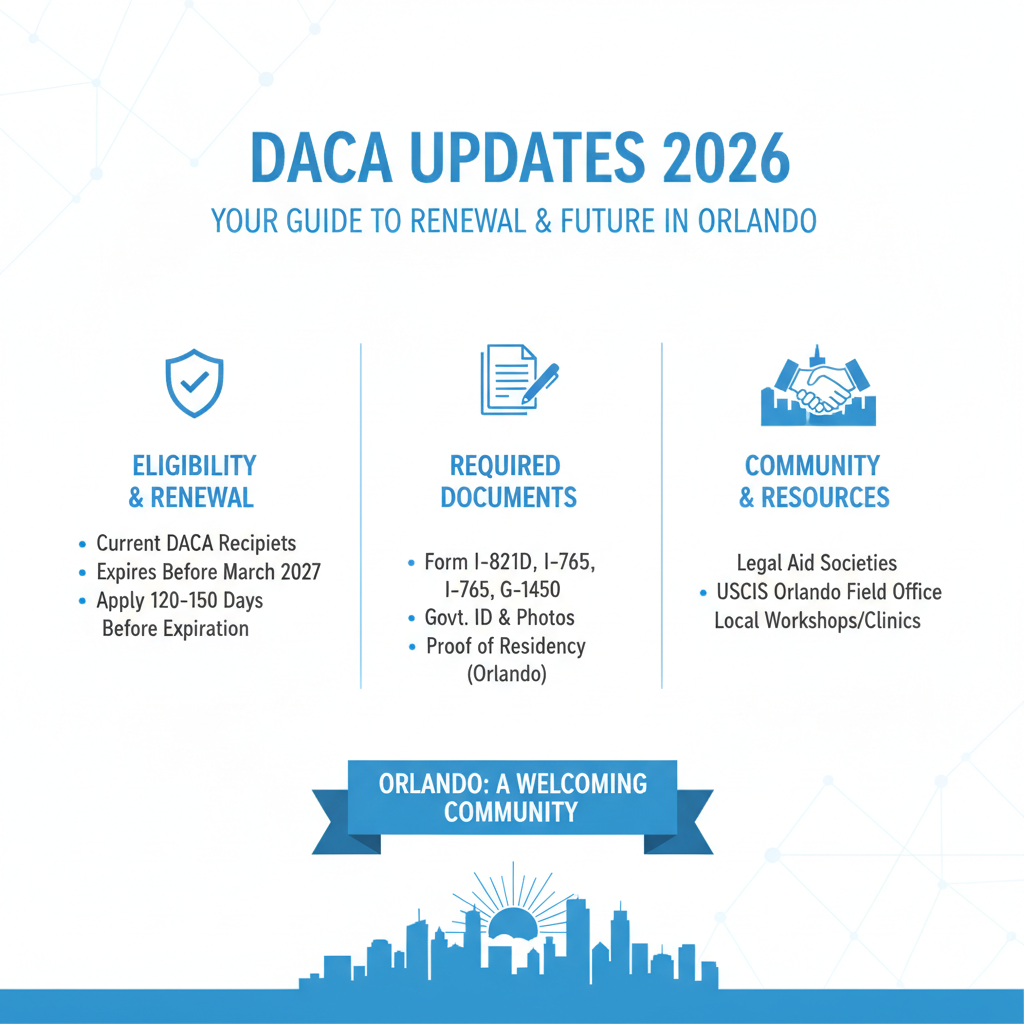
Recent discussions and reports from official sources like USCIS regarding the ongoing status and operational guidelines of the Deferred Action for Childhood Arrivals (DACA) program have underscored the critical need for up-to-date, accurate information for recipients. While the program continues to face legal challenges, USCIS has consistently provided updates on renewal procedures, processing times, and eligibility criteria for existing DACA beneficiaries. This ongoing stream of information, often found through official USCIS announcements and summarized by immigration news outlets, directly impacts the lives of hundreds of thousands of individuals. It is this continuous flow of information, particularly regarding the ability to renew and maintain deferred action, that prompts this detailed guide.
DACA Program Updates and Renewal Information (USCIS)
What This News Means for Immigrants in Orlando and Across Florida
For DACA recipients and their families living in Orlando and throughout Florida, news regarding the DACA program is never just a headline—it's a direct impact on their lives, their livelihoods, and their sense of security. The ongoing legal battles and administrative updates surrounding DACA necessitate constant vigilance and prompt action, especially when it comes to renewals.
Why this news is showing up now
The Deferred Action for Childhood Arrivals (DACA) program, established in 2012, has been in a state of continuous legal and political flux almost since its inception. What began as an executive policy to protect certain young undocumented immigrants from deportation and grant them work authorization has become one of the most litigated immigration programs in U.S. history. The "news" you're seeing now isn't a singular event but rather the latest chapter in this ongoing saga. Courts, particularly the Fifth Circuit Court of Appeals, have repeatedly ruled on DACA's legality, finding it unlawful. However, these rulings have often been accompanied by stays or injunctions that have allowed existing DACA recipients to continue renewing their status, even as new applications remain blocked.
The current situation, as of July 2026, likely reflects the ongoing administrative process for renewals under the shadow of these legal challenges. Each court decision, each appeal, and each administrative update from USCIS creates ripples, leading to public statements, policy adjustments, and renewed urgency for recipients to understand their rights and obligations. The program is currently operating under a federal court order that allows USCIS to accept and process DACA renewal requests for existing recipients, but generally prohibits the approval of initial DACA requests. This delicate balance means that any new court filing, hearing, or administrative guidance from USCIS constitutes significant news for the DACA community.
How it can affect Florida residents
Florida is home to a significant population of DACA recipients, often referred to as Dreamers, many of whom reside in vibrant communities like Orlando, Tampa, and Miami. For these individuals, the DACA program is a lifeline, providing protection from deportation and the ability to work legally. Here's how the ongoing DACA news and renewal information specifically affects Florida residents:
- Employment Stability: DACA provides an Employment Authorization Document (EAD), allowing recipients to work legally. Any uncertainty or delay in renewal processing can directly threaten their ability to maintain employment, impacting their financial stability and that of their families. Many DACA recipients are integral parts of Florida's workforce, contributing to various sectors, from healthcare to hospitality, particularly along the I-4 corridor.
- Driver's Licenses: In Florida, DACA recipients are generally eligible to obtain a driver's license upon presenting their EAD and other required identification documents. A lapse in DACA status due to delayed renewal or processing issues could lead to the inability to renew a driver's license, severely impacting daily life, commuting to work, and accessing essential services in a state heavily reliant on personal transportation.
- Educational Opportunities: While Florida's public universities and colleges do not grant DACA recipients automatic in-state tuition, some institutions may have specific policies or scholarships. More broadly, DACA allows recipients to pursue higher education and vocational training without fear of deportation, fostering a sense of stability that encourages educational attainment. News impacting DACA's future can create immense stress for students and prospective students.
- Community Impact: The DACA community in Florida is tightly knit. News about the program's status reverberates through families, churches, and community organizations. Legal uncertainties can create widespread anxiety, affecting mental health and community well-being. Organizations in Orange County and surrounding areas often provide support, and their work is directly influenced by DACA developments.
- Legal Planning: The precarious nature of DACA means that recipients in Florida are constantly evaluating their legal options. This includes exploring potential pathways to permanent residency if they become available, or understanding the risks if DACA were to be fully terminated. The need for proactive legal advice from qualified immigration attorneys in Orlando is paramount.
Important: For Central Florida residents, understanding these updates is crucial. The Orlando USCIS Field Office primarily handles interviews for certain applications, but DACA renewals are typically processed centrally. Nonetheless, local legal counsel is vital for personalized guidance.
Need Help? Our Orlando immigration team is ready to assist. Call +1 786-791-3106 for a free consultation, or message us online. Se Habla Español.
What DACA Is (and Why It Matters)
The Deferred Action for Childhood Arrivals (DACA) program is a critical, yet often misunderstood, immigration policy. For hundreds of thousands of young people across the United States, including many in Florida, DACA represents stability, opportunity, and a chance to build a life in the only country they’ve ever truly known.
A plain-English definition
At its core, DACA is a U.S. immigration policy that provides two main benefits to eligible young undocumented immigrants who came to the United States as children:
- Deferred Action: This means the government agrees to "defer" (postpone) any deportation action against an individual for a renewable period, typically two years. It's important to understand that deferred action is not a grant of lawful status, nor does it provide a path to U.S. citizenship or a green card. It is a form of prosecutorial discretion, meaning the government chooses not to pursue deportation.
- Work Authorization: Along with deferred action, DACA recipients are eligible to apply for an Employment Authorization Document (EAD), which allows them to legally work in the United States for the period of their deferred action. This EAD is what allows DACA recipients to secure jobs, pay taxes, and contribute to the economy.
In essence, DACA offers a temporary reprieve from deportation and the ability to work legally, enabling recipients to pursue education, careers, and contribute more fully to American society without constant fear of removal.
Key terms you need to know
Navigating DACA and immigration law requires understanding specific terminology. Here are some key terms:
- Deferred Action: As mentioned above, this is a discretionary decision by the government to postpone removing an individual from the U.S. It does not confer legal status.
- DACA Recipient (or Dreamer): An individual who has been granted deferred action under the DACA program. The term "Dreamer" originates from the DREAM Act (Development, Relief, and Education for Alien Minors Act), proposed legislation that would have provided a pathway to permanent residency for similar individuals.
- USCIS (U.S. Citizenship and Immigration Services): The government agency responsible for administering lawful immigration to the United States, including processing DACA applications and renewals. You will interact with USCIS for your DACA process.
- EAD (Employment Authorization Document): Also known as a work permit, this card proves an individual is authorized to work in the United States. DACA recipients receive an EAD upon approval of their DACA request.
- Form I-821D: The specific USCIS form used to request consideration of Deferred Action for Childhood Arrivals.
- Form I-765: The specific USCIS form used to apply for an Employment Authorization Document. This form is filed concurrently with Form I-821D for DACA applicants.
- Form I-765WS: The Worksheet for Form I-765, which helps explain the economic need for employment.
- Advance Parole: A travel document that allows certain non-citizens, including some DACA recipients, to travel outside the U.S. and return legally. This is separate from DACA and requires a separate application (Form I-131). Due to DACA's precarious legal status, advance parole for DACA recipients has become more restricted.
- Unlawful Presence: Being in the U.S. without admission or parole, or after the expiration of a period of authorized stay. DACA grants deferred action but does not erase prior periods of unlawful presence.
- Removal Proceedings (Deportation): The legal process through which the U.S. government seeks to deport a non-citizen from the country. DACA provides temporary protection from these proceedings.
Understanding these terms is crucial for anyone involved with the DACA program, especially when discussing legal options or renewing your status.
Current Immigration Law: The Foundation for DACA
Unlike many immigration programs rooted directly in specific acts of Congress, DACA was created through executive action by the Secretary of Homeland Security in 2012. This distinction is critical, as it means DACA is a policy, not a law, making it inherently vulnerable to shifts in presidential administrations and court challenges. The ongoing legal battles center on whether the executive branch had the authority to implement such a program without congressional approval. As of July 2026, the program continues to operate under federal court orders that allow for renewals but generally block new initial DACA applications.
Federal requirements for DACA eligibility (for renewals)
While new DACA applications are largely on hold due to court injunctions, existing recipients remain eligible to renew their deferred action and employment authorization, provided they meet specific criteria. These criteria largely mirror the original requirements, with some modifications for renewals:
- Received DACA Previously: You must have previously been granted DACA.
- No Disqualifying Factors: You must not have departed the United States on or after August 15, 2012, without advance parole.
- Continuous Residence: You must have continuously resided in the United States since you submitted your most recent DACA request that was approved. Brief, casual, and innocent absences from the United States will not break continuous residence.
- Criminal History: You must not have been convicted of a felony, a significant misdemeanor, or three or more other misdemeanors, and not otherwise pose a threat to national security or public safety. (Warning: Any interaction with law enforcement, even minor, should be discussed with an attorney.)
Reminder: It's imperative to consult with an immigration attorney if you have any questions about these eligibility requirements, especially concerning travel or any criminal history, no matter how minor it may seem.
Florida-specific considerations for DACA recipients
While DACA is a federal program, its impact and certain ancillary benefits can vary slightly by state. For DACA recipients in Florida, here are some key considerations:
- Driver's Licenses: The Florida Department of Highway Safety and Motor Vehicles (FLHSMV) generally allows DACA recipients to obtain a Florida driver's license or identification card. You will need to present your valid EAD card (Form I-766) and other required identification documents. Timely renewal of your DACA and EAD is essential to maintaining your driving privileges.
- In-State Tuition: Florida currently does not offer in-state tuition rates specifically for DACA recipients at its public universities and colleges. DACA recipients are typically classified as out-of-state residents for tuition purposes, which can make higher education significantly more expensive. However, some private institutions or specific scholarship programs may offer alternatives. It is advisable to check directly with the financial aid office of the specific institution you are interested in.
- Professional Licenses: DACA recipients may be eligible for certain professional licenses in Florida, depending on the profession and specific state regulations. Requirements vary greatly, so it's essential to research the licensing board for your intended profession. Your EAD proves work authorization, which is often a prerequisite.
- Local Community Support: Orlando and other major Florida cities have robust networks of non-profit organizations and community groups that offer support, resources, and legal aid clinics for DACA recipients. These local resources can be invaluable for navigating the complexities of DACA and connecting with others in similar situations.
Form I-821D, Form I-765, and Form I-765WS are the primary forms you'll use for DACA renewal. Always access the latest versions directly from the USCIS Forms page.
For official information and to download forms, always refer to the USCIS official website.
Need Help? Our Orlando immigration team is ready to assist. Call +1 786-791-3106 for a free consultation, or message us online. Se Habla Español.
How to Renew Your DACA: A Complete Step-by-Step Guide
Renewing your DACA is a critical process that requires careful attention to detail and adherence to specific timelines. Missing a deadline or submitting an incomplete application can lead to a lapse in your work authorization and protection from deportation. Follow this detailed guide to ensure a smooth renewal process.
1) Determine your eligibility for renewal
Before you begin gathering documents, confirm you meet the current DACA renewal eligibility criteria. As of July 2026, USCIS is generally accepting renewal requests for individuals who have previously been granted DACA. You must still meet the original criteria, updated as follows:
- You must have previously received DACA.
- You must not have departed the United States on or after August 15, 2012, without first obtaining advance parole.
- You must have continuously resided in the United States since you submitted your most recent DACA request that was approved. Brief, casual, and innocent absences from the United States will not break continuous residence.
- You must not have been convicted of a felony, a significant misdemeanor, or three or more other misdemeanors, and not otherwise pose a threat to national security or public safety.
Important: If you have any new criminal history, even minor infractions, or if you traveled outside the U.S. without advance parole, you MUST consult an immigration attorney before filing your renewal. These issues can lead to denial and potentially place you in removal proceedings.
2) Gather required documents and evidence
Thorough documentation is key to a successful DACA renewal. You generally do not need to resubmit documents you provided in your initial or previous renewal request, unless there has been a change in your circumstances or you need to provide updated information (e.g., new address, new criminal history). However, it's always wise to include copies of your most recent DACA approval notice and EAD card.
Required Documents Checklist:
- Copies of your most recent DACA approval notice (Form I-797).
- Copies of your current Employment Authorization Document (EAD card, Form I-766).
- Two recent, identical passport-style photographs. (Must be taken within 30 days of filing, unmounted, full-face, passport-style, with a white background. Write your name and A-number lightly on the back of each photo with a pencil).
- Proof of continuous residence since your last DACA approval. While not always required for renewals if no changes, it's good practice to have this ready. Examples include:
- School records (transcripts, diplomas)
- Employment records (pay stubs, W-2s, employment letters)
- Medical records
- Rental agreements or utility bills
- Bank statements
- Passport entries (if you traveled with advance parole)
- Affidavits from individuals who can attest to your presence.
- Documentation of any new criminal history since your last DACA approval. This includes certified court dispositions for any arrests, citations, or convictions, even if expunged or dismissed.
- Previous versions of Forms I-821D, I-765, and I-765WS you submitted (for reference).
3) Complete the necessary forms (I-821D, I-765, I-765WS)
You will need to complete three forms for your DACA renewal. Always download the latest versions directly from the USCIS Forms page to ensure you are using the correct edition.
- Form I-821D, Consideration of Deferred Action for Childhood Arrivals: This is the main form to request deferred action. Fill it out completely and accurately. Pay close attention to sections asking about your residence, travel history, and criminal background.
- Form I-765, Application for Employment Authorization: This form requests your work permit. For DACA renewals, under "Reason for Applying," select "Renewal of my permission to work." For eligibility category, write (c)(33).
- Form I-765WS, Worksheet for Form I-765: This worksheet requires you to explain your economic need for employment. Provide a clear and concise explanation of why you need to work.
Tips for completing forms:
- Type your answers or print clearly in black ink.
- Answer ALL questions. If a question doesn't apply, write "N/A" (not applicable) or "None."
- Ensure your name, date of birth, and A-number are consistent across all forms and match your previous DACA application.
- Sign and date each form in BLUE ink where required. An unsigned form will be rejected.
4) Prepare your supporting evidence
While renewing DACA generally requires less supporting evidence than an initial application, you must still provide documentation for any changes or new information. Organize your documents clearly.
- Copies, Not Originals: Always send copies of your documents unless USCIS specifically requests originals.
- Translations: Any document not in English must be accompanied by a complete English translation and a certification by the translator.
- Organize: Use tabs, dividers, or sticky notes to help USCIS officers easily find different sections of your application. Create a cover letter listing all contents.
5) Calculate and prepare fees
There are fees associated with DACA renewal, which cover the filing of Form I-765 and the biometric services fee. As of July 2026, the fee is typically $495 ($410 for Form I-765 and $85 for biometrics). This fee is subject to change, so always check the USCIS Fees page for the most current information.
- Payment Method: You can pay by money order, personal check, cashier's check, or by credit card using Form G-1450, Authorization for Credit Card Transactions.
- Payable To: Make checks or money orders payable to "U.S. Department of Homeland Security." Do NOT abbreviate.
- Fee Waivers: Fee waivers for DACA renewals are extremely rare and only granted in very specific and limited circumstances. Do not assume you are eligible for a fee waiver. If you believe you qualify, you must file Form I-912, Request for Fee Waiver, with your application and provide compelling evidence of inability to pay. Consulting an attorney is highly recommended if considering a fee waiver.
6) Mail your application package
Once your application is complete and thoroughly reviewed, you need to mail it to the correct USCIS lockbox facility. The correct address depends on where you live. Always check the "Where to File" section on the USCIS website for Form I-821D to find the most current mailing address.
- For Florida residents: As of this date, DACA renewal applications from Florida residents are typically sent to the USCIS Chicago Lockbox. However, confirm this on the USCIS website.
- Send via Certified Mail: Use a service that provides tracking and delivery confirmation (e.g., USPS Certified Mail with Return Receipt, FedEx, UPS). This provides proof of mailing and delivery.
- Keep Copies: Make a complete copy of your entire application package (all forms, documents, and payment receipt) for your records before mailing.
7) What to expect after filing
After you mail your DACA renewal application:
- Receipt Notice: USCIS will typically send you a receipt notice (Form I-797C) within a few weeks, confirming they received your application. This notice will include your receipt number, which you can use to track your case online at USCIS Case Status Online.
- Biometrics Appointment: You will receive an appointment notice for a biometrics (fingerprinting) appointment at an Application Support Center (ASC). Attend this appointment as scheduled. The Orlando USCIS Application Support Center is located in Orlando, and you will receive instructions on where to go.
- Request for Evidence (RFE): USCIS may send you an RFE if they need more information or clarification. Respond to RFEs promptly and completely.
- Approval/Denial: If approved, you will receive an approval notice and your new EAD card (Form I-766) in the mail. If denied, you will receive a denial letter explaining the reasons.
Timeline Expectation: USCIS generally recommends filing your DACA renewal request 120 to 150 days before your current DACA and EAD expire. This window allows sufficient time for processing and avoids a lapse in your work authorization. You can check current processing times for Form I-821D and Form I-765 at USCIS Processing Times.

Practical Steps You Can Take Today
Proactive preparation is your best defense against processing delays or potential issues with your DACA renewal. Here’s an actionable checklist to help you get started today:
Actionable checklist for DACA renewal
- Check Your Expiration Date: Locate your current DACA approval notice and EAD card. Note the expiration date for both. Set reminders in your phone or calendar for 150 days before the expiration date.
- Start Gathering Documents Early: Even if your DACA isn't expiring soon, begin collecting copies of your previous DACA applications, approval notices, EADs, and any new supporting evidence (e.g., school records, employment history, proof of residence).
- Review Your History: Think through any changes since your last DACA approval. Did you travel outside the U.S.? Have you had any interactions with law enforcement, even minor traffic tickets? Document everything.
- Consult an Attorney: If you have any concerns about eligibility, criminal history, or have complex travel history, schedule a consultation with an experienced immigration attorney at Imigrar immediately. Don’t wait until the last minute.
- Check USCIS Website for Updates: Regularly visit the USCIS official website for the latest news, forms, and filing addresses related to DACA.
- Save Money for Fees: The DACA renewal fee is currently $495. Start saving this amount well in advance to avoid last-minute financial stress.
- Inform Your Employer: If your EAD is nearing expiration, have a conversation with your employer about the renewal process and potential timelines. Transparency can help manage expectations.
Document preparation guidance
- Create a Master Folder: Keep all your immigration documents, including previous applications, approval notices, and supporting evidence, in a secure, organized physical and/or digital folder.
- Label Everything Clearly: When preparing your renewal package, use labels or sticky notes to clearly identify each document (e.g., "Copy of Current EAD," "Passport Photos," "Form I-821D").
- Make Copies: Always make a full copy of your entire application package before mailing it. This includes all forms, supporting documents, and your payment method.
- Proofread: Double-check all forms for accuracy, completeness, and consistency. Ensure all signatures are present and in blue ink.
Timeline expectations
- Filing Window: USCIS recommends filing your DACA renewal application between 120 and 150 days before your current DACA and EAD expire. Filing too early (more than 150 days) may result in rejection. Filing too late risks a lapse in your work authorization and protection.
- Processing Times: DACA renewal processing times vary. You can check current estimates on the USCIS Processing Times website. Typically, processing can take anywhere from 2 to 6 months.
- Biometrics Appointment:


