


Navigating the ever-evolving landscape of immigration law can be complex and, at times, daunting. For hundreds of thousands of young people across the United States, and particularly in vibrant communities like Orlando and throughout Florida, the Deferred Action for Childhood Arrivals (DACA) program represents a critical lifeline. As we move into May 2026, the DACA program continues to be a subject of ongoing discussion, legal challenges, and vital renewals.
At Imigrar, we understand the profound impact these updates have on individuals and families. Our mission, "Keep Families Together," drives us to provide clear, actionable information and expert legal guidance. This comprehensive guide is designed to help DACA recipients and their families understand the latest developments, master the renewal process, and plan for the future with confidence.
Need Help with DACA Renewal? Don't risk a lapse in your protection. Our Orlando immigration team is ready to assist. Call +1 786-791-3106 for a free consultation, or message us online. Se Habla Español.
The reporting that sparked this guide
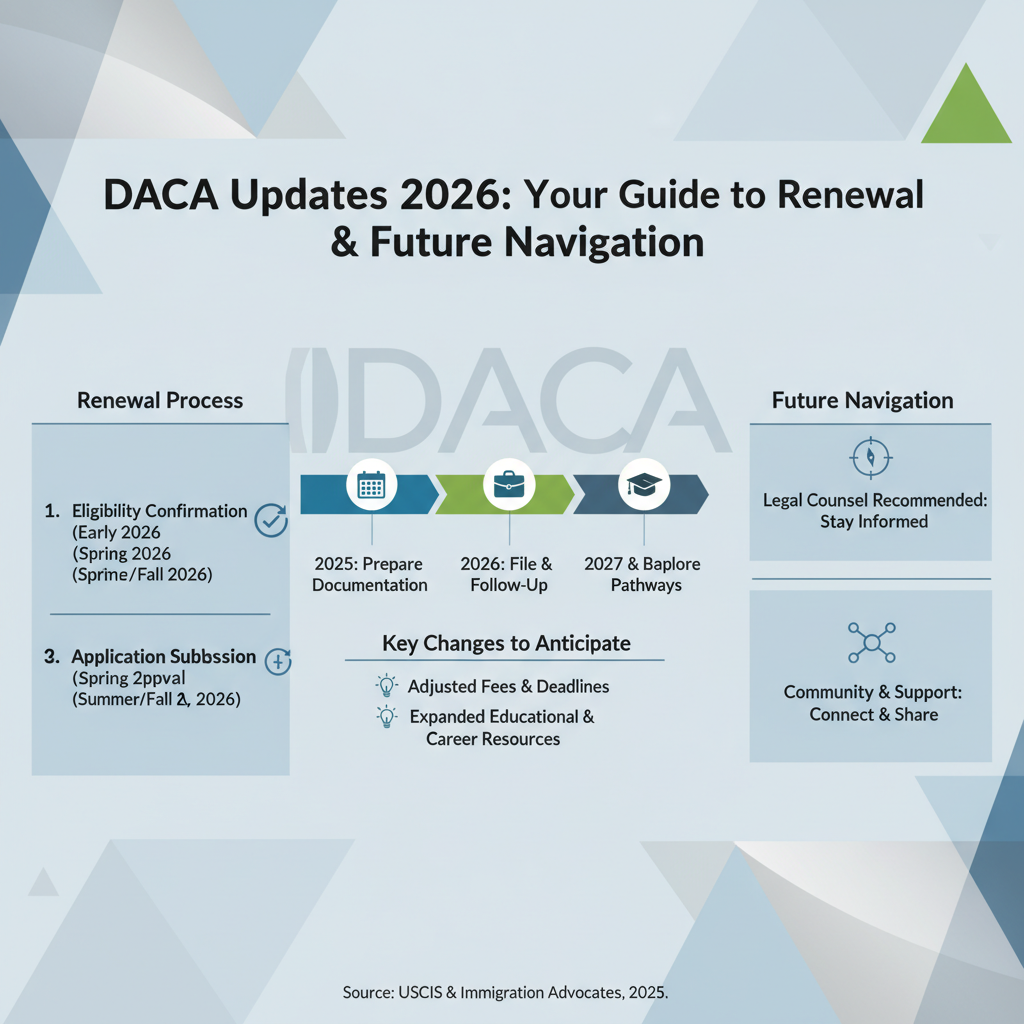
The information and guidance in this article are inspired by ongoing news coverage and updates from official government sources regarding the Deferred Action for Childhood Arrivals (DACA) program. For the latest official announcements and policy changes, we encourage all DACA recipients and interested parties to consult directly with USCIS and other federal agencies.
DACA Program Updates and Renewal Information (USCIS)
What This News Means for Immigrants in Orlando and Across Florida
The continuous updates and legal discussions surrounding DACA are not just abstract legal concepts; they directly impact the lives, dreams, and futures of individuals and families right here in Orlando, across Central Florida, and throughout the entire state. Understanding the nuances of these developments is crucial for planning your next steps.
Why this news is showing up now
The DACA program, originally established in 2012, has faced persistent legal and political challenges since its inception. While the program has allowed hundreds of thousands of eligible young people to live and work lawfully in the U.S. without fear of deportation, its future has always hung in the balance due to its executive action origins rather than legislative enactment.
As of May 2026, DACA remains largely under the shadow of court orders. Specifically, the Fifth Circuit Court of Appeals’ ruling in *Texas v. United States* in October 2022 affirmed a District Court's decision that DACA is unlawful. While this ruling allowed current DACA recipients to continue renewing their status, it prohibited USCIS from approving any new initial DACA requests. This legal battle has continued, with potential appeals to the Supreme Court or further lower court proceedings. Consequently, every few months, there are new developments, court filings, or administrative policy clarifications that keep DACA in the headlines. These ongoing legal challenges mean that the status of DACA is never truly settled, leading to a constant need for updates and vigilance from beneficiaries and their legal advocates.
Furthermore, the political climate often brings renewed calls for legislative solutions for Dreamers, alongside efforts to terminate DACA. These legislative discussions, though often stalled, also contribute to the trending nature of DACA news, as advocates and politicians continue to push for a permanent pathway to citizenship.
How it can affect Florida residents
Florida is home to a significant population of DACA recipients, many of whom contribute substantially to the state's economy, culture, and communities. From the vibrant tourism industry in Orlando to agricultural sectors across the state, DACA recipients are integral members of the workforce and society. The uncertainty surrounding DACA’s future creates unique challenges and considerations for Florida residents:
- Employment Stability: DACA provides work authorization, allowing recipients to secure stable jobs. Any disruption to DACA, such as a delayed renewal or program termination, could lead to job loss and economic instability for thousands of families in Orange County and beyond.
- Educational Opportunities: Many DACA recipients in Florida pursue higher education. While Florida offers some in-state tuition benefits for DACA recipients, the long-term impact on their ability to complete degrees and build careers is directly tied to the program's stability.
- Family Unity: DACA helps keep families together by protecting eligible individuals from deportation. The prospect of DACA ending causes immense stress and fear of family separation, a core concern for Imigrar.
- Community Engagement: DACA recipients are active members of their communities, contributing to local economies and civic life. The ongoing uncertainty can lead to disengagement and a sense of vulnerability within these communities, particularly along the I-4 corridor where many immigrant families reside.
- Legal Planning: The fluctuating legal status of DACA means that recipients in Florida must be extra diligent about their renewal applications and proactively explore any potential alternative immigration pathways. The Orlando USCIS Field Office processes many of these crucial applications, highlighting the local impact.
For these reasons, staying informed and seeking expert legal counsel is not just advisable, but essential for DACA recipients in Florida. Imigrar is deeply committed to supporting our community through these challenging times.
What DACA Is (and Why It Matters)
Deferred Action for Childhood Arrivals, or DACA, is a United States immigration policy that allows certain undocumented immigrants who entered the country as minors to receive a renewable two-year period of deferred action from deportation and eligibility for a work permit. Established by the Obama administration in June 2012, DACA was a response to the inability of Congress to pass comprehensive immigration reform, particularly legislation known as the "DREAM Act."
While DACA does not provide a pathway to lawful permanent resident status (a Green Card) or U.S. citizenship, it offers crucial temporary protection and opportunities for hundreds of thousands of young people, often referred to as "Dreamers."
A plain-English definition
Think of DACA as a temporary pause button on deportation. If you meet specific criteria, the government agrees not to pursue your removal from the country for a period of two years. During this time, you also become eligible to apply for a work permit (an Employment Authorization Document, or EAD), which allows you to legally work in the U.S. and often obtain a driver's license. This protection and work authorization must be renewed every two years. It's incredibly important because it allows young people who have grown up in the U.S. to pursue education, employment, and contribute to their communities without constant fear of being sent to a country they may barely remember.
Key terms you need to know
Understanding these terms is vital when discussing DACA and its implications:
- Deferred Action: This is the core of DACA. It means that the Department of Homeland Security (DHS) exercises its discretion not to pursue removal (deportation) proceedings against an individual for a specific period. It is not a grant of lawful status but rather a temporary exercise of prosecutorial discretion.
- Employment Authorization Document (EAD): Also known as a work permit, this card allows individuals to legally work in the United States. DACA recipients are eligible to apply for an EAD, typically valid for two years, coinciding with their deferred action period.
- Advance Parole: This is a travel document that allows certain non-citizens to travel outside the U.S. and return legally without jeopardizing their immigration status. DACA recipients can apply for Advance Parole for humanitarian, educational, or employment purposes, though approval is not guaranteed and current restrictions apply. Traveling without Advance Parole can lead to serious consequences.
- Undocumented Immigrant: An individual who entered the United States without authorization or who overstayed a valid visa. DACA was created for a specific subset of this population.
- Immigration Status: Refers to an individual's legal standing in the U.S., such as a U.S. citizen, lawful permanent resident (Green Card holder), non-immigrant visa holder (e.g., student, tourist), or undocumented. DACA does not grant lawful immigration status.
- USCIS: Stands for U.S. Citizenship and Immigration Services. This is the federal agency responsible for administering immigration and naturalization benefits, including DACA applications and renewals. You will interact with USCIS official website for all DACA-related filings.
- DHS: Stands for the Department of Homeland Security. This is the federal department under which USCIS operates, and it is ultimately responsible for immigration enforcement and policy, including the DACA program.
Concerned about Your DACA Status? Imigrar's experienced attorneys provide personalized legal advice. Reach out to our Orlando office at +1 786-791-3106 for a free consultation. Se Habla Español.
Current Immigration Law: The Foundation
The DACA program, while a significant policy, is not a federal statute enacted by Congress. Instead, it was established through an executive memo from the Secretary of Homeland Security. This distinction is crucial because it means DACA is more vulnerable to changes in presidential administrations and judicial challenges than a codified law. As of May 2026, the legal framework surrounding DACA is particularly complex due to ongoing litigation.
The primary legal challenge to DACA, initiated by the state of Texas and several other states, argues that the program was unlawfully created without proper notice-and-comment rulemaking procedures and exceeds the executive branch's authority. The Fifth Circuit Court of Appeals has sided with the District Court, finding DACA unlawful. However, the court's order allowed DACA renewals to continue for current beneficiaries while prohibiting USCIS from granting initial DACA requests.
Important: This means that while existing DACA recipients can renew their deferred action and work permits, individuals who have never before been granted DACA are currently unable to apply for the program.
Federal requirements
To be eligible for DACA (and thus, DACA renewal), applicants must generally meet the criteria outlined in the original 2012 memo, which remain largely in effect for renewals:
- Were under the age of 31 as of June 15, 2012.
- Came to the United States before reaching your 16th birthday.
- Have continuously resided in the United States since June 15, 2007, up to the present time.
- Were physically present in the United States on June 15, 2012, and at the time of making your request for deferred action.
- Had no lawful immigration status on June 15, 2012 (e.g., were not a lawful permanent resident, conditional permanent resident, or in a valid nonimmigrant status).
- Are currently in school, have graduated or obtained a certificate of completion from high school, have obtained a general education development (GED) certificate, or are an honorably discharged veteran of the Coast Guard or Armed Forces of the United States.
- Have not been convicted of a felony, a significant misdemeanor, or three or more other misdemeanors, and do not otherwise pose a threat to national security or public safety.
For renewals, the continuous residence and criminal history criteria are particularly scrutinized. Any breaks in continuous residence without authorization or new criminal convictions can jeopardize a renewal application. You can find detailed eligibility requirements and forms on the USCIS official website.
Florida-specific considerations
While DACA is a federal program, its impact and practical considerations can vary at the state level. For DACA recipients in Florida, understanding these state-specific nuances is beneficial:
- In-State Tuition: Florida Statute 1009.26(12)(a) allows certain undocumented students, including DACA recipients, to qualify for in-state tuition at Florida public colleges and universities if they meet specific residency requirements. This is a significant benefit for many Dreamers in the state.
- Driver's Licenses: With an approved Employment Authorization Document (EAD), DACA recipients in Florida are generally eligible to apply for a Florida driver's license or state identification card through the Florida Department of Highway Safety and Motor Vehicles (FLHSMV).
- Community Resources: Florida, especially major metropolitan areas like Orlando and Miami, has numerous non-profit organizations and advocacy groups dedicated to assisting DACA recipients with legal aid, educational resources, and community support. These local networks can be invaluable.
- Orlando USCIS Field Office: While DACA applications are typically processed at USCIS service centers, the Orlando USCIS Field Office serves the Central Florida region for various immigration matters, including potential biometrics appointments or interviews if required for other immigration processes. Knowing your local office can be helpful.
Reminder: State laws and policies can change. Always verify the latest information with relevant state agencies or an immigration attorney. The complexities of state-level interactions often require expert guidance to ensure compliance and maximize benefits.
How to Renew Your DACA: A Complete Step-by-Step Guide
Renewing your DACA is a critical process to maintain your protection from deportation and your work authorization. Filing correctly and on time is paramount. Here’s a comprehensive, step-by-step guide for DACA renewal. We recommend filing between 120 to 150 days before your current DACA and EAD expire to avoid any lapse in coverage.
1) Determine Your Eligibility for Renewal
Before you begin gathering documents, ensure you still meet the DACA renewal criteria. You are generally eligible to renew if you:
- Were issued DACA previously.
- Have not departed the United States without first obtaining Advance Parole.
- Have continuously resided in the United States since the date you filed your most recent DACA request.
- Have not been convicted of a felony, a significant misdemeanor, or three or more other misdemeanors, and do not otherwise pose a threat to national security or public safety.
Warning: Even minor brushes with the law since your last DACA approval can impact your renewal. Be honest and disclose everything to your attorney.
2) Gather Required Documents
Thorough documentation is key to a successful renewal. Organize your documents carefully.
- Copy of Your Current EAD Card: Front and back.
- Copy of Your Most Recent Form I-797 DACA Approval Notice: The notice you received when your DACA was last approved.
- Proof of Identity: Copy of your passport, birth certificate with photo ID, or school ID with photo.
- Proof of Continuous Residence: Documents showing you have lived in the U.S. since your last DACA approval. This can include:
- School transcripts or diplomas
- Employment records (pay stubs, W-2s)
- Bank statements
- Utility bills (electric, water, gas)
- Rental agreements or mortgage statements
- Medical records
- Dated photographs
- Affidavits from friends, family, or employers
- Documents Related to Any New Criminal History: If you have been arrested or convicted of any offense since your last DACA approval, you must include certified court dispositions and police reports, even for minor incidents.
- Previous DACA Application Documents (Optional but Recommended): Having copies of your prior applications can help ensure consistency and accuracy.
Important: Do not send original documents unless specifically requested by USCIS. Always send high-quality copies.
3) Complete the Forms
You will need to complete three forms for DACA renewal:
- Form I-821D, Consideration of Deferred Action for Childhood Arrivals: This is the main form for the DACA request itself. Fill it out completely and accurately. Pay close attention to questions about your travel history and criminal record.
- Form I-765, Application for Employment Authorization: This form requests your work permit. Ensure the information matches your I-821D.
- Form I-765 Worksheet (Form I-765WS): This is a required worksheet that helps USCIS determine your economic need for an EAD.
Tip: You can download the latest versions of these forms from the USCIS Forms page. Always use the most current version. Remember to sign all forms where required. An unsigned form will be rejected.
4) Pay the Filing Fees
As of May 2026, the total fee for DACA renewal is $495. This includes:
- $85 for the biometrics services fee.
- $410 for the Form I-765 (Application for Employment Authorization) fee.
- There is no fee for Form I-821D.
You must submit the fees in the exact amount. Payment can be made by money order, personal check, cashier’s check, or by credit card using Form G-1450, Authorization for Credit Card Transactions. Make checks payable to "U.S. Department of Homeland Security." Do not use abbreviations.
Fee Waivers: Fee waivers for DACA renewal are extremely rare and granted only under very limited circumstances for those who are indigent. If you believe you qualify, you would submit Form I-912, Request for Fee Waiver, along with extensive documentation of your financial hardship. However, it's generally advised to pay the fee to avoid delays or denials, as fee waiver requests are often denied for DACA. Consult with an attorney if you are considering a fee waiver.
5) Prepare and Mail Your Application Package
Once all forms are completed, signed, and all supporting documents are gathered:
- Make a complete copy of your entire application package for your records. This is crucial for future reference and if anything goes missing.
- Organize your application. Many attorneys recommend placing a cover letter, followed by the forms, and then the supporting documents in a logical order (e.g., identity, continuous residence, criminal history).
- Mail your application to the correct USCIS Lockbox Facility. The address depends on your current state of residence. For Florida residents, you will typically mail your DACA renewal package to the USCIS Chicago Lockbox.
- For U.S. Postal Service (USPS):
USCIS
Attn: DACA
P.O. Box 80521
Chicago, IL 60680-5211 - For FedEx, UPS, and DHL deliveries:
USCIS
Attn: DACA (Box 521)
131 S. Dearborn St., 3rd Floor
Chicago, IL 60603-5517
- For U.S. Postal Service (USPS):
- Use a mailing service that provides tracking and delivery confirmation (e.g., USPS Certified Mail with Return Receipt, FedEx, UPS). This provides proof of timely filing.
6) Attend Biometrics Appointment (If Required)
After USCIS receives your application, you will typically receive a receipt notice (Form I-797C). Sometime later, you may receive an appointment notice (Form I-797C) for a biometrics (fingerprinting) appointment at an Application Support Center (ASC). While not all DACA renewals require new biometrics, be prepared if you receive a notice.
- Bring the appointment notice and a valid photo ID (e.g., passport, EAD, driver's license).
- Arrive on time.
- The appointment is usually brief, involving fingerprints, a photograph, and a digital signature.
7) Monitor Your Case Status
After filing, you can monitor the progress of your application:
- Use the receipt number from your Form I-797C to check your case status online at the USCIS Case Status Online Tool.
- You can also check USCIS Processing Times for an estimate of how long similar applications are taking at your service center.
- If you move during the processing period, you must update your address with USCIS by filing Form AR-11, Alien's Change of Address Card online or by mail. Failure to do so could result in missed notices and even denial.

Practical Steps You Can Take Today
Even with legal uncertainties, there are concrete steps DACA recipients in Orlando and across Florida can take now to ensure they are prepared and protected.
Actionable Checklist
- Check Your Expiration Date: Locate your DACA approval notice and EAD card. Note the expiration date.
- Set a Renewal Reminder: Mark your calendar to begin preparing your renewal package 150-180 days before your DACA expires. This gives you ample time to gather documents and address any issues.
- Start Saving for Fees: The $495 filing fee can be a burden. Begin setting aside funds now to ensure you have the full amount when needed.
- Gather Your Documents: Start compiling copies of your previous DACA application, EAD, and continuous residence proofs. Store them securely.
- Review Your Criminal Record: If you've had any encounters with law enforcement, no matter how minor, since your last DACA approval, obtain certified court dispositions immediately.
- Consult an Immigration Attorney: If you have any doubts about your eligibility, have a criminal history, or experienced significant life changes (e.g., travel outside the U.S.), schedule a consultation with a qualified immigration lawyer.
- Update Your Address: If you've moved, ensure your address is updated with USCIS using Form AR-11.
- Stay Informed: Regularly check official USCIS announcements and reliable immigration news sources.
Document preparation guidance
- Organize Chronologically: For continuous residence documents, arrange them by date, from oldest to newest.
- Label Clearly: Use sticky notes or section dividers to label different categories of documents (e.g., "Proof of Residence," "EAD Copy," "Criminal History").
- Avoid Sending Originals: Unless specifically requested, always send copies. Keep your originals safe.
- High-Quality Copies: Ensure all copies are clear, legible, and not cut off.
- No Staples (Unless Specified): USCIS generally prefers paper clips or binder clips over staples, as documents often need to be scanned.


