The reporting that sparked this guide
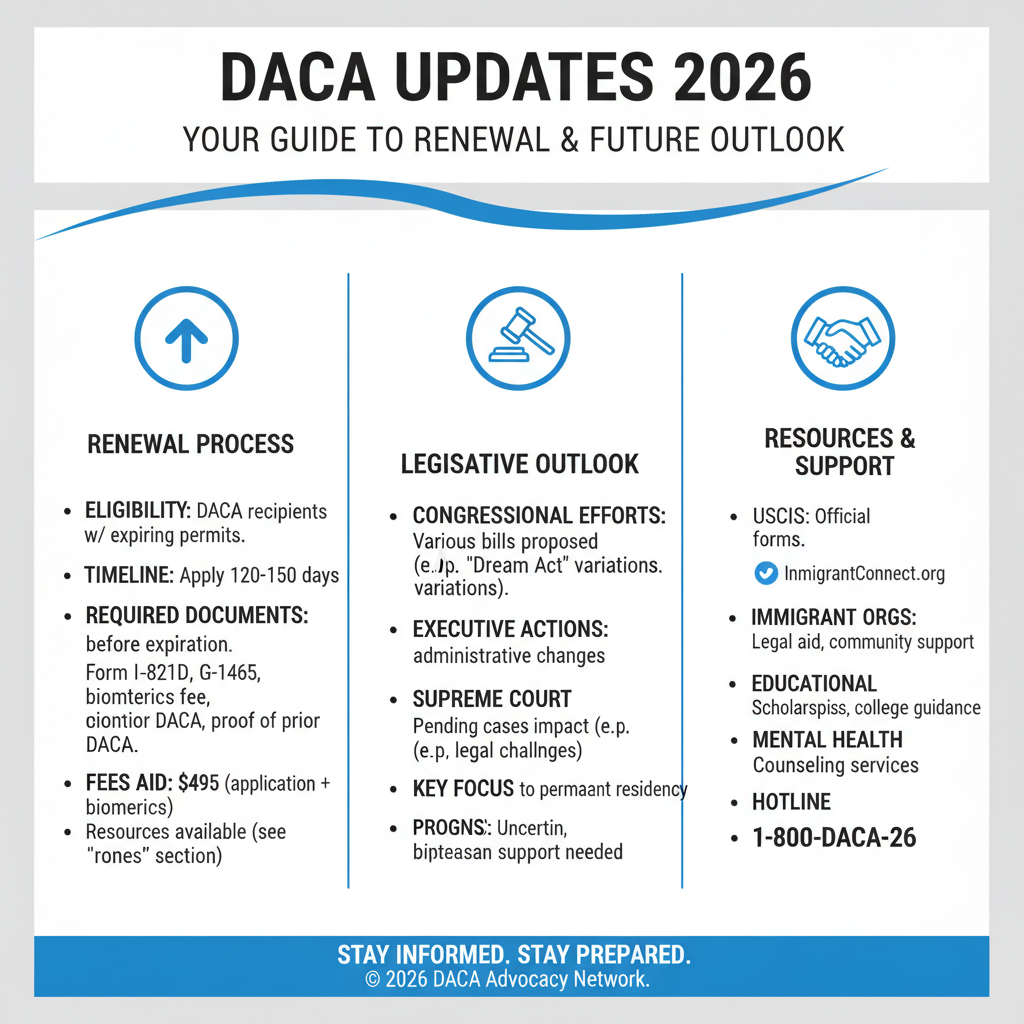
This comprehensive guide is informed by the latest developments and ongoing discussions surrounding the Deferred Action for Childhood Arrivals (DACA) program, as regularly monitored through official government channels and reputable news outlets covering U.S. immigration policy. For the most current announcements and official guidance, we always recommend consulting the primary source:
What This News Means for Immigrants in Orlando and Across Florida
For hundreds of thousands of young immigrants across the United States, and especially here in Florida, the Deferred Action for Childhood Arrivals (DACA) program represents a lifeline. It provides temporary protection from deportation and the ability to work legally. As of May 2026, the DACA program continues to operate under specific parameters, primarily allowing for renewals but still halting new applications. This ongoing legal and administrative landscape means that staying informed is not just beneficial, but critical for DACA recipients and their families.Why this news is showing up now
The DACA program has been embroiled in legal and political challenges almost since its inception in 2012. Over the past several years, various court rulings have significantly impacted its scope. Most notably, a federal court ruling in 2021 declared DACA unlawful, halting the processing of new applications indefinitely. Subsequent appeals and administrative actions have maintained this status quo, meaning that while existing DACA recipients can continue to apply for renewals, individuals who have never held DACA status are currently unable to apply. The "news" surrounding DACA is therefore less about a sudden, dramatic change and more about the persistent uncertainty and the continuous need for current recipients to understand their ongoing obligations and rights. Every few months, there are legal filings, court hearings, or administrative updates that reaffirm the program's current operational status or hint at potential future changes. For Imigrar, and for the DACA community, monitoring these developments from sources like USCIS and the courts is a constant priority. These ongoing legal battles keep DACA in the headlines, underscoring the precarious nature of the program and the urgent need for comprehensive immigration reform.How it can affect Florida residents
Florida is home to one of the largest populations of DACA recipients in the nation. Estimates suggest tens of thousands of Dreamers reside in our state, contributing significantly to our economy, culture, and communities. From Orlando to Miami, Tampa to Jacksonville, DACA recipients are students, healthcare workers, small business owners, and integral parts of our workforce. For Florida residents, the current DACA landscape means: * **Renewals are paramount:** If you are a current DACA recipient in Central Florida or anywhere in the state, ensuring your renewal application is filed accurately and on time is absolutely critical to maintain your protection and work authorization. Lapses can have severe consequences. * **No new applications:** For young people who meet the original DACA criteria but have never applied, the inability to submit a new application leaves them in a state of limbo, without the protection and opportunities DACA offers. This affects families where some siblings may have DACA while others do not. * **Economic impact:** DACA recipients contribute significantly to Florida's economy through taxes, consumer spending, and filling vital roles in various industries. The stability of their status directly impacts Florida's economic health. * **Educational opportunities:** Many DACA recipients in Florida pursue higher education, often relying on in-state tuition benefits or special scholarships. The security of their DACA status allows them to continue their studies without fear. * **Family stability:** DACA allows families to remain together, reducing the constant fear of separation. The ongoing uncertainty, however, adds immense stress to these families, many of whom have deep roots in Orlando and surrounding communities. At Imigrar, we understand these impacts firsthand. Our mission, "Keep Families Together," resonates deeply with the DACA community, and we are committed to providing the most current and actionable legal advice to help DACA recipients navigate these complex waters.Need Help with Your DACA Renewal? Our Orlando immigration team is ready to assist. Don't risk a lapse in your status. Call +1 786-791-3106 for a free consultation, or message us online. Se Habla Español.
What DACA Is (and Why It Matters)
The Deferred Action for Childhood Arrivals (DACA) program is a critical, albeit temporary, immigration policy that has impacted hundreds of thousands of young people across the United States. Its existence, and its ongoing legal battles, underscore the pressing need for comprehensive immigration reform.A plain-English definition
At its core, DACA provides certain eligible young undocumented immigrants with a form of temporary relief from deportation, known as deferred action. This means that U.S. Citizenship and Immigration Services (USCIS) agrees not to pursue their removal from the country for a specific period, typically two years. Along with deferred action, recipients are also eligible to apply for an Employment Authorization Document (EAD), which allows them to work legally in the U.S. for the duration of their deferred action period. It is crucial to understand what DACA is NOT: * **It is not a path to U.S. citizenship or a green card.** DACA provides temporary protection and work authorization, but it does not confer any legal immigration status or provide a direct pathway to permanent residency. * **It is not an amnesty program.** Recipients must meet strict criteria and apply for renewal every two years. * **It does not provide federal benefits** such as Medicaid, food stamps, or federal student aid. The individuals who qualify for DACA are often referred to as "Dreamers," a term derived from the proposed "DREAM Act" legislation that aimed to provide a pathway to legal status for these young people. They were brought to the U.S. as children, often have no memory of their country of birth, and have grown up in and contributed to American society.Key terms you need to know
Understanding the DACA program requires familiarity with several key terms: * **Deferred Action:** This is a discretionary determination by the Department of Homeland Security (DHS) to defer removal action against an individual. It does not confer lawful status but prevents deportation for a specified period. * **Employment Authorization Document (EAD):** Often called a "work permit," this card allows DACA recipients to work legally in the U.S. It is typically valid for two years, coinciding with the DACA deferral period. * **USCIS (U.S. Citizenship and Immigration Services):** The federal agency responsible for administering the DACA program, processing applications, and issuing EADs. You will interact with USCIS for all DACA-related filings. * **Dreamers:** A term commonly used to refer to young undocumented immigrants who were brought to the United States as children. Many DACA recipients fall into this category. * **Form I-821D, Consideration of Deferred Action for Childhood Arrivals:** The primary form used to request DACA. * **Form I-765, Application for Employment Authorization:** The form used to apply for a work permit, which is filed concurrently with Form I-821D for DACA purposes. * **Form I-765 Worksheet:** This supplemental sheet helps applicants properly calculate the period of employment authorization requested, though it's often straightforward for DACA renewals. * **Removal Proceedings:** The legal process by which the U.S. government seeks to deport an individual. DACA provides temporary protection from these proceedings. * **Continuous Residence:** A key eligibility criterion for DACA, requiring applicants to have resided continuously in the U.S. for a specified period. * **Significant Misdemeanor/Felony:** DACA eligibility can be denied if an applicant has been convicted of certain types of crimes. Understanding these definitions is crucial. DACA matters because it provides a measure of stability and opportunity for hundreds of thousands of young people who consider the U.S. their home. It allows them to pursue education, build careers, and contribute to their communities without the constant threat of deportation. For communities like Orlando, which thrives on diversity and the contributions of all its residents, DACA recipients are vital members who deserve the chance to live and work without fear.Current Immigration Law: The Foundation for DACA
It's important to clarify that DACA itself is not a law passed by Congress, but rather a policy initiated by the executive branch. This distinction is crucial, as it explains why DACA has faced, and continues to face, significant legal challenges. The legal foundation for DACA rests on the concept of "prosecutorial discretion" within immigration enforcement, allowing the Department of Homeland Security (DHS) to prioritize certain cases for removal while deferring action on others.Federal requirements
When DACA was first announced in 2012, it established specific federal requirements for eligibility. While new applications are currently paused, these criteria remain the benchmark for **renewal eligibility**: 1. **Came to the U.S. before your 16th birthday.** 2. **Continuously resided in the U.S.** since June 15, 2007, up to the present time. This means you generally cannot have left the U.S. for extended periods without authorization during this time. 3. **Were under the age of 31 as of June 15, 2012.** 4. **Were physically present in the U.S.** on June 15, 2012, and at the time of making your request for DACA. 5. **Had no lawful immigration status** on June 15, 2012. 6. **Are currently in school, have graduated or obtained a certificate of completion from high school, have obtained a general education development (GED) certificate, or are an honorably discharged veteran of the Coast Guard or Armed Forces of the United States.** 7. **Have not been convicted of a felony, a significant misdemeanor, or three or more other misdemeanors, and do not pose a threat to national security or public safety.** **Important:** For DACA renewals, USCIS reviews these original criteria, along with your conduct since your last DACA approval. Any new criminal offenses, unauthorized travel, or lapses in continuous residence could jeopardize your renewal. The primary forms associated with DACA are: * Form I-821D, Consideration of Deferred Action for Childhood Arrivals * Form I-765, Application for Employment Authorization * Form I-765 Worksheet These forms are critical for both initial applications (when allowed) and renewals. They require detailed personal information, residency history, and criminal background information. For the latest versions of these forms and detailed instructions, always refer to the USCIS Forms page. You can find more detailed information on the official USCIS official website.Florida-specific considerations
While DACA is a federal program, its impact and certain benefits can vary by state. For Florida residents, there are a few key considerations: * **Driver's Licenses:** DACA recipients in Florida are generally eligible to apply for a Florida driver's license upon presentation of their valid EAD and other required identification documents. This is a critical benefit for navigating daily life in Central Florida, especially given the extensive I-4 corridor and reliance on personal transportation. * **In-State Tuition:** Florida has specific laws regarding in-state tuition eligibility for certain undocumented students, including DACA recipients, who meet specific residency and high school attendance requirements. This significantly reduces the cost of higher education for many Dreamers attending universities in Orlando, Gainesville, Tallahassee, and across the state. * **Professional Licenses:** The ability for DACA recipients to obtain professional licenses (e.g., nursing, teaching) can vary depending on state regulations and specific professional boards. While their EAD allows them to work, some professions may have additional requirements related to immigration status. * **Local Enforcement:** While DACA provides federal protection from deportation, local law enforcement agencies in Florida are not always prohibited from cooperating with federal immigration authorities. It's crucial for DACA recipients to understand their rights and the potential implications of any interaction with law enforcement. The Orlando USCIS Field Office, while not processing DACA applications directly (these go to specific Lockbox facilities), can be a resource for certain immigration matters, though DACA-specific inquiries are best directed through the USCIS contact center or online tools. Understanding these federal requirements and Florida-specific nuances is vital for DACA recipients. Given the complexity and the high stakes involved, consulting with an experienced immigration attorney is always recommended.Don't navigate DACA renewals alone! Our Orlando immigration lawyers are experts in DACA policy and can help ensure your application is accurate and timely. Contact Imigrar today at +1 786-791-3106 for a free consultation. Se Habla Español.
How to Renew Your DACA: A Complete Step-by-Step Guide
For current DACA recipients, the renewal process is crucial to maintaining protection from deportation and work authorization. It's imperative to file your renewal application within the recommended timeframe and with extreme accuracy. While USCIS generally advises filing between **120 and 150 days** before your current DACA and EAD expire, some legal experts recommend an even earlier window (up to **180 days**) to account for potential processing delays. Here’s a detailed step-by-step guide to renewing your DACA:1) Determine Your Eligibility for Renewal
Before you begin, confirm you still meet the DACA criteria. The original criteria for initial DACA apply to renewals. * You must have previously received DACA. * You must not have departed the United States without advance parole on or after August 15, 2012. * You must have continuously resided in the U.S. since you submitted your most recent DACA request that was approved. * You must not have been convicted of a felony, a significant misdemeanor, or three or more other misdemeanors. * You must not otherwise pose a threat to national security or public safety. **Important:** Any new criminal history, even minor offenses, must be disclosed. Consult an attorney if you have had any arrests or convictions since your last DACA approval.2) Gather Required Documents
Thorough documentation is key to a successful renewal. Organize everything well in advance. * **Copy of your most recent DACA approval notice (Form I-797).** * **Copy of your most recent Employment Authorization Document (EAD).** * **Proof of continuous residence since your last DACA approval:** * Bank statements * Utility bills * School transcripts/report cards * Employment records/pay stubs * Medical records * Rental agreements/lease documents * Tax returns * **Identification documents:** * Copy of your birth certificate (with certified translation if not in English) * Copy of your passport (if available) * Copy of any government-issued ID (e.g., state ID or driver's license from Florida). * **Any criminal history records:** If you have been arrested or charged with any offense since your last DACA approval, you must obtain certified court dispositions for each incident, even if charges were dismissed. This is critical. * **Travel history:** If you traveled outside the U.S. with advance parole, you'll need records of those trips. **Tip:** Create a checklist and make photocopies of *everything* you send to USCIS. Keep the originals for your records.3) Complete the Necessary Forms
You will need to complete three forms for your DACA renewal: * **Form I-821D, Consideration of Deferred Action for Childhood Arrivals:** * Complete all sections accurately. Pay close attention to dates and addresses. * For renewals, you will check the box indicating you are filing for a "renewal." * **Form I-765, Application for Employment Authorization:** * In Part 2, Question 27, for "Eligibility Category," enter **(c)(33)**. * Ensure your requested employment start and end dates align with your DACA renewal period. * **Form I-765 Worksheet:** * This form helps you determine the correct eligibility category and other details for your EAD. For DACA renewals, it's typically straightforward, but ensure it's filled out correctly. **Reminder:** Use the latest version of these forms from the USCIS Forms page. Do not use expired forms.4) Pay the Filing Fees
As of May 2026, the total filing fee for a DACA renewal is **$495**. This includes: * **$85** for the biometrics services fee. * **$410** for the Form I-765, Application for Employment Authorization. * **Important:** There is no separate fee for Form I-821D. **Payment Methods:** * Personal check, cashier's check, or money order payable to "U.S. Department of Homeland Security." Do not abbreviate. * Credit card using **Form G-1450, Authorization for Credit Card Transactions**. **Fee Waivers:** Fee waivers are generally NOT available for DACA renewals. USCIS has specific, very limited criteria for fee exemptions, but these are rare for DACA.5) Prepare and Mail Your Application Package
Assemble your application package carefully and mail it to the correct USCIS Lockbox facility. * **Order of Documents:** While not strictly mandated, a common and recommended order is: 1. Payment (check/money order or Form G-1450) 2. Form I-821D 3. Form I-765 4. Form I-765 Worksheet 5. All supporting documents (copies, not originals, unless specifically requested) * **Mailing Address:** The correct Lockbox address depends on your state of residence. For Florida residents, you typically mail to the USCIS Chicago Lockbox. * **For U.S. Postal Service (USPS):** USCIS Attn: DACA P.O. Box 805219 Chicago, IL 60680-5219 * **For FedEx, UPS, and DHL deliveries:** USCIS Attn: DACA (Box 5219) 131 South Dearborn Street 3rd Floor Chicago, IL 60603-5517 * **Tracking:** Always use a mailing service that provides tracking and delivery confirmation (e.g., USPS Certified Mail with Return Receipt, FedEx, UPS). This is your proof of timely filing.6) Attend Biometrics Appointment (If Required)
After filing, USCIS will send you a receipt notice (Form I-797C) and, typically, a separate appointment notice for biometrics. * **What to Expect:** This appointment is usually at an Application Support Center (ASC) near you (e.g., the one serving Orlando in Orange County). You will have your fingerprints and photograph taken. This is for background checks and identity verification. * **Preparation:** Bring your appointment notice, a valid photo ID (like your Florida driver's license or passport), and any other documents requested.7) Monitor Your Case Status and Respond to RFEs
* **Online Case Status:** Use the receipt number from your **Form I-797C** to track your case online at the USCIS Case Status Online tool. * **RFEs (Requests for Evidence):** USCIS may send an RFE if they need additional information or clarification. Respond promptly and accurately to RFEs. Failure to respond can lead to denial. * **Approval/Denial:** If approved, you will receive a new Form I-797 approval notice and your new EAD card in the mail. If denied, USCIS will send a denial notice explaining the reasons. **Warning:** Do not let your DACA expire. A lapse in DACA can lead to a period of unauthorized presence, which could have serious future immigration consequences.Practical Steps You Can Take Today for DACA Renewal
Being proactive is the best strategy for a smooth DACA renewal process. Here's an actionable checklist and advice to get started today: * **Check Your Expiration Date:** Immediately identify the expiration date on your current EAD card. This is your most critical deadline. * **Mark Your Calendar:** Set reminders for the **180-day**, **150-day**, and **120-day** marks before expiration. Aim to file around the **150-day** mark. * **Start Gathering Documents:** Begin collecting all necessary documents now, especially those that might take time to obtain, like certified court dispositions or old school records. * **Review Your Previous Application:** Pull out a copy of your last DACA application. This will serve as a valuable reference for information like addresses, dates, and employment history. * **Update Your Address with USCIS:** If you've moved since your last DACA approval, file **Form AR-11, Alien's Change of Address Card**, online or by mail, within **10 days** of moving. Failure to do so can result in missed notices and significant issues. This is especially important for residents moving within Orlando or from other parts of Florida. * **Assess Any New Criminal History:** Honestly evaluate any arrests or charges, no matter how minor, since your last DACA approval. Begin the process of obtaining certified court records. * **Save for Fees:** Start saving the **$495** renewal fee. * **Seek Legal Advice:** If you have any concerns about your eligibility, criminal history, or simply want peace of mind, schedule a consultation with a qualified immigration attorney.Document preparation guidance
* **Organize Everything:** Use folders or binders to keep all your documents categorized and easily accessible. * **Make Copies:** Always send copies of your supporting documents to USCIS, never originals, unless specifically requested. Keep a complete set of copies for your own records. * **Clarity and Legibility:** Ensure all copies are clear and legible. If a document is difficult to read, try to obtain a better copy. * **Translations:** Any document not in English must be accompanied by a complete and accurate English translation, along with a certification from the translator stating their competency and the accuracy of the translation. * **Consistency:** Ensure all information across your forms and supporting documents is consistent (e.g., names, dates of birth, addresses).Timeline expectations
* **Filing Window:** The ideal window to file your DACA renewal is **120 to 150 days** before your current DACA and EAD expire. Filing too early (more than 150 days) can lead to rejection, and filing too late risks a lapse in your work authorization and protection. * **Processing Times:** USCIS processing times for DACA renewals can vary significantly. You can check current processing times for Form I-821D and Form I-765 at the USCIS Processing Times page. As of 2026, many renewals are processed within **3-6 months**, but delays can occur. * **Biometrics Appointment:** Typically, you'll receive a biometrics appointment notice within **3-5 weeks** of filing your application. The appointment itself usually occurs within **1-2 months** of filing. * **EAD Delivery:** Once approved, your new EAD card usually arrives within **1-2 weeks** of the approval notice. **Important:** If your DACA expires before your renewal is approved, you will lose your work authorization and protection from deportation. You cannot work legally or drive (if your Florida license depends on your EAD) during this lapse. While you can still file a renewal application after expiration, it's often considered an "initial" application in terms of processing, and you will be without protection during that time.