

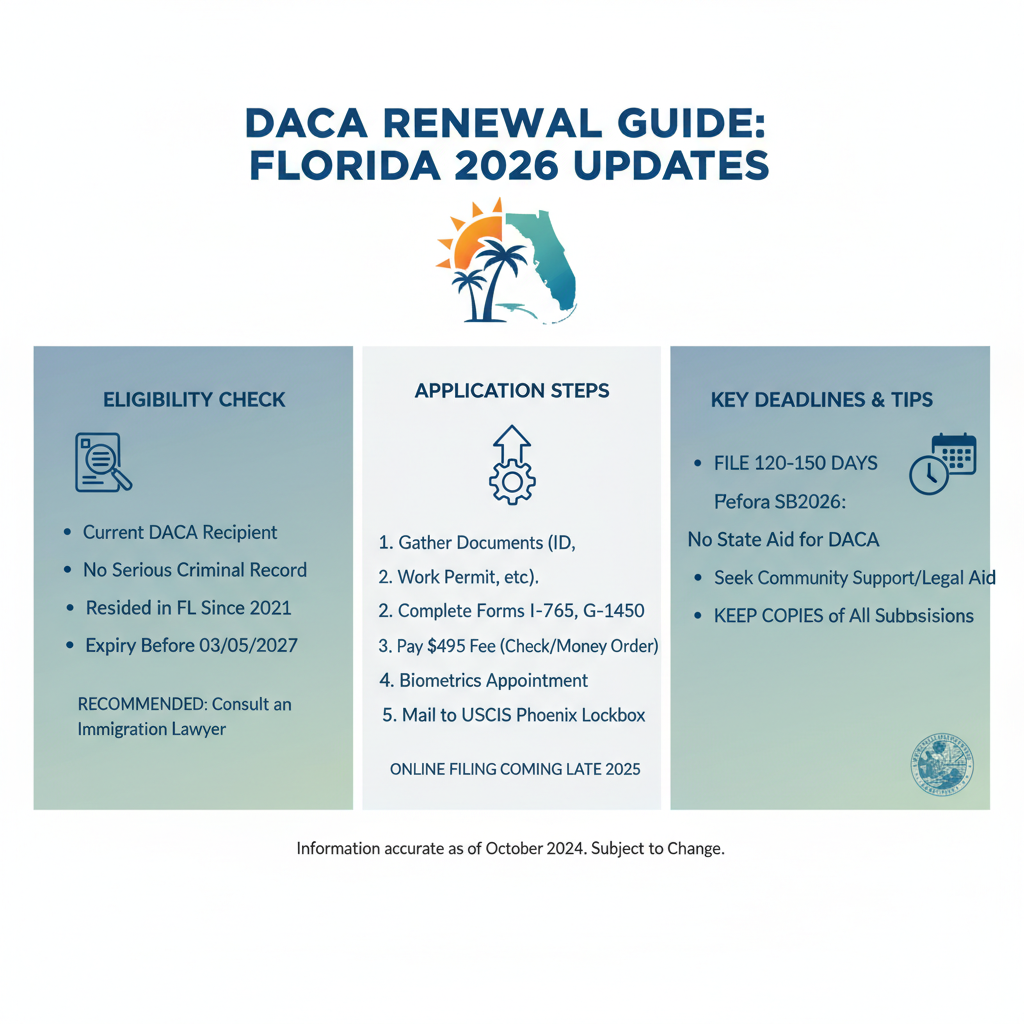
What This News Means for Immigrants in Orlando and Across Florida
The landscape of immigration law is constantly evolving, and few programs illustrate this better than the Deferred Action for Childhood Arrivals (DACA) program. For hundreds of thousands of young people across the United States, including countless individuals and families in Orlando and throughout Florida, DACA represents a pathway to work legally, pursue education, and live without immediate fear of deportation. As we move through 2026, news and updates regarding DACA continue to be a critical focus for Dreamers and their advocates.
Why this news is showing up now
The DACA program has been a subject of intense legal and political debate since its inception in 2012. Throughout its history, DACA has faced challenges from various state governments, resulting in numerous court orders and injunctions that have shaped its current operational status. The latest news consistently revolves around ongoing litigation, court decisions, and USCIS’s responses to these rulings. Currently, due to a federal court order, USCIS is prohibited from approving any new DACA applications. However, USCIS continues to accept and process DACA renewal requests for individuals who have previously held DACA status. This distinction is crucial and often the focus of recent reports.
In early 2026, the discussion continues to center on the program's uncertain future, potential legislative solutions, and the immediate need for eligible individuals to renew their status promptly. Every court ruling, every policy statement from the Department of Homeland Security (DHS), and every piece of legislative discussion adds another layer of complexity and urgency for DACA recipients. The news cycle highlights these developments, providing updates on the legal battles and reminding current DACA holders of the consistent requirements for renewal to maintain their protected status and work authorization.
How it can affect Florida residents
Florida is home to a significant population of DACA recipients, many of whom reside in major metropolitan areas like Orlando, Miami, Tampa, and along the bustling I-4 corridor. For these individuals, the ongoing updates directly impact their daily lives, their employment, their educational pursuits, and their families. The ability to renew DACA means maintaining an Employment Authorization Document (EAD), which is essential for holding a job, obtaining a driver's license in Florida, and contributing to the state's economy.
If your DACA status is nearing expiration, news about the program serves as a critical reminder to initiate the renewal process without delay. Delays can lead to a lapse in employment authorization, potential job loss, and the risk of falling out of DACA protection. For Central Florida residents, understanding the specific requirements and deadlines for renewal is paramount. The Orlando USCIS Field Office may process certain aspects of your case, though most DACA applications are filed centrally. Imigrar, located in Orlando, is acutely aware of the unique challenges and opportunities for DACA recipients in Orange County and across the state, offering tailored guidance to ensure individuals can navigate these complex waters effectively.
The uncertainty surrounding DACA also affects long-term planning for families. Many DACA recipients are integral parts of mixed-status families, where some members are U.S. citizens or lawful permanent residents. The stability provided by DACA renewals helps these families remain together and thrive. Keeping abreast of the latest news ensures that you, and your family, can make informed decisions about your future and take proactive steps to protect your status.
Need Help? Our Orlando immigration team is ready to assist. Call +1 786-791-3106 for a free consultation, or message us online. Se Habla Español.
What DACA Is (and Why It Matters)
To truly understand the ongoing news and the importance of timely renewals, it's essential to grasp the fundamentals of the DACA program itself. DACA has provided a crucial lifeline for hundreds of thousands of young people who were brought to the United States as children.
A plain-English definition
Deferred Action for Childhood Arrivals (DACA) is an immigration policy established by the Obama administration in 2012. It allows certain undocumented immigrants who entered the U.S. as minors to receive a renewable two-year period of deferred action from deportation and to be eligible for a work permit. "Deferred action" means that the government agrees to postpone any deportation proceedings against an individual for a specific period. It does not grant lawful immigration status, nor does it provide a path to U.S. citizenship or a green card. Instead, it offers temporary protection from removal and the ability to legally work in the U.S.
The program was created to address the situation of "Dreamers"—young people who grew up in the U.S., often having little to no memory of their country of birth, and who consider America their home. Without DACA, many of these individuals would face significant barriers to education and employment, and live under constant threat of deportation to a country they barely know.
Key terms you need to know
- Deferred Action: This is the core benefit of DACA. It means the government has chosen to exercise its discretion not to remove an individual from the U.S. for a specific period (typically two years). It is not a form of legal status.
- Employment Authorization Document (EAD): Also known as a work permit, the EAD is a card issued by USCIS that allows non-citizens to work legally in the United States. DACA recipients are eligible for an EAD, which is critical for their economic stability.
- Dreamers: This term refers to young undocumented immigrants who were brought to the U.S. as children. It originates from the "DREAM Act" (Development, Relief, and Education for Alien Minors Act), a legislative proposal that would have provided a path to legal status for these individuals. While the DREAM Act has never passed Congress, the term "Dreamers" is widely used to describe DACA recipients and those who would have qualified for the DREAM Act.
- Removal Proceedings: These are legal processes in immigration court to determine whether an individual should be deported from the United States. DACA provides protection from these proceedings for the duration of the deferred action period.
- USCIS: The U.S. Citizenship and Immigration Services, an agency of the Department of Homeland Security (DHS), is responsible for administering the DACA program, including processing applications and renewals.
- DHS: The Department of Homeland Security is the federal executive department responsible for public security, including immigration enforcement and policy. USCIS operates under DHS.
Understanding these terms is vital for anyone navigating the DACA program. DACA matters because it empowers young people to contribute more fully to their communities and the economy, providing a measure of stability in lives that would otherwise be filled with uncertainty and fear. It allows individuals to pursue higher education, build careers, and support their families without the constant threat of deportation. While not a permanent solution, DACA has been a transformative program for nearly a million individuals since its inception.
Current Immigration Law: The Foundation for DACA Renewals
While DACA itself is a policy implemented through executive action rather than a Congressional law, its operation is deeply intertwined with existing immigration statutes and the broad prosecutorial discretion granted to the Department of Homeland Security. The legal framework surrounding DACA has been shaped by various federal court rulings, most notably from the Fifth Circuit Court of Appeals, which currently prohibits USCIS from processing initial DACA requests but allows for renewals.
Federal requirements for DACA Renewal
To be eligible for DACA renewal, applicants must meet several stringent federal criteria. These requirements are set by USCIS and are subject to change based on court orders or policy updates. For the most up-to-date information, always consult the USCIS official website.
As of early 2026, to renew DACA, you must meet the following criteria:
- You must have previously received DACA. This means you cannot be applying for DACA for the first time.
- You must not have departed the United States on or after August 15, 2012, without advance parole.
- You must have continuously resided in the United States since you submitted your most recent DACA request that was approved.
- You must not have been convicted of a felony, a significant misdemeanor, or three or more other misdemeanors, and not otherwise pose a threat to national security or public safety. Important: Even minor legal issues can impact your eligibility, so it’s crucial to consult with an attorney.
Reminder: USCIS explicitly states that they will continue to accept requests from individuals who have previously been granted DACA and are seeking to renew their deferred action and employment authorization. This commitment is vital for the current DACA population.
The forms required for DACA renewal are:
- Form I-821D, Consideration of Deferred Action for Childhood Arrivals
- Form I-765, Application for Employment Authorization
- Form I-765WS, Worksheet
These forms, along with specific instructions, can be downloaded directly from the USCIS Forms page. It is absolutely critical to use the most current version of each form.
Florida-specific considerations
While DACA is a federal program, its impact and certain state-level considerations are important for Florida residents. For those in Orlando, Central Florida, and across the state, DACA status provides crucial benefits that are recognized at the state level:
- Driver's Licenses: DACA recipients in Florida are generally eligible to apply for a Florida driver's license, provided they have a valid EAD. This is a significant benefit for daily life, commuting along the I-4 corridor, and employment.
- In-State Tuition: While DACA does not automatically grant in-state tuition at Florida public colleges and universities, some institutions may have policies or specific scholarships available for DACA recipients. It's advisable for students in Orange County and beyond to check with their specific educational institution regarding tuition rates and financial aid opportunities.
- Professional Licenses: DACA recipients with an EAD may be eligible for certain professional licenses in Florida, depending on the profession and specific state board requirements. This allows Dreamers to pursue careers in various fields, contributing to the state's workforce.
- Local Community Support: Communities in Orlando and other Florida cities often have non-profit organizations and advocacy groups that provide support and resources for DACA recipients, including legal aid clinics and educational workshops.
It’s important to understand that DACA does not provide a direct pathway to permanent residency or U.S. citizenship. Any changes to immigration law that would create such a pathway would require Congressional action. Therefore, maintaining DACA status through timely renewals remains the primary focus for current recipients.
Need Help? Our Orlando immigration team is ready to assist. Call +1 786-791-3106 for a free consultation, or message us online. Se Habla Español.
How to Renew Your DACA: A Complete Step-by-Step Guide
The DACA renewal process, while seemingly straightforward, requires meticulous attention to detail and adherence to specific USCIS guidelines. Missing a single piece of information or making an error can lead to delays or even a denial. This comprehensive guide outlines the steps to successfully renew your DACA.
1) Determine Your Eligibility and Gather Essential Information
Before you begin filling out forms, confirm your eligibility. You must have previously been granted DACA. If you've had any encounters with law enforcement since your last DACA approval, you must carefully assess how these might impact your eligibility. Even minor citations or arrests should be reviewed with an attorney.
Required Documents/Information to Gather:
- Your most recent DACA approval notice (Form I-797) and Employment Authorization Document (EAD).
- Proof of continuous residence since your last DACA approval (e.g., utility bills, bank statements, pay stubs, school records, rental agreements).
- Records of any travel outside the U.S. since your last DACA approval (if you traveled with advance parole).
- Documentation for any new criminal history, arrests, charges, or convictions, even if they were expunged or dismissed.
- Your current mailing address and phone number.
- Two passport-style photos taken within 30 days of filing.
Important: Start this process early! USCIS recommends filing your renewal application between 120 and 150 days before your current DACA and EAD expire. Filing too late risks a lapse in your work authorization.
2) Complete the Required Forms Accurately
You will need to complete three forms for your DACA renewal. Download the latest versions from the USCIS Forms page.
- Form I-821D, Consideration of Deferred Action for Childhood Arrivals: Fill out every section completely and accurately. Pay close attention to questions about your criminal history and travel outside the U.S. If a question does not apply to you, write "N/A" (Not Applicable) or "None."
- Form I-765, Application for Employment Authorization: This form requests your work permit. For DACA renewals, your eligibility category will typically be (c)(33). Ensure your name matches your previous EAD and other identity documents.
- Form I-765WS, Worksheet: This worksheet helps USCIS determine your economic need for an EAD. Provide clear and truthful information about your income, expenses, and assets.
Warning: Never leave a question blank unless instructed. If you need more space, attach a separate sheet of paper with the corresponding question number and your answer, and sign and date the sheet.
3) Compile Your Supporting Documentation
This step is crucial for proving your continued eligibility. Organize your documents clearly.
Required Documents (Bullet List):
- Copy of your previous EAD (front and back).
- Copy of your most recent DACA approval notice (Form I-797).
- Two identical, unmounted, passport-style color photographs (taken within 30 days of filing). Write your name and Alien Registration Number (A-Number) lightly in pencil on the back of each photo.
- Proof of identity (e.g., copy of your birth certificate with photo ID, passport copy, or school ID with photo).
- Proof of continuous residence since your last DACA approval (e.g., school transcripts, employment records, bank statements, utility bills, medical records, tax returns, rental agreements). Provide at least one document for each year since your last approval.
- Any documents related to new criminal history (certified court dispositions, police reports). Even if charges were dropped or expunged, you must disclose them and provide documentation.
- If you requested a fee waiver/exemption, include supporting documentation (see Step 4).
Reminder: Do NOT send original documents unless specifically requested by USCIS. Send clear photocopies. Keep all original documents for your records.
4) Prepare Your Application Packet and Pay Fees
The filing fee for DACA renewal is currently $495 (as of February 2026), which includes the $410 for Form I-765 and the $85 for biometric services. This fee is subject to change, so always verify the current fee on the USCIS website before mailing your application. You can pay with a money order, personal check, cashier's check, or by credit card using Form G-1450, Authorization for Credit Card Transactions.
- Make the check or money order payable to "U.S. Department of Homeland Security."
- Write your A-Number on the check/money order.
- Organize your application packet in the order recommended by USCIS, usually with the check/money order on top, followed by Form I-765, Form I-765WS, Form I-821D, and then your supporting documentation.
Fee Exemptions/Waivers: In very limited circumstances, USCIS may grant a fee exemption. You must demonstrate that you are unable to pay the fee and that your income is below 150% of the federal poverty line, or that you have an uncompensated medical emergency, or that you are homeless. This is rare and requires significant documentation. Consult with an attorney if you believe you qualify.
5) Submit Your Application to USCIS
Send your complete application packet to the correct USCIS lockbox facility. The filing address depends on the state you reside in and the service center processing your case. For Florida residents, check the USCIS official website for the specific DACA filing address. It's usually a P.O. Box in Chicago for DACA applications.
- Use a reliable mailing service that provides tracking, such as USPS Certified Mail with a return receipt, FedEx, or UPS. This ensures you have proof of mailing and delivery.
- Keep a complete copy of your entire application packet, including all forms, supporting documents, and the payment method, for your records.
Important: Double-check the mailing address on the USCIS website right before you send your application, as these addresses can sometimes change.
6) Attend Your Biometrics Appointment (If Required)
After filing, USCIS will send you a receipt notice (Form I-797C) confirming they received your application. Soon after, you may receive an appointment notice for biometrics (fingerprints, photograph, and signature) at an Application Support Center (ASC). Not all DACA renewals require a new biometrics appointment, but if you receive one, it is mandatory to attend.
- Bring your appointment notice, a valid photo ID (e.g., driver's license, passport), and your DACA EAD card to the appointment.
- The Orlando USCIS Field Office may be the location for your biometrics appointment if you reside in Central Florida.
7) Monitor Your Application Status and Respond to USCIS Requests
You can monitor the status of your DACA renewal application online using the receipt number provided on your Form I-797C. Visit USCIS Case Status Online.
- Request for Evidence (RFE): USCIS may send an RFE if they need additional information or documents to process your application. Respond promptly and thoroughly by the deadline provided.
- Notice of Intent to Deny (NOID): A NOID indicates USCIS intends to deny your application and provides you an opportunity to respond and correct any issues. This is a serious notice, and you should immediately consult an attorney if you receive one.
- Approval: If approved, you will receive a new DACA approval notice (Form I-797) and your new EAD card by mail.
Reminder: Keep your address updated with USCIS, especially if you move within Orlando or Florida. Failure to receive notices can severely impact your case.
Practical Steps You Can Take Today for DACA Renewal
Proactive planning is key to a successful DACA renewal. Don't wait until the last minute. Here are practical steps you can take starting today:
Actionable Checklist (5+ items):
- Mark Your Calendar: Note your DACA and EAD expiration dates. Set reminders for 150 days, 120 days, and 90 days before expiration.
- Organize Your Documents: Create a dedicated folder (physical and/or digital) for all DACA-related documents. Include your previous applications, approval notices, EADs, and any supporting evidence of continuous residence.
- Review Your History: Carefully recall any interactions with law enforcement, even minor ones. Gather documentation (court dispositions, police reports) for anything that occurred since your last DACA approval.
- Check USCIS Website: Regularly visit the USCIS official website for the latest forms, fees, and policy updates.
- Save for Fees: Begin saving the $495 filing fee. If you anticipate needing a fee exemption, start gathering financial documentation.
- Update Your Address: If you've moved, update your address with USCIS immediately by filing Form AR-11, Alien's Change of Address Card, and by updating your address on any pending applications. This is critical for receiving important notices.
- Consult an Attorney: If you have any questions, concerns, or changes in your legal history, schedule a consultation with an experienced immigration attorney.
Document preparation guidance
The way you prepare your documents can significantly impact the efficiency of your application processing. USCIS adjudicators review thousands of applications, so clarity and organization are paramount.
- Make Copies of Everything: Before sending your application, make a complete, identical copy of the entire packet for your records.
- Clear Photocopies: Ensure all photocopies are clear, legible, and full-size. Do not submit blurry or cut-off copies.
- Organize Methodically: Use tabs, dividers, or paper clips to separate different sections (e.g., forms, photos, evidence of residence, legal documents). Do not use staples excessively.
- Avoid Originals: Unless specifically requested, never send original documents. USCIS rarely returns originals, and you will need them for future reference.
- Translate Documents: If any supporting documents are not in English, you must include a complete English translation along with a certification from the translator stating their competency and the accuracy of the translation.
Timeline expectations
The DACA renewal process involves several stages, and understanding the typical timeline can help manage expectations and avoid anxiety:
- Filing Window: File between 120 and 150 days before your current DACA and EAD expire. This window allows ample time for processing and helps prevent a lapse in employment authorization.
- Receipt Notice: You should receive a receipt notice (Form I-797C) from USCIS within 2-4 weeks after they receive your application.
- Biometrics Appointment: If required, an appointment notice for biometrics typically arrives 3-8 weeks after filing. The appointment itself will be scheduled a few weeks after the notice.
- Processing Times: DACA renewal processing times can vary significantly based on the service center workload. You can check current processing times on the USCIS Processing Times page. Generally, renewals can take anywhere from 2 to 6 months.
- Approval and EAD Delivery: Once approved, you will receive an approval notice and your new EAD card, usually within 1-2 weeks after the approval decision.
Warning: If you file outside the recommended window, particularly too late, you risk a gap in your work authorization, which can lead to job loss. If your DACA expires before your renewal is processed, you will lose your legal work authorization and protection from deportation until the renewal is approved.
Need Help? Our Orlando immigration team is ready to assist. Call +1 786-791-3106 for a free consultation, or message us online. Se Habla Español.

How Imigrar Helps DACA Recipients in Orlando and Beyond
Navigating the complexities of DACA renewal can be daunting, especially with the ongoing legal challenges and the need for precision in every step of the application process. At Imigrar, we understand the profound importance of DACA for you and your family’s stability and future. Our mission, "Keep Families Together," resonates deeply with the needs of Dreamers in Orlando and across the nation.
Our experienced immigration attorneys are dedicated to providing clear, compassionate, and effective legal guidance. We specialize in helping individuals and families understand and successfully navigate the ever-changing landscape of U.S. immigration law.
Our experience and expertise:
- Comprehensive DACA Renewal Assistance: We guide you through every step of the renewal process, from eligibility assessment and document gathering to form completion and submission. We ensure all forms are accurately filled out and all required documentation is meticulously prepared.
- Legal Review of Complex Cases: If you have any criminal history, travel outside the U.S., or other factors that might complicate your renewal, our attorneys will conduct a thorough review to assess potential risks and develop a strategy to address them proactively.
- Keeping Abreast of Legal Changes: The DACA program is frequently impacted by court rulings and policy shifts. Our team stays continuously updated on all legal developments to provide the most current and accurate advice.
- Responding to USCIS Requests: Should you receive a Request for Evidence (RFE) or a Notice of Intent to Deny (NOID), we will help you formulate a timely and compelling response to protect your application.
- Orlando-Specific Insight: As a firm based in Orlando, we have a deep understanding of the local resources, community organizations, and specific considerations for DACA recipients living in Central Florida, including interactions with the Orlando USCIS Field Office.
- Bilingual Services: We proudly offer services in both English and Spanish. Se Habla Español, ensuring that language is never a barrier to receiving expert legal assistance.
We believe that everyone deserves the opportunity to pursue their dreams and contribute to their community without fear. Let Imigrar be your trusted partner in securing your DACA renewal and protecting your future. Don't leave your status to chance.


