

The landscape of immigration law is constantly evolving, and for Deferred Action for Childhood Arrivals (DACA) recipients, staying informed is not just helpful—it’s essential. As of July 20, 2026, the DACA program continues to operate under significant legal scrutiny, yet renewals remain a vital lifeline for hundreds of thousands of individuals across the United States, including a substantial population right here in Florida. At Imigrar, we understand the anxieties and uncertainties that come with these ongoing changes. Our mission is to provide clear, actionable guidance to help you protect your status and keep your families together.
Need Help? Our Orlando immigration team is ready to assist. Call +1 786-791-3106 for a free consultation, or message us online. Se Habla Español.
The reporting that sparked this guide
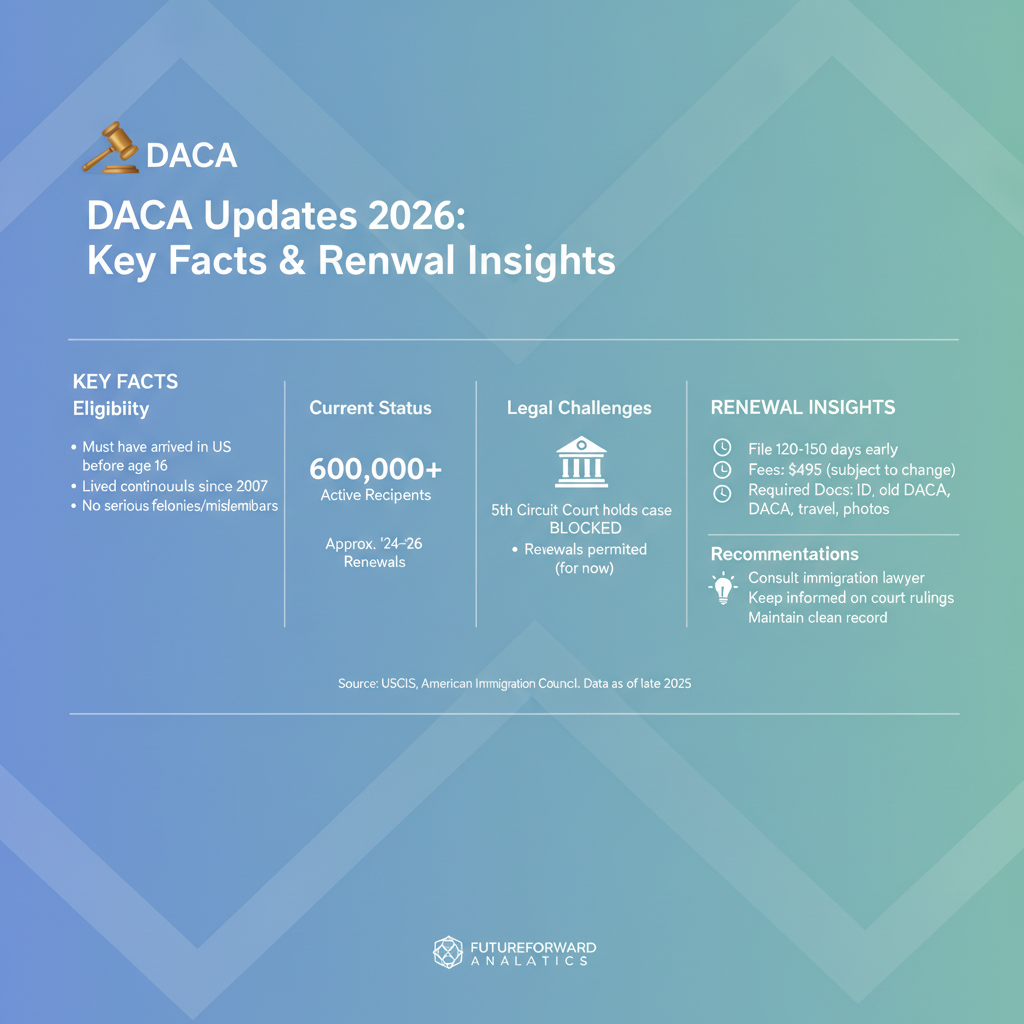
This comprehensive guide is inspired by the continuous stream of critical updates regarding the DACA program from official sources like USCIS and reputable news outlets. Keeping abreast of these developments is crucial for DACA recipients and their families. For the latest official announcements and policy changes, we always recommend referring directly to the U.S. Citizenship and Immigration Services (USCIS) website and reliable news sources:
DACA Program Updates and Renewal Information (USCIS)
What This News Means for Immigrants in Orlando and Across Florida
For DACA recipients and their families in Orlando, Central Florida, and throughout the Sunshine State, the ongoing updates and discussions around the Deferred Action for Childhood Arrivals program are more than just headlines – they directly impact lives, livelihoods, and the ability to plan for the future. Understanding the nuances of these developments is paramount.
Why this news is showing up now
The DACA program, first established in 2012, has been under continuous legal challenge for years. As of July 2026, the program's future remains tied up in federal courts, most notably the ongoing litigation in Texas v. United States. This case has led to injunctions preventing USCIS from approving new initial DACA applications. However, the courts have generally allowed USCIS to continue processing DACA renewal requests. The "news" around DACA is often a reflection of court hearings, judicial rulings, policy interpretations by the Department of Homeland Security (DHS), or simply the regular cycle of renewal deadlines approaching for hundreds of thousands of individuals. It's a program in a constant state of legal flux, requiring vigilant attention from recipients and legal advocates alike.
Each time there's a court filing, a hearing, or even an unofficial statement from a government official, it generates a ripple of news. These updates are crucial because they can signal potential changes in how renewals are processed, what documentation might be scrutinized, or even the long-term viability of the program itself. For DACA recipients, this means a perpetual need to stay informed and, more importantly, to ensure their renewal applications are as robust and timely as possible to avoid any gaps in protection or work authorization.
How it can affect Florida residents
Florida is home to one of the largest populations of DACA recipients in the United States. Estimates suggest tens of thousands of DACA beneficiaries reside in Florida, many of whom live and work in the vibrant communities of Orlando, Tampa, Miami, and along the I-4 corridor. This means that any DACA-related news has a direct and profound impact on families, businesses, and the economy across the state.
- Employment Stability: DACA provides an Employment Authorization Document (EAD), allowing recipients to work legally. Any disruption to DACA renewals could jeopardize employment for thousands, impacting families and contributing to economic instability. Many DACA recipients are essential workers, entrepreneurs, and vital contributors to Florida's workforce.
- Educational Opportunities: While DACA does not grant federal student aid eligibility, it allows recipients to pursue higher education without fear of deportation and, in some cases, qualify for in-state tuition or private scholarships within Florida. The loss of DACA could severely limit these opportunities for young Floridians.
- Community Impact: DACA recipients are deeply integrated into Florida's communities. They are neighbors, friends, parents, and community leaders. The uncertainty surrounding DACA creates stress and fear, impacting mental health and social cohesion. Keeping families together, the very mission of Imigrar, becomes even more challenging under these circumstances.
- Local USCIS Operations: The Orlando USCIS Field Office, located at 5449 South Semoran Blvd, plays a crucial role for many Central Florida residents in processing immigration applications, including DACA biometrics appointments. Understanding local procedures and potential backlogs is important for timely renewals.
For DACA recipients in Orange County and surrounding areas, the need for accurate information and experienced legal guidance is particularly acute. The legal complexities of DACA, combined with the continuous flow of updates, make it challenging for individuals to navigate the renewal process alone. This is where firms like Imigrar step in, offering expert assistance to ensure Florida residents can continue to live and work without unnecessary fear.
Need Help? Our Orlando immigration team is ready to assist. Call +1 786-791-3106 for a free consultation, or message us online. Se Habla Español.
What DACA Is (and Why It Matters)
The Deferred Action for Childhood Arrivals (DACA) program is a critical, yet often misunderstood, immigration policy. For hundreds of thousands of young people across the United States, DACA represents stability, opportunity, and a chance to live without the constant fear of deportation. Understanding its core components is the first step toward navigating its complexities.
A plain-English definition
At its heart, DACA is a discretionary immigration policy that allows certain eligible undocumented immigrants who came to the United States as children to receive a renewable two-year period of deferred action from deportation and eligibility for a work permit. Important: DACA is not a pathway to U.S. citizenship or lawful permanent residency (a Green Card). It does not change your underlying immigration status. Instead, it provides temporary protection from removal and an Employment Authorization Document (EAD), which allows you to work legally in the U.S. and, in most states, obtain a driver's license.
The program was established by the Obama administration in June 2012, recognizing that these young individuals, often referred to as "Dreamers," had been brought to the U.S. through no fault of their own and had grown up considering America their home. The intent was to allow them to contribute more fully to society without fear.
Key terms you need to know
Navigating immigration law requires familiarity with specific terminology. Here are some key terms related to DACA:
- DACA (Deferred Action for Childhood Arrivals): The full name of the program. It provides temporary relief from deportation and work authorization.
- Deferred Action: A discretionary determination by the government to defer removal action against an individual. It does not confer lawful status but acknowledges that the government will not pursue deportation for a specified period.
- Dreamers: A term often used to refer to young undocumented immigrants, many of whom are DACA recipients. It originates from the proposed "DREAM Act," which sought to provide a pathway to legal status for these individuals.
- EAD (Employment Authorization Document): Also known as a work permit, this card allows individuals to work legally in the United States. DACA recipients are eligible for an EAD, typically valid for two years, coinciding with their deferred action period.
- USCIS (U.S. Citizenship and Immigration Services): The government agency responsible for administering the DACA program, processing applications, and issuing EADs.
- Renewal: The process of reapplying for DACA and an EAD before the current period of deferred action expires. As of 2026, new initial DACA applications are generally not being accepted, but renewals are critical for maintaining protection.
- Advance Parole: A travel document that allows certain non-citizens to leave the U.S. and return without jeopardizing their immigration status. DACA recipients can apply for advance parole for humanitarian, educational, or employment purposes, though eligibility can be complex and it’s always best to consult an attorney before traveling.
- Continuous Residence: A DACA eligibility requirement referring to the period of time an applicant has continuously resided in the U.S. since a specific date. For renewals, it means maintaining residence since the approval of their last DACA period.
- Discretionary Authority: The power of a government agency (like USCIS) to make decisions on a case-by-case basis, even when an applicant meets all objective criteria. DACA is a discretionary program, meaning approval is not guaranteed even if all requirements are met.
For DACA recipients, particularly those in Orlando and Central Florida, understanding these terms is crucial to navigating the program's requirements and legal challenges. DACA matters because it offers a measure of stability and allows individuals to pursue education, careers, and contribute to their communities without the constant threat of deportation. It represents hope for a generation that knows no other home than the United States.
Current Immigration Law: The Foundation
The DACA program, while immensely impactful, does not stem from a specific federal statute passed by Congress. Instead, it was established through executive action, specifically a memorandum issued by the Secretary of Homeland Security. This origin is a key reason for its ongoing legal vulnerability and the continuous cycle of challenges it faces. As of July 2026, DACA continues to operate under existing directives, primarily focusing on renewals, while initial applications remain paused due to federal court orders. The legal framework surrounding DACA is complex, intertwined with administrative law and constitutional challenges.
Federal requirements
While new initial DACA applications are generally not being processed, understanding the original federal eligibility criteria is vital for renewals, as applicants must continue to meet these standards and demonstrate that no disqualifying factors have arisen. The core requirements for DACA, as outlined by USCIS, are:
- Age: You must have been under the age of 31 as of June 15, 2012.
- Entry to U.S.: You must have come to the United States before your 16th birthday.
- Continuous Residence: You must have continuously resided in the United States since June 15, 2007, up to the present time. For renewals, this means maintaining continuous residence since your last DACA approval.
- Physical Presence: You must have been physically present in the United States on June 15, 2012, and at the time of making your request for DACA.
- No Lawful Status: You must have had no lawful status on June 15, 2012.
- Education/Military: You must currently be in school, have graduated or obtained a certificate of completion from high school, have obtained a General Education Development (GED) certificate, or be an honorably discharged veteran of the Coast Guard or Armed Forces of the United States.
- Criminal Record: You must not have been convicted of a felony, a significant misdemeanor, or three or more other misdemeanors, and not otherwise pose a threat to national security or public safety.
For renewal applicants, the focus is on demonstrating continued eligibility and that no new disqualifying events (such as certain criminal convictions or significant breaks in continuous residence) have occurred since the last DACA approval. USCIS reviews each renewal application on a case-by-case basis, exercising its discretionary authority. Even if all criteria are met, approval is not guaranteed. This is why thorough preparation and legal guidance are paramount.
The primary forms used for DACA renewals are: Form I-821D (Consideration of Deferred Action for Childhood Arrivals), Form I-765 (Application for Employment Authorization), and Form I-765WS (Worksheet for Form I-765). These forms are critical to the renewal process and must be completed with utmost accuracy and submitted with the correct fees and supporting documentation. You can find these forms and detailed instructions on the USCIS Forms page.
For the most up-to-date information on DACA policy and legal challenges, always refer to the USCIS official website.
Florida-specific considerations
While DACA is a federal program, its implementation and impact resonate uniquely within each state. For Florida residents, the federal requirements apply universally. However, there are practical considerations specific to living in the Sunshine State:
- Orlando USCIS Field Office: The Orlando USCIS Field Office primarily handles interviews and biometrics appointments for applicants in Central Florida. If you reside in Orlando, Orange County, or surrounding areas, your biometrics appointment will likely be scheduled at this location. It’s important to be aware of its location and any specific instructions provided in your appointment notice.
- Driver's Licenses: DACA recipients in Florida can apply for a Florida driver's license upon receiving their EAD. This is a crucial benefit for daily life, employment, and navigating the state's extensive road network, including the I-4 corridor. Ensure your EAD is valid and present it along with other required identification documents to the Florida Department of Highway Safety and Motor Vehicles (FLHSMV).
- State Legislative Landscape: While DACA is federal, state legislation can sometimes affect DACA recipients indirectly, for example, regarding professional licensing or access to certain state-funded programs. Staying informed about Florida's legislative environment is important, though direct DACA eligibility remains a federal matter.
The Orlando immigration attorneys at Imigrar are deeply familiar with both federal DACA requirements and the specific needs and concerns of Florida residents. We can provide tailored advice and ensure your renewal application is robust and compliant with all current federal guidelines, while also addressing any local considerations that may arise.
Need Help? Our Orlando immigration team is ready to assist. Call +1 786-791-3106 for a free consultation, or message us online. Se Habla Español.

How to Renew Your DACA: A Complete Step-by-Step Guide
Renewing your DACA is a critical process that requires meticulous attention to detail and timely action. Given the program's ongoing legal challenges, maintaining your deferred action status and work authorization is more important than ever. This guide focuses on the renewal process, as new initial DACA applications are generally not being accepted as of July 2026.
1) Determine Your Eligibility and When to Apply
The first and most crucial step is to confirm your continued eligibility and to identify the optimal window for filing. USCIS recommends filing your DACA renewal application between 120 and 150 days before your current DACA and EAD expire. Filing too early or too late can have serious consequences.
- Continued Eligibility: Review the original DACA eligibility criteria (age, continuous residence, education, criminal record) to ensure you still meet all requirements. Have you maintained continuous residence in the U.S. since your last DACA approval? Have you been convicted of any new disqualifying crimes?
-
Optimal Filing Window (120-150 Days):
- Filing too early (more than 150 days out): USCIS may reject your application.
- Filing too late (less than 120 days out): You risk having a gap in your deferred action and work authorization. This could lead to loss of employment, inability to drive, and potentially even placement in removal proceedings.
- Check Expiration Dates: Locate your current I-797 DACA Approval Notice and your EAD card. Note the expiration dates clearly. Calculate your 120-150 day window precisely.
Warning: If your DACA has already expired, you should still apply to renew as soon as possible. USCIS generally accepts renewal requests even if your DACA expired more than a year ago, but the risk of a gap in protection is higher. Consult with an attorney if your DACA has lapsed.
2) Gather All Necessary Documents
Thorough documentation is key to a successful DACA renewal. While the renewal process often requires less evidence than an initial application, you must be prepared to demonstrate continued eligibility and address any changes since your last approval.
- Previous DACA Approval Notices: Copies of your most recent Form I-797 Approval Notice for DACA and your EAD card.
- Proof of Identity: Copy of your birth certificate with translation (if not in English), passport, national identity document, or previous EAD card.
-
Proof of Continuous Residence (since last DACA approval): While USCIS generally does not require extensive evidence for renewals if there have been no breaks in residence, it's wise to have some documents ready, especially if you have had any changes or lengthy absences (even with Advance Parole). Examples include:
- School transcripts or diplomas
- Employment records (pay stubs, tax returns)
- Bank statements
- Medical records
- Rental agreements or utility bills
- Marriage certificates or birth certificates of U.S. citizen children (if applicable)
- Travel History (if applicable): If you traveled outside the U.S. with Advance Parole since your last DACA approval, provide copies of your I-131 approval notice and entry/exit stamps from your passport.
- Criminal History (if applicable): If you have been arrested or convicted of any crimes, even minor ones, since your last DACA approval, you must provide certified court dispositions and arrest records. Important: Do NOT omit any criminal history, no matter how minor. Failure to disclose can lead to denial and serious immigration consequences.
- Most Recent Passport Photos: Two identical, color passport-style photographs taken within 30 days of filing. Write your name and Alien Registration Number (A-Number) lightly on the back.
Organize all documents neatly. Make copies of everything you send to USCIS and keep the originals for your records.
3) Complete Required Forms Accurately
Accurate completion of the forms is paramount. Errors, omissions, or inconsistencies can lead to RFEs (Requests for Evidence) or even denial.
-
Form I-821D, Consideration of Deferred Action for Childhood Arrivals:
- Fill out every section completely. If a section does not apply, write "N/A" (not applicable).
- Pay close attention to Part 2, "Information About Your Request," and ensure all dates, especially related to continuous residence and physical presence, are correct.
- In Part 3, "Basis for Requesting Deferred Action," clearly state that you are requesting a renewal.
- Sign and date the form. Unsigned forms will be rejected.
-
Form I-765, Application for Employment Authorization:
- This form is for your work permit. In Question 27, "Eligibility Category," enter (c)(33) for DACA renewal.
- Ensure your name, address, and A-Number match your other forms and previous applications.
- Sign and date the form.
-
Form I-765WS, Worksheet:
- This worksheet helps USCIS determine if you have an economic need to work. Fill it out completely and honestly.
- Provide details about your income, expenses, and assets.
Reminder: Always use the latest version of the forms available on the USCIS Forms page. Forms can be updated frequently.
4) Prepare Your Application Packet and Fees
Once forms are completed and documents gathered, assemble your application packet carefully and ensure all required fees are included.
-
Filing Fees:
- The current fee for Form I-765 (Employment Authorization) is $410.
- The biometrics services fee is $85.
- Total Fee: $495.
- Note: There is no separate fee for Form I-821D.
- Payment Method: You can pay by money order, personal check, cashier’s check, or by credit card using Form G-1450 (Authorization for Credit Card Transactions). Make checks payable to "U.S. Department of Homeland Security." Do NOT send cash.
-
Organize Your Packet:
- Place your check or Form G-1450 on top.
- Followed by Form I-821D, then Form I-765, then Form I-765WS.
- Include your two passport-style photos in a small envelope clipped to the I-765.
- Attach copies of all supporting documents (previous DACA notices, EAD, identity, residence, criminal records, etc.) behind the relevant forms.
- Consider using tabs to label sections for easy review by USCIS.
Important: Double-check all forms for signatures and dates. An unsigned form will be rejected and returned to you, causing significant delays.
5) Submit Your Application to USCIS
The mailing address for DACA renewal applications depends on your current state of residence. For Florida residents, you will generally mail your application to a USCIS Lockbox Facility.
- Mailing Address for Florida Residents: Check the "Direct Filing Addresses for Form I-821D" page on the USCIS official website. As of current guidelines, DACA applications from Florida are typically sent to the USCIS Chicago Lockbox.
- Shipping Method: Always send your application via a traceable mail service, such as USPS Certified Mail with Return Receipt, FedEx, or UPS. This provides proof of mailing and delivery, which is crucial for your records.
- Keep Copies: Make a complete copy of your entire application packet, including all forms, documents


