


Child Immigration Status Updates in 2026: What Families Need to Know
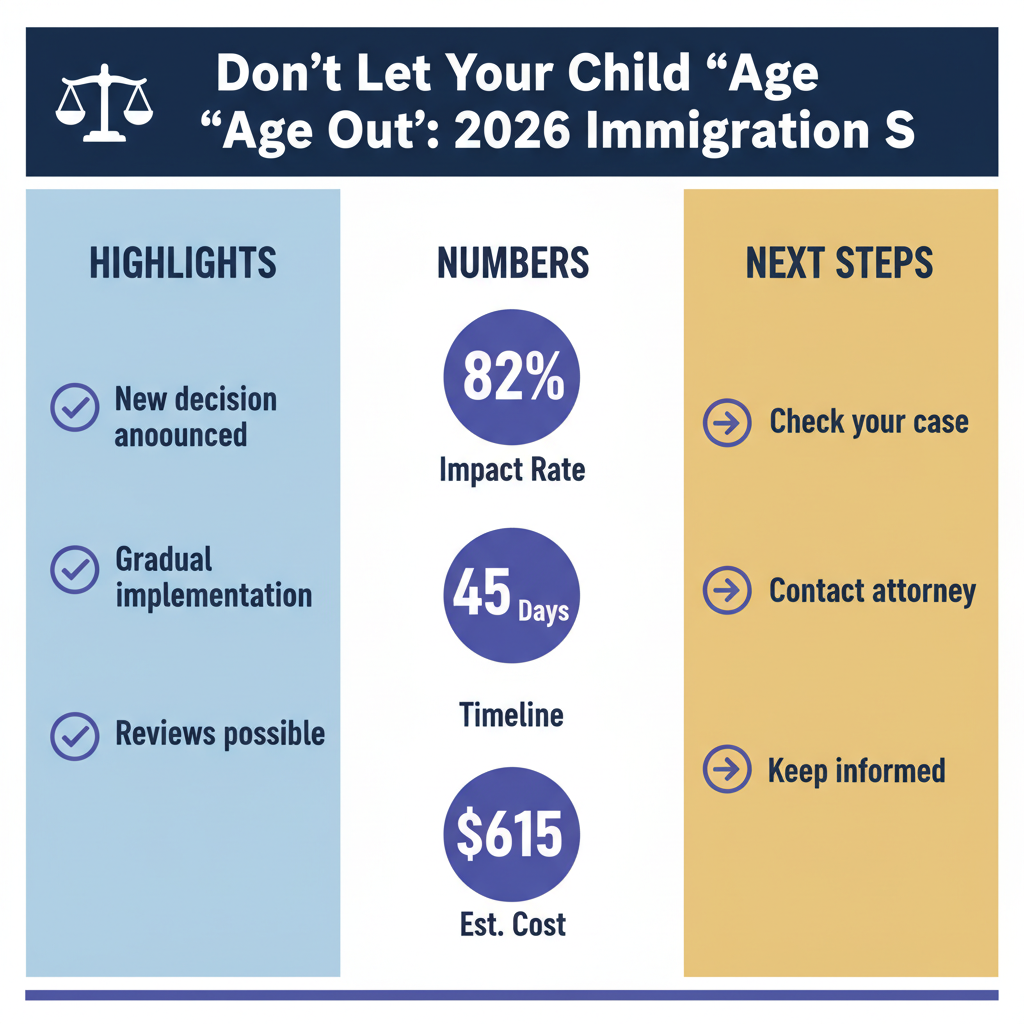
If you are immigrating to the United States with children, 2025–2026 has brought important changes that can affect whether your son or daughter can stay on your case as a “child.” The rules are complex, but with careful planning you can often protect your child’s place in line and avoid heartbreaking “age out” problems.
This guide explains in simple terms what is changing, how “aging out” works, and practical steps you can take right now to safeguard your child’s immigration status.
Key Concept: Who Counts as a “Child” in U.S. Immigration Law?
Under U.S. immigration law, a “child” is generally an unmarried person under age 21 for most family and derivative immigration benefits.[7]
That definition matters for many cases, including:
- Children listed on a parent’s family-based or employment-based green card case as derivative beneficiaries
- Children coming with or “following to join” a Diversity Visa (DV) lottery winner[8]
- Children of green card holders in the F‑2A category (spouses and unmarried children under 21)[7]
Once a son or daughter turns 21, they are usually treated as an adult child and may move to a different category with a much longer waiting time, or lose eligibility as a derivative child entirely.[4][7]
“Aging Out”: Why Turning 21 Can Be So Risky
Aging out happens when a child turns 21 before they receive their green card or immigrant visa, and the law no longer considers them a “child” for that particular benefit.[4]
Common consequences include:
- A child on a parent’s family-based case can no longer immigrate as a derivative and may need a new petition with a long wait.[3][4]
- A child of a green card holder in the F‑2A category (under 21) may be moved to the F‑2B category (21 or older), which often has many additional years of backlog.[4][7]
- Some employment-based derivative children lose their ability to immigrate at all if they age out.[3][4]
- Diversity Visa (DV) derivative children can only be issued visas through the end of the DV fiscal year (for DV‑2026, that is September 30, 2026).[8]
Because of these risks, Congress created a law called the Child Status Protection Act (CSPA) to help some children keep “child” status even after turning 21.
Big 2025–2026 Change: Stricter USCIS Policy Makes Aging Out More Likely
In August 2025, U.S. Citizenship and Immigration Services (USCIS) announced that it was reversing a more generous 2023 policy on how it applies the Child Status Protection Act.[1][4]
Here are the essentials:
- The earlier 2023 policy allowed many children to use the more generous “Dates for Filing” chart from the monthly Visa Bulletin when calculating CSPA age, which made it easier to stay under 21 in many cases.[1][4]
- As of August 15, 2025, USCIS returned to its older, more restrictive method, using the typically less generous “Final Action Dates” chart to determine when a visa is considered “available” for CSPA purposes.[1][4]
- This change applies to adjustment of status applications filed with USCIS on or after August 15, 2025.[1][4]
- This shift makes aging out more likely for teens who are close to turning 21 while waiting in long backlogs.[1][3][4]
The Department of State (which handles consular processing) never adopted the more generous 2023 interpretation, so now USCIS and the State Department policies are aligned on this point.[1][4]
Important Protection for Cases Filed Before August 15, 2025
USCIS has confirmed that the more generous 2023 policy continues to apply to many earlier cases:[1][4]
- Adjustment of status applications filed before August 15, 2025 remain under the 2023, more favorable CSPA interpretation.[1][4]
- If a child became eligible to apply for adjustment when the 2023 policy was in effect but could not file within one year because of extraordinary circumstances beyond their control, USCIS may still apply the more generous rule when calculating CSPA age.[1][4]
If your child is in this group, it is crucial to document the reasons they could not file and to speak with an immigration attorney as soon as possible.
How CSPA Works in Practice: Freezing Your Child’s Age
The Child Status Protection Act (CSPA) can sometimes “freeze” a child’s immigration age so they are still treated as under 21, even if they have passed their 21st birthday.[3][4]
Basic CSPA Formula for Many Family and Employment Cases
For many cases handled by USCIS, the CSPA age is roughly calculated as:
CSPA Age = Child’s age on the date the visa becomes available − Time the petition was pending[4]
Key points:
- The child’s age is “locked in” when an immigrant visa is considered available under the applicable chart (now generally the Final Action Dates chart for adjustment cases with USCIS).[1][4]
- You subtract the time that the underlying petition (for example, Form I‑130 or I‑140) was pending with USCIS from the child’s actual age on that date.[4]
- If the result is under 21, the child may qualify as a “child” so long as they seek to acquire permanent residence (for example, by filing Form I‑485 or paying consular fees) within one year of visa availability.[4]
Because the calculation depends on both the visa bulletin and the length of time the petition was pending, it is very case-specific. Families should not assume a child has aged out until an experienced immigration professional reviews the numbers.
Visa Bulletin Basics: Why the Monthly Charts Matter for Your Child
The U.S. Department of State publishes a monthly Visa Bulletin, which is crucial for understanding if a visa is “available” and how CSPA age will be calculated.[7][8]
The Main Family Categories Affecting Children
Family-based categories in the Visa Bulletin include, among others:[7]
- F‑1 – Unmarried children (age 21 and older) of U.S. citizens
- F‑2A – Spouses and unmarried children (under 21) of permanent residents
- F‑2B – Unmarried children (age 21 or older) of permanent residents
- F‑3 – Married children of U.S. citizens
- F‑4 – Siblings of U.S. citizens
Your family’s priority date (usually the date the petition was filed) and your category determine how long you must wait and when a visa becomes available for you and your children.[7]
Two Charts: Dates for Filing vs. Final Action Dates
The Visa Bulletin usually includes two key charts for family and employment cases:
- Dates for Filing – Shows when applicants may be allowed to file their applications early in some cases.
- Final Action Dates – Shows when a visa is actually available and a case can be approved.
Under the current USCIS policy, for most adjustment of status cases, the Final Action Dates chart is used for CSPA age calculations, which can delay the “visa available” date and increase the risk of aging out.[1][4]
2026 Processing Environment: Backlogs and Children at Risk
Family-based immigration continues to face backlogs and unpredictable processing times in 2026, especially for categories involving adult children and siblings.[2][7]
Key trends affecting children:
- USCIS is still working through large backlogs that began during the pandemic.[2]
- Some categories involving children are moving faster, but many long-pending cases still create age-out risk for teens approaching 21.[2][3]
- USCIS has been expanding digital processing and hiring more officers, which may gradually improve processing times later in 2026, but delays are still common.[2]
Special Note: Health Coverage for Immigrant Children in California
For families in California, separate state rules affect Medi‑Cal (California’s Medicaid program) eligibility based on age and immigration status. These are not immigration status rules, but they are important for your child’s access to health care.
Starting January 1, 2026, some Medi‑Cal rules are changing, but children and youth under age 19 can still qualify for full-scope Medi‑Cal regardless of immigration status.[6]
In addition, foster children and youth and former foster youth under age 26 who were in foster care on their 18th birthday remain eligible for full-scope Medi‑Cal regardless of immigration status.[5][6]
If you live in California, you can contact your local Medi‑Cal office or the statewide call center to understand how these rules apply to your child.[6]
Practical Steps to Protect Your Child from Aging Out
Even with stricter CSPA rules, there are many practical steps your family can take to reduce the risk that your child will age out.
1. Know Your Priority Date and Category
Start by gathering the basic facts about your case:
- Find your priority date on your I‑130 or I‑140 receipt notice or approval notice.
- Confirm your immigrant category (for example, F‑2A, F‑3, employment-based, DV).[7][8]
- List all your derivative children (those listed as dependents) with their dates of birth.
Once you know this information, you can compare it to the current Visa Bulletin to see how close you are to visa availability and whether a child is at risk.
2. Track the Visa Bulletin Monthly
Because the Visa Bulletin changes every month, families should check it regularly—especially if you have a child age 16–20.[3][7][8]
Practical tips:
- Set a monthly calendar reminder to review the latest Visa Bulletin.[7][8]
- Compare your priority date to your category’s Final Action Date to see when your date becomes current.[7][8]
- If your date is close to becoming current and you have a teen, talk to an attorney immediately about timing and filing strategy.
3. File As Soon As Your Case Becomes Eligible
Because CSPA often requires the child to “seek to acquire” permanent residence within one year of visa availability, timing is critical.[4]
Action items:
- Prepare documents before your date becomes current so you can file quickly.
- For adjustment of status (Form I‑485), watch USCIS announcements on whether they are using the Dates for Filing or Final Action Dates chart for filing. Even though CSPA now usually uses Final Action Dates, filing early when allowed can still help overall timing.[1][4]
- For consular processing, make sure you follow National Visa Center (NVC) instructions promptly, pay visa fees, and submit all requested documents without delay.
4. Consider Backup Options for Teens 16–20
Given the stricter CSPA interpretation, many practitioners advise exploring backup strategies for older teens listed on a parent’s case.[3]
Possible strategies to discuss with counsel include:
- Filing a separate petition for the child where possible, such as a U.S. citizen parent filing directly for the child
- Considering whether consular processing or adjustment of status offers better timing for your child’s situation
- Reviewing eligibility for other pathways (for example, student visas, humanitarian options, or other family categories)
These strategies are very specific to each family and should be carefully evaluated with an immigration attorney.
5. Document “Extraordinary Circumstances” if You Could Not File in Time
USCIS has indicated that for some children who were eligible to file under the more generous 2023 policy but could not do so within one year because of extraordinary circumstances beyond their control, it may still apply the prior, more favorable CSPA interpretation.[1][4]
If this may apply to your family:
- Gather evidence of what prevented filing within the one-year period (for example, serious illness, natural disaster, legal error, or other major obstacles).
- Keep all correspondence with prior attorneys, USCIS, the National Visa Center, or the consulate.
- Ask an attorney to help you prepare a detailed explanation and supporting documents for USCIS.
6. Respond Quickly to Requests for Evidence (RFEs)
Delays caused by missing or incomplete evidence can push a case into age-out territory. In 2026, USCIS is paying close attention to the credibility of family relationships, including parent‑child relationships.[2]
To minimize delays:
- Keep copies of all birth certificates, adoption decrees, and legal guardianship documents readily available.[2]
- If you receive a Request for Evidence (RFE) or a Notice of Intent to Deny (NOID), note the deadline and respond as early and as completely as possible.[2]
- Organize photos, school records, medical records, and other documents showing a long-term parent‑child relationship, if relevant.[2]
What If Your Child Already Aged Out?
Even if your child has already turned 21 or you believe they have aged out, it is important not to give up without a careful legal review. In some cases, options may still exist.
Recalculating CSPA Age
Because the CSPA calculation is technical and depends on the length of time a petition was pending and exact visa availability dates, an attorney may find that a child is still protected even if they are older than 21 today.[3][4]


