

Navigating the complex world of U.S. immigration can be challenging, especially when your ability to work and support your family depends on timely processing of your Employment Authorization Document (EAD). At Imigrar, we understand the critical importance of a valid EAD, often referred to as a work permit, for immigrants across Orlando, Florida, and nationwide.
Today, June 25, 2026, we're addressing the ongoing developments from U.S. Citizenship and Immigration Services (USCIS) regarding EAD applications and renewals. USCIS consistently updates its processes, policies, and processing times, which can significantly impact individuals waiting for their work authorization. Staying informed is key to a successful application.
Need Help with Your EAD Application or Renewal? Our Orlando immigration team at Imigrar is ready to assist. Don't navigate the complexities alone. Call +1 786-791-3106 for a free consultation, or message us online. Se Habla Español.
The reporting that sparked this guide
Our commitment to keeping you informed is driven by continuous monitoring of official sources and news outlets covering immigration policy and processing updates. The information compiled in this guide is a direct response to the latest discussions and developments surrounding Employment Authorization Document Processing (USCIS), ensuring you receive the most current and relevant advice.
What This News Means for Immigrants in Orlando and Across Florida
The landscape of immigration processing is dynamic, with USCIS frequently adjusting its operational strategies to manage caseloads, enhance efficiency, and respond to evolving needs. These adjustments, particularly concerning Employment Authorization Documents (EADs), have direct and significant implications for individuals seeking to work legally in the United States.
Why this news is showing up now
The ongoing attention to EAD processing stems from USCIS's continuous efforts to address application backlogs and improve processing efficiencies. Over the past few years, various factors, including the COVID-19 pandemic, staffing shortages, and increased application volumes, have led to significant delays. In response, USCIS has been implementing several initiatives:
- Temporary Final Rules and Policy Updates: USCIS has previously enacted temporary final rules to extend the automatic validity period for certain renewing EADs, aiming to prevent lapses in work authorization. While these specific rules may evolve, the underlying commitment to mitigating work authorization gaps remains a priority. As of 2026, USCIS continues to explore and implement similar strategies to streamline renewals and reduce processing times for key categories.
- Digitization Efforts: A major push is underway to digitize application processes, allowing for electronic filing and processing of more forms, including Form I-765. While not all categories may fully benefit yet, these efforts are designed to create a more efficient system overall.
- Increased Staffing and Resource Allocation: The agency has been working to allocate more resources and personnel to processing centers handling Form I-765, aiming to chip away at the existing backlogs.
- Public Scrutiny and Advocacy: Consistent advocacy from immigration attorneys, non-profit organizations, and the public has kept the issue of EAD processing times at the forefront, prompting USCIS to provide updates and implement changes.
These initiatives are often announced via official USCIS news alerts and policy manuals, becoming trending topics in the immigration community due to their direct impact on people's lives and livelihoods.
How it can affect Florida residents
For individuals residing in Orlando, Central Florida, and throughout the state, these EAD processing updates are particularly relevant:
- Economic Stability: A timely EAD means uninterrupted employment, crucial for supporting families and contributing to Florida's economy. Delays can lead to job loss, financial hardship, and uncertainty.
- Local Job Market: Florida's diverse economy, especially in regions like Orlando with its tourism, tech, and healthcare sectors, relies on a skilled workforce. Efficient EAD processing ensures that eligible individuals can fill these roles without unnecessary delays.
- Orlando USCIS Field Office: While many Form I-765 applications are processed nationally, the Orlando USCIS Field Office may handle certain interviews or requests for information related to your underlying immigration benefit (e.g., an Adjustment of Status application filed concurrently). Understanding national processing trends is vital, even if local interaction is limited.
- Planning and Preparedness: Knowing about potential processing fluctuations allows Florida residents to plan better. This includes filing renewals well in advance and preparing for potential gaps in employment if an extension is not automatically granted or is delayed.
- Community Impact: Florida has a significant immigrant population. Updates to EAD processing resonate deeply within communities across Orange County and along the I-4 corridor, affecting thousands of families directly.
Important: The impact of these updates can vary significantly depending on your specific eligibility category for an EAD. It's crucial to understand how general policy changes apply to your unique situation.
What Employment Authorization Documents (EADs) Are (and Why They Matter)
An Employment Authorization Document (EAD) is a foundational document for many immigrants in the United States. Without it, most non-citizens are not legally permitted to work for an employer in the U.S. Understanding what an EAD is and its significance is the first step in navigating the application process.
A plain-English definition
Simply put, an Employment Authorization Document (EAD), often called a "work permit," is a card issued by USCIS that proves you are authorized to work in the United States for a specific period. It's a physical card, similar to a driver's license, that you present to employers to demonstrate your eligibility to be hired. It does not grant you immigration status itself, but rather grants you the ability to work based on an underlying immigration status or application.
For example, if you are awaiting a decision on your Adjustment of Status to a Green Card, or if you have been granted asylum, or are a spouse of certain visa holders (like H-4 or L-2), an EAD allows you to legally hold a job while your primary immigration case is pending or while you maintain your status.
Key terms you need to know
To fully grasp the EAD process, familiarize yourself with these essential terms:
- Employment Authorization Document (EAD): The official term for a U.S. work permit card.
- USCIS: U.S. Citizenship and Immigration Services, the government agency responsible for processing most immigration benefits, including EADs.
- Form I-765: The official application form, "Application for Employment Authorization," that you must submit to USCIS to request an EAD.
- Eligibility Category: The specific immigration status or application you have that qualifies you for an EAD. Examples include "c(9)" for Adjustment of Status applicants, "a(5)" for asylees, or "c(26)" for H-4 spouses. Your category dictates specific requirements and processing.
- Initial EAD: Your first application for an EAD.
- EAD Renewal: An application to extend the validity of an existing EAD that is nearing expiration.
- Automatic Extension: A provision that allows certain renewing EAD applicants to continue working for a specific period (currently up to 180 days for most categories) beyond their card's expiration date, provided they filed their renewal application on time.
- Biometrics Appointment: An appointment at a USCIS Application Support Center (ASC) where fingerprints, photographs, and a signature are collected for background checks. This is often required for EAD applicants.
- Receipt Notice: A document sent by USCIS confirming they have received your application. It's crucial for tracking your case and for verifying the start date of any Automatic Extension.
- Adjustment of Status (AOS): The process of applying for a Green Card while physically present in the United States. Many AOS applicants are eligible for an EAD.
- Advance Parole (AP): A travel document that allows certain non-citizens to re-enter the U.S. after traveling abroad without abandoning their pending Adjustment of Status application. Often, EAD and AP are applied for concurrently on a combo card.
Understanding these terms will empower you to better comprehend the EAD application process and any updates or policy changes from USCIS.
Don't Risk Delays or Denials! EAD applications require precision. Our experienced immigration attorneys in Orlando can help ensure your Form I-765 is filed correctly and completely. Call us today at +1 786-791-3106 for a free consultation. Se Habla Español.
Current Immigration Law: The Foundation for Work Permits
The ability to obtain an Employment Authorization Document (EAD) is rooted in federal immigration law, primarily the Immigration and Nationality Act (INA) and its implementing regulations. While USCIS implements policies and procedures, the fundamental eligibility criteria are defined by these statutes.
Federal requirements
Eligibility for an EAD is not universal; it is granted to specific categories of non-citizens. These categories are outlined in 8 CFR § 274a.12 and are diverse, reflecting various stages and types of immigration processes. Key examples of individuals eligible for an EAD include:
- Applicants for Adjustment of Status (Form I-485) to lawful permanent resident (Green Card).
- Asylees and refugees, and applicants for asylum or refugee status.
- Individuals granted Temporary Protected Status (TPS).
- Certain non-immigrant visa holders, such as spouses of L-1 (L-2 spouses) and H-1B (H-4 spouses) visa holders, under specific conditions.
- Individuals with pending applications for NACARA or VAWA.
- Students with specific employment authorizations (e.g., Optional Practical Training (OPT) for F-1 students).
- Cuban/Haitian Entrants.
- Certain parolees.
- Individuals with pending requests for Cancellation of Removal.
Each category has specific requirements and conditions that must be met to qualify for an EAD. For instance, an Adjustment of Status applicant typically files Form I-765 concurrently with or after their Form I-485. H-4 spouses, on the other hand, must have an H-1B spouse who is the principal beneficiary of an approved Form I-140 (Immigrant Petition for Alien Worker) or has been granted an extension of stay beyond the six-year limit under AC21.
The primary form used for all EAD applications is Form I-765, Application for Employment Authorization. This form collects information about your identity, immigration history, and the specific category under which you are applying.
For detailed information on eligibility categories and current requirements, always refer to the official USCIS Form I-765 page and the USCIS Policy Manual. You can access all necessary forms and instructions directly from the USCIS Forms page on the USCIS official website.
Florida-specific considerations
While the eligibility and application process for an EAD are federal matters, there are Florida-specific considerations that immigrants should be aware of:
- No State-Level Work Permits: Florida does not issue its own work permits. All legal authorization to work for non-citizens in Florida must come from the federal government (i.e., through an EAD issued by USCIS or through specific visa categories that inherently allow work).
- E-Verify Requirements: Florida has laws regarding employer verification of employment eligibility. Many employers in Florida, particularly public employers and contractors, are required to use E-Verify, an internet-based system operated by USCIS in partnership with the Social Security Administration (SSA). E-Verify checks an employee's eligibility to work in the United States. Your valid EAD is essential for this process.
- Driver's Licenses and State IDs: A valid EAD is often a crucial document when applying for a Florida driver's license or state identification card, which further facilitates daily life and employment in the state.
- Public Benefits: While an EAD grants work authorization, it does not automatically qualify you for all public benefits. Eligibility for state-level benefits often depends on your underlying immigration status and the length of your residency.
Reminder: Always carry your valid EAD and other required identification, especially if you are working or interacting with law enforcement. For Central Florida residents, understanding these state-level implications alongside federal regulations is vital for seamless integration and compliance.
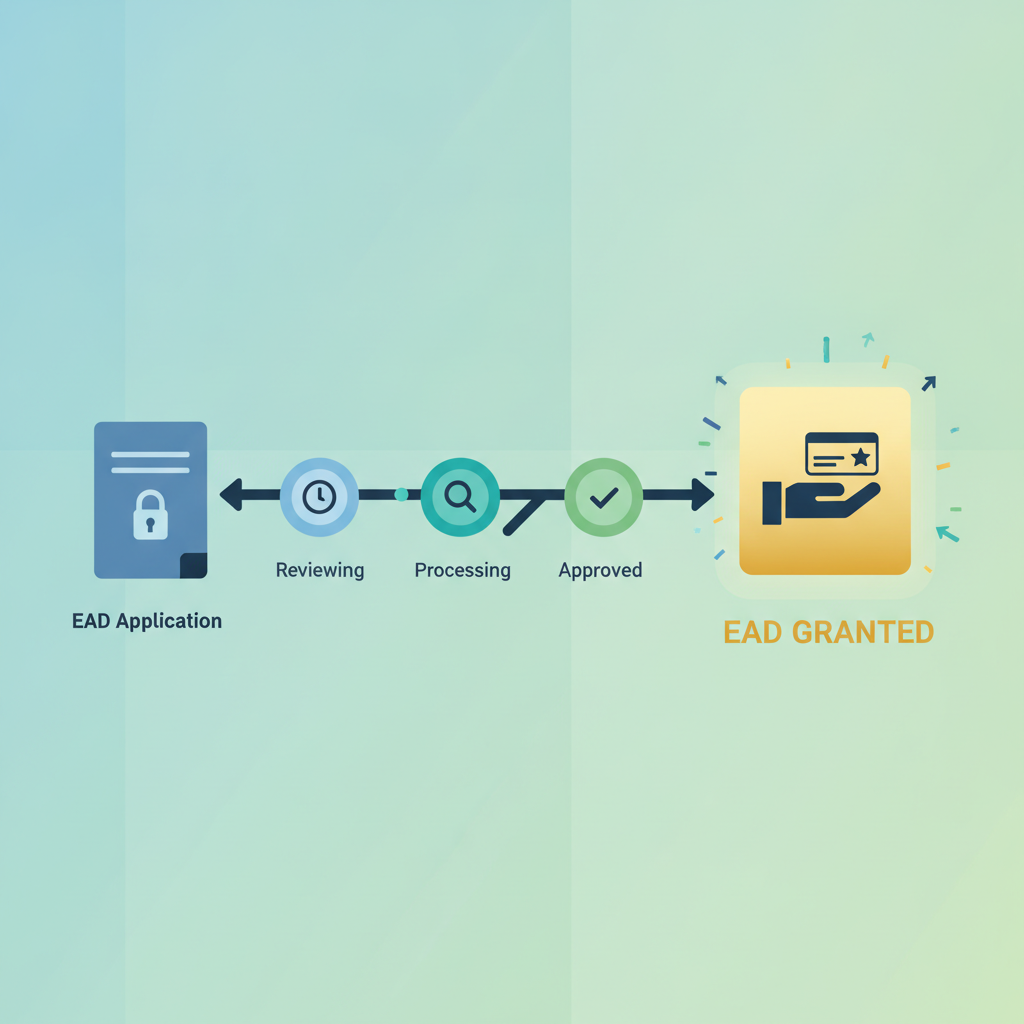
How to Apply for or Renew Your EAD: A Complete Step-by-Step Guide
Applying for or renewing an Employment Authorization Document (EAD) involves careful preparation and adherence to USCIS guidelines. This step-by-step guide will walk you through the process, helping you avoid common pitfalls.
1) Determine Your Eligibility Category and Gather Initial Information
Before you even touch Form I-765, you must confirm that you are eligible for an EAD and identify your specific eligibility category. This is perhaps the most critical first step, as applying under the wrong category will lead to denial.
- Research Eligibility: Consult the USCIS Form I-765 instructions to find the list of eligibility categories. Common categories include:
- (c)(9): Adjustment of Status applicants (Form I-485 pending).
- (a)(5): Asylees.
- (c)(8): Asylum applicants.
- (c)(26): H-4 spouses.
- (a)(12): Temporary Protected Status (TPS).
- Collect Personal Information: Have ready your full legal name, date of birth, country of birth, Alien Registration Number (A-Number), Social Security Number (if applicable), and current address.
- Understand Your Underlying Status: Be clear about your current immigration status or the basis of your pending immigration application (e.g., pending Form I-485, approved asylum, etc.).
Warning: Misidentifying your category is a common reason for application delays or denials. If unsure, seek legal counsel.
2) Complete Form I-765, Application for Employment Authorization
This is the core of your application. Fill out Form I-765 accurately and completely.
- Download the Latest Form: Always download the most recent version of Form I-765 from the USCIS website. Forms are updated periodically, and old versions may be rejected.
- Read Instructions Carefully: The instructions document is lengthy but crucial. It provides detailed guidance for each question and explains specific requirements for different eligibility categories.
- Type or Print Legibly: USCIS prefers typed forms. If handwriting, use black ink and print clearly.
- Answer All Questions: Do not leave any questions blank. If a question doesn't apply to you, write "N/A" (not applicable) or "None," as appropriate.
- Part 2, Item 27: Eligibility Category: This is where you enter your specific eligibility code (e.g., c09, a05). Be precise.
- Part 2, Item 28 & 29 (for specific categories): Some categories require additional information, like the receipt number of a spouse's Form I-797 or evidence of an approved Form I-140.
- Sign and Date: Ensure you sign the form in black ink. An unsigned form will be rejected.
3) Assemble Your Supporting Documentation
This is where you provide evidence to support your eligibility. The required documents vary significantly by eligibility category.
- General Required Documents (for most applicants):
- Two identical, passport-style photos taken within 30 days of filing. Write your A-Number (if you have one) and full name lightly on the back of each photo.
- Copy of your last EAD (front and back), if renewing.
- Copy of your Form I-94, Arrival/Departure Record (front and back, if applicable).
- Copy of your government-issued identity document with photo (e.g., passport identity page, driver's license).
- Copy of your birth certificate (with certified translation if not in English).
- Copy of your visa (if applicable).
- Copy of any previous USCIS notices (e.g., Form I-797 Receipt Notice for Form I-485, asylum approval notice).
- Category-Specific Documents (Examples):
- For (c)(9) Adjustment of Status Applicants: Copy of your Form I-485 Receipt Notice.
- For (c)(8) Asylum Applicants: Copy of your Form I-589 Receipt Notice or proof of a pending asylum application.
- For (c)(26) H-4 Spouses: Copy of your spouse's H-1B Form I-797 Approval Notice, evidence of your marriage, and proof your spouse has an approved Form I-140 or has been granted an H-1B extension beyond the 6-year limit.
- For (a)(5) Asylees: Copy of your asylum grant letter.
- Translations: Any document not in English must be accompanied by a complete and accurate English translation and a certification by the translator.
- Copies, Not Originals: Unless specifically requested by USCIS, always submit copies of your documents, not originals.
4) Pay the Filing Fees
The filing fee for Form I-765 is subject to change. As of the latest updates, ensure you pay the correct amount.
- Check Current Fees: Always verify the current fee on the USCIS Filing Fees page.
- Payment Method: You can pay by money order, personal check, cashier's check, or by credit card using Form G-1450, Authorization for Credit Card Transactions. Make checks payable to "U.S. Department of Homeland Security."
- Fee Waivers: Certain applicants may be eligible for a fee waiver if they meet specific income or public assistance criteria. If you are applying for a fee waiver, you must submit Form I-912, Request for Fee Waiver, along with supporting documentation.
Reminder: Some categories, like initial EADs for Adjustment of Status applicants, may have the Form I-765 fee waived if filed concurrently with Form I-485. Check the instructions carefully.
5) File Your Application with USCIS
Once your application is complete and all documents are assembled, it's time to mail it.
- Check Filing Address: The filing address for Form I-765 depends on your eligibility category and whether you are filing it concurrently with another form (like Form I-485) or separately. Use the USCIS Direct Filing Addresses for Form I-765 page to find the correct lockbox or service center.
- Organize Your Packet: Use fasteners (like paper clips or binder clips) to keep documents organized. Do not staple entire packets. Consider using cover sheets to identify sections.
- Mail with Tracking: Always send your application via a reputable mail service that provides tracking and delivery confirmation (e.g., USPS Certified Mail with return receipt, FedEx, UPS). This provides proof of timely submission.
- Keep Copies: Make a complete copy of your entire application packet (including the signed form, all supporting documents, and the check/money order) for your records. This is invaluable if USCIS loses your application or requests clarification.
6) Attend Biometrics Appointment (If Required) and Monitor Your Case
After filing, you will receive a Receipt Notice (Form I-797C)


