

In the dynamic world of U.S. immigration, staying informed is not just helpful—it's essential. For individuals seeking to live and work legally in the United States, the Employment Authorization Document (EAD), often called a work permit, is a cornerstone of their journey. As of April 2026, the U.S. Citizenship and Immigration Services (USCIS) continues to implement and refine policies aimed at improving the efficiency of EAD application and renewal processing. These updates can have a profound impact on immigrants in Orlando, across Florida, and nationwide.
At Imigrar, your trusted immigration law firm in Orlando, Florida, we understand the critical importance of a valid EAD for you and your family. Our mission is to "Keep Families Together" by providing expert legal guidance through complex immigration processes. This comprehensive guide will break down the latest EAD processing news, explain what it means for you, and provide a clear, step-by-step roadmap to navigate your application or renewal.
The reporting that sparked this guide
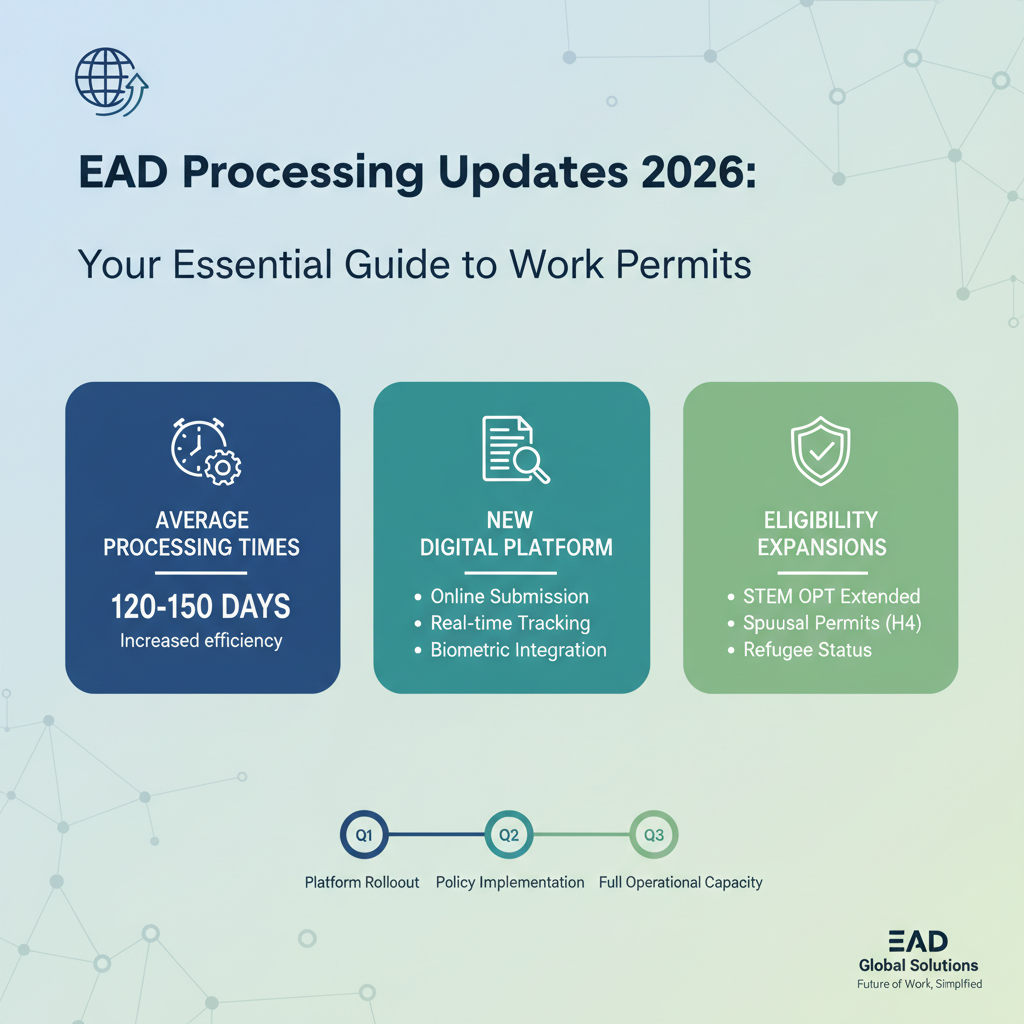
Our commitment to keeping you informed is driven by continuous monitoring of official sources and trending news. The insights and guidance in this article are informed by recent USCIS announcements and reporting on the evolving landscape of EAD processing:
Employment Authorization Document Processing (USCIS)
What This News Means for Immigrants in Orlando and Across Florida
The recent and ongoing updates from USCIS regarding Employment Authorization Document processing are more than just administrative changes; they represent significant shifts that directly impact the lives and livelihoods of immigrants. Understanding these developments is crucial for anyone relying on an EAD to work legally in the U.S.
Why this news is showing up now
USCIS has been under considerable pressure in recent years to address substantial backlogs in various immigration benefit applications, including Form I-765, Application for Employment Authorization. These backlogs led to prolonged processing times, causing significant hardship for individuals awaiting work authorization, often leaving them unable to work or renew their existing permits in a timely manner. In response, USCIS has implemented several initiatives and policy adjustments:
- Backlog Reduction Efforts: USCIS has dedicated resources to increase staffing, modernize systems, and streamline internal processes to chip away at the accumulated caseload. This includes prioritizing certain application types and optimizing intake procedures.
- Automatic Extension Policy: One of the most significant changes, particularly for renewal applicants, was the temporary final rule increasing the maximum period of automatic extension for certain expiring EADs. Initially, it was 180 days, then temporarily increased to 540 days, and USCIS has continued to evaluate and adjust this policy based on processing capacity and ongoing backlogs. As of April 2026, the specifics of this extension remain a critical consideration for many.
- Policy Clarifications and Guidance: USCIS frequently issues updated guidance and policy memos to clarify eligibility requirements, documentation standards, and processing protocols. These updates aim to provide clarity for both applicants and adjudicators, reducing errors and processing delays.
- Digital Transformation: The agency is slowly but steadily moving towards greater digitalization of applications and processes, which, in the long run, is expected to improve efficiency and reduce physical mail handling delays.
The news you're seeing now reflects USCIS's ongoing, iterative efforts to manage demand, reduce processing times, and ensure that eligible individuals receive their work authorization without undue delay. These aren't one-time fixes but rather continuous adjustments in response to changing caseloads and operational challenges.
How it can affect Florida residents
For individuals residing in Florida, particularly in the vibrant Orlando area, these EAD processing updates have direct and tangible effects:
- Workforce Stability: Florida's economy, heavily reliant on industries like tourism, agriculture, healthcare, and construction, benefits significantly from immigrant labor. Timely EAD processing ensures that businesses can retain their workforce and individuals can continue contributing to the state's economic prosperity. Delays, conversely, can lead to job loss, financial instability for families, and labor shortages for employers.
- Local Economic Impact: When EADs are processed efficiently, individuals can secure or maintain employment, pay taxes, and support local businesses. For Central Florida residents, this means greater economic security for families and a stronger local economy in cities like Orlando, Kissimmee, and Sanford.
- Planning and Uncertainty: For those awaiting an initial EAD or renewal, fluctuations in processing times create immense uncertainty. Knowing about potential automatic extensions or faster processing for certain categories allows for better personal and professional planning.
- Orlando USCIS Field Office: While EAD applications are generally processed at USCIS service centers, local field offices like the Orlando USCIS Field Office handle specific services, including interviews for underlying immigration benefits (like Adjustment of Status) that are often prerequisite for EAD eligibility. While not directly processing EADs, the efficiency of local offices can indirectly impact the overall immigration journey.
- Community Resources: Updates often highlight the need for accurate information and legal assistance. For Florida's diverse immigrant communities, access to reliable legal counsel, such as Imigrar, becomes even more critical to navigate these changes successfully.
Whether you're an asylum seeker in Orange County, an international student on OPT, or an applicant for a Green Card via Adjustment of Status along the I-4 corridor, these EAD processing updates directly influence your ability to work, support your family, and plan your future in Florida.
Need Help? Navigating EAD processing updates can be complex. Our Orlando immigration team is ready to assist. Call +1 786-791-3106 for a free consultation, or message us online. Se Habla Español.
What Employment Authorization Documents (EADs) Are (and Why They Matter)
For many immigrants in the United States, the ability to work legally is not just a privilege but a necessity for survival, financial stability, and integration into society. This is where the Employment Authorization Document, or EAD, plays a pivotal role.
A plain-English definition
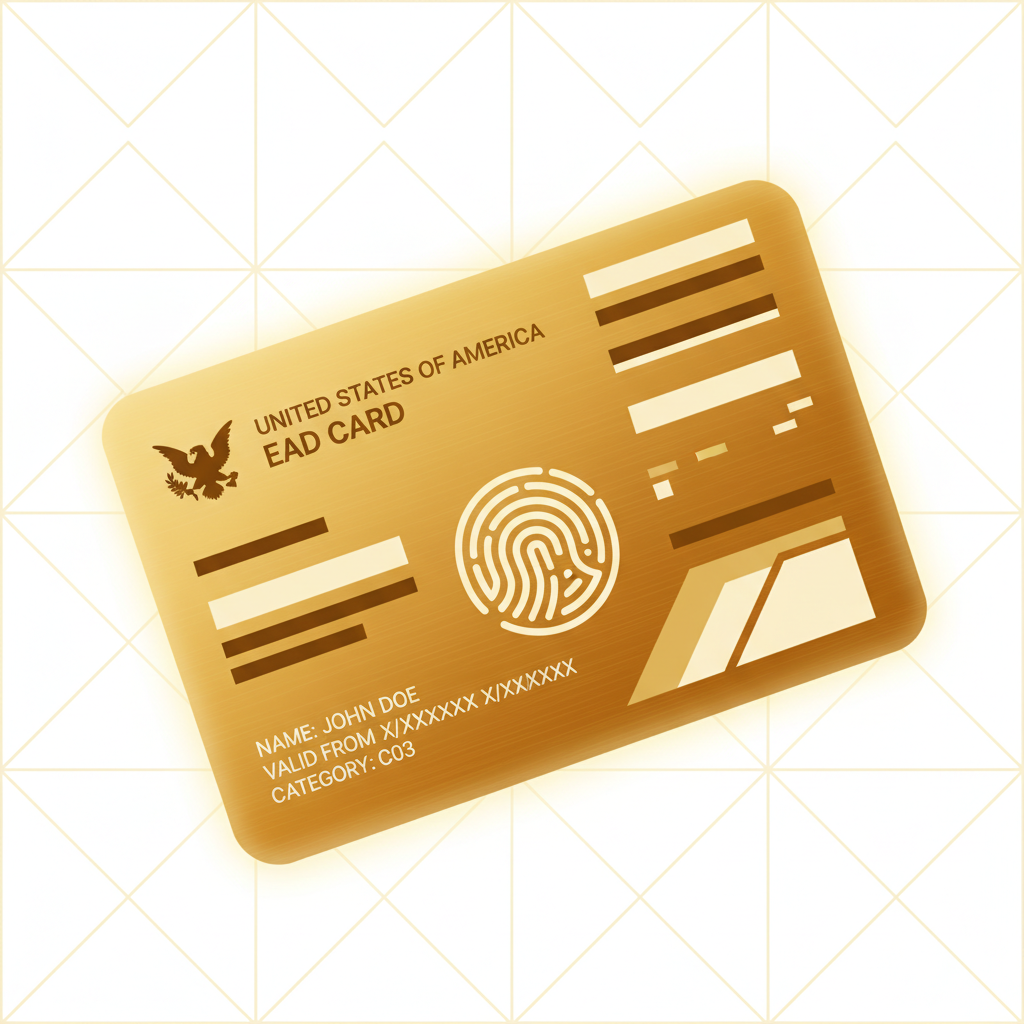
An Employment Authorization Document (EAD) is a card issued by U.S. Citizenship and Immigration Services (USCIS) that proves an individual is authorized to work legally in the United States for a specific period. It is often referred to simply as a "work permit" or "work authorization card." The EAD card resembles a driver's license and includes your photo, name, date of birth, country of birth, fingerprint, and a validity date. It also indicates your immigration category under which you are authorized to work.
An EAD is not a visa, nor is it a Green Card. It is a temporary authorization to work, granted to individuals who are in specific nonimmigrant or humanitarian statuses, or who have certain pending immigration applications.
Key terms you need to know
Understanding the following terms will help you navigate the EAD application and renewal process more effectively:
- Form I-765, Application for Employment Authorization: This is the official USCIS form you must file to apply for an EAD, whether it's your initial application or a renewal.
- USCIS Service Center: These are the centralized processing facilities where USCIS adjudicates most EAD applications, rather than local field offices. The specific service center depends on your eligibility category and mailing address.
- Eligibility Category: USCIS assigns a specific category code (e.g., (c)(9), (c)(8), (a)(5)) to each type of applicant eligible for an EAD. Your category is crucial as it determines your specific requirements and processing.
- Adjustment of Status (AOS): This is the process for eligible individuals to apply for lawful permanent resident (Green Card) status while remaining in the United States. Many AOS applicants are eligible for an EAD while their Green Card application (Form I-485) is pending.
- Asylum Seeker: An individual who has applied for asylum in the U.S. and whose application is pending. After a certain waiting period (currently 150 days after filing the asylum application), asylum seekers can apply for an EAD.
- Nonimmigrant Visa Holders: Certain nonimmigrant visa holders (e.g., F-1 students with Optional Practical Training (OPT), J-2 spouses of exchange visitors) are eligible for EADs based on their specific visa category.
- Automatic Extension: A policy by USCIS that, for certain EAD categories, automatically extends the validity of an expiring EAD for a specified period (e.g., 540 days) if a timely renewal application (Form I-765) has been filed. This allows individuals to continue working while their renewal is processed.
- Receipt Notice (Form I-797C): This is the official notice from USCIS confirming that they have received your application. For EAD renewals, this notice is critical as it serves as proof of your automatic extension if you are in an eligible category.
- Request for Evidence (RFE): A letter from USCIS requesting additional documents or information to support your application. Failing to respond to an RFE can lead to denial.
- Biometrics Appointment: A scheduled appointment at an Application Support Center (ASC) where USCIS collects your fingerprints, photograph, and signature for background checks.
For immigrants in Orlando, understanding these terms is the first step toward successfully navigating the EAD process. It ensures you can accurately complete forms, gather the right documents, and respond appropriately to USCIS communications.
Current Immigration Law: The Foundation for EADs
The authority for granting employment authorization in the United States stems from federal immigration law, primarily the Immigration and Nationality Act (INA), and is further detailed in federal regulations.
Federal requirements
The legal framework for Employment Authorization Documents is found within the Immigration and Nationality Act (INA), specifically sections like 8 U.S.C. § 1324a, which prohibits the employment of unauthorized aliens, and 8 U.S.C. § 1101 et seq., which defines various immigration statuses and benefits. The regulations governing employment authorization are primarily codified at 8 CFR 274a.12.
These laws and regulations delineate specific categories of individuals who are eligible to apply for an EAD. Eligibility is not universal; it is tied to your underlying immigration status or the specific immigration benefit you have applied for. Common federal requirements and eligibility categories include:
- Applicants for Adjustment of Status (AOS): Individuals with a pending Form I-485, Application to Register Permanent Residence or Adjust Status (Category (c)(9)). This is one of the most common EAD categories.
- Asylum Applicants: Individuals who have filed Form I-589, Application for Asylum and for Withholding of Removal, and whose application has been pending for at least 150 days (Category (c)(8)).
- Refugees and Asylees: Individuals granted refugee or asylee status (Categories (a)(3) and (a)(5)).
- Nonimmigrants with Specific Authorizations: Certain nonimmigrant visa holders, such as F-1 students seeking Optional Practical Training (OPT) (Category (c)(3)(A), (B), or (C)), J-2 spouses of J-1 exchange visitors (Category (c)(5)), and K-1/K-3 fiancés/spouses (Category (a)(6)).
- Temporary Protected Status (TPS) Beneficiaries: Individuals granted TPS (Category (a)(12) or (c)(19)).
- DACA Recipients: Individuals who have been granted Deferred Action for Childhood Arrivals (DACA) (Category (c)(33)).
- Spouses of E and L Visa Holders: Spouses of certain nonimmigrant workers (Category (a)(17) and (a)(18)).
Each category has specific requirements for documentation and eligibility. It is crucial to correctly identify your eligibility category when filing Form I-765.
For the most current and detailed information on eligibility categories and their specific requirements, always refer to the USCIS official website.
Florida-specific considerations
While the laws governing EADs are federal, their impact and certain practical considerations can have a Florida-specific dimension:
- Economic Impact: Florida's diverse economy, particularly in industries prevalent in Orlando and Central Florida such as hospitality, tourism, agriculture, and healthcare, often relies on a workforce that includes individuals holding EADs. Efficient EAD processing directly impacts the stability of these industries and the local job market.
- State Identification: An EAD, coupled with other identity documents, can be used to obtain a Florida driver's license or state identification card. However, state DMV offices will verify the validity of your EAD and underlying immigration status through federal systems.
- Employer Compliance: Florida employers are subject to federal regulations regarding employment verification (I-9 compliance). They must ensure that all employees, including those with EADs, are legally authorized to work in the U.S. and properly complete Form I-9. The automatic EAD extension policy is particularly relevant here, as employers need to understand how to verify continued work authorization using the Form I-797C receipt notice.
- Local Resources: In areas like Orlando, there are numerous community organizations and legal aid groups that assist immigrants. While Imigrar serves clients nationwide, our local presence means we are intimately familiar with the specific needs and challenges faced by Central Florida residents in navigating federal immigration processes.
It's important for Florida residents to remember that the EAD is a federal document. There are no Florida-specific EAD laws; however, the state's unique demographics and economy make federal EAD policies particularly impactful here.
How to Apply for or Renew Your EAD: A Complete Step-by-Step Guide
The process of applying for or renewing an EAD, while seemingly straightforward, requires meticulous attention to detail. Missing a step or providing incorrect information can lead to significant delays or even denial. This guide focuses on Form I-765, the Application for Employment Authorization.
1) Determine Your Eligibility Category and Gather Core Documents
Before you begin, you must identify the correct eligibility category under which you are applying. This is paramount as it dictates the specific documents and information required. Review the USCIS EAD eligibility page to confirm your category (e.g., (c)(9) for AOS applicants, (c)(8) for asylum seekers, (c)(3)(C) for STEM OPT). Your category will be a code, often a letter followed by two numbers in parentheses.
Required Documents (General):
- Form I-765 instructions and current edition of the form.
- Two identical, passport-style photos (taken within 30 days of filing).
- Copy of your last EAD (front and back), if applicable.
- Copy of your government-issued identification (e.g., passport, birth certificate with photo ID).
- Copy of Form I-94 (Arrival/Departure Record), if applicable.
- Proof of your underlying immigration status or pending application that grants EAD eligibility.
- Previous work authorization documents (if any).
- Proof of identity and nationality.
Important: The exact documents required will vary significantly based on your eligibility category. For example, an asylum applicant will need proof of filing Form I-589 and a 150-day waiting period, while an AOS applicant will need a copy of their Form I-485 receipt notice.
2) Complete Form I-765, Application for Employment Authorization
Download the latest version of Form I-765 from the USCIS Forms page. Read the instructions thoroughly before filling out the form. You can complete it electronically and print it, or print it and fill it out neatly in black ink.
- Part 1. Reason for Applying: Indicate if you are applying for initial permission, a renewal, or a replacement.
- Part 2. Information About You: Provide accurate personal details, including your full legal name, address, date of birth, country of birth, and A-Number (Alien Registration Number), if you have one.
- Part 2. Section 27. Eligibility Category: This is critical. Enter the correct eligibility category code (e.g., (c)(9)). If you are applying under a category that requires additional information (like (c)(3)(C) for STEM OPT or (c)(26) for H-4 spouses), ensure you provide the necessary details as specified in the instructions.
- Part 3. Applicant's Statement, Contact Information, Declaration, Certification, and Signature: Double-check all information. An unsigned form will be rejected.
Warning: Any inaccuracies or omissions can lead to an RFE or denial. If you need more space for answers, use Part 4 (Additional Information) or attach a separate sheet, clearly indicating the part and item number your answer refers to.
3) Pay the Filing Fee (or Request a Fee Waiver)
The filing fee for Form I-765 is subject to change, so always check the USCIS Fee Schedule. As of 2026, the fee is generally paid via check, money order, or credit card (using Form G-1450, Authorization for Credit Card Transactions). Some categories may require an additional biometrics fee.
- Fee Exemptions: Certain applicants, such as asylum seekers (c)(8) and some TPS beneficiaries, may be exempt from the filing fee.
- Fee Waiver: If you cannot afford the fee, you may be eligible to apply for a fee waiver by submitting Form I-912, Request for Fee Waiver. You must meet specific income guidelines or be receiving means-tested public benefits.
Reminder: If paying by check or money order, make it payable to "U.S. Department of Homeland Security." Do not abbreviate.
4) Assemble and Mail Your Application Package
Organize your application package carefully. USCIS recommends placing documents in the following order from top to bottom:
- Filing fee (check, money order, or Form G-1450 on top).
- Completed and signed Form I-765.
- Supporting documents specific to your eligibility category.
- Two passport-style photos in a small envelope attached to the front of the form.
Mail your application to the correct USCIS Lockbox facility. The address depends on your eligibility category and the state you reside in. For Florida residents, this will typically be a Lockbox in Chicago or Dallas, not the Orlando USCIS Field Office. Use a mailing service that provides tracking (e.g., USPS Certified Mail, FedEx, UPS) so you have proof of submission.
Important: Always make and keep a complete copy of your entire application package for your records before mailing it.
5) Track Your Application and Respond to RFEs
After USCIS receives your application, they will mail you a Form I-797C, Notice of Action, acknowledging receipt. This notice will contain a 13-character receipt number (e.g., EAC, WAC, LIN, SRC, or IOE followed by 10 numbers).
- Online Case Status: Use your receipt number to check your case status online at USCIS Case Status Online.
- Biometrics Appointment: If required, you will receive a separate notice for a biometrics appointment at an Application Support Center (ASC). Do not miss this appointment.
- Request for Evidence (RFE): If USCIS needs more information, they will send an RFE. It is crucial to respond promptly and thoroughly with all requested documents. Failure to do so will likely lead to a denial.
6) Understand Automatic EAD Extensions and Renewals
For certain EAD categories, if you file your renewal application (Form I-765) before your current EAD expires, your work authorization may be automatically extended. As of April 2026, USCIS has maintained policies allowing for significant automatic extensions (often 540 days from the expiration date printed on the EAD card) for specific categories.
- Eligibility: You must have filed Form I-765 for renewal before your current EAD expired, and your eligibility category must be one of those specifically designated for automatic extensions (e.g., (c)(8), (c)(9), (a)(12), etc.).
- Proof of Extension: Your expired EAD card, along with your Form I-797C receipt notice for your timely filed renewal application, serves as proof of your continued work authorization for the duration of the automatic extension.
Reminder:


