


Navigating the U.S. immigration system can be complex, especially when it comes to securing or renewing your ability to work legally. For many immigrants, the Employment Authorization Document (EAD), often referred to as a "work permit," is a crucial lifeline, allowing them to support themselves and their families while pursuing their American dreams. At Imigrar, we understand that delays or changes in processing can cause immense stress and uncertainty. That's why we're dedicated to providing clear, actionable information to help you stay informed and prepared.
Today, we delve into the latest updates regarding EAD application and renewal processing from U.S. Citizenship and Immigration Services (USCIS). As of 2026-07-22, these changes are vital for anyone seeking to maintain continuous work authorization in the United States.
The reporting that sparked this guide
The information and guidance in this comprehensive article are based on recent trends and official announcements concerning Employment Authorization Document Processing (USCIS). We continuously monitor USCIS news releases, policy updates, and processing time reports to ensure our clients receive the most current and accurate advice.
What This News Means for Immigrants in Orlando and Across Florida
Recent developments in EAD processing have significant implications for immigrants nationwide, and especially for those residing in Orlando and throughout Florida. Understanding these changes is critical for maintaining your legal ability to work and live without undue interruption.
Why this news is showing up now
The landscape of immigration processing is constantly evolving, influenced by a confluence of factors including legislative changes, administrative priorities, and operational challenges within USCIS. Over the past few years, USCIS has grappled with unprecedented backlogs, driven by increased application volumes, staffing shortages, and the complexities of adapting to new technologies and security protocols. This has led to fluctuating processing times and a need for USCIS to implement various strategies to address these issues, such as temporary final rules for automatic extensions or internal process adjustments.
The "news" surrounding EAD processing often reflects these ongoing efforts and their outcomes. For instance, USCIS might announce new initiatives to reduce backlogs, changes to automatic extension policies, or adjustments to filing procedures. These updates frequently stem from public and governmental pressure to improve efficiency and reduce the burden on applicants. As of mid-2026, USCIS continues to fine-tune its operations, leading to periodic announcements that can either alleviate or exacerbate applicant concerns. Staying informed through reliable sources, like the USCIS official website and expert legal analysis, is paramount.
How it can affect Florida residents
For individuals and families in Florida, particularly those in vibrant, diverse communities like Orlando, these EAD processing updates carry direct and tangible consequences. Florida has a large immigrant population, with many individuals relying on EADs to work in various sectors, from tourism and hospitality to agriculture, healthcare, and technology. Delays in EAD processing can lead to:
- Job Loss or Inability to Work: If an EAD expires before a renewal is processed, and no automatic extension applies, individuals may temporarily lose their legal authorization to work, leading to job termination or an inability to start a new job. This directly impacts financial stability for families across the I-4 corridor and beyond.
- Economic Instability: The inability to work can quickly cascade into financial hardship, affecting housing, food security, and access to essential services for families in Orange County and surrounding areas.
- Stress and Uncertainty: The emotional toll of waiting for a work permit, especially when a livelihood depends on it, can be immense. This uncertainty is amplified for those whose underlying immigration status is also pending, such as Adjustment of Status applicants or asylum seekers.
- Employer Challenges: Florida employers who hire immigrants legally must verify work authorization. Delays can create administrative burdens for businesses and potentially lead to the loss of valuable employees. Many businesses in Central Florida depend on a diverse workforce.
Understanding the current processing environment allows Florida residents to plan strategically, file renewals well in advance, and seek legal guidance to mitigate potential disruptions. The Orlando USCIS Field Office, while not directly processing EAD applications (which are handled by service centers), plays a role in certain related interviews and services, making local knowledge of the system all the more valuable.
Need Help Navigating EAD Changes? Our Orlando immigration team is ready to assist. Don't let processing delays jeopardize your ability to work. Call +1 786-791-3106 for a free consultation, or message us online. Se Habla Español.
What Employment Authorization Documents (EADs) Are (and Why They Matter)
For countless individuals seeking to build a life in the United States, the ability to work legally is fundamental. This ability is often granted through an Employment Authorization Document (EAD). Understanding what an EAD is and its significance is the first step in navigating the complex immigration landscape.
A plain-English definition
An Employment Authorization Document (EAD), commonly known as a "work permit," is a government-issued card that provides proof that an individual is authorized to work in the United States for a specific period. It looks similar to a driver's license, featuring your photo, name, date of birth, and a validity period. This document is essential for non-U.S. citizens who are not lawful permanent residents (Green Card holders) but are permitted to work in the U.S. based on their particular immigration status or application.
The EAD is not an immigration status in itself; rather, it is a benefit derived from an underlying immigration status or a pending application for one. For example, individuals who have applied for a Green Card through Adjustment of Status, those seeking asylum, or recipients of Temporary Protected Status (TPS) often apply for an EAD to work legally while their main application is pending. Without an EAD, or another form of work authorization, working in the U.S. is generally illegal and can have severe immigration consequences.
Key terms you need to know
To fully grasp the intricacies of EAD processing, it’s helpful to be familiar with several key terms:
- EAD (Employment Authorization Document): The official government card proving your authorization to work.
- Form I-765 (Application for Employment Authorization): The specific USCIS form you must file to request an EAD or renew an existing one. This is the central document in the EAD application process.
- USCIS (U.S. Citizenship and Immigration Services): The federal agency responsible for administering the country's lawful immigration system, including processing EAD applications. You will interact with USCIS for all EAD-related matters.
- Adjustment of Status: The process by which an eligible foreign national already in the United States can apply for lawful permanent resident status (a Green Card) without having to return to their home country to complete visa processing. Individuals with pending I-485 applications are often eligible for an EAD.
- Asylum Seeker: An individual who has applied for asylum in the U.S. based on a fear of persecution in their home country. Asylum seekers are typically eligible to apply for an EAD 150 days after filing their asylum application and can receive it after 180 days.
- TPS (Temporary Protected Status): A temporary immigration status granted to eligible nationals of certain countries designated by the Secretary of Homeland Security due to conditions in their home country that make it unsafe to return. TPS holders are eligible for EADs.
- DACA (Deferred Action for Childhood Arrivals): A program that provides certain undocumented immigrants who arrived in the U.S. as children with protection from deportation and a renewable two-year work permit (EAD).
- Renewal: The process of reapplying for a new EAD card when your current one is nearing expiration. Timely renewal is crucial to avoid a lapse in work authorization.
- Receipt Notice (Form I-797C): A document issued by USCIS acknowledging receipt of your application. This notice is vital as it contains your case number, which you’ll use to track your application status.
- Processing Times: The estimated duration USCIS takes to process an application from the date of filing until a decision is made. These times vary significantly by application type, service center, and EAD category. You can check current processing times on the USCIS Processing Times website.
- Automatic Extension: A temporary extension of an expiring EAD for certain eligible categories, provided a renewal application (Form I-765) was filed on time. This can be critical for maintaining continuous work authorization.
Understanding these terms empowers you to navigate the EAD process with greater confidence, ensuring you meet requirements and manage expectations effectively.
Current Immigration Law: The Foundation for Work Authorization
The ability to work in the United States is strictly governed by federal immigration law. Understanding the legal framework is essential for anyone seeking an Employment Authorization Document (EAD), as eligibility is tied directly to specific statutory provisions and regulations.
Federal requirements
The primary legal authority for employment authorization is found in the Immigration and Nationality Act (INA) and its implementing regulations at 8 Code of Federal Regulations (CFR) § 274a.12. This regulation outlines the various classes of foreign nationals who are authorized to work in the U.S. without specific authorization from USCIS, and those who require an EAD.
Generally, individuals who are U.S. citizens or lawful permanent residents (Green Card holders) are inherently authorized to work. Most other non-citizens require an EAD, unless they are in a nonimmigrant status that specifically permits employment with a particular employer (e.g., H-1B, L-1, O-1). For those who need an EAD, eligibility typically falls into several broad categories, including:
- Applicants for Adjustment of Status (Form I-485): Individuals with a pending Form I-485 application to become a lawful permanent resident are eligible to apply for an EAD. This is often filed concurrently with Form I-485 and Form I-131 (Application for Travel Document).
- Asylum Applicants: Individuals who have filed Form I-589, Application for Asylum and for Withholding of Removal, and whose application has been pending for at least 150 days, are generally eligible for an EAD.
- Refugees and Asylees: Individuals granted refugee or asylum status are authorized to work immediately and can obtain an EAD.
- Temporary Protected Status (TPS) Holders: Nationals of countries designated for TPS are eligible to apply for an EAD.
- Certain Nonimmigrant Visa Holders: This includes spouses of certain nonimmigrants (e.g., H-4 spouses, L-2 spouses), students with Optional Practical Training (OPT) (F-1 visa holders), and fiancés of U.S. citizens (K-1 visa holders). Each category has specific requirements and limitations.
- DACA Recipients: Individuals granted Deferred Action for Childhood Arrivals receive an EAD.
- Parolees: Certain individuals paroled into the U.S. for humanitarian reasons or significant public benefit may be eligible.
The specific form used to apply for an EAD is Form I-765, Application for Employment Authorization. This form requires applicants to specify their eligibility category, which corresponds to the codes listed in 8 CFR § 274a.12(c). Providing the correct eligibility category is crucial for a successful application.
For detailed information on eligibility categories and current regulations, always refer to the USCIS official website and the USCIS Policy Manual.
Florida-specific considerations
While immigration law is federal, certain state-level considerations can impact employment authorization for Florida residents. Florida does not have its own immigration laws that grant or deny work authorization; that authority rests solely with the federal government. However, state laws can affect the employment landscape:
- E-Verify Requirements: Florida law mandates that most public employers and private employers with 25 or more employees use E-Verify to confirm the employment eligibility of new hires. Having a valid EAD is essential for passing the E-Verify check. Employers in Orlando, Miami, and across the state strictly adhere to these requirements.
- Professional Licensing: Some professions in Florida require state-issued licenses (e.g., healthcare, teaching, legal). Eligibility for these licenses often requires proof of lawful presence and work authorization, which an EAD provides.
- State ID and Driver's Licenses: While not directly related to EAD, having a valid EAD facilitates obtaining a Florida driver's license or state identification card, which are practical necessities for living and working in Central Florida.
For Central Florida residents, understanding these state-level implications in conjunction with federal EAD requirements is vital. Ensuring your EAD is current and valid is not just a federal mandate but a practical necessity for daily life and employment in the Sunshine State.
Confused by EAD Eligibility? Our knowledgeable attorneys at Imigrar can help you understand your specific situation and navigate federal and state requirements. Call us today at +1 786-791-3106 for a free consultation. Se Habla Español.
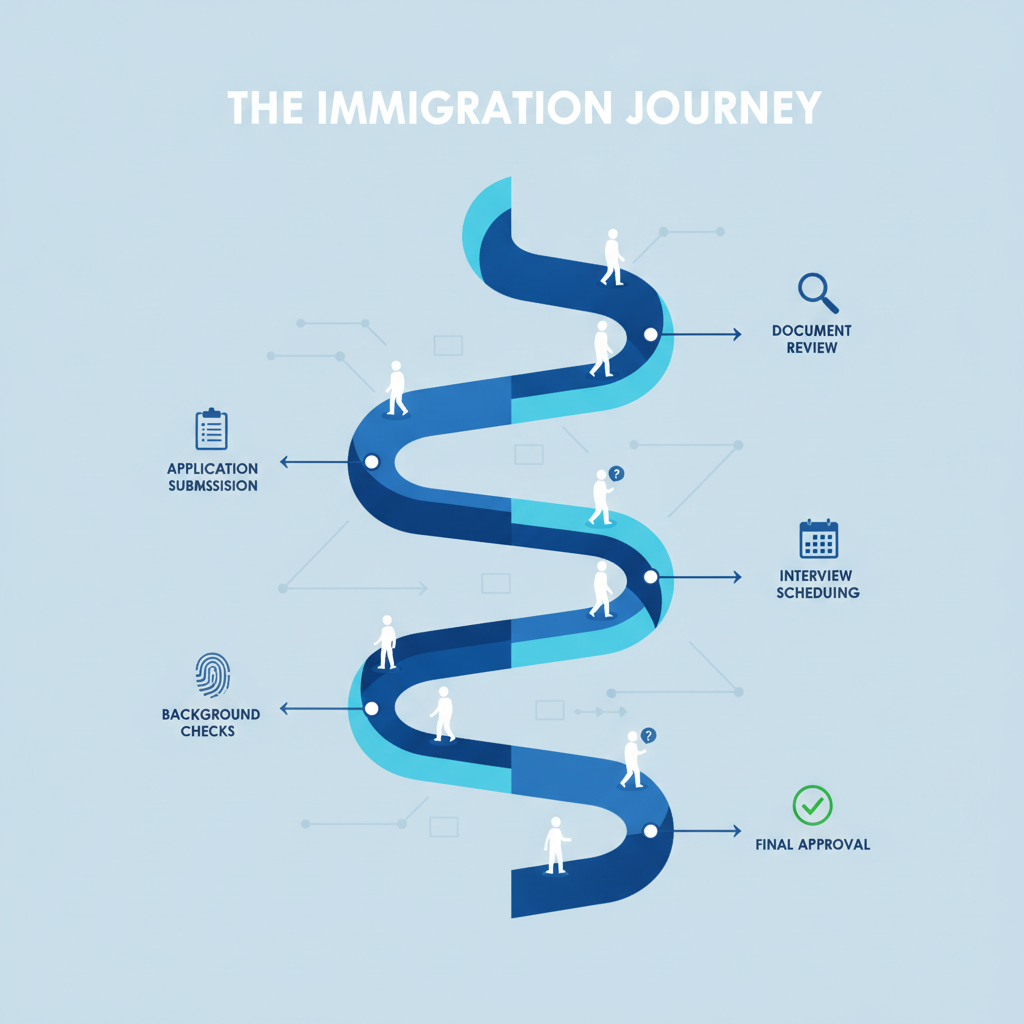
How to Apply for or Renew Your EAD: A Complete Step-by-Step Guide
Whether you're applying for your first Employment Authorization Document (EAD) or renewing an expiring one, the process involves careful attention to detail and adherence to USCIS guidelines. This step-by-step guide will walk you through the essential stages to help ensure a smooth application process.
1) Determine Your Eligibility and Category
Before anything else, you must confirm that you are eligible for an EAD and identify the correct eligibility category. Your eligibility is directly tied to your underlying immigration status or pending application. Incorrectly identifying your category can lead to delays or denial.
Common EAD Eligibility Categories:
- (c)(9): Filed Form I-485, Application to Register Permanent Residence or Adjust Status (pending Green Card).
- (c)(8): Asylum applicant (after 150 days of filing Form I-589).
- (a)(5): Asylee (granted asylum).
- (a)(10): Granted withholding of deportation or removal.
- (c)(14): Deferred Action for Childhood Arrivals (DACA recipient).
- (a)(12): Temporary Protected Status (TPS) granted.
- (c)(26): Certain H-4 spouses (H-1B principal must be in specific stage of green card process).
- (c)(17)(i): Spouse of an E-1, E-2, or E-3 nonimmigrant.
- (c)(17)(ii): Spouse of an L-1 nonimmigrant.
- (c)(3)(i): F-1 student seeking Optional Practical Training (OPT).
Actionable Advice: Review the instructions for Form I-765 or consult with an immigration attorney to confirm your exact eligibility category. This is a critical first step.
2) Gather All Required Documents
Once you've determined your eligibility, the next crucial step is to meticulously collect all necessary supporting documents. Missing or incorrect documents are a primary cause of Requests for Evidence (RFEs) and processing delays.
General Required Documents (for most EAD applications):
- Two identical, passport-style photographs (taken within 30 days of filing).
- Copy of your last EAD (front and back), if renewing.
- Copy of your government-issued identification with photo (e.g., passport biographic page).
- Copy of your Form I-94, Arrival/Departure Record (front and back, if applicable, or printout from CBP website).
- Copy of your birth certificate (and certified translation if not in English).
- Copy of marriage certificate (if applying as a spouse).
- Proof of your underlying immigration status or pending application (e.g., Form I-797C receipt notice for Form I-485, Form I-589, or Form I-130).
- Any other documents specified for your particular eligibility category (e.g., for H-4 EAD, proof of H-1B principal's status and approved I-140 or AC21 extension).
Important: Make copies of everything you send to USCIS. Never send original documents unless specifically requested.
3) Complete Form I-765, Application for Employment Authorization
The core of your EAD application is Form I-765. It's essential to complete this form accurately and thoroughly. You can download the latest version from the USCIS Form I-765 Page.
- Read Instructions Carefully: Before filling out anything, read the entire instruction packet for Form I-765.
- Type or Print Clearly: If filling out by hand, use black ink and print legibly. Typing is preferred if possible.
- Answer All Questions: Do not leave any fields blank. If a question doesn't apply, write "N/A" (not applicable).
- Consistency: Ensure all information (name, date of birth, etc.) matches your other immigration documents exactly. Any discrepancies can cause delays.
- Previous Applications: Be truthful about any previous EAD applications or denials.
- Signature: Make sure you sign the form in blue or black ink. An unsigned form will be rejected.
Warning: Providing false information on Form I-765 can lead to severe immigration consequences, including denial of current and future immigration benefits, and even deportation.
4) Prepare Your Application Packet and Pay Fees
Once your form is completed and documents are gathered, assemble your application packet. This step also involves calculating and submitting the correct filing fee.
- Filing Fee: As of 20


