


The Reporting That Sparked This Guide
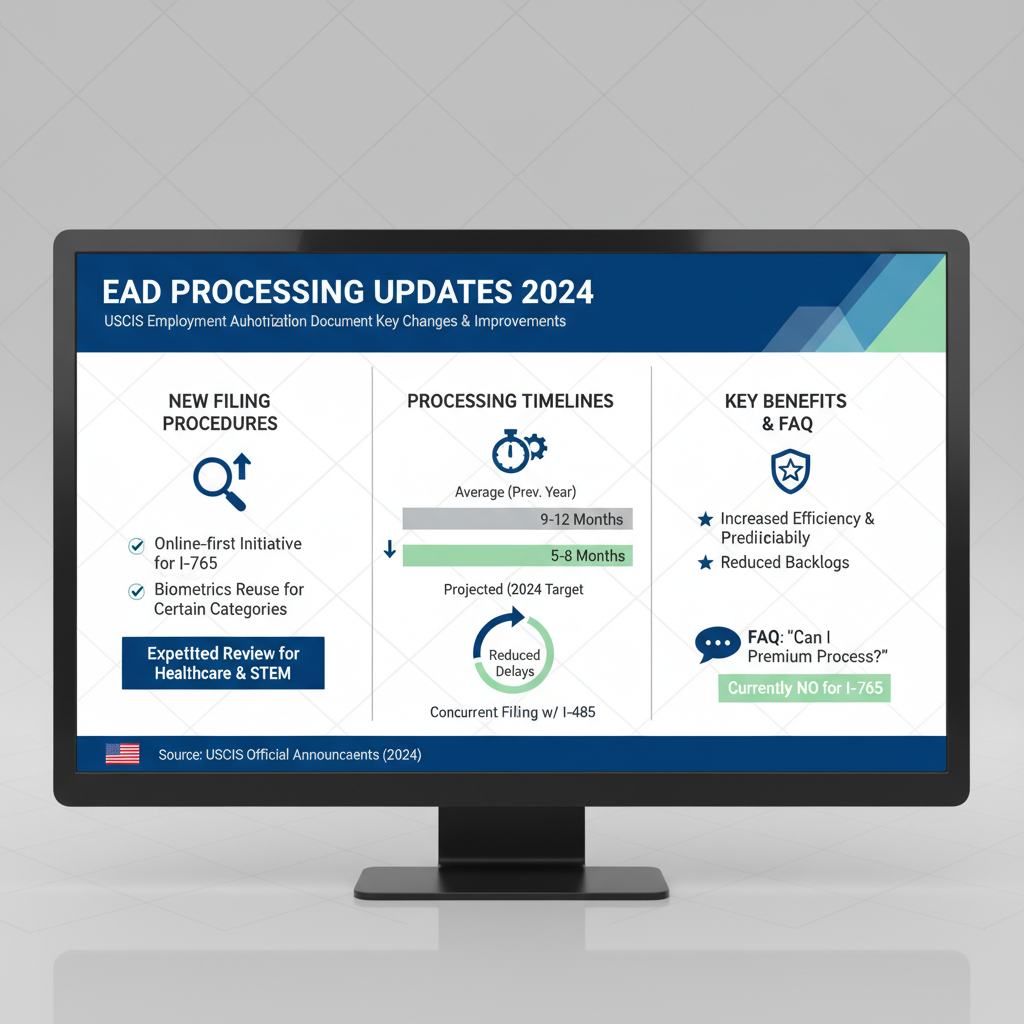
The information and insights presented in this comprehensive guide are inspired by recent discussions and updates from USCIS regarding the processing of Employment Authorization Documents. Staying informed about these developments is crucial for immigrants seeking to work legally in the United States.
Read more about the ongoing conversation: Employment Authorization Document Processing (USCIS)
What This News Means for Immigrants in Orlando and Across Florida
For immigrants living in Orlando, across Central Florida, and throughout the Sunshine State, updates from U.S. Citizenship and Immigration Services (USCIS) regarding Employment Authorization Document (EAD) processing are always significant. An EAD, commonly known as a work permit, is your key to legal employment in the U.S., and any changes to its application or renewal process can have profound impacts on individuals and families.
Why this news is showing up now
As of April 2026, the discussion around EAD processing continues to evolve, reflecting USCIS's ongoing efforts to streamline operations, reduce backlogs, and adapt to legislative and administrative priorities. Over the past few years, USCIS has implemented various strategies to tackle historical processing delays, particularly for certain categories of EAD applicants. These initiatives included temporary final rules, policy guidance updates, and technological enhancements aimed at improving efficiency.
Specifically, we've seen significant policy shifts regarding the automatic extension of EADs for certain renewal applicants. While the initial 180-day automatic extension was a long-standing provision, USCIS introduced temporary measures in 2022 to extend this period to 540 days for specific categories, acknowledging the severe impact of COVID-19 related delays. As we move further into 2026, while the 540-day extension may have reverted to a shorter period for some or been adjusted, the underlying principle of providing relief through automatic extensions remains a critical part of the conversation. USCIS is constantly evaluating processing times and making adjustments, leading to continuous news and updates.
The current focus is on maintaining efficiency gains, preventing new backlogs, and ensuring fair and timely adjudication. This means that while some processing times have improved, other categories might still experience fluctuations, and USCIS is keen on transparently communicating these trends. For many, the ability to work without interruption is fundamental to their stability and future in the U.S., making these updates paramount.
How it can affect Florida residents
Florida, a state with a vibrant and diverse immigrant population, is particularly sensitive to EAD processing changes. From the agricultural fields of South Florida to the burgeoning tech and tourism industries of Orlando and the I-4 corridor, immigrants contribute significantly to the state's economy. Delays or confusion in EAD processing can lead to:
- Job Loss or Inability to Secure Employment: Without a valid EAD, individuals cannot legally work, potentially leading to financial hardship, loss of income, and inability to support families.
- Economic Instability: For families relying on income from an EAD holder, any interruption can have cascading effects, impacting housing, food security, and access to essential services.
- Stress and Uncertainty: The waiting period for an EAD, especially a renewal, can be incredibly stressful, creating anxiety about the future and ability to maintain a livelihood.
- Impact on Local Businesses: Many Orlando and Central Florida businesses depend on immigrant labor. EAD processing issues can create staffing shortages and operational challenges.
- Planning for the Future: For those on pathways to permanent residency, maintaining continuous employment authorization is often critical for demonstrating financial stability and good moral character.
For Central Florida residents whose cases are processed at the Orlando USCIS Field Office or through national service centers, understanding the current processing landscape is vital. Our local economy thrives on the contributions of immigrants, making efficient EAD processing a concern for the entire community.
Need Help Navigating EAD Updates? The immigration process can be complex, especially with ongoing changes. Our experienced Orlando immigration team at Imigrar is here to help you understand the latest EAD processing news and how it applies to your situation. Call us today for a free consultation at +1 786-791-3106, or message us online. Se Habla Español.
What Employment Authorization Documents (EADs) Are (and Why They Matter)
An Employment Authorization Document (EAD), often referred to as a "work permit," is a crucial document issued by USCIS that grants foreign nationals temporary permission to work legally in the United States. For many immigrants, obtaining an EAD is the first step towards financial independence and integration into American society.
A plain-English definition
Simply put, an EAD is a card that proves you are authorized by the U.S. government to work in the country. It looks similar to a driver's license and contains your photo, name, date of birth, and an expiration date. When an employer hires you, they are required to verify your eligibility to work in the U.S., and your EAD card serves as primary evidence of this authorization. Without a valid EAD, most foreign nationals cannot legally accept employment in the U.S.
The EAD is typically granted to individuals who are in the process of applying for a more permanent immigration benefit (like a Green Card), or who are in certain non-immigrant statuses that permit employment but require specific authorization, or those who are seeking protection in the U.S.
Key terms you need to know
Understanding these terms will help you navigate the EAD process more effectively:
- USCIS (U.S. Citizenship and Immigration Services): The government agency responsible for processing EAD applications and other immigration benefits. USCIS official website.
- Form I-765 (Application for Employment Authorization): This is the specific form you must file with USCIS to apply for an EAD or renew an existing one.
- Work Permit: A common, informal term for an EAD.
- Adjustment of Status (AOS): The process of applying for a Green Card while physically present in the United States. Many individuals applying for AOS are eligible for an EAD while their Green Card application (Form I-485) is pending.
- Asylum Seeker: An individual who has applied for asylum in the U.S. and is waiting for a decision. Asylum seekers are typically eligible to apply for an EAD 150 days after filing their asylum application.
- H-4 EAD: Certain H-4 nonimmigrant spouses of H-1B nonimmigrants who meet specific criteria (e.g., the H-1B spouse has an approved Form I-140, Immigrant Petition for Alien Worker) are eligible for an EAD.
- L-2 EAD: Spouses of L-1 nonimmigrant intracompany transferees are generally granted work authorization incident to their L-2 status, meaning they don't always need a separate EAD card, but many still apply for one to present to employers. Recent changes have clarified their work authorization.
- F-1 OPT/STEM OPT: Optional Practical Training (OPT) and Science, Technology, Engineering, and Mathematics (STEM) OPT are temporary employment authorizations for F-1 students related to their field of study.
- TPS (Temporary Protected Status): A humanitarian immigration benefit granted to eligible nationals of certain countries designated by the Secretary of Homeland Security due to conditions in their home country (e.g., armed conflict, natural disaster). TPS beneficiaries are eligible for an EAD.
- DACA (Deferred Action for Childhood Arrivals): An administrative relief from deportation available to certain undocumented immigrants who came to the U.S. as children. DACA recipients are eligible for EADs.
- Receipt Notice: A document sent by USCIS confirming they have received your application. It contains your receipt number, which you can use to track your case online.
- RFE (Request for Evidence): A letter from USCIS asking for additional documents or information to support your application.
- Automatic Extension: A provision allowing certain EAD renewal applicants to continue working for a period beyond their card's expiration date while their new EAD application is pending. This period can be 180 days or, in some cases, longer (like the 540-day temporary extension provided in 2022 for specific categories).
Understanding these terms is crucial as you navigate the EAD application or renewal process. They define eligibility, explain procedural steps, and highlight important benefits like automatic extensions.
Current Immigration Law: The Foundation for EADs
Employment Authorization Documents are rooted deeply in U.S. immigration law, primarily governed by the Immigration and Nationality Act (INA) and its corresponding regulations found in the Code of Federal Regulations (CFR). These laws define who is eligible for an EAD and under what conditions.
Federal requirements
The authority to grant employment authorization stems from Section 274A(h)(3) of the INA, which states that "employment authorization... shall not be required for an alien who is lawfully admitted for permanent residence or who is authorized to be employed in the United States under this Act or by the Attorney General." Regulations at 8 CFR 274a.12 specifically outline the various categories of foreign nationals who are eligible to receive an EAD.
These categories are diverse and include, but are not limited to:
- Asylum seekers: Generally, those with a pending asylum application who have waited 150 days without a decision.
- Refugees: Granted employment authorization automatically upon admission.
- Adjustment of Status applicants: Individuals who have filed Form I-485 to adjust their status to lawful permanent resident.
- Spouses of certain nonimmigrant visa holders: Such as H-4 spouses (under specific conditions) and L-2 spouses.
- Students with Optional Practical Training (OPT) or STEM OPT: F-1 students seeking work experience related to their field of study.
- Individuals granted Temporary Protected Status (TPS): Nationals of certain designated countries.
- DACA recipients: Those granted Deferred Action for Childhood Arrivals.
- Parolees: Individuals paroled into the U.S. for humanitarian reasons or significant public benefit.
- Certain victims of human trafficking (T visa) and crime (U visa): Who are assisting law enforcement.
Each category has specific eligibility criteria and often requires the filing of Form I-765, Application for Employment Authorization. The regulations also specify the duration of the EAD, which typically aligns with the underlying immigration status or benefit sought. For instance, an EAD for an AOS applicant is often valid for two years, renewable until the Green Card is approved.
Important: The specific eligibility category (often represented by a letter and number code on Form I-765, e.g., (c)(9) for AOS applicants, (c)(8) for asylum applicants) is crucial. Incorrectly identifying your category can lead to delays or denial.
For the most up-to-date information on eligibility and requirements, always refer to the USCIS official website and the instructions for Form I-765. These are regularly updated to reflect policy changes and new regulations.
Florida-specific considerations
While EAD eligibility and processing are federal matters, Florida residents experience the impact of these federal laws within their local context. There are no Florida-specific state laws that govern EAD eligibility or issuance; the federal framework applies uniformly across all states.
However, Florida does have state-level employer requirements related to employment verification. For example, Florida law mandates that public employers and contractors use E-Verify, a federal system that allows employers to confirm the eligibility of their employees to work in the United States. While E-Verify is a federal program, its mandatory application in Florida for certain employers means that having a valid EAD (or other work authorization) is paramount for securing and maintaining employment in many sectors across the state.
For those living in Orlando and surrounding areas, the proximity to the Orlando USCIS Field Office may sometimes be relevant for certain in-person services, although EAD applications are generally mailed to specific USCIS Lockbox facilities or processed electronically by service centers. Nevertheless, local resources, community organizations, and legal aid services in Central Florida play a vital role in assisting immigrants with understanding and complying with federal EAD requirements.
Reminder: Your EAD is your proof of work authorization. Keep it safe, carry a copy, and be aware of its expiration date. Renewals are critical for continuous employment.
Access all USCIS Forms here.How to Apply for or Renew Your EAD: A Complete Step-by-Step Guide
Applying for an initial Employment Authorization Document (EAD) or renewing an existing one is a multi-step process that requires attention to detail. Following these steps carefully can help prevent delays and ensure a smoother application experience.
1) Determine Your Eligibility Category
This is the foundational step. Before you even touch Form I-765, you must understand which specific category makes you eligible for an EAD. USCIS has dozens of categories, each with distinct requirements. Common categories include:
- (c)(9): Pending Adjustment of Status (Form I-485) applicants.
- (c)(8): Asylum applicants whose application has been pending for at least 150 days.
- (c)(3)(C): F-1 students seeking 12 months of Optional Practical Training (OPT) after completing their studies.
- (c)(26): H-4 spouses of H-1B nonimmigrants who meet specific criteria.
- (a)(12): TPS beneficiaries.
- (c)(33): DACA recipients.
Your eligibility category dictates what supporting documents you need and how you should complete certain sections of Form I-765. Consult the USCIS official website. You can fill it out electronically and print it, or print it and fill it out neatly in black ink. Pay close attention to:
- Part 1. Reason for Applying: Clearly indicate if you are applying for initial permission, a renewal, or a replacement.
- Part 2. Information About You: Ensure your name, address, date of birth, and other personal details match exactly with your other immigration documents.
- Part 2. Item 27. Eligibility Category: This is critical. Enter the correct category code (e.g., (c)(9), (c)(8)).
- Part 3. Applicant's Statement, Contact Information, Declaration, Certification, and Signature: Read carefully, sign and date in blue or black ink. An unsigned form will be rejected.
Review the instructions for Form I-765 thoroughly, as they contain specific guidance for each eligibility category. Do not leave any required fields blank; if an item does not apply to you, write "N/A" (Not Applicable).
4) Prepare Supporting Evidence
Beyond the general documents, you will need specific evidence related to your eligibility category:
- For (c)(9) AOS applicants: A copy of your Form I-485 receipt notice (Form I-797C) or a copy of the filing receipt showing your Form I-485 is pending.
- For (c)(8) Asylum applicants: A copy of your Form I-589 (Application for Asylum and for Withholding of Removal) receipt notice (Form I-797C) or an order from an immigration judge granting asylum.
- For (c)(26) H-4 EAD applicants: A copy of your H-4 Form I-797 approval notice, your H-1B spouse's Form I-797 approval notice, and a copy of your H-1B spouse's approved Form I-140 or evidence that they have been granted an extension of H-1B status beyond the 6-year limit under AC21.
- For F-1 OPT (c)(3)(A) & (c)(3)(B) applicants: A copy of your Form I-20 endorsed by your Designated School Official (DSO) for OPT, and a copy of any previous EADs issued for OPT. For STEM OPT (c)(3)(C), specific I-20 endorsement for STEM OPT and academic transcripts.
This is not an exhaustive list. Always refer to the official Form I-765 instructions for your specific category's requirements.
5) Pay the Filing Fee (or Request a Fee Waiver)
As of April 2026, the filing fee for Form I-765 can change, so always check the USCIS fee schedule before submitting. You can generally pay by money order, personal check, cashier's check, or by credit card using Form G-1450, Authorization for Credit Card Transactions. Make checks payable to "U.S. Department of Homeland Security."
Certain applicants may be eligible for a fee waiver by filing Form I-912, Request for Fee Waiver. Eligibility is typically based on income below 150% of the federal poverty guidelines, receipt of means-tested benefits, or financial hardship. If you apply for a fee waiver, do not send the filing fee.
6) Assemble and Mail Your Application
Organize your application packet in the following order, from top to bottom:
- Payment (check, money order, or Form G-1450) or Form I-912.
- Two passport-style photos in a small plastic bag or envelope stapled to the upper left corner of the application.
- Completed and signed Form I-765.
- Required supporting evidence, including copies of all identity documents and proof of eligibility.
Use a sturdy envelope and mail your application to the correct USCIS Lockbox facility based on your eligibility category and mailing address. Check the USCIS website for the most current mailing addresses. Consider using a mailing service that provides tracking and delivery confirmation, such as USPS Certified Mail.
7) Track Your Application and Respond to RFEs
After USCIS receives your application, they will mail you a receipt notice (Form I-797C) containing your receipt number. Use this number to track your case status online and check current USCIS processing times.
If USCIS needs more information, they will send you an RFE. It is critical to respond to an RFE promptly and provide all requested documents by the deadline. Failure to do so can lead to denial. If you move, remember to update your address with USCIS by filing Form AR-11, Alien's Change of Address Card, to ensure you receive all correspondence.
Feeling Overwhelmed? The detailed requirements for an EAD application can be daunting. Let Imigrar simplify the process for you. Our Orlando-based immigration attorneys are experts in EAD applications and renewals. Contact us for a free consultation at +1 786-791-3106, or reach out online. Se Habla Español.

Practical Steps You Can Take Today for Your EAD Application
Proactive preparation is key to a successful EAD application or renewal. Here are practical steps you can take right now to get ahead of the process:
Actionable Checklist
- Verify Your Eligibility: Re-read the instructions for Form I-765 and the USCIS website to confirm your exact eligibility category. Don't assume.
- Check Your Current EAD Expiration Date: If you are renewing, mark your calendar for at least 6 months before your EAD expires. Remember the 180-day automatic extension for certain categories, and be aware if you qualify for any longer temporary extensions like the 540-day one which applied to specific categories in 2022.
- Gather Original Documents: Start collecting all required documents (birth certificates, marriage certificates, previous EADs, I-94s, etc.). If any are not in English, begin the certified translation process immediately.
- Obtain Passport Photos: Get two new, compliant passport-style photos taken within the last 30 days.
- Review Online USCIS Resources: Bookmark the Form I-765 page, the processing times page (USCIS Processing Times), and the USCIS Forms page.
- Consult an Attorney: If you have any doubts about your eligibility, document requirements, or how to fill out the form, schedule a consultation with an experienced immigration lawyer. This is especially important for complex cases or if you've had previous denials.
- Set Up an Online Account (if applicable): If your case allows for online filing or tracking, ensure you have an active myUSCIS account.
Document Preparation Guidance
Proper document preparation can significantly speed up your application and prevent RFEs:
- Organize Everything: Create a physical folder and a digital folder for your EAD application. Keep all original documents separate from the copies you will submit.
- Make Clear Copies: Ensure all copies of documents are legible and accurate. If a document has information on both sides (like an EAD card or driver's license), copy both sides.
- Certified Translations: Any document not in English must be accompanied by a complete and accurate English translation, certified by the translator as competent to translate and that the translation is accurate. The certification must include the translator's signature, date, and contact information.
- Avoid Staples (mostly): While some recommend stapling photos, generally, USCIS prefers paper clips for multiple pages of supporting documents. Follow the specific instructions for Form I-765 regarding photo attachment.
- Cover Letter: Consider including a simple cover letter outlining the contents of your application package. This helps USCIS organize your submission.
Timeline Expectations
EAD processing times can vary significantly based on your eligibility category, the service center processing your application, and overall USCIS workload. Here's what to expect in 2026:
- Check Current Processing


