

The reporting that sparked this guide: Employment Authorization Document Processing (USCIS)
What This News Means for Immigrants in Orlando and Across Florida
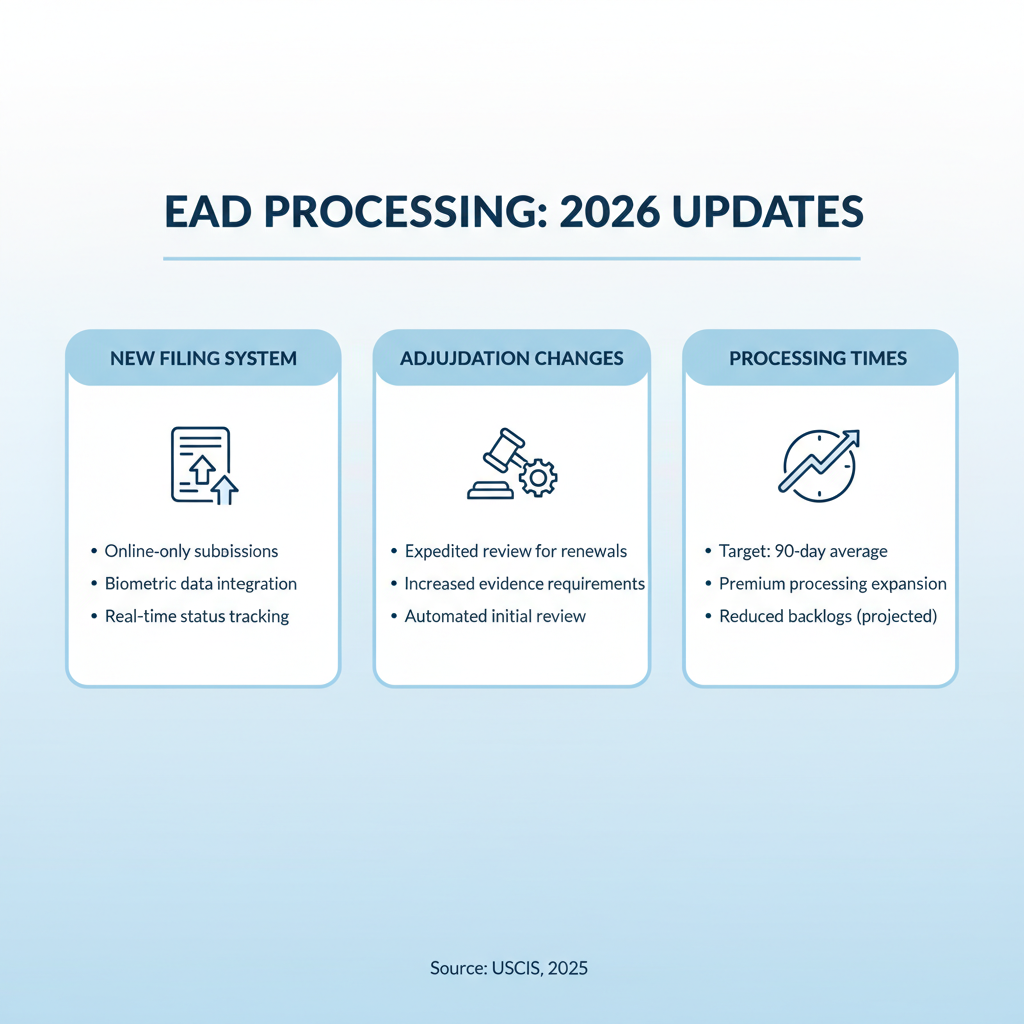
The ability to work legally in the United States is a cornerstone of building a new life. For many immigrants, the Employment Authorization Document (EAD), often called a "work permit," is the key to this opportunity. Recent updates and ongoing discussions from U.S. Citizenship and Immigration Services (USCIS) regarding EAD application and renewal processing have significant implications for individuals and families in Orlando, throughout Florida, and nationwide.
Why this news is showing up now
In recent years, USCIS has faced unprecedented backlogs in processing various immigration applications, including the Form I-765, Application for Employment Authorization. These delays have caused immense stress and financial hardship for countless individuals awaiting their work permits or renewals, sometimes leading to gaps in employment and loss of income. In response to these challenges and public outcry, USCIS has been implementing strategies to improve efficiency, reduce processing times, and provide relief to applicants.
These strategies include temporary final rules, policy guidance changes, and administrative efforts aimed at streamlining operations. For example, recent announcements have focused on extending the automatic validity period for certain EAD renewal applications and optimizing internal processes. The goal is to prevent employment authorization lapses and mitigate the impact of processing delays. As of 2026, USCIS continues to fine-tune these initiatives, making "EAD processing" a trending topic as immigrants seek clarity on how these changes affect their ability to work and support their families.
How it can affect Florida residents
Florida, particularly Central Florida with its vibrant economy and diverse population, is home to a large immigrant community. Many residents in Orlando, Tampa, Miami, and other cities rely on their EADs to work in various sectors, from hospitality and healthcare to technology and agriculture. The state's economy thrives on the contributions of its immigrant workforce.
- Employment Stability: For those whose EADs are expiring or who are waiting for initial approval, faster processing or automatic extensions mean continued employment and financial stability. A lapse in EAD validity can lead to job loss, impacting families and local businesses.
- Economic Impact: When EADs are processed efficiently, immigrants can contribute to the local economy without interruption. This includes paying taxes, purchasing goods and services, and supporting their communities. Delays, conversely, can lead to economic stagnation for affected families and reduce their purchasing power in areas like Orlando.
- Planning and Uncertainty: For Florida residents planning their lives, careers, and family futures, clear and consistent EAD processing updates are crucial. Uncertainty about work authorization makes long-term planning difficult, affecting everything from housing decisions to educational pursuits.
- Local USCIS Impact: While EAD applications are processed nationally, the overall efficiency of USCIS impacts the workload and service availability at local field offices, such as the Orlando USCIS Field Office, particularly for related services like infopass appointments or biometrics.
At Imigrar, we understand that these updates are not just administrative changes; they represent hope and stability for the families we serve across the I-4 corridor and beyond. Navigating these changes requires accurate information and often, expert legal guidance.
Need Help? Our Orlando immigration team is ready to assist. Call +1 786-791-3106 for a free consultation, or message us online. Se Habla Español.
What Employment Authorization Document (EAD) Is (and Why It Matters)
An Employment Authorization Document (EAD) is a permit issued by USCIS that grants foreign nationals temporary authorization to work legally in the United States. It's a crucial document for many individuals who are not U.S. citizens or lawful permanent residents (green card holders) but are eligible to work based on their immigration status or pending application.
A plain-English definition
Think of an EAD as your official "work permit." It's a physical card, similar to a driver's license, that proves you are allowed to be employed in the U.S. for a specific period. It's not a visa, nor is it a green card, but it's often a stepping stone or a necessary document while you await other immigration benefits. Without an EAD, most non-citizens cannot legally accept employment in the U.S. The exceptions are typically those on certain nonimmigrant visas that inherently allow work for a specific employer (like an H-1B or L-1 visa).
Key terms you need to know
- USCIS: U.S. Citizenship and Immigration Services. This is the government agency responsible for processing immigration benefits, including EAD applications. (USCIS official website)
- Form I-765: This is the official application form used to request an EAD. It's titled "Application for Employment Authorization."
- Eligibility Category: USCIS assigns specific codes (e.g., (c)(9), (a)(5), (c)(3)(C)) to define the different immigration statuses or pending applications that make an individual eligible for an EAD. Your eligibility category determines specific requirements and processing.
- Adjustment of Status (AOS): The process of applying for a green card while physically present in the U.S. Many individuals with a pending Form I-485 (Application to Register Permanent Residence or Adjust Status) are eligible for an EAD.
- Asylum Applicant: Individuals who have applied for asylum and whose application has been pending for at least 150 days are typically eligible for an EAD.
- Nonimmigrant Visa Holder: While many nonimmigrant visas (like H-1B) allow work for a specific employer, others (like F-1 student visas) may allow for EADs under specific circumstances (e.g., Optional Practical Training - OPT).
- Deferred Action for Childhood Arrivals (DACA): DACA recipients are granted deferred action from deportation and are eligible to apply for EADs.
- Automatic Extension: For certain EAD categories, if you file a renewal application before your current EAD expires, USCIS may automatically extend the validity of your existing EAD for a specific period (e.g., 180 days or up to 540 days in specific situations, depending on current policy). This is a critical provision to prevent employment gaps.
- Biometrics Appointment: An appointment where USCIS collects fingerprints, photographs, and a signature to conduct background checks. This is often required for EAD applications.
Understanding these terms is crucial for navigating the EAD application process effectively. An EAD is more than just a card; it's a lifeline for many families, allowing them to legally work, earn a living, and contribute to their communities.
Current Immigration Law: The Foundation of Work Authorization
The authority for USCIS to grant employment authorization stems from the Immigration and Nationality Act (INA) and its implementing regulations. These laws define who is eligible for an EAD and under what conditions. It's not a universal right for all non-citizens but is granted to specific categories of individuals based on their immigration status or other pending applications.
Federal requirements
The primary federal regulation governing EAD eligibility is found at 8 CFR § 274a.12. This regulation lists numerous categories of foreign nationals who are eligible to apply for employment authorization. These categories are diverse and include:
- Asylum applicants: Those with a pending Form I-589 (Application for Asylum and for Withholding of Removal) whose application has been pending for 150 days or more.
- Refugees and Asylees: Individuals granted refugee or asylum status.
- Applicants for Adjustment of Status: Individuals with a pending Form I-485 (Application to Register Permanent Residence or Adjust Status). This is one of the most common categories, often filed concurrently with or after a family-based or employment-based immigrant petition.
- Spouses of certain visa holders: For example, spouses of E-1/E-2 treaty traders/investors, L-1 intracompany transferees, or J-2 exchange visitors.
- F-1 students: Eligible for Optional Practical Training (OPT) or Curricular Practical Training (CPT) under specific circumstances.
- Individuals with Temporary Protected Status (TPS): Nationals of designated countries who cannot safely return due to ongoing armed conflict, environmental disaster, or other extraordinary and temporary conditions.
- Deferred Action recipients: Including those granted Deferred Action for Childhood Arrivals (DACA).
- U-visa and T-visa applicants: Victims of certain crimes or human trafficking.
Each category has specific requirements and documentation needed for the Form I-765. It's critical to correctly identify your eligibility category, as an error can lead to delays or denial. The EAD itself is typically valid for a period ranging from one to five years, depending on the eligibility category and USCIS policy. It does not grant or extend your underlying immigration status; it only grants work authorization.
All EAD applications must be filed using Form I-765, Application for Employment Authorization. The form and its instructions are regularly updated by USCIS, so always ensure you are using the latest version available on the USCIS Forms page.
Florida-specific considerations
While EADs are federal immigration benefits, their practical impact resonates locally in Florida. For residents of Orlando and surrounding areas, having an EAD means being able to:
- Obtain a Social Security Number (SSN): An EAD is typically required to apply for an SSN from the Social Security Administration, which is essential for employment, filing taxes, and accessing many other services.
- Apply for a Florida Driver's License: With an EAD and SSN, individuals can apply for a Florida driver's license or state identification card at the Florida Department of Highway Safety and Motor Vehicles (FLHSMV), provided they meet other state requirements. This is vital for mobility in a car-dependent state like Florida, particularly in areas like Orange County.
- Secure Employment: Employers in Florida are legally required to verify an employee's authorization to work in the U.S. using Form I-9, Employment Eligibility Verification. An EAD is a primary "List A" document for this purpose. Many industries in Central Florida, from tourism to healthcare, rely on a legal workforce, and timely EADs are crucial for both employers and employees.
- Access Services: While an EAD doesn't grant all benefits of permanent residency, it allows for greater integration into society, enabling individuals to open bank accounts, sign leases, and generally participate more fully in the community.
Important: Federal immigration law is complex and constantly evolving. The information provided here is for general guidance. Always consult with an experienced immigration attorney for advice tailored to your specific situation.
Need Assistance with Your EAD Application? Don't risk delays or denials. Contact Imigrar for expert legal guidance on your work authorization. Call us at +1 786-791-3106 or reach out online. Se Habla Español.
How to Apply for or Renew Your EAD: A Complete Step-by-Step Guide
Applying for or renewing an Employment Authorization Document (EAD) involves careful attention to detail and adherence to USCIS requirements. This guide outlines the general steps, but remember that specific documents and considerations may vary based on your eligibility category.
1) Determine Your Eligibility and Gather Initial Documents
Before you begin, confirm that you are eligible to apply for an EAD. Your eligibility category is crucial, as it dictates the specific evidence you need. Common categories include those with pending Form I-485 (Adjustment of Status), asylum applicants, DACA recipients, and certain spouses of nonimmigrants. You can find a comprehensive list on the USCIS website under 8 CFR § 274a.12.
Required Documents (Initial Assessment):
- Proof of your underlying immigration status or pending application (e.g., receipt notice for Form I-485, asylum application, visa stamp).
- Your current EAD card (if renewing).
- Passport or other government-issued identification.
2) Complete Form I-765, Application for Employment Authorization
Download the latest version of Form I-765 from the USCIS Forms page. Read the instructions carefully before filling out the form. Ensure all information is accurate and consistent with your other immigration documents. Pay special attention to:
- Part 1: Reason for Applying: Indicate if you are applying for initial permission, a renewal, or a replacement of a lost/damaged card.
- Part 2: Information About You: Provide your full legal name, address, date of birth, country of birth, citizenship, and Alien Registration Number (A-Number) if you have one.
- Part 3: Your Statement, Contact Information, Declaration, Certification, and Signature: Double-check all answers and sign the form in blue ink. An unsigned form will be rejected.
- Part 2, Item 27: Eligibility Category: This is critical. Enter the correct three-character code (e.g., (c)(9) for Adjustment of Status applicants, (c)(8) for asylum applicants). If you are unsure, consult an attorney.
Reminder: Do not leave any fields blank. If a question does not apply to you, write "N/A" (not applicable) or "None."
3) Prepare Supporting Evidence and Photographs
This is where your specific eligibility category comes into play. While some documents are universal, others are unique to your situation.
General Required Documents:
- Two identical, passport-style photographs (2x2 inches) taken within 30 days of filing. Write your A-Number and full name lightly on the back of each photo.
- Copy of your last EAD (front and back) if you are renewing or replacing.
- Copy of your Form I-94, Arrival/Departure Record (front and back, if applicable).
- Copy of your passport identity page.
- Copy of your birth certificate (with certified translation if not in English).
- Copy of any previous EADs issued to you.
Category-Specific Documents (Examples):
- For (c)(9) Adjustment of Status applicants: Copy of your Form I-485 receipt notice.
- For (c)(8) Asylum applicants: Copy of your Form I-589 receipt notice and proof that it has been pending for at least 150 days (e.g., a letter from USCIS, a copy of the filing date).
- For F-1 Optional Practical Training (OPT) (c)(3)(A)/(B)/(C): Copy of your Form I-20 endorsed for OPT, academic transcripts, and evidence of degree completion.
- For Spouses of L-1 visa holders (a)(18): Copy of spouse's Form I-797 Approval Notice for Form I-129, copy of spouse's L-1 visa, marriage certificate.
Organize your documents neatly. Consider creating a cover letter that lists all the enclosed documents.
4) Pay the Filing Fees
As of 2026, the fee for Form I-765 is subject to change, so always check the USCIS Fee Schedule before filing. Some categories are exempt from the fee (e.g., asylum applicants filing under (c)(8)).
- You can pay by money order, personal check, cashier's check, or credit card using Form G-1450, Authorization for Credit Card Transactions.
- Make checks payable to "U.S. Department of Homeland Security."
- If you are eligible, you may apply for a fee waiver using Form I-912, Request for Fee Waiver.
Warning: Incorrect fees or payment methods are common reasons for application rejection.
5) File Your Application with USCIS
Mail your complete application package to the correct USCIS lockbox facility. The filing address depends on your eligibility category and whether you are filing Form I-765 concurrently with another form (like Form I-485) or separately. Always refer to the "Where to File" section in the Form I-765 instructions on the USCIS website.
- Use a mailing service that provides tracking (e.g., USPS Certified Mail, FedEx, UPS) so you have proof of mailing and delivery.
- Keep a complete copy of everything you send to USCIS for your records.
Important: Some categories may allow for online filing of Form I-765. Check the USCIS website to see if your category is eligible for online submission, which can sometimes expedite the initial receipt process.
6) Attend Your Biometrics Appointment (If Required)
After USCIS accepts your application, you will receive a receipt notice (Form I-797C, Notice of Action). Depending on your application history and category, USCIS may then send you an appointment notice for biometrics collection at a local Application Support Center (ASC), such as the one serving the Orlando area. This appointment is mandatory. Failure to attend without rescheduling can lead to denial.
- Bring your appointment notice, a valid photo ID, and any other documents requested.
- The biometrics data is used for background checks.
7) Await Decision and Receive Your EAD
Processing times for EADs can vary significantly. You can check current processing times for your specific form and field office/service center on the USCIS Processing Times website. These times are estimates and can fluctuate.
- If your EAD is approved, USCIS will mail the EAD card to the address on file.
- If USCIS requires additional information, they will send a Request for Evidence (RFE). Respond promptly and thoroughly.
- If your EAD renewal application is pending and you are in an eligible category, your existing EAD may be automatically extended for up to 180 days or even 540 days (depending on current policy). Your receipt notice for the renewal application, along with your expired EAD, serves as proof of continued work authorization during this extension period.
Tip: Create a USCIS online account to link your case and track its status. You will need the receipt number from your Form I-797C.
Practical Steps You Can Take Today
Navigating the EAD process can be daunting, but proactive steps can significantly improve your experience and minimize delays. Here’s an actionable checklist for immigrants in Orlando and across Florida:
Actionable Checklist:
- Verify Your Eligibility: Double-check your specific eligibility category on the USCIS website or with an attorney. This is the foundation of your application.
- Download the Latest Form I-765: Always use the most current version of the form from USCIS.gov. Form versions change, and using an outdated one will lead to rejection.
- Gather All Required Documents Early: Don't wait until the last minute. Collect all supporting evidence, including identity documents, immigration status proof, and any category-specific requirements.
- Make Copies of Everything: Before mailing your application, make a complete copy of the entire package, including the filled-out form, all supporting documents, and your payment method. Keep these copies safe.
- Calculate Your Filing Fee: Check the USCIS Fee Schedule for the exact fee amount. If paying by check, ensure funds are available.
- Monitor USCIS Processing Times: Regularly check the USCIS Processing Times page for your specific form (Form I-765) and service center. This will give you a realistic expectation.
- Sign Up for Case Status Updates: Create an online account with USCIS and link your case using your receipt number to receive email and text updates.
- File Renewals Early: If you are renewing your EAD, file your application well in advance of its expiration, ideally 5-6 months before the expiry date. This maximizes your chances of receiving the new card before the old one expires and allows time for the automatic extension to apply if needed.
Document preparation guidance
Proper document preparation is vital to avoid RFEs (Requests for Evidence) or denials:
- Organize Logically: Arrange your documents in the order listed in the Form I-765 instructions, or create a clear cover letter with a table of contents.
- Clear Copies: Provide clear, legible photocopies of all documents. Do not send original documents unless specifically requested by USCIS.
- Translations: Any document not in English must be accompanied by a complete and certified English translation. The translator must certify that they are competent to translate and that the translation is accurate.
- Passport Photos: Ensure your passport-style photos meet USCIS specifications (2x2 inches, white background, no glasses, recent).
Timeline expectations
EAD processing times are highly variable, but understanding general expectations can help you plan:
- Receipt Notice: You typically receive a receipt notice (Form I-797C) within 2-4 weeks after USCIS receives your application.
- Biometrics Appointment: If required, an appointment notice for biometrics usually arrives within 4-8 weeks of your receipt notice. The appointment itself will be a few weeks after that.
- Processing Time: This is the longest phase. Depending on your eligibility category and the service center, processing can range from a few months to over a year. The USCIS Processing Times tool is your best resource.
- Automatic Extension: If you filed a timely renewal for an eligible category, your existing EAD may be automatically extended for 180 days or up to 540 days from its expiration date (check current USCIS policy). This extension starts on the expiration date printed on your current EAD card. Your receipt notice for the renewal and your expired EAD card serve as valid proof of authorization.
Warning: While USCIS has made efforts to reduce backlogs, significant delays can still occur. Always plan for the longest possible processing time, especially for renewals.
How Imigrar Helps Immigrants in Orlando
At Imigrar, we understand that securing and maintaining employment authorization is critical for your future in the United States. Based in Orlando, Florida, we serve clients nationwide, offering compassionate and expert legal guidance through the complexities of immigration law.
Our experience and expertise
Our firm specializes in a wide range of immigration matters, with a particular focus on keeping families together. Our experienced attorneys are deeply knowledgeable about the nuances of EAD applications and renewals, including the latest USCIS policies, processing updates, and eligibility criteria. We stay abreast of all changes, such as the automatic extension rules and any new initiatives USCIS implements to combat backlogs.
Whether you are applying for an initial EAD based on a pending Adjustment of Status, seeking a renewal as an asylum applicant, or navigating work authorization for other categories, we provide:
- Personalized Case Assessment: We thoroughly evaluate your unique situation to determine your eligibility and the most appropriate strategy.
- Meticulous Application Preparation: We assist in accurately completing Form I-765, ensuring all required fields are filled correctly and consistently.
- Comprehensive Document Gathering: We guide you through compiling all necessary supporting documents, ensuring they meet USCIS standards and are properly organized.
- Strategic Advice: We advise on potential challenges, respond to RFEs, and help you understand processing timelines and what to expect.
- Proactive Renewal Planning: For renewals, we help you plan ahead to avoid gaps in employment authorization, taking full advantage of automatic extensions where applicable.
- Representation and Advocacy: If issues arise, we are prepared to communicate with USCIS on your behalf and advocate for your case.
Our commitment is to provide clear, actionable advice, making the immigration process as smooth and stress-free as possible for you and your family in Orlando and beyond.
Free consultation offer
We believe everyone deserves access to quality legal advice. That's why Imigrar offers a free consultation to discuss your EAD application or renewal. This is an opportunity to:
- Understand your eligibility for an EAD.
- Learn about the specific documents and fees required for your category.
- Get an overview of the current processing timelines and potential challenges.
- Ask any questions you have about the process.
Don't navigate the complexities of immigration law alone. Our team is here to help you secure your work authorization and maintain your ability to live and thrive in the U.S.
Call us today at +1 786-791-3106 to schedule your free consultation, or reach out through our website. Se Habla Español. We are dedicated to helping you keep


