

Welcome to Imigrar's comprehensive guide on the latest developments concerning Employment Authorization Documents (EADs), also known as work permits. As an immigration law firm based in Orlando, Florida, we understand how critical an EAD is for individuals and families seeking to work legally in the United States. Recent updates from USCIS have brought both new opportunities and potential complexities to the application and renewal process. This article will break down what you need to know, provide actionable advice, and offer the expert support you can rely on.
Need Help? Our Orlando immigration team is ready to assist. Call +1 786-791-3106 for a free consultation, or message us online. Se Habla Español.
The reporting that sparked this guide
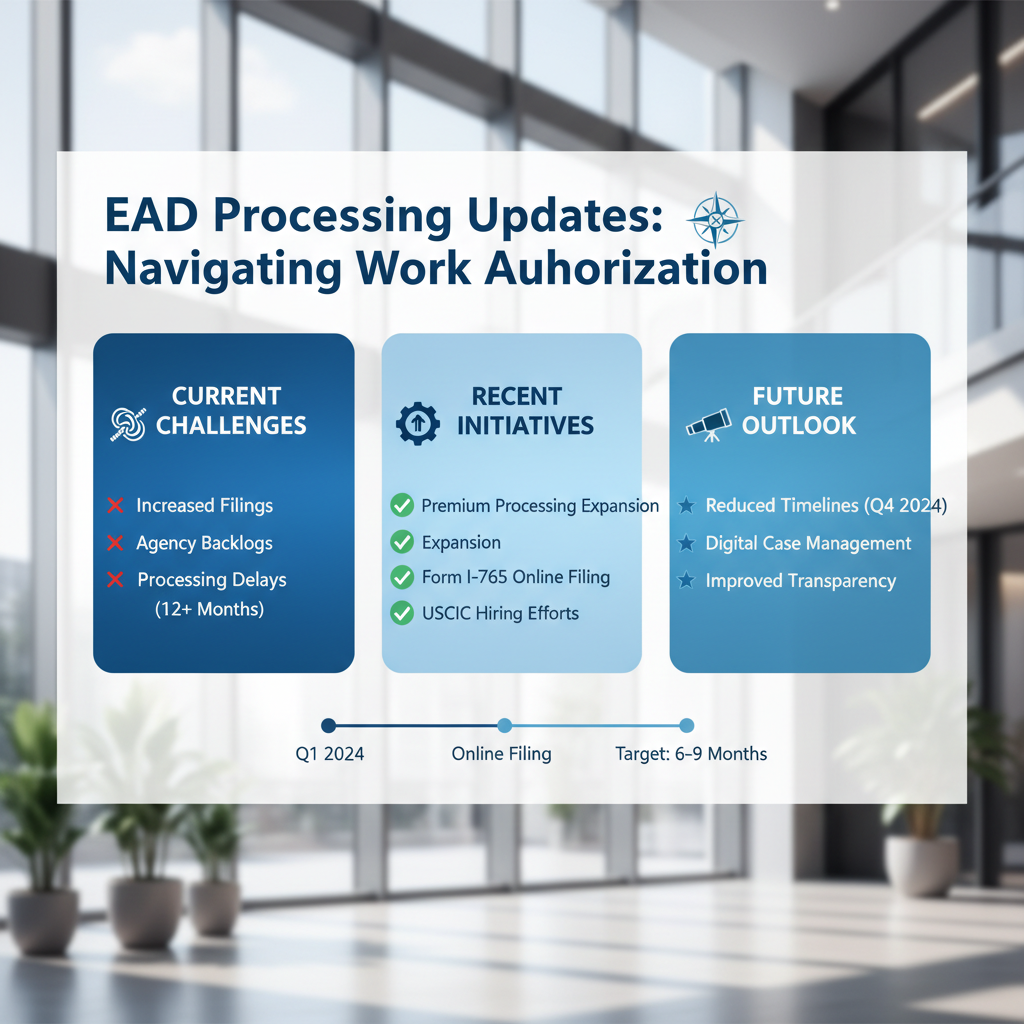
The information and guidance in this article are informed by recent discussions and announcements from U.S. Citizenship and Immigration Services (USCIS) regarding processing times and policies affecting the Employment Authorization Document Processing (USCIS). Staying informed about these changes is crucial for anyone applying for or renewing their work authorization.
What This News Means for Immigrants in Orlando and Across Florida
Understanding the nuances of immigration policy changes can be daunting. At Imigrar, we specialize in translating complex legal updates into clear, actionable advice for our clients, whether they are in Central Florida or across the nation.
Why this news is showing up now
For several years, USCIS has faced significant backlogs in processing various immigration benefits, including EAD applications. This was largely due to increased filings, resource constraints, and operational adjustments during the global pandemic. In response to widespread concern and the critical need for timely work authorization, USCIS has been actively implementing strategies to reduce these backlogs and improve efficiency. These efforts include temporary final rules extending automatic EAD validity periods, internal process optimizations, and a focus on digital transformation. The "news" you're seeing often reflects these ongoing efforts, policy adjustments, and the resulting shifts in processing times and requirements, all aimed at streamlining the system and addressing the challenges applicants have faced.
How it can affect Florida residents
For individuals residing in Florida, particularly in bustling areas like Orlando, Tampa, and Miami, these EAD processing updates have direct and significant implications. Florida is a hub for diverse immigrant communities, and many rely on EADs to maintain employment, support their families, and contribute to the local economy. Shorter processing times or expanded automatic extensions mean less anxiety, fewer gaps in employment, and greater stability for thousands of individuals and their employers across the state. Conversely, any delays or changes in requirements can cause severe disruption, impacting everything from housing and transportation to family finances. The Orlando USCIS Field Office, serving a large portion of Central Florida, often experiences high volumes of applications, making efficient processing particularly vital for residents along the I-4 corridor and throughout Orange County. Staying current with these updates can mean the difference between continued employment and unexpected hardship.
What Employment Authorization Document (EAD) Processing Is (and Why It Matters)
An Employment Authorization Document, commonly known as an EAD or a work permit, is a vital document for many non-U.S. citizens who wish to work legally in the United States. It's a key to financial independence and stability for countless individuals and families.
A plain-English definition
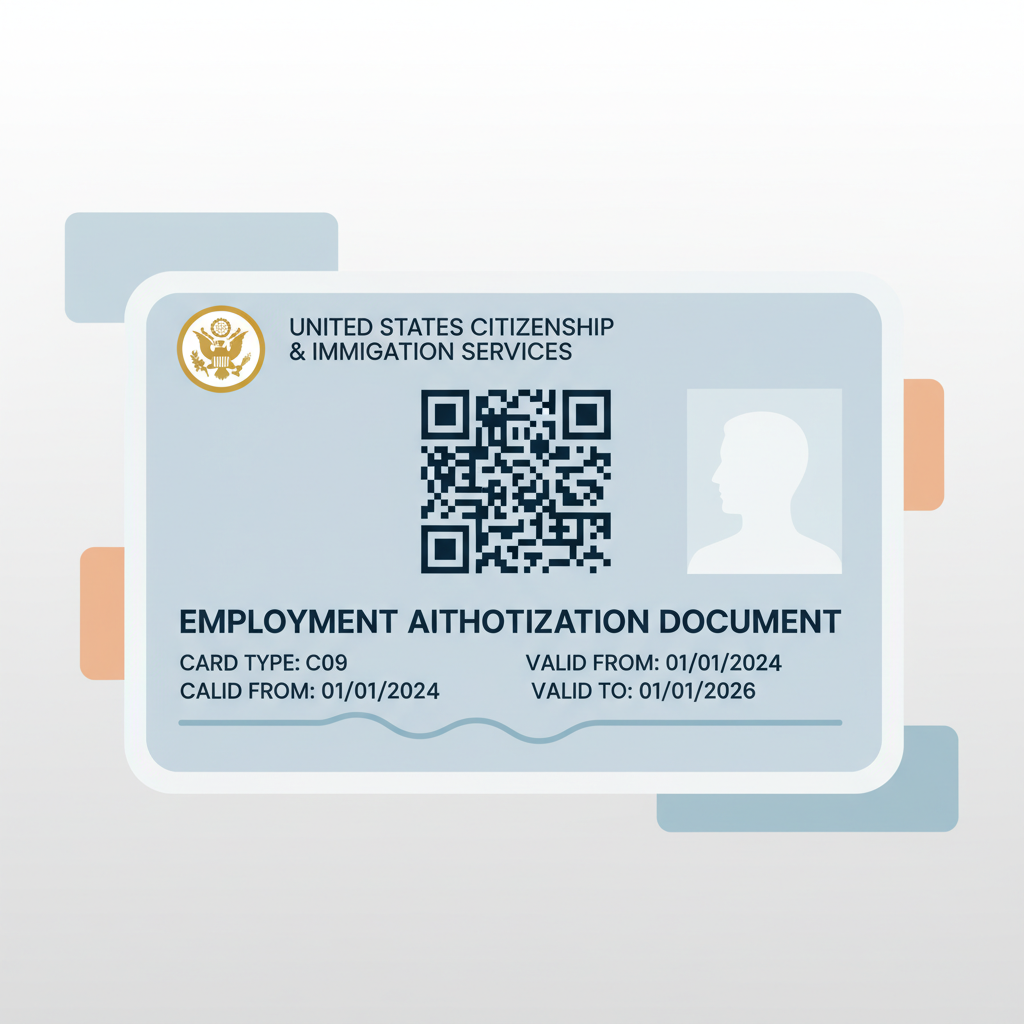
An Employment Authorization Document (EAD) is a card issued by USCIS that proves you are authorized to work in the United States for a specific period. It looks similar to a driver's license and contains your photo, name, date of birth, and an expiration date. Holding a valid EAD means you can legally accept a job offer, start a business, or continue working for an employer without needing a specific employer-sponsored visa (though some EAD categories are tied to a specific visa status, like certain student visas). It's essentially your government-issued permission slip to work.
Key terms you need to know
- Form I-765, Application for Employment Authorization: This is the official USCIS form you must file to request an EAD.
- EAD Category: This refers to the specific eligibility category under which you are applying for an EAD. Examples include categories for asylum seekers, refugees, adjustment of status applicants, certain nonimmigrant visa holders (e.g., F-1 students with OPT, H-4 spouses), and Temporary Protected Status (TPS) beneficiaries. Each category has its own specific requirements.
- Adjustment of Status (AOS): The process of applying for lawful permanent resident (green card) status while physically present in the United States. Many individuals applying for AOS are eligible for an EAD while their green card application is pending.
- Automatic Extension: A policy that allows certain EAD categories to continue working for a specific period (e.g., up to 540 days, as per recent temporary final rules) beyond their EAD's expiration date, as long as they have filed a timely renewal application.
- Receipt Notice: A document sent by USCIS confirming that they have received your application. It contains a Receipt Number which you can use to track your case online.
- Request for Evidence (RFE): A letter from USCIS asking for additional documents or information to support your application.
- Biometrics Appointment: An appointment at a USCIS Application Support Center (ASC) where your fingerprints, photograph, and signature are collected for background checks.
- Premium Processing: An expedited service offered by USCIS for certain forms, allowing for faster processing for an additional fee. While not all EAD categories are eligible for premium processing, it's an important term to know.
Understanding these terms is fundamental to navigating the EAD application and renewal process effectively. The EAD itself is more than just a piece of plastic; it represents the ability to build a life, provide for family, and contribute to the American community. Its timely approval or renewal is paramount for many.
Need Help? Our Orlando immigration team is ready to assist. Call +1 786-791-3106 for a free consultation, or message us online. Se Habla Español.
Current Immigration Law: The Foundation of EAD Eligibility
The ability to obtain an EAD is rooted in specific sections of the Immigration and Nationality Act (INA) and subsequent regulations. Eligibility is not universal; it is granted to specific categories of non-citizens who meet defined criteria.
Federal requirements
The legal framework for employment authorization is primarily found in 8 U.S.C. § 1324a (INA § 274A), which prohibits the employment of unauthorized aliens, and 8 CFR § 274a.12, which details the categories of aliens authorized for employment in the United States. This regulation distinguishes between aliens authorized to work incident to their status (who do not need to apply for an EAD) and those who must apply for an EAD to be authorized to work.
Common federal eligibility categories for an EAD include, but are not limited to:
- Asylum Applicants: Individuals who have filed Form I-589, Application for Asylum and for Withholding of Removal, and whose application has been pending for at least 150 days (and are not responsible for delays).
- Refugees and Asylees: Individuals granted refugee or asylum status.
- Applicants for Adjustment of Status: Individuals with a pending Form I-485, Application to Register Permanent Residence or Adjust Status. Often, they can file their Form I-765 concurrently with their Form I-485.
- Certain Nonimmigrant Visa Holders: This includes spouses of certain visa holders (e.g., H-4 spouses, L-2 spouses) and F-1 students seeking Optional Practical Training (OPT) or STEM OPT extensions.
- Deferred Action for Childhood Arrivals (DACA) recipients: Individuals granted DACA status are eligible for an EAD.
- Temporary Protected Status (TPS) beneficiaries: Individuals granted TPS status are eligible for an EAD.
- Applicants for Suspension of Deportation or Cancellation of Removal: Individuals with pending applications before the Executive Office for Immigration Review (EOIR).
Each category has specific documentary requirements and criteria that must be met. The application is made using Form I-765, Application for Employment Authorization. It is crucial to select the correct eligibility category on the form and provide all necessary supporting documentation. Failure to do so can lead to delays or denials.
For the most up-to-date information on eligibility and categories, always refer to the USCIS official website.
Florida-specific considerations
While immigration law is federal, Florida residents should be aware of a few practical considerations. There are no state-specific EAD laws that alter federal eligibility criteria. However, the volume of applications processed by the USCIS field offices and Application Support Centers (ASCs) in Florida (e.g., Orlando, Miami, Tampa) can impact local processing times. For Central Florida residents, the Orlando USCIS Field Office typically handles interviews for adjustment of status cases, and the local ASC in Orlando is where many biometric appointments take place. Being prepared for these local processes is key. Furthermore, Florida's economy offers diverse employment opportunities across various sectors, making a valid EAD essential for many to secure and maintain employment in industries ranging from tourism and hospitality to agriculture and technology.
Important: Always ensure your employer is aware of your EAD status and renewal timelines, especially if your EAD comes with an automatic extension. Employers must comply with federal I-9 verification requirements.
How to Apply for or Renew Your EAD: A Complete Step-by-Step Guide
Applying for or renewing an EAD can be a straightforward process if you follow the steps carefully. This guide provides a general overview; specific requirements may vary based on your eligibility category.
1) Determine Your Eligibility and Category
Before you begin, confirm that you are eligible for an EAD and identify the correct eligibility category. This is the most crucial first step. Review the USCIS instructions for Form I-765 or consult with an immigration attorney to understand which category applies to your situation (e.g., (c)(9) for Adjustment of Status applicants, (c)(3)(C) for STEM OPT, (c)(8) for asylum applicants). Your eligibility category dictates the required documents, fees, and sometimes, the processing location.
- Required Documents for Step 1:
- Your current immigration status documents (e.g., visa, I-94, receipt notices for pending applications).
- Proof of eligibility for a specific EAD category (e.g., I-485 receipt notice, I-589 receipt notice, school's I-20 for OPT).
2) Gather Required Supporting Documents
Once you know your category, collect all necessary supporting documents. This often includes identity verification, proof of immigration status, and evidence of your eligibility for the specific EAD category. Common documents include:
- Two identical passport-style photos: Taken within 30 days of filing.
- Copy of your last EAD (front and back), if applicable: For renewals.
- Copy of your I-94 Arrival/Departure Record: Obtainable online at CBP's I-94 website.
- Copy of your last visa (if applicable): From your passport.
- Copy of your passport biographical page.
- Copy of your birth certificate (and certified translation if not in English).
- Proof of eligibility for your specific category:
- For (c)(9) Adjustment of Status: Copy of Form I-485 receipt notice.
- For (c)(8) Asylum Applicants: Copy of Form I-589 receipt notice.
- For (c)(3)(C) STEM OPT: Copy of your STEM OPT Form I-20 endorsed by your Designated School Official (DSO).
- For (c)(26) H-4 Spouse: Copy of your H-4 Form I-797 approval notice, your spouse's H-1B Form I-797, and proof of your spouse's approved I-140 or AC21 extension.
- Government-issued identification (e.g., driver's license, state ID).
- Any other documents requested in the Form I-765 instructions for your category.
Reminder: Do not send original documents unless specifically requested by USCIS. Always send high-quality copies.
3) Complete Form I-765, Application for Employment Authorization
Fill out Form I-765 accurately and completely. You can download the latest version from the USCIS Forms page. Pay close attention to:
- Part 1: Reason for Applying: Select the correct option (initial permission, renewal, replacement).
- Part 2: Information About You: Ensure your name, address, date of birth, and other personal details match your other immigration documents exactly.
- Part 2, Item 27: Eligibility Category: Enter the correct three-character code (e.g., (c)(9), (c)(8), (c)(3)(C)). This is critical.
- Signature: Sign the form in blue or black ink. An unsigned form will be rejected.
Warning: Any errors or omissions can lead to delays, RFEs, or even denial.
4) Calculate and Prepare the Filing Fee (or Fee Waiver Request)
Check the current filing fee for Form I-765 on the USCIS website. The fee can change, so verify it before submitting. Some categories are exempt from the fee (e.g., initial asylum applicants, certain refugees). If you are eligible for a fee waiver, you must submit Form I-912, Request for Fee Waiver, along with your application and supporting documentation for the waiver.
- Payment Method: You can pay by money order, personal check, cashier's check, or credit card using Form G-1450, Authorization for Credit Card Transactions. Make checks payable to "U.S. Department of Homeland Security."
5) Assemble and File Your Application Package
Organize your application package neatly. It's often recommended to place documents in the order they are listed in the Form I-765 instructions. Create a cover letter listing all the contents of your package. Make a complete copy of your entire application package for your records before mailing it.
- Mailing Address: Send your application to the correct USCIS lockbox facility. The address depends on your eligibility category and the state you reside in. Check the "Where to File" section on the USCIS website for Form I-765. For many Florida residents, this will be a lockbox in Dallas or Chicago.
- Online Filing: USCIS is increasingly encouraging online filing for certain EAD categories. If your category is eligible, consider filing online through your USCIS account, as it can sometimes expedite processing and provide immediate receipt confirmation.
6) Attend Your Biometrics Appointment (If Required)
After USCIS receives your application, you will typically receive a receipt notice (Form I-797C, Notice of Action). For many categories, USCIS will then send you an appointment notice for biometrics collection at a local Application Support Center (ASC). For Central Florida residents, this is often the Orlando ASC. Attend this appointment as scheduled. If you miss it, your application may be delayed or denied.
- What to Bring: Your appointment notice, a valid photo ID (e.g., passport, driver's license), and any other requested documents.
7) Monitor Your Case Status and Respond to RFEs
You can track the status of your application online using the receipt number provided on your Form I-797C. Visit the USCIS Processing Times page for estimated timelines. If USCIS sends a Request for Evidence (RFE), respond promptly and thoroughly with the requested information. Failure to do so within the specified deadline will likely lead to a denial. If your EAD is approved, USCIS will mail the card to you.
Important: If your EAD is expiring soon and you've filed a renewal, check if your category qualifies for an automatic extension. This allows you to continue working for a specified period (e.g., 540 days) while your renewal is pending, provided you have your expired EAD and the Form I-797C receipt notice for your renewal application.
Practical Steps You Can Take Today for Your EAD Application
Don't wait until the last minute! Proactive preparation is key to a smooth EAD application or renewal process.
Actionable Checklist:
- Verify Eligibility and Category: Double-check that you meet the requirements for an EAD and select the correct category on Form I-765. Consult the USCIS official website or an attorney.
- Start Gathering Documents Early: Begin collecting all required supporting documents well in advance of your filing date, especially for renewals. Some documents, like foreign birth certificates, may take time to obtain or translate.
- Review Form I-765 Instructions Thoroughly: The instructions are comprehensive and provide specific guidance for each eligibility category. Read them carefully before filling out the form.
- Make Copies of Everything: Before mailing your application, make a complete copy of every single document and form for your records. This is invaluable if documents are lost or if USCIS requests further information.
- Track USCIS Processing Times: Regularly check the USCIS Processing Times page for your specific form and field office/service center. While not a guarantee, it gives an estimate.
- Understand Automatic Extensions: If you are renewing, determine if your EAD category is eligible for an automatic extension. Keep your expired EAD and your Form I-797C receipt notice together as proof of continued work authorization.
- Seek Legal Counsel: If you have any doubts about your eligibility, the required documents, or the process, consult an experienced immigration attorney.
Document Preparation Guidance:
- Translations: Any document not in English must be accompanied by a complete and accurate English translation, certified by the translator. The certification must state that the translator is competent to translate from the foreign language into English and that the translation is complete and accurate.
- Legibility: Ensure all copies are clear and easy to read. Blurry copies can lead to RFEs.
- Order: Organize your documents in a logical order, often matching the sequence in the Form I-765 instructions or your cover letter.
- Avoid Staples/Paperclips (unless necessary): USCIS prefers binders clips or nothing at all for large packets, as documents are often scanned.
Timeline Expectations:
EAD processing times can vary significantly based on the eligibility category, the volume of applications, and the specific USCIS service center handling your case. While USCIS has made efforts to reduce backlogs, it's still prudent to apply for renewals well in advance – ideally 180 days before your current EAD expires. Recent temporary final rules have extended the maximum automatic extension period for certain categories to 540 days (from 180 days) for applications filed on or before October 26, 2023, and for some categories, this extension may still apply. Always check the latest USCIS guidance on automatic extensions. Keep in mind that biometrics appointments can add several weeks to the process. Be prepared for potential delays and plan accordingly to avoid gaps in employment.
How Imigrar Helps Immigrants in Orlando and Beyond
Navigating the complexities of EAD applications and renewals requires precision and up-to-date knowledge of immigration law. At Imigrar, we are committed to providing expert legal guidance to individuals and families in Orlando, Central Florida, and across the United States. Our tagline, "Keep Families Together," reflects our core mission.
Our experience and expertise: Our team of dedicated immigration attorneys possesses extensive experience in all facets of employment authorization. We stay abreast of the latest USCIS policy changes, processing updates, and legal precedents to ensure our clients receive the most accurate and effective representation. From initial eligibility assessment to preparing and filing complex applications, responding to RFEs, and tracking case progress, we guide you through every step of the journey. We understand the unique challenges faced by immigrants along the I-4 corridor and those interacting with the Orlando USCIS Field Office.
Free consultation offer: We believe that everyone deserves access to quality legal advice. That's why we offer a free consultation to discuss your EAD application or renewal. This is an opportunity for you to understand your options, assess your eligibility, and get clear answers to your questions without any financial commitment. We will review your specific situation, identify your correct EAD category, and outline the best strategy for a successful application.
Se Habla Español: We are proud to serve the diverse communities of Florida and nationwide. Our team is fully bilingual, and we are ready to assist you in both English and Spanish. Se Habla Español.
Need Help? Our Orlando immigration team is ready to assist. Call +1 786-791-3106 for a free consultation, or message us online. Se Habla Español.
Frequently Asked Questions About EADs and Processing
Q: Who is eligible to apply for an EAD?
A: Eligibility for an EAD is granted to specific categories of non-U.S. citizens, not to everyone. Common eligible groups include applicants for Adjustment of Status (green card applicants), asylum seekers, refugees, individuals granted Temporary Protected Status (TPS), certain nonimmigrant visa holders (like some H-4 spouses or F-1 students seeking Optional Practical Training), and Deferred Action for Childhood Arrivals (DACA) recipients. Each category has distinct requirements. It's crucial to identify your correct eligibility category before applying.
Q: Does an EAD grant me permanent immigration status or a green card?
A: No, an EAD itself does not grant you permanent immigration status or a green card. It is simply authorization to work in the U.S. for a specific period. While many individuals applying for a green card (Adjustment of Status) are eligible for an EAD while their application is pending, the EAD is separate from the green card application. Your underlying immigration status remains what it was before you received the EAD, or it may be tied to a pending application for a different status.
Q: How long does EAD processing typically take, and are there automatic extensions for renewals?
A: EAD processing times vary significantly by eligibility category and USCIS service center, ranging from a few months to over a year. You can check current estimates on the USCIS Processing Times page. Yes, many EAD renewal applicants are eligible for an automatic extension of their expiring EAD for a specific period (e.g., up to 540 days for certain categories, as per recent temporary rules) provided they filed their renewal application timely and remain eligible. You can continue working with your expired EAD and the Form I-797C receipt notice for your renewal. Always confirm the latest automatic extension rules for your specific category.
Q: What documents are absolutely essential for an EAD application or renewal?
A: The absolute essentials generally include a properly completed and signed Form I-765, two passport-style photographs, a copy of your government-issued identification, and proof of your eligibility for the specific EAD category you're applying under (e.g., a copy of your Form I-485 receipt notice if applying based on a pending green card). For renewals, a copy of your previous EAD is also essential. Depending on your category, you might also need copies of your I-94, passport biographic page, or other immigration documents. Always refer to the official USCIS instructions for Form I-765 for a complete list specific to your category.
Q: What are the costs associated with applying for an EAD, and can I get a fee waiver?
A: The current filing fee for Form I-765 is typically around $470 (as of early 2026, but always verify on the USCIS website as fees can change). Some categories are exempt from paying the fee (e.g., initial asylum applicants, certain refugees). If you meet specific income-based guidelines or receive certain public benefits, you may be eligible to request a fee waiver by filing Form I-912, Request for Fee Waiver, along with your EAD application and supporting evidence of your financial hardship. It's advisable to consult with an attorney if you're considering a fee waiver.
Q: What happens if my EAD application is denied? Can I appeal?
A: If your EAD application is denied, USCIS will send you a denial notice explaining the reason. Generally, there is no formal appeal process for EAD denials. However, you might be able to file a motion to reopen or a motion to reconsider, or simply reapply for the EAD with new evidence or by correcting the issues that led to the denial. The best course of action depends on the reason for denial. If your application is denied, it is highly recommended to seek immediate legal counsel from an immigration attorney to assess your options and avoid any potential negative impact on your underlying immigration status.
Common EAD Application Mistakes (and How to Avoid Them)
Errors in your EAD application can lead to significant delays, RFEs, or even outright denial, disrupting your ability to work. Here are some of the most common mistakes and how to prevent them:
Mistake #1: Incomplete or Incorrect Forms
Many applications are rejected or delayed because forms are not fully completed, are missing required signatures, or contain incorrect information. For instance, entering the wrong eligibility category code on Form I-765 is a frequent error. An unsigned Form I-765 will be automatically rejected.
How to Avoid: Read the Form I-765 instructions thoroughly, line by line. Use the most recent version of the form from the USCIS Forms page. Double-check all entries for accuracy, especially personal details and eligibility codes. Always sign the form in the designated signature block. If you are unsure about any section, consult an immigration attorney.
Mistake #2: Missing Supporting Documentation
Failing to include all necessary supporting documents is a major cause of RFEs and delays. This could be anything from missing passport photos, a copy of your I-94, or crucial evidence proving your eligibility for a specific EAD category (e.g., the receipt notice for your pending Form I-485 or Form I-589).
How to Avoid: Create a checklist of all required documents based on the Form I-


