

At Imigrar, we understand that reliable information is crucial for navigating the complex U.S. immigration system. Our mission, "Keep Families Together," guides us to provide clear, actionable advice, especially when government policies or processing times shift. Today, we're diving deep into recent updates concerning Employment Authorization Documents (EADs), often known as work permits, and what these changes mean for your ability to work legally in the United States.
Need Help? Our Orlando immigration team is ready to assist. Call +1 786-791-3106 for a free consultation, or message us online. Se Habla Español.
The reporting that sparked this guide:
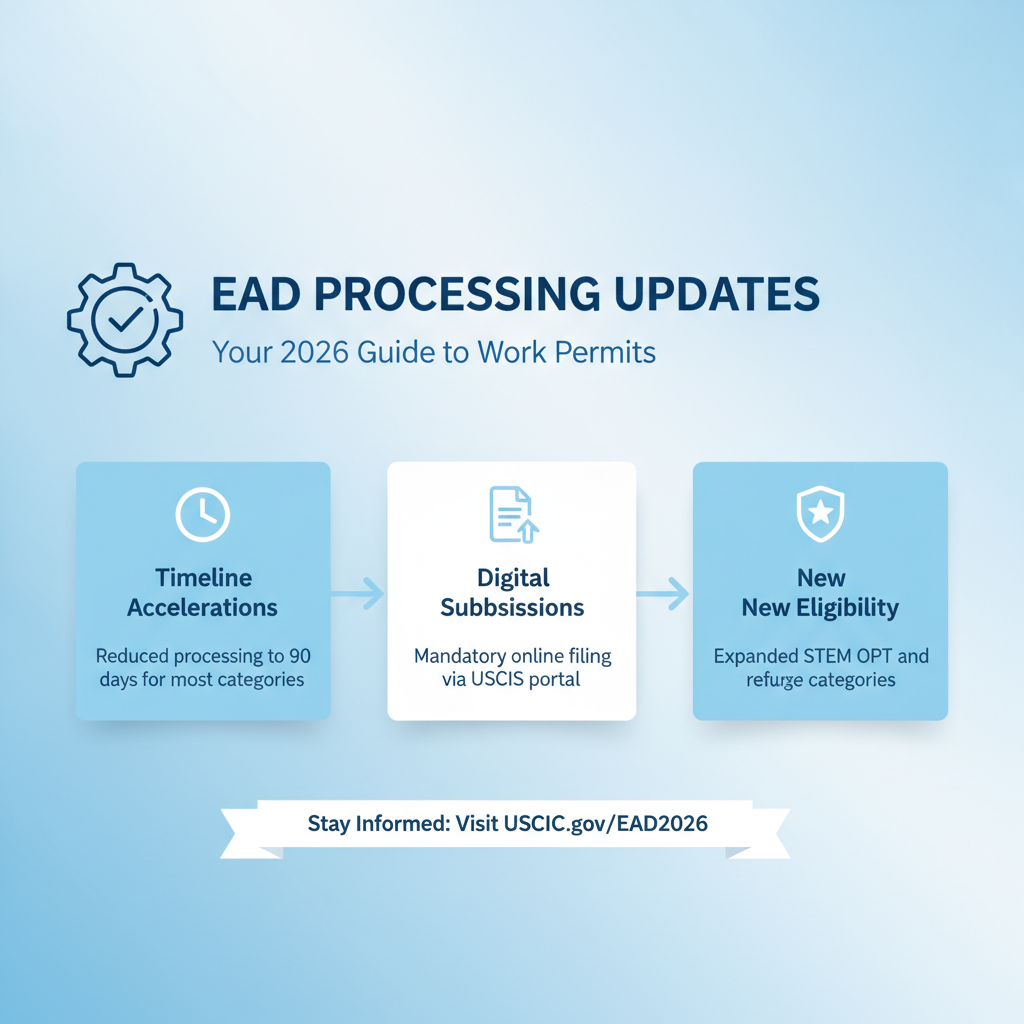
What This News Means for Immigrants in Orlando and Across Florida
The United States Citizenship and Immigration Services (USCIS) regularly issues updates, policy alerts, and processing time adjustments that directly impact the lives of immigrants. For those seeking or renewing an Employment Authorization Document (EAD), these changes can mean the difference between maintaining lawful employment and facing uncertainty.
Why this news is showing up now
Recent reports from USCIS indicate a continued focus on improving efficiency and reducing backlogs across various application types, including the crucial Form I-765, Application for Employment Authorization. Over the past few years, the agency has grappled with unprecedented processing delays, particularly exacerbated by pandemic-era operational adjustments and increased application volumes. In response, USCIS has been implementing strategies such as temporary final rules to extend automatic EAD validity periods, streamlining internal processes, and increasing staffing. The current news cycle reflects ongoing efforts to stabilize and, ideally, expedite EAD processing, often involving adjustments to policy, fee structures, or digital submission capabilities. As of mid-2026, these efforts are still very much in progress, with USCIS continuously evaluating and modifying its approach to meet the demand for work authorization.
These updates are critical because an EAD is not just a piece of paper; it’s a gateway to economic stability, independence, and the ability for individuals and families to thrive. Delays in EAD processing have had profound impacts, leaving many individuals unable to work, support their families, or contribute fully to the economy. The current focus on EAD processing is a direct response to these challenges, aiming to alleviate the burden on applicants and ensure timely access to work authorization.
How it can affect Florida residents
For the vibrant immigrant communities across Florida, from Orlando and the I-4 corridor to Miami, Tampa, and Jacksonville, these EAD processing updates are highly significant. Florida is home to a substantial number of immigrants who rely on EADs for their livelihood. This includes individuals with pending Adjustment of Status applications, asylum seekers, DACA recipients, and certain nonimmigrant visa holders.
- Employment Opportunities: Faster processing means quicker access to the job market. Delays can lead to job loss or an inability to start new employment, impacting families and local economies in Central Florida. When EADs are renewed efficiently, it ensures continuity for employees and stability for businesses in Orange County and beyond.
- Economic Stability: An EAD allows individuals to earn a living wage, pay taxes, and support their families. Timely processing directly contributes to the economic well-being of thousands of families throughout Florida.
- Planning and Uncertainty: Knowing the current state of EAD processing times helps individuals and employers plan more effectively. Reduced processing times can alleviate the stress and uncertainty that often accompany immigration applications. Conversely, unexpected policy changes or new delays can create significant hardship.
- Local USCIS Impact: The Orlando USCIS Field Office, while not directly processing I-765 applications (which are typically handled by national service centers), plays a role in interviews for underlying immigration benefits that grant EAD eligibility, such as Adjustment of Status. Therefore, overall USCIS efficiency impacts local experiences.
Important: Staying informed about these updates is not just about convenience; it's about protecting your ability to work and live lawfully in the U.S. Imigrar is committed to providing you with the most current information and expert legal guidance to navigate these evolving landscapes.
What Employment Authorization Documents (EADs) Are (and Why They Matter)
An Employment Authorization Document (EAD) is a vital permit issued by USCIS that grants certain non-citizens in the United States legal permission to work for a specific period. It’s often referred to simply as a "work permit." For many immigrants, obtaining an EAD is a critical step towards financial independence, building a life, and contributing to American society.
A plain-English definition
Imagine you're in the U.S. but haven't yet received a Green Card or a visa that automatically permits you to work. An EAD is essentially a temporary card (similar to a driver's license in appearance) that proves you are allowed to be employed in the U.S. It typically comes with an expiration date, after which it needs to be renewed. Without a valid EAD or another form of work authorization (like certain visas or a Green Card), working in the U.S. is considered unlawful and can lead to serious immigration consequences.
The EAD is often a bridge document, allowing individuals to work while their long-term immigration applications (like a Green Card application based on family or employment, or an asylum claim) are pending. It ensures that individuals can support themselves and their families during what can often be a lengthy immigration process.
Key terms you need to know
Navigating the EAD process involves understanding specific terminology:
- Employment Authorization Document (EAD): The official card issued by USCIS, also known as a work permit, proving your authorization to work in the U.S.
- Form I-765, Application for Employment Authorization: The specific form you must file with USCIS to request an EAD. This is the central document for the application process.
- USCIS (U.S. Citizenship and Immigration Services): The government agency responsible for overseeing lawful immigration to the United States, including processing EAD applications. Visit the USCIS official website for more information.
- Adjustment of Status (AOS): The process of applying for lawful permanent resident (Green Card) status from within the United States. Many individuals applying for AOS are eligible for an EAD while their Green Card application (Form I-485) is pending.
- Asylum Seeker: An individual who has applied for asylum in the U.S. and is awaiting a decision. Asylum applicants are generally eligible for an EAD after their asylum application (Form I-589) has been pending for 150 days.
- Deferred Action for Childhood Arrivals (DACA): An immigration policy that allows certain undocumented immigrants who entered the U.S. as minors to receive a renewable two-year period of deferred action from deportation and eligibility for a work permit. DACA recipients apply for EADs.
- Nonimmigrant Visa: A visa issued to foreign nationals seeking to enter the U.S. temporarily for a specific purpose (e.g., students, tourists, temporary workers). Some nonimmigrant visa categories, such as certain spouses of L-1 or E visa holders, are eligible for EADs.
- Receipt Number: A unique 13-character code USCIS assigns to each application received. You'll use this to track your case online.
- Request for Evidence (RFE): A notice from USCIS asking for more information or documents to support your application. Responding promptly and thoroughly is critical.
- Automatic EAD Extension: A temporary provision that allows certain EAD categories to continue working for a period (currently up to 540 days in many cases) beyond their card's expiration date, provided they filed a timely renewal application and remain eligible.
Understanding these terms is the first step toward successfully navigating your EAD application or renewal. An EAD is more than just permission to work; it's a foundation for building a stable future in the U.S.
Need Help? Our Orlando immigration team is ready to assist. Call +1 786-791-3106 for a free consultation, or message us online. Se Habla Español.
Current Immigration Law: The Foundation for Work Authorization
The ability to work legally in the United States is governed by a complex framework of federal immigration laws, primarily the Immigration and Nationality Act (INA) and its subsequent amendments. While there isn't a single "EAD law," various sections of the INA define who is eligible for employment authorization based on their immigration status or pending application.
The INA broadly categorizes individuals into those authorized to work incident to their status (e.g., U.S. citizens, lawful permanent residents) and those who require specific employment authorization, typically through an EAD. The latter group includes a wide array of non-citizens who are present in the U.S. but do not yet have permanent resident status or a nonimmigrant visa that inherently authorizes employment with any employer.
Federal requirements
Federal law, enforced by USCIS, sets the eligibility criteria for an EAD. These criteria are detailed in 8 CFR §274a.12 and are categorized based on your immigration situation. Some of the most common categories for EAD eligibility include:
- Asylum Applicants: Individuals who have filed Form I-589, Application for Asylum and for Withholding of Removal, and whose application has been pending for at least 150 days.
- Adjustment of Status Applicants: Individuals who have filed Form I-485, Application to Register Permanent Residence or Adjust Status, and are awaiting a decision. This is a very common pathway for EAD eligibility.
- DACA Recipients: Individuals granted Deferred Action for Childhood Arrivals, who apply for renewal of their deferred action and EAD.
- Spouses of Certain Nonimmigrants: E.g., spouses of E-1/E-2 treaty traders/investors, L-1 intracompany transferees (L-2 spouses), and certain H-1B holders (H-4 spouses).
- Students with Optional Practical Training (OPT) or Curricular Practical Training (CPT): F-1 students seeking work experience related to their field of study.
- Temporary Protected Status (TPS) Beneficiaries: Nationals of designated countries who cannot return safely due to armed conflict, environmental disaster, or other extraordinary conditions.
- Parolees: Individuals granted humanitarian parole or significant public benefit parole into the U.S.
For each category, specific documentation and conditions apply. All applicants must file Form I-765, Application for Employment Authorization. The instructions for this form are comprehensive and outline the evidence required for each eligibility category. USCIS regularly updates these instructions, so it's vital to always refer to the latest version.
Reminder: The underlying immigration status or application (e.g., asylum application, Green Card application) must be valid and active for EAD eligibility to continue.
Florida-specific considerations
While EAD eligibility is determined by federal law, there are practical considerations for Florida residents:
- Employment Verification: Employers in Florida, like those nationwide, must verify the employment eligibility of all new hires using Form I-9, Employment Eligibility Verification. A valid EAD card is one of the primary documents accepted for this purpose.
- Driver's Licenses: A valid EAD can often be used as a document to obtain a Florida driver's license or state identification card, though additional proof of residency and identity may be required by the Florida Department of Highway Safety and Motor Vehicles (FLHSMV).
- Local Resources: Immigrants in Central Florida, including Orlando and surrounding Orange County, have access to various community organizations and legal aid services that can assist with understanding EAD requirements and connecting with legal professionals. The Orlando USCIS Field Office may also provide information on local resources, though it does not process EAD applications directly.
- State-Level Initiatives: While Florida does not issue its own work permits, state legislative actions can sometimes impact employment opportunities or the integration of immigrant communities, making it important to stay informed about local developments alongside federal immigration law.
Understanding these federal requirements and how they apply in your daily life in Florida is crucial. For detailed information on EAD categories and filing, always consult the USCIS official website and their forms page.
How to Apply for or Renew Your EAD: A Complete Step-by-Step Guide
Applying for or renewing an Employment Authorization Document (EAD) can seem daunting, but breaking it down into manageable steps makes the process clearer. Here’s a comprehensive guide to help you navigate it.
1) Determine Your Eligibility Category
Before anything else, you must confirm you are eligible for an EAD and identify your specific eligibility category. This is crucial because different categories have different requirements and supporting documents. Common categories include:
- (c)(9): Adjustment of Status applicants (e.g., filed Form I-485).
- (c)(8): Asylum applicants (after 150 days of application pending).
- (c)(33): DACA recipients.
- (a)(12): TPS beneficiaries.
- (a)(17): Spouses of E-1/E-2 nonimmigrants.
- (a)(18): Spouses of L-1 nonimmigrants.
- (c)(26): H-4 spouses of certain H-1B nonimmigrants.
- (c)(3)(A): F-1 students with Curricular Practical Training (CPT).
- (c)(3)(B): F-1 students with Optional Practical Training (OPT).
- (c)(3)(C): F-1 students with a STEM OPT extension.
Action: Review the USCIS I-765 eligibility categories to find yours. If unsure, consult with an experienced immigration attorney.
2) Gather Required Documents
Once your category is clear, collect all necessary supporting documents. This is a critical step to avoid delays. While specific documents vary by category, general requirements often include:
- Two recent passport-style photos: Must meet USCIS specifications (2x2 inches, white background, unretouched, full front view).
- Copy of your last EAD (if renewing): Front and back.
- Copy of your government-issued identification: Such as a passport, birth certificate with photo ID, or national identity card.
- Copy of Form I-94, Arrival/Departure Record: Proof of lawful admission.
- Copy of your visa (if applicable): From your passport.
- Evidence of your eligibility category:
- For (c)(9) Adjustment of Status: Copy of your Form I-485 receipt notice.
- For (c)(8) Asylum: Copy of your Form I-589 receipt notice.
- For (c)(33) DACA: Copy of your most recent Form I-797, Approval Notice for deferred action.
- For (c)(26) H-4 spouse: Copy of your spouse's H-1B approval notice (Form I-797), proof of marriage, and your H-4 approval notice.
- For (c)(3)(B) OPT: Copy of your Form I-20 endorsed for OPT, and all previous EADs issued for OPT.
- Copy of birth certificate (if applicable).
- Copy of marriage certificate (if applicable).
- Any other documents requested by USCIS specific to your case.
Tip: Make copies of everything you send to USCIS and keep them for your records. Do not send original documents unless specifically requested.
3) Complete Form I-765, Application for Employment Authorization
Fill out Form I-765 accurately and completely. You can download the latest version from the USCIS website. Read the instructions carefully for each question.
- Personal Information: Ensure your name, address (especially if you live in Orlando or Central Florida), and date of birth match your identification documents exactly.
- Eligibility Category: Enter the correct eligibility category code in Part 2, Item 27.
- Signature: Do not forget to sign the form. An unsigned form will be rejected.
- Online Filing: For many categories, USCIS offers online filing of Form I-765. This can sometimes expedite the process and provide immediate confirmation of submission. Check if your category is eligible for online filing on the USCIS website.
Warning: Any errors or omissions can lead to delays or even denial. If you're unsure about any part of the form, seek legal assistance.
4) Prepare Supporting Evidence
Organize your gathered documents logically. Create a cover letter listing all the documents you are submitting. This helps USCIS officers quickly verify the contents of your application. Ensure all copies are clear and legible. If any documents are not in English, you must provide a certified English translation.
- Translation Requirements: The translator must certify that they are competent to translate and that the translation is accurate. The certification must include the translator's name, signature, and date.
- Organization: Use fasteners (like paper clips, not staples) to keep related documents together. Place the Form I-765 on top, followed by the payment, photos, and then supporting evidence in a logical order (e.g., eligibility proof, then identity documents).
5) Pay the Filing Fee (or Request a Fee Waiver)
As of 2026, there is a filing fee for Form I-765, which can change. Always check the USCIS website for the current fee. You can pay by money order, personal check, cashier's check, or credit card using Form G-1450, Authorization for Credit Card Transactions. Make checks payable to "U.S. Department of Homeland Security."
Fee Waiver: If you cannot afford the fee, you might be eligible for a fee waiver by filing Form I-912, Request for Fee Waiver. Eligibility for a fee waiver is based on income below 150% of the Federal Poverty Guidelines, receipt of a means-tested benefit, or financial hardship. Not all EAD categories are eligible for fee waivers.
6) Submit Your Application
Once your application package is complete and reviewed, submit it to the correct USCIS Lockbox facility. The mailing address depends on your eligibility category and where you live. Always refer to the specific filing instructions for Form I-765 on the USCIS website.
- Mailing: Use a reputable mail service with tracking (e.g., USPS Certified Mail, FedEx, UPS) to ensure your application reaches USCIS and you have proof of delivery.
- Online Submission: If filing online, follow the prompts on the USCIS website, upload all required documents, and pay the fee electronically.
- Keep Records: Make sure you have a complete copy of the submitted application and all supporting documents.
After submission, USCIS will send you a Form I-797C, Notice of Action, acknowledging receipt of your application. This notice will contain your receipt number, which you'll use to track your case.
7) Track Your Application and Respond to RFEs
Once you have your receipt number, you can track the status of your application online using the USCIS Case Status Online tool. This tool will provide updates on where your application is in the processing queue.
- Processing Times: Check the USCIS Processing Times page regularly for estimates. Keep in mind these are averages and can fluctuate.
- RFEs: If USCIS needs more information, they will send you a Request for Evidence (RFE). Respond to RFEs promptly and thoroughly within the given deadline. Failure to do so can lead to denial.
- Address Changes: If you move while your application is pending (e.g., within Orlando or to another part of Florida), you must notify USCIS of your change of address within 10 days by filing Form AR-11, Alien's Change of Address Card, and updating any pending applications.
Patience is key during this stage. However, if your application significantly exceeds the posted processing times, or if you receive an RFE, it might be time to consult with an immigration attorney.
Need Help? Our Orlando immigration team is ready to assist. Call +1 786-791-3106 for a free consultation, or message us online. Se Habla Español.
Practical Steps You Can Take Today for Your EAD Application
Preparing for your EAD application or renewal doesn't have to be overwhelming. Here are practical steps you can start taking right now to ensure a smoother process.
Actionable Checklist:
- Verify Your Eligibility: Double-check your specific immigration status and ensure you fall into one of the eligible EAD categories. Don't assume; confirm with USCIS guidelines or an attorney.
- Check Your Current EAD Expiration Date: If renewing, make a note of your EAD's expiration date. Aim to file your renewal application at least 180 days before it expires to take advantage of the automatic extension and avoid gaps in employment.
- Download the Latest Forms: Always use the most current version of Form I-765 and its instructions from the USCIS website. Forms are frequently updated.
- Gather Core Identity Documents: Locate your passport, birth certificate, previous EADs, and Form I-94. Ensure they are valid and readily available.
- Review Processing Times: Visit the USCIS Processing Times page to get an estimate for your specific EAD category and service center. This helps set realistic expectations.
- Budget for Fees: Check the current filing fee for Form I-765 on the USCIS website. If you plan to apply for a fee waiver (Form I-912


