

The reporting that sparked this guide: Employment Authorization Document Processing (USCIS)
What This News Means for Immigrants in Orlando and Across Florida
For immigrants and their families striving to build a life in the United States, the ability to work legally is not just a privilege—it's a necessity. An Employment Authorization Document (EAD), often referred to as a work permit, is the golden ticket that allows eligible non-citizens to be lawfully employed in the U.S. Recent and ongoing updates from U.S. Citizenship and Immigration Services (USCIS) regarding EAD application and renewal processing are critical for thousands of individuals and families, including those right here in Orlando and throughout Florida.
Why this news is showing up now
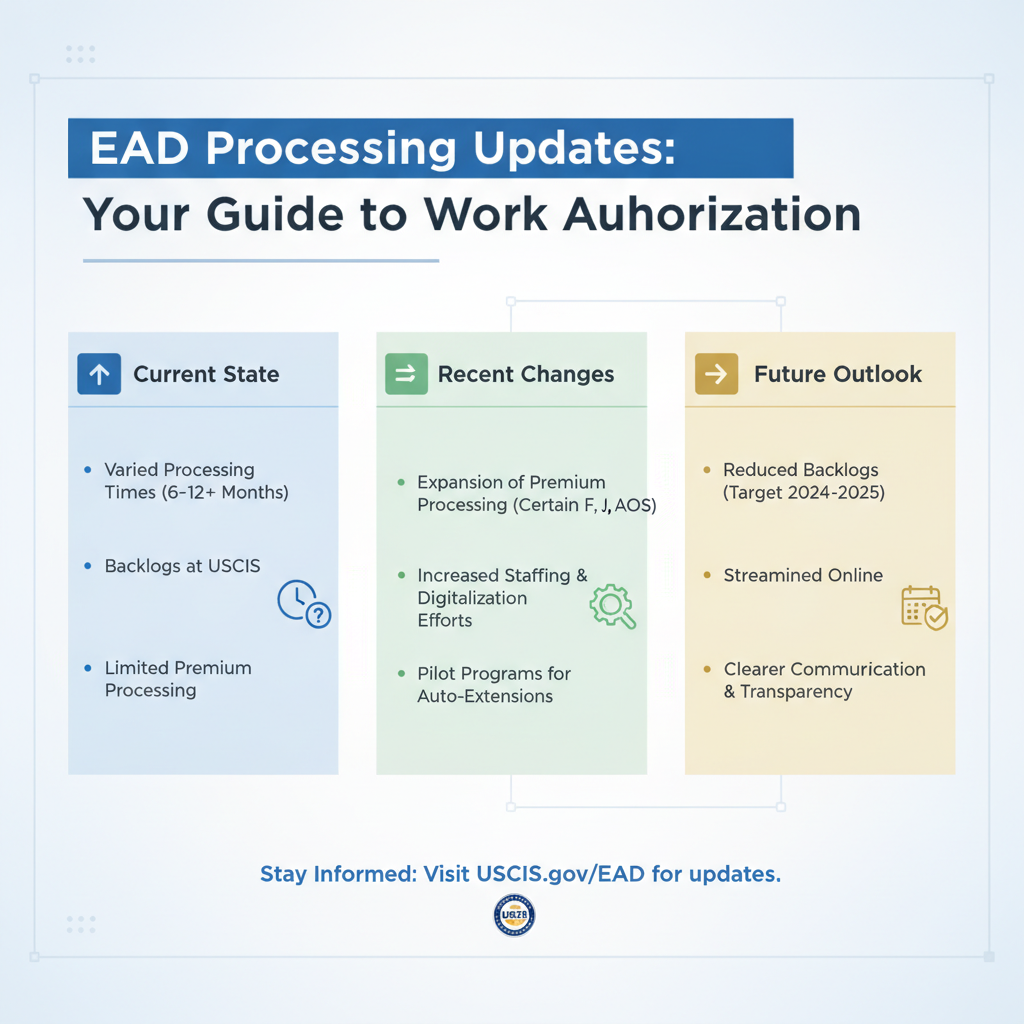
As of 2026, USCIS continues its efforts to streamline immigration processes and address the backlogs that have significantly impacted applicants in recent years. The agency has been under immense pressure to improve efficiency, particularly for documents as vital as EADs. These ongoing "updates" aren't always a single breaking news story, but rather a continuous stream of policy adjustments, technological enhancements, and operational directives aimed at reducing processing times, clarifying eligibility, and ensuring consistent adjudications. For instance, in the past few years, we've seen temporary expansions of automatic EAD extensions, efforts to digitize applications, and targeted hiring initiatives within USCIS. These changes are part of a broader commitment to make the immigration system more responsive and less burdensome for applicants, directly affecting anyone applying for or renewing their work authorization.
The continuous focus on EAD processing reflects a recognition by USCIS of the profound impact delays have on individuals and the broader U.S. economy. When EADs expire or take too long to process, individuals can lose jobs, families can face financial hardship, and employers can lose valuable talent. Therefore, any move by USCIS to improve this system is considered significant news, even if it's an incremental policy adjustment rather than a dramatic overhaul.
How it can affect Florida residents
Florida, with its diverse population and vibrant economy, is home to a vast number of immigrants who rely on EADs. From the agricultural fields of South Florida to the tourism and tech industries of Orlando and the I-4 corridor, immigrants contribute significantly to the state's prosperity. Updates to EAD processing directly impact their ability to work, support their families, and contribute to their communities.
- For Orlando residents: If your case is in Orlando, whether you're an asylum seeker, adjusting status, or a dependent spouse, faster or more predictable EAD processing means greater stability. Central Florida's economy thrives on a workforce that includes many immigrants, and an efficient EAD system helps maintain this stability. Delays can lead to job loss, particularly in sectors like hospitality, healthcare, and services that are pillars of the Orlando economy.
- Economic Impact: When EADs are processed efficiently, it allows individuals to maintain employment, pay taxes, and contribute to local economies, including Orange County. Conversely, delays can lead to unemployment, increased reliance on social services, and economic instability for families and communities.
- Family Stability: Imigrar's tagline is "Keep Families Together," and an EAD is fundamental to this mission. The ability to work provides financial security, allowing families to remain united and thrive. Expedited processing or clearer guidelines can prevent families from being plunged into financial distress due to unexpected gaps in work authorization.
- Legal Planning: For those in the process of adjusting status or seeking asylum, EAD processing times can influence overall case strategy and planning. Knowing what to expect allows individuals and their legal counsel to prepare more effectively.
Understanding these updates and knowing how to navigate the EAD application and renewal process is crucial for Florida residents. Imigrar is here to help you understand these changes and ensure your application is handled with the utmost care and expertise.
Need Help? Our Orlando immigration team is ready to assist. Call +1 786-791-3106 for a free consultation, or message us online. Se Habla Español.
What Employment Authorization Documents (EADs) Are (and Why They Matter)
An Employment Authorization Document (EAD) is a crucial immigration benefit that allows eligible foreign nationals to work legally in the United States for a specific period. It's a physical card, similar to a driver's license, that serves as proof of your authorization to be employed in the U.S. While often referred to as a "work permit," it's important to understand that an EAD does not grant immigration status itself; rather, it is a benefit derived from an underlying immigration status or application.
The ability to work legally is foundational for most immigrants to establish a stable life in the U.S. It enables individuals to earn income, support themselves and their families, pay taxes, and contribute to the economy and society. Without an EAD, many individuals would be unable to legally secure employment, leading to significant financial hardship and limiting their ability to integrate into American life. For families, an EAD can mean the difference between struggling to make ends meet and achieving financial stability, directly supporting Imigrar's mission to "Keep Families Together."
A plain-English definition
Simply put, an Employment Authorization Document (EAD) is a card issued by USCIS that proves you are allowed to work in the U.S. for a certain period. Think of it as your official permission slip to get a job. It's not a Green Card, and it doesn't make you a U.S. citizen, but it does allow you to legally earn a living while you are pursuing a more permanent immigration status or if you are in a temporary status that permits employment.
Many different categories of immigrants are eligible for an EAD. These can include individuals who have applied for Adjustment of Status (a Green Card), asylum seekers, certain non-immigrant visa holders (like H-4 spouses or F-1 students seeking Optional Practical Training), and those with Temporary Protected Status (TPS) or Deferred Action for Childhood Arrivals (DACA). Each category has specific requirements for eligibility, and it's vital to apply under the correct one.
Key terms you need to know
Navigating immigration law requires understanding specific terminology. Here are some essential terms related to EADs:
- USCIS (U.S. Citizenship and Immigration Services): The federal agency responsible for administering immigration and naturalization benefits. They process EAD applications. USCIS official website
- Form I-765, Application for Employment Authorization: This is the primary form you must file to apply for an EAD.
- Eligibility Category: The specific reason or immigration status that qualifies you for an EAD (e.g., c(9) for Adjustment of Status, a(5) for asylum applicant, c(33) for DACA recipient). Choosing the correct category is critical.
- Adjustment of Status (AOS): The process by which eligible foreign nationals already in the U.S. can apply for lawful permanent resident status (a Green Card) without having to return to their home country. Many AOS applicants are eligible for an EAD while their Green Card application is pending.
- Asylum Seeker: An individual who has applied for asylum in the U.S. and meets certain criteria is eligible for an EAD typically 180 days after filing their asylum application.
- DACA (Deferred Action for Childhood Arrivals): A program that provides temporary protection from deportation and work authorization to eligible young immigrants who came to the U.S. as children. DACA recipients apply for EADs.
- H-4 Dependent Spouse: Certain spouses of H-1B visa holders (specialty occupation workers) may be eligible for an EAD if their H-1B spouse has an approved Form I-140 (Immigrant Petition for Alien Worker) or has been granted an extension of H-1B status beyond the 6-year limit.
- Optional Practical Training (OPT): A period during which F-1 nonimmigrant students can work in jobs directly related to their major area of study. OPT requires an EAD.
- Automatic Extension: In some cases, USCIS grants an automatic extension of an expiring EAD for certain categories if a renewal application is timely filed. This can provide continued work authorization for up to 540 days (as per recent, temporary policy changes) beyond the EAD's expiration date while the renewal is pending.
- RFE (Request for Evidence): A notice from USCIS requesting additional information or documentation to support your application.
- Biometrics Appointment: An appointment at a USCIS Application Support Center (ASC) where fingerprints, photographs, and signatures are collected to verify identity and conduct background checks.
Current Immigration Law: The Foundation for EADs
The authority for issuing EADs stems from the Immigration and Nationality Act (INA), the primary body of law governing immigration in the United States, and subsequent regulations published in the Code of Federal Regulations (CFR). While the INA broadly defines who is eligible to enter and remain in the U.S., specific regulations detail the conditions under which a non-citizen may obtain employment authorization.
It's crucial to understand that EAD eligibility is not universal. It is tied to specific immigration statuses or applications. For example, Section 274A of the INA makes it unlawful for employers to knowingly hire individuals who are not authorized to work in the U.S., underscoring the importance of having a valid EAD for eligible foreign nationals. The regulations at 8 CFR § 274a.12 list the various categories of foreign nationals who are eligible to apply for employment authorization, each with its own specific criteria.
Federal requirements
Eligibility for an EAD is determined by federal law and regulations, primarily overseen by USCIS. There are numerous categories under which one might qualify for an EAD. The most common include:
- Asylum Applicants: Individuals who have filed Form I-589, Application for Asylum and for Withholding of Removal, and whose application has been pending for at least 180 days (without any delays caused by the applicant) are generally eligible to apply for an EAD under category (a)(5).
- Refugees: Individuals granted refugee status are authorized to work incident to their status and typically receive an EAD upon entry or shortly thereafter.
- Individuals Granted Asylum: Those granted asylum are also employment authorized incident to their status.
- Applicants for Adjustment of Status (Green Card Applicants): Individuals who have filed Form I-485, Application to Register Permanent Residence or Adjust Status, are eligible for an EAD under category (c)(9) while their Green Card application is pending. This is a common pathway for many immigrants in Orlando.
- DACA Recipients: Individuals who have been granted Deferred Action for Childhood Arrivals are eligible for an EAD under category (c)(33).
- Certain Nonimmigrant Spouses: Spouses of certain nonimmigrant visa holders, such as H-4 spouses (category (c)(26)) and L-2 spouses, are eligible for EADs. For H-4 spouses, the primary H-1B worker must have an approved Form I-140 or have been granted an H-1B extension beyond the six-year limit.
- Students with Optional Practical Training (OPT): F-1 students participating in OPT (pre-completion or post-completion) or STEM OPT extensions are eligible for EADs under categories (c)(3)(A), (B), or (C).
- Temporary Protected Status (TPS): Individuals granted TPS are eligible for EADs under category (a)(12) or (c)(19).
- U-Visa Applicants: Victims of certain crimes who have been granted U nonimmigrant status or have a pending bona fide U visa application may be eligible for an EAD.
Each category has specific documentary requirements and filing procedures. It is essential to correctly identify your eligibility category when filing Form I-765.
For detailed information on all eligibility categories, always refer to the official USCIS website: USCIS official website
Florida-specific considerations
While EADs are a federal benefit, there are some Florida-specific considerations that individuals holding an EAD should be aware of:
- Driver's Licenses: In Florida, a valid EAD is generally accepted as proof of lawful presence when applying for a Florida driver's license or state identification card. The duration of your driver's license will typically be tied to the expiration date of your EAD. The Florida Department of Highway Safety and Motor Vehicles (FLHSMV) will verify your immigration status through the federal SAVE (Systematic Alien Verification for Entitlements) program.
- Employment Verification: Florida employers, like all U.S. employers, are legally required to verify the employment authorization of all new hires using Form I-9, Employment Eligibility Verification. Your EAD is one of the primary documents you can present to satisfy this requirement. While E-Verify is a federal program, many Florida businesses, particularly those with government contracts or in specific industries, voluntarily participate or are mandated to use it.
- Local Resources: For Central Florida residents, understanding where to access resources, such as the Orlando USCIS Field Office for certain appointments or community organizations offering support, is vital. While most EAD applications are mailed to USCIS service centers, local field offices handle interviews for related applications (like Adjustment of Status) that impact EAD eligibility.
- State-specific Assistance: Although EADs are federal, state and local programs may require proof of work authorization for certain benefits or services. Maintaining a valid EAD ensures access to such programs if you are otherwise eligible.
Reminder: Always carry your EAD with you, as it is your official proof of work authorization. If it expires, you lose your legal ability to work until a new one is issued or an automatic extension applies.
Need Help? Our Orlando immigration team is ready to assist. Call +1 786-791-3106 for a free consultation, or message us online. Se Habla Español.
How to Apply for or Renew Your EAD: A Complete Step-by-Step Guide
Applying for or renewing your EAD can seem daunting, but by following a structured approach, you can navigate the process effectively. This guide covers the essential steps for both initial applications and renewals, as the core process is largely similar.
Important: Always use the most current version of Form I-765 from the USCIS Forms page.
1) Determine Your Eligibility Category and Application Type
Before you do anything else, you must accurately identify which eligibility category applies to you. This is the most crucial step, as selecting the wrong category can lead to denial and loss of filing fees.
- Initial Application: Are you applying for an EAD for the first time based on a pending asylum application, an Adjustment of Status application, DACA, or another qualifying status?
- Renewal Application: Is your current EAD expiring soon, and you need to continue working? You generally need to file for renewal within a 180-day window before your current EAD expires, though USCIS recommends filing well in advance (e.g., 6 months) due to potential processing delays.
- Required Documents for this step:
- Your current immigration documents (e.g., I-94 Arrival/Departure Record, visa, Green Card application receipt notice, asylum application receipt notice).
- Any previous EADs.
2) Gather All Required Supporting Documents
Once your eligibility category is clear, collect all necessary supporting documents. The exact documents vary by category, but common requirements include:
- Proof of Identity and Nationality:
- Copy of your birth certificate (with certified translation if not in English).
- Copy of passport biographical page.
- Copy of national identity card (if applicable).
- Proof of Immigration Status:
- Copy of your Form I-94, Arrival/Departure Record.
- Copy of your current visa (if applicable).
- Copies of previous EADs (if renewing).
- Copy of your most recent Form I-797, Approval Notice for your underlying status (e.g., H-1B, L-1, F-1).
- Copy of the receipt notice for your pending underlying application (e.g., Form I-485, Form I-589).
- Photographs: Two identical passport-style color photographs taken within 30 days of filing.
- Proof of Eligibility for Your Category:
- For Adjustment of Status (c)(9): Copy of your Form I-485 receipt notice.
- For Asylum Applicants (a)(5): Copy of your Form I-589 receipt notice.
- For DACA (c)(33): Copy of your DACA approval notice.
- For H-4 EAD (c)(26): Copy of your H-1B spouse's Form I-797 for their H-1B approval, a copy of your spouse's approved Form I-140 or evidence of their H-1B extension beyond 6 years, and marriage certificate.
- Previous Applications/Decisions: Copies of previous Form I-765 applications, approval notices, or denial letters.
- Translations: Any document not in English must be accompanied by a complete English translation and a certification by the translator.
3) Complete Form I-765, Application for Employment Authorization
Fill out Form I-765 accurately and completely. You can download the form from the USCIS Forms page.
- Personal Information: Provide your full legal name, address, date of birth, country of birth, and A-Number (Alien Registration Number) if you have one.
- Eligibility Category: Crucially, enter the correct eligibility category code (e.g., c09, a05, c33) in Part 2, Item 27.
- Previous Applications: Disclose any previous EAD applications.
- Signatures: Ensure you sign the form in blue or black ink. An unsigned form will be rejected.
- Online Filing Option: For certain categories, USCIS allows online filing of Form I-765. Check the USCIS website to see if your category is eligible. Online filing can sometimes lead to faster processing and allows for immediate confirmation of submission.
4) Pay the Filing Fee (or Apply for a Fee Waiver)
The filing fee for Form I-765 is currently $410 (as of the date of this article, but always check USCIS Forms for the most current fee). Additionally, some applicants may need to pay an $85 biometrics fee, though this is often waived if filed concurrently with Form I-485 or for certain categories.
- Payment Methods: You can pay by money order, personal check, cashier's check, or credit card using Form G-1450, Authorization for Credit Card Transactions. Make checks payable to "U.S. Department of Homeland Security."
- Fee Waivers: Certain applicants, particularly those with low income or receiving public benefits, may be eligible for a fee waiver by filing Form I-912, Request for Fee Waiver. This is common for asylum seekers.
5) Submit Your Application Packet
Assemble your complete application packet, including Form I-765, all supporting documents, photographs, and the filing fee.
- Mailing Address: The correct mailing address depends on your eligibility category and whether you are filing concurrently with another application (e.g., Form I-485). Always check the "Where to File" instructions on the USCIS website for Form I-765.
- Concurrent Filing: If you are filing Form I-765 concurrently with Form I-485, mail both applications together to the address specified for Form I-485.
- Proof of Mailing: Send your application via certified mail with a return receipt or a courier service that provides tracking. This provides proof of delivery.
6) Attend Your Biometrics Appointment (if Required)
After USCIS accepts your application, you will typically receive a receipt notice (Form I-797C). If a biometrics appointment is required, you will later receive a separate appointment notice (Form I-797C, Notice of Action) scheduling you for a visit to a local Application Support Center (ASC).
- What to Bring: Bring your appointment notice, a valid photo ID (e.g., passport, driver's license), and any other documents specified in the notice.
- Purpose: At the ASC, your fingerprints, photograph, and signature will be collected for background checks.
- For Central Florida residents: The Orlando USCIS Application Support Center is often the location for these appointments. Ensure you attend on time.
7) Monitor Your Case Status and Respond to RFEs
After your biometrics appointment, monitor your case status regularly.
- Online Case Status: Use the receipt number from your Form I-797C to track your case on the USCIS Case Status Online tool.
- RFEs: If USCIS needs more information, they will send you an RFE (Request for Evidence). Respond promptly and completely to RFEs by the deadline provided to avoid delays or denial.
- Approval: If your application is approved, you will receive an approval notice, and your EAD card will be mailed to you.
- Processing Times: Check USCIS Processing Times for an estimate, but be aware that these are just estimates and can fluctuate.
Practical Steps You Can Take Today
Proactive preparation is key to a smooth EAD application or renewal process. Here are actionable steps you can take starting today:
- Start Early for Renewals: If your EAD is approaching its expiration date, begin the renewal process at least 6 months before it expires. While some categories offer an automatic extension, relying solely on this can be risky if there are unexpected delays.
- Organize Your Documents: Create a dedicated folder (physical and/or digital) for all immigration-related documents. Keep originals safe and make copies of everything you submit to USCIS.
- Verify Eligibility: Reconfirm your eligibility category for Form I-765. If your underlying immigration status has changed, your EAD eligibility might also change.
- Check USCIS Website for Latest Forms and Fees: Immigration forms and fees are subject to change. Always download the latest version of Form I-765 and verify the correct filing fee on the USCIS official website.
- Take New Passport-Style Photos: Ensure your photos meet USCIS specifications (2x2 inches, white background, no glasses, taken within 30 days of filing).
- Consult with an Immigration Attorney: Even if you think your case is straightforward, an attorney can help identify potential issues, ensure correct category selection, and verify all documents are in order. This is especially important for complex cases or if you have any immigration history issues.
- Keep a Copy of Everything: Before mailing your application, make a complete copy of the entire packet for your records. This is invaluable if USCIS requests information or if your original application is lost.
Document preparation guidance
- Accuracy is Paramount: Double-check all information for typos or errors. Even minor discrepancies can cause delays or RFEs.
- Translations: If any document is not in English, provide a certified English translation. The translator must sign a statement certifying that they are competent to translate and that the translation is accurate.
- Photo Requirements: Ensure your photos adhere strictly to USCIS guidelines. Submitting incorrect photos is a common reason for RFEs.
- Organize Clearly: When assembling your packet, use cover sheets or tabs to clearly label each type of document (e.g., "Form I-765," "Copy of Passport," "Form I-485 Receipt Notice").


