


The ability to work legally in the United States is a cornerstone for many immigrants building a new life. An Employment Authorization Document (EAD), often referred to as a work permit, is critical for this journey. At Imigrar, an immigration law firm based in Orlando, Florida, we understand the profound impact that EAD processing times and policies have on individuals and families across the nation. We are committed to keeping you informed about the latest developments from USCIS, helping you navigate these complex processes with confidence.
Today is 2026-02-19, and we’re observing recent trends and updates from USCIS regarding EAD applications and renewals. These changes can significantly affect how quickly you can obtain or renew your work authorization, impacting your employment, financial stability, and overall peace of mind.
The reporting that sparked this guide
This comprehensive guide is inspired by recent reports and announcements from the United States Citizenship and Immigration Services (USCIS) concerning the processing of Employment Authorization Documents. Staying current with these updates is vital for anyone seeking or renewing their work authorization.
Employment Authorization Document Processing (USCIS)
What This News Means for Immigrants in Orlando and Across Florida
Recent USCIS updates regarding Employment Authorization Document (EAD) processing are more than just bureaucratic changes; they represent significant shifts that can directly impact the lives and livelihoods of immigrants in Orlando, throughout Central Florida, and across the entire state.
Why this news is showing up now
The landscape of immigration processing is constantly evolving. In recent years, USCIS has grappled with unprecedented backlogs, particularly for EAD applications. This has been due to a confluence of factors, including increased application volumes, staffing challenges, and procedural adjustments implemented during and after the global pandemic. In response, USCIS has been actively exploring and implementing new strategies to improve efficiency, reduce processing times, and enhance the overall customer experience. These efforts manifest as policy memos, temporary final rules, and operational updates that aim to streamline the adjudication process for various immigration benefits, including the EAD. The current news cycle reflects these ongoing attempts by USCIS to address past challenges and adapt to current demands, often resulting in both positive changes (like expanded automatic extensions) and potential new complexities.
How it can affect Florida residents
For individuals and families residing in Florida, these EAD processing updates have direct and tangible consequences:
- Employment Opportunities: A timely EAD means the ability to start a new job, continue existing employment, or pursue career advancement. Delays can lead to job loss, financial hardship, and instability for families relying on that income. Florida's diverse economy, from tourism and hospitality along the I-4 corridor to agriculture and tech, relies on a robust workforce, and EAD holders are a vital part of it.
- Economic Stability: The ability to work legally is fundamental to economic self-sufficiency. Delays in EAD processing can force individuals into difficult financial situations, impacting their ability to pay rent, buy groceries, and contribute to the local economy in places like Orlando, Kissimmee, and Tampa.
- Planning and Uncertainty: For those awaiting an initial EAD or a renewal, uncertainty about processing times can make long-term planning impossible. This affects everything from housing decisions to family budgeting and educational pursuits.
- Legal Compliance for Employers: Florida employers, particularly those in Orange County and surrounding areas, must ensure their workforce has valid work authorization. Delays or expirations of EADs can create compliance issues for businesses, potentially leading to difficult decisions regarding an employee's status.
- Automatic Extension Benefits: Recent USCIS policies, such as the temporary increase of the automatic EAD extension period for certain categories, are particularly beneficial for Florida residents. This allows eligible individuals to continue working for an extended period while their renewal application is pending, mitigating the risk of employment gaps. Understanding these extensions is crucial for continued work authorization.
At Imigrar, we understand these local impacts. Our Orlando-based team is dedicated to guiding you through these updates, ensuring your EAD application or renewal is handled with precision and care to minimize disruption to your life in Florida.
Need Help? Our Orlando immigration team is ready to assist. Call +1 786-791-3106 for a free consultation, or message us online. Se Habla Español.
What Employment Authorization Document (EAD) Is (and Why It Matters)
Understanding the Employment Authorization Document (EAD) is crucial for anyone seeking to work legally in the United States. It's more than just a piece of plastic; it's your key to economic independence and stability.
A plain-English definition
An Employment Authorization Document (EAD), often called a "work permit," is a card issued by the United States Citizenship and Immigration Services (USCIS) that provides temporary authorization for foreign nationals to work legally in the U.S. if they are not U.S. citizens or lawful permanent residents (green card holders). It proves to employers that you are allowed to be employed in the U.S. for a specific period.
The EAD is typically granted to individuals who are in the process of adjusting their immigration status, seeking asylum, or are in specific non-immigrant categories that permit employment outside of a sponsored visa. It is not an immigration visa itself, nor does it grant a specific immigration status; rather, it's a benefit tied to an underlying immigration application or status.
Key terms you need to know
Navigating immigration law requires familiarity with specific terminology. Here are some key terms related to EADs:
- EAD (Employment Authorization Document): The official name for the work permit card.
- Form I-765: The official USCIS application form used to request an EAD. This is the central document for your application.
- USCIS (U.S. Citizenship and Immigration Services): The government agency responsible for administering immigration and naturalization benefits, including EADs.
- Adjustment of Status (AOS): The process by which an eligible foreign national already in the United States can apply for lawful permanent resident status (a Green Card) without having to return to their home country to complete visa processing. Many AOS applicants are eligible for an EAD while their Green Card application (Form I-485) is pending.
- Asylum Seeker: An individual who has applied for asylum in the U.S. and is awaiting a decision. Asylum applicants are generally eligible to apply for an EAD 180 days after filing their asylum application.
- DACA (Deferred Action for Childhood Arrivals): A U.S. immigration policy that allows certain undocumented immigrants who entered the country as minors to receive a renewable two-year period of deferred action from deportation and eligibility for a work permit.
- TPS (Temporary Protected Status): A temporary immigration status granted to eligible nationals of designated countries who are unable to return safely to their home country due to conditions such as armed conflict or natural disaster. TPS beneficiaries are eligible for EADs.
- OPT (Optional Practical Training): A period during which F-1 nonimmigrant students can work in a field directly related to their major area of study. OPT requires an EAD.
- STEM OPT (Science, Technology, Engineering, and Mathematics Optional Practical Training): An extension of OPT available to F-1 students who have earned a STEM degree from an accredited U.S. institution. STEM OPT requires a new EAD.
- Expedite Request: A request made to USCIS to speed up the processing of an application, including an EAD, due to urgent circumstances (e.g., severe financial hardship, humanitarian reasons).
- Biometrics Appointment: A scheduled appointment at an Application Support Center (ASC) where USCIS collects fingerprints, photographs, and a signature from applicants. This is a standard part of many immigration applications, including EADs.
- Receipt Notice (Form I-797C): A notice sent by USCIS acknowledging receipt of your application. This is important for tracking your case.
- Automatic EAD Extension: A policy that allows certain EAD categories to continue working for a specific period (currently up to 540 days, under a temporary final rule, for applications filed by October 26, 2023) beyond their card's expiration date if they filed a timely renewal application.
Understanding these terms will empower you to better comprehend the EAD application and renewal process, making your journey smoother and more informed. If you're in Orlando or anywhere in Florida and these terms feel overwhelming, Imigrar is here to simplify them for you.
Current Immigration Law: The Foundation of EAD Eligibility
The ability to obtain an Employment Authorization Document (EAD) is rooted deeply in U.S. immigration law, specifically the Immigration and Nationality Act (INA) and its implementing regulations. While USCIS processes these applications, the underlying eligibility criteria are dictated by federal statutes and regulations.
Federal requirements
The authority for granting employment authorization comes primarily from Section 274A of the Immigration and Nationality Act (INA) and is detailed in 8 Code of Federal Regulations (CFR) Part 274a.12. This section outlines various categories of foreign nationals who are eligible to receive an EAD. It's crucial to understand that an EAD is not a standalone benefit but is typically tied to an underlying immigration status or application.
Here are some of the most common categories of individuals eligible to apply for an EAD, as defined by federal law:
- Applicants for Adjustment of Status (AOS): Individuals who have filed Form I-485, Application to Register Permanent Residence or Adjust Status. These applicants are often eligible to file Form I-765 concurrently or subsequent to their Form I-485.
- Asylum Applicants: Individuals who have filed Form I-589, Application for Asylum and for Withholding of Removal, and whose application has been pending for at least 180 days without a final decision.
- Refugees: Individuals granted refugee status in the U.S.
- Asylees: Individuals granted asylum in the U.S.
- F-1 Students Seeking Optional Practical Training (OPT) or STEM OPT: Nonimmigrant students authorized for post-completion training related to their field of study.
- J-2 Spouses and Children of J-1 Exchange Visitors: If the J-2 nonimmigrant can demonstrate that the income is not necessary to support the J-1 principal.
- K-1 Fiance(e)s and K-2 Dependents: Nonimmigrants admitted as K-1 or K-2.
- U Nonimmigrant Status Holders: Victims of certain crimes who have been helpful to law enforcement.
- V Nonimmigrant Status Holders: Spouses and children of lawful permanent residents who have been waiting for their immigrant visa petition to become current.
- Individuals with Temporary Protected Status (TPS): Nationals of designated countries who cannot safely return due to ongoing armed conflict, environmental disaster, or other extraordinary and temporary conditions.
- DACA Recipients: Individuals granted deferred action under the Deferred Action for Childhood Arrivals policy.
- Spouses of E-1/E-2 Treaty Traders/Investors and L-1 Intracompany Transferees: Certain spouses holding E-1, E-2, or L-2 nonimmigrant status are eligible for EADs.
Each category has specific requirements and conditions that must be met. It's crucial to correctly identify your eligibility category when filing Form I-765, as an error can lead to delays or denial. You can find detailed instructions and eligibility criteria for each category on the USCIS official website.
Florida-specific considerations
While the laws governing EAD eligibility and issuance are federal, there are practical considerations for Florida residents:
- Federal Uniformity: It's important to remember that EAD laws are federal, meaning the eligibility criteria, application process, and forms (like Form I-765) are the same whether you apply from Orlando, Florida, or anywhere else in the U.S. There are no state-specific EAD laws in Florida.
- Local Impact of Processing Times: While the law is federal, the impact of USCIS processing times is felt locally. For Central Florida residents, delays can disrupt employment in the vibrant Orlando job market, affecting families and businesses.
- Biometrics Appointments: If a biometrics appointment is required for your EAD application, you will typically be scheduled at an Application Support Center (ASC) convenient to your residence. For those in the Orlando area, this would likely be the Orlando USCIS Field Office or another nearby ASC.
- Legal Support: Access to knowledgeable legal counsel is particularly important in a state with a large and diverse immigrant population like Florida. An attorney familiar with local resources and the intricacies of federal immigration law can provide invaluable assistance.
Reminder: Always refer to the most current instructions for Form I-765 on the USCIS Forms page to ensure you meet all federal requirements.
Don't risk delays due to complex legal requirements. Imigrar helps clients nationwide, with a strong focus on Orlando and Florida residents. Contact us at +1 786-791-3106 for expert guidance. Se Habla Español.
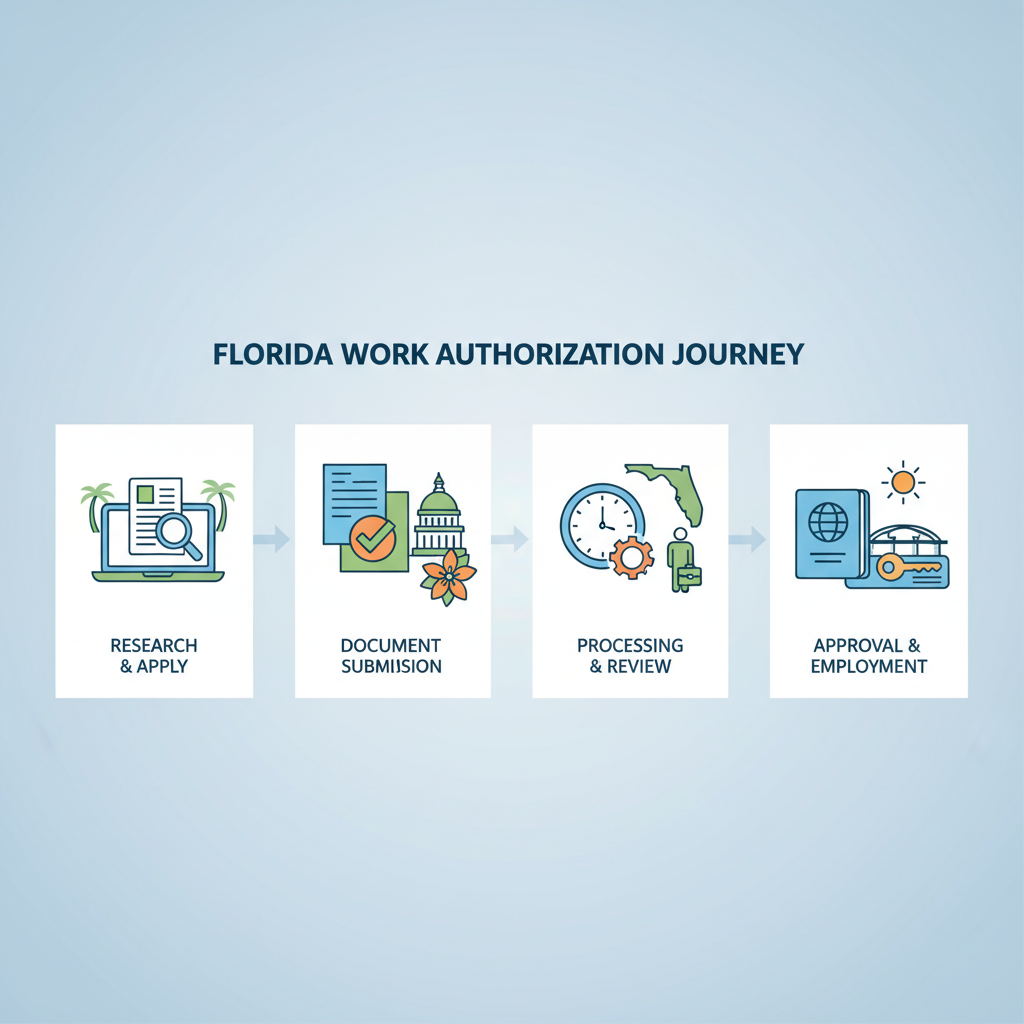
How to Apply for or Renew Your EAD: A Complete Step-by-Step Guide
Applying for or renewing an Employment Authorization Document (EAD) involves careful attention to detail and adherence to USCIS procedures. This step-by-step guide will walk you through the process, helping you avoid common pitfalls. For those in Orlando or across Florida, these steps are universal.
1) Determine Your Eligibility and Gather Essential Information
Before you even touch Form I-765, you must confirm your eligibility category. This is the most crucial first step, as it dictates what supporting documents you'll need and how your application will be adjudicated.
- Identify Your Category: Refer to the "Current Law Section" above or the USCIS website (8 CFR 274a.12) to find the correct eligibility category code for your situation (e.g., (c)(9) for Adjustment of Status applicants, (c)(8) for asylum applicants, (a)(12) for TPS).
- Collect Personal Documents:
- Valid passport and visa (if applicable)
- Form I-94 (Arrival/Departure Record, print from CBP website)
- Birth certificate
- Marriage certificate (if applicable)
- Previous EAD cards (if renewing)
- Social Security card (if you have one)
- Most recent immigration application receipt notices (e.g., for Form I-485, Form I-589, Form I-130, Form I-140)
- Two identical passport-style photos (taken within 30 days of filing)
- Proof of any previous EADs, even if expired or lost.
- Underlying Application Documentation: Gather all documents related to the immigration application that makes you EAD-eligible (e.g., receipt notice for Form I-485, proof of asylum application filing date, I-20 for OPT).
2) Complete Form I-765, Application for Employment Authorization
This is the core of your application. Accuracy is paramount.
- Download the Latest Form: Always download the most recent version of Form I-765 from the USCIS Forms website. Forms expire, and using an outdated version will lead to rejection.
- Read Instructions Carefully: Review the official instructions for Form I-765 thoroughly. They provide critical guidance on how to fill out each section.
- Fill Out Completely and Accurately:
- Provide all requested information, ensuring it matches your other immigration documents.
- Pay special attention to Part 2, Item 27, "Eligibility Category." This is where you enter the specific code you determined in Step 1.
- If renewing, clearly indicate that you are applying for a renewal in Part 1, Item 1.a.
- Sign the form in blue ink. An unsigned form will be rejected.
- Consider Online Filing: For certain eligibility categories, USCIS allows online filing of Form I-765. This can sometimes lead to faster processing and provides immediate confirmation of submission. Check the USCIS website for current eligibility for online filing.
3) Prepare Your Supporting Documents
Beyond the completed form, you must include evidence supporting your eligibility.
- Required Documents (General):
- A copy of your last EAD (front and back), if applicable.
- A copy of your Form I-94 (Arrival/Departure Record).
- A copy of your passport biographic page.
- A copy of your last visa stamp (if applicable).
- Two identical passport-style photos (write your name and A-number lightly on the back of each).
- Evidence of your eligibility category (e.g., receipt notice for Form I-485, asylum application receipt, I-20 for OPT).
- Specific Category Documents:
- For AOS (c)(9): Copy of Form I-485 Receipt Notice.
- For Asylum (c)(8): Copy of Form I-589 Receipt Notice or proof of filing, showing the 180 days have passed.
- For OPT/STEM OPT (c)(3)(A)/(c)(3)(B): Copy of your Form I-20 endorsed for OPT/STEM OPT.
- For TPS (a)(12): Copy of your Form I-797 approval notice for TPS.
- Organization: Organize your documents neatly. Use cover letters to list contents and tabs to separate different types of evidence. Do not staple documents unless specifically instructed.
4) Pay the Filing Fee (or Request a Fee Waiver)
The filing fee for Form I-765 is a critical component of your application.
- Current Fee: Check the USCIS Filing Fees page for the most current fee amount. Fees change periodically.
- Payment Method: You can pay by money order, personal check, cashier's check, or credit card using Form G-1450, Authorization for Credit Card Transactions. Make checks payable to "U.S. Department of Homeland Security."
- Fee Waivers: Certain applicants may be eligible for a fee waiver if they can demonstrate inability to pay based on financial hardship, receiving means-tested benefits, or income below 150% of the federal poverty guidelines. To request a waiver, you must file Form I-912, Request for Fee Waiver, along with your Form I-765.
5) Submit Your Application
Once your package is complete, it's time to send it to USCIS.
- Mailing Address: The filing address depends on your eligibility category and whether you are filing Form I-765 concurrently with another application (like Form I-485). Always check the "Where to File" section in the official Form I-765 instructions. It will direct you to a specific USCIS Lockbox facility.
- Shipping Method: Use a reputable courier service (e.g., USPS Certified Mail with return receipt, FedEx, UPS) that provides tracking information. This is your proof of timely filing.
- Online Submission: If eligible for online filing, follow the instructions on the USCIS online portal carefully.
- Receipt Notice: After USCIS receives your application, they will mail you a Form I-797C, Notice of Action, acknowledging receipt. This notice will contain your receipt number, which you can use to track your case online. Keep this notice safe!
6) Attend Your Biometrics Appointment (If Required)
Many EAD applicants are required to attend a biometrics appointment.
- Appointment Notice: USCIS will send you a Form I-797C, Appointment Notice, indicating the date, time, and location of your biometrics appointment. For those in Orlando, this will typically be at the local USCIS Application Support Center.
- What to Bring: Bring your appointment notice, a valid photo ID (e.g., passport, driver's license), and any other requested documents.
- Purpose: USCIS collects your fingerprints, photograph, and signature for background checks and identity verification.
- Important: Do not miss your appointment. If you have an unavoidable conflict, follow the instructions on the notice to request a reschedule immediately.
7) Monitor Your Case and Respond to USCIS Requests
The process doesn't end with submission; active monitoring is key.
- Online Case Status: Use your receipt number to check your case status online at USCIS Case Status Online.
- Processing Times: Check the USCIS Processing Times page for an estimate of how long it might take for your application to be processed. Remember, these are estimates and can vary.
- Requests for Evidence (RFEs): USCIS may send you a Request for Evidence (RFE) if they need additional information or documents to make a decision on your case. Respond promptly and completely to RFEs by the deadline provided. Failure to do so can lead to denial.
- Interview (Rare for EADs): While rare for standalone EAD applications, some underlying applications (like AOS) may require an interview.
- Approval/Denial: Once a decision is made, USCIS will mail you an approval notice (Form I-797) and your EAD card, or a denial notice explaining the reasons.
This detailed guide aims to demystify the EAD application process. However, given the complexities and potential for error, especially for those navigating the immigration system for the first time, seeking professional legal assistance is always recommended. Imigrar is here to help you through every step.
Practical Steps You Can Take Today
Navigating the EAD application or renewal process can feel overwhelming, but taking proactive steps can significantly improve your chances of a smooth and timely approval. Here are practical actions you can implement starting today, especially for those in Orlando and the broader Florida community.
Actionable Checklist for EAD Applicants
Important: Start preparing well in advance, especially for renewals. USCIS recommends filing EAD renewals 120-180 days before your current card expires.
- Verify Eligibility: Double-check your specific EAD eligibility category (e.g., (c)(9) for AOS, (c)(8) for Asylum) using the official USCIS website. Misidentifying your category is a common cause of delays.
- Gather All Documents Early: Begin collecting all necessary personal documents (passport, Form I-94, birth certificate, previous EADs) and supporting evidence for your underlying immigration status. Create a checklist and tick off items as you get them.
- Download the Latest Form I-765: Always obtain the most current version of Form I-765 and its instructions directly from the USCIS Forms page. Do not use old forms saved on your computer or found on unofficial sites.
- Review Automatic EAD Extensions: If you are renewing, determine if your category is eligible for the automatic EAD extension. Understand the current temporary rule which extended the period to 540 days for certain applicants who filed by October 26, 2023. This can provide peace of mind and prevent employment gaps.
- Take Passport Photos: Get two identical, recent (within 30 days) passport-style photos. Ensure they meet USCIS specifications.
- Check Filing Fees: Confirm the exact filing fee on the USCIS Filing Fees page. Prepare your payment method (money order, check, or Form G-1450 for credit card).
- Consider Professional Help: If you find the process confusing or have a complex case, schedule a consultation with an experienced immigration attorney at Imigrar. This can save you time, stress, and potential errors.
Document Preparation Guidance
Proper document preparation is vital for a smooth EAD process:
- Make Copies: Always make a complete copy of your entire application package (including the signed Form I-765, all supporting documents, and payment receipt) before


