


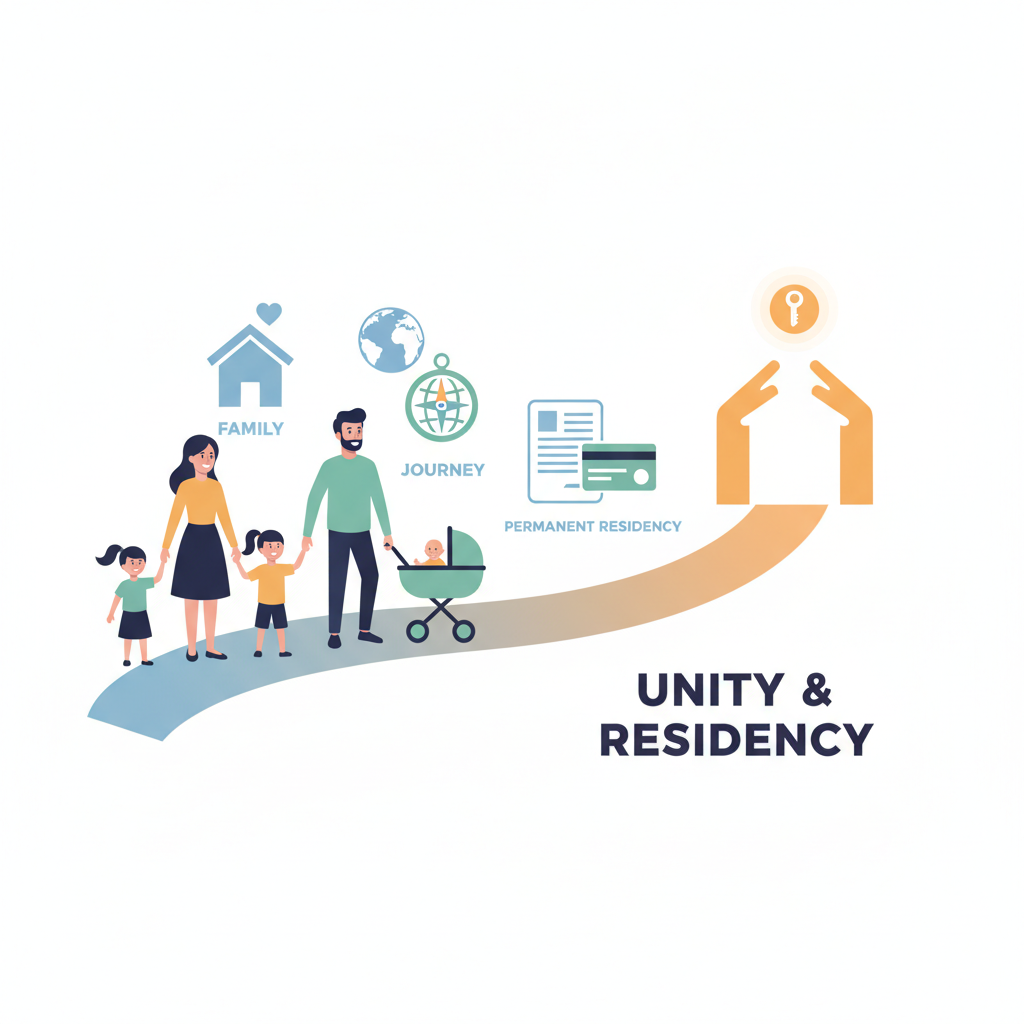
The dream of keeping families together is at the heart of U.S. immigration law. For countless individuals and families in Orlando, throughout Florida, and across the nation, the path to permanent residency often begins with a family-based immigration petition. This process, while offering immense hope, can also be complex and filled with potential pitfalls if not navigated correctly.
At Imigrar, an immigration law firm based in Orlando, Florida, we understand the emotional and legal intricacies involved. Our mission, "Keep Families Together," guides every action we take, ensuring our clients receive professional, accurate, and compassionate legal support. Today, May 20, 2026, we're seeing renewed interest and questions surrounding family petitions, prompting us to provide this comprehensive guide.
The reporting that sparked this guide

The continued focus on family unity in immigration discussions, as highlighted by recent articles and updates, underscores the enduring relevance of family-based petitions. The ongoing need for clear, actionable information is paramount for individuals seeking to reunite with their loved loved ones.
Family-Based Immigration Petition Guide (Immigration)
What This News Means for Immigrants in Orlando and Across Florida
The consistent visibility of family-based immigration in the news cycle isn't just about headlines; it reflects a constant and critical need for reliable information and legal assistance. For immigrants and their families in Central Florida and beyond, understanding the nuances of these petitions is not merely academic—it's essential for their future.
Why this news is showing up now
Family-based immigration is a cornerstone of the U.S. immigration system, and discussions around it are evergreen. News reports often highlight processing times, legislative proposals, policy changes, or even simple reminders of the existing pathways. In 2026, with ongoing efforts to streamline immigration processes and address backlogs, public interest in how families can legally unite remains consistently high. Furthermore, as the immigration landscape evolves, the need for updated, accurate information becomes more critical than ever. Every report, every policy discussion, serves as a reminder that the system is active and accessible, but requires careful navigation.
How it can affect Florida residents
For individuals residing in Florida, particularly those in vibrant, diverse communities like Orlando, Tampa, Miami, and Jacksonville, the ability to petition for family members directly impacts their daily lives and long-term stability. Florida has a significant immigrant population, making family reunification a top priority for many. Understanding the latest requirements, processing updates, and the proper filing procedures is crucial. Errors or delays can have profound consequences, impacting everything from employment authorization to the emotional well-being of separated families. Florida residents often interact with the Orlando USCIS Field Office, the National Visa Center, and various consulates abroad, making local and national policy changes highly relevant. Staying informed helps ensure that families can plan effectively and avoid common pitfalls.
Need Help? Our Orlando immigration team is ready to assist. Call +1 786-791-3106 for a free consultation, or message us online. Se Habla Español.
What Family-Based Immigration Petitions Are (and Why They Matter)
At its core, family-based immigration is the process by which a U.S. citizen or lawful permanent resident (LPR) can sponsor certain family members to obtain a Green Card, allowing them to live and work permanently in the United States. This pathway is a fundamental component of U.S. immigration law, reflecting a long-standing national commitment to family unity.
A plain-English definition
A family-based immigration petition is essentially a formal request made to the U.S. government (specifically, U.S. Citizenship and Immigration Services, or USCIS) by a U.S. citizen or Green Card holder (the Petitioner) to bring a qualifying family member (the Beneficiary) to the United States permanently. If approved, this petition is the first major step towards the beneficiary receiving a Green Card, also known as lawful permanent resident status. It's the legal mechanism designed to "Keep Families Together" across international borders.
Key terms you need to know
- Petitioner: The U.S. citizen or lawful permanent resident who files the immigration petition on behalf of a family member.
- Beneficiary: The foreign national family member for whom the petition is filed, seeking a Green Card.
- Form I-130, Petition for Alien Relative: The initial form filed by the petitioner to establish a qualifying family relationship with the beneficiary. This is the cornerstone of the family petition process.
- Green Card: Official document allowing a foreign national to live and work permanently in the United States. Also known as a Permanent Resident Card.
- Adjustment of Status (AOS): The process for eligible beneficiaries already in the U.S. to apply for a Green Card without leaving the country. This typically involves filing Form I-485.
- Consular Processing: The process for beneficiaries living outside the U.S. to obtain an immigrant visa at a U.S. embassy or consulate in their home country.
- Immediate Relatives (IR): This category includes spouses of U.S. citizens, unmarried children under 21 of U.S. citizens, and parents of U.S. citizens (if the U.S. citizen is 21 or older). There are no annual visa limits for Immediate Relatives, meaning they generally don't have to wait for a visa to become available once the Form I-130 is approved.
- Family Preference Categories: These categories are subject to annual visa limits and often involve waiting periods due to backlogs. They include:
- First Preference (F1): Unmarried sons and daughters (21 years of age or older) of U.S. citizens.
- Second Preference (F2A): Spouses and children (unmarried, under 21) of lawful permanent residents.
- Second Preference (F2B): Unmarried sons and daughters (21 years of age or older) of lawful permanent residents.
- Third Preference (F3): Married sons and daughters of U.S. citizens.
- Fourth Preference (F4): Brothers and sisters of U.S. citizens (if the U.S. citizen is 21 or older).
- Priority Date: The date USCIS receives your properly filed Form I-130. This date determines your place in line for a visa, especially for Family Preference Categories.
- Visa Bulletin: A monthly publication from the U.S. Department of State that lists when immigrant visas are available for various preference categories and countries. Your Priority Date must be "current" according to the Visa Bulletin before you can apply for a Green Card (unless you are an Immediate Relative). U.S. Department of State
- Affidavit of Support (Form I-864): A legally binding document signed by the petitioner (and sometimes a joint sponsor) to demonstrate their financial ability to support the beneficiary and prevent them from becoming a public charge.
Current Immigration Law: The Foundation of Family Petitions
The legal framework for family-based immigration is primarily established by the Immigration and Nationality Act (INA), specifically Sections 201, 203, and 204. These sections define who can petition for whom, the categories of family members, and the procedural steps involved. Understanding this foundation is crucial for any family embarking on this journey.
Federal requirements
The INA sets out the core federal requirements for family-based petitions. Key aspects include:
- Qualifying Relationship: The petitioner must prove a legitimate family relationship with the beneficiary that falls into one of the established Immediate Relative or Family Preference categories. This is the primary purpose of Form I-130.
- Petitioner's Status: The petitioner must be either a U.S. citizen or a lawful permanent resident. Their status dictates which family members they can petition for and whether the beneficiary falls into the Immediate Relative or a Preference Category.
- Financial Sponsorship: The petitioner must demonstrate the financial ability to support the beneficiary at 125% of the federal poverty guidelines, typically by filing Form I-864, Affidavit of Support. This ensures the immigrant will not become a "public charge" and rely on government assistance. If the petitioner's income is insufficient, a joint sponsor may be required.
- Admissibility: The beneficiary must be admissible to the United States. Certain factors, such as criminal history, past immigration violations, or specific health conditions, can render an individual inadmissible. Waivers may be available in some cases.
- Forms and Fees: All required USCIS forms must be accurately completed and submitted with the correct filing fees. Common forms include Form I-130, Form I-485 (for Adjustment of Status), Form I-864, and Form I-693 (Report of Medical Examination and Vaccination Record).
Important: Immigration laws are federal. This means the basic requirements for family petitions are the same nationwide, whether you're in Orlando, Florida, or anywhere else in the U.S. For detailed information and to download forms, always refer to the USCIS official website.
Florida-specific considerations
While the federal requirements are universal, navigating the process from Florida can involve specific logistical considerations:
- Orlando USCIS Field Office: If you are pursuing Adjustment of Status and live in Central Florida, your interview will likely be scheduled at the Orlando USCIS Field Office. This office is located at 6680 Corporate Centre Blvd, Orlando, FL 32822. Familiarity with local procedures and typical interview questions for this office can be beneficial.
- Local Resources: Florida offers various community organizations and legal aid services that can provide additional support, especially for those in need of language assistance or general guidance.
- State ID and Driver's Licenses: Once you obtain your Green Card, you can apply for a Florida driver's license or state ID card through the Florida Department of Highway Safety and Motor Vehicles (DHSMV).
- Legal Expertise: Engaging an immigration attorney in Orlando, like Imigrar, who understands both federal law and local practicalities, can be invaluable. We can help you navigate the specific demands of the Orlando USCIS office and ensure your application is complete and compelling.
Navigating complex immigration laws requires expert guidance. Don't leave your family's future to chance. Call Imigrar today at +1 786-791-3106 for a free consultation. Se Habla Español.
How to Petition for a Family Member: A Complete Step-by-Step Guide
The family-based immigration process can be broken down into several key stages. While the exact steps and forms may vary slightly depending on whether the beneficiary is inside or outside the U.S., this guide covers the general progression.
1) Determine Eligibility and Category
Before filing any forms, you must confirm that a qualifying relationship exists and identify the correct immigration category.
- Petitioner's Status: Are you a U.S. citizen or a lawful permanent resident (Green Card holder)? Your status determines who you can petition for.
- Beneficiary's Relationship: What is your relationship to the beneficiary (spouse, child, parent, sibling)?
- Immigration Category: Based on the above, determine if the beneficiary is an Immediate Relative (no visa waiting list) or falls under a Family Preference Category (subject to visa availability and waiting lists).
- U.S. Citizens can petition for: Spouses, unmarried children under 21, parents (if the U.S. citizen is 21+), unmarried sons/daughters 21+, married sons/daughters, and brothers/sisters (if the U.S. citizen is 21+).
- Lawful Permanent Residents can petition for: Spouses, unmarried children under 21, and unmarried sons/daughters 21+.
- Required Documents for Eligibility:
- Proof of petitioner's U.S. citizenship (e.g., U.S. birth certificate, naturalization certificate, U.S. passport) or LPR status (e.g., Green Card, I-551 stamp).
- Proof of relationship (e.g., birth certificate for parent/child, marriage certificate for spouse, divorce decrees for prior marriages, adoption decrees if applicable).
- Photos (passport-style) of petitioner and beneficiary.
- Any name change documents (e.g., marriage certificate, court order).
2) File Form I-130, Petition for Alien Relative
This is the initial and foundational step. The Form I-130 establishes the legal relationship between the petitioner and the beneficiary.
- Complete Form I-130: Fill out the form meticulously. Any errors or omissions can lead to delays or rejection. Ensure all questions are answered accurately.
- Gather Supporting Documents: Attach all required evidence to prove the relationship and your status as a petitioner. This often includes:
- Copy of petitioner's proof of U.S. citizenship or LPR status.
- Copy of beneficiary's birth certificate.
- Copy of marriage certificate (if petitioning for a spouse).
- Copies of divorce decrees or death certificates for any prior marriages of both petitioner and beneficiary.
- Passport-style photos for both petitioner and beneficiary.
- Evidence of a bona fide marriage (for spousal petitions): joint bank accounts, joint leases/mortgages, utility bills in both names, photos, affidavits from friends/family, etc.
- Pay the Filing Fee: As of the date of this article, the filing fee for Form I-130 is $535 (fees are subject to change, always check the USCIS Forms page for current fees).
- Mail the Petition: Send the completed Form I-130 and all supporting documents to the correct USCIS Lockbox facility. The address depends on where you live and which service center will process your petition.
- Receive Receipt Notice: USCIS will send you a Form I-797C, Notice of Action, confirming receipt of your petition and providing a receipt number. Keep this safe! This notice will also contain your Priority Date.
3) Wait for Petition Approval and Priority Date to Become Current
After filing, USCIS will review your Form I-130. This stage can involve significant waiting, especially for Family Preference Categories.
- I-130 Processing: USCIS will adjudicate your petition. Processing times vary widely depending on the service center and the category. You can check estimated processing times on the USCIS Processing Times page.
- Petition Approval: If approved, you will receive a Form I-797, Approval Notice.
- Priority Date Becomes Current (for Preference Categories): If the beneficiary is an Immediate Relative, they can proceed to the next step immediately after I-130 approval. If they are in a Family Preference Category, they must wait for their Priority Date to become "current" in the U.S. Department of State Visa Bulletin. This could take months or even many years, depending on the category and the beneficiary's country of birth.
- Reminder: The Visa Bulletin has two charts: "Dates for Filing" and "Final Action Dates." You generally need to wait for your Priority Date to be current on the "Final Action Dates" chart to apply for a Green Card, but sometimes you can file earlier based on the "Dates for Filing" chart.
4) Choose Your Path: Adjustment of Status or Consular Processing
Once the Form I-130 is approved and a visa is available (or immediately for Immediate Relatives), the beneficiary can apply for their Green Card. The path depends on whether the beneficiary is currently in the U.S. or abroad.
- Option A: Adjustment of Status (for beneficiaries in the U.S.)
- Eligibility: Generally, the beneficiary must have entered the U.S. lawfully and maintained valid immigration status (though exceptions exist for Immediate Relatives). They must not have certain disqualifying factors.
- Forms to File:
- Form I-485, Application to Register Permanent Residence or Adjust Status
- Form I-765, Application for Employment Authorization (optional, allows work while I-485 is pending)
- Form I-131, Application for Travel Document (optional, allows travel outside U.S. while I-485 is pending – known as Advance Parole)
- Form I-864, Affidavit of Support (from petitioner)
- Form I-693, Report of Medical Examination and Vaccination Record (completed by a USCIS-approved civil surgeon)
- Required Documents for AOS Package:
- Copies of all previously submitted I-130 approval notices.
- Beneficiary's birth certificate.
- Beneficiary's passport and visa pages.
- Proof of lawful entry (I-94, visa stamp).
- Marriage certificate (if applicable).
- Two passport-style photos.
- Form I-864 and supporting financial documents (tax returns, employment letters, pay stubs).
- Form I-693 (in a sealed envelope).
- Criminal history documents (if applicable).
- Filing: Mail the complete package to USCIS.
- Biometrics Appointment: After filing, the beneficiary will receive an appointment notice for biometrics (fingerprints, photos).
- Interview: Most AOS applicants, especially in Orlando, will have an interview at the local USCIS Field Office.
- Option B: Consular Processing (for beneficiaries outside the U.S.)
- National Visa Center (NVC) Stage: After I-130 approval, the case is transferred to the National Visa Center (NVC). The NVC will contact the petitioner and beneficiary with instructions to pay fees and submit required documents online.
- Forms to File:
- DS-260, Immigrant Visa Application (completed online by beneficiary).
- Form I-864, Affidavit of Support (from petitioner).
- Required Documents for NVC:
- Petitioner's Form I-864 and financial evidence.
- Beneficiary's civil documents (birth certificate, marriage certificate, police certificates, military records).
- Passport-style photos.
- Beneficiary's passport biographical page.
- Interview Scheduling: Once all documents are accepted by the NVC, they will schedule an interview at the U.S. embassy or consulate in the beneficiary's home country.
- Medical Exam: The beneficiary will need to undergo a medical examination with an authorized doctor in their country before the interview.
5) Prepare for the Interview
Whether it's an Adjustment of Status interview in Orlando or a consular interview abroad, preparation is key.
- Review Your Application: Understand every detail of your submitted forms and documents.
- Gather Original Documents: Bring all original civil documents, financial evidence, and any additional evidence that strengthens your case (especially for spousal petitions).
- Practice Answering Questions: Be prepared to answer questions about your relationship, background, and immigration history honestly and consistently.
- For Spousal Interviews: Be ready to answer detailed questions about how you met, your daily life, shared experiences, and future plans.
- Legal Representation: An attorney from Imigrar can accompany you to your interview (for AOS) or provide thorough preparation (for consular processing).
6) Receive Your Green Card or Immigrant Visa
The final step culminates in either receiving your Green Card or an immigrant visa to enter the U.S. as a permanent resident.
- For Adjustment of Status: If approved, you will receive your Green Card by mail within a few weeks after your interview.
- For Consular Processing: If approved, the consular officer will place an immigrant visa in your passport. You must enter the U.S. before its expiration date. Upon entry, you will be considered a lawful permanent resident.
- USCIS Immigrant Fee: Beneficiaries who undergo consular processing must pay the USCIS Immigrant Fee ($235 as of this writing) online after receiving their immigrant visa and before entering the U.S. This fee covers the cost of producing and mailing the physical Green Card.
Practical Steps You Can Take Today
Starting early and being organized are crucial for a successful family petition. Here are actionable steps you can take right away:
- Consult with an Immigration Attorney: This is the most important first step. An expert legal opinion from Imigrar can clarify your eligibility, identify potential issues, and guide you through the entire process. Call us at +1 786-791-3106.
- Gather Essential Documents: Start collecting birth certificates, marriage certificates, divorce decrees, passports, and proof of U.S. citizenship or LPR status. Ensure they are originals or certified copies and have certified English translations if necessary.
- Review Your Financials: Understand the Affidavit of Support requirements. Gather tax returns (past three years), employment letters, and pay stubs to assess if you meet the income requirements. If not, identify a potential joint sponsor.
- Establish a Bona Fide Relationship (Spousal Petitions): If petitioning for a spouse, begin collecting evidence of your genuine marriage: joint bank statements, joint utility bills, shared lease/mortgage, photos, travel itineraries, etc.
- Create an Organized Filing System: Keep all original documents, copies, receipt notices, and correspondence from USCIS or the NVC in a well-organized folder. This will save you immense time and stress.
- Check USCIS Website for Updates: Regularly visit USCIS official website for the latest forms, fees, and policy changes.
- Understand Timelines: While frustrating, be prepared for potentially long processing times, especially for Family Preference Categories. Check the USCIS Processing Times page for estimates, but remember they are just estimates.
Document preparation guidance
- Accuracy is Paramount: Double-check all forms for accuracy. Even small mistakes can cause significant delays.
- Translations: Any document not in English must be accompanied by a complete and certified English translation. The translator must certify that they are competent


