

As of July 3, 2026, the landscape of U.S. immigration continues to evolve, but one constant remains: the deep desire of families to stay united. Family-based immigration petitions are the cornerstone of this principle, offering a path for U.S. citizens and lawful permanent residents to bring their loved ones to America. At Imigrar, an immigration law firm based in Orlando, Florida, we understand the profound importance of keeping families together. Our mission is to guide you through this complex journey with expertise and compassion.
The reporting that sparked this guide
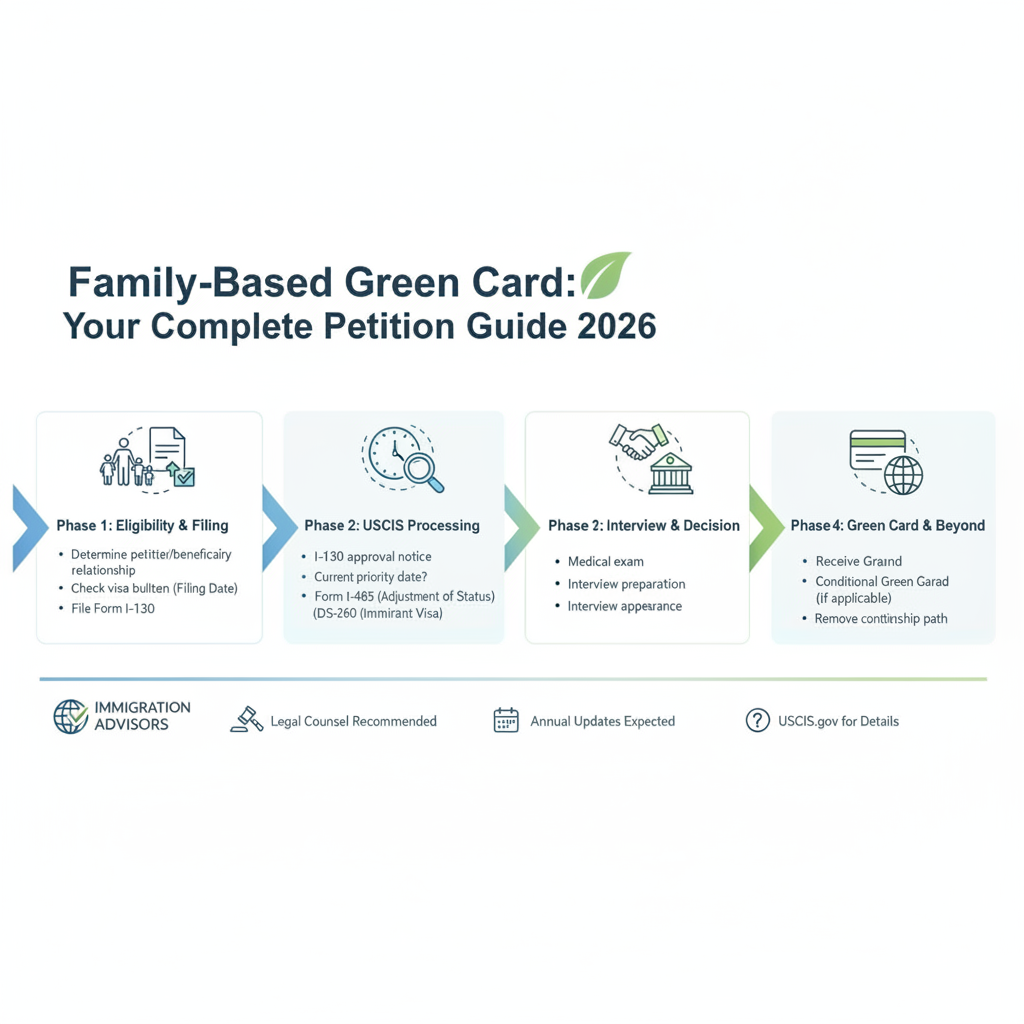
Recent discussions and news cycles surrounding immigration law consistently highlight the intricacies and critical nature of family-based petitions. While there isn't one single new policy, the ongoing public and legal interest in these processes underscores the need for clear, accurate, and actionable guidance for families navigating their immigration journey. This guide is inspired by the continuous demand for reliable information on this vital pathway. You can explore the broader context of these discussions here: Family-Based Immigration Petition Guide (Immigration).
What This News Means for Immigrants in Orlando and Across Florida
The consistent focus on family-based immigration in the news and through government updates serves as a powerful reminder of its enduring significance within U.S. immigration policy. For families in Orlando, Central Florida, and indeed across the entire nation, this means that the core mechanisms for family reunification remain active, albeit with ongoing procedural refinements and processing considerations.
Why this news is showing up now
The topic of family-based immigration is perennially relevant because it forms the bedrock of our immigration system. Each year, millions of families rely on these petitions. The news cycle often reflects:
- Processing Updates: USCIS and the Department of State regularly release updates on processing times, visa bulletin cut-off dates, and policy guidance, which can significantly impact applicants.
- Legislative Discussions: While major legislative changes are less frequent, ongoing debates in Congress about immigration reform often touch upon family reunification, keeping the topic in public discourse.
- Administrative Changes: New presidential administrations or changes within immigration agencies can introduce new priorities or procedural adjustments that affect how petitions are handled.
- High Demand: The sheer volume of applications means that family immigration is always a topic of interest for immigrant communities, legal professionals, and policymakers alike.
Today, as we move through 2026, the emphasis remains on efficient processing and adherence to established legal frameworks for family reunification, making accurate information more critical than ever.
How it can affect Florida residents
For the diverse population of Florida, particularly those in vibrant hubs like Orlando and along the I-4 corridor, family-based immigration is a daily reality. The news surrounding these petitions directly impacts:
- Planning and Expectations: Updates on visa availability and processing times directly influence how long families in Florida might have to wait to be reunited. This helps manage expectations and plan for future steps, such as job relocation or schooling.
- Legal Strategy: Changes in policy or interpretation can affect the optimal legal strategy for filing a petition. An experienced Orlando immigration lawyer stays abreast of these changes to advise clients effectively.
- Local Economy and Community: Family reunification strengthens Florida's communities and contributes to its economy. When family members are able to join their loved ones, they often contribute to the workforce, open businesses, and enrich the cultural fabric of places like Orange County.
- Access to Services: For immigrants in Central Florida, understanding the latest news helps them identify when and how to seek legal assistance, educational resources, and community support.
At Imigrar, we closely monitor these developments to provide timely and precise advice to our clients, ensuring that Florida families are well-prepared for every step of their immigration journey.
What Family-Based Immigration Is (and Why It Matters)
Family-based immigration is a core component of U.S. immigration law, designed to allow U.S. citizens and lawful permanent residents (LPRs) to sponsor certain family members for permanent residency, commonly known as a Green Card. This pathway is rooted in the principle of family reunification, recognizing the importance of keeping loved ones together.
A plain-English definition
Simply put, family-based immigration is the process where a qualifying relative who is either a U.S. citizen or a Green Card holder (also called a lawful permanent resident) asks the U.S. government to allow a specific family member from another country to come and live permanently in the United States. If approved, that family member receives a Green Card, granting them permanent resident status. This process starts with the sponsoring relative filing a petition on behalf of their foreign family member.
Key terms you need to know
Navigating immigration law requires understanding specific terminology. Here are some essential terms for family-based petitions:
- Petitioner: The U.S. citizen or lawful permanent resident who files the immigration petition on behalf of their family member.
- Beneficiary: The foreign national family member for whom the petition is filed, and who hopes to receive a Green Card.
- Sponsor: Often the same as the Petitioner, this is the individual who agrees to financially support the beneficiary to ensure they do not become a "public charge" in the U.S. This is formalized through an Affidavit of Support (Form I-864).
- Immediate Relative (IR): A special category for spouses, unmarried children under 21, and parents of U.S. citizens. There is no annual limit on the number of visas for immediate relatives, meaning they do not have to wait in line for a visa to become available once the petition is approved.
- Family Preference Categories: These are categories for other qualifying family members, for whom there are annual limits on the number of visas issued. This means beneficiaries in these categories often face longer waiting periods based on their "Priority Date."
- Priority Date: The date USCIS receives a properly filed Form I-130 petition. This date determines a beneficiary's place in the visa queue for family preference categories.
- Visa Bulletin: A monthly publication by the U.S. Department of State that provides the cut-off dates for visa availability in the family preference categories. A beneficiary can only apply for a Green Card when their priority date is "current" according to the Visa Bulletin.
- Adjustment of Status (AOS): The process of applying for a Green Card while physically present in the United States. This is generally available if the beneficiary entered the U.S. legally and meets other eligibility criteria.
- Consular Processing: The process of applying for an immigrant visa at a U.S. embassy or consulate in the beneficiary's home country (or another designated country) if they are outside the United States.
Need Help? Our Orlando immigration team is ready to assist. Call +1 786-791-3106 for a free consultation, or message us online. Se Habla Español.
Current Immigration Law: The Foundation
The framework for family-based immigration is primarily established by the Immigration and Nationality Act (INA), specifically sections 201, 203, and 204. These sections define who can sponsor a family member, which family members are eligible, and the procedural requirements for filing a petition.
Federal requirements
Under federal law, the ability to sponsor a family member depends on your status and the relationship to the beneficiary.
U.S. Citizens can petition for:
- Spouses
- Unmarried children under 21 years old (Immediate Relatives)
- Unmarried sons and daughters 21 years old or older (Family Preference Category F1)
- Married sons and daughters of any age (Family Preference Category F3)
- Brothers and sisters (if the U.S. citizen is 21 years old or older) (Family Preference Category F4)
- Parents (if the U.S. citizen is 21 years old or older) (Immediate Relatives)
Lawful Permanent Residents (Green Card holders) can petition for:
- Spouses (Family Preference Category F2A)
- Unmarried children under 21 years old (Family Preference Category F2A)
- Unmarried sons and daughters 21 years old or older (Family Preference Category F2B)
Important: There are no immigrant visa limits for Immediate Relatives of U.S. citizens, meaning their Green Card becomes available much faster once the petition is approved. For family preference categories, however, there are annual limits, leading to waiting lists that can span several years or even decades, depending on the category and country of origin. The U.S. Department of State's Visa Bulletin is crucial for tracking these wait times.
The primary form for initiating this process is Form I-130, Petition for Alien Relative. This form establishes the qualifying relationship between the petitioner and the beneficiary. Subsequent forms, such as Form I-485 (for Adjustment of Status) or Form DS-260 (for Consular Processing), are filed later in the process.
All forms and detailed instructions can be found on the USCIS official website, but understanding which forms to file and when is critical for a successful petition.
Florida-specific considerations
While U.S. immigration law is federal, meaning the rules for family-based petitions are the same across all states, there are practical considerations for Florida residents:
- USCIS Field Offices: If your case involves an Adjustment of Status, you might attend an interview at a local USCIS Field Office, such as the Orlando USCIS Field Office. Knowing your local office can help you understand potential scheduling and processing dynamics.
- Legal Support: Access to experienced immigration attorneys in Orlando and Central Florida is crucial. Local firms like Imigrar are familiar with the specific operational nuances of regional USCIS offices and can provide tailored advice.
- Community Resources: Florida, especially Orlando, has a vibrant immigrant community with numerous support organizations that can provide non-legal assistance, English classes, or cultural integration programs.
- State-Specific Documentation: While not immigration laws, state-issued documents (like Florida driver's licenses, birth certificates from Florida hospitals, or marriage licenses issued in Orange County) will be used as supporting evidence in your federal immigration petition. Ensure these documents are valid and readily available.
How to File a Family-Based Immigration Petition: A Complete Step-by-Step Guide
Filing a family-based immigration petition is a multi-stage process that requires meticulous attention to detail. Here’s a comprehensive step-by-step guide:
1) Determine Eligibility and Gather Initial Documents
Before you begin, confirm that you (the petitioner) are a U.S. citizen or a lawful permanent resident, and that your family member (the beneficiary) falls into one of the eligible relationship categories. This foundational step is critical.
Required Documents (Initial):
- Proof of Petitioner’s U.S. Citizenship or LPR Status:
- For U.S. Citizens: U.S. birth certificate, naturalization certificate, or valid U.S. passport.
- For LPRs: Copy of your Green Card (Form I-551).
- Proof of Relationship:
- For spouses: Marriage certificate, joint bank statements, utility bills, photos, affidavits from friends/family, birth certificates of common children.
- For children: Beneficiary’s birth certificate listing the petitioner as a parent.
- For parents: Petitioner’s birth certificate listing the beneficiary as a parent.
- For siblings: Petitioner’s and beneficiary’s birth certificates showing at least one common parent.
- Proof of any name changes: Marriage certificates, divorce decrees, court orders, etc.
Warning: Ensure all documents not in English are accompanied by a certified English translation.
2) File Form I-130, Petition for Alien Relative
This is the first official step in the family-based immigration process. The U.S. citizen or LPR petitioner files Form I-130 with U.S. Citizenship and Immigration Services (USCIS). For spouses, Form I-130A, Supplemental Information for Spouse Beneficiary, must also be filed.
Required Documents (Form I-130 Filing):
- Completed and signed Form I-130 and Form I-130A (if applicable).
- Copy of petitioner’s proof of U.S. citizenship or LPR status (as gathered in Step 1).
- Copy of beneficiary’s birth certificate.
- Copy of marriage certificate (for spouse petitions).
- Copies of divorce decrees or death certificates for any prior marriages of either petitioner or beneficiary.
- Two passport-style photos of both the petitioner and the beneficiary (for spouse petitions).
- Filing fee (check USCIS website for current fees).
Reminder: USCIS will send a receipt notice (Form I-797C) confirming they received your petition. Keep this notice safe as it contains your case receipt number, which you'll use to track your case status.
3) Wait for I-130 Approval and Priority Date to Become Current (If Applicable)
USCIS will review your Form I-130. If the relationship is proven and all requirements are met, they will approve the petition.
- Immediate Relatives (IR): Once Form I-130 is approved, the beneficiary can immediately proceed to the next step (Adjustment of Status or Consular Processing) because visas are always available.
- Family Preference Categories: After Form I-130 approval, beneficiaries must wait for their "Priority Date" to become current according to the Visa Bulletin. This waiting period can range from a few years to over a decade.
You can check USCIS Processing Times for an estimate on how long Form I-130 adjudication might take.
4) Apply for a Green Card: Adjustment of Status or Consular Processing
Once the Form I-130 is approved and an immigrant visa is available (or immediately for IRs), the beneficiary can apply for their Green Card. The method depends on whether the beneficiary is in the U.S. or abroad.
Option A: Adjustment of Status (Beneficiary is in the U.S.)
This path allows the beneficiary to apply for permanent residency without leaving the United States.
Required Documents (Adjustment of Status Packet - Form I-485):
- Completed and signed Form I-485, Application to Register Permanent Residence or Adjust Status.
- Copy of the approved Form I-130 (Approval Notice).
- Two passport-style photos.
- Copy of beneficiary’s birth certificate.
- Copy of passport, visa, and I-94 arrival record.
- Form I-864, Affidavit of Support, from the petitioner/sponsor, along with supporting financial documents (tax transcripts, employment letters, pay stubs).
- Form I-693, Report of Medical Examination and Vaccination Record, completed by a USCIS-approved civil surgeon.
- Form I-765, Application for Employment Authorization (optional, allows beneficiary to work while I-485 is pending).
- Form I-131, Application for Travel Document (optional, allows beneficiary to travel internationally while I-485 is pending).
- Filing fees for Form I-485 and biometrics.
Important: If the beneficiary entered the U.S. without inspection or has certain immigration violations, they may not be eligible for Adjustment of Status and might need to explore other options or waivers.
Option B: Consular Processing (Beneficiary is outside the U.S.)
If the beneficiary is living outside the United States, their case will be processed through a U.S. embassy or consulate in their home country. This involves the National Visa Center (NVC).
Required Documents (Consular Processing):
- Approved Form I-130.
- Form I-864, Affidavit of Support, from the petitioner/sponsor and financial documents.
- Completed Form DS-260, Immigrant Visa Application, online.
- Beneficiary’s birth certificate, marriage certificate (if applicable), police certificates, military records (if applicable).
- Passport valid for at least six months beyond the intended date of entry into the U.S.
- Medical examination from an embassy-approved physician.
- Two passport-style photos.
- Payment of immigrant visa fees.
Reminder: The NVC will notify you when it's time to submit these documents and fees. Once all documents are accepted, the NVC will schedule an interview at the appropriate U.S. embassy or consulate.
5) Attend Biometrics Appointment and Interview
For both Adjustment of Status and Consular Processing, there will be an interview and/or biometrics appointment.
- Biometrics: USCIS will send a notice for a biometrics appointment at an Application Support Center (ASC). This involves fingerprinting and photography for background checks.
- Interview:
- Adjustment of Status: Beneficiary (and often the petitioner for spouse cases) will attend an interview at a USCIS Field Office (e.g., the Orlando USCIS Field Office).
- Consular Processing: Beneficiary will attend an interview at the U.S. embassy or consulate abroad.
During the interview, an immigration officer will verify the information on your forms, confirm the bona fides of your relationship (especially for spouse petitions), and ensure the beneficiary is admissible to the U.S.
Required Documents (Interview):
- Originals of all documents submitted with your application (birth certificates, marriage certificates, divorce decrees, etc.).
- Any additional evidence of relationship (for spouse petitions: photos, joint accounts, lease agreements, utility bills, etc.).
- Passport.
- Medical exam results (if not already submitted in a sealed envelope).
- For Adjustment of Status: Proof of continuous lawful presence in the U.S. since arrival.
6) Receive Decision and Green Card
If the interview is successful and all requirements are met, the application will be approved.
- Adjustment of Status: USCIS will mail the Green Card directly to the beneficiary's address.
- Consular Processing: The embassy/consulate will stamp the beneficiary's passport with an immigrant visa. The beneficiary then travels to the U.S., where they will be admitted as a lawful permanent resident, and their Green Card will be mailed to their U.S. address.
Congratulations! This marks the successful completion of the family-based immigration petition process. Remember, the Green Card is typically valid for 10 years, but for marriage-based Green Cards where the marriage is less than two years old at the time of approval, a conditional Green Card valid for two years is issued. You will need to file Form I-751 to remove conditions within the 90-day window before it expires.
Need Help? Our Orlando immigration team is ready to assist. Call +1 786-791-3106 for a free consultation, or message us online. Se Habla Español.
Practical Steps You Can Take Today
Starting early and staying organized are keys to a successful family-based petition. Here are practical steps you can take right now:
Actionable Checklist
- Confirm Eligibility: Double-check that both the petitioner and beneficiary meet all relationship and status requirements.
- Gather Core Documents: Start collecting birth certificates, marriage certificates, and proof of petitioner's status. Get certified translations for any non-English documents immediately.
- Review Financial Standing: Understand the Poverty Guidelines for Form I-864. If the petitioner's income is insufficient, identify potential joint sponsors early.
- Organize Records: Create a dedicated folder (digital and physical) for all immigration documents. Label clearly and keep copies of everything you send.
- Educate Yourself: Read through official USCIS instructions for Form I-130 and other relevant forms. Knowledge is power.
- Consult an Attorney: Even if you plan to self-file, a consultation with an experienced immigration lawyer can help identify potential issues, clarify complex steps, and ensure you're on the right track from the start.
Document Preparation Guidance
- Originals vs. Copies: Generally, USCIS requires copies of documents, but be prepared to present originals at an interview. Never send original irreplaceable documents unless specifically requested.
- Translations: Any document not in English must be accompanied by a complete and accurate English translation, certified by the translator as competent to translate and that the translation is accurate.
- Affidavits: For situations where official documents are unavailable (e.g., birth certificates from countries with poor record-keeping), consider obtaining notarized affidavits from individuals with personal knowledge of the event.
- Evidence of Bona Fide Marriage: For spouse petitions, collect a wide range of evidence demonstrating a genuine marriage: joint leases, utility bills, bank statements, insurance policies, photos over time, travel itineraries, and affidavits from friends/family.
Timeline Expectations
Be prepared for a lengthy process. Processing times vary significantly based on:
- Relationship Category: Immediate Relatives (spouses, unmarried children under 21, and parents of U.S. citizens) have no visa backlog and generally experience faster processing.
- Family Preference Categories: These categories have annual visa limits, leading to backlogs that can last for many years, sometimes over a decade, particularly for beneficiaries from high-demand countries like Mexico, China, India, and the Philippines. Always check the Visa Bulletin.
- USCIS Workload: Processing times at USCIS service centers fluctuate.
- Completeness of Application: Any errors or missing documents can lead to Requests for Evidence (RFEs), delaying your case.
General Estimate (Highly Variable):
- Form I-130 Approval: 6 months to 2+ years.
- Adjustment of Status (after I-130 approval and visa availability): 1-3 years for interview and Green Card issuance.
- Consular Processing (after I-130 approval and visa availability): 6-18 months for NVC processing, interview, and visa issuance.
Patience is paramount. Regular monitoring of your case status online and checking the Visa Bulletin (if applicable) are essential.

How Imigrar Helps Immigrants in Orlando
At Imigrar, we are dedicated to helping families in Orlando, throughout Florida, and nationwide navigate the complexities of U.S. immigration law. Our firm, conveniently located in Orlando, is built on the principle of "Keep Families Together," and we strive to make that a reality for every client.
Our experience and expertise
Our team of experienced immigration attorneys possesses a deep understanding of family-based immigration petitions. We stay meticulously updated on all changes in immigration law, policy, and processing procedures to provide the most accurate and effective legal strategies. From the initial eligibility assessment to the final Green Card approval, we guide our clients through every intricate step, anticipating potential challenges and working proactively to overcome them. We have successfully represented countless families in Orlando and beyond, helping them achieve their dream of reunification.
Free consultation offer
We understand that the immigration process can be overwhelming, and taking the first step can be daunting. That's why Imigrar offers a free, no-obligation consultation. This initial meeting allows us to:


