

The dream of uniting families in the United States is a cornerstone of American immigration policy. For countless individuals and families in Orlando, Central Florida, and across the nation, family-based immigration petitions are the primary pathway to achieving permanent residency and a new life together. As an immigration law firm dedicated to helping clients "Keep Families Together," Imigrar understands the profound importance and often complex nature of this journey.
This comprehensive guide is designed to demystify the family-based immigration process, providing clear, actionable steps, and essential information to help you navigate this critical journey. Whether you are a U.S. citizen or a lawful permanent resident (LPR) looking to bring a loved one to Florida, or a beneficiary seeking to understand your path, this resource is for you.
Ready to Start Your Family Petition? Don't navigate complex immigration laws alone. Our Orlando immigration team is ready to assist. Call +1 786-791-3106 for a free consultation, or message us online. Se Habla Español.
The reporting that sparked this guide
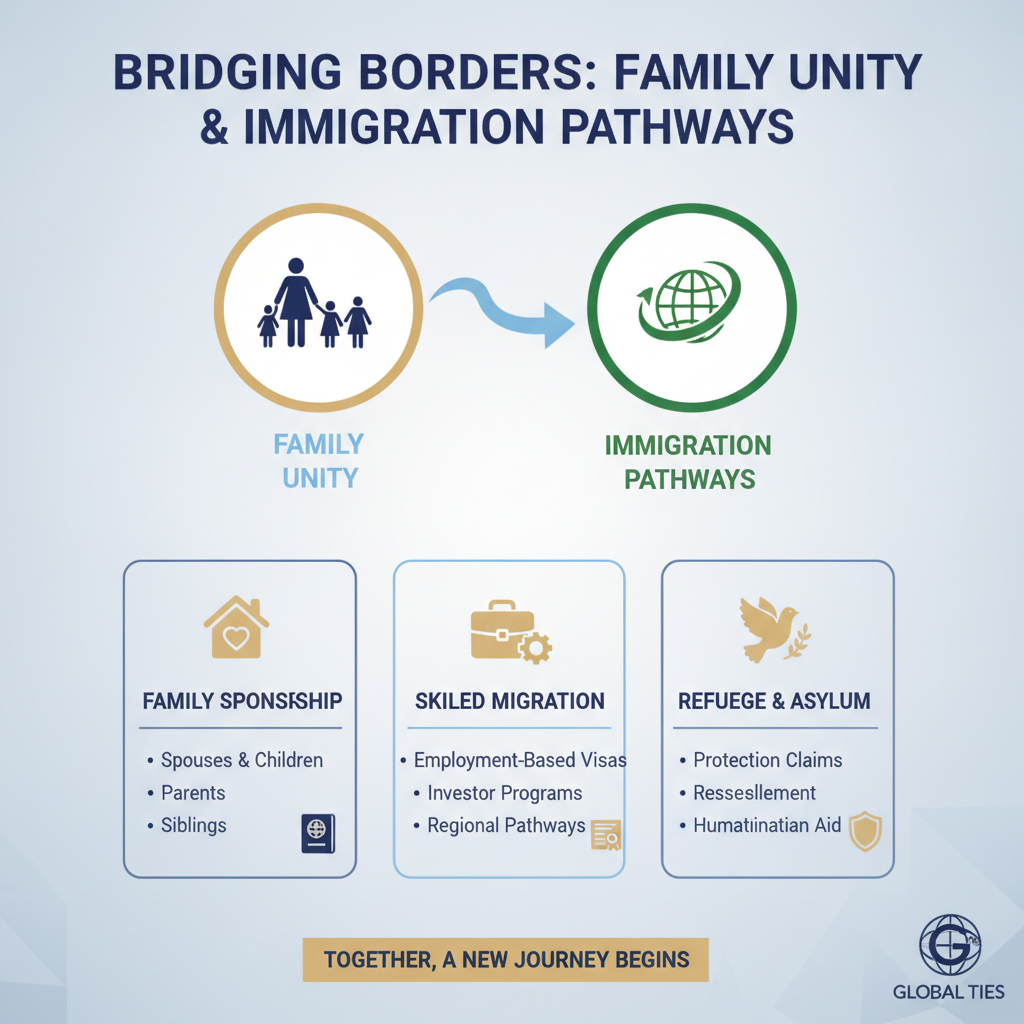
The ongoing conversation surrounding immigration law and policy consistently highlights the vital role of family reunification. While there may not be a single "breaking news" alert daily, the topic of family-based immigration petitions remains a trending and evergreen subject within the broader immigration landscape. Discussions about visa backlogs, processing times, and policy adjustments frequently appear in news cycles, underscoring the constant need for accurate, up-to-date information for families embarking on this journey.
Our commitment to providing timely and relevant information is inspired by this continuous public discourse, ensuring that families have the resources they need to navigate these critical processes effectively.
Family-Based Immigration Petition Guide (Immigration)
What This News Means for Immigrants in Orlando and Across Florida
Why this news is showing up now
The news surrounding family-based immigration is perennially relevant because it touches upon fundamental human desires: to live with and support one's loved ones. In 2026, as in previous years, discussions about immigration reform, border security, and economic contributions of immigrants continue to dominate headlines. Within this broader context, the foundational pathways for family reunification, such as the family-based immigration petition process, are always under scrutiny and discussion. While the core laws remain largely stable, processing times can fluctuate, administrative policies may be updated, and judicial interpretations can evolve. Therefore, staying informed about the step-by-step process is not just helpful but essential for anyone planning to sponsor a family member or be sponsored.
Furthermore, advocacy groups and legal experts consistently highlight the human impact of immigration policies, often bringing stories of families separated or reunited to the forefront. This constant focus ensures that guides like this one remain a critical resource for those directly affected by these laws.
How it can affect Florida residents
Florida is one of the most diverse states in the U.S., home to a vibrant and growing immigrant population from Latin America, the Caribbean, Europe, and beyond. For Central Florida residents, particularly those in Orlando and surrounding areas like Kissimmee, Sanford, and Lakeland, family-based immigration is a daily reality. The Orlando metropolitan area serves as a hub for many immigrant communities, meaning that a significant number of individuals and families here are either petitioners or beneficiaries in these processes.
Understanding the nuances of family petitions directly impacts the ability of Florida residents to:
- **Unite with Loved Ones:** Whether bringing a spouse, child, parent, or sibling to live in the U.S.
- **Plan for the Future:** Gaining permanent residency through family petitions provides stability, access to employment, education, and social services, allowing families to build a secure future in Florida.
- **Navigate Local Resources:** Florida residents often interact with the Orlando USCIS Field Office for interviews and biometrics appointments, making local expertise and guidance particularly valuable.
For those along the I-4 corridor and throughout Orange County, having a clear roadmap to family immigration can alleviate stress, prevent costly mistakes, and ultimately help achieve the goal of keeping families together.
Don't Let Complexity Keep Your Family Apart. Imigrar has extensive experience with family-based petitions for clients in Orlando and nationwide. Call +1 786-791-3106 for your free consultation today. Se Habla Español.
What Family-Based Immigration Petitions Are (and Why They Matter)
A plain-English definition
At its core, a family-based immigration petition is a formal request filed with U.S. Citizenship and Immigration Services (USCIS) by a U.S. citizen or a lawful permanent resident (LPR) to sponsor certain eligible family members for a Green Card (permanent residency). This process is designed to allow families to live together in the United States. The sponsoring family member is called the Petitioner, and the family member seeking a Green Card is the Beneficiary.
The entire system is rooted in the principle of family reunification, recognizing the importance of keeping families together. It's the most common pathway for individuals to obtain a Green Card, highlighting its significance in the broader immigration framework.
Key terms you need to know
Navigating the immigration process requires understanding specific terminology. Here are some key terms vital to family-based petitions:
- Petitioner: The U.S. citizen or lawful permanent resident who files the immigration petition (Form I-130) on behalf of a family member.
- Beneficiary: The foreign national family member for whom the petition is filed, seeking a Green Card.
- Immediate Relatives: This category includes spouses of U.S. citizens, unmarried children under 21 of U.S. citizens, and parents of U.S. citizens (if the U.S. citizen is 21 or older). There are an unlimited number of visas available for Immediate Relatives, meaning they do not have to wait for a visa number to become available based on a Priority Date.
- Family Preference Categories: These categories are for family members who are not Immediate Relatives. They include adult children and siblings of U.S. citizens, and spouses and unmarried children of LPRs. Visas in these categories are limited each year, leading to waiting lists based on Priority Dates.
- Priority Date: The date USCIS receives your properly filed Form I-130 petition. This date determines your place in the waiting line for a visa in the Family Preference Categories.
- Visa Bulletin: A monthly publication by the U.S. Department of State that lists the Priority Dates for when Green Cards become available for different visa categories and countries of chargeability. You must have a "current" Priority Date according to the Visa Bulletin before a Green Card can be issued.
- Adjustment of Status (AOS): The process of applying for a Green Card from within the United States. This is generally available if the beneficiary is lawfully present in the U.S. and an immigrant visa is immediately available.
- Consular Processing: The process of applying for an immigrant visa at a U.S. Embassy or Consulate abroad. This is for beneficiaries who are outside the U.S. or ineligible for Adjustment of Status.
- Affidavit of Support (Form I-864): A legally binding document signed by the petitioner (and sometimes a joint sponsor) to show that the beneficiary will have adequate financial support and is not likely to become a "public charge" in the U.S.
Current Immigration Law: The Foundation
Family-based immigration is primarily governed by the Immigration and Nationality Act (INA), specifically sections 201 through 205. These sections establish the framework for who can petition for whom and the numerical limitations that apply to various categories. Understanding these foundational laws is crucial for any successful petition.
Federal requirements
The INA divides family-based immigration into two main groups, each with distinct rules and processing:
-
Immediate Relatives of U.S. Citizens:
- Spouses of U.S. citizens
- Unmarried children under 21 of U.S. citizens
- Parents of U.S. citizens (if the U.S. citizen petitioner is 21 years of age or older)
Key Feature: There are no annual numerical limits for Immediate Relatives, meaning they do not have to wait for a visa number to become available once their petition is approved. This often leads to faster processing times compared to preference categories.
-
Family Preference Categories: These categories are subject to annual numerical limits and often involve waiting periods due to visa backlogs.
- First Preference (F1): Unmarried sons and daughters (21 years of age or older) of U.S. citizens.
- Second Preference (F2A): Spouses and unmarried children (under 21 years of age) of lawful permanent residents.
- Second Preference (F2B): Unmarried sons and daughters (21 years of age or older) of lawful permanent residents.
- Third Preference (F3): Married sons and daughters of U.S. citizens.
- Fourth Preference (F4): Brothers and sisters of U.S. citizens (if the U.S. citizen petitioner is 21 years of age or older).
Key Feature: Beneficiaries in these categories must wait for their Priority Date to become current according to the monthly U.S. Department of State Visa Bulletin before they can apply for a Green Card.
All petitioners must demonstrate a legitimate family relationship and meet specific financial requirements by filing Form I-864, Affidavit of Support, to ensure the beneficiary will not become a public charge. This requires the petitioner to demonstrate income at or above 125% of the federal poverty guidelines for their household size.
For official information on forms and procedures, always refer to the USCIS official website.
Florida-specific considerations
While immigration law is federal, certain aspects touch upon state-level realities for Florida residents. For instance, when proving relationships, state-issued documents like birth certificates, marriage certificates, and divorce decrees from Florida (or other states) are crucial. Ensuring these documents are properly certified and, if necessary, translated, is paramount.
For those pursuing Adjustment of Status in Florida, the process will typically involve interactions with the Orlando USCIS Field Office for biometrics appointments and interviews. Knowing the local office's procedures, common interview questions, and specific requirements can be beneficial. While the federal law doesn't change from state to state, the local administrative nuances and resources available to immigrants in Central Florida can vary. Imigrar's team is intimately familiar with the local landscape and can provide tailored advice.

How to Petition for a Family Member: A Complete Step-by-Step Guide
The family-based immigration process can be lengthy and complex, but breaking it down into manageable steps makes it more approachable. Here’s a detailed guide to help you understand each phase:
1) Determine Eligibility and Category
Before filing any forms, the petitioner must confirm their eligibility and identify the correct family preference category for the beneficiary. This initial step is critical as it dictates the forms to be filed, the required documentation, and the potential timeline.
-
Petitioner Eligibility:
- Must be a U.S. citizen or a lawful permanent resident (Green Card holder).
- Must be able to prove their status (e.g., U.S. passport, birth certificate, naturalization certificate, Green Card).
- Must be able to prove a genuine relationship with the beneficiary.
-
Beneficiary Eligibility and Relationship:
- U.S. Citizens can petition for: Spouses, unmarried children under 21, unmarried sons/daughters 21 or older, married sons/daughters of any age, parents (if the U.S. citizen is 21 or older), and brothers/sisters (if the U.S. citizen is 21 or older).
- Lawful Permanent Residents can petition for: Spouses and unmarried children of any age.
-
Required Documents (for this stage, primarily for self-assessment and future filing):
- Proof of petitioner's U.S. citizenship or LPR status (e.g., U.S. birth certificate, naturalization certificate, U.S. passport, Green Card).
- Proof of relationship to the beneficiary (e.g., birth certificates for parent-child relationships, marriage certificate for spouses, adoption decrees).
- Any previous divorce decrees or death certificates for prior spouses of both petitioner and beneficiary, if applicable.
2) File Form I-130, Petition for Alien Relative
This is the foundational step for all family-based petitions. The U.S. citizen or LPR files Form I-130 with USCIS to establish the qualifying relationship with the beneficiary.
- Purpose of Form I-130: To prove that a valid family relationship exists between the petitioner and the beneficiary that qualifies for immigration under U.S. law.
- Where to File: The filing location depends on where you live and the specific category. Most petitions are filed with a USCIS lockbox facility. Always check the USCIS website for current filing addresses.
- Filing Fees: There is a mandatory filing fee for Form I-130. Fee waivers are rarely granted for this form.
-
Required Documents to Submit with Form I-130:
- Completed and signed Form I-130.
- Proof of petitioner's U.S. citizenship or LPR status.
- Proof of the qualifying relationship (e.g., birth certificates, marriage certificates, adoption decrees).
- Passport-style photos of both the petitioner and beneficiary (check USCIS photo requirements).
- If applicable, copies of divorce decrees or death certificates for any previous marriages of either party.
- G-1145, E-Notification of Application/Petition Acceptance (optional, for email/text notifications).
3) Wait for I-130 Approval and Priority Date
Once USCIS receives your Form I-130, they will send you a receipt notice (Form I-797C) indicating your Priority Date. This date is crucial for family preference categories.
- Processing Times: USCIS processing times vary significantly based on the service center, the type of petition, and the relationship category. You can check current processing times on the USCIS Processing Times website.
-
Priority Date and Visa Bulletin:
- For Immediate Relatives (spouses, unmarried children under 21, and parents of U.S. citizens), a visa number is immediately available upon I-130 approval.
- For Family Preference Categories, the beneficiary must wait for their Priority Date to become "current" in the U.S. Department of State Visa Bulletin. This waiting period can range from a few years to over a decade, depending on the category and the beneficiary's country of birth.
- Notification: You will receive an approval notice (Form I-797) once your Form I-130 is approved.
Feeling Overwhelmed by Paperwork? Imigrar's Orlando team can help prepare and file all necessary forms accurately. Call +1 786-791-3106 for a free consultation. Se Habla Español.
4) Adjustment of Status (AOS) or Consular Processing
After the Form I-130 is approved and a visa number is available (if applicable), the beneficiary can apply for their Green Card through one of two pathways:
A) Adjustment of Status (AOS) – For Beneficiaries in the U.S.:
- Eligibility: Generally, the beneficiary must have entered the U.S. lawfully, maintained lawful status (though some exceptions exist for Immediate Relatives), and a visa number must be immediately available (either as an Immediate Relative or if their Priority Date is current).
- Concurrent Filing: Immediate Relatives can often file Form I-130 and Form I-485 (Application to Register Permanent Residence or Adjust Status) concurrently.
-
Required Forms & Documents for AOS:
- Form I-485, Application to Register Permanent Residence or Adjust Status.
- Form I-864, Affidavit of Support, signed by the petitioner (and any joint sponsor).
- Form I-765, Application for Employment Authorization (optional, allows work while AOS is pending).
- Form I-131, Application for Travel Document (optional, allows travel outside U.S. while AOS is pending – known as Advance Parole).
- Form I-693, Report of Medical Examination and Vaccination Record (completed by a USCIS-approved civil surgeon).
- Birth certificate of beneficiary.
- Marriage certificate (if applicable).
- Passport-style photos.
- Copy of passport, visa, and I-94 arrival record.
- Police clearances (if required).
- Copies of all previous immigration applications and decisions.
- Biometrics Appointment: USCIS will schedule a biometrics appointment (fingerprints, photos, signature) for background checks. For Central Florida residents, this often takes place at the Orlando USCIS Field Office.
B) Consular Processing – For Beneficiaries Outside the U.S.:
- Process: After Form I-130 approval, the case is sent to the National Visa Center (NVC). The NVC collects all required documents and fees before scheduling an interview at a U.S. Embassy or Consulate abroad.
-
Required Forms & Documents for Consular Processing:
- Form DS-260, Immigrant Visa Application (online).
- Form I-864, Affidavit of Support, signed by the petitioner (and any joint sponsor).
- Civil documents: birth certificates, marriage certificates, divorce decrees, police certificates from all countries lived in for specified periods, military records.
- Passport-style photos.
- Passport valid for at least six months beyond the intended date of entry into the U.S.
- Medical examination (conducted by an embassy-approved physician in the beneficiary's country).
- NVC Processing: The NVC will notify the petitioner and beneficiary when to submit fees and documents. After all documents are accepted, an interview will be scheduled.
5) Attend Interview (if required)
Depending on whether the beneficiary is undergoing Adjustment of Status or Consular Processing, an interview will be scheduled.
- For AOS (in the U.S.): The interview will be at a USCIS Field Office (e.g., the Orlando USCIS Field Office). Both the petitioner and beneficiary typically attend. The purpose is to verify the information on the application and confirm the authenticity of the relationship.
- For Consular Processing (abroad): The interview will be at a U.S. Embassy or Consulate in the beneficiary's home country. Only the beneficiary attends. The Consular Officer will review the application, ask questions, and make a final decision.


