


At Imigrar, we understand that nothing is more important than keeping families together. For decades, family-based immigration has been the cornerstone of the U.S. immigration system, offering a path for U.S. citizens and lawful permanent residents to sponsor their loved ones for a green card. Navigating this complex process can feel overwhelming, but with the right guidance, it’s a journey many families successfully complete.
This comprehensive guide, current as of early 2026, is designed to demystify the family-based immigration petition process, providing clarity, actionable steps, and expert advice for immigrants and their families in Orlando, across Florida, and nationwide.
Need Help? Our Orlando immigration team is ready to assist. Call +1 786-791-3106 for a free consultation, or message us online. Se Habla Español.
The reporting that sparked this guide
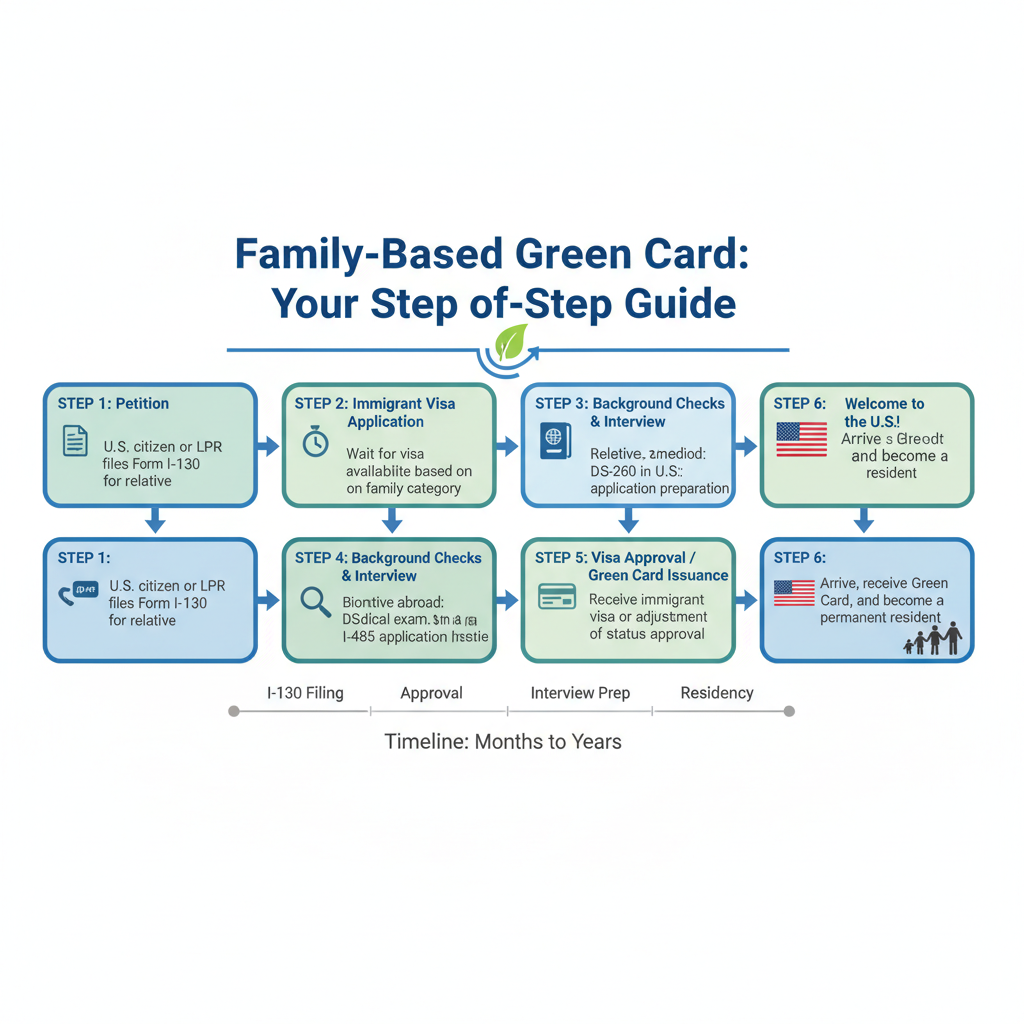
The ongoing discourse around family-based immigration is a constant in the news cycle, reflecting its vital role in American society. The reporting that sparked this guide, specifically exploring step-by-step family petitions, highlights the continuous need for clear, accessible information for families striving to reunite. You can explore the broader context of these discussions here: Family-Based Immigration Petition Guide (Immigration).
What This News Means for Immigrants in Orlando and Across Florida
The consistent focus on family-based immigration in the news underscores its enduring relevance and importance. For families in Orlando, Central Florida, and throughout the state, this means understanding the process is not just about compliance, but about securing your family's future.
Why this news is showing up now
Family-based immigration is a perpetual topic because it’s the primary legal pathway for millions to achieve permanent residency in the United States. While specific policies or legislative proposals may generate spikes in news coverage, the fundamental need for a step-by-step guide remains constant. Every day, thousands of U.S. citizens and lawful permanent residents are looking for ways to bring their spouses, children, parents, and siblings to live with them. The process can be intricate, with specific forms, deadlines, and eligibility criteria that frequently evolve or are subject to new interpretations by immigration authorities. Therefore, comprehensive, up-to-date guidance is always in demand, reflecting the ongoing human desire for family unity, a core value Imigrar champions with our tagline: "Keep Families Together."
How it can affect Florida residents
Florida, a state known for its diverse population and vibrant immigrant communities, is significantly impacted by family-based immigration policies and processes. For residents of Orlando, Miami, Tampa, and other cities along the I-4 corridor, family petitions are a vital tool for reunification. Understanding this process correctly can mean the difference between timely approval and prolonged separation. If your case is in Orlando, for example, your interviews or biometric appointments might take place at the Orlando USCIS Field Office. Florida-specific considerations often involve navigating local USCIS offices, understanding state-specific documentation requirements (though federal law governs immigration), and accessing local support services. Moreover, the sheer volume of family-based petitions originating from or destined for Florida means that local processing times and administrative nuances can sometimes differ from national averages. For Central Florida residents, having an experienced local law firm like Imigrar can be invaluable in navigating these specific challenges and ensuring your application is robust and compliant with all federal and local expectations.
What Family-Based Immigration Petitions Are (and Why They Matter)
A family-based immigration petition is the first, crucial step in the process for a U.S. citizen or lawful permanent resident (LPR) to sponsor a qualifying family member for a green card, which grants them permanent residency in the United States. It’s the legal mechanism designed to "Keep Families Together," allowing relatives to live, work, and study permanently in the U.S.
A plain-English definition
Think of a family-based immigration petition as a formal request to the U.S. government (specifically, U.S. Citizenship and Immigration Services, or USCIS) to recognize a family relationship. This recognition is essential because it's the foundation upon which a foreign national can apply for a green card. The U.S. citizen or LPR who files the petition is called the petitioner, and the family member they are sponsoring is called the beneficiary. Once USCIS approves this petition, it confirms that the family relationship is legitimate and that the beneficiary is eligible to move forward with the green card application process.
Key terms you need to know
- Petitioner: The U.S. citizen or lawful permanent resident who files Form I-130 to sponsor a family member.
- Beneficiary: The foreign national family member who is being sponsored for a green card.
- Form I-130, Petition for Alien Relative: The primary form filed by the petitioner to establish the qualifying family relationship.
- Green Card (Lawful Permanent Residence): The status that allows a foreign national to live and work permanently in the U.S.
- Immediate Relatives (IR): Spouses, unmarried children under 21, and parents of U.S. citizens. This category has no numerical visa limits, meaning visas are always available once the petition is approved.
- Family Preference Categories: All other family relationships eligible for sponsorship (e.g., adult children, siblings of U.S. citizens; spouses and children of LPRs). These categories are subject to annual numerical limits, leading to waiting periods.
- Priority Date: The date USCIS receives your properly filed Form I-130. This date determines your place in the waiting line for a visa if you are in a family preference category.
- Visa Bulletin: A monthly publication from the U.S. Department of State that shows which priority dates are current for different family preference categories, indicating when beneficiaries can proceed with their green card application.
- Adjustment of Status (AOS): The process of applying for a green card while physically present in the United States. This typically involves filing Form I-485.
- Consular Processing: The process of applying for a green card through a U.S. embassy or consulate in the beneficiary’s home country. This is for beneficiaries who are outside the U.S.
- Affidavit of Support (Form I-864): A legally binding document filed by the petitioner (sponsor) to show they can financially support the beneficiary, ensuring the beneficiary will not become a public charge.
Current Immigration Law: The Foundation
Family-based immigration is governed primarily by the Immigration and Nationality Act (INA), which outlines the specific categories of family relationships eligible for sponsorship and the limits applied to certain categories. Understanding these foundational laws is crucial for navigating the process effectively.
Federal requirements
The INA establishes two main categories for family-based immigration:
- Immediate Relatives (IR): As defined by INA Section 201(b)(2)(A)(i), this category includes:
- Spouses of U.S. citizens (IR-1)
- Unmarried children under 21 of U.S. citizens (IR-2)
- Parents of U.S. citizens (IR-5) (U.S. citizen must be at least 21 years old)
Key Feature: There are no annual numerical limits on visas for Immediate Relatives. This means that once the Form I-130 petition is approved, and the beneficiary is otherwise eligible, a green card visa is generally available without a waiting period based on the Visa Bulletin (though processing times still apply).
- Family Preference Categories: These categories are subject to annual numerical limits, as outlined in INA Section 203(a). This means there’s a waiting line, and beneficiaries must wait for their Priority Date to become current according to the Visa Bulletin.
- First Preference (F1): Unmarried sons and daughters (21 years of age or older) of U.S. citizens.
- Second Preference (F2A): Spouses and unmarried children (under 21) of lawful permanent residents.
- Second Preference (F2B): Unmarried sons and daughters (21 years of age or older) of lawful permanent residents.
- Third Preference (F3): Married sons and daughters of U.S. citizens.
- Fourth Preference (F4): Brothers and sisters of U.S. citizens (U.S. citizen must be at least 21 years old).
Important: Each category has a limited number of visas available each fiscal year, leading to potentially long waiting periods, especially for categories like F4. The length of the wait depends on the demand for visas from a particular country and category.
All petitioners must file Form I-130, Petition for Alien Relative, with USCIS official website to establish the qualifying relationship. Subsequently, beneficiaries must undergo either Adjustment of Status (if in the U.S. and eligible) or Consular Processing (if outside the U.S.) to obtain their green card.
Florida-specific considerations
While immigration law is federal, practical aspects of the process can have local nuances. For Florida residents, particularly those in Orange County and surrounding areas, understanding these local elements can be beneficial:
- Orlando USCIS Field Office: If the beneficiary is adjusting status in the U.S. and resides in Central Florida, their interview will likely take place at the Orlando USCIS Field Office. Familiarity with local office procedures and common interview questions can be an advantage.
- Biometrics Appointments: USCIS Application Support Centers (ASCs) are located throughout Florida, including Orlando, for biometric services (fingerprints, photos, signature). Your appointment notice will specify the nearest location.
- Access to Legal Services: Florida has a large network of immigration attorneys. For residents of Orlando and the I-4 corridor, Imigrar offers expert legal support, providing local insight combined with extensive federal immigration law experience.
- State Documentation: While immigration is federal, state-issued documents (birth certificates, marriage licenses, divorce decrees) are crucial for establishing relationships. Ensure these are properly translated and certified if not in English.
Need Clarity on Immigration Law? Our Orlando immigration attorneys are here to help you understand complex regulations. Contact us at +1 786-791-3106 for a free consultation. Se Habla Español.
How to File a Family-Based Immigration Petition: A Complete Step-by-Step Guide
The family-based immigration process involves several critical stages, each with its own requirements. Here’s a detailed, step-by-step guide to help you navigate the journey.
1) Determine Eligibility and Gather Initial Information
Before filing any forms, confirm that both the petitioner and beneficiary meet the basic eligibility criteria. This initial assessment is crucial for a smooth process.
- Petitioner Eligibility:
- Must be a U.S. citizen or a lawful permanent resident (green card holder).
- Must be able to prove a qualifying relationship with the beneficiary.
- Must be at least 18 years old to file an affidavit of support (Form I-864), though you can file Form I-130 at any age if you are a U.S. citizen sponsoring a parent or spouse.
- Must reside in the U.S. or a U.S. territory (with some exceptions for U.S. citizens residing abroad).
- Beneficiary Eligibility:
- Must be a qualifying relative of the petitioner (spouse, child, parent, sibling).
- Must not be inadmissible to the U.S. (e.g., due to certain criminal convictions, health issues, prior immigration violations).
- Required Documents (Initial Assessment):
- Proof of petitioner’s U.S. citizenship (U.S. birth certificate, naturalization certificate, U.S. passport) or LPR status (green card, foreign passport with I-551 stamp).
- Proof of the qualifying relationship (e.g., marriage certificate for spouses, birth certificates for parent-child relationships, adoption decrees).
- Any previous divorce decrees or death certificates for prior marriages of either party.
- Passport-style photos of both petitioner and beneficiary.
2) File Form I-130, Petition for Alien Relative
This is the cornerstone of the family-based petition process. The U.S. citizen or LPR files this form with USCIS to establish the legitimate family relationship.
- Completing Form I-130: Fill out the form accurately and completely. Provide all requested information about yourself (the petitioner) and your family member (the beneficiary).
- Assembling the Petition Package:
- Completed and signed Form I-130.
- Proof of petitioner's U.S. citizenship or LPR status (e.g., copy of birth certificate, naturalization certificate, U.S. passport, or green card).
- Proof of the qualifying relationship:
- For Spouses: Marriage certificate, joint financial documents (bank accounts, leases, utility bills), photos together, affidavits from friends/family, birth certificates of shared children.
- For Children: Child's birth certificate showing petitioner as parent. If step-child, marriage certificate to child's biological parent.
- For Parents: Petitioner's birth certificate showing parent as beneficiary.
- For Siblings: Petitioner's and beneficiary's birth certificates showing at least one common parent.
- Passport-style photos for both petitioner and beneficiary.
- Filing fee (check USCIS Forms for current fees).
- Where to File: The filing address depends on where you live and whether you are filing other forms concurrently. Always check the "Direct Filing Addresses for Form I-130" on the USCIS website.
- Important: Ensure all documents not in English are accompanied by a certified English translation.
3) Wait for Petition Approval and Priority Date to Become Current
After filing Form I-130, USCIS will send a receipt notice (Form I-797C, Notice of Action) with your Priority Date. This date is crucial for preference categories.
- USCIS Processing: USCIS reviews the petition to verify the relationship and eligibility. Processing times vary widely depending on the service center and relationship category. You can check current processing times on the USCIS Processing Times page.
- Petition Approval: If approved, USCIS sends an approval notice (Form I-797, Notice of Action).
- Visa Bulletin and Priority Dates:
- Immediate Relatives: No waiting period for a visa after Form I-130 approval.
- Family Preference Categories: You must wait for your Priority Date to become "current" in the Visa Bulletin. The Visa Bulletin is issued monthly by the Department of State and shows which priority dates are being processed for each country and family preference category.
- Reminder: Keep track of your Priority Date and monitor the Visa Bulletin closely.
4) Choose Adjustment of Status or Consular Processing
Once your Form I-130 is approved and a visa is available (or if you are an Immediate Relative), the beneficiary proceeds to the final stage: obtaining the green card. The path depends on whether the beneficiary is in the U.S. or abroad.
- Adjustment of Status (AOS) – For beneficiaries *in* the U.S.:
- Eligible if the beneficiary entered the U.S. legally, has maintained their nonimmigrant status (or is an Immediate Relative who entered legally), and has a visa immediately available.
- This allows the beneficiary to apply for a green card without leaving the U.S.
- Important: If the beneficiary is an Immediate Relative, they can often file Form I-485 concurrently with Form I-130.
- Consular Processing – For beneficiaries *outside* the U.S.:
- Required if the beneficiary is living outside the U.S. or is ineligible for Adjustment of Status.
- The approved petition is sent to the National Visa Center (NVC), which then coordinates with the U.S. embassy or consulate in the beneficiary’s home country.
5) File Form I-485 (Adjustment of Status) or Complete Visa Interview (Consular Processing)
This is the final application stage for the green card itself.
- For Adjustment of Status (AOS):
- File Form I-485, Application to Register Permanent Residence or Adjust Status: This is the main application for the green card.
- Supporting Forms and Documents:
- Form I-485
- Form I-864, Affidavit of Support: Filed by the petitioner to prove financial capability.
- Form I-693, Report of Medical Examination and Vaccination Record: Completed by a USCIS-approved civil surgeon.
- Form I-765, Application for Employment Authorization (optional): Allows the beneficiary to work while Form I-485 is pending.
- Form I-131, Application for Travel Document (optional): Allows the beneficiary to travel internationally while Form I-485 is pending.
- Birth certificate, marriage certificate (if applicable).
- Passport-style photos.
- Copy of government-issued photo identification.
- Copy of initial entry documentation (e.g., I-94 arrival record).
- Filing fees for all forms.
- Biometrics Appointment: USCIS will schedule an appointment for fingerprints and photos. For Central Florida residents, this will be at an Application Support Center (ASC) like the one in Orlando.
- Interview: Most AOS applicants will have an interview at a USCIS field office (e.g., the Orlando USCIS Field Office) with the petitioner.
- For Consular Processing:
- NVC Processing: After Form I-130 approval, the NVC will send instructions to pay fees and submit required documents (e.g., birth certificates, marriage certificates, police certificates, DS-260 Immigrant Visa Application).
- Form I-864, Affidavit of Support: Submitted to the NVC.
- Medical Examination: Completed by a panel physician approved by the U.S. embassy/consulate in the beneficiary’s country.
- Interview Scheduling: Once all documents are submitted and reviewed by the NVC, an interview will be scheduled at the U.S. embassy or consulate.
6) Attend Interview and Receive Decision
This is the final hurdle before a decision is made on the green card application.
- The Interview:
- AOS: Both petitioner and beneficiary typically attend an interview at a USCIS field office (e.g., Orlando). The officer will review the application, verify information, and assess the legitimacy of the relationship.
- Consular Processing: The beneficiary attends an interview at the U.S. embassy or consulate in their home country. The consular officer makes a decision on the immigrant visa.
- Preparation: Bring all original documents submitted with your application, as well as any new supporting evidence. Be honest and consistent in your answers.
- Decision:
- Approval:
- AOS: If approved, the beneficiary will receive a welcome notice and their green card will be mailed.
- Consular Processing: If approved, the beneficiary will receive an immigrant visa stamp in their passport. They then have a limited time to enter the U.S. as a permanent resident. The physical green card will be mailed after entry.
- Denial: If denied, USCIS or the consular officer will provide a reason. It is crucial to consult with an immigration attorney immediately to understand options, which may include filing a motion to reconsider/reopen or appealing the decision.
- Approval:

Practical Steps You Can Take Today
Starting early and staying organized are key to a successful family-based immigration petition. Here are some actionable steps you can take right now to prepare.
Actionable checklist (5+ items)
- Verify Eligibility: Double-check that both the petitioner and beneficiary meet all eligibility requirements for the specific family category.
- Gather Essential Documents: Start collecting original birth certificates, marriage certificates, divorce decrees, passports, and any other foundational documents. Ensure they are valid and up-to-date.
- Review Financial Requirements: Understand the income requirements for the Form I-864, Affidavit of Support. If the petitioner's income is insufficient, consider finding a joint sponsor.
- Organize Your Records: Create a dedicated physical and digital folder for all immigration documents. Label everything clearly and keep copies of every single form and piece of evidence submitted.
- Educate Yourself: Read through the official
Related Articles
You may also be interested in:
-
TPS Extended? Your Guide to Maintaining Status in Orlando &
Recent TPS extensions bring vital relief. Learn what this means for you, how to re-register, and secure your status with Imigrar in Orlando....
-
DACA Renewal 2026: Updates & Your Step-by-Step Guide for Dreamers
Stay informed on DACA updates and the renewal process for 2026. This comprehensive guide provides Dreamers in Orlando and nationwide with actionable s...
-
H-1B Visa Lottery FY2027: New Rules & Your Path to a U.S.
Understand the critical H-1B visa lottery changes for FY2027, including beneficiary-centric selection. Get expert guidance for Orlando immigrants and ...
-
H-1B Visa Lottery FY2027: Navigating New Rules & Opportunities
Understand the crucial H-1B visa lottery changes for FY2027. Imigrar guides you through new beneficiary-centric rules, eligibility, and how to prepare...
-
TPS Extended? Your Guide to Maintaining Status in Orlando &


