

The reporting that sparked this guide
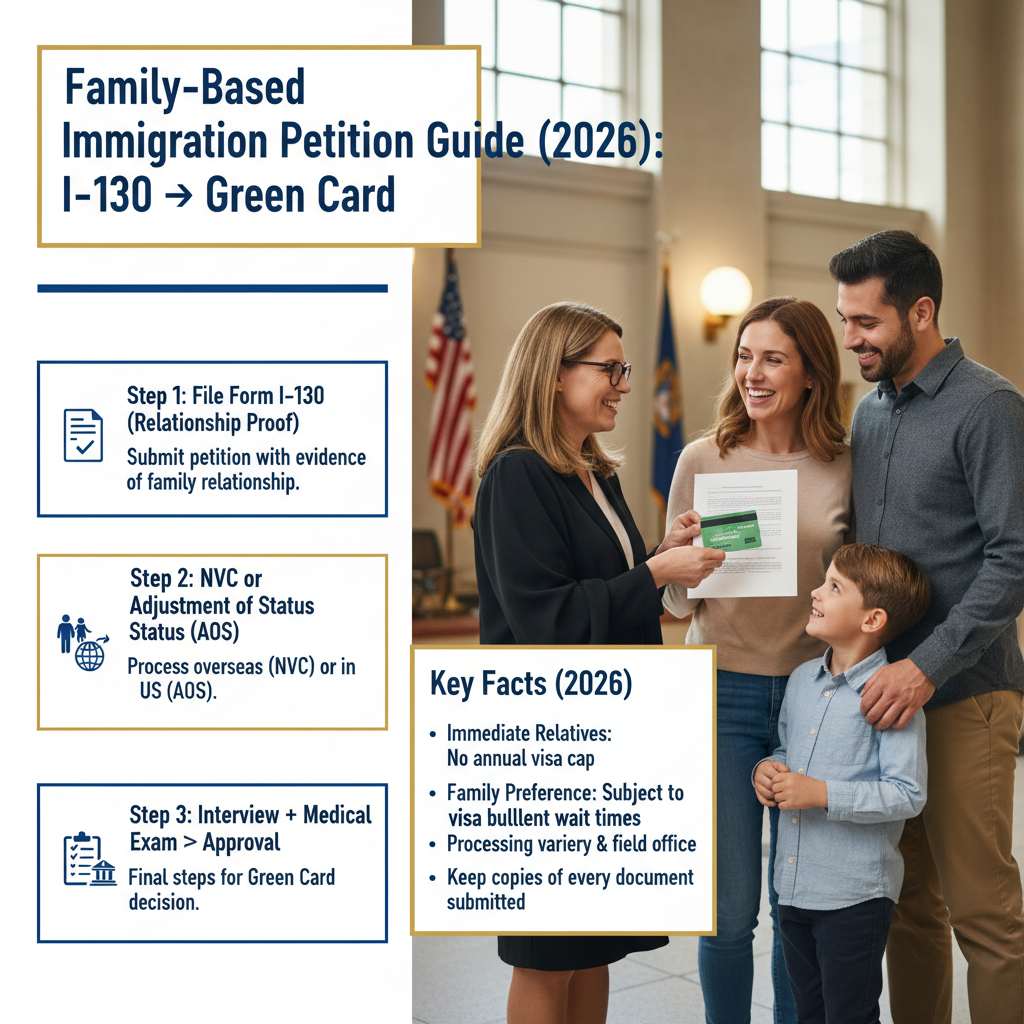
This step-by-step resource was inspired by ongoing, trending coverage and public interest around family immigration processes, processing times, and policy updates. See the news search results here:
Need Help? Our Orlando immigration team is ready to assist. Call +1 786-791-3106 for a free consultation, or message us online. Se Habla Español.
What This News Means for Immigrants in Orlando and Across Florida
Why this news is showing up now
Family-based immigration is “trending” because many families are trying to reunite in the U.S. while navigating changing processing times, backlogs, and stricter document review. Online interest often spikes when:
- USCIS updates filing policies, fees, or evidence standards.
- Processing times fluctuate—especially for Form I-130, Form I-485, and consular cases.
- More applicants receive Requests for Evidence (RFEs) or interview notices.
- Visa bulletin movement affects the Priority Date for family preference categories.
Reminder: Even when the law hasn’t changed dramatically, the way cases are adjudicated can shift—meaning a “simple” petition can become delayed if documents are missing, translations are incorrect, or eligibility is misunderstood.
How it can affect Florida residents
For Florida residents—especially in Central Florida—family petitions often involve coordination across multiple agencies: USCIS, the National Visa Center (NVC), U.S. consulates abroad, and sometimes immigration court. If your case is in Orlando or along the I-4 corridor (Orange County, Osceola County, Seminole County, and beyond), the practical impact often comes down to:
- Where your interview will occur (for example, the Orlando USCIS Field Office for many Adjustment of Status cases).
- How quickly you can obtain local civil documents (birth certificates, marriage records, divorce decrees) and certified translations.
- Whether travel plans, work authorization, or pending status are affected by filing strategy.
Important: A family petition is not just a form—it is a legal strategy. The “best” pathway depends on your relationship category, immigration history, and whether you qualify to file in the U.S. or must process through a consulate.
What Family-Based Immigration Petition Guide Is (and Why It Matters)
A plain-English definition
A family-based immigration petition is the process where a U.S. citizen or lawful permanent resident (green card holder) asks the U.S. government to recognize a qualifying family relationship so the family member can apply for a green card (lawful permanent residence).
For most families, the process begins with Form I-130 (Petition for Alien Relative). After the relationship is approved, the family member typically completes one of two paths:
- Adjustment of Status inside the U.S. (often using Form I-485), or
- Consular processing abroad through the U.S. Department of State and a U.S. consulate.
Why it matters: a properly prepared petition can reduce delays, lower the risk of RFEs/denials, and help families reunite faster and more safely.
Key terms you need to know
- Immediate Relative: Certain relatives of U.S. citizens (spouse, unmarried child under 21, parent of a U.S. citizen 21+). These cases are not subject to annual visa caps.
- Family Preference Categories: Relatives subject to visa limits and waiting lists (e.g., F1, F2A, F2B, F3, F4).
- Priority Date: The “place in line” date—usually when USCIS receives the Form I-130. This determines when a visa may become available in capped categories.
- Visa Bulletin: The Department of State’s monthly publication showing which Priority Date is current.
- Adjustment of Status: Applying for a green card from inside the U.S., typically by filing Form I-485.
- Consular Processing: Completing the immigrant visa process outside the U.S. at a U.S. consulate after NVC processing.
- Affidavit of Support: Financial sponsorship requirement, usually with Form I-864.
- RFE (Request for Evidence): USCIS request for missing/unclear documents.
- NOID (Notice of Intent to Deny): USCIS warning before a denial, requiring a strong legal response.
Warning: Many delays happen because people confuse eligibility to file an Form I-130 with eligibility to obtain a green card. Some applicants may need waivers, may face bars, or may need to consular process even if the petition is approved.
Current Immigration Law: The Foundation
Family-based immigration is governed primarily by the Immigration and Nationality Act (INA) and related federal regulations. USCIS and the Department of State apply these rules nationwide, including Florida.
Federal requirements
Key legal foundations include:
- INA § 201 and INA § 203: Visa allocation rules (immediate relatives vs. preference categories and numerical limits).
- INA § 204: Petition process and eligibility rules for family-sponsored petitions (basis for Form I-130).
- INA § 245: Adjustment of Status requirements and bars (basis for Form I-485 eligibility).
- INA § 212: Grounds of inadmissibility (health, criminal, fraud/misrepresentation, unlawful presence, and more).
- INA § 213A: Affidavit of Support requirements (basis for Form I-864).
- Regulations: 8 C.F.R. § 204 (petitions) and 8 C.F.R. § 245 (adjustment).
Official starting points: USCIS official website, USCIS Forms, and the U.S. Department of State.
Important: If the beneficiary has ever been in removal proceedings (immigration court), the case may also intersect with the Executive Office for Immigration Review. Court history can affect strategy, timing, and jurisdiction.
Florida-specific considerations
Florida does not create its own immigration petition rules (immigration is federal), but Florida residents often face practical considerations that can affect outcomes:
- Local interviews: Many Central Florida cases are interviewed at the Orlando USCIS Field Office. Preparation matters, especially for marriage-based cases.
- Document access: Florida vital records processes can affect how quickly you obtain certified marriage certificates, divorce decrees, and name-change records.
- Mobility along the I-4 corridor: Moving between counties can impact address changes and interview scheduling. Reminder: timely address updates with USCIS help prevent missed notices.
To check case trends and planning, use USCIS Processing Times, but treat it as a general guide—not a guarantee.
Need Help? Our Orlando immigration team is ready to assist. Call +1 786-791-3106 for a free consultation, or message us online. Se Habla Español.
How to File a Family Petition: A Complete Step-by-Step Guide
Below is a practical roadmap from start to finish. Your exact steps may vary depending on whether you will do Adjustment of Status in the U.S. or consular processing abroad, and whether you are an immediate relative or in a preference category with a waiting list tied to your Priority Date.
1) Confirm the correct family category and strategy
Start by identifying who the petitioner is (U.S. citizen or green card holder) and who the beneficiary is (spouse, child, parent, sibling). This determines visa availability, wait times, and whether you can file Form I-485 now or must wait.
Important: “Can I file the petition?” is different from “Can I get the green card without leaving the U.S.?” This is where many families make costly mistakes.
- Immediate relatives of U.S. citizens: Usually no visa backlog; may be able to file Form I-130 and Form I-485 together if eligible.
- Preference categories: Must track the Priority Date and visa bulletin before filing Form I-485 (or before NVC can schedule an interview).
- Green card holder petitioners: Different categories and waiting lines than U.S. citizens.
Documents to gather (category/strategy stage):
- Petitioner’s proof of status (U.S. passport, naturalization certificate, green card copy).
- Beneficiary’s passport biographic page (if available).
- Relationship evidence overview (marriage certificate, birth certificates, adoption decrees).
- Any prior immigration documents (I-94, visas, prior approvals/denials, EAD/AP cards).
- Any court/police records (if arrests or charges ever occurred).
2) Prepare and file Form I-130 (the family petition)
Form I-130 asks USCIS to recognize the qualifying family relationship. You must prove:
- The petitioner is eligible (U.S. citizen or lawful permanent resident).
- The relationship is real and legally valid.
- Any prior marriages were legally terminated (if applicable).
Marriage-based petitions require additional proof that the relationship is bona fide (real) and not entered solely for immigration benefits.
Documents to include with Form I-130 (typical examples):
- Petitioner’s proof of citizenship/LPR status.
- Marriage certificate (for spouse) or birth certificate (for parent/child relationship).
- Divorce decrees/annulments/death certificates for any prior marriages (both spouses, if applicable).
- Passport-style photos (if required by current instructions).
- Proof of a bona fide marriage (if spouse case), such as:
- Joint lease/mortgage, joint bank statements, joint insurance.
- Photos over time with family/friends, travel records.
- Birth certificates of children (if any), affidavits from people who know you.
- Certified translations for any non-English documents.
Reminder: Always follow the latest USCIS instructions on USCIS Forms. Requirements can change.
3) Decide between Adjustment of Status (I-485) vs. consular processing
After (or sometimes while) the Form I-130 is pending, you must choose the correct path:
- Adjustment of Status (file Form I-485 in the U.S.) if the beneficiary is eligible and a visa is available.
- Consular processing if the beneficiary is outside the U.S. or not eligible to adjust status.
Adjustment of Status (AOS) basics:
- Often includes Form I-485 plus related applications (work permit and travel document).
- May require a medical exam by a USCIS-designated civil surgeon (Form I-693).
- Usually ends with an in-person interview at a field office (for Central Florida, often the Orlando USCIS Field Office).
Consular processing basics:
- After I-130 approval, the case moves to the National Visa Center (NVC) for fee payment and document upload.
- Then the beneficiary attends a medical exam and a consular interview abroad.
- Upon entry to the U.S. with an immigrant visa, the person becomes a lawful permanent resident.
Documents to gather (AOS vs. consular decision stage):
- Beneficiary’s I-94 record and entry documents (if in the U.S.).
- Full immigration history (prior visas, overstays, entries/exits).
- Any prior removal/deportation orders or immigration court records (if any).
- Address history and employment history for forms.
Warning: If the beneficiary entered without inspection, has unlawful presence, has certain criminal issues, or has prior immigration violations, filing the wrong way can trigger serious consequences. Legal screening matters before filing.
4) File the green card stage: Form I-485 (AOS) or NVC/consular packet
This is the “application” stage, where the beneficiary seeks permanent residence, proves admissibility, and submits financial sponsorship and supporting evidence.
If filing Form I-485 (Adjustment of Status):
- Form I-485 (Application to Register Permanent Residence or Adjust Status)
- Form I-864 (Affidavit of Support) from the petitioner (and joint sponsor if needed)
- Form I-693 medical exam (often submitted with the packet or later)
- Form I-765 (optional) for a work permit (EAD)
- Form I-131 (optional) for advance parole (travel permission)
Typical documents for Form I-485 packets:
- Copy of passport, visa page(s), and I-94.
- Birth certificate (long form, if available) with certified translation if needed.
- Marriage certificate (if applicable) and divorce decrees from prior marriages.
- Financial evidence for Form I-864:
- Most recent IRS tax transcript(s), W-2s/1099s, pay stubs, employment letter.
- Joint sponsor documents if petitioner income is insufficient.
- Two passport-style photos (if required by instructions).
- Any required legal dispositions for arrests/charges.
If doing consular processing (NVC stage):
- Pay NVC fees and submit the DS-260 immigrant visa application (Department of State).
- Upload civil documents and Form I-864 financial sponsorship documents.
- Wait for ���Documentarily Qualified” status and interview scheduling.
Department of State guidance is available at U.S. Department of State.
Reminder: If your case involves unlawful presence or other inadmissibility issues, you may need a waiver strategy (for example, an I-601 or I-601A in some situations). Do not assume “approved I-130” means “approved visa.”
5) Attend biometrics, respond to RFEs, and prepare for the interview
After filing, USCIS typically schedules biometrics (fingerprints/photo). Many cases also receive RFEs. If an interview is required, preparation is essential—especially for marriage-based cases.
Biometrics and case monitoring:
- Track receipts and notices; keep copies of everything filed.
- Check processing ranges at USCIS Processing Times.
- Attend every appointment; reschedule only when absolutely necessary.
Interview preparation (especially if your case is in Orlando):
- Bring updated relationship evidence (new lease, new photos, new joint statements).
- Review your forms for consistency—addresses, dates, prior entries, prior marriages.
- Be ready to explain any gaps, prior overstays, or name differences.
Documents to bring to an AOS interview:
- Government-issued IDs and passports (originals).
- Original civil documents (birth/marriage certificates, divorce decrees).
- Updated Form I-864 financial proof (latest tax transcript/pay stubs).
- Updated bona fide marriage evidence (if applicable).
- Any RFE response copies and delivery confirmations.
Warning: Missing an interview or failing to respond to an RFE by the deadline can lead to denial. Some USCIS notices provide a strict deadline; always calendar it immediately.
6) Receive a decision, and protect your status after approval
If approved, the beneficiary becomes a lawful permanent resident and receives a green card. Some spouses receive a two-year conditional green card (if the marriage is less than two years old at the time of approval/entry), requiring a later filing to remove conditions.
After approval, plan for:
- Green card delivery and verifying the information is correct.
- Social Security updates (if needed).
- Travel rules and maintaining residence (avoid long absences without planning).
- Future steps such as removing conditions (if applicable) and naturalization eligibility.
Important: Approval is not the end of compliance. Certain crimes, fraud findings, or abandonment of residence can jeopardize permanent resident status.
Need Help? Our Orlando immigration team is ready to assist. Call +1 786-791-3106 for a free consultation, or message us online. Se Habla Español.
Practical Steps You Can Take Today
Whether you live in Orlando, Kissimmee, Sanford, Winter Park, or anywhere along the I-4 corridor, the best way to reduce delays is to prepare thoroughly before filing.
Actionable checklist (do these now)
- Create a shared folder (digital + paper) for every immigration document and receipt.
- Order certified copies of birth certificates, marriage certificates, and divorce decrees early.
- Request IRS tax transcripts for the petitioner (and joint sponsor if needed).
- Gather proof of a real relationship (especially for spouse cases): joint accounts, leases, insurance, photos across time.
- Write a clear relationship timeline (how you met, major dates, addresses lived together).
- Screen for issues: prior overstays, entries without inspection, arrests, prior denials, misrepresentation concerns.
- Check your Priority Date category and the visa bulletin if not an immediate relative.
Document preparation guidance
- Translations: Any non-English document should include a complete, certified translation.
- Name consistency: If names differ across documents (maiden names, spelling variations), prepare evidence to explain it (court orders, affidavits, or consistent identity records).
- Proof of termination of prior marriages: Provide final divorce decrees (not just filings) and translations if needed.
- Financial sponsorship: If income is close to the threshold, plan early for a joint sponsor and gather their tax documentation.
Timeline expectations (general planning)
Processing varies widely by category, service center/field office, and consular post. Use USCIS Processing Times as a baseline. Typical ranges families may experience:
- Form I-130: often many months; can be longer depending on category and workload.
- Form I-485 (AOS): often many months after filing; interview scheduling can vary.
- NVC + consular processing: depends on document collection and consulate appointment availability.
Reminder: Some deadlines are strict even when timelines are long. For example, if USCIS issues an RFE, you must respond by the stated date. Also, if you receive a notice with a 90-day window for a required step, missing it can cause denial or delays.
Important: If you have a time-sensitive situation (expiring status, upcoming travel, medical emergencies), legal planning is essential.
How Imigrar Helps Immigrants in Orlando
At Imigrar, our mission is to Keep Families Together. We help families in Orlando, Orange County, and throughout Florida—and we serve clients nationwide—with clear, step-by-step legal support for family-based immigration.
- Case strategy: AOS vs. consular processing, category selection, and timing with the Priority Date.
- Strong filings: professionally prepared Form I-130 and Form I-485 packages with organized evidence.
- RFE/NOID responses: fast, detailed, legally supported submissions.
- Interview preparation: what to expect at the Orlando USCIS Field Office, including practice questions and document checklists.
- Complex issues: prior immigration violations, criminal records screening, and waiver planning when needed.
We offer a free consultation. Call +1 786-791-3106 or contact us online. Se Habla Español.
Frequently Asked Questions
Q: Who is eligible to file a family petition with Form I-130?
A: U.S. citizens can generally petition for spouses, children (married or unmarried), parents (if the citizen is 21+), and siblings. Lawful permanent residents can generally petition for spouses and unmarried children. Eligibility also depends on documentation and whether the relationship is legally valid. Important: Petition eligibility does not automatically mean the beneficiary can complete the green card process inside the U.S.
Q: Can I file Form I-130 and Form I-485 together?
A: Sometimes. Concurrent filing is often possible for immediate relatives of U.S. citizens if the beneficiary is in the U.S. and eligible for Adjustment of Status. For preference categories, you may need to wait until the Priority Date is current under the visa bulletin rules. Because filing too early can cause rejection or denial, confirm visa availability and eligibility before submitting.
Q: How does my current immigration status affect a family-based case?
A: It can affect whether you can adjust status in the U.S. or must consular process. Overstays, unauthorized work, prior entries without inspection, or prior removal orders can create legal barriers or require waivers. Warning: In some situations, leaving the U.S. to attend a consular interview can trigger unlawful presence bars. A legal review before choosing a path is critical.
Q: How long does a family petition take in 2026?
A: There is no single timeline. Immediate relative cases may move faster than preference categories because they are not capped, while preference categories can face multi-year waits tied to the Priority Date. After filing, you can monitor general estimates at USCIS Processing Times. For consular cases, scheduling depends on NVC document review and the local U.S. consulate’s appointment availability.
Q: What documents are most important for a strong filing?
A: The essentials usually include proof of petitioner status, proof of the relationship (marriage/birth certificates), proof that prior marriages ended, and (for spouse cases) proof the marriage is bona fide. For the green card stage, financial sponsorship documents for Form I-864 are critical. If any documents are not in English, include certified translations.
Q: How much does it cost to file a family-based green card case?
A: Costs typically include USCIS filing fees (which vary by form and can change), medical exam costs for Form I-693, translation costs, and possibly travel or consular fees for overseas processing. Check current fees and instructions directly on the USCIS official website and USCIS Forms. Attorney fees vary by complexity.
Q: What happens if my petition or green card application is denied?
A: The next steps depend on what was denied and why. Some denials can be refiled with stronger evidence; others may involve motions, appeals, or alternative strategies. If the beneficiary is in removal proceedings, the case may intersect with immigration court under Executive Office for Immigration Review. Important: A denial can sometimes create serious risk for applicants without lawful status—get legal advice immediately if you receive a denial, RFE, or NOID.
Common Mistakes (and How to Avoid Them)
Mistake #1: Filing without checking visa availability and the Priority Date
Families in preference categories sometimes file Form I-485 too early, or assume an approved Form I-130 means the green card is immediately available.
How to avoid it: Identify the correct category and track the visa bulletin. If you’re unsure, get legal guidance before filing.
Mistake #2: Weak relationship evidence in marriage cases
USCIS looks for real-life proof—shared finances, shared residence, consistent history. A small set of photos is rarely enough.
How to avoid it: Submit a well-organized packet showing your life together over time: leases, insurance, joint bills, bank statements, and a clear timeline.
Mistake #3: Ignoring inadmissibility risks (unlawful presence, prior orders, misrepresentation)
Some applicants choose consular processing without understanding that departure may trigger a bar, or they file Adjustment of Status when they are not eligible.
How to avoid it: Do a full immigration history review before selecting a pathway. If waivers may be needed, plan early and file strategically.
Need Help? Our Orlando immigration team is ready to assist. Call +1 786-791-3106 for a free consultation, or message us online. Se Habla Español.
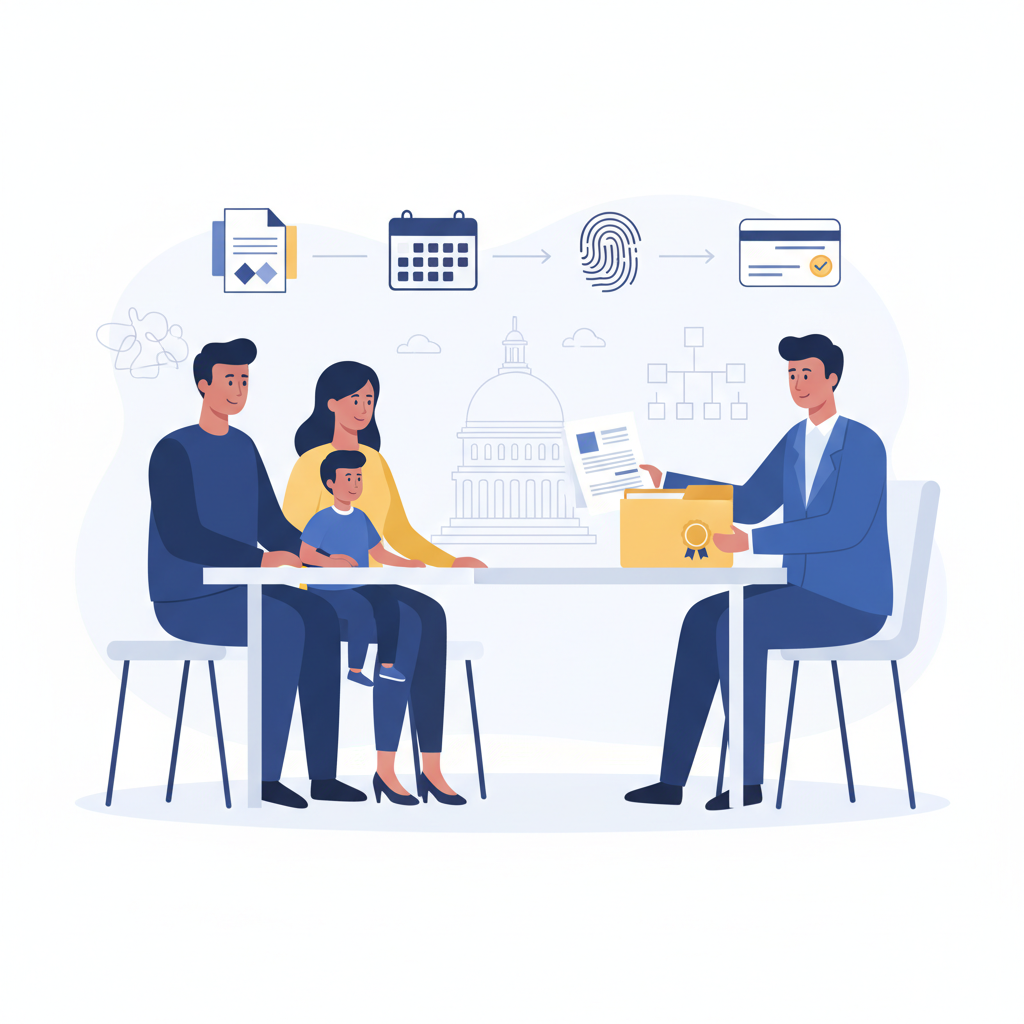
Closing: Get a family petition plan you can trust
Family-based immigration can be straightforward when eligibility is clear and documentation is strong—but small mistakes can cause major delays or denials. If your case is in Orlando, if you’re filing through the Orlando USCIS Field Office, or if your family is navigating consular processing, Imigrar can help you build a step-by-step plan from Form I-130 to approval.
Need help now? Call Imigrar at +1 786-791-3106 for a free consultation, or message us online. Se Habla Español.
Tagline: Keep Families Together


