


The reporting that sparked this guide
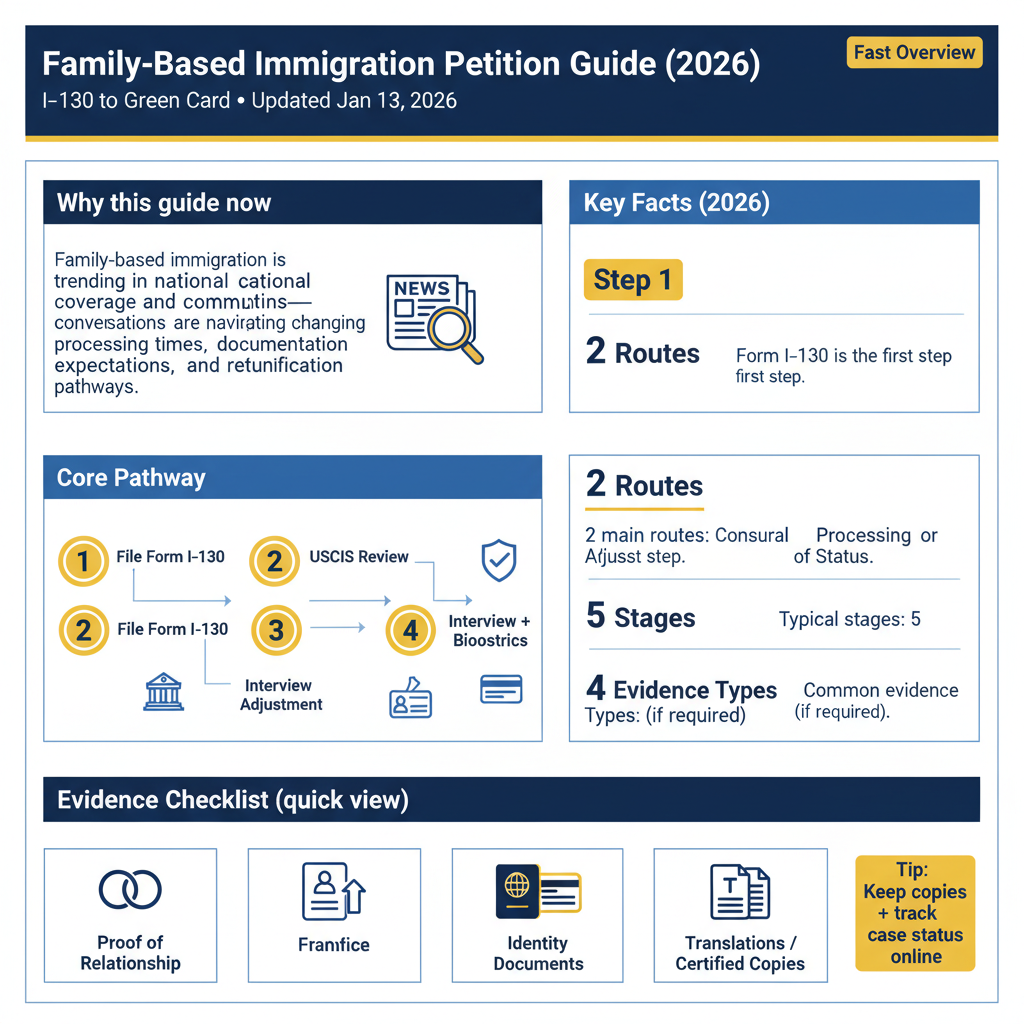
Family-based immigration continues to trend in national coverage and community conversations—especially as families try to understand changing processing times, documentation expectations, and the best path to reunification. This guide was inspired by the ongoing news cycle and search trends around immigration law:
Need Help? Our Orlando immigration team is ready to assist. Call +1 786-791-3106 for a free consultation, or message us online. Se Habla Español.
What This News Means for Immigrants in Orlando and Across Florida
Why this news is showing up now
Family petitions are “trending” because they are the most common legal pathway to permanent residence in the U.S.—and because small mistakes can cause big delays. Many families are also reacting to:
- USCIS processing backlogs and shifting adjudication patterns (more Reminder: requests for specific evidence).
- Increased use of online accounts and electronic notices.
- More public attention on lawful pathways—especially for spouses, parents, and children of U.S. citizens and permanent residents.
- Confusion about whether to pursue Adjustment of Status in the U.S. or consular processing abroad.
For many families, the “news” is not one single policy change—it’s the reality that family immigration is paperwork-heavy, time-sensitive, and easy to misunderstand without a clear roadmap.
How it can affect Florida residents
Florida is home to large immigrant communities, including many mixed-status families. For Central Florida residents, including Orange County and communities along the I-4 corridor (Orlando, Kissimmee, Sanford, Deltona, Lakeland, Tampa-area connections), family-based filings are extremely common.
If your case is in Orlando, you may interact with:
- The Orlando USCIS Field Office (often involved in green card interviews for Form I-485 cases).
- USCIS lockboxes and service centers that receive and process Form I-130 petitions.
- Local civil document offices for birth, marriage, divorce, and name change records—documents USCIS will scrutinize closely.
Important: Florida state law doesn’t decide who gets a green card—but Florida-specific realities (like travel patterns, local court records, and documentation access) can affect evidence gathering, timing, and interview preparation.
What Family-Based Immigration Petition Guide Is (and Why It Matters)
A plain-English definition
A family-based immigration petition is the process where a U.S. citizen or lawful permanent resident (green card holder) asks the U.S. government to recognize a qualifying family relationship—so the family member can apply for an immigrant visa (abroad) or a green card (in the U.S.).
Most cases start with Form I-130 (Petition for Alien Relative). Think of it as the “relationship petition.” It does not automatically grant a green card. It is the first major step that can open the door to the green card stage.
Key terms you need to know
- Form I-130: The petition filed by the U.S. citizen or permanent resident petitioner to prove the qualifying relationship.
- Form I-485: The green card application filed by the beneficiary inside the U.S. (if eligible) through Adjustment of Status.
- Adjustment of Status: Applying for a green card from inside the U.S. (instead of going to a U.S. consulate abroad).
- Consular Processing: Applying for an immigrant visa at a U.S. embassy/consulate abroad after the petition is approved and the case is processed through the National Visa Center (NVC).
- Immediate Relative: Spouse of a U.S. citizen, unmarried child under 21 of a U.S. citizen, or parent of a U.S. citizen (petitioner must be 21+). Immediate relatives are not subject to annual visa caps.
- Family Preference Category: Certain relatives (like siblings of U.S. citizens, or spouses/children of permanent residents) who must wait for a visa number.
- Priority Date: The “place in line” date—usually the date USCIS receives the Form I-130. This matters a lot in preference categories.
- Visa Bulletin: The monthly Department of State chart showing which Priority Dates are current.
- RFE (Request for Evidence): USCIS asks for missing/insufficient documents.
- NOID (Notice of Intent to Deny): USCIS warns it plans to deny unless you respond convincingly.
- Warning: “Being married” or “being related” is not enough—USCIS requires documentary proof, and eligibility depends on entry history, status, inadmissibility issues, and sometimes prior immigration violations.
Current Immigration Law: The Foundation
Family immigration is governed primarily by federal law—especially the Immigration and Nationality Act (INA). The key legal concepts include who qualifies as a “relative,” how immigrant visas are allocated, and who can apply for permanent residence in the U.S.
Federal requirements
At a high level, most family cases involve these legal building blocks:
- INA § 201 and INA § 203: Define immigrant visa categories and numerical limits (immediate relatives vs. preference categories).
- INA § 204: Governs family-based petitions (including Form I-130) and the evidence required to prove the relationship.
- INA § 245: Governs Adjustment of Status (including bars and exceptions).
- INA § 212: Lists “grounds of inadmissibility” (health, certain crimes, immigration fraud/misrepresentation, unlawful presence, public charge-related issues, etc.).
- Affidavit of Support (INA § 213A): Requires most family-based applicants to submit financial sponsorship using Form I-864.
Core USCIS forms commonly used in family-based cases include:
- Form I-130 (Petition for Alien Relative)
- Form I-485 (Application to Register Permanent Residence or Adjust Status)
- Form I-864 (Affidavit of Support)
- Form I-765 (Employment Authorization)
- Form I-131 (Advance Parole / travel document)
- Form I-693 (Medical exam and vaccination record)
- Form I-130A (Supplemental information for spouse beneficiary)
Official resources you should rely on (not social media rumors):
- USCIS official website
- USCIS Processing Times
- USCIS Forms
- U.S. Department of State (Visa Bulletin, consular processing)
- Executive Office for Immigration Review (immigration court information if removal proceedings are involved)
Florida-specific considerations
Immigration is federal, but Florida residents often face practical issues that affect family petitions:
- Document access: Getting certified copies of birth/marriage/divorce records from Florida counties (including Orange County) can take time—plan ahead.
- Name variations: Many families in Florida have records from multiple countries and languages; consistent translations and name matching are critical.
- Local interview logistics: The Orlando USCIS Field Office may schedule in-person interviews for Form I-485 cases; being prepared with originals and updated relationship evidence is essential.
- Travel realities: Florida residents often travel internationally. Warning: Departing the U.S. without proper authorization during a pending Adjustment of Status can cause abandonment of the application in many cases.
How to File a Family Petition: A Complete Step-by-Step Guide
This step-by-step roadmap covers the most common scenario: filing Form I-130 and then pursuing either Adjustment of Status (inside the U.S.) or consular processing (abroad). Your best path depends on your relationship category, immigration history, and whether a visa number is available based on your Priority Date.
1) Confirm the qualifying relationship and category
Start by identifying (a) who the petitioner is and (b) what category the beneficiary falls under. This determines whether visas are immediately available and what timeline to expect.
Important: Immediate relatives of U.S. citizens generally do not wait for a visa number. Preference categories do.
Documents to gather for this step:
- Petitioner proof of status: U.S. passport, birth certificate, naturalization certificate, or green card (front/back)
- Beneficiary identity documents: passport biographic page, birth certificate
- Relationship proof:
- Spouse: marriage certificate + evidence of bona fide marriage
- Parent/child: birth certificate showing parentage, adoption decree (if applicable)
- Siblings: birth certificates for both showing at least one common parent
- Termination of prior marriages (if any): divorce decrees, annulments, death certificates
- Certified translations for any non-English documents
2) Choose the process: Adjustment of Status vs. consular processing
Next, decide where the beneficiary will apply for permanent residence:
- Adjustment of Status (usually via Form I-485) if the beneficiary is in the U.S. and eligible.
- Consular processing if the beneficiary is outside the U.S. (or sometimes if in the U.S. but not eligible to adjust).
Warning: If the beneficiary entered without inspection, overstayed, worked without authorization, has certain criminal issues, or has prior removal orders, the “best” option may not be obvious. Some issues trigger bars that require waivers or different strategies.
Documents to gather for this step:
- Proof of last entry to the U.S.: I-94 record (if available), entry stamp, visa page
- Prior immigration paperwork: notices, receipts, approvals/denials
- Any prior removal/deportation documents (if applicable)
- Criminal disposition records (certified) for any arrests/charges
- Proof of current address in Florida (if applicable): lease, utility bill, ID
3) Prepare and file the I-130 package (and I-130A for spouses)
The Form I-130 package is where many cases succeed or fail. USCIS must be convinced the relationship is real and legally valid. For spousal cases, Form I-130A is also required.
Common evidence for a bona fide marriage includes:
- Joint lease/mortgage, joint bank accounts, joint insurance
- Photos over time with family and friends
- Birth certificates of children (if any)
- Shared bills, shared travel itineraries, correspondence
- Affidavits from people who know the relationship (where appropriate)
Documents to include for this step (typical):
- Completed Form I-130 (signed)
- Completed Form I-130A (if spouse beneficiary)
- Filing fee payment per USCIS instructions
- Petitioner proof of citizenship/LPR status
- Beneficiary proof of identity
- Relationship documents (certified copies)
- Two passport-style photos (if required per current instructions)
- Translations and translator certification
Reminder: Always use the latest edition of each form and follow the form instructions on the USCIS Forms page.
Need Help? Our Orlando immigration team is ready to assist. Call +1 786-791-3106 for a free consultation, or message us online. Se Habla Español.
4) Track receipts, biometrics, and respond to RFEs on time
After filing, USCIS will issue receipt notices. Many applicants will also be scheduled for biometrics (fingerprints/photo). If USCIS issues an RFE, you must respond by the deadline listed on the notice.
Important: Missing an RFE deadline can lead to denial. USCIS deadlines are strict.
Documents to keep organized for this step:
- USCIS receipt notices (I-797C)
- Biometrics appointment notice and proof of attendance
- A complete copy of everything you filed
- RFE/NOID notice (if issued) and your response packet
- Updated relationship evidence (especially in marriage cases)
Check realistic timelines using USCIS Processing Times—and understand that posted times are estimates, not guarantees.
5) If adjusting in the U.S.: file I-485 (plus I-864, I-765, I-131, I-693 when appropriate)
If a visa is available and the beneficiary is eligible, the next step is the green card application: Form I-485. Many immediate relatives of U.S. citizens can file Form I-130 and Form I-485 together (concurrent filing), when permitted.
Key components commonly included:
- Form I-485 (green card application)
- Form I-864 (Affidavit of Support)
- Form I-765 (work permit) and Form I-131 (Advance Parole) if desired
- Form I-693 (medical exam) per current USCIS guidance and timing strategy
Warning: Do not travel internationally while Form I-485 is pending unless you have the correct travel authorization (usually Advance Parole) and your situation allows travel. Some statuses and situations make travel risky.
Documents to include for this step (typical):
- Passport, visa, and I-94 (if applicable)
- Birth certificate + certified translation
- Marriage certificate/divorce records (if applicable)
- Proof of lawful entry (when required)
- Financial evidence for Form I-864: tax returns, W-2/1099, pay stubs, employer letter
- Medical exam in sealed envelope (if submitting now)
- Two passport-style photos (if required)
Reminder: Some applicants worry about “public charge.” The rules are technical and fact-specific—get individualized advice before filing if you have concerns about benefits history or sponsorship strength.
6) If processing abroad: complete NVC steps and attend the consular interview
If the beneficiary will apply from outside the U.S., after Form I-130 approval the case typically moves to the Department of State’s National Visa Center (NVC). You’ll pay fees, submit civil documents, and complete the DS-260 immigrant visa application.
Official Department of State guidance is available at U.S. Department of State.
Documents for this step (typical):
- Valid passport
- Police certificates (as required by the consulate)
- Birth certificate, marriage certificate, divorce decrees
- Military records (if applicable)
- Proof of petitioner domicile in the U.S. (often required)
- Form I-864 and financial evidence
- Medical exam from panel physician (per consulate instructions)
Important: Consular processing can trigger unlawful presence bars if the beneficiary accrued unlawful presence in the U.S. and then departs. This is one of the most common “surprise” issues—get legal screening before leaving the U.S.
7) Prepare for the interview (Orlando field office or consulate) and finalize the green card
Many family-based cases require an interview—either at The Orlando USCIS Field Office (for Adjustment of Status) or at a U.S. consulate abroad (for consular processing).
If your case is in Orlando, you should plan to bring:
- Original civil documents (birth/marriage/divorce)
- Original passports and current IDs
- Updated relationship evidence (especially for spouses)
- Updated financial documents if requested
- A complete copy of your filing
90-day window note: In marriage-based cases, if the green card is approved when the marriage is less than two years old, the beneficiary typically receives conditional residence and must later file to remove conditions within the 90-day window before the card expires (commonly via Form I-751, depending on the case type). Planning ahead avoids last-minute stress.
Reminder: If you move, update your address with USCIS promptly to avoid missing notices.
Practical Steps You Can Take Today
Family immigration can feel overwhelming, but you can make meaningful progress immediately by organizing, documenting, and planning timelines.
Actionable checklist
- Create a “master folder” (digital + paper) with every immigration document you’ve ever received.
- Order certified copies of birth/marriage/divorce records now—some offices take weeks.
- Start a relationship evidence timeline (for spouses): lease history, shared bills, photos by date, travel records.
- Pull tax transcripts and employment proof for the financial sponsorship (Form I-864).
- Screen for red flags early: prior removals, unlawful presence, arrests, misrepresentation concerns.
- Check estimated timelines on USCIS Processing Times.
Document preparation guidance
- Important: Use consistent names across forms. If names vary across countries/documents, prepare a clear explanation and supporting evidence.
- Use high-quality scans and keep originals safe for interviews.
- Translations must be complete and include a translator certification.
- For any arrest—even if charges were dropped—obtain certified court dispositions.
Timeline expectations
Processing times vary widely by form type, category, and USCIS workload. In general:
- Form I-130 can take months (sometimes longer) depending on category and service center.
- Form I-485 timelines depend on field office capacity; Orlando cases may involve an interview and additional review.
- Work permits/travel documents (when filed with Form I-485) can also take months.
Reminder: Some deadlines are strict. For example, if USCIS issues an RFE, your response must arrive by the stated due date. And if you later need to remove conditions, you typically must file within the 90-day window before the conditional card expires.
180 days note: Certain immigration benefits and eligibility rules can hinge on time periods like 180 days (for example, some status/eligibility calculations or employment authorization gaps). Because “180-day” rules vary by context, confirm how any 180 days timeline applies to your specific case before acting.
Need Help? Our Orlando immigration team is ready to assist. Call +1 786-791-3106 for a free consultation, or message us online. Se Habla Español.
How Imigrar Helps Immigrants in Orlando
At Imigrar, we focus on helping families reunite and stay together—our tagline is “Keep Families Together”. We serve clients in Orlando, across Central Florida, and nationwide.
Family petitions often look “simple” online, but real cases can involve complex issues: prior overstays, entries, divorce histories, missing documents, financial sponsorship problems, or prior immigration filings that create inconsistencies. Our team helps by:
- Confirming the best category and strategy (immediate relative vs. preference; Adjustment of Status vs. consular processing).
- Building strong evidence packages to reduce RFEs and delays.
- Preparing clients for interviews—especially if scheduled at The Orlando USCIS Field Office.
- Responding to RFEs/NOIDs with organized, persuasive legal support.
- Identifying waiver needs early and planning around travel risks.
Se Habla Español. We can support you in English or Spanish.
Free consultation: Call +1 786-791-3106 to discuss your family’s options and next steps.
Frequently Asked Questions
Q: Who is eligible to file a family-based petition using Form I-130?
A: A U.S. citizen or lawful permanent resident can generally file Form I-130 for certain qualifying relatives. Eligibility depends on the specific relationship (spouse, parent, child, sibling) and whether the relationship is legally valid. You must prove both your status and the family relationship with credible documents.
Q: Can I file Form I-485 if I’m out of status or overstayed?
A: Sometimes. Many immediate relatives of U.S. citizens may still pursue Adjustment of Status with Form I-485 even after an overstay, but eligibility depends on how you entered the U.S. and whether other issues apply (such as unlawful entry, certain criminal issues, or prior removal orders). Because the consequences of a wrong filing can be severe, get a case-specific screening before applying.
Q: How long does a family-based petition take in 2026?
A: Timelines vary by relationship category, USCIS workload, and whether you are doing Adjustment of Status or consular processing. Use USCIS Processing Times to check estimates for your form type and office. Preference categories may also require waiting for your Priority Date to become current under the Visa Bulletin on U.S. Department of State.
Q: What documents do I need for a strong I-130 marriage petition?
A: In addition to the marriage certificate and proof of legal termination of any prior marriages, you should submit evidence of a real (bona fide) marriage—joint lease/mortgage, joint bank accounts, insurance, photos over time, shared bills, travel records, and other proof of shared life. Reminder: Quality matters more than quantity; documents should show an ongoing relationship, not just a wedding day.
Q: How much does it cost to file a family petition and green card application?
A: Costs include USCIS filing fees (which vary by form and sometimes by age/category), medical exam fees, translation costs, and potentially attorney fees. Always verify current USCIS fees on the USCIS Forms page (each form page links to the fee). If consular processing is involved, Department of State/NVC fees also apply via U.S. Department of State.
Q: What happens if USCIS denies my I-130 or I-485?
A: A denial can happen for missing evidence, credibility concerns, ineligibility, or inadmissibility issues. Next steps depend on what was denied and why: you may be able to file a motion, appeal (in some situations), refile with stronger evidence, or pursue a different strategy. Warning: If the beneficiary is in removal proceedings, denials can have serious consequences. If immigration court is involved, check resources through Executive Office for Immigration Review and consult counsel immediately.
Q: Do I need an interview at the Orlando USCIS Field Office?
A: Many Form I-485 family cases are scheduled for interviews, though interview requirements can vary. If your case is in Orlando, plan as if an interview will happen: bring originals, updated relationship evidence, and be ready to explain your timeline clearly and consistently.
Q: Can I travel while my I-485 is pending?
A: Often, you should not travel unless you have proper authorization (typically Advance Parole via Form I-131) and your situation permits travel. Warning: Traveling without authorization can lead to a finding that you abandoned your Form I-485. Also, some individuals should avoid travel even with Advance Parole due to prior immigration issues. Get individualized advice before leaving the U.S.
Common Mistakes (and How to Avoid Them)
Mistake #1: Filing the right forms with the wrong strategy
Many families assume everyone can do Adjustment of Status with Form I-485. But eligibility depends on entry history, category, and potential inadmissibility issues. Avoid this by screening the case first—especially if there was any unlawful entry, prior removal, or long overstay.
Mistake #2: Weak relationship evidence (especially for marriage cases)
USCIS looks for a real shared life, not just a marriage certificate. Avoid this by submitting evidence that spans time: shared finances, shared residence, consistent communication, family integration, and updated documents up to the interview date.
Mistake #3: Missing deadlines or sending incomplete RFE responses
RFEs and NOIDs have strict deadlines and specific requests. Avoid this by keeping a tracking system, responding early, and including a well-organized cover letter with labeled exhibits. Important: If you’re close to a deadline, get professional help immediately—do not wait.
Need Help? Our Orlando immigration team is ready to assist. Call +1 786-791-3106 for a free consultation, or message us online. Se Habla Español.
Closing: Get a Clear Family Petition Plan
Family-based immigration can be life-changing—but the process is detail-driven. The right category, the right evidence, and the right timing can make the difference between approval and months (or years) of delay.
If your case is in Orlando or anywhere in Florida—especially for Central Florida residents in Orange County and along the I-4 corridor—Imigrar can help you build a strong, organized petition and guide you through the full process from Form I-130 to Form I-485 or consular processing.
Need help now? Call +1 786-791-3106 for a free consultation or message us online. Se Habla Español.


