


The reporting that sparked this guide
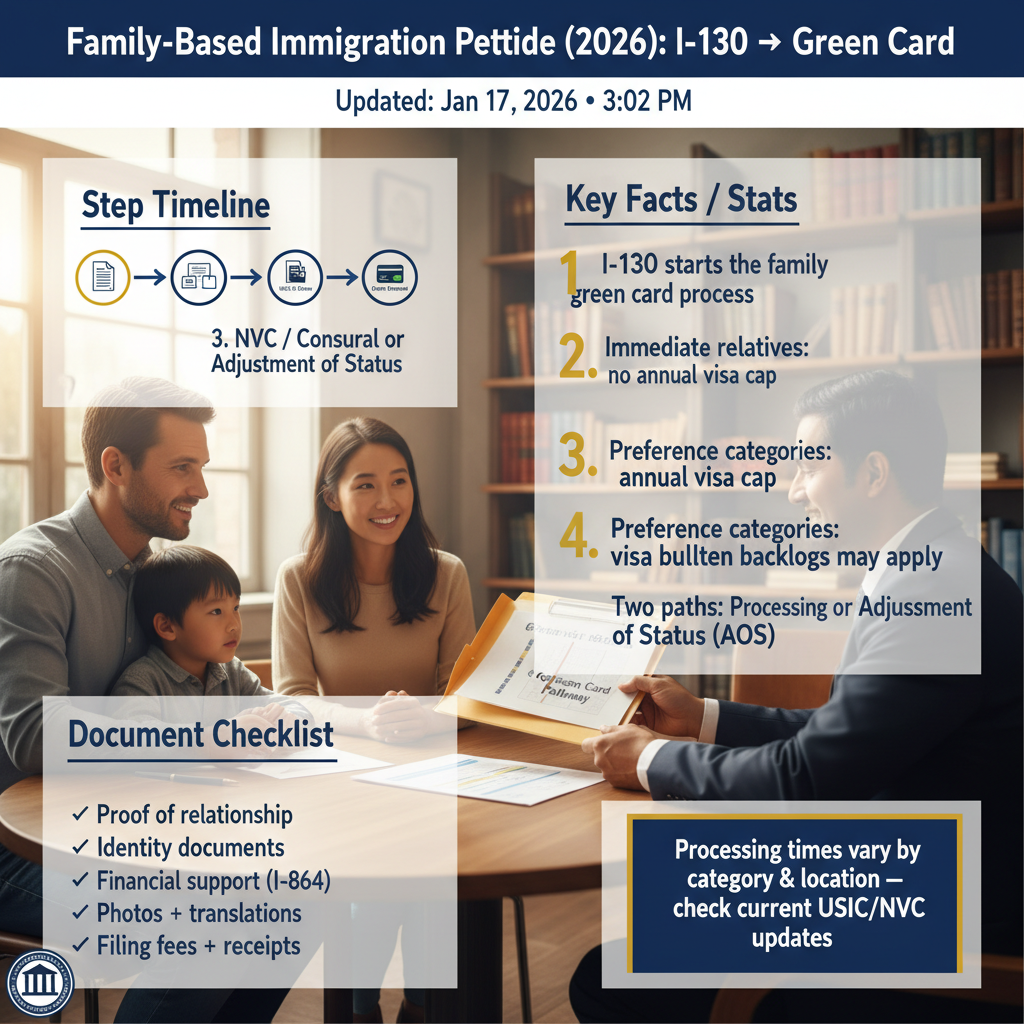
Family immigration remains one of the most searched topics in U.S. immigration law—especially as processing times, visa backlogs, and policy updates continue to make headlines. This guide was inspired by ongoing coverage and trending searches around family petitions, including:
Need Help? Our Orlando immigration team is ready to assist. Call +1 786-791-3106 for a free consultation, or message us online. Se Habla Español.
What This News Means for Immigrants in Orlando and Across Florida
Why this news is showing up now
Family-based immigration is “trending” because many families are trying to plan around longer processing times, shifting appointment availability, and ongoing visa backlogs. Even when the law has not changed dramatically, the practical reality changes—how long the case takes, what evidence USCIS expects, and how quickly the National Visa Center (NVC) can schedule interviews abroad.
Important: A family petition is not just “one form.” It is usually a multi-stage process with strict eligibility rules, document requirements, and timing issues that can affect whether your loved one can stay in the U.S. while applying or must finish the process at a consulate.
How it can affect Florida residents
Florida is home to large immigrant communities and mixed-status families. For many people in Orlando, Orange County, and along the I-4 corridor (Kissimmee, Sanford, Lake Mary, and Tampa-to-Daytona travel patterns), the biggest impacts are:
- Longer waits for interviews and final decisions, making it essential to plan work authorization and travel permission.
- Higher risk if someone has prior unlawful presence, entries without inspection, or old removal orders—issues that can trigger bars or require waivers.
- More scrutiny of relationship evidence (marriage-based cases in particular) and financial sponsorship requirements.
- Local logistics: If your case is in Orlando, you may deal with biometrics appointments and interviews tied to the Orlando-area USCIS footprint and case routing.
Reminder: Always verify current instructions and filing addresses on the USCIS official website before submitting anything.
What Family-Based Immigration Petition Guide Is (and Why It Matters)
A plain-English definition
A family-based immigration petition is the legal process where a U.S. citizen or lawful permanent resident (green card holder) asks the U.S. government to recognize a qualifying family relationship so the family member can apply for a green card (lawful permanent residence).
Most family cases start with Form I-130 (Petition for Alien Relative). After approval, the family member typically completes one of two paths:
- Adjustment of Status in the U.S. (often using Form I-485), or
- Consular processing abroad through the U.S. Department of State and the U.S. embassy/consulate.
Key terms you need to know
- Immediate Relative: Spouse of a U.S. citizen, unmarried child under 21 of a U.S. citizen, or parent of a U.S. citizen (petitioner must be 21+). Immediate relatives are not subject to annual visa caps.
- Family Preference Category: Categories subject to annual limits and waitlists (e.g., F1, F2A/F2B, F3, F4). These cases depend on visa bulletin availability.
- Priority Date: The “place in line” date—generally when USCIS receives the I-130. Priority Date controls when a visa can be issued in capped categories.
- Visa Bulletin: The monthly Department of State chart showing whether visas are available for each category/country. (Found on the Department of State website.)
- Affidavit of Support: A financial sponsorship requirement, usually Form I-864, showing the petitioner (and sometimes a joint sponsor) meets income thresholds.
- Unlawful Presence: Time in the U.S. without valid status. It can trigger 3-year/10-year bars if you leave the U.S.
- Warning: “Approval” of Form I-130 does not automatically grant a green card. It only confirms the relationship and allows the next stage.
Current Immigration Law: The Foundation
Family-based immigration is primarily governed by the Immigration and Nationality Act (INA) and related federal regulations. The core legal framework includes:
- INA § 201 (8 U.S.C. § 1151): Worldwide levels of immigration and immediate relatives.
- INA § 203 (8 U.S.C. § 1153): Family-sponsored preference categories and allocation of visas.
- INA § 204 (8 U.S.C. § 1154): Petitioning procedures (including I-130).
- INA § 245 (8 U.S.C. § 1255): Adjustment of Status eligibility rules.
- INA § 212(a) (8 U.S.C. § 1182): Grounds of inadmissibility (medical, criminal, immigration violations, fraud, etc.).
- INA § 237 (8 U.S.C. § 1227): Deportability grounds (relevant if someone is already in the U.S.).
Federal requirements
At the federal level, most family petitions require:
- A qualifying relationship (spouse, parent, child, sibling—depending on petitioner’s status).
- Proof the relationship is genuine (especially marriages).
- Proof the petitioner’s U.S. citizenship or permanent residence.
- Proof the beneficiary is admissible (or eligible for a waiver).
- Correct filings using current forms from USCIS Forms.
Common USCIS forms in family cases include:
- Form I-130 (Petition for Alien Relative)
- Form I-485 (Application to Register Permanent Residence or Adjust Status)
- Form I-864 (Affidavit of Support)
- Form I-765 (Employment Authorization)
- Form I-131 (Travel Document / Advance Parole)
- Form I-693 (Medical Examination and Vaccination Record)
- Form I-130A (Supplement for spouse beneficiary)
Reminder: Always confirm edition dates, fees, and filing addresses on the USCIS official website.
Florida-specific considerations
Immigration is federal law, so Florida does not create separate family-based green card rules. However, Florida residents often face practical, case-specific considerations such as:
- Local interview logistics: The Orlando USCIS Field Office (or the field office with jurisdiction over your ZIP code) may schedule your in-person interview for marriage-based or other adjustment cases.
- Document access: Some families need Florida vital records (marriage certificates, divorce decrees) and translations for foreign documents.
- Travel realities: For Central Florida residents, travel to biometrics and interviews can mean navigating the I-4 corridor and planning around work and childcare.
- State court records: If a beneficiary has any arrests, certified Florida dispositions are critical to evaluate admissibility.
If your case is in Orlando, we recommend planning for potential interview preparation and ensuring all originals (and certified copies) are organized well in advance.
How to File a Family Petition: A Complete Step-by-Step Guide
1) Confirm eligibility and choose the correct pathway (AOS vs. consular)
Start by identifying (1) who is petitioning, (2) the relationship category, and (3) whether the beneficiary will apply inside the U.S. through Adjustment of Status or abroad through consular processing.
Important: The choice is not always “optional.” Entry history, current status, and prior immigration violations can determine whether Form I-485 is legally available.
Documents to gather (early screening):
- Petitioner proof: U.S. passport, birth certificate, naturalization certificate, or green card (front/back)
- Beneficiary proof: passport biographic page, current I-94 (if applicable), visas, entry stamps
- Relationship proof: marriage certificate, birth certificates, adoption decrees, legitimation documents (if relevant)
- Termination of prior marriages: divorce decrees, annulments, death certificates
- Immigration history: prior USCIS notices, prior petitions, removal paperwork, voluntary departure orders
- Criminal history (if any): certified dispositions and arrest reports
Warning: If the beneficiary has an old removal order or is in immigration court, the case may involve the Executive Office for Immigration Review and require a coordinated strategy.
2) File Form I-130 with strong relationship evidence
The Form I-130 is the foundation of most family-based cases. USCIS must be convinced the relationship is legally valid and (for marriages) bona fide.
Documents to include with Step 2:
- Completed and signed Form I-130
- Form I-130A (if petitioning a spouse)
- Filing fee (verify current fee on USCIS)
- Petitioner’s proof of status (citizenship or LPR)
- Beneficiary identity documents (passport page, birth certificate)
- Proof of relationship:
- Marriage certificate (spouse cases)
- Birth certificates showing parent-child relationship
- Adoption paperwork (if applicable)
- Proof of bona fide marriage (if spouse case), such as:
- Joint lease/mortgage
- Joint bank/credit card statements
- Insurance policies listing each other
- Photos over time with family/friends
- Children’s birth certificates (if applicable)
- Affidavits from people who know the relationship (optional but helpful)
- Certified translations for non-English documents
Track your receipt number and monitor updates. You can also check estimated time ranges using USCIS Processing Times.
3) If eligible, file the “one-step” package: Form I-485 (plus work/travel)
If the beneficiary is in the U.S. and a visa is immediately available (commonly immediate relatives of U.S. citizens), you may be able to file Form I-485 together with the I-130 (often called “concurrent filing”).
Documents to include with Step 3 (Adjustment of Status packet):
- Completed and signed Form I-485
- Copy of beneficiary passport, visa page, entry stamp
- I-94 record (if applicable)
- Two passport-style photos (per current instructions)
- Form I-864 Affidavit of Support with:
- Most recent tax return (and W-2/1099)
- Pay stubs and/or employment letter
- Proof of current income
- Joint sponsor packet if needed
- Form I-693 medical exam (follow USCIS instructions on timing and sealed envelope rules)
- Form I-765 (optional) for work permit
- Form I-131 (optional) for Advance Parole travel
- Certified translations for non-English documents
Warning: Do not travel internationally while an AOS case is pending unless you have the proper travel authorization (Advance Parole) and your situation allows travel. Some individuals should not use Advance Parole due to prior immigration issues—get legal advice first.
4) Attend biometrics, respond to RFEs, and prepare for the interview
After filing, USCIS typically schedules biometrics (fingerprints/photo). USCIS may also issue a Request for Evidence (RFE) if something is missing or unclear.
Documents to prepare for Step 4:
- Biometrics appointment notice and government-issued ID
- RFE response packet (if issued), including:
- The RFE notice (original or copy as instructed)
- Requested documents in the exact order requested
- Cover letter and exhibit list
- Interview prep binder (if interview is scheduled), including:
- All originals of civil documents (birth, marriage, divorce)
- Updated relationship evidence (recent statements, lease renewals, photos)
- Updated financial evidence for Form I-864
- Any updated immigration documents (new I-94, extensions, etc.)
If your case is in Orlando, interview notices can require you to appear locally. The Orlando USCIS Field Office interview experience often focuses on verifying eligibility, reviewing forms for accuracy, and (for marriage cases) assessing whether the relationship is genuine.
5) If processing abroad: complete NVC steps and attend the consular interview
If the beneficiary will process abroad, after I-130 approval the case typically goes to the Department of State’s National Visa Center (NVC). You’ll pay fees, submit civil documents, and the Form I-864 financial sponsorship package, then wait for an interview appointment at the consulate.
Documents to prepare for Step 5 (consular processing):
- Passport valid for travel
- Birth certificate, marriage certificate, divorce decrees (certified copies)
- Police certificates (as required per country rules)
- Military records (if applicable)
- Form I-864 with tax returns and proof of income
- Medical exam from an approved panel physician (country-specific)
- Proof of relationship and ongoing contact (helpful for spouse cases)
Consular processing rules and interview preparation resources are available through the U.S. Department of State.
6) Receive the decision and plan the next compliance steps (green card, conditions, citizenship)
After approval, the beneficiary becomes a lawful permanent resident either upon approval of Form I-485 (inside the U.S.) or upon entry to the U.S. with an immigrant visa (consular processing).
Documents/next steps after approval:
- Review the green card for errors immediately (name, date of birth, category)
- Keep approval notices and copies of the full filing
- If marriage-based and the marriage was under 2 years at approval/entry, you likely receive a conditional green card and must later file Form I-751 during the 90-day window before the card expires
- Track eligibility for naturalization (citizenship) in the future
Reminder: Missing the 90-day window for removing conditions can create serious problems. Plan ahead.
Need Help? Our Orlando immigration team is ready to assist. Call +1 786-791-3106 for a free consultation, or message us online. Se Habla Español.
Practical Steps You Can Take Today
Family petitions move faster and more smoothly when you prepare like an auditor: organized, consistent, and ready to prove every key fact.
Actionable checklist (do this now)
- Create a shared folder (digital + paper) for all identity and relationship records.
- Order certified copies of marriage certificates, divorce decrees, and birth certificates early.
- Start a “relationship timeline” document with dates: met, engagement, marriage, addresses, trips, major events.
- Collect joint evidence monthly (bank statements, utility bills, insurance) rather than scrambling later.
- Check your category and Priority Date strategy (especially for preference categories) and monitor the Visa Bulletin.
- Review prior immigration history for risks: unlawful presence, misrepresentation, prior denials, removal orders.
Document preparation guidance
- Consistency matters: Names, dates, and addresses should match across forms and evidence.
- Translations: Non-English documents must be accompanied by a competent English translation with a proper certification.
- Financial sponsorship: If income is borderline, explore a joint sponsor early rather than waiting for an RFE.
- Medical exam: Follow USCIS instructions carefully—submitting it incorrectly can delay the case.
Timeline expectations (real-world planning)
Timelines vary by category, field office, and whether you are doing Adjustment of Status or consular processing. Use USCIS Processing Times as a baseline, but plan for variability.
- Work permit (I-765) during AOS: Often months; plan finances accordingly.
- Interview scheduling: Can be unpredictable; keep your address updated with USCIS.
- Reminder: If you move, update USCIS promptly. Missing notices can cause denials.
Warning: If you are close to accruing unlawful presence or have status expiring, speak with counsel immediately—timing can affect whether you trigger bars when departing the U.S. The 180 days mark can be significant in certain unlawful presence scenarios.
How Imigrar Helps Immigrants in Orlando
Imigrar is an immigration law firm based in Orlando, Florida, serving clients nationwide. Our mission is simple: Keep Families Together. Family-based immigration is personal—and the paperwork is only one part of the process. We help clients build a strategy that matches their facts, their risks, and their goals.
We assist with:
- Family petitions using Form I-130 and related filings
- Adjustment of Status with Form I-485, including work and travel applications
- Consular processing preparation and document review
- RFE strategy and interview preparation (including Orlando-area interview readiness)
- Complex cases involving inadmissibility issues, prior immigration violations, or court history
Se Habla Español. We offer a free consultation so you can understand your options before you file.
Need Help? Our Orlando immigration team is ready to assist. Call +1 786-791-3106 for a free consultation, or message us online. Se Habla Español.
Frequently Asked Questions
Q: Who can file a family-based petition using Form I-130?
A: U.S. citizens can generally petition for spouses, children (married or unmarried), parents (if the citizen is 21+), and siblings. Lawful permanent residents can generally petition for spouses and unmarried children. The correct category matters because it affects whether a visa is immediately available and whether a Priority Date wait applies.
Q: Can I file Form I-130 and Form I-485 together?
A: Sometimes. Concurrent filing is often possible when the beneficiary is an “immediate relative” of a U.S. citizen and is otherwise eligible for Adjustment of Status. For preference categories, you generally need a current visa per the Visa Bulletin before filing Form I-485. Eligibility also depends on lawful entry, status issues, and other factors.
Q: How does my current immigration status affect a family petition?
A: Status can determine whether you can stay in the U.S. while applying or whether you must process abroad. Overstays and unauthorized work can be forgiven for certain immediate relatives of U.S. citizens in AOS contexts, but not always for other categories. Warning: Departing the U.S. after accruing unlawful presence can trigger 3-year or 10-year bars; the 180 days threshold is often a key planning point. Get individualized legal advice before traveling or choosing consular processing.
Q: How long does a family-based green card process take?
A: It depends on (1) the relationship category, (2) whether you are adjusting in the U.S. or processing abroad, and (3) local workload. Use USCIS Processing Times for USCIS stages and the U.S. Department of State for consular information. Preference categories can take years due to the Priority Date backlog, while immediate relative cases are not subject to annual caps (though processing still takes time).
Q: What documents are most important for a marriage-based case?
A: USCIS looks for proof the marriage is real and not only for immigration. Strong evidence includes joint financial accounts, shared housing documents, insurance, photos across time, travel records, and evidence of shared life responsibilities. Bring originals to the interview. If your case is in Orlando, expect detailed questions about your relationship history and daily life.
Q: How much does it cost to file a family petition?
A: Costs typically include USCIS filing fees (which vary by form and can change), medical exam costs, translation costs, and possibly attorney fees. Check current filing fees and form instructions on the USCIS official website and USCIS Forms. If consular processing applies, Department of State fees also apply.
Q: What happens if my petition or green card application is denied?
A: The next steps depend on what was denied and why. An Form I-130 denial may be re-filed with stronger evidence or challenged through motions/appeals in some situations. An Form I-485 denial can be more serious—sometimes leading to removal proceedings for certain applicants. If you receive a denial or Notice to Appear, consult counsel immediately and review options that may involve the Executive Office for Immigration Review.
Common Mistakes (and How to Avoid Them)
Mistake #1: Treating Form I-130 like a simple “relationship form”
USCIS expects documentation that proves a legally valid relationship—and, for marriages, a bona fide relationship. Weak evidence often leads to RFEs or denials. Avoid this by submitting a well-organized, labeled evidence packet and continuing to collect proof after filing.
Mistake #2: Choosing the wrong process (AOS vs. consular) without analyzing risks
Some applicants assume consular processing is “safer” or “faster.” Others assume Adjustment of Status is always available. Both assumptions can be wrong. Warning: Departing the U.S. can trigger unlawful presence bars; prior immigration violations can require waivers. Get a legal screening before committing to a path.
Mistake #3: Missing deadlines and notice requirements
People miss biometrics, forget to update addresses, or respond late to RFEs. These errors can cause avoidable denials. Track every deadline, keep copies of everything, and use reliable mail tracking. For conditional residents, missing the 90-day window for Form I-751 can be especially damaging.
Need Help? Our Orlando immigration team is ready to assist. Call +1 786-791-3106 for a free consultation, or message us online. Se Habla Español.
Additional official resources (bookmark these)
- USCIS official website (forms, instructions, policy updates)
- USCIS Forms (download current editions)
- USCIS Processing Times (time estimates by form and office)
- U.S. Department of State (Visa Bulletin, consular processing)
- Executive Office for Immigration Review (immigration court information)

Closing: Get a family petition plan you can trust
Family-based immigration can be straightforward—or surprisingly complex—depending on entry history, prior filings, financial sponsorship, and timing. For Central Florida residents, planning around interviews, biometrics, and document collection is easier when you have a clear checklist and a legal strategy tailored to your facts.
Important: This article provides general information, not legal advice. Every family’s situation is different.
Need Help? Our Orlando immigration team is ready to assist. Call +1 786-791-3106 for a free consultation, or message us online. Se Habla Español.


